
The years 1524 and 1525 marked a terrifying turning point in the history of the German-speaking lands of the Holy Roman Empire. Noble and princely forces slaughtered tens of thousands of their own subjects following a revolt that came to be known as the German Peasants’ War. It is considered the largest and most widespread peasant uprising in European history before the French Revolution.
How Snail Shells and Scripture Triggered Europe’s Bloodiest Peasant Uprising
Just before the revolt, rising feudal burdens in the Holy Roman Empire left the peasantry in a state of growing hardship. The peasants endured heavy taxation alongside mandatory forced labor for their lords. Conditions were especially harsh in southern regions, which is why the war first erupted there.
It all started around June 23, 1524, when about 1,200 peasants on the lands of Count Siegmund of Lupfen at Stühlingen, near the Swiss border south of the Black Forest, began protesting after several difficult harvests. The peasants opposed feudal systems and stark inequalities. This quickly grew into the start of the German Peasants’ War. This was after the Countess of Lupfen reportedly demanded that peasants gather snail shells during the busy harvest to wind yarn, which was one too many injustices.
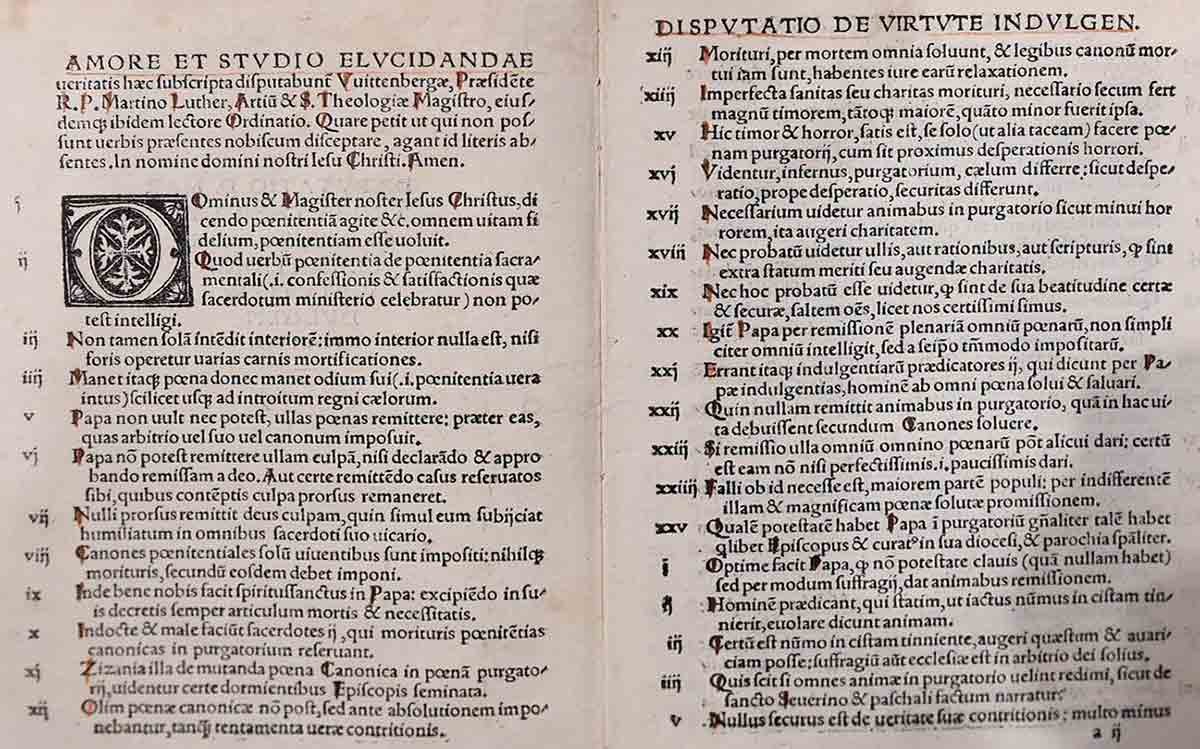
Religion played an equally powerful role in setting the stage for the revolt. When Martin Luther posted his Ninety-five Theses on the church door in Wittenberg in 1517, he opened up a new world of thought that would have consequences he never intended. Luther taught that priesthood was for all believers and that every Christian stood equal before God. Luther didn’t mean for this to be taken as a call for social revolt by the peasants, but that is how many took it. His message of spiritual freedom, or Freiheit in German, inspired the peasants to demand social and economic freedom as well. If they were truly equal in the eyes of God, they reasoned, then why were they being treated like animals by the nobility?
The 1525 ‘Viral’ Manifesto That United 300,000 Rebels
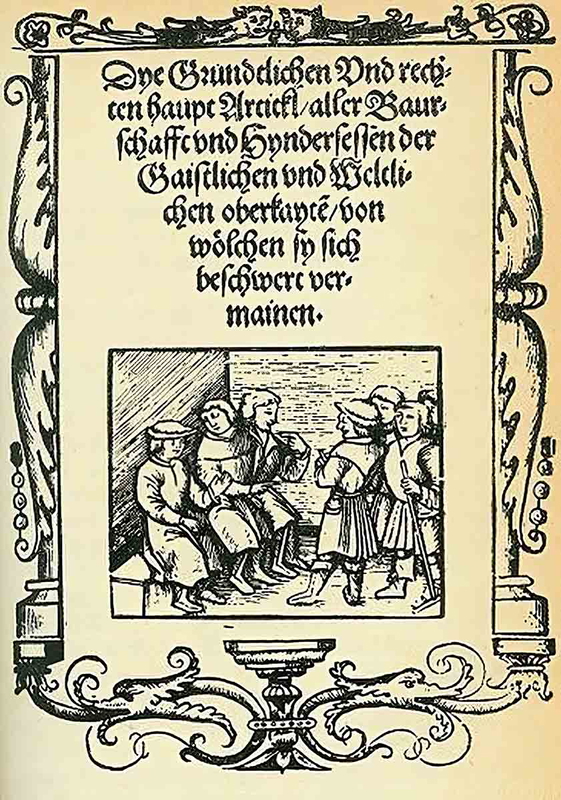
When the peasants started to revolt in early 1525, they created a list of demands known as the Twelve Articles of the Swabian Peasants. About 50 representatives of Upper Swabian peasant groups met in Memmingen on March 6, 1525, and adopted the articles on March 15 and 20. The journeyman furrier and lay preacher Sebastian Lotzer drafted them along with the Reformed theologian Christoph Schappeler. They were printed over 25,000 times within two months and quickly spread throughout the German-speaking lands.
Among the listed demands was an end to serfdom. They also demanded the restoration of traditional hunting and fishing rights. Additionally, the peasants wanted the right to choose their own pastors and wanted unfair tithes and inheritance taxes abolished or reformed. By framing their requests as having been inspired by divine law, the peasants essentially created an early statement of rights grounded in scripture. The peasant revolt continued to grow and soon became a war that included around 300,000 peasants from many parts of the Holy Roman Empire.
Apocalyptic Prophets and Luther’s Betrayal
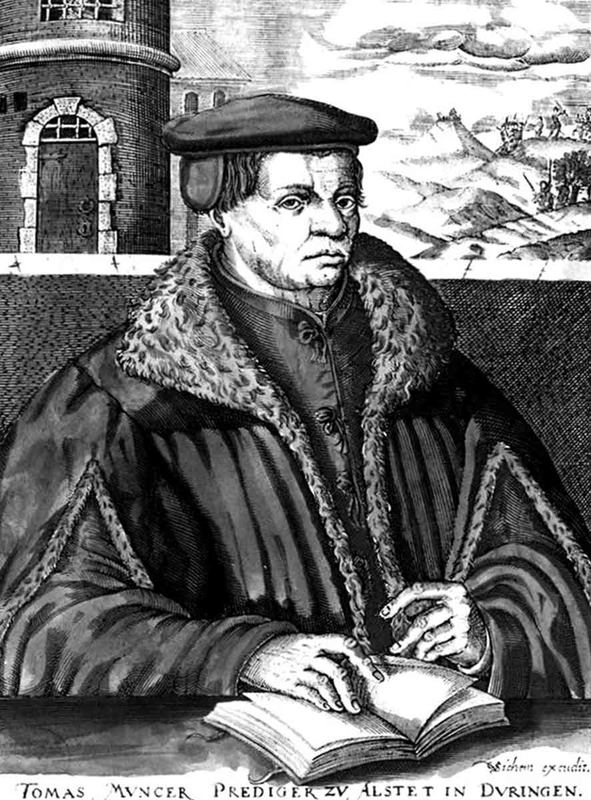
There were many factors that led to the German Peasants’ War becoming Europe’s bloodiest uprising. Religion was one factor. While some of the peasants wanted change and listed demands in the Twelve Articles, leaders like Thomas Müntzer wanted to overthrow the entire social structure. He preached an apocalyptic vision that the last days were at hand and that the peasants should rise up and overthrow the nobility. The princes of Germany were scared of this rhetoric and knew that they had to put a stop to this uprising by unleashing unprecedented levels of violence.
Martin Luther, who at first showed some sympathy for peasant grievances, also contributed to the violence by turning against them and publishing a pamphlet titled Against the Murderous, Thieving Hordes of Peasants, in May 1525. In it, he told the princes to smite and slay the rebellious peasants without mercy. This harsh stance helped intensify the response.
How the Peasant Rebellion Was Ruthlessly Crushed
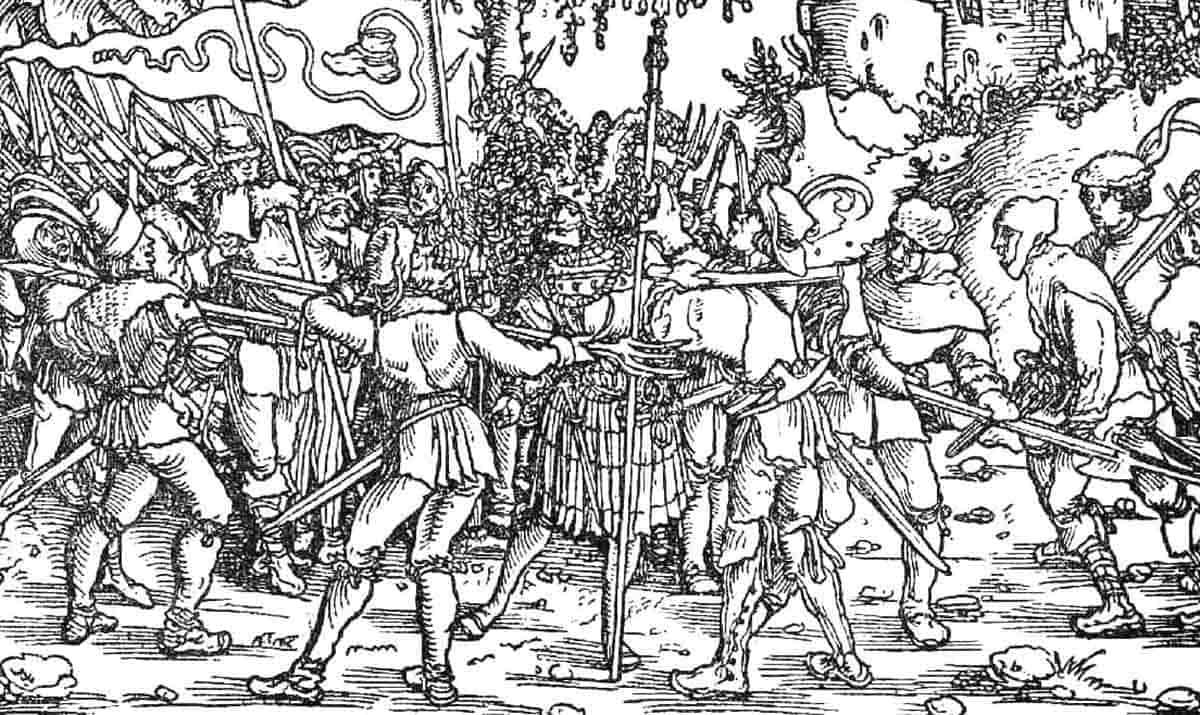
The revolt ended with many one-sided defeats for the peasant armies as they lacked trained soldiers and professional weaponry to match the well-equipped forces fighting for the aristocracy. The first full-scale engagement was the Battle of Leipheim on April 4, 1525, where approximately 5,000 peasants faced over 8,000 professionally trained troops. On May 15, 1525, the peasants lost the Battle of Frankenhausen to forces under Philip I of Hesse and George, Duke of Saxony. Thomas Müntzer was captured there, tortured, and executed on May 27, 1525.
It is estimated that up to 100,000 or more peasants died from fighting and execution by the state. After this event, the ruling states became more powerful and oppressive towards the lower-class citizens. However, there was still unrest in the air. Although they failed in their mission, the peasants changed the way Europe viewed the struggle for social and economic justice.