
Cuban-American artist Ana Mendieta had a dramatically short yet remarkable career. Originally trained as a painter, she moved to performance art and photography in the 1970s. Still, she defined herself mostly as a sculptor who used her own face and body instead of marble or bronze. A particular segment of her oeuvre was her burial art, which included performances and video works in which she posed in ancient tombs or completely immersed herself in earth or water.
Ana Mendieta’s Cuban Origins
Ana Mendieta was a Cuban-born artist who spent most of her life in the US. Aged just twelve, in 1961, she was transported from Havana to Miami as part of Operation Peter Pan, a US-funded project of moving Cuban children from revolutionary Cuba. Born and raised in a privileged, well-educated Cuban family, Mendieta suddenly found herself in a foreign culture with barely any understanding of the English language, facing racial and cultural prejudice. The years of struggle later manifested themselves in Mendieta’s political activism. As an artist, she spoke of systemic oppression, violence, and the idea of otherness. In her work, she sought to bridge her lost native culture and the modern reality, going beyond the idea of borders and cultures into the domain of universal archetypes. Mendieta’s oeuvre was dramatically short due to her tragic death under controversial circumstances in 1985.
Ana Mendieta’s use of the body in her art was inherently tied to a complex of her identities—as an artist, a woman, a Cuban, an immigrant, etc. As an artist who was forcefully torn out of her native culture as a child and implanted into another, rather hostile and radically different from her expectations, she was left with her body and herself as her only unalienable assets.
Mendieta, The Sculptor
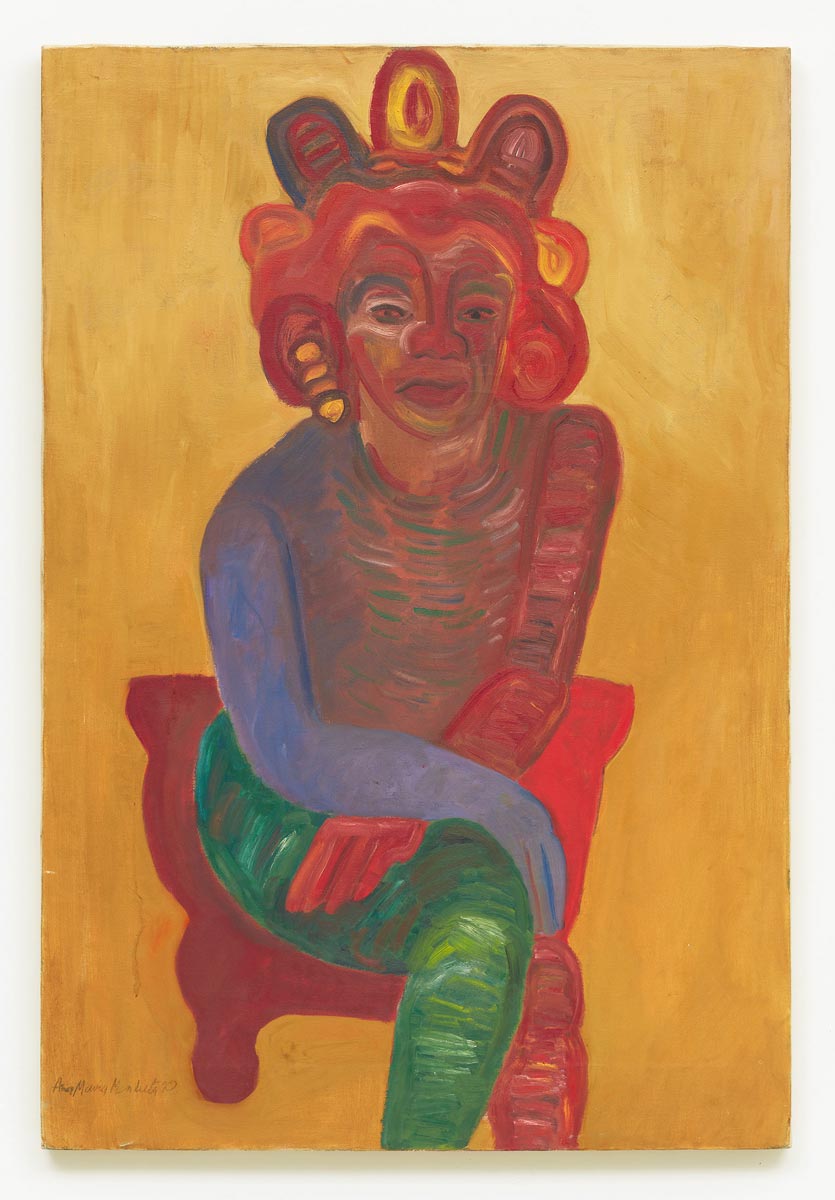
Ana Mendieta started her training as a painter. Her niece, Raquel Cecilia Mendieta, who knew Ana, remembered that it was not an easy path for her, but certainly not due to the lack of talent. Mendieta came from an entirely different artistic tradition and felt out of place within the conventional classical-centered training of the University of Iowa. Her use of color and form, reminiscent of the traditional art of her native region, went against the traditional expectations of a Western painter in training. Such primitivist tendencies were allowed only for those who already made names for themselves in more normative domains and styles of art.
Unfortunately, very little of her painted work has been exhibited over the years. Ana Mendieta had to fight to be admitted to exams and enroll in courses. Ironically, the more she fought, the more disillusioned she became with painting as a medium, but for a while was too emotionally invested to quit. She saw painting as an unnecessary mediator between the artist and their work of art. While for some, this mediator was of great help, in her case, it only diluted her ideas and made them flat.
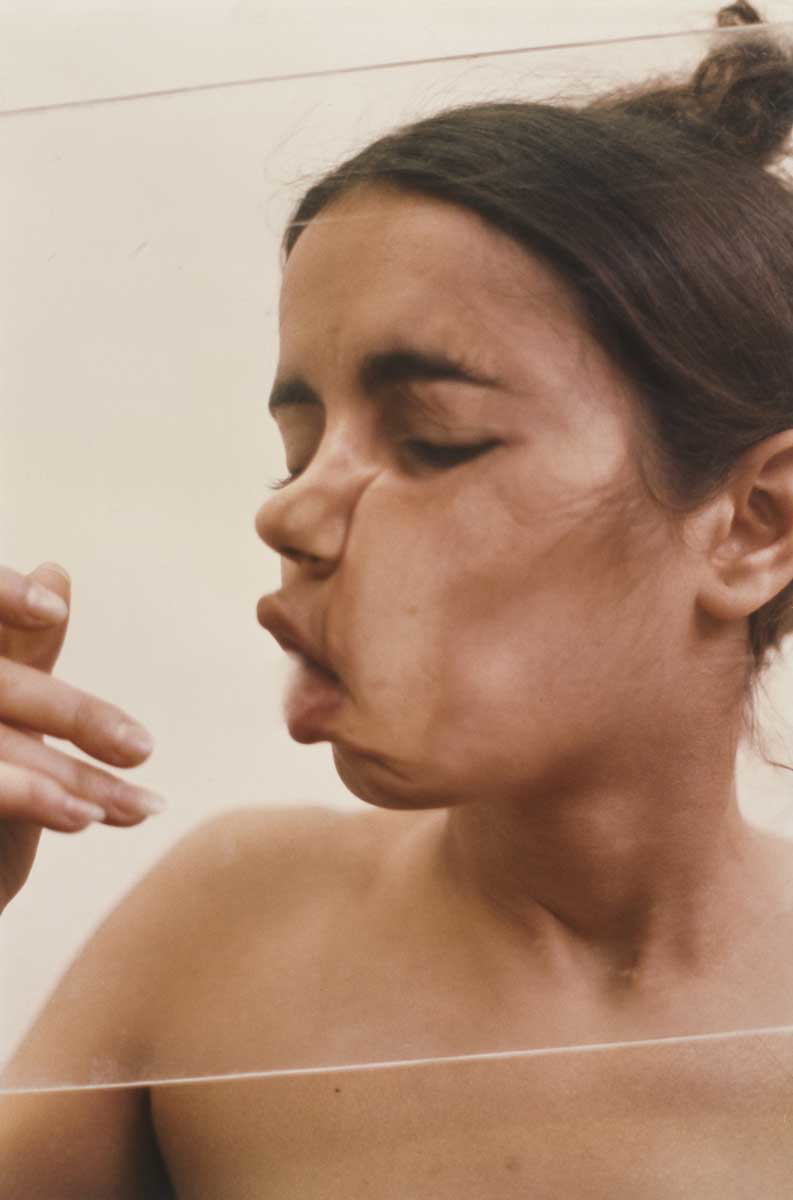
In 1972, Mendieta finally moved on to study what was then called Intermedia, interdisciplinary artistic practices that blended several mediums together, relying heavily on performance art and technology. Around that time, Ana Mendieta discovered that her own body was expressive enough as an artistic medium on its own. For the following years, she would create numerous photographs and video works centered around her physical self and her contact with nature. However, Mendieta never defined herself as a photographer or a performance artist. Most frequently, she spoke of herself as a sculptor, shaping her body and the area around it. This was most obvious in one of her earliest photographic works, where she pressed her face to a piece of glass, reshaping and squishing it.
Identity as Costume
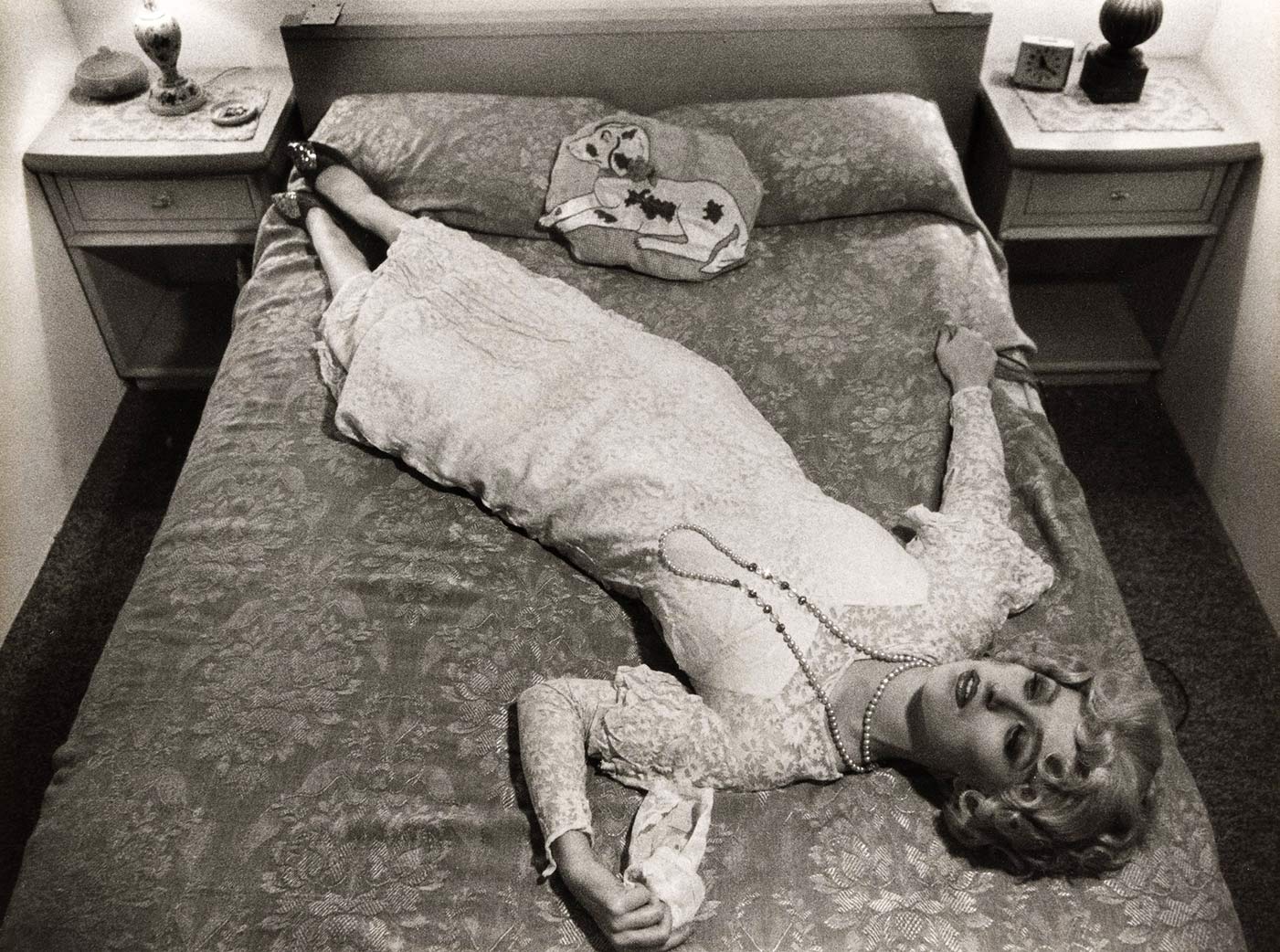
Identity, with its fluidity and attributes, has been an important preoccupation of artists since the 1970s when Mendieta began her artistic career. Many artists, particularly women, sought to dissect the concept of racial, ethnic, cultural, gender, and other identities to understand why some forms of identity grant privilege while others strip it away. The controversial series of works Projects by Korean artist Nikki S. Lee focused on the artist trying on various subcultural identities and settling within their communities. The iconic artist Cindy Sherman created and assumed countless different identities for her self-portrait works.
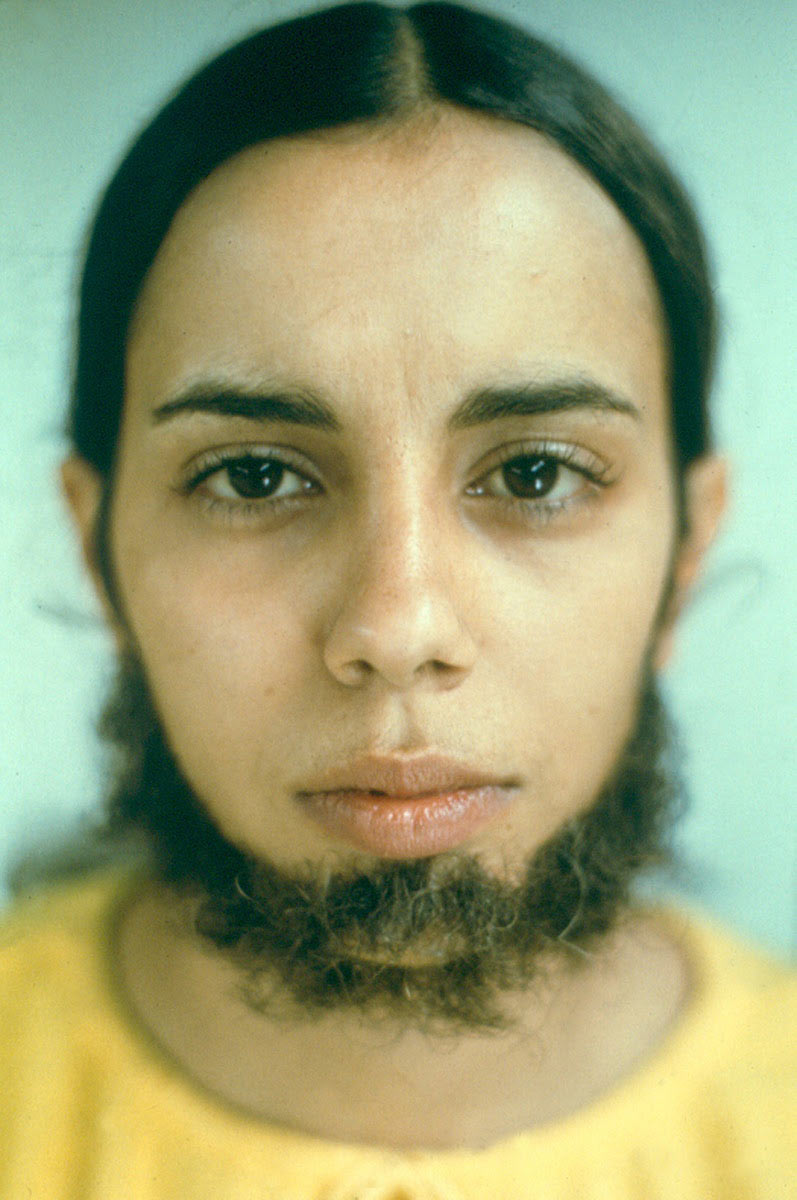
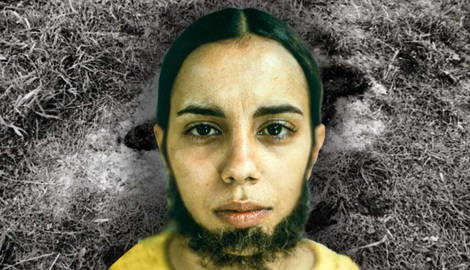
Ana Mendieta never went that far into the exploration of self. Rather swiftly, she moved towards more abstract and metaphysical notions of femininity and physicality. However, for one of her early works, she asked a male friend to shave off his beard and then glued it to her own face, creating a facial hair transplant. This piece of costume formally transformed her into a male artist. As an experienced and educated creator, Mendieta was well aware of the bias and boundaries that stood in her way as a woman artist. She realized her work would inevitably be treated differently from that of a man and felt bitter about it. The Facial Hair Transplant photo series was both a mockery of the existing system and an attempt to test its stability by assuming attributes of a privileged category.
Physical Body as Evidence
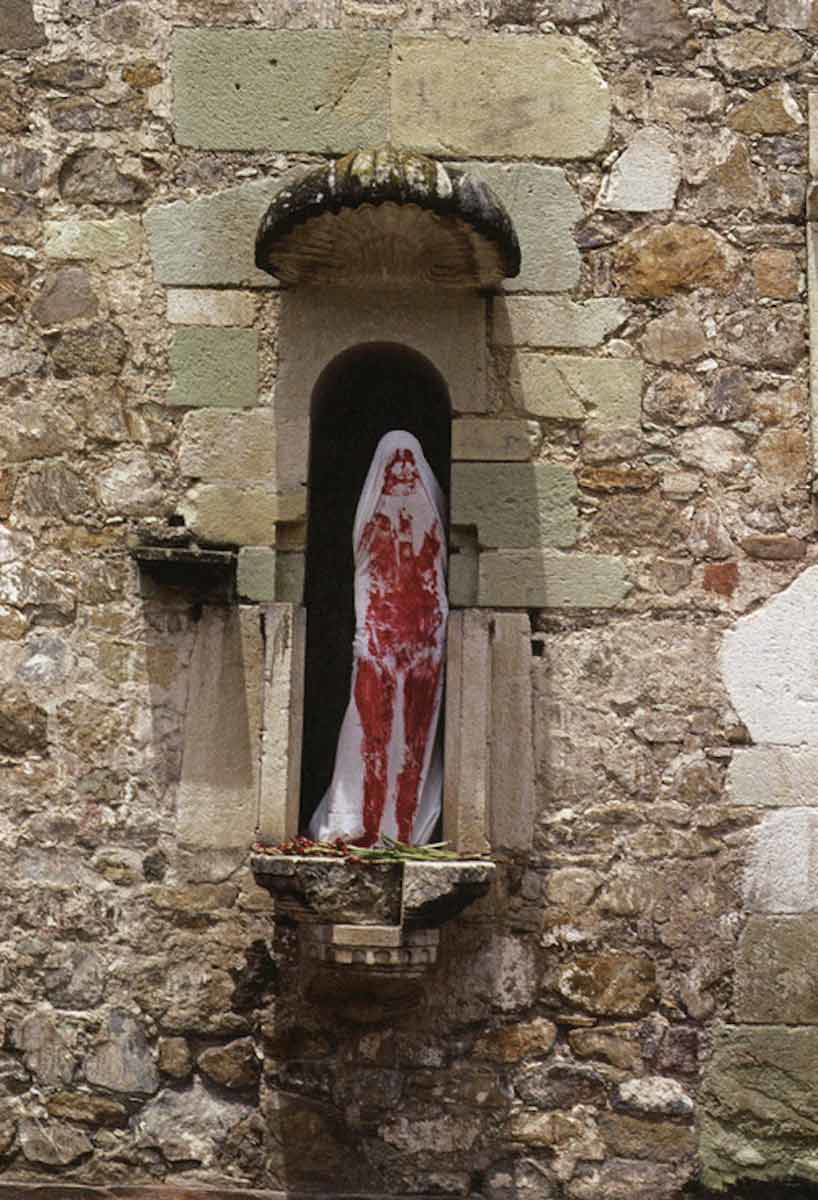
In Ana Mendieta’s art, the presence of a physical body is crucial. The shape of a body was a recurring symbol in her short career that spanned just a little more than a decade. It all began with a tragedy. As a young artist searching for her style and expressive language, she was and remained for years a vocal activist protesting violence and oppression. In 1973, the University of Iowa student Sarah Ann Ottens was found dead in her room on campus. The perpetrator was never identified with certainty. Although the alleged rapist and murderer was sentenced to 50 years in prison, he was released after an unnamed person allegedly confessed to killing Ottens but faced no charges.
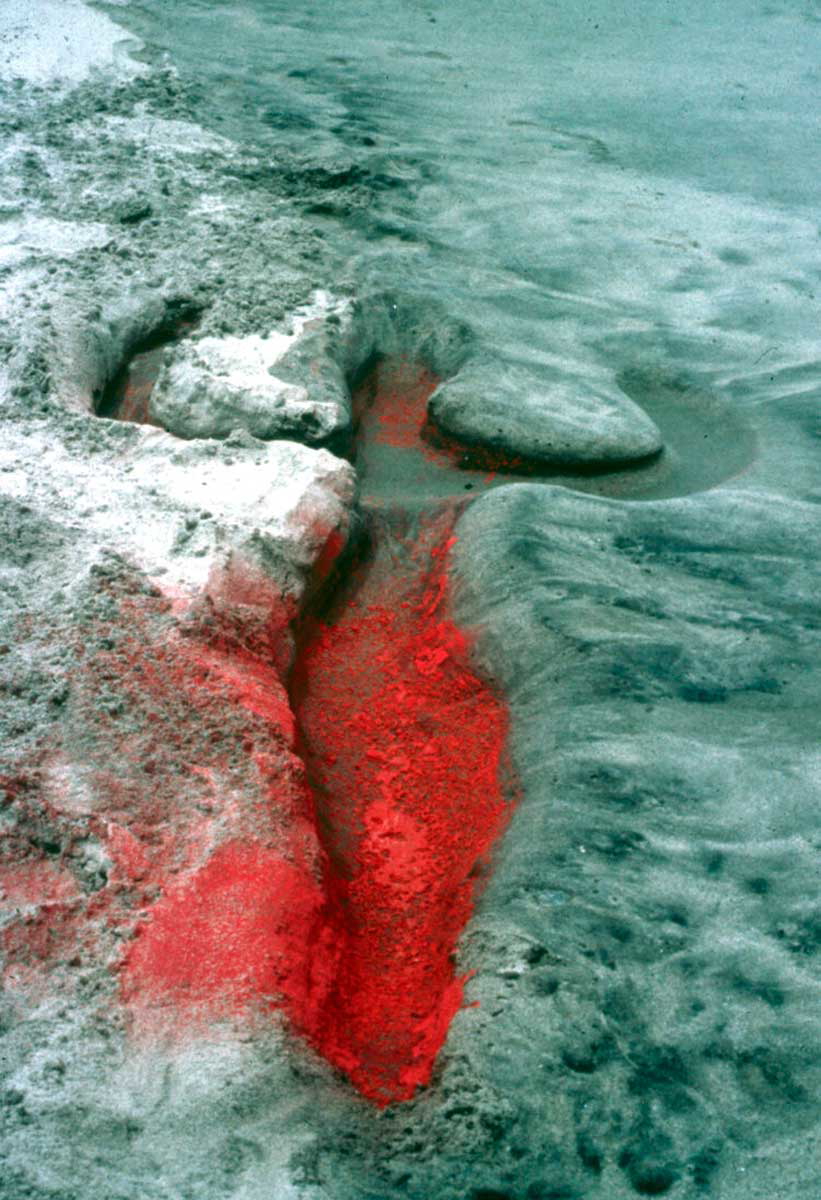
The University of Iowa attempted to suppress the information about Ottens’ death and allegedly withheld some of the evidence. Outraged, Ana Mendieta created several shocking works intended to highlight the presence of violence in their routine student lives. For the Rape Scene, she posed, covered in blood, in the same position Sarah Ottens was found. The work was a private performance intended for Mendieta’s friends and was intended to confront them with a realistic and material depiction of violence. Subsequently, the artist created her famous Moffitt Building Piece, a video work documenting the public’s engagement in suppressing and ignoring the evidence of violence.
Ana Mendieta’s Burial Art
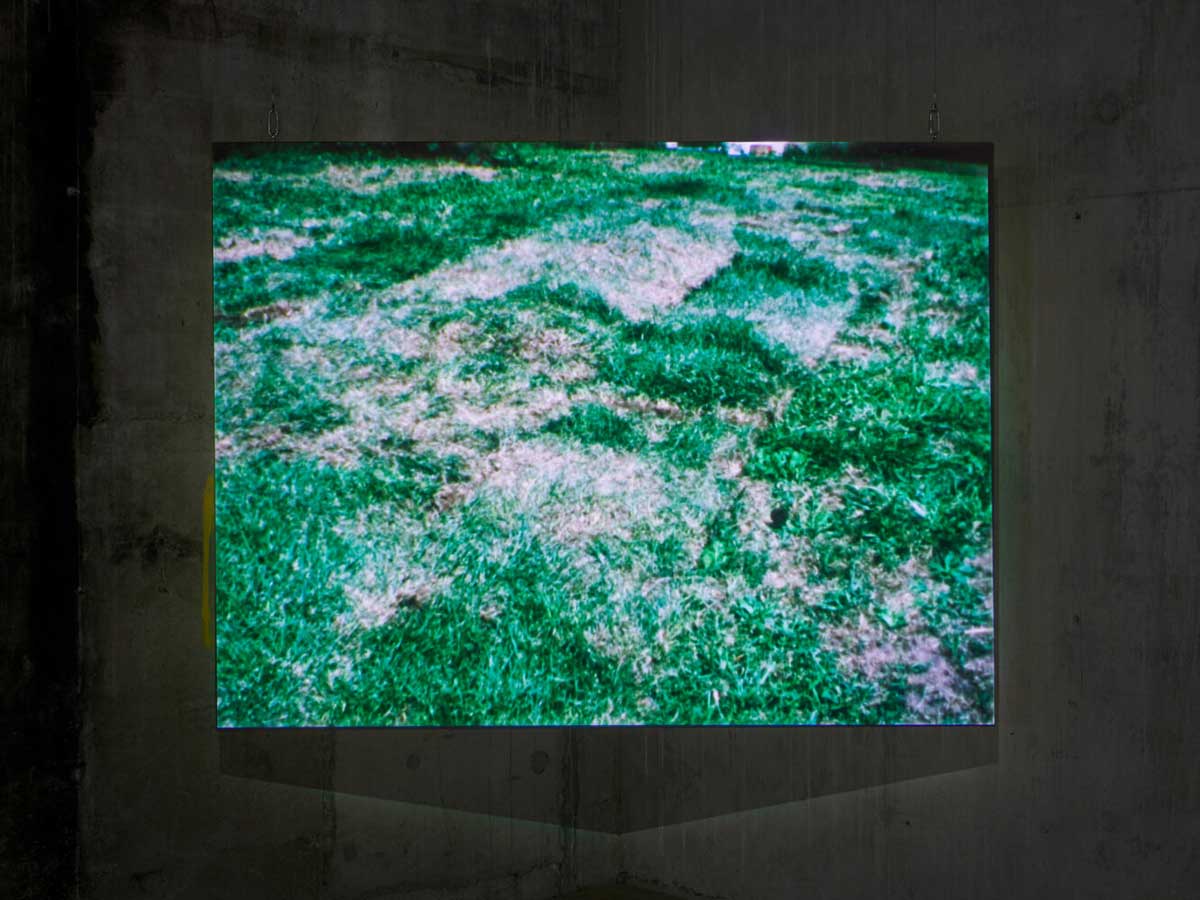
In her later works, violence took a step back. As she gradually developed her expressive language, she moved on from working in urban and domestic scenes to nature. Human experience of interacting with the natural realm is heavily tied to childhood experiences of exploring the world with little societal pressure. For Mendieta, nature, especially its remote areas, existed outside of concepts of borders, ethnicities, and other characteristics. For several years, she created images of herself swimming, lying in grass, or even covering herself with mud. Her goal was to feel the inner vibration of the earth and to breathe with it, immersed in its unseen life. One of her video works, Grass Breathing, represented a seemingly immobile patch of grass. However, after a while, viewers realized that the artist was literally buried under it.
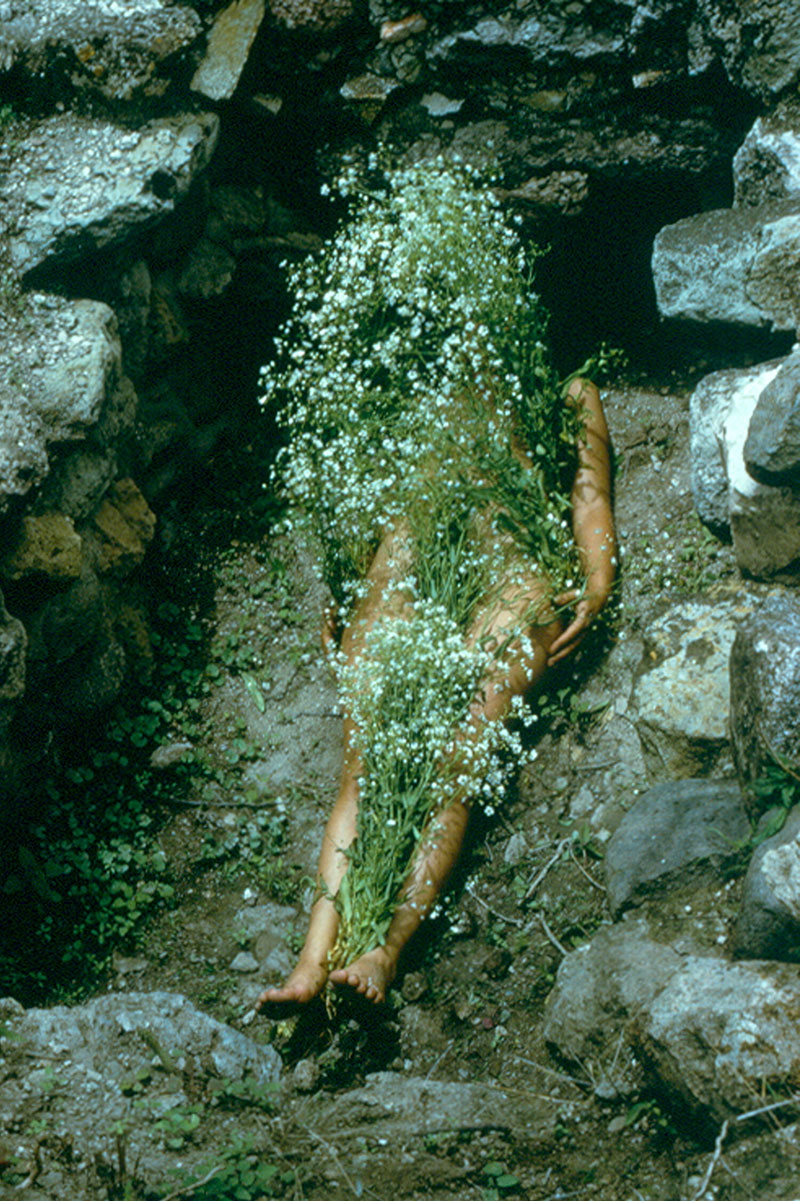
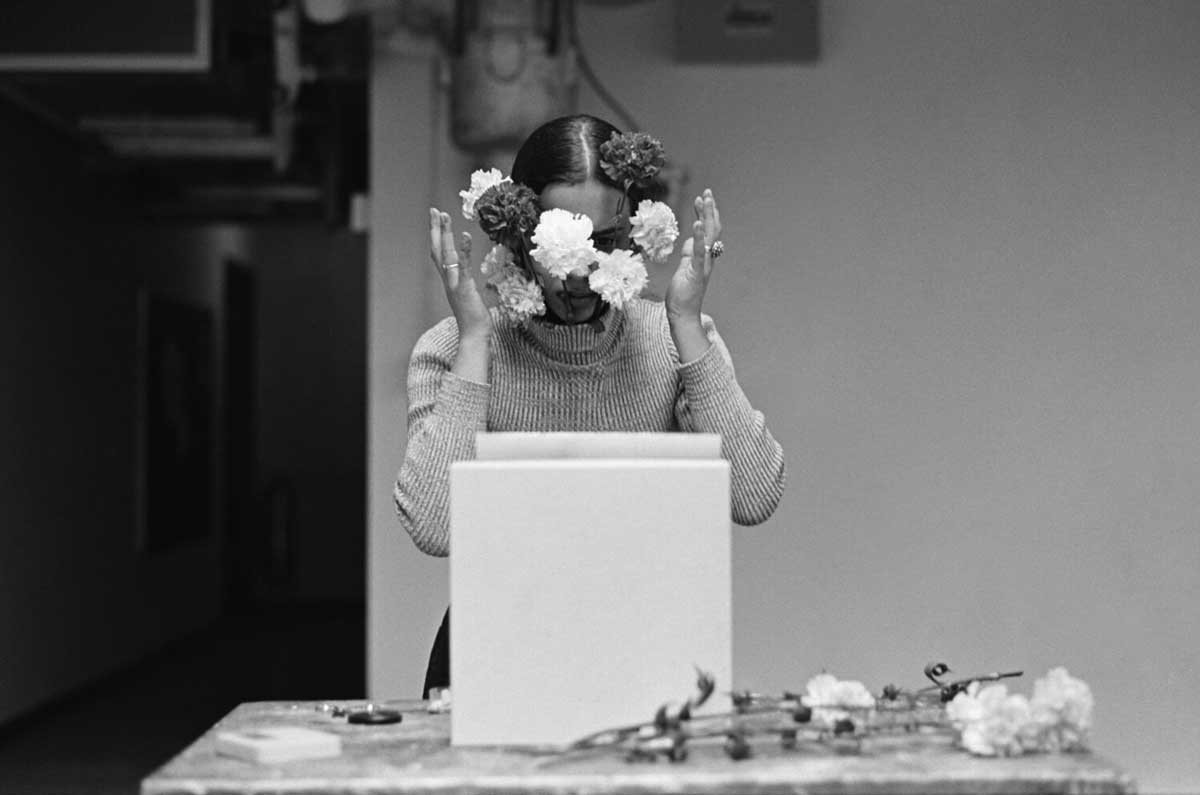
For one of such works, she literally dug a hole in worm-filled soil and immersed herself into it, aiming to feel the inner life of the earth. During her first trip to Mexico in 1974, she visited pre-Columbian Zapotec tombs and posed in them naked, covered with white flowers. Despite the connotations of burial, these works were devoid of morbid undertones. Placing her body in earth and water, Mendieta returned it where it belonged, in its natural state that existed outside of the social and political boundaries.
Ana Mendieta and The Great Goddess Archetype
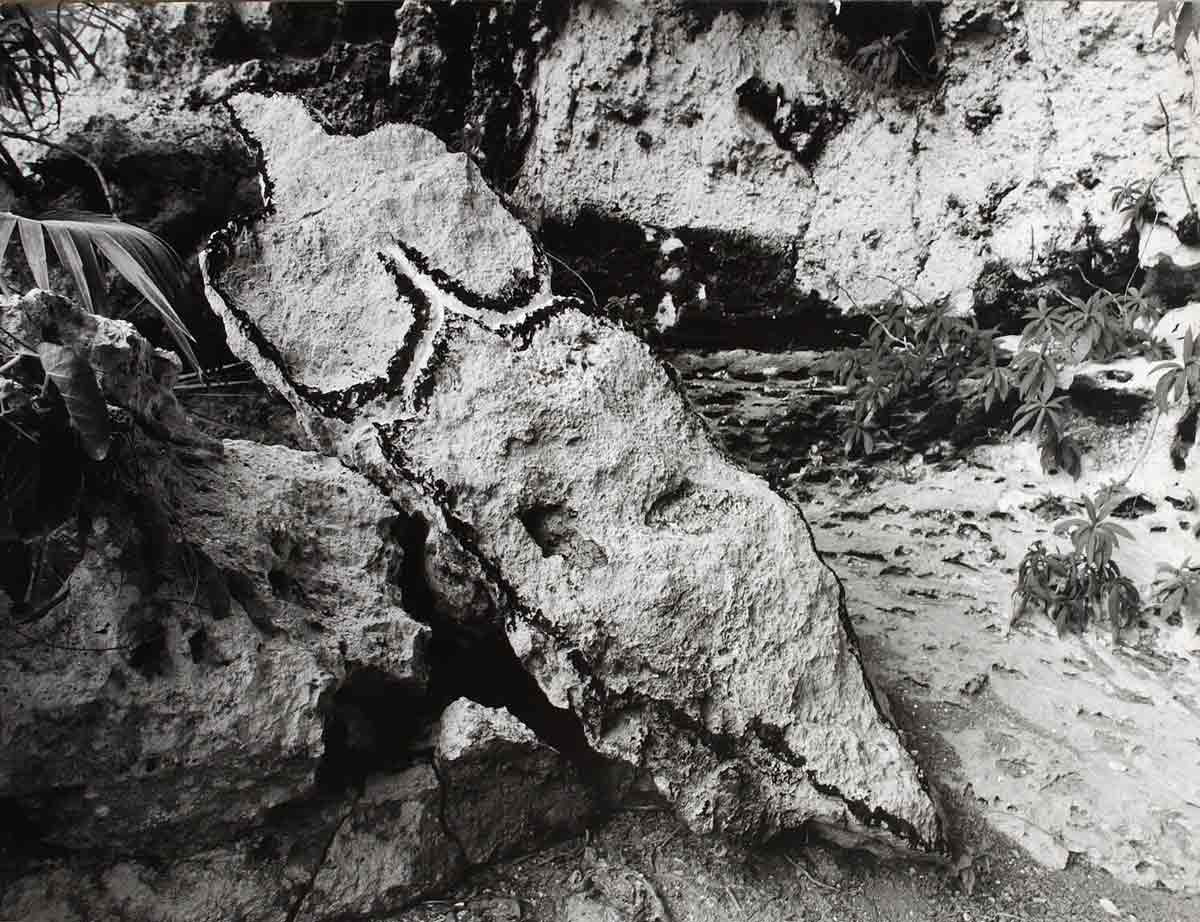
The crucial component of Ana Mendieta’s use of the body in artistic practice refers to the Great Goddess Archetype, mythologized femininity referencing matriarchal cults and societies that preceded all known religions. Many prehistoric and pre-Christian cultures had feminine deities that stood for life and death, fertility and lifecycle, and ensured the survival of groups, tribes, and peoples. Some historians believe that before the emergence of polytheistic cults that attributed different functions to groups of deities, humans could have worshiped a single feminine deity, the so-called Great Goddess. The female body, with its ability to create life, was inherently connected to this deity, with every woman representing a small part of her.
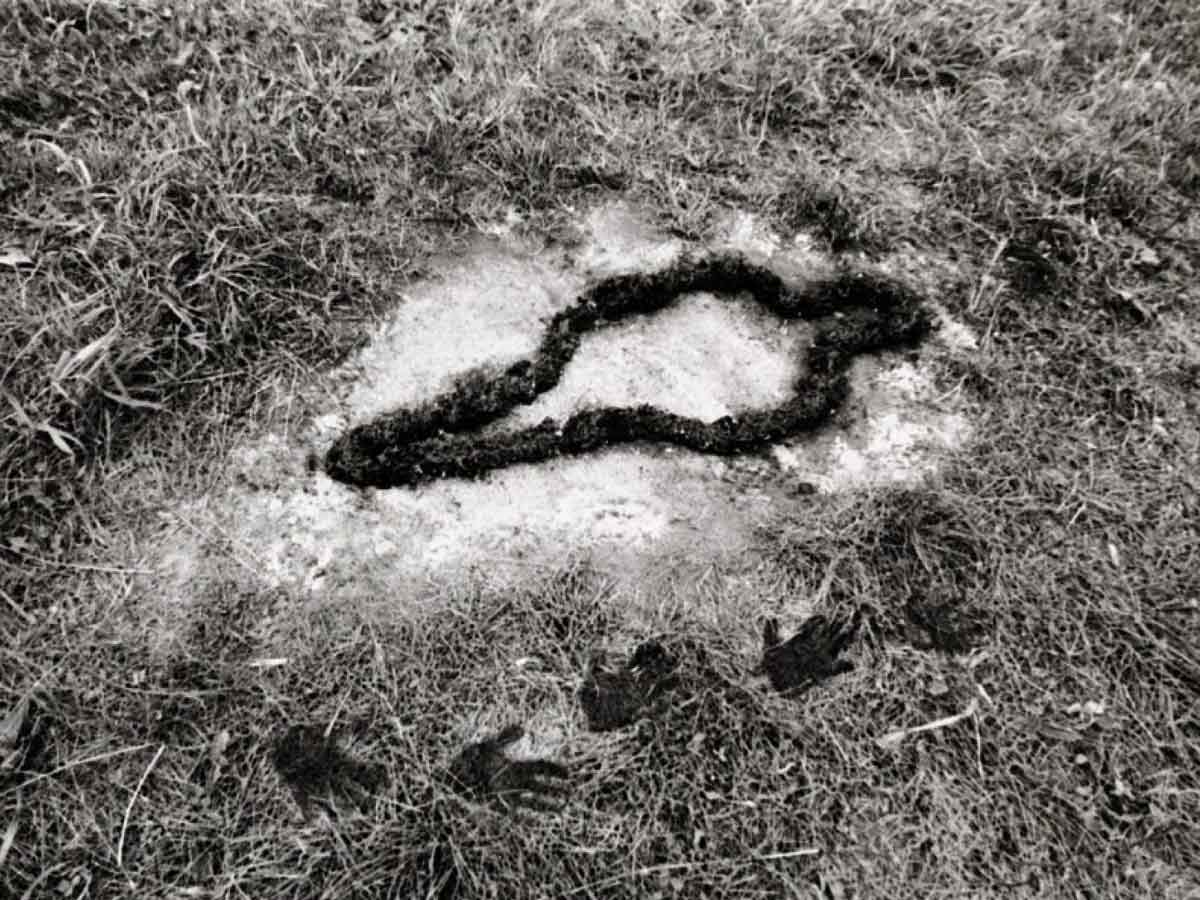
Ana Mendieta’s use of her own body in natural realms, usually removed from the so-called civilization, reconnected modern femininity with its prehistoric, pre-colonial, and pre-capitalist roots. Such imagery was both an act of empowerment and exploration, with the artist seeking to oppose institutional biases and limitations through concepts and archetypes way more ancient and powerful than any modern construct.