
Early 20th-century technological advancements radically transformed warfare. World War I soldiers mostly fought in trenches, which led to a staggering number of facial and head injuries. American sculptor Anna Coleman Ladd was among those who applied her artistic skill to help soldiers regain their faces. She created life-like metallic masks to cover the injuries and help veterans lead normal lives again.
World War I Combat: The Emergence of Anna Coleman Ladd’s Masks
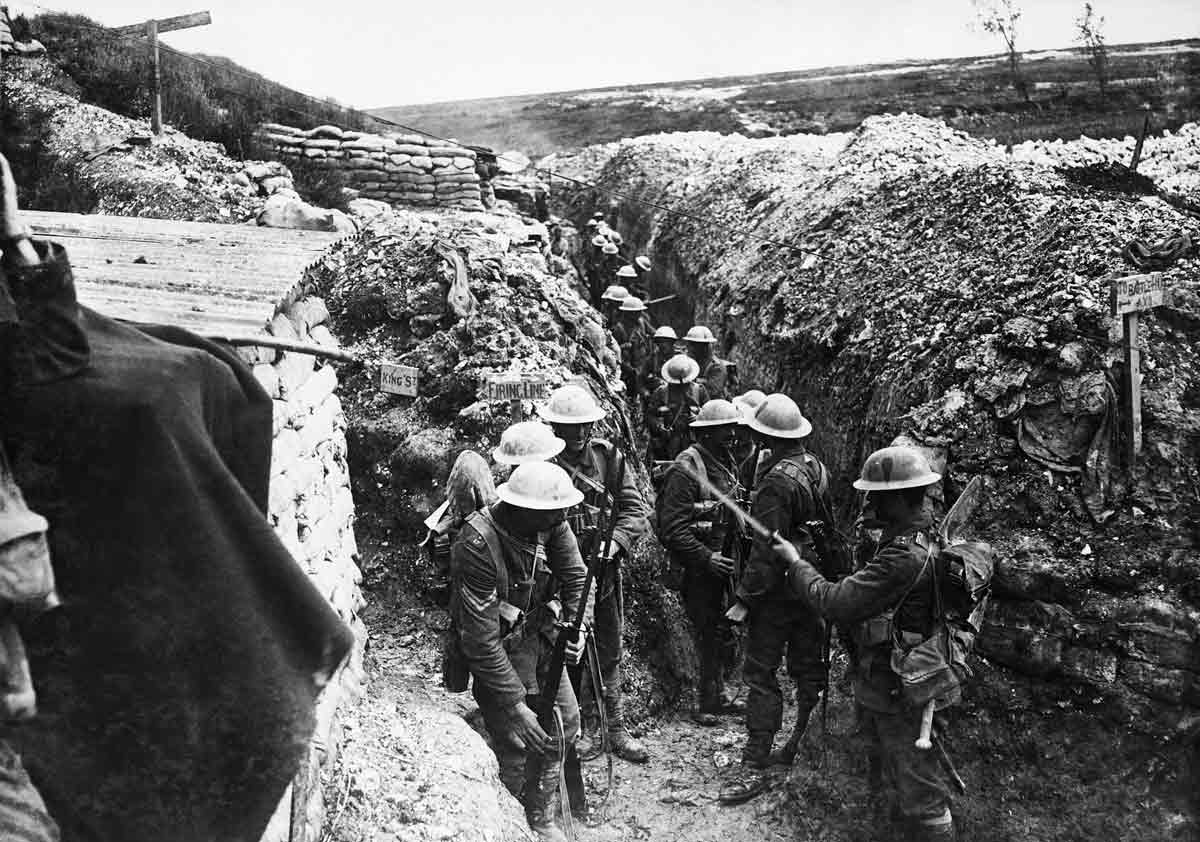
World War I presented not only a previously unseen scale of human involvement but also significant advancements in the domain of technical progress, although ‘advancements’ is not the best word to describe the instruments used for human destruction. Chemical weapons, airplanes, machine guns, and bombs radically changed the strategy and tactics of combat, unleashing unprecedented destruction. Moreover, the warfare itself changed—from open spaces, the fight moved to the trenches.
The most horrifying product of trench warfare was the transformed character of typical battle wounds. Shrapnel not only pierced the flesh but tore it to pieces and shattered bones. Fighting in trenches has also meant that the human head and face became the body parts most exposed to shooting and explosions. Consequently, the number of face injuries became staggering, and no doctor was prepared to deal with it on such a scale. Soldiers returned home, if they returned at all, with their entire faces missing, with chins and noses shaved off.
The soldiers’ facial injuries were so severe and so widespread that surgical experiments became necessities, with doctors desperately trying to gather faces from pieces. Aesthetical issues were secondary: functionality and safety came first. Plastic surgery developed quickly but not quickly enough. Many soldiers suffered from phantom pains, feeling parts of their bodies and faces that were not there anymore. The condition currently called body dysmorphia was the most common and mentally traumatic occurrence. Human faces are body parts we recognize best in ourselves and others, directly associating them with persons and personalities. These soldiers lost not only their faces but their sense of self.
The ethical side of the issue was also far from being balanced and healthy. European hospitals that treated such injuries, along with more regular ones, painted some of the benches on the premises as designated seats for someone with a supposedly disturbing appearance. Caring for the emotional well-being of healthy people inevitably puts the patients’ mental health at even higher risk than it already was. Facial surgery wards strictly banned mirrors and other reflective surfaces so that the wounded soldiers would not see their faces, at least for a while. Still, they frequently had to treat mental breakdowns and fits of shock after someone accidentally caught a glimpse of their injuries. The soldiers’ families were often as shocked—for example, children were scared of their fathers.
Anna Coleman Ladd Before the War
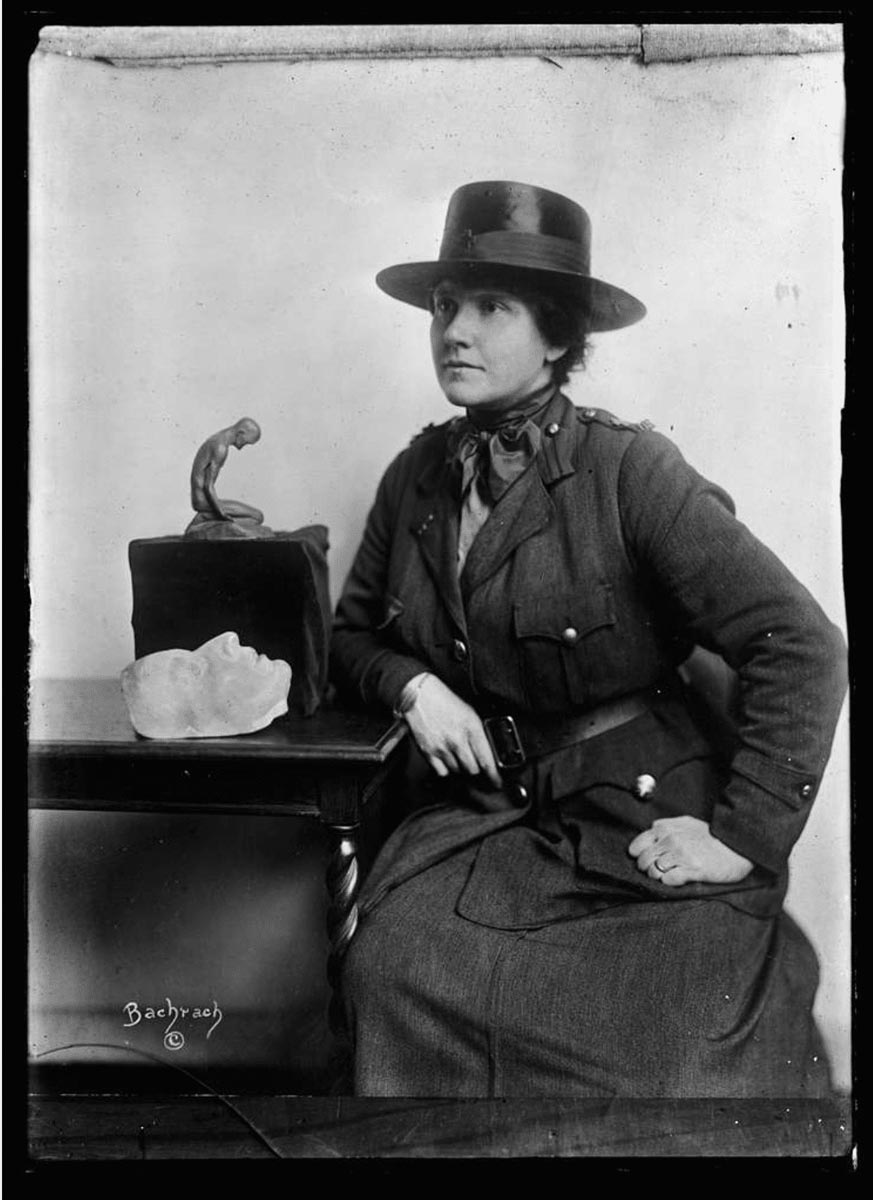
Anna Coleman Ladd started her career as a conventional and rather talented sculptor. Born in Philadelphia in 1878, she went to study sculpture in France and Italy. Upon returning home, she married a physician and worked as a professional artist, creating painted and sculpted portraits that were in high demand. Coleman Ladd’s artistic works were hardly outstanding on their own but presented a great skill.
Her portrait busts did not demonstrate any dramatism or strong character like those of more famous sculptors, but this was exactly the thing that would make her perfect for her future occupation. Anna Coleman Ladd knew real human faces well and could easily convey them in marble or bronze. When World War I started, her husband was put in charge of an American military hospital in France, so the couple moved to Europe. A British art critic, Lewis Lind, who was familiar with Coleman Ladd’s work, sent her a letter noting her talent for creating natural-looking faces and offered her a new opportunity to work and help.
Inside Anna Coleman Ladd’s Studio
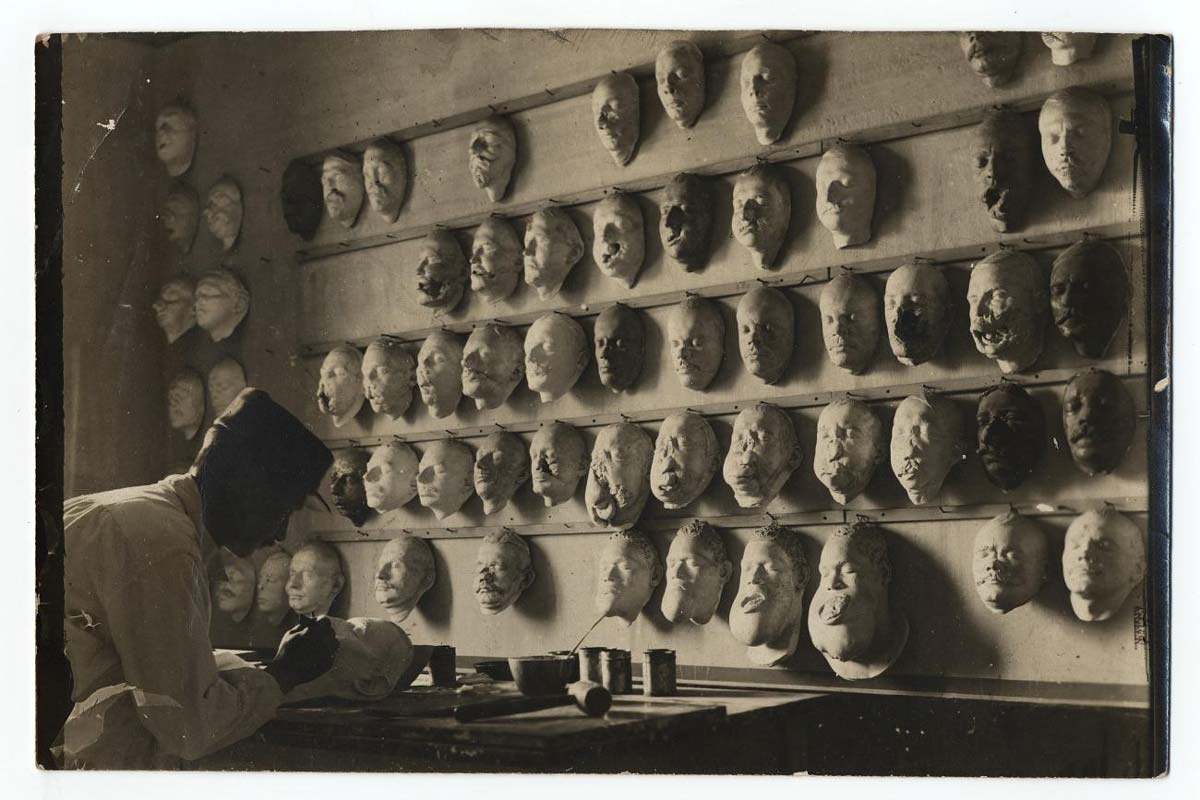
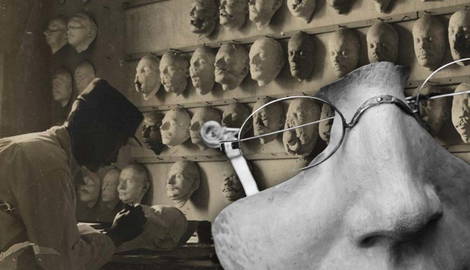
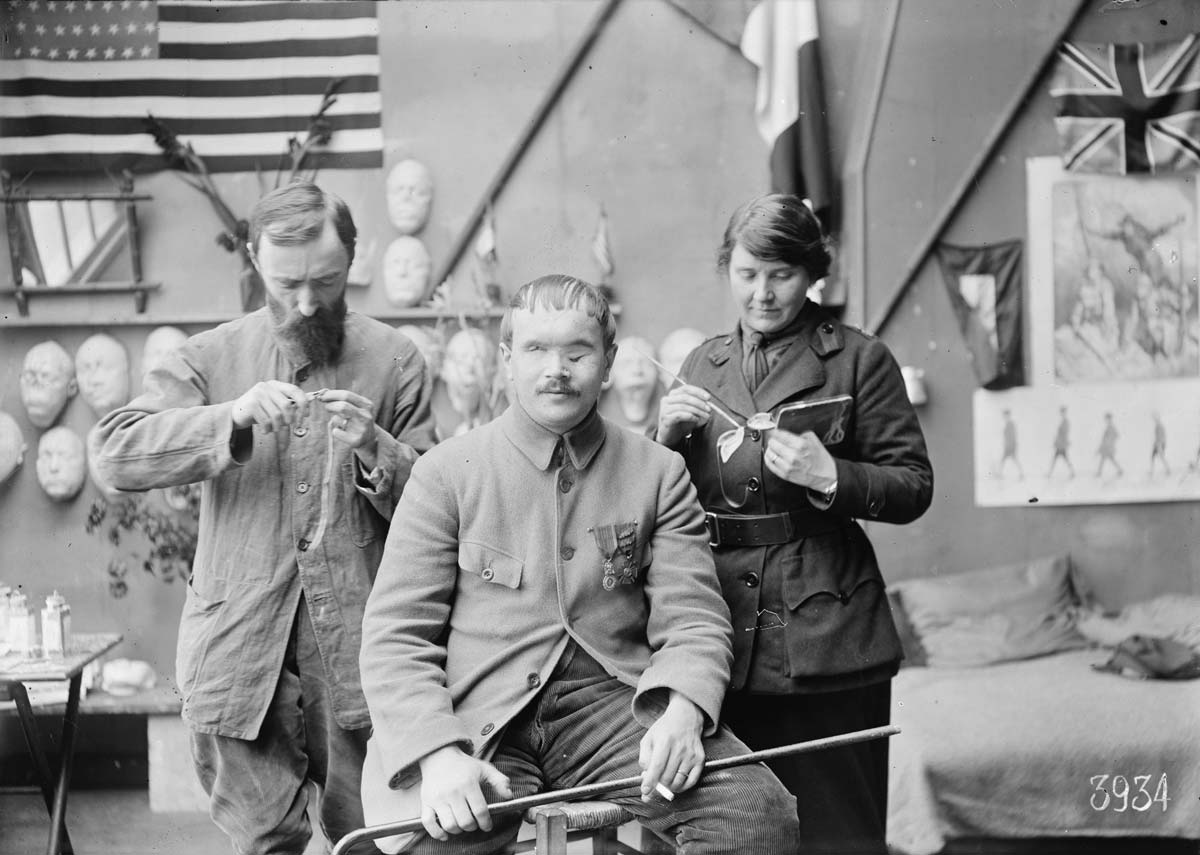
In December 1917, Anna Coleman Ladd opened her prosthetics shop in Paris, partially funded by the American Red Cross. In the preceding months, she visited French hospitals to both train and demonstrate her work to the surgeons, who would later refer recovering patients to her. The sculptor did everything to make the soldiers’ experience as comfortable as possible. Her workshop looked like a salon rather than a hospital ward, with patterned cushions, flowers, posters, and tea served. She started her work by making a mold of the injured face once it had healed enough not to cause too much pain.
From the mold, she made a plaster cast. Next came the most difficult and exciting part—reconstructing the actual face. The sculptor relied on pre-injury photographs, if available, as well as information from family members. If none were present, she asked the soldier to describe himself. Usually, the likeness was striking, with new faces indistinguishable from original ones from a distance.
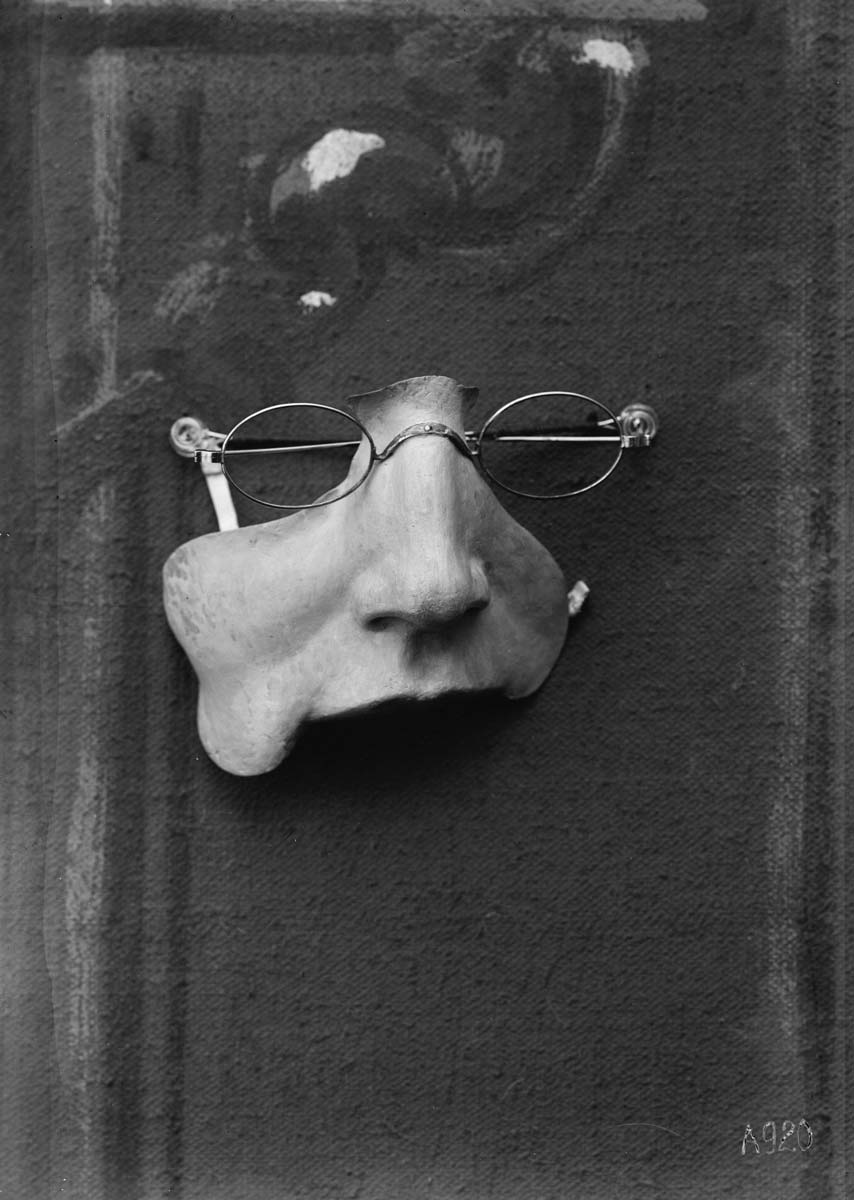
On at least one occasion, a soldier’s wife sent Anna Coleman Ladd a letter asking her to change something in the mask. Her husband lost both his eyes in combat, and his wife asked to repaint the mask’s artificial eyes with the same dark brown color he had before. Sometimes, a mask covers the entire face, and sometimes, only an injured part of it. In both cases, the masks were usually fixed onto a face with spectacles hooked behind the ears. In rarer cases, the sculptor used strings tied at the back of the head.
Francis Derwent Wood: Another Pioneer of Facial Prosthetics
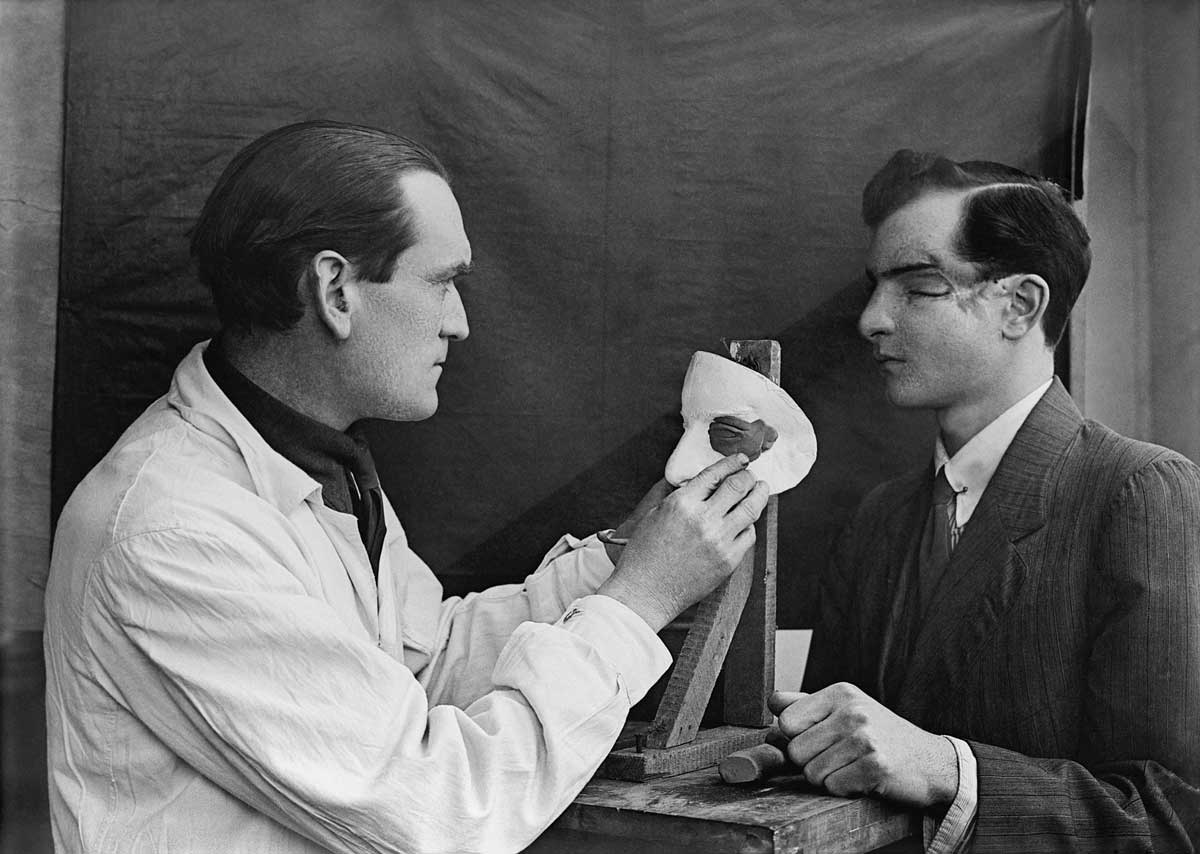
Anna Coleman Ladd was not the only artist who became a specialist in facial prosthetics at the time. Initially, the idea came from the British sculptor Francis Derwent Wood, who opened the Masks for Facial Disfigurement Department at one of London Hospitals, which soldiers called “The Tin Noses Shop.” Derwent Wood was the first person Coleman Ladd was referred to in order to get familiar with the basics of the work.
Francis Derwent Wood’s main achievement was the idea of using galvanized copper for masks. Before him, some doctors tried to work with rubber, but it was too heavy and hot and gave off an unpleasant smell, making it too uncomfortable to wear. Wood’s invention was thin, light, and comfortable to use. Some soldiers even slept in those masks, either forgetting or unwilling to take them off at night. To imitate facial hair, Wood inserted thin pieces of cut metal.
Constructing Faces
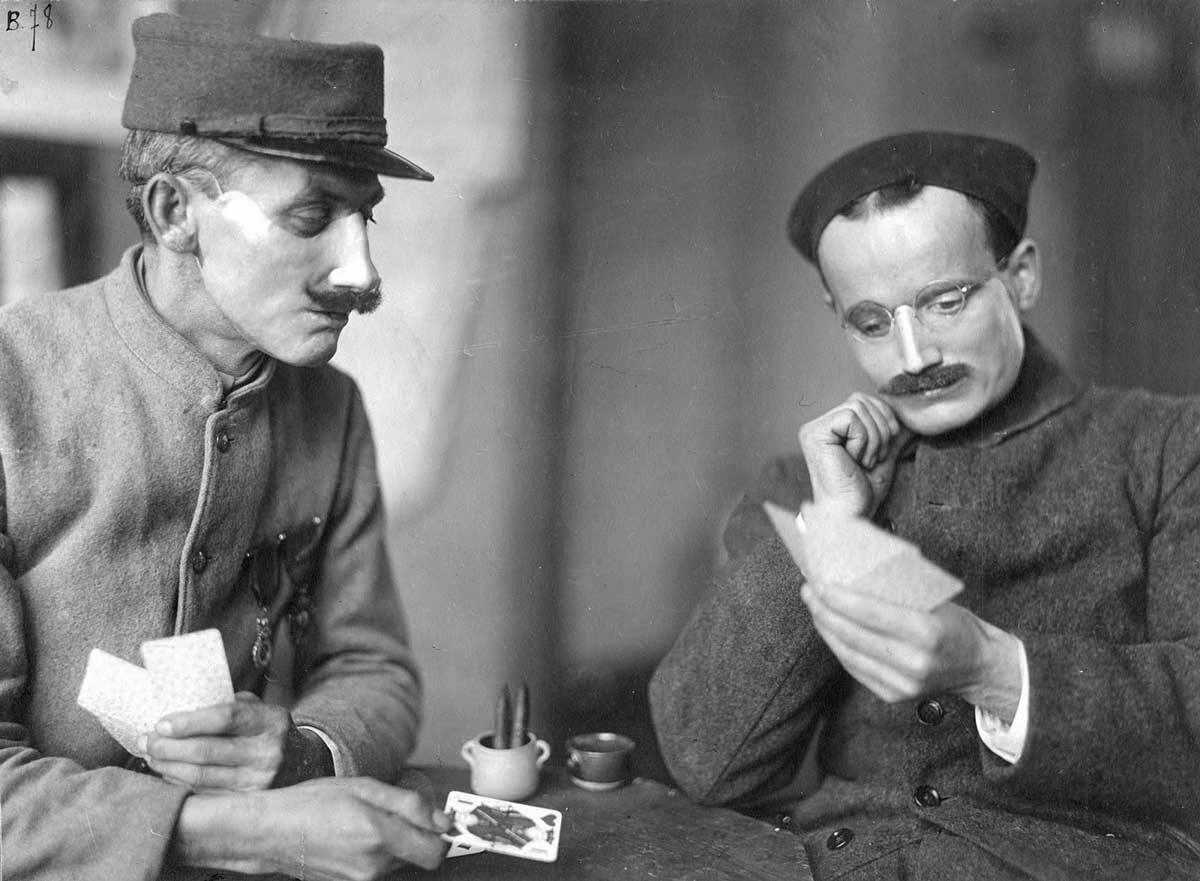
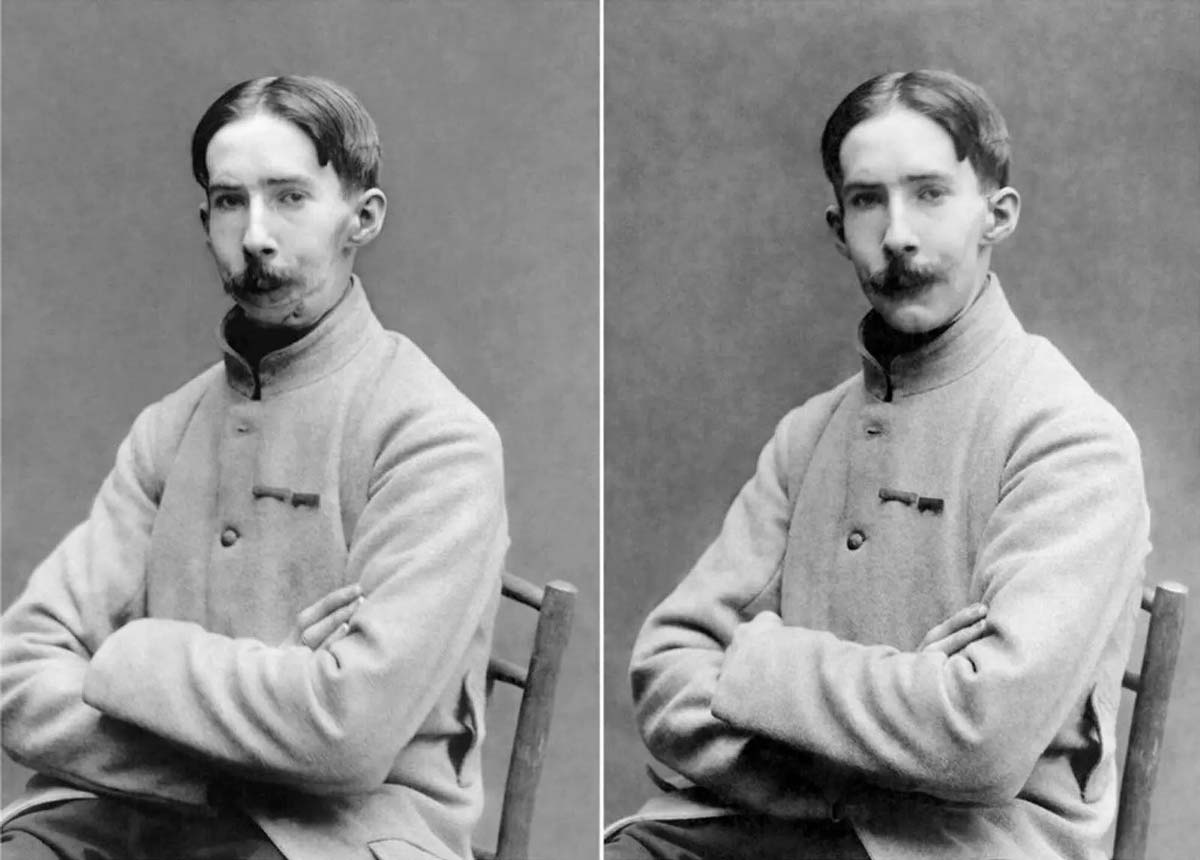
However, Anna Coleman Ladd went a step further in her craft, surpassing her colleagues in quality. Compared to other mask-makers, her work was rather slow and it took more time, but the result was more convincing than ever. She carefully matched the paint tint to the skin tone of her patient, comparing how it looked in natural and artificial light. To make the metallic surface look like real skin, she experimented with paint components. Oil paint proved to be too messy and easily chipped, so the sculptor used washable hard enamel. She used a blue tint to draw a hint of stubble on the masks’ cheeks and chins. She created eyelashes, eyebrows, and even thick mustaches from real human hair. The lips of the masks were usually slightly parted so the patient could smoke through them.
Sometimes, the masks were temporary solutions that would help the patient to function between surgeries that would eventually restore his face. Yet, in most cases, these masks stayed with their owners for the rest of their lives. The masks, however, were not as durable as their owners wanted them to be, and after two or three years, the paint started to chip, while the thin metal distorted. Still, many soldiers were so attached to them that they would not take them off, even to order a new one. Some of them sent letters to Anna Coleman Ladd, expressing their gratitude for bringing their normal lives back. Despite the positive connotations, these letters were utterly devastating, as those people believed they were no longer welcome in their homes after their injuries.
Still, although the masks provided sensory and visual comfort to the soldier and his social circle, they could not make up for the terrible injuries. Many of them were unable to eat, speak, or see. The masks, although realistic enough, were still motionless and sometimes created an uncanny valley effect. Nonetheless, the wounded soldiers believed them to be much better than their actual faces.
Anna Coleman Ladd in the Post-War Era
Despite the enormous impact Anna Coleman Ladd made on the lives of the soldiers she treated and the whole field of post-traumatic treatment, she did not stay in Paris for long. Only a year after she opened her workshop, she returned to the USA, leaving sculptors Mary Louise Brent and Jane Poupelet in charge of the production. In the following years, she continued working on sculpture, creating several war memorials. Perhaps she was more traumatized by the war than she expected it to be. Many unfinished busts created by Coleman Ladd after returning from France have no faces, almost like the soldiers she used to treat.
During several years of the workshop’s existence, Coleman Ladd and her assistants created around 200 masks. Despite plenty of evidence and photographs from these years, none of the actual copper faces have survived. Either they deteriorated beyond repair, or their owners were buried with them still protecting their faces.