
At 87 years old, David Hockney is still a practicing and immensely successful artist. Although he was trained as a traditional figurative artist, he became famous for his simplified compositions of swimming pools and natural scenes painted in vivid colors. Despite his age, Hockney does not shy away from technology and eagerly incorporates devices like the iPhone and iPad into his art production. Read on to learn more about David Hockney’s paintings and the inspiration behind them.
David Hockney’s Early Years: The Origins of His Artistic Style
David Hockney is one of the most famous artists associated with the Pop Art movement. Despite this immediate link with the art of Andy Warhol and Roy Lichtenstein, Hockney has already outgrown the confines of a single movement and developed his own signature style and look. Although deliberately simple, his works capture the audiences due to their pure color and direct forms of expression.
Hockney was born in 1937 in England and was one of five children in a rather eccentric family. His father was an accountant and an eccentric social activist. He refused to serve in World War II on the grounds of his political beliefs and wrote personal letters to world leaders, calling for immediate nuclear disarmament. Hockney’s mother was a Methodist and vegetarian, and although she was much less expressive than her husband, she equally supported their children’s interest in arts.
In 1953, Hockney began his art school studies, later enrolling in the Royal College of Art in London. His basic training was based on traditional methods of art education, such as drawing and painting from nature and live models or copying other artists’ work. His earliest known work is a 1954 portrait of his mother seated next to her sewing machine.
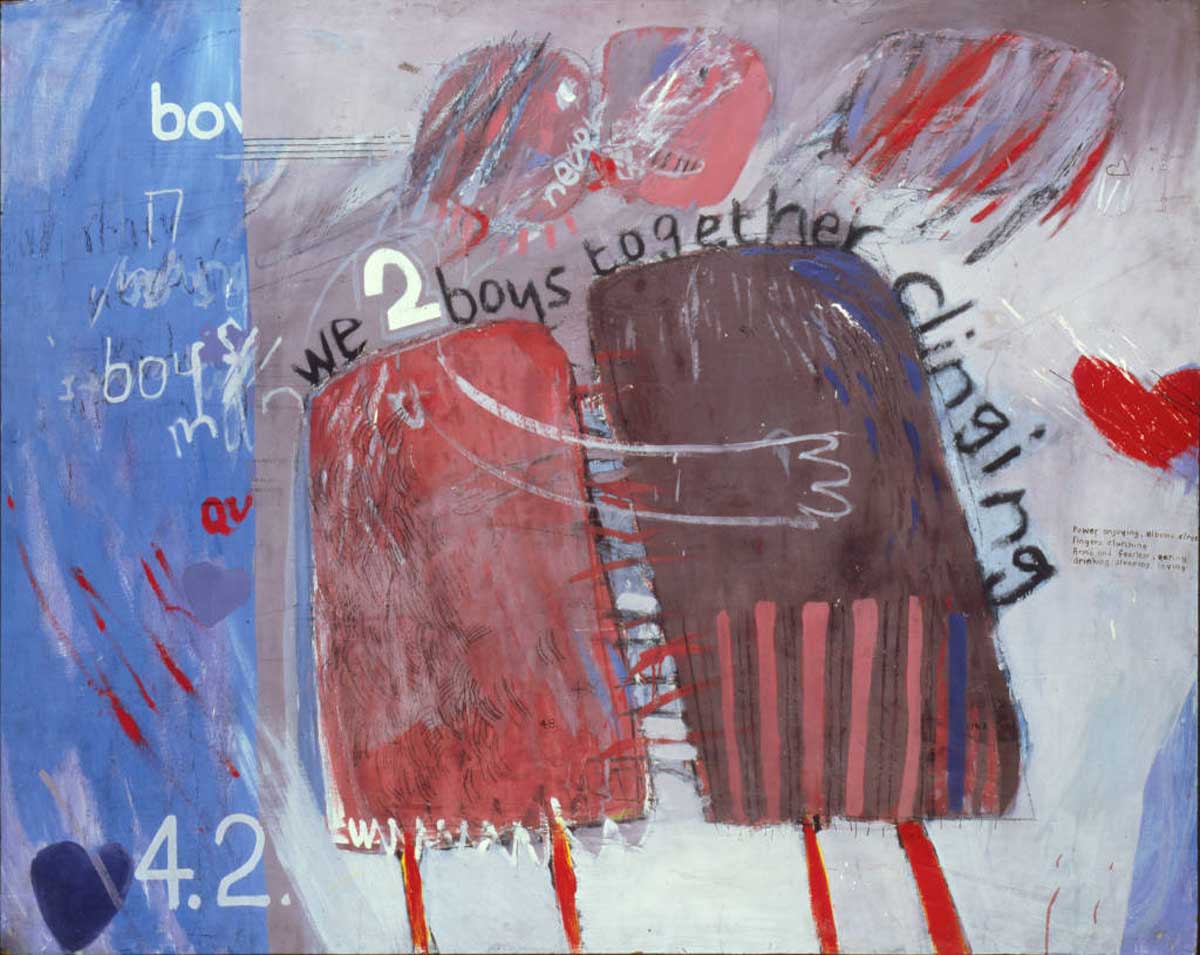
In college, Hockney began to explore more avant-garde forms of art. In tune with trends, he experimented with abstraction and the style of Jean Dubuffet, the promoter of outsider art. Many of the works from that period reflected Hockney’s identity as a young gay man in a country that did not decriminalize homosexuality until 1967. Despite his early experiments with the non-figurative, quite soon, Hockney realized he was not interested in abstract art, as he wanted to depict only the material world around him.
Hockney’s Californian Period
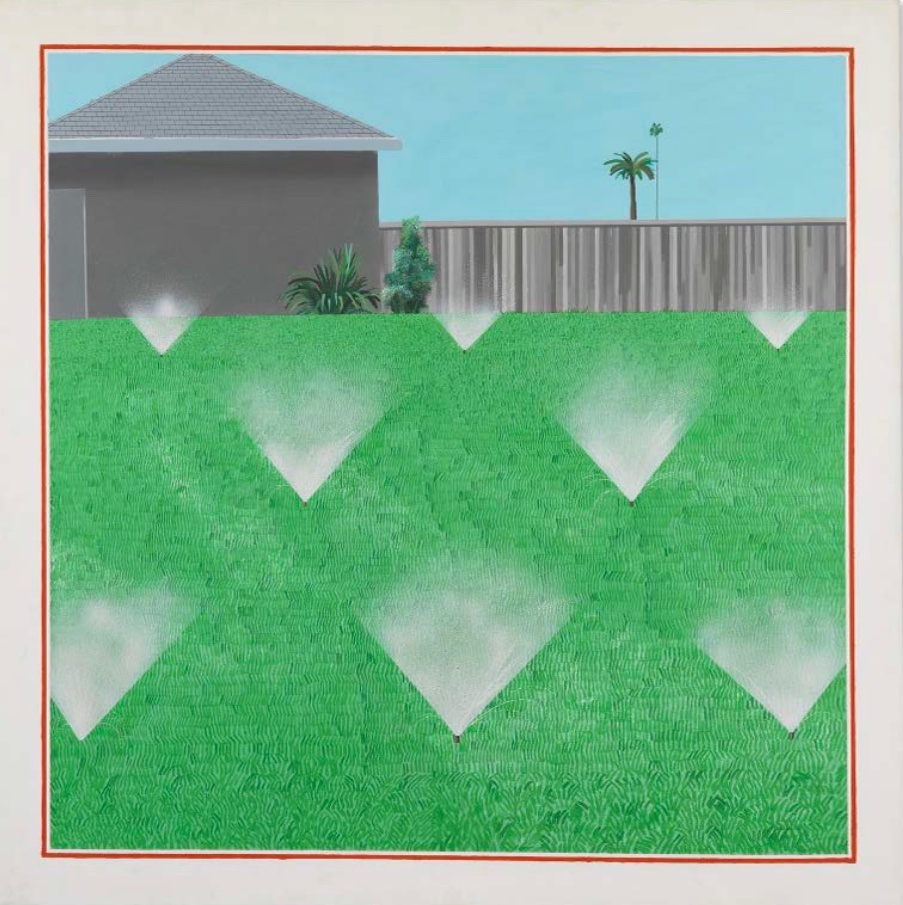
In 1964, Hockney visited Los Angeles for the first time and soon moved to California to teach art at Berkeley. The transformed surroundings triggered a transformation in Hockney’s painting style. He noticed that people in California were less tense than in New York, where he previously stayed, and that the sunlight and bright colors created an atmosphere incomparable to any other location. In California, Hockney created many of his most famous works, inspired by the colors and lifestyle of the state.
Hockney’s Swimming Pool Series
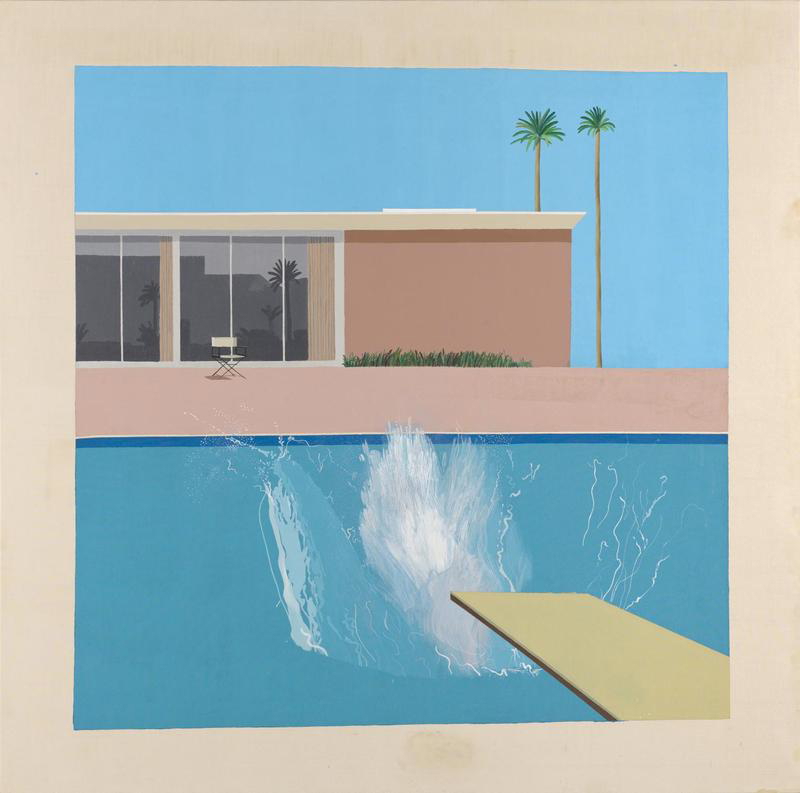
Undoubtedly, the most famous works of Hockney’s Californian period were also the ones that made him truly popular as an artist. Starting in 1966, he began painting images of swimming pools, strangely still with the only exception of a water splash in the center of each canvas. Despite traces of human presence, like the splash or the empty director’s seat in the background, the scenes were completely empty.
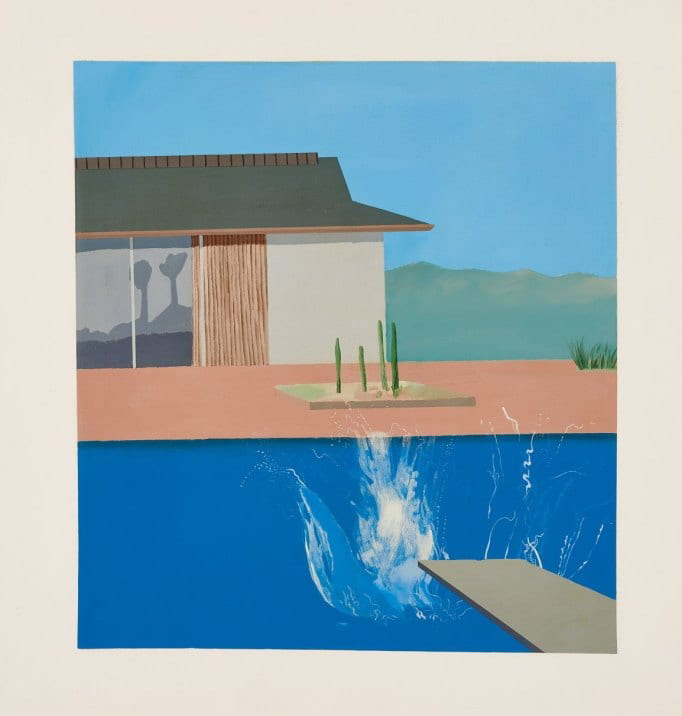
According to Hockney, he did not think about who jumped in the pool or who was present at the scene. Initially, he saw a photograph of a water splash and was mesmerized by the stillness of the shot and the captured moment. Hockney painted his pools almost entirely using paint rollers, spreading acrylic paint evenly and thinly. However, to accurately capture the splash, he used thin brushes and meticulously repeated every detail from his reference photographs. This gesture also positioned his art as an alternative to then-popular drip paintings of the Abstract Expressionist scene.
David Hockney’s Portraits
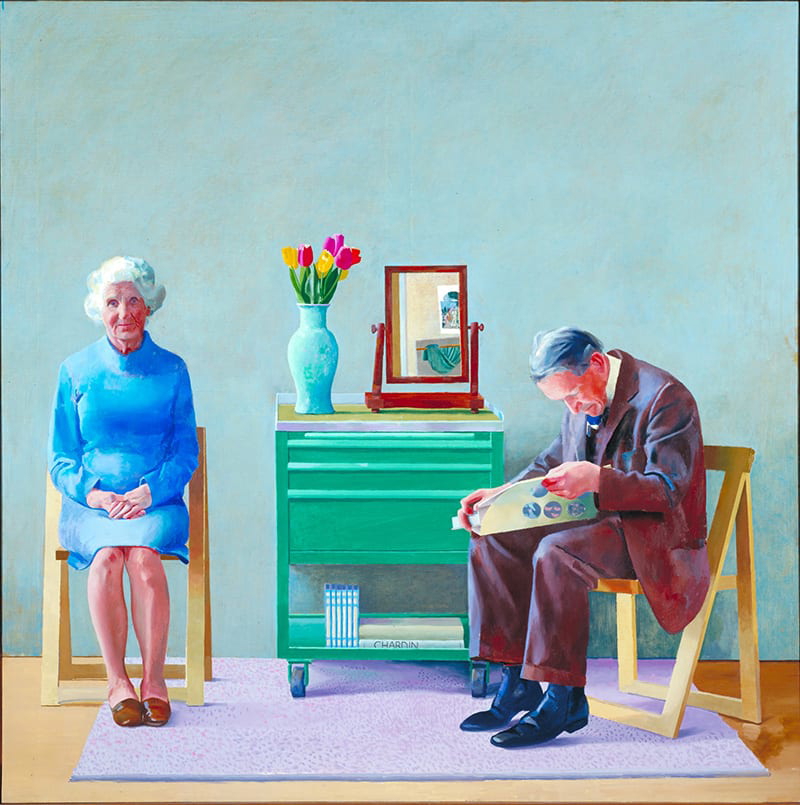
Another significant part of David Hockney’s oeuvre was a vast collection of portraits that he painted over his entire career. Beginning in the 1960s, Hockney created numerous portraits of his family members, friends, lovers, colleagues, and important figures from the art world who sat for him. He also painted hundreds of self-portraits that depicted the evolution of his artistic style and persona.
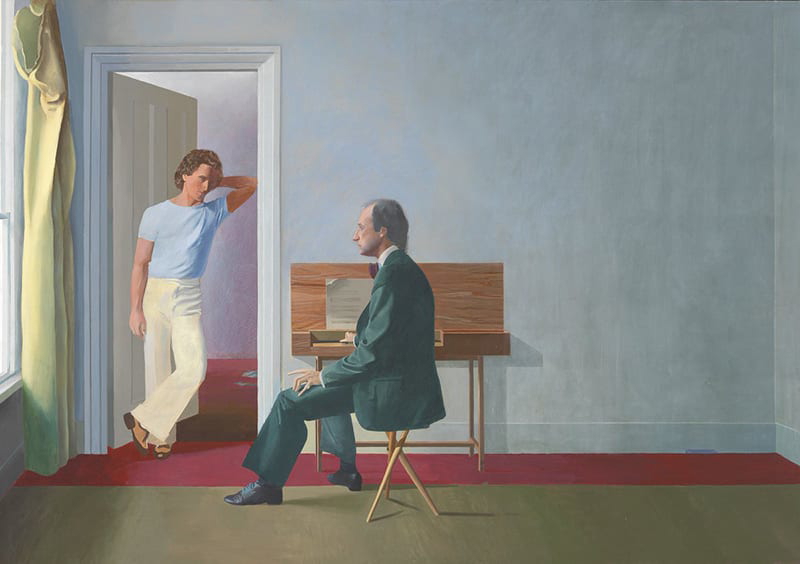
Hockney’s portrait style is, as that of his other works, deliberately simple. In most cases, it relies on a shoulder-up image or a seated figure. In the 1970s, however, Hockney painted larger portraits that featured figures in interiors. His most recent painted work that went viral was the 2023 portrait of singer Harry Styles.
Hockney’s Multi-Panel Landscapes: Bigger Grand Canyon
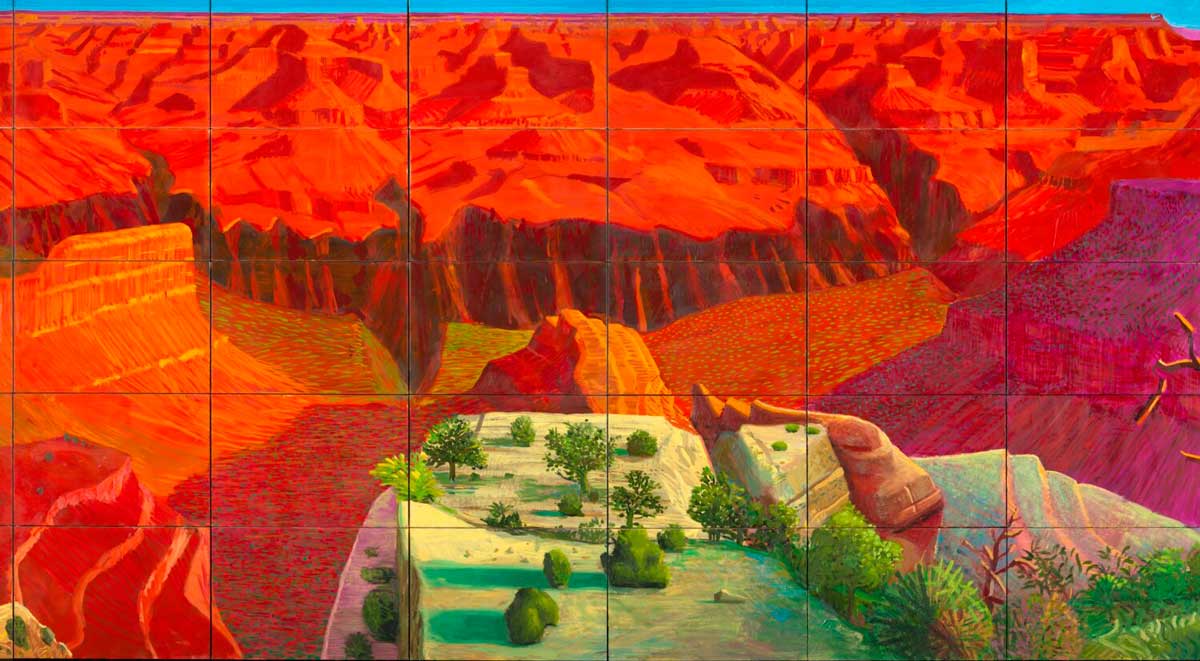
In 1982, David Hockney traveled to see the Great Canyon in Arizona. Impressed by the size and the colors of the space, the artist took numerous photographs of it, but none of them seemed to do it justice. More than a decade later, Hockney decided to paint it, using 60 small canvases that he arranged into a grid. According to Hockney, his Bigger Grand Canyon was an attempt to capture the uncapturable, fitting the enormous size and overwhelming impression of the Canyon into paintings.
The main inspiration for the work came to Hockney through his research of Chinese art. In Chinese tradition, artists often created painted scrolls with landscapes that showed the transformation of one scene during different seasons. The vivid and expressive paintings of Hockney attempted to do exactly that, representing different times of the day and year at once.
Hockney-Falco Thesis
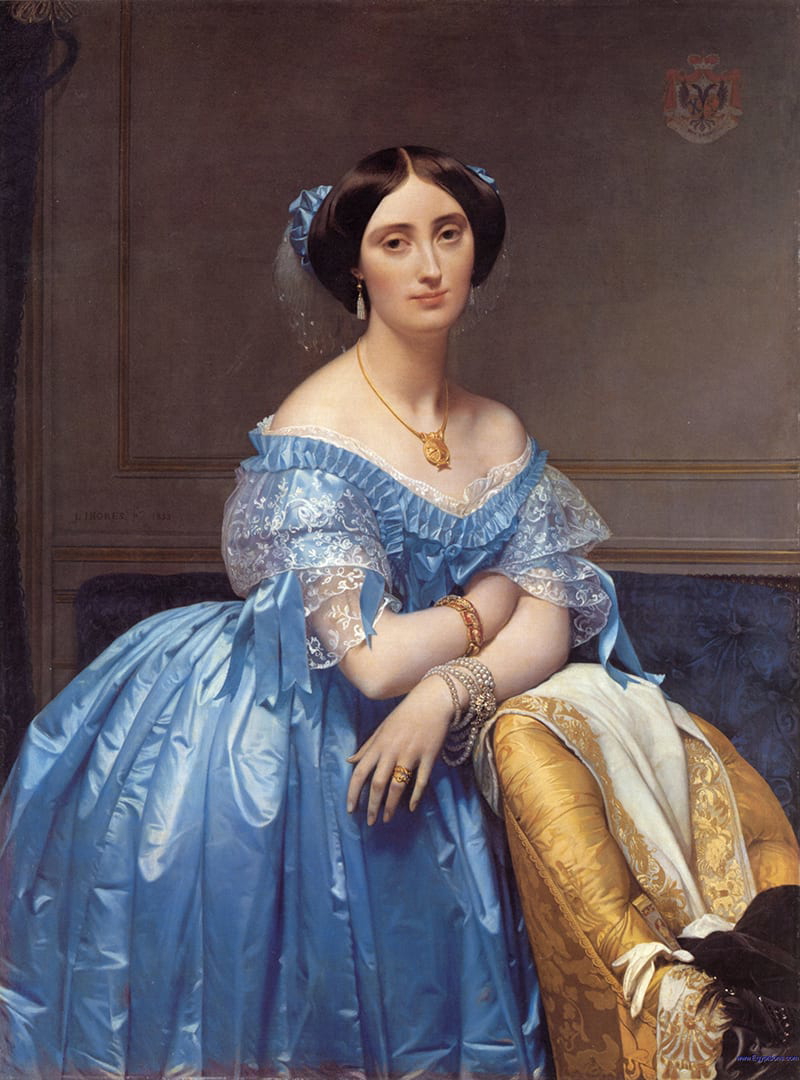
In the late 1990s, David Hockney expanded his artistic input to the domain of art theories. While visiting an exhibition of Jean Auguste Dominique Ingres’ work, Hockney noticed incredibly subtle and realistic details of the light, draped fabric of dresses, and jewelry. He thought of artists like Andy Warhol and Audrey Flack, who created photorealistic images by projecting photographs onto canvas and tracing them. This led Hockney to suggest that Ingres possibly could have used mirrors or devices that could project images, like camera obscura or camera lucida.
For several years, Hockney studied Western art from the Middle Ages to the modern era and came to the conclusion that most famous artists of the Renaissance and early modernity used various kinds of optic devices. For instance, he claimed that the famous Arnolfini family portrait was painted by Jan van Eyck using a large curved mirror that projected the image of his models onto a wooden board. He also insisted that the degree of realism demonstrated by those skilled painters of past centuries was impossible to achieve without technical advancements.
Hockney’s theory was well-received by the general, amateur public. However, both art historians and optics scientists strongly objected to his ideas. For instance, in van Eyck’s time, the production of a mirror large enough to fit the entire scene was impossible. Moreover, the realistic image of a couple has several mistakes in angles and proportions that could have been avoided if van Eyck had relied on any kind of optic device. The idea that offended experts the most, however, was Hockney’s disbelief in the power of artistic skill of trained practicing artists. To disprove Hockney’s point, his opponents used the help of several contemporary painters who painted realistic fragments of famous paintings without any technical help.
David Hockney’s iPad Paintings
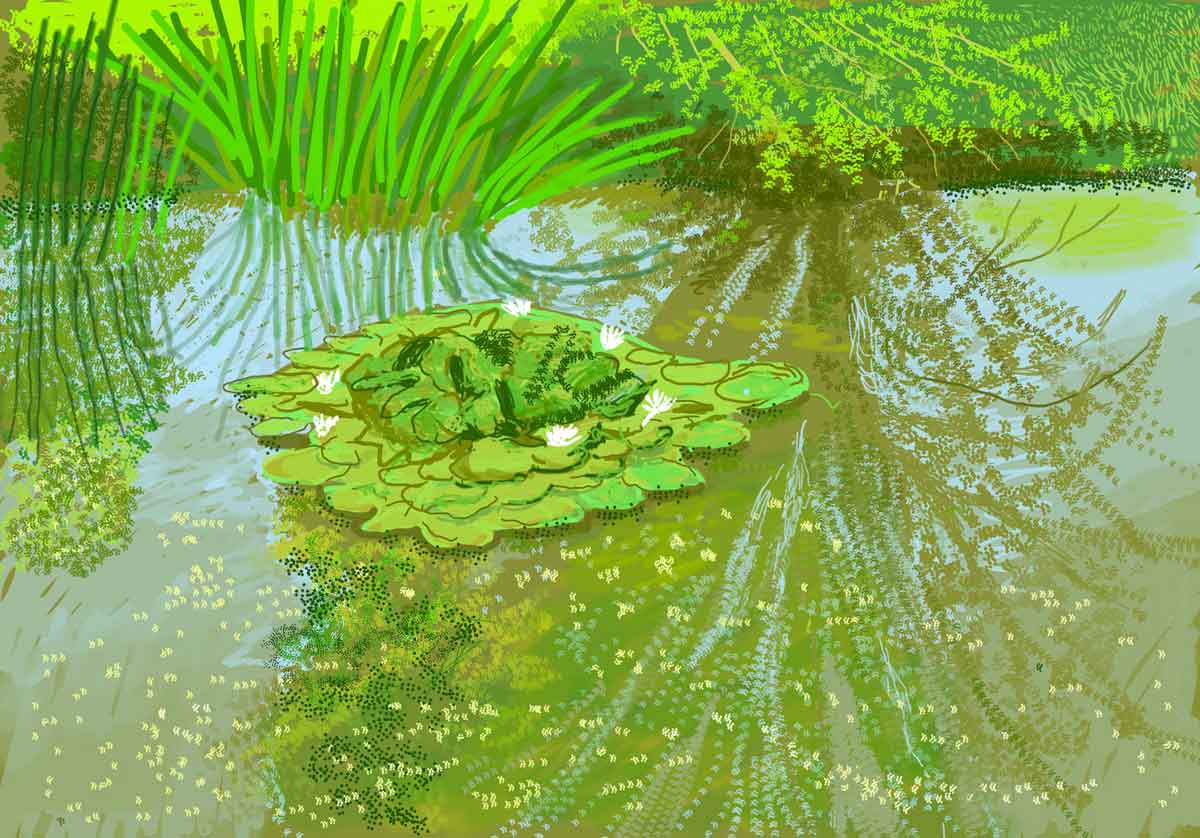
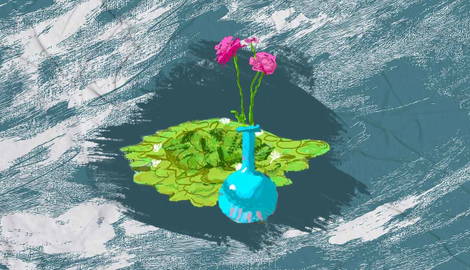
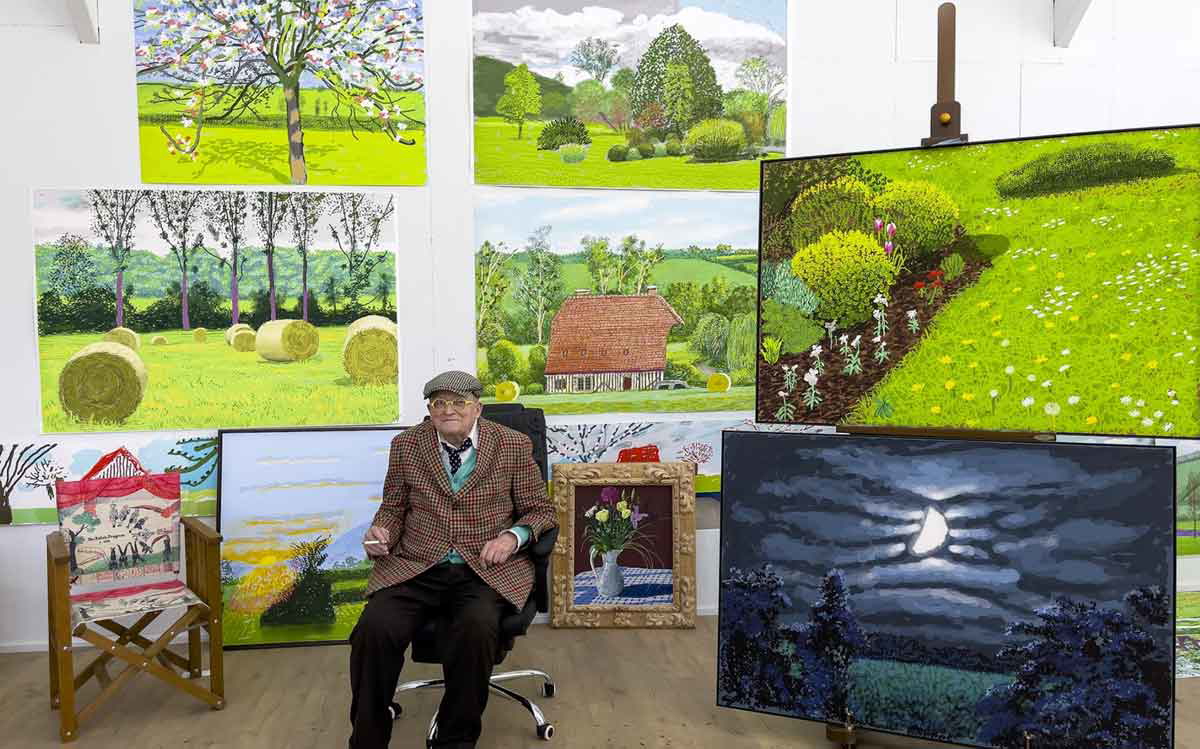
Over the decades of his career, David Hockney was never afraid to explore and experiment with new technology. Since the 1980s, he experimented with various computer programs to paint and create collages. Since 2009, he has used his iPhone and iPad as artistic mediums, creating landscape paintings, still lifes, and portraits. Hockney views technology as an exciting alternative to traditional art making, which requires materials, space, and time to prepare the workspace.
Painting on one’s phone allows for an unprecedented immediacy of impression, form, and color. Moreover, it creates more possibilities to share art with others. According to Hockney, every day, he paints a bouquet of flowers on his iPhone and sends it to his friends so that they can get fresh flowers every day.
Inspired by Claude Monet, Hockney created a series of iPad paintings depicting water lilies and other flowers from his garden in Normandy. In terms of convenience and immediate artistic response, such paintings can be interpreted as the continuation of the Impressionist plein-air tradition. After the invention of portable paint tubes, artists could leave the walls of the studio and paint directly on sight.