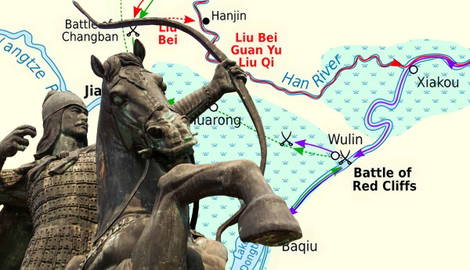

China has long had a history of unity followed by division, and the Battle of Red Cliffs stands out as a key event that contributed significantly to this pattern. It took place towards the end of the Han Dynasty and stopped Cao Cao, a powerful northern warlord who controlled much of northern China, from conquering the lands south of the Yangtze River. Had he won the battle, East Asia would have remained a unified country, as the Three Kingdoms period would not have emerged to divide it.
Why Cao Cao Chained His Fleet—And How It Ruined His Southern Campaign
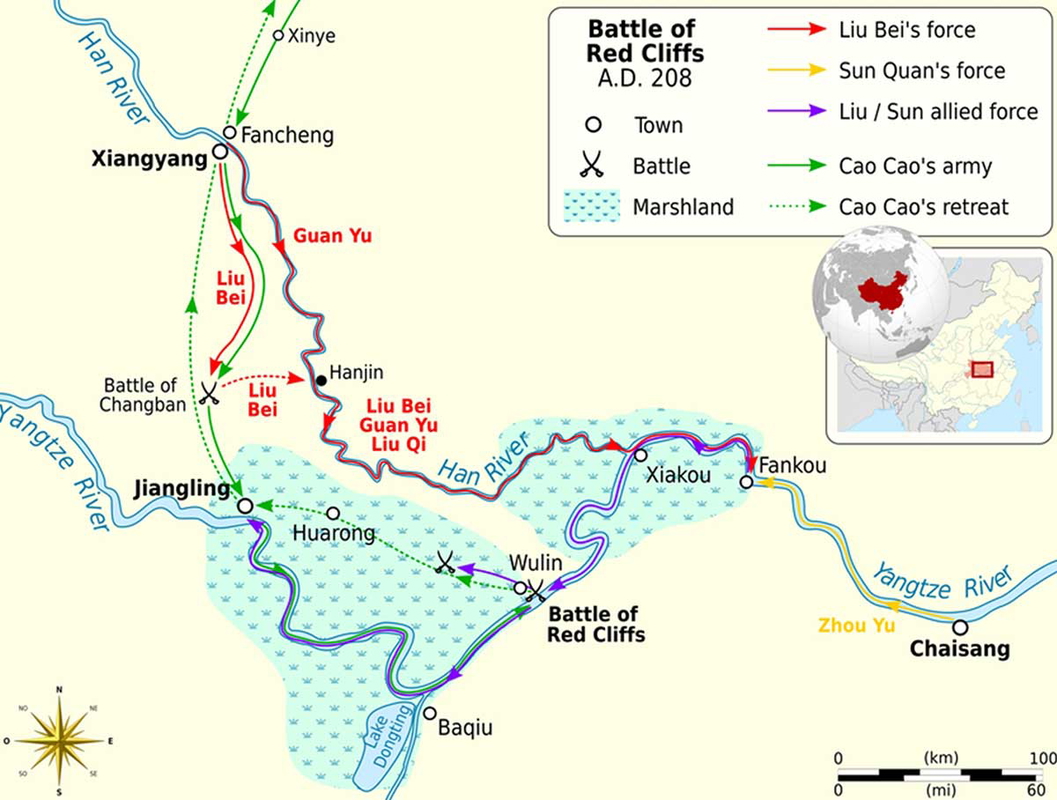
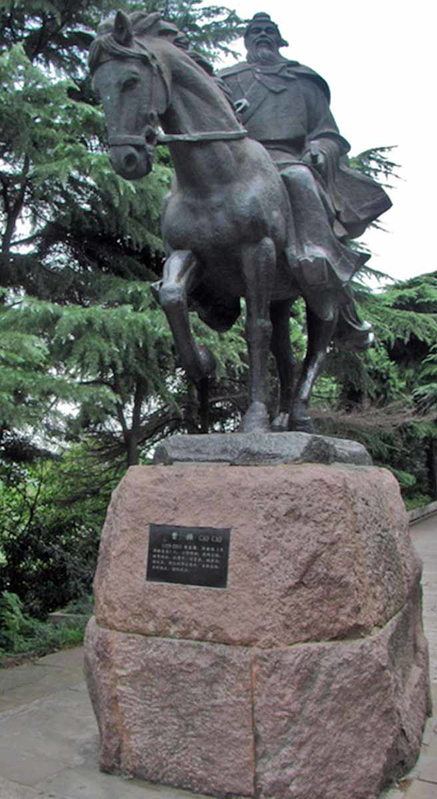
The Battle of Red Cliffs began following the campaign by the northern warlord Cao Cao to conquer the south. Before his conquests in the north, he had taken the young Emperor Xian under his control in 196 AD. This was following the death of Emperor Xian’s father, Emperor Ling, who had headed the Han Dynasty. He used him as a puppet ruler of the Han Dynasty, and upon subduing the north, he led his army south toward the Yangtze River in the winter of 208 AD – 209 AD. In response, the southern warlord Sun Quan joined forces with the regional leader Liu Bei to oppose Cao Cao’s forces.
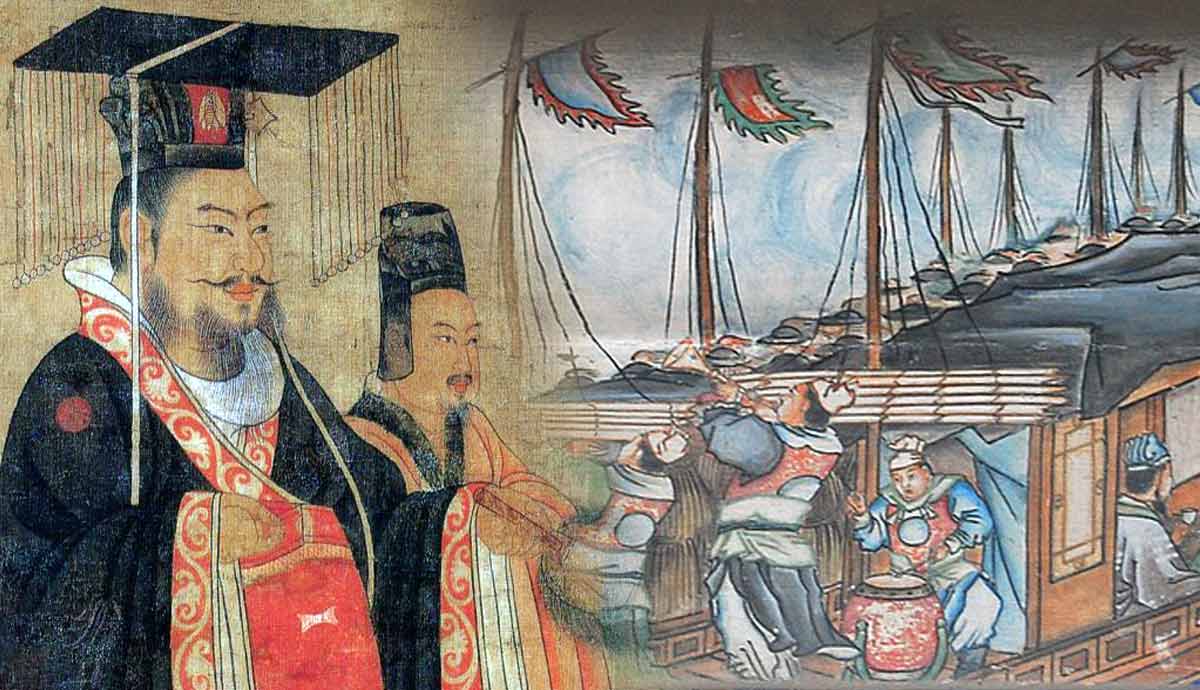
Cao Cao’s troops were mostly northerners and struggled on the water. Because of this, he ordered his men to chain the boats together to stabilize them and reduce seasickness, a strategy that would later cost him the battle.
Taking advantage of the situation, Huang Gai, one of Sun Quan’s generals, feigned surrender to join Cao Cao’s side and sent fire ships toward Cao Cao’s fleet. With the help of a strong wind blowing from the southeast, the fire destroyed most of the fleet, forcing Cao Cao and his forces to retreat.
The allied southern force numbered about 50,000 men. While Cao Cao claimed a force of about 800,000 soldiers to intimidate his enemies, modern estimates put the actual number closer to 220,000.
It Led to the Emergence of the Three Kingdoms Period

The Battle of Red Cliffs shattered Cao Cao’s god-like status and led to the division of China into three competing states. After he died in 220 AD, his son, Cao Pi, forced Emperor Xian to abdicate and founded the state of Cao Wei that same year. Warlord Liu Bei, on the other hand, proclaimed himself emperor of the state of Shu Han in 221 AD. Sun Quan soon also broke away from the Cao Wei state in November 222 AD after briefly forming an alliance with the state, eventually becoming the imperial leader of Eastern Wu in May 229 AD. These three kingdoms fought over territories for decades. The Three Kingdoms period lasted until 280 AD when the Jin dynasty reunited China.
It Created the Conditions That Led to the Uprising of the Five Barbarians
The Battle of Red Cliffs in the winter of 208 AD to 209 AD ended Cao Cao’s dream of reunifying China and led to the division of the country into three kingdoms, namely Cao Wei (Wei), Shu Han (Shu), and Eastern Wu (Wu). The Three Kingdoms period, however, was only the beginning of China’s long fragmentation. While the Western Jin dynasty united China in 280 AD, it quickly fell apart in 316 AD because of civil war. And that’s because, from 291 AD to 306 AD, a devastating civil war raged between the different princes of the Sima family.
This was known as the War of the Eight Princes. The war weakened the Western Jin greatly, and many of the local leaders began to use non-Chinese tribal soldiers. These tribes were the Xiongnu, Xianbei, Jie, Di, and Qiang. They had been living in Northern China for many years and had seen the Chinese government weakening. They soon decided to take advantage of the situation and rebelled against the Jin dynasty through the Uprising of the Five Barbarians, composed of the five tribes. It occurred from 304 AD to 316 AD.
It Led to the Fragmentation of the North and the Formation of the Sixteen Kingdoms
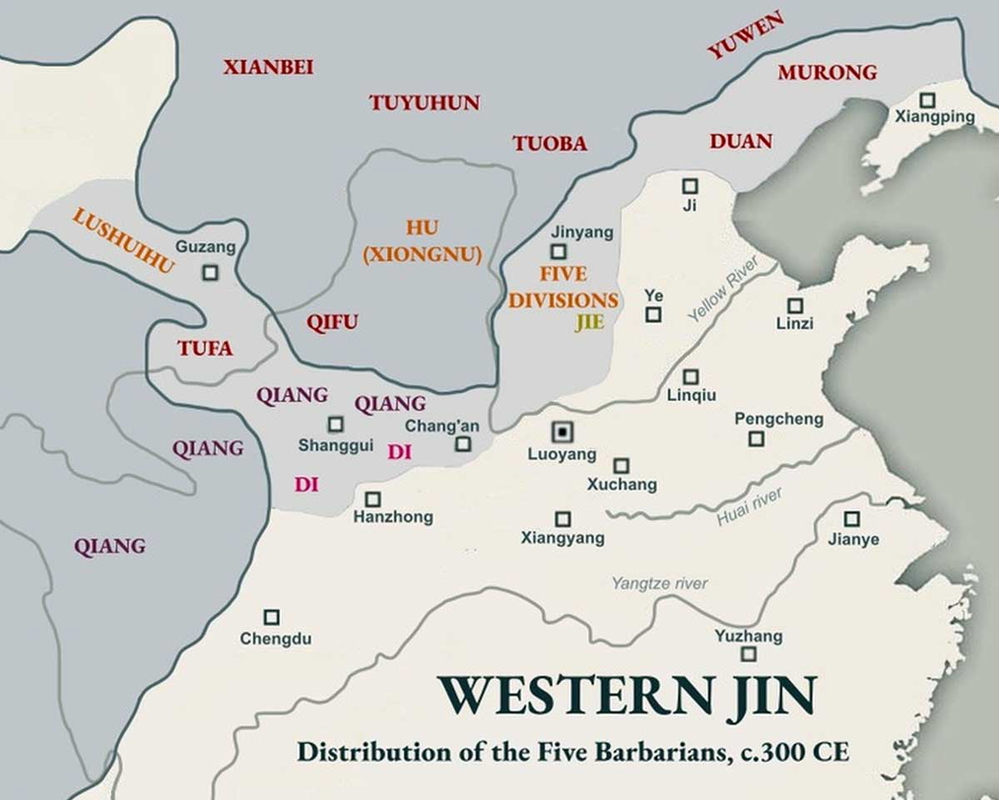
The Jin armies were weakened by their civil war, so the tribes easily took over Luoyang in 311 AD and Chang’an in 316 AD. This ended the Western Jin in 316 AD and forced the surviving Jin court south, where it founded the Eastern Jin in 317 AD at Jiankang.
As a result, northern China was divided into many kingdoms known as the Sixteen Kingdoms. There were actually as many as 22 significant states during this period, not literally 16. The kingdoms were in a constant state of war with each other until 439 AD, when the Northern Wei dynasty unified the north. China remained divided between the North and South until the Sui Dynasty reunited it in 589 AD.
Ultimately, Cao Cao’s defeat at Red Cliffs triggered a long period of extreme fragmentation that lasted almost 400 years before the nation reunited again under a centralized government. Today, it defines China’s historical struggle to attain unity.