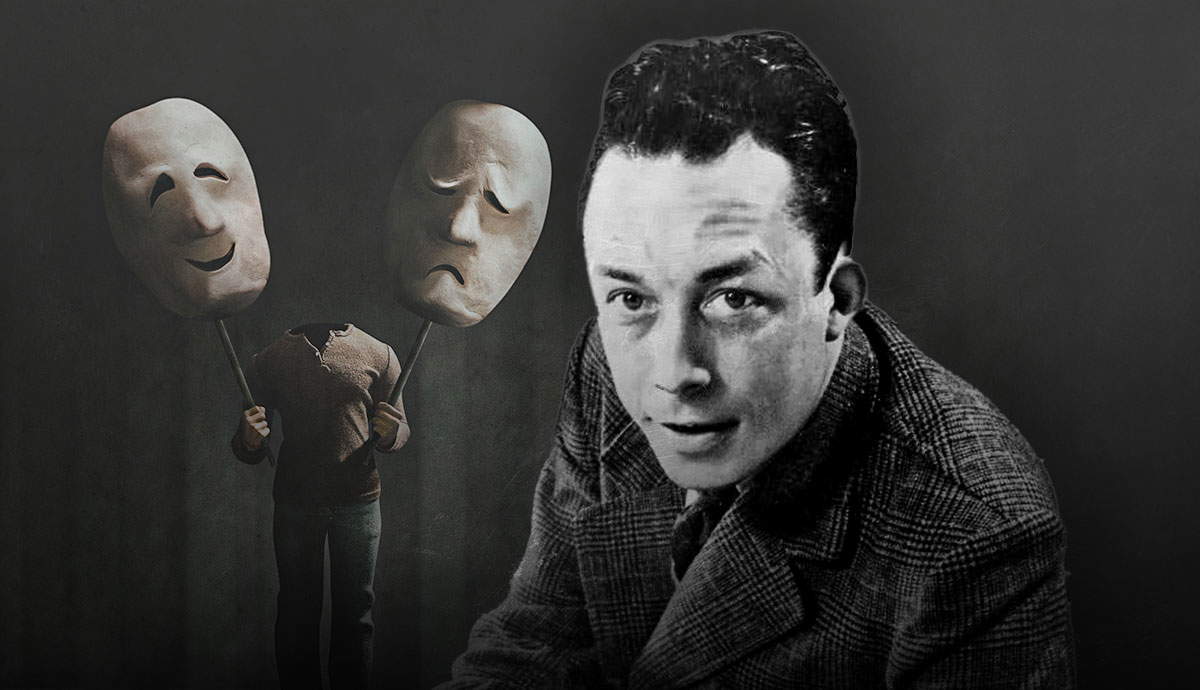
Albert Camus and Jean-Paul Sartre shared similar philosophical interests and published essays, plays, and fiction on the same subjects. However, they were never close friends, and whatever friendship they had ended after the 1951 publication of Camus’s book-length essay The Rebel. Albert Camus is often considered today as an existentialist. In this article, we will see why this label is inappropriate due to his belief in the existence of human nature.
Who Was Albert Camus?
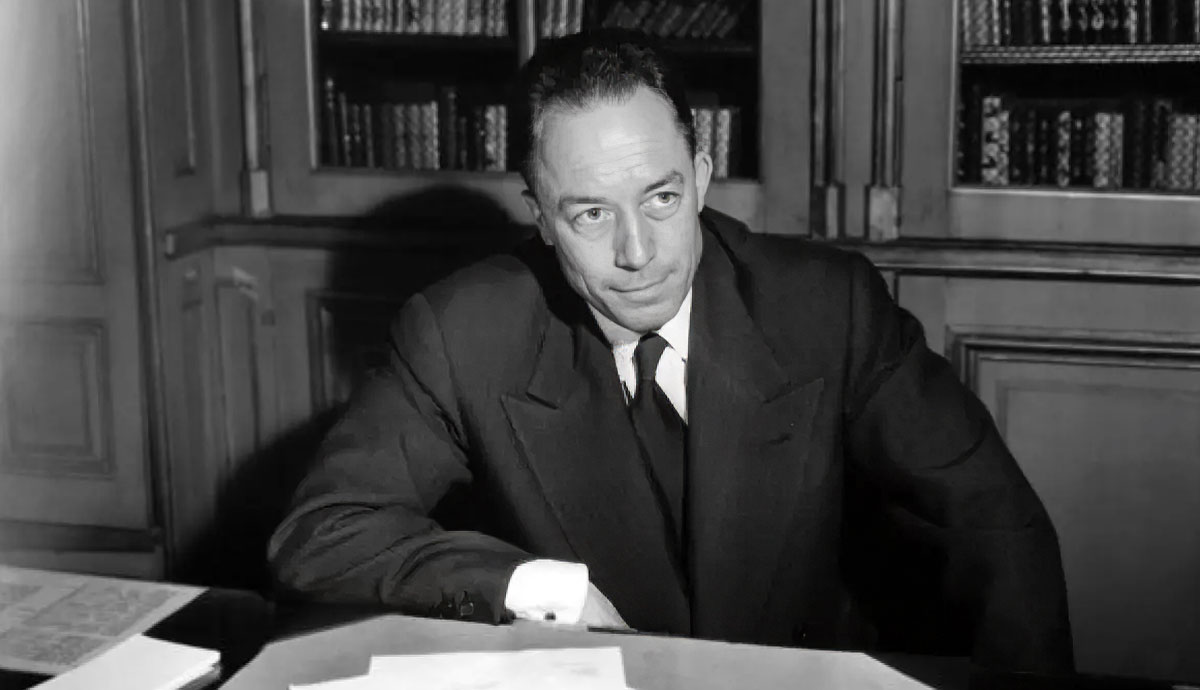
Albert Camus was born in Algiers in 1913. A year later, his father, Lucien Camus, died from wounds received fighting in WWI. Camus grew up in poverty, living in a cramped three-bedroom apartment with his mother, grandmother, and brother. The normal plan for him would have been to find work as soon as possible in order to help support the family; however, Camus was a very bright child and won a scholarship at secondary school.
In 1930, aged seventeen, Camus was diagnosed with tuberculosis. His illness had a profound effect on his life. Not only was it a painful and debilitating condition, but it also prevented him from becoming a teacher and exempted him from duty during the Second World War. Camus sought to fight and joined the Resistance after relocating to Paris.
Camus moved to Paris in 1940. Before that, he worked as a journalist and served as a leading member of a theater company. During this period, he wrote and published lyrical essays and worked on his book-length essay The Myth of Sisyphus, the novel The Stranger, and the play Caligula. He also published a review of Jean-Paul Sartre’s novel Nausea (1938).
While working for a newspaper in Paris, a role he did not particularly enjoy, Camus completed his essay and novel. In 1941, he and his wife Francine returned to Algiers. Whilst there, The Stranger and The Myth of Sisyphus were published in France. Comparisons were drawn between Camus’s work and that of Sartre. During this time, Camus suffered greatly from his tuberculosis.
In 1942, Camus returned to Paris to a hero’s welcome. He became a fixture on the literary scene and had a friendship with Jean-Paul Sartre. However, this friendship was to end after Camus published his second book-length essay, The Rebel, in 1951.
Who Was Jean-Paul Sartre?
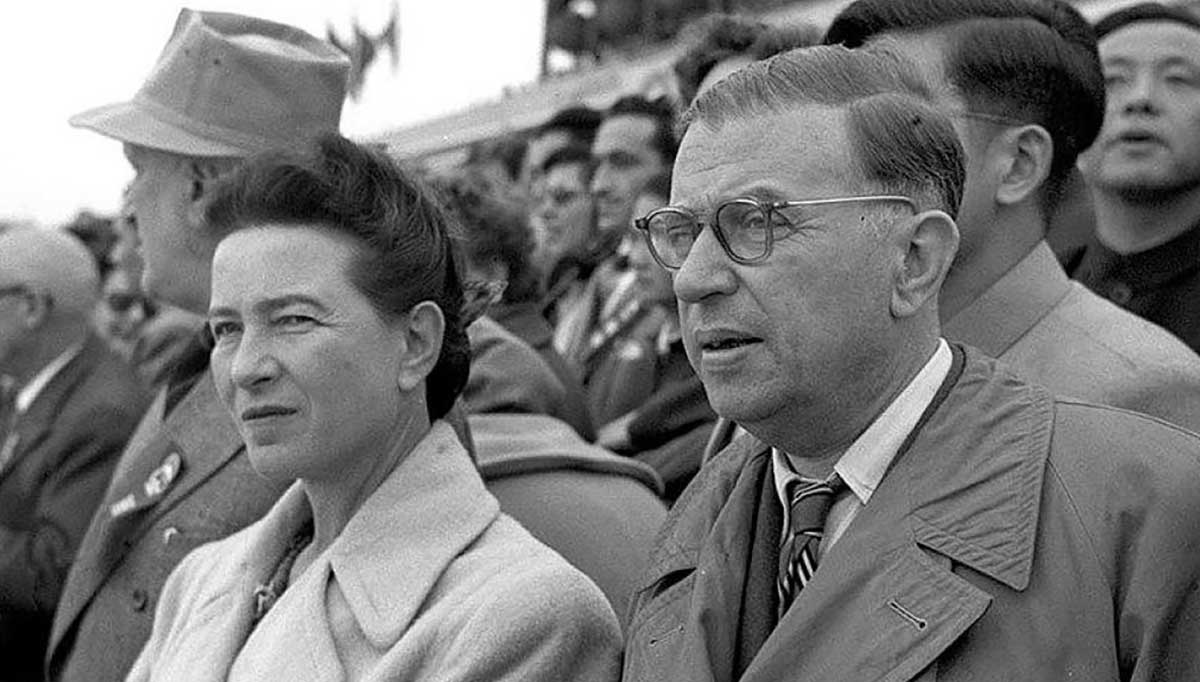
In 1905, Jean-Paul Sartre was born in Paris to a wealthy family. His father was an officer in the navy who died from an illness contracted in Indochina when Sartre was just two years old. As a teenager, he developed an interest in philosophy and went on to study at the prestigious École Normale Supérieure. In 1929, he met Simone de Beauvoir (pictured above), who was studying at the nearby Sorbonne. Although they were never married and maintained an open relationship, they became lifelong companions.
As mentioned above, in 1938, Sartre published Nausea, his short novel on the absurd. This work has become an existential classic; however, Camus’s review (written in Algiers before he and Sartre had met) was cool. He wrote that the philosophy in the novel stuck out like a sore thumb. Camus’s own novel of the absurd, The Stranger (1942), is also considered an existential classic and is widely accepted as a far superior novel.
It was around this time that Sartre wrote his play, No Exit (1944). It is in this play that we hear the now-famous line ‘Hell is other people.’ It is generally considered that Sartre’s plays are superior to those of Camus, who chose to write his theatrical works in a heavy, classical style that some find jarring.
We note that Camus and Sartre were friends but parted ways after Camus published The Rebel in 1951. However, before we look at this, it will be useful to look at a short publication (a transcript of a public lecture) published by Sartre in 1946: Existentialism Is a Humanism. It is here that we find one of the key ideas of his existentialism, that existence precedes essence.
Why Is Sartre Considered an Existentialist?
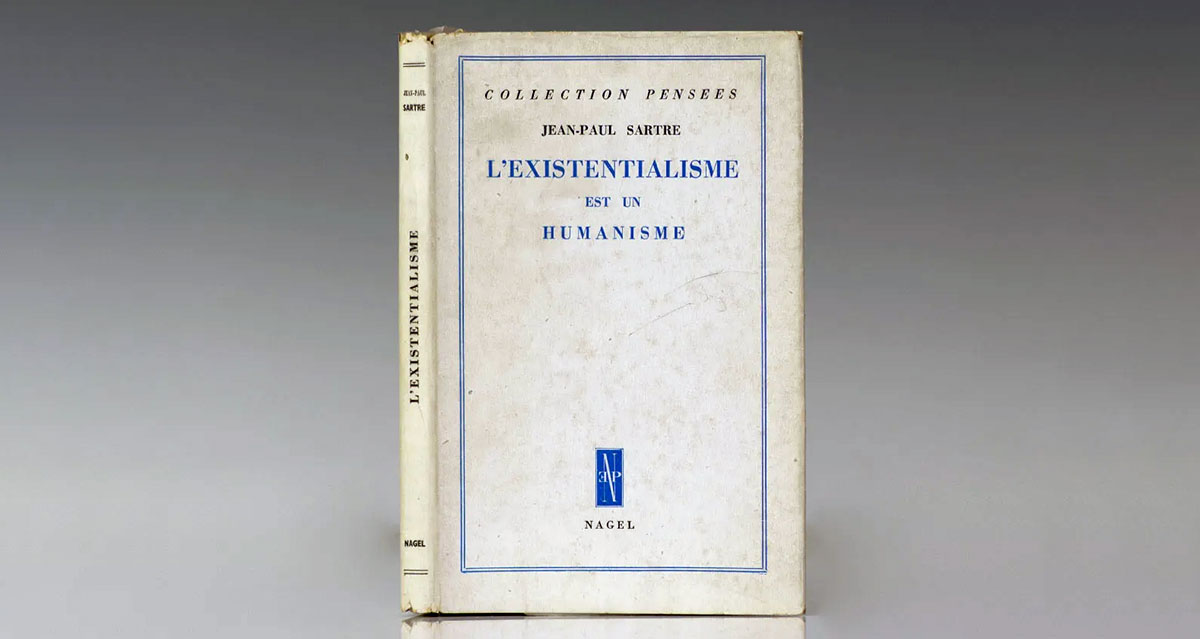
The text “Existentialism Is a Humanism” is a public lecture delivered by Sartre at Club Maintenant in Paris in 1945. Prior to this, no philosopher had taken ownership of the label ‘existentialism.’
There have been a few thinkers regarded as so-called ‘founding fathers’ of existentialism, or at least as proto-existentialists. These include Søren Kierkegaard (1813-1855), Fyodor Dostoevsky (1821-1881), Friedrich Nietzsche (1844-1900), and Martin Heidegger (1889-1976). However, Sartre was the only thinker to embrace the label.
It is worth noting at this point why philosophers might reject the label ‘existentialist.’ First, it may be that the label is not suggested during their lifetime. That is, the term might only come into public usage after a particular philosopher is long dead. Here, they never got the chance to accept, let alone embrace, the label in their lifetime. However, for those alive, well, and working when a label is used, there is a very good reason why they may wish to reject a label.
All thinkers like to think of themselves as original and unique. Labels, such as ‘existentialist,’ categorize an individual’s thinking. It makes them part of a movement; it gives readers a ‘heads up’ as to how they ought to be read. Very few thinkers want to be seen in this way. Albert Camus rejected, his whole life, the label of ‘existentialist,’ whereas Sartre embraced it.
As we shall see, there are important differences between the philosophy of Camus and that of others now considered to be existentialists. The interesting question for now is why Sartre embraced the label. A plausible answer was that it was ‘up for grabs.’ That is, since no one had claimed it, Sartre could take it for himself and define it how he liked.
Existence Precedes Essence

The idea that existence precedes essence means, in simple terms, that people are not born to fulfill a previously designed purpose. What this means is that, for Sartre, human beings are not born with a pre-ordained path or objective. Consider, in this regard, an acorn. The acorn has only two paths open to it: either it will rot or be eaten, in other words, it will be destroyed, or it will grow into an oak tree. The essence of the acorn precedes what it will be. With human beings, on the other hand, whatever they will become after infancy is not fixed. For Sartre, we all exist and then choose what we will become.
In his lecture, which would later become Existentialism Is a Humanism, Sartre asked his audience to think of a paper-knife. This object is created with a function in mind, that is, opening letters, and is designed to fulfill this function. Whenever we come across a paper-knife, we have an object in our hands that was designed and created by people in order to fulfill the function of a paper-knife. However, human beings, according to Sartre, were not created by someone in order to fulfill some function. God, says Sartre, is regarded by believers as a kind of supernatural artisan who created human beings to perform or serve a function.
However, because Sartre was an atheist, he did not believe in any deity. Therefore, there is no ‘artisan’ that produced human beings, and human beings were not ‘designed’ to perform some kind of function. This means, the ‘essence,’ what it is that human beings are and what they are for, cannot precede their existence, that is, their presence on Earth. After we are born, that is, after we come into existence, we are free to choose what we will be.
Radical Freedom
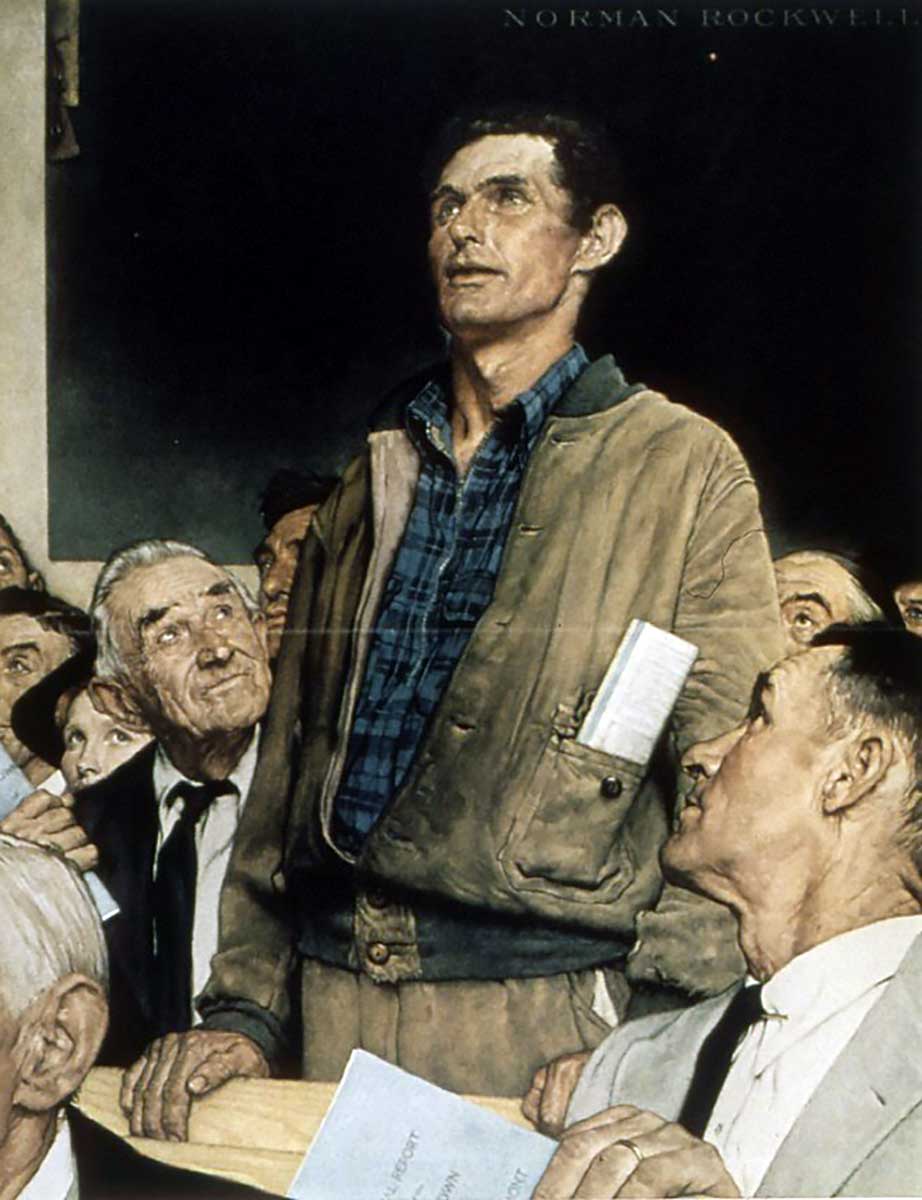
Sartre argued that we are “condemned to be free.” He said that we are nothing but what we make of ourselves. Sartre places the responsibility for where we end up in life on our own shoulders. His view is at once both liberating and devastating. Sartre compares human beings to moss or cauliflowers. As we saw above with the example of acorns, these things have no part to play in what they will become. Unlike simple vegetables, we have the opportunity to use our lives how we see fit.
Sartre points out that many of us have grand ideas about what we might be. For those who fail to achieve what they hoped for, Sartre offers no consolation. He places responsibility for who we are squarely on our own shoulders. But, of course, factors outside of our control play a part in our lives.
Sartre accepts that there is a ‘condition’ of human beings. There will inevitably be people who find themselves in situations in which there seems to be little choice in what they can do. For example, someone born a slave has a very limited choice in what they can do about their situation.
However, for Sartre, the condition of human beings is not in their ‘nature.’ In other words, someone born into slavery is not by nature a slave. If they continue to act as if they were a slave and justify their servitude by claims to their nature as a slave, Sartre would argue that they were wrong and in bad faith.
‘Bad faith’ is the phenomenon of denying one’s own existential freedom. A classic example of someone acting in bad faith is the soldier accused of war crimes who attempts to justify their actions by claiming they were only following orders.
Camus and Human Nature
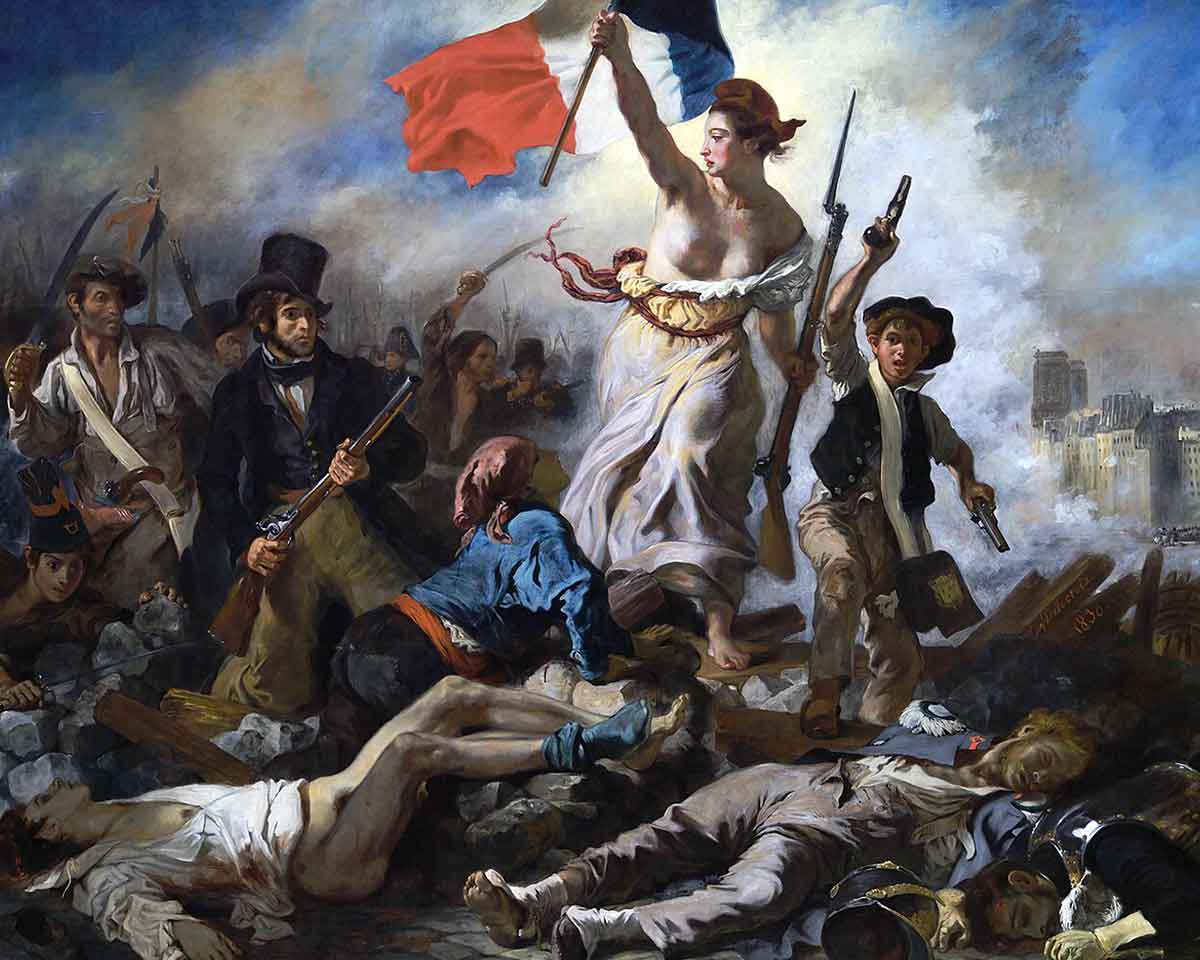
In his book-length essay The Rebel (1951), Camus speculated that there might exist something like human nature. In the first chapter, he writes: “An analysis of rebellion leads us to the suspicion that, contrary to the postulates of contemporary thought, a human nature does exist, as the Greeks believed. Why rebel if there is nothing worth preserving in oneself?”
What Camus meant was that the instinct to rebel is something human beings are born with, that it is in their natures to rebel against injustices. Here, Camus is not simply referring to a negative reaction to someone treating a person badly, but rather the idea that there is something about human beings as a whole that means it is wrong to treat them in particular ways. For example, we might say that slavery is wrong simply because it is wrong to disrespect the autonomy of others and to treat them as means to some end.
On this point, Camus’ philosophy clearly differs from Sartre’s. We saw that Sartre holds human beings come into existence prior to becoming what they are. Whereas Camus believes that some fundamental essence of humanity exists prior to existence. That is, there is something we all share simply by virtue of being human beings. For Camus, this is an inbuilt sense that all human beings have something in common with each other (what we might call ‘human dignity’) that can be violated by the actions of others. And in addition, we share a common impulse to rebel whenever we witness such violations. Camus summed up this instinct or impulse with the following philosophical formula: “I rebel – therefore we exist.”
If the idea that existence precedes existence is an essential tenet of existentialism, then Albert Camus cannot be considered an existentialist; a label he consistently and vehemently denied.