
In 1309, Pope Clement V moved the papal court from Rome to Avignon in France. Over the next 70 years, the curia grew deep roots in Avignon. The cardinals lived lavishly, and it seemed that the political pressure exerted by the French monarchy would keep the Papacy in southern France for the foreseeable future. That is, until the culmination of a series of political events in Italy, and the urging of a remarkable mystic from Siena, combined to force Pope Gregory XI to move the Papacy back to Rome.
Catherine of Siena
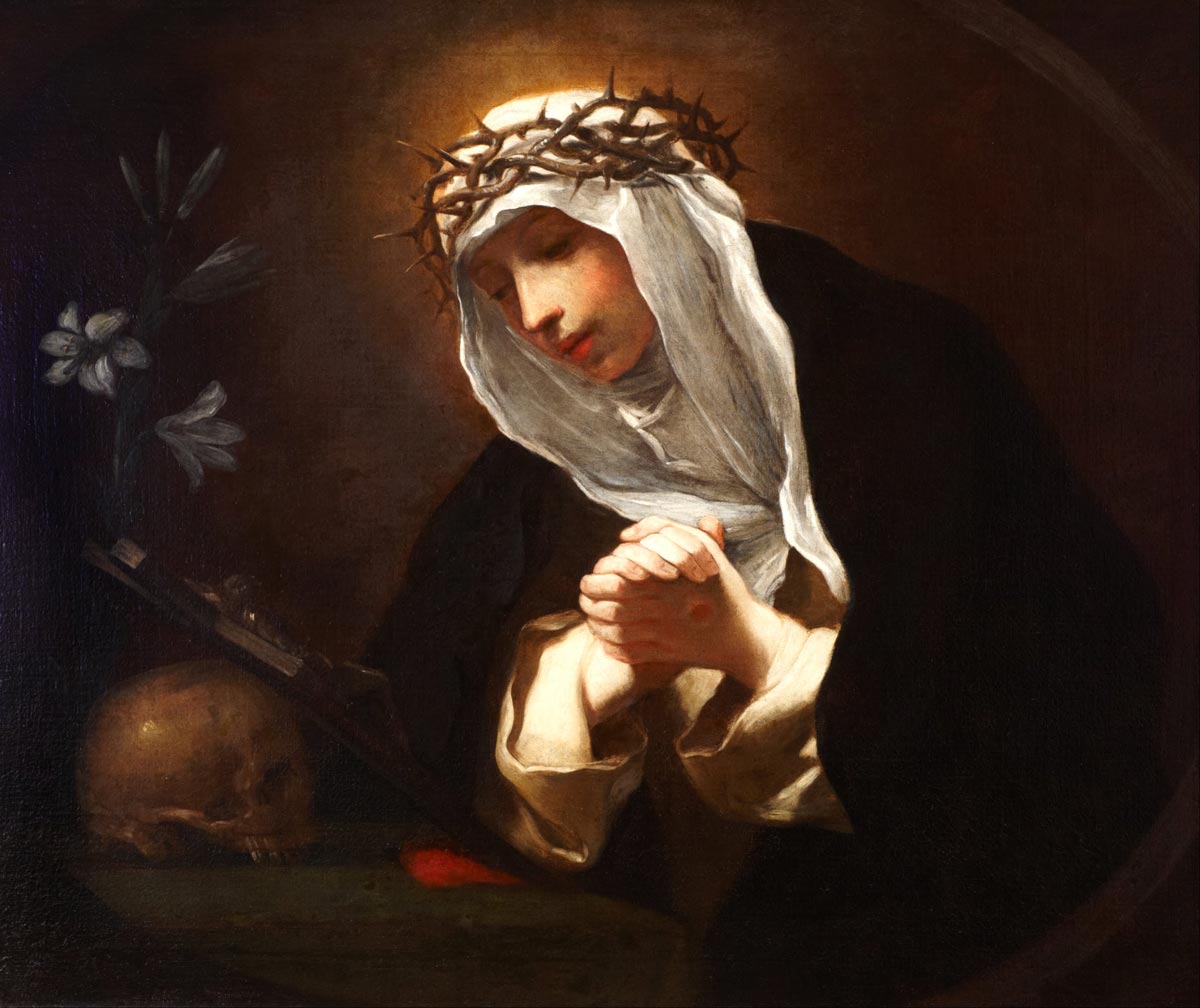
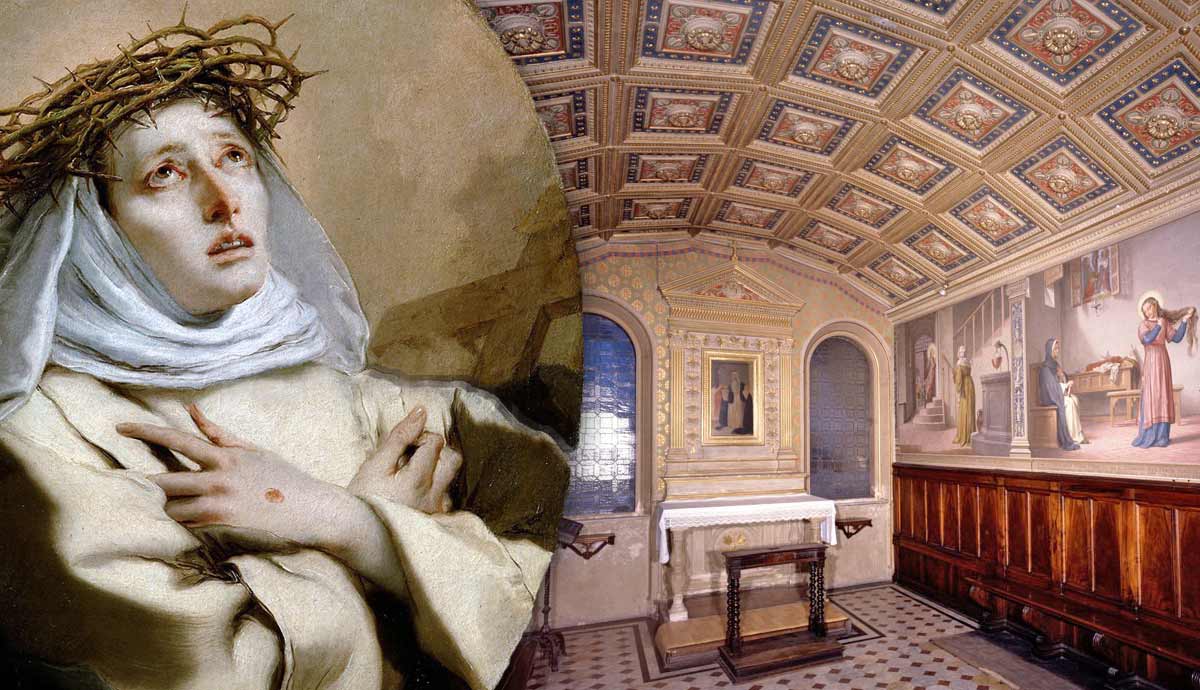
Catherine was born in 1347, in the Republic of Siena, in what is today central Italy. From the age of five, she reported having visions of Christ and the Apostles, and by age seven, Catherine swore that her life would be given to serving God. When she was 16, she was expected to marry, but Catherine went on a hunger strike until her parents relented and backed off their demand. She lived like a monastic, confining herself to a small room in her family’s house, spending most of her time in silence and solitude.
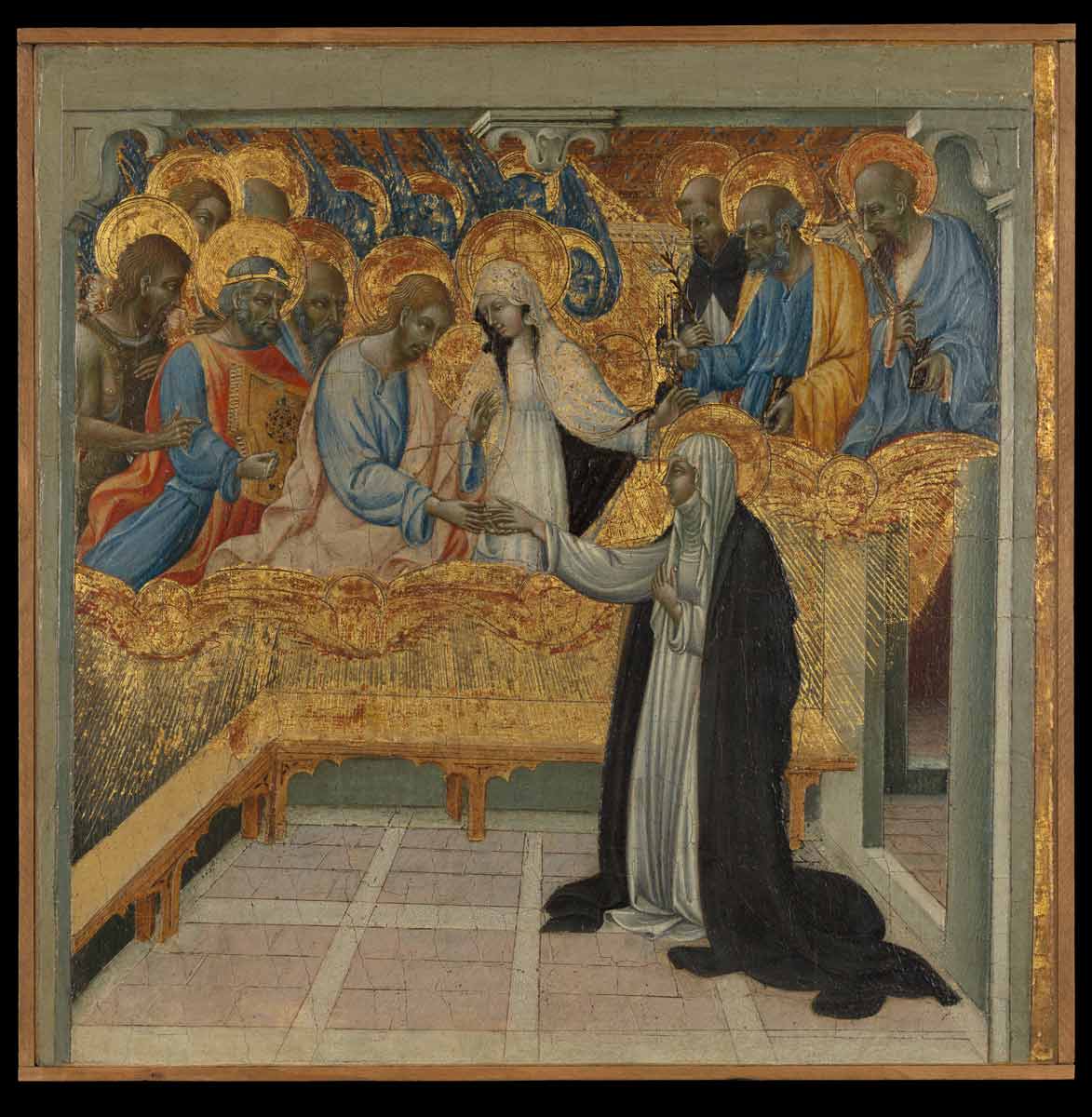
At the age of 21, Catherine claimed that she experienced what she called a Mystical Marriage, wherein she married Jesus. After this marriage, she received a vision from Jesus telling her to leave her cloistered life of seclusion and go out into the world. She helped the sick, the poor, and the downtrodden of Siena. Between her charity and her vivid descriptions of the visions she claimed to regularly receive from God, she gained a reputation as a holy woman. This reputation was further strengthened when, in 1375, she claimed to have received the stigmata, the physical representation of Christ’s wounds during his crucifixion, and an extraordinarily powerful manifestation of holiness in Catholic tradition.
This holiness brought her into the political world, and eventually to a fateful meeting with the pope in Avignon.
Pope Gregory XI
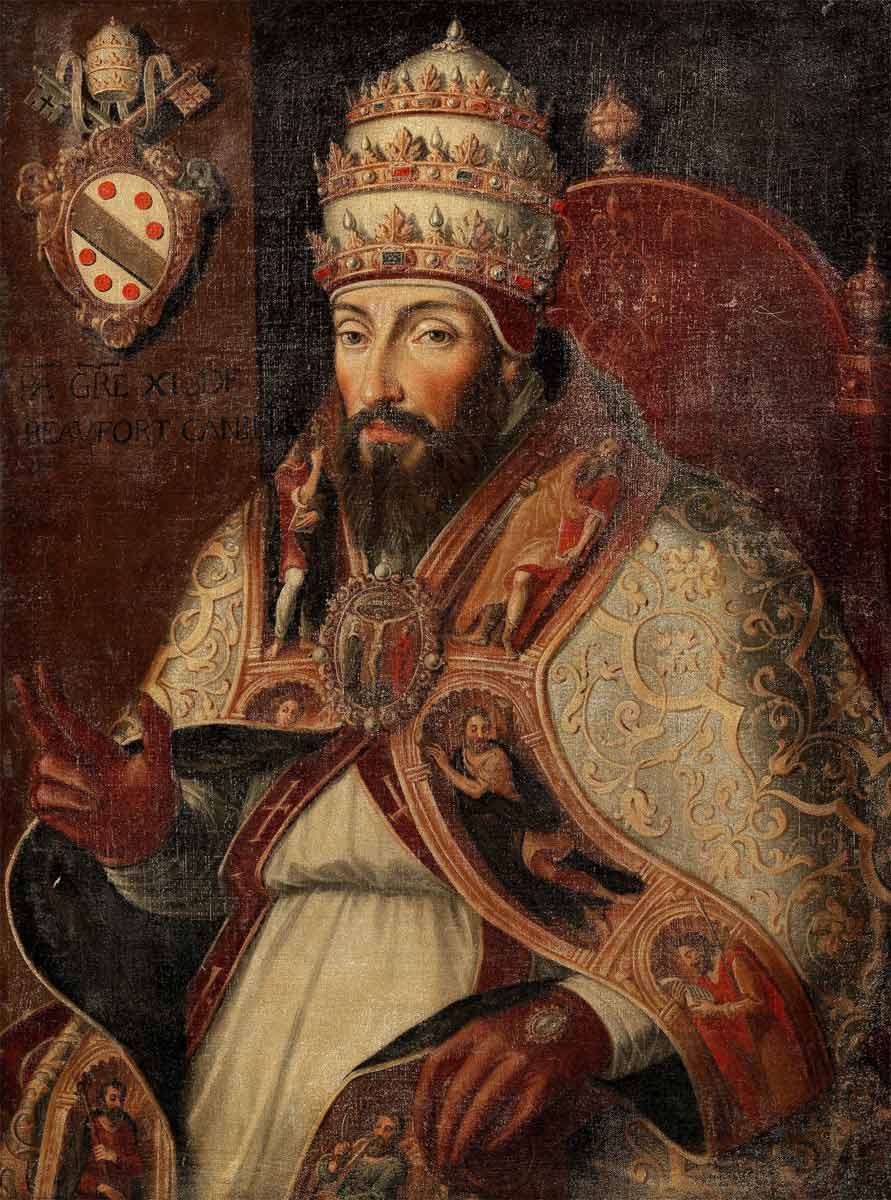
Pierre Roger de Beaufort was born into nobility in Maumont, France, in 1329. He was a nephew of Pope Clement VI, and thanks to this family connection, he was appointed as a cardinal at the age of 18. He studied law and theology and gained a good reputation among the papal court. When Pope Urban V died in 1370, the conclave unanimously chose Pierre to be the next pope. He chose the name Gregory XI, but since he was not a priest, he was quickly ordained the day before he was formally crowned Pope.
Gregory’s pontificate saw conflict all over Western Europe. He tried to mediate the Hundred Years’ War between England and France, but ultimately failed. He also found himself in conflict with many of the Italian cities throughout his reign. The Italians were bitter about the Papacy being moved to France and sought to expand their own power and influence at the expense of the Papal States.
The first conflict was with Milan, whose Duke, Bernabo Visconti, seized Reggio and other papal fiefs. Gregory excommunicated Visconti, hoping that would be enough to make the duke back down. However, Visconti thought so little of the act that he imprisoned the legates who brought him the Bull of excommunication and refused to release them until they ate the parchment on which it was written and the lead papal seal that affixed it.
After this humiliation, Gregory declared war on Visconti. The war raged for three years until Milan sued for peace in 1375, gaining favorable terms in the settlement thanks to some well-placed bribes of papal officials.
Intercession
After the war with Milan concluded, the city of Florence organized a broad anti-papal coalition of Italian cities. Perhaps remembering the humiliation he suffered at the hands of the Duke of Milan, Gregory acted swiftly and harshly. He excommunicated all members of the Florentine government, he removed legal protections that had formerly prohibited the arrest and enslavement of Florentines throughout Europe, and placed Florence under interdict. The interdict banned all religious services except baptism, last rites, and certain Masses on holy days.
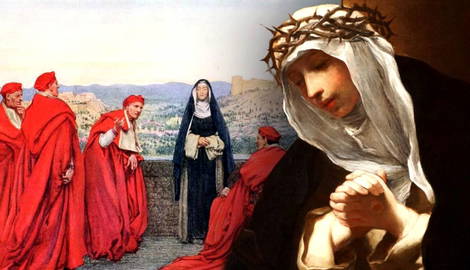
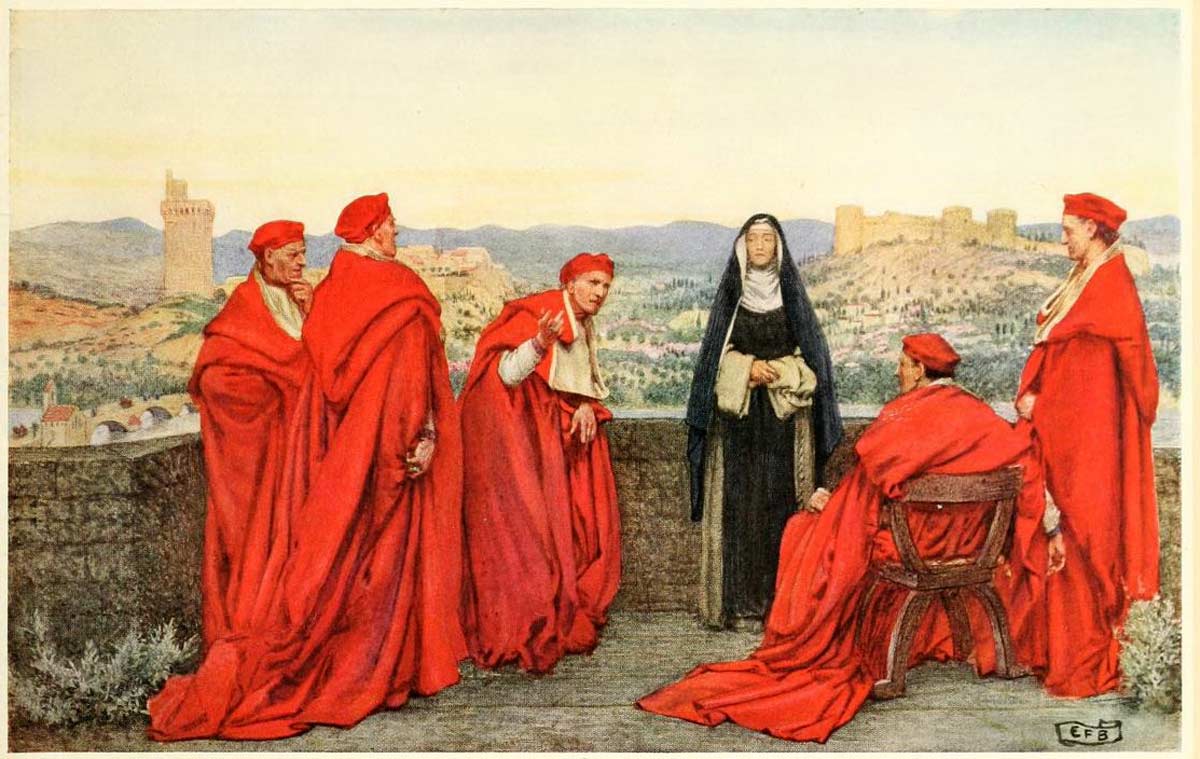
The results were catastrophic for Florence, and they sought a mediator to negotiate an end to such harsh reprisals. They turned to Catherine of Siena. She had already been in contact with Gregory while the crisis was brewing, writing to him to ask for leniency. As the crisis deepened, the Florentines requested that Catherine journey to Avignon and negotiate with Gregory to plead their case in person. They hoped that such a holy woman would be the best representative for their cause.
Catherine’s Mission
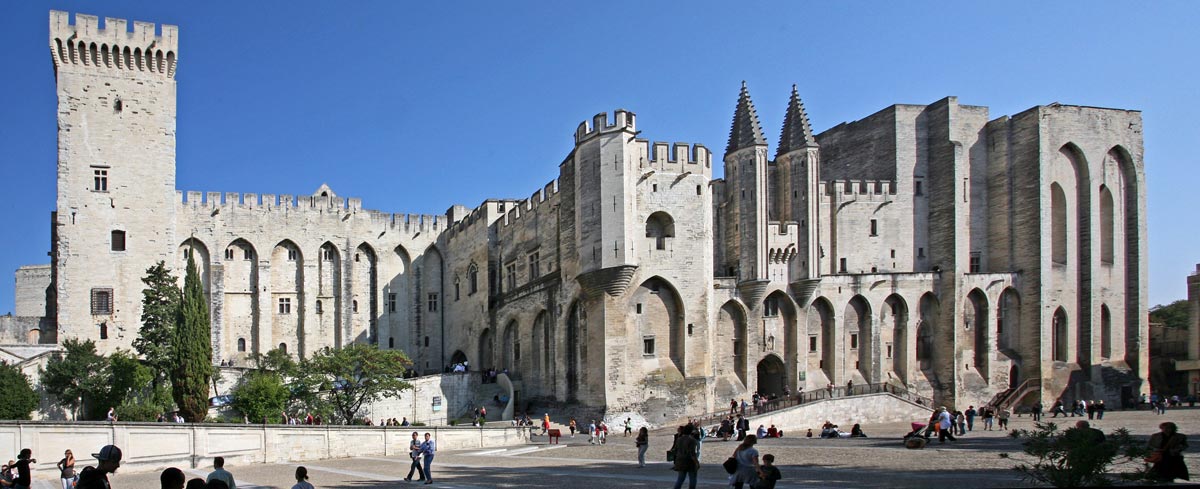
While Catherine did indeed plead the case of the Tuscans before the pope, she would ultimately prove unsuccessful. However, she had a secondary goal in traveling to Avignon. She had come to believe that it was her mission to return the Papacy to its rightful place in Rome.
While we do not know exactly what was said in their personal audiences, Catherine continued to write letters to the pope while in Avignon, which survive to this day. It is important to note that Catherine was illiterate until late in her life, so most of her letters were dictated, allowing us, in a way, to hear her very voice echo across the centuries. These letters show an extraordinary level of directness and boldness. The urgency she felt in what she saw as her divine mission can be seen in this excerpt from early April 1376:
“Come, come, don’t resist any longer the will of God who is calling you… The starving little sheep are waiting for you to come and take possession of the place of your predecessor and model, the apostle Peter… You, as Christ’s vicar, ought to be residing in your proper place. Come! Come! Come!”
Challenges
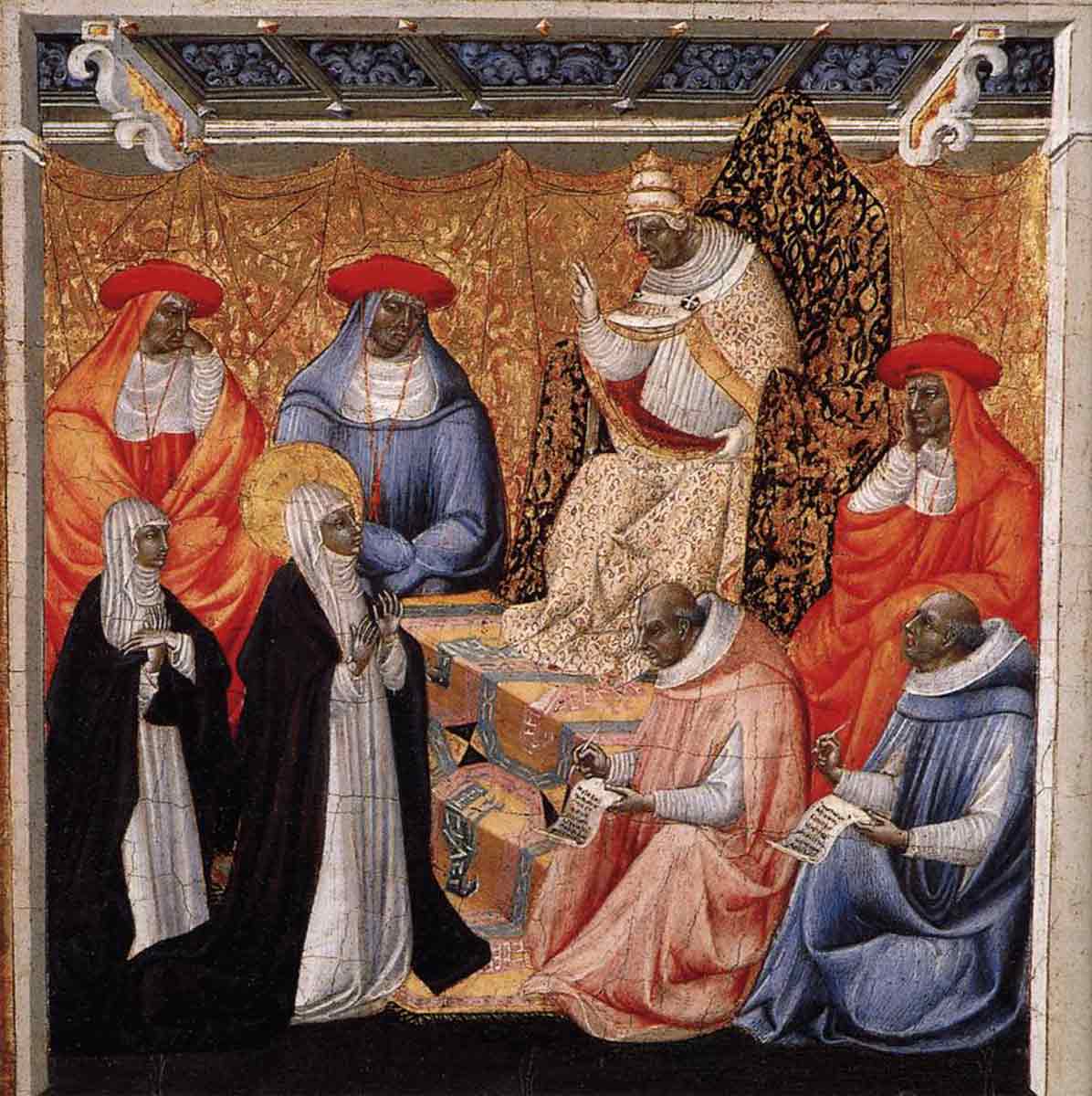
While it is impossible to know anyone’s true thoughts, let alone those of someone who lived over 600 years ago, it is likely that before Catherine’s arrival, Gregory had already considered moving the Papacy back to Rome. The discontent in northern Italy and the Papal States themselves only grew worse the longer the pope and cardinals stayed in France, and some sources indicate that Gregory had made a private vow to return to Rome if elected Pope. However, the papal court had grown deep roots in Avignon, and the vast majority of cardinals and officials preferred to remain there rather than journey back to Rome.
Catherine herself speaks to the forces trying to keep Gregory in Avignon when she wrote in early August 1376, “May a blazing flame of charity so burn in you that you will not let yourself listen to the voice of incarnate devils, will not let yourself take the advice of evil counselors. Their foundation is in self-centeredness, and as I understand they want to frighten you by saying you’ll be killed. They say this to keep you from coming. And I am telling you, in the name of Christ crucified … not to be afraid for any reason whatsoever.”
She saw the struggle over where the Papacy would reside through the lens of the cosmic battle between good and evil, between God and Satan. Those trying to keep the pope in Avignon were on the side of the devil, but she spoke in the name of Christ. This view is even more explicit in a letter from mid-August 1376, where she said, “I understand from the note you sent me that you are being harassed by the enemies of all good, who never stop tempting you.”
Gregory’s Relationship With Catherine
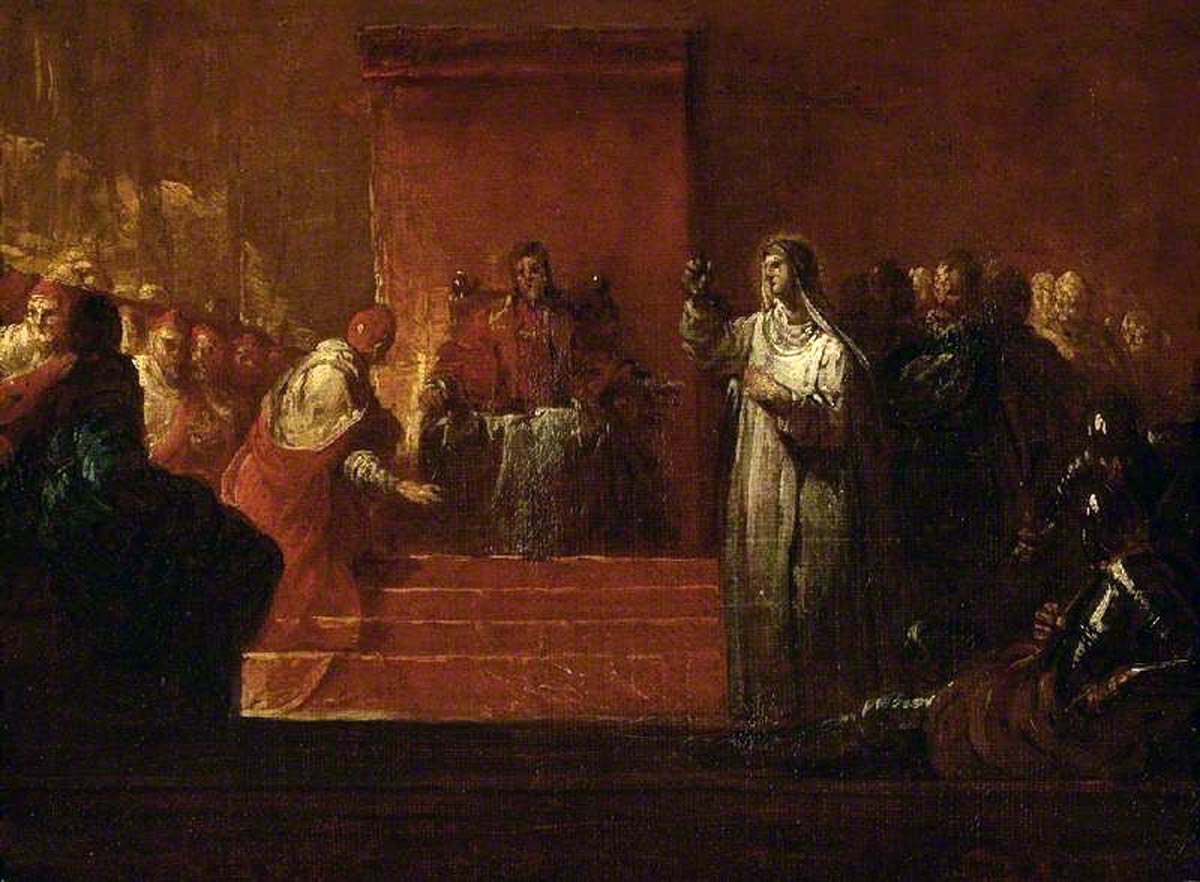
Gregory’s letters to Catherine do not survive, so we only have one side of the conversation. However, Catherine will often refer to what Gregory had written to her in her letters, so we can somewhat reconstruct the flow of their conversation.
Gregory clearly placed a high value on what Catherine said and thought, often asking her for advice and explaining his difficulties to her. He would also ask her to pray for him, a powerful request for someone who regularly received visions from God.
From some of Catherine’s letters, it seems that Gregory was not a very forceful personality, easily swayed depending on who he spoke with last. In one extraordinary instance, Catherine writes that God said, “Tell him the more opposition he encounters … the more he will feel a courage growing within him that no one can take away, though this is contrary to his natural bent.”
Catherine’s letters show an extraordinary familiarity and boldness, astonishing for a laywoman addressing the head of Western Christendom. She regularly calls Gregory “Babbo,” which was a term roughly equivalent to “Daddy” in the Tuscan dialect, a word used by young children to address their father.
In early September 1376, Gregory wrote to Catherine saying that he was threatened with death if he returned to Rome. Catherine is not moved by the threat. She does not try to console Gregory by saying that he will not be killed; instead, she says, “You will be more concerned about God’s honor and the salvation of your sheep than about yourself—like a good shepherd who should lay down his life for his sheep.”
Catherine was very consciously drawing on the biblical imagery of Jesus as the good shepherd, and also on the long tradition of Christian martyrdom. She further says, “I beg you in the name of Christ crucified not to be a timid child but a courageous man.”
The Return to Rome
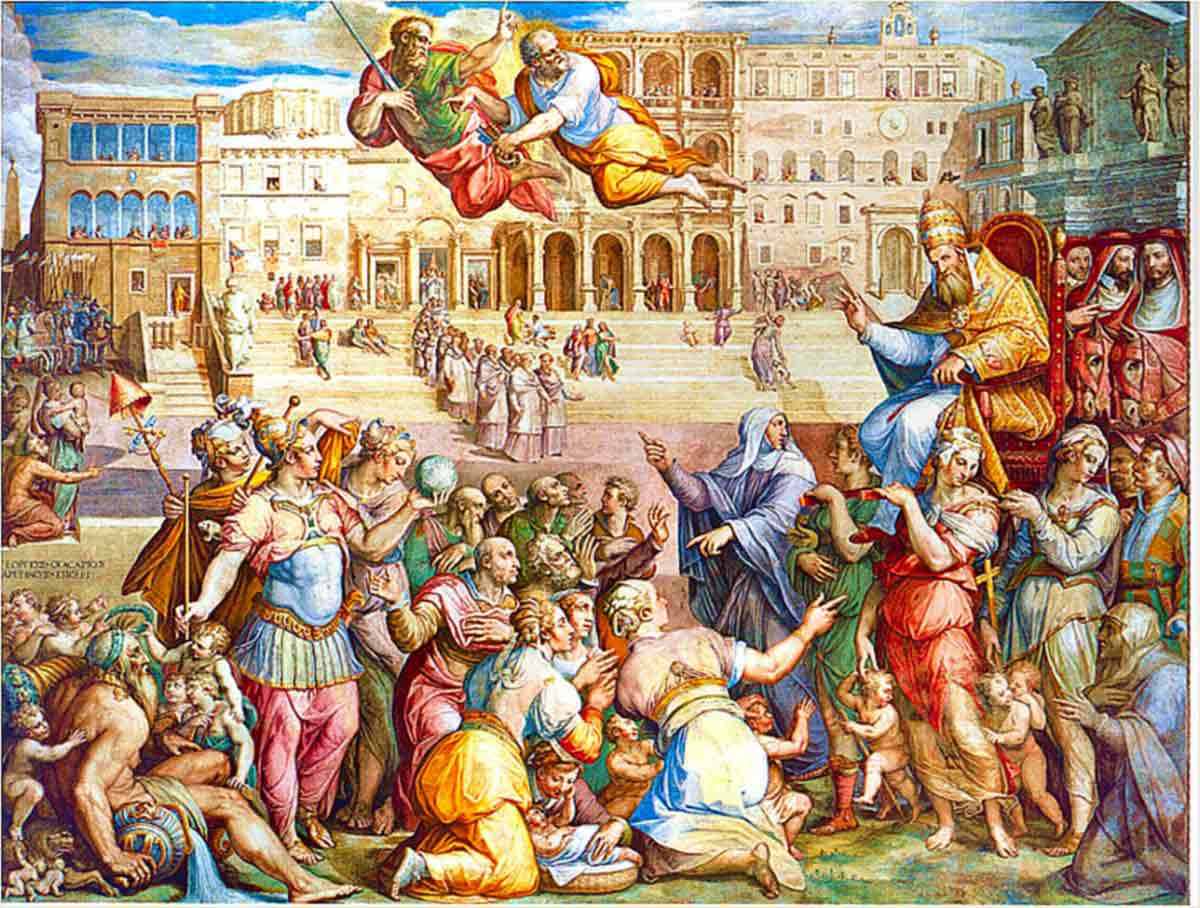
Political realities in Italy and Catherine’s forceful personality combined to finally push Gregory to take the momentous decision to return to Rome in 1376. It was not a popular decision among the papal court. Pierre Amelia, Bishop of Senigallia, later wrote an account of the return to Rome, where he exclaimed, “God! If only the mountains would move and block our journey!”
Gregory XI entered Rome on January 17, 1377. Unfortunately, he was already in poor health, and he died just over a year later on March 27, 1378.
The conclave after his death is infamous due to the angry mob that surrounded the Apostolic Palace, implicitly threatening violence if an Italian wasn’t chosen. The conclave ultimately elected Urban VI, but shortly thereafter, a group of cardinals claimed that the election was invalid due to the cardinals fearing for their life. This breakaway group elected a rival Pope who returned to Avignon. This was the beginning of the Great Western Schism, where there were two, and eventually three, popes ruling simultaneously.
For her part, Catherine vehemently backed Urban VI in the schism, never relenting in her belief that the pope needed to be in Rome for all to be right with the world.
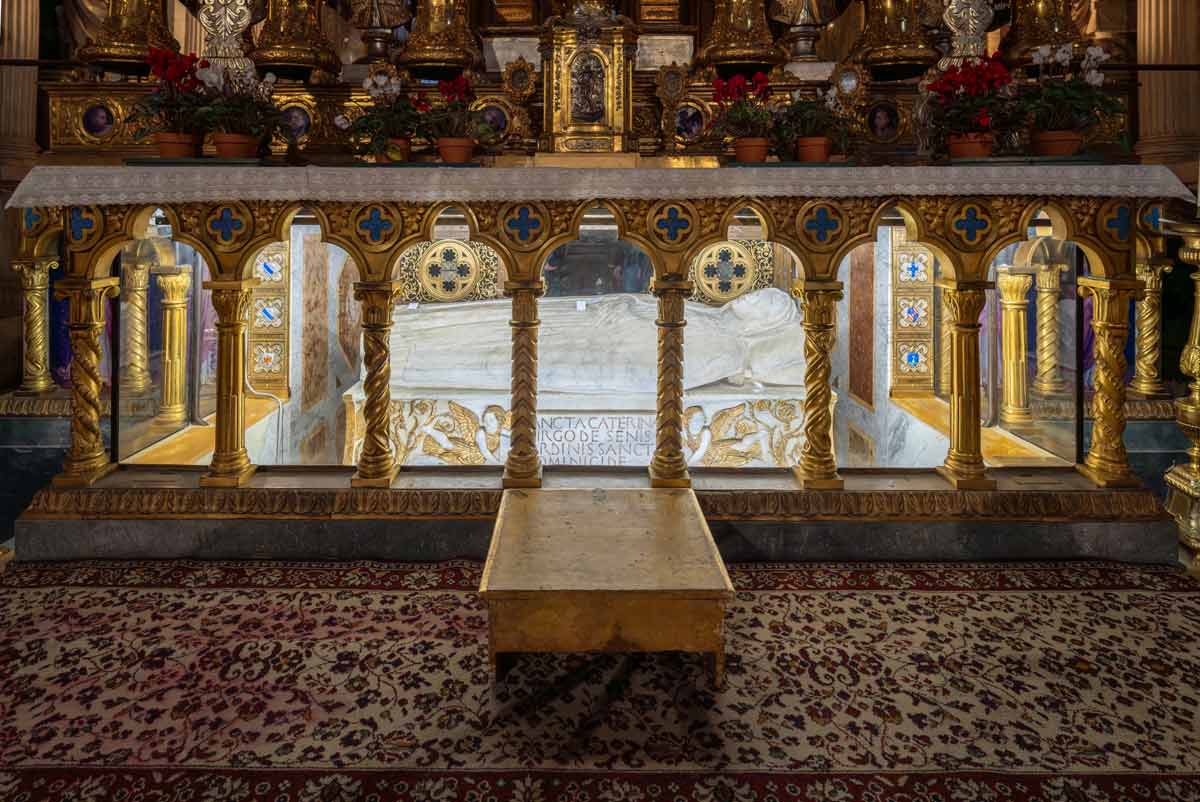
Catherine would die at the age of 33 on April 29, 1380. She was later canonized as a saint in 1461 by Pope Pius II.