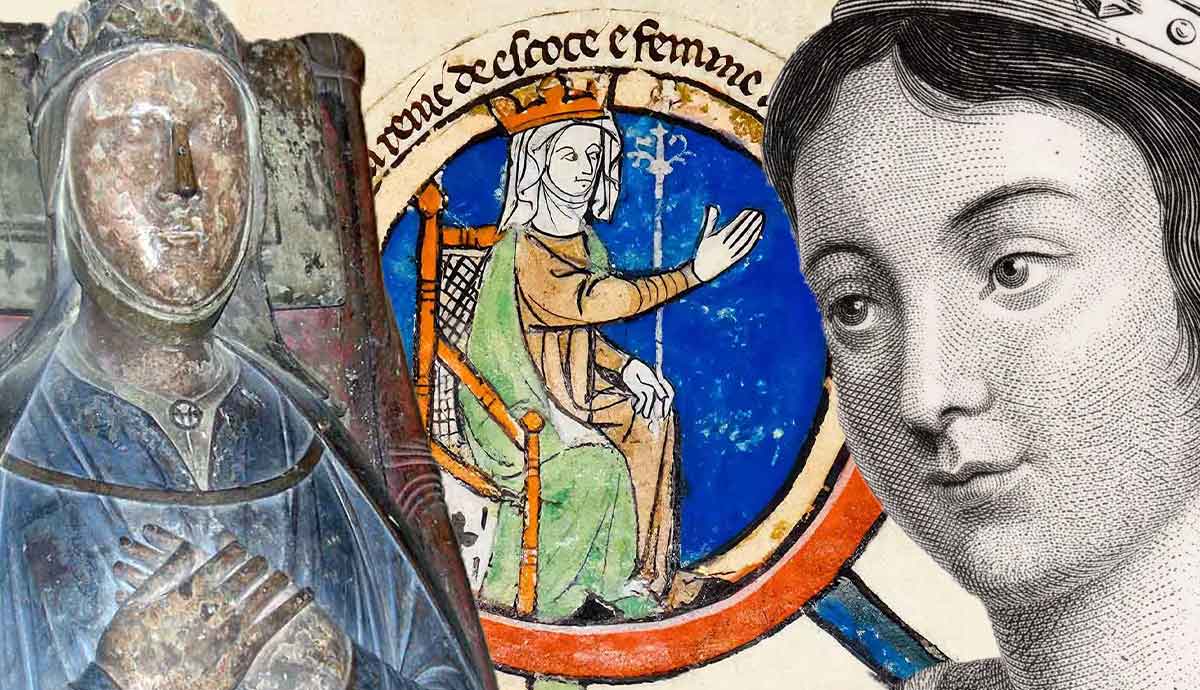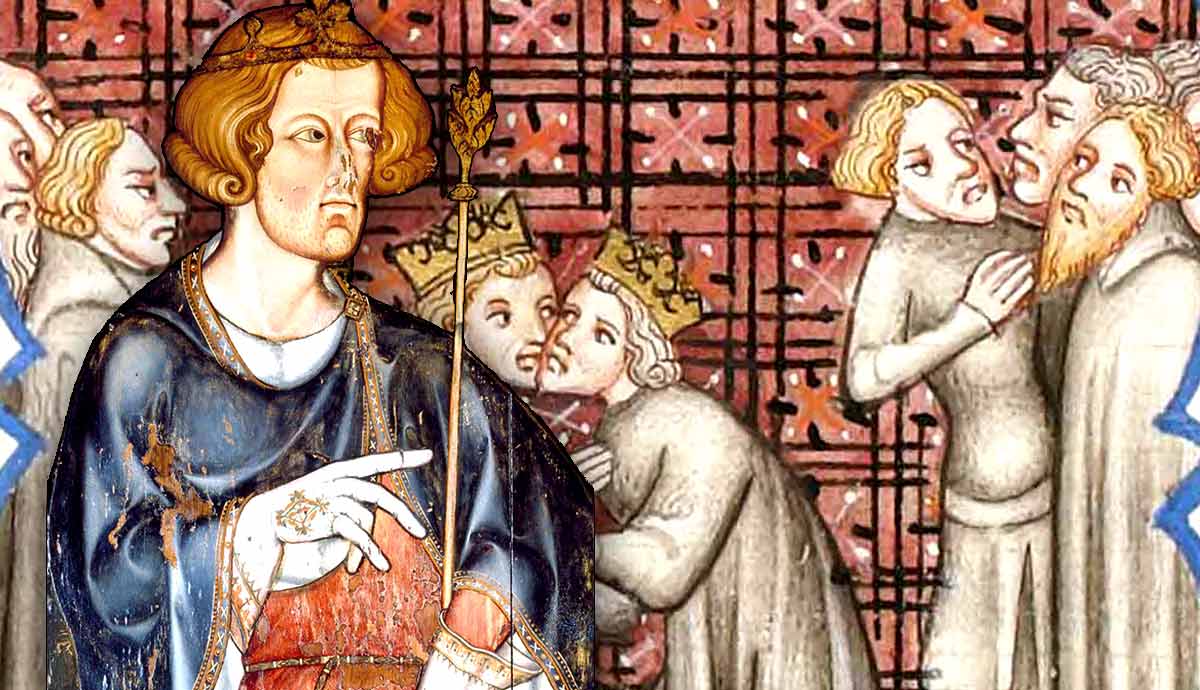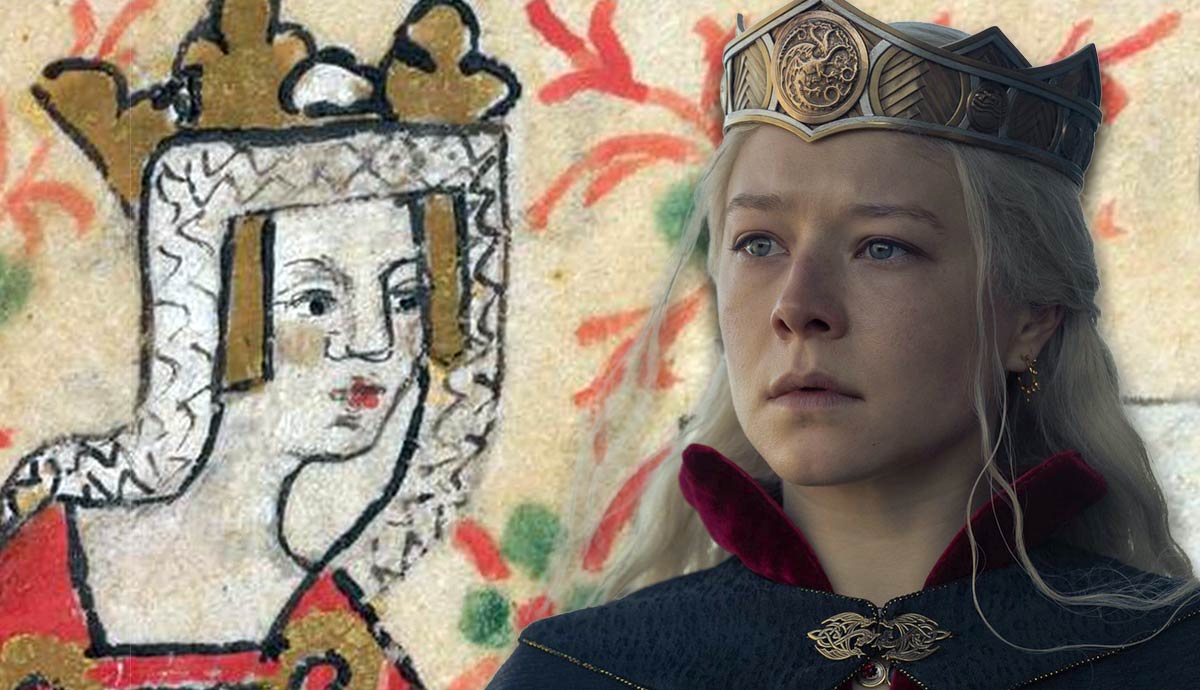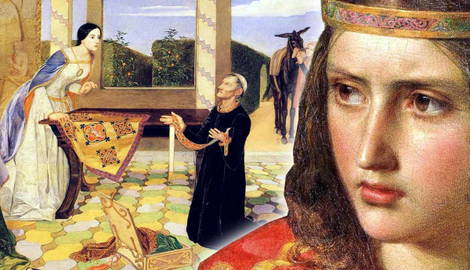

The Angevin Empire was a sprawling collection of states which included England as well as her Continental lands. This fragile empire was held together by blood and marriage rather than bureaucracy. While kings dominated on the battlefield, their wives and mothers took charge and dominated the royal court. Related by marriage, Empress Matilda, Eleanor of Aquitaine, Berengaria of Navarre and Isabella of Angoulême shaped the future of Western Europe and the reigns of their husbands and sons.
1. Empress Matilda and the Creation of the Angevin Empire

King Henry I had over twenty illegitimate children with a variety of mistresses, but only one legitimate son, William. When William died in the White Ship Disaster of 1120, Henry’s hopes for an easy succession sank with his son. The king remedied this dynastic problem in an unusual way by recalling his daughter Matilda, the recently widowed consort of the Holy Roman Emperor, to court. Henry had his nobles swear to uphold Matilda’s succession to the English throne and the Duchy of Normandy. Henry also had his daughter take a second husband, Geoffrey Plantagenet, Count of Anjou, by whom it was hoped she would produce a son to pass the throne to once he came of age.
Henry’s hopes were realized when Matilda gave birth to a boy named Henry after his grandfather in 1133. The boy could add the rich County of Anjou to his anticipated inheritance thanks to his mother’s advantageous marriage.
Matilda was in Anjou in 1135, pregnant with her third child, when she received news of her father’s death. Unbeknownst to Matilda, her cousin, Stephen of Blois, one of the nobles who had sworn to uphold her claim to the English throne, successfully seized the crown. His swift coronation secured his position as the new king of England; Matilda, on the other hand, was overlooked and expected to accept her fate. But she was made of sterner stuff.
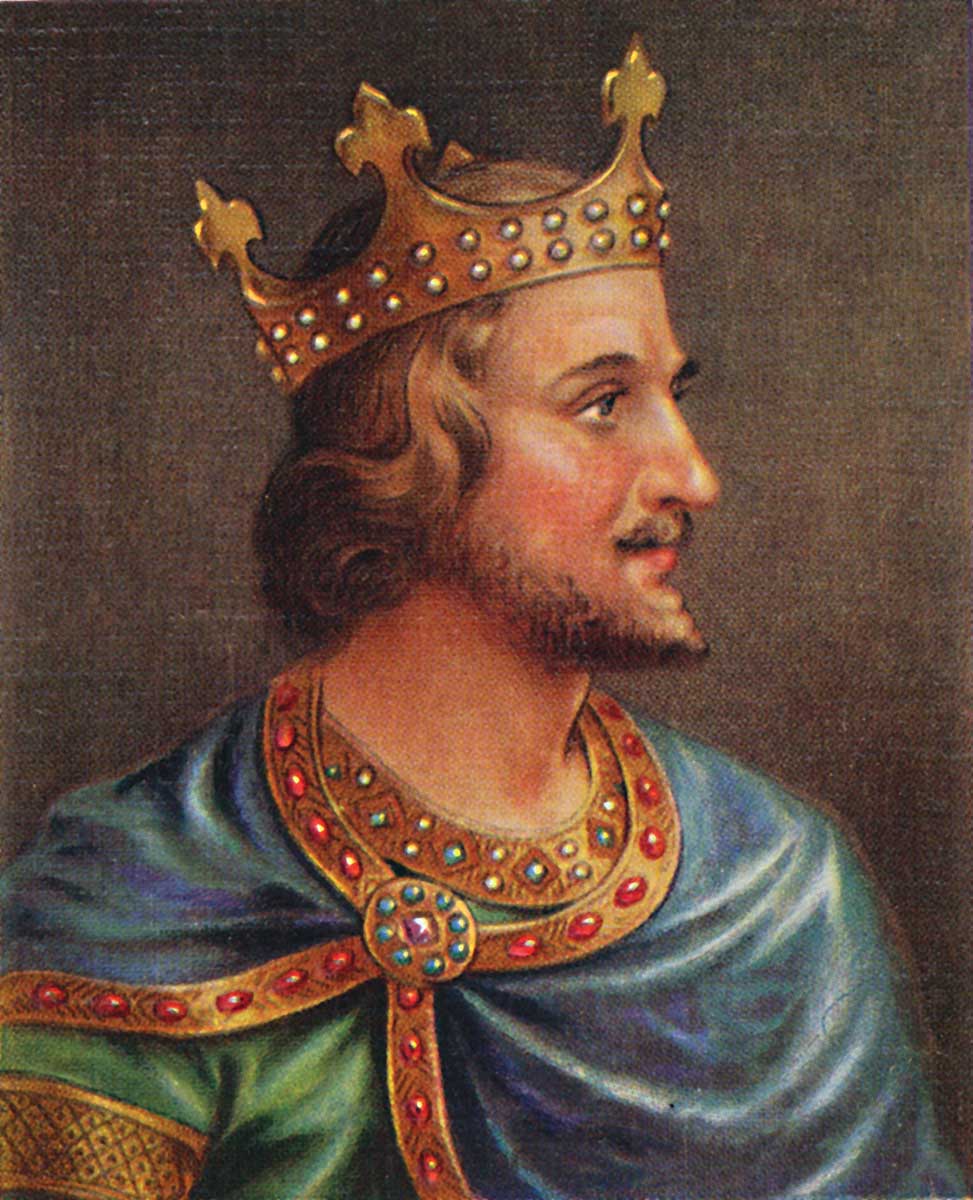
Matilda and Geoffrey quickly seized Normandy, and by 1139, she had amassed a sizable army to challenge Stephen for her rightful inheritance. England was plunged into a bloody civil war known to history as The Anarchy.
Matilda’s sex worked against her, and she was shrewd enough to accept this. By 1142, she relinquished her claim to the throne in favor of her son, Henry, and it was now on his behalf that she fought so vehemently. Following the sudden death of Stephen’s eldest son, Eustace, in August 1153, Stephen recognized Henry as his heir in the Treaty of Wallingford, passing over his surviving younger son, William, who was compensated with other estates. Henry had already acquired Normandy in 1150 and Anjou in 1151, and in 1154 he was crowned King of England after Stephen’s death.
Matilda’s sheer determination and fortitude had succeeded. She had helped to establish her son as the ruler of a vast kingdom incorporating England and half of France, collectively known to historians as the Angevin Empire.
2. Eleanor of Aquitaine and the Creation of the Angevin Hegemony

Eleanor of Aquitaine, heiress in her own right to the wealthy Duchy of Aquitaine, left the Parisian court in 1152. Her husband, King Louis VII of France, had annulled their marriage; the reason was most likely the couple’s lack of sons. Fleeing to her court in Poitiers, Eleanor evaded several attempts to kidnap her and force her into a second marriage not of her choosing. Determined to steer the course of her own destiny, she offered herself in marriage to Henry, Duke of Normandy and Count of Anjou, who was poised to become king of England.
The couple were duly wed a mere eight weeks after the dissolution of Eleanor’s first marriage. Through his marriage to Eleanor, Henry added her Duchy of Aquitaine to his French possessions in Normandy and Anjou; her rich and prosperous lands provided the territorial backbone of the Angevin Empire. By 1154, Henry had added the crown of England to his domains, making him King Henry II. The couple now controlled lands from the southern border of Scotland in the north to the Pyrenees in the south. The Angevin Empire was a major threat to Eleanor’s first husband, Louis, who became increasingly concerned by Henry’s ambitions.
Eleanor gave Henry the sons her first husband had so desperately desired. Four of them, Henry, Richard, Geoffrey, and John, survived into adulthood as well as three daughters. Their strategic marriages ensured that Plantagenet descendants spread across Europe.
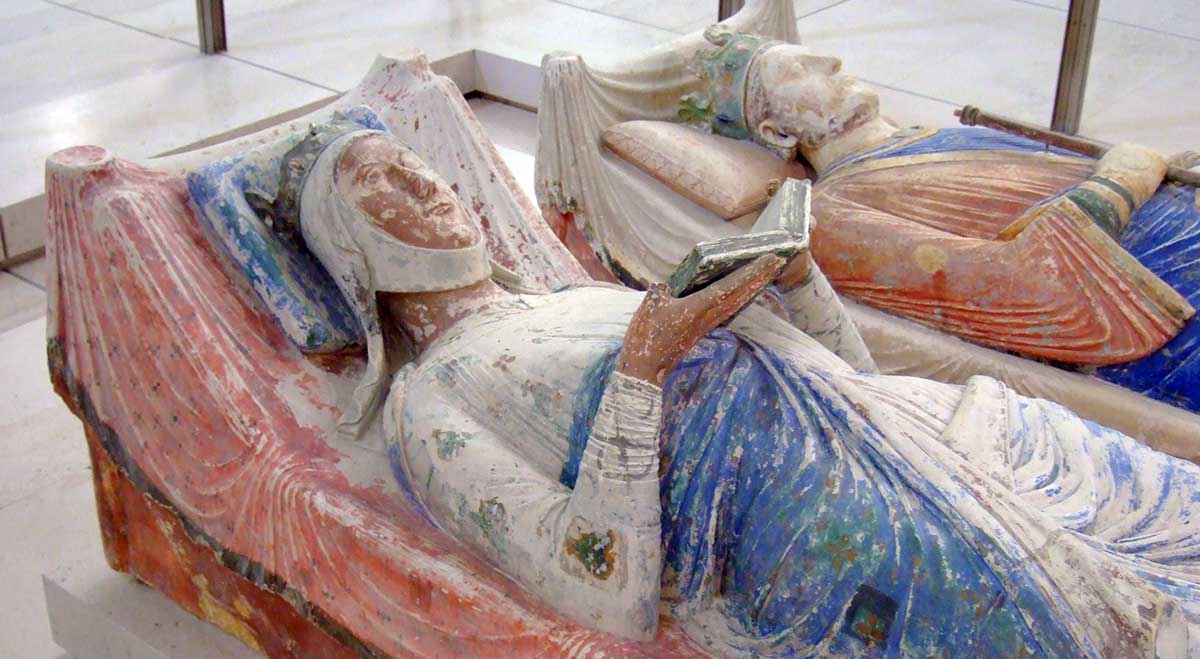
Eleanor’s duties extended beyond those of a mother. She was a politically active consort whom Henry appointed as regent during his absences. In 1168, once the couple had produced a sufficient number of children, Henry sent Eleanor to her native Aquitaine to rule there on his behalf. Her son, Richard, accompanied her there to be trained for his eventual role as Duke of Aquitaine. It was there, from her court at Poitiers, that rumors abound of her alleged “Courts of Love” where Eleanor would sit in judgment over lovers’ quarrels.
When her sons, Henry, Richard, and Geoffrey, rebelled against their father in 1173 in “the Great Revolt,” Eleanor was intercepted by her husband’s men on her way to meet them at the court of her former husband, Louis VII. Disguised as a man, her plans to offer support to her sons were nonetheless foiled. Eleanor was considered the mastermind of the revolt and consequently was placed under the custody of her husband, confined for 16 years. During her 16-year imprisonment, she nevertheless enjoyed a certain amount of freedom and was kept in relative luxury at her favorite royal residences.
During her years of confinement, Henry would often call upon his consort to settle family disputes. When Richard refused to relinquish control of Aquitaine to his father, Eleanor was brought to Normandy, where Richard was forced to surrender the Duchy to his mother.
Following Henry’s death in 1189, Eleanor ruled alongside her son, Richard, and then John, often acting as regent to them in England, Normandy and Aquitaine. The vast Angevin Empire required trust and cooperation, and Eleanor proved herself an invaluable asset with decades of political experience.
3. Why Berengaria of Navarre Remained an Essential Ally During the Crusades
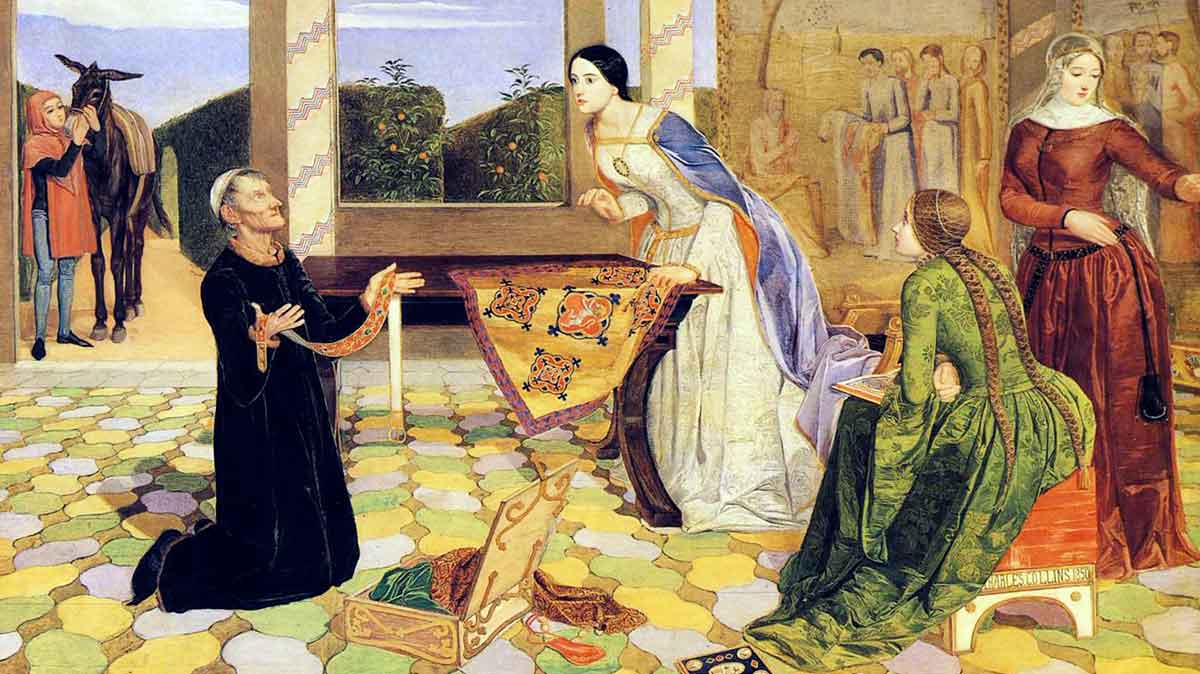
Berengaria of Navarre is often overlooked by historians because she exercised little influence as a consort. Nevertheless, she was essential to the success of her husband, Richard’s crusade and kingship and led a remarkably politically active life as a widow.
A princess of the small Spanish kingdom of Navarre, Berengaria’s marriage to Richard the Lionheart was a social and political climb for both herself and her family. Richard departed for the Third Crusade in 1190 and left his mother to finalize the marriage negotiations between himself and Berengaria. Not content to halt his nuptials, Richard had entrusted his mother to bring his new bride to meet him as he traveled towards the Holy Land. Embarking on a remarkable journey, Berengaria and her soon-to-be mother-in-law crossed the Alps in winter and met Richard in Sicily in 1191.
Why was Richard so eager to marry Berengaria to such an extent that he would risk the lives of both his mother and his future bride on such a perilous journey? Berengaria represented the security Richard desperately needed for the success of his Crusade. Navarre shared a border with Richard’s lands in Aquitaine, and her father, Sancho of Navarre, could provide Richard with protection against troublesome elements within his southern domains.
Once married, Berengaria traveled with Richard during his Crusade, her presence a continual reminder of the security her family brought to his Aquitanian lands, thereby allowing him to focus on his military ambitions.
Although Berengaria did not visit England during Richard’s lifetime and the couple spent little time together once they returned from the Crusade, Berengaria nevertheless continued to play an important role in the security of Richard’s kingdom. Her family were frequently called to quell rebellions and to repel attacks.
4. How Isabella of Angoulême Influenced the Fate of the Angevin Empire
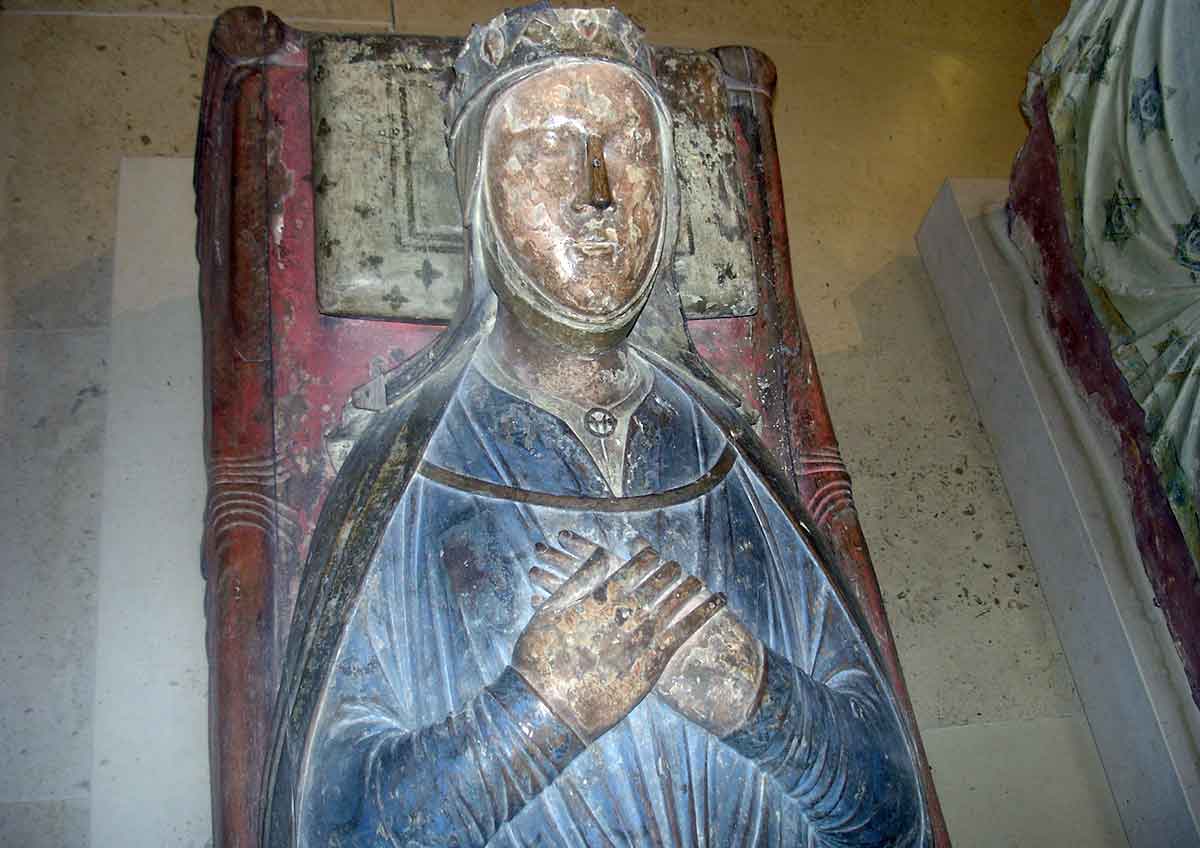
The only surviving child of Audemar, Count of Angoulême, the twelve-year-old Isabella of Angoulême was betrothed to Count Hugh IX of Lusignan in 1200. Such a union would bring together two territories in southern France that could threaten the southern border of the Angevin Empire.
Unwilling to permit such a threat to his kingdom, King John of England prevented the marriage by marrying Isabella himself. A furious Hugh complained to Philip Augustus, King of France. Looking for any pretext to cause trouble for the English kings, Philip responded by invading and confiscating John’s lands in France, including Normandy, Anjou, Tours and parts of Poitou. Only the southwestern portion of Aquitaine remained in John’s hands.
Throughout his reign, John tried with no success to recapture the lands he had lost. Heavy taxes levied to fund John’s unsuccessful campaigns in France caused strife with the English barons, who revolted against the king and forced him to sign the Magna Carta in 1215.
Although Isabella had no agency in the matter of her first marriage, she did have a say in the selection of her second husband, following John‘s death in 1216. Her choice fell to Hugh X de Lusignan, and the marriage was not without controversy. He was the son of her first fiancé and was also engaged to her daughter, Joan.
Isabella assured her son, Henry III of England, that she intended to rule Angoulême on his behalf, but as the distance between mother and son grew, it became increasingly apparent that she was playing a dangerous political game. She hindered Henry’s efforts to recover the continental lands lost by his father by, at times, siding with the French king, only to shift her allegiance and support her son when it suited her interests. The Angevin Empire as it had existed under Henry II was never recovered.
Why the Influence of These Women Was Vital for Medieval Governance
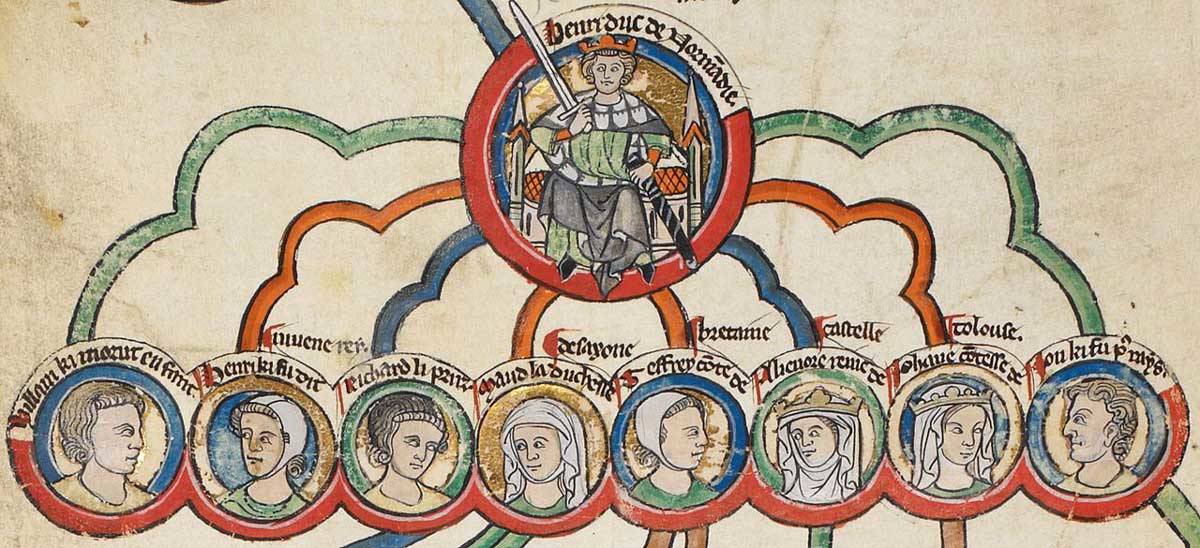
Medieval queen consorts were far from passive figures in English politics. Their influence shaped the course of the dynasty. Queenship in England permitted women to wield considerable power if they possessed the talents to do so and if their husbands permitted them a degree of political independence.
Unlike Eleanor of Aquitaine and the Empress Matilda, Berengaria of Navarre and Isabella of Angoulême were constrained by their husbands and were not afforded the same opportunity to establish themselves as independent political figures in England. Both women, however, proved capable rulers in their widowhood.
Berengaria refused to be overlooked by her brother-in-law King John and continued to fight for her dower lands. The French king eventually took pity on her and awarded her the city of Le Mans. Isabella similarly was granted direct rule over Angoulême, freed from the restraints of a tyrannical and cruel husband.
By contrast, Eleanor of Aquitaine and the Empress Matilda, both wealthy heiresses in their own right, possessed an exceptional strength of character that refused to be sidelined by their respective husbands. Regardless of their political autonomy during their husbands’ reigns, their respective roles as consorts to English kings remained a fundamental component in shaping the fate of the Angevin Empire.
Each of these remarkable women enhanced the Angevin Empire through the lands and security they brought to their marriages. The Angevin Empire relied on strong alliances and loyalty to enable it to grow and flourish. Without the contribution of these women, it could scarcely have been described as an empire at all, but rather a loose and more fragile collection of feudal territories.