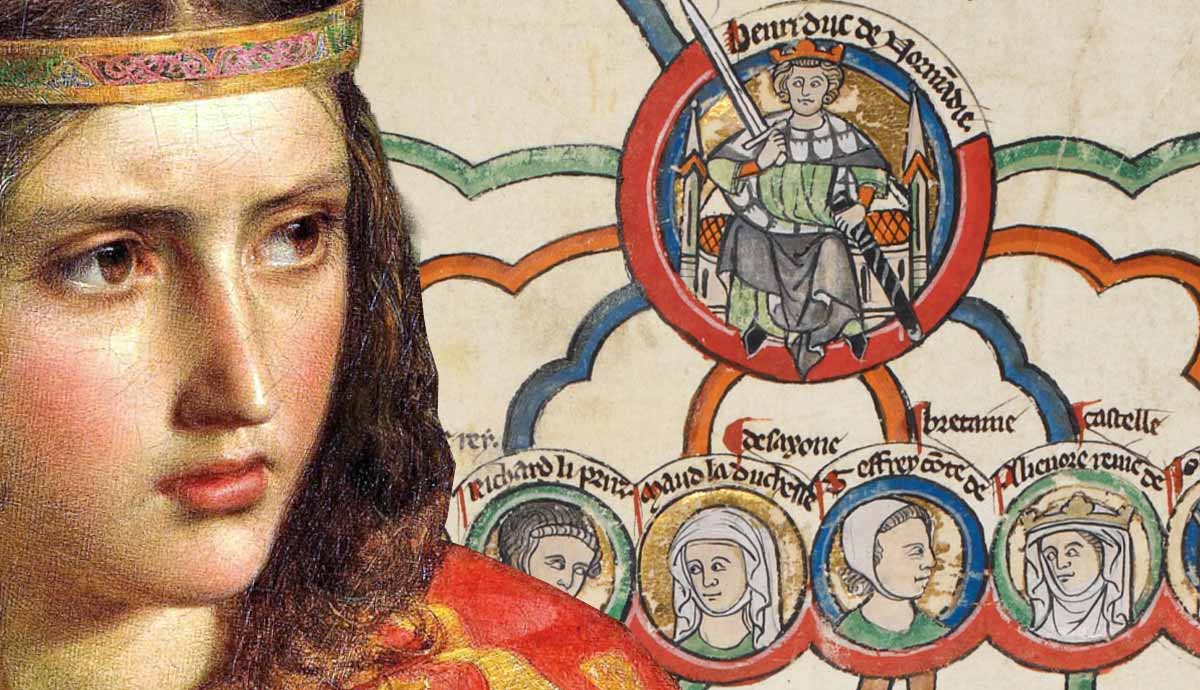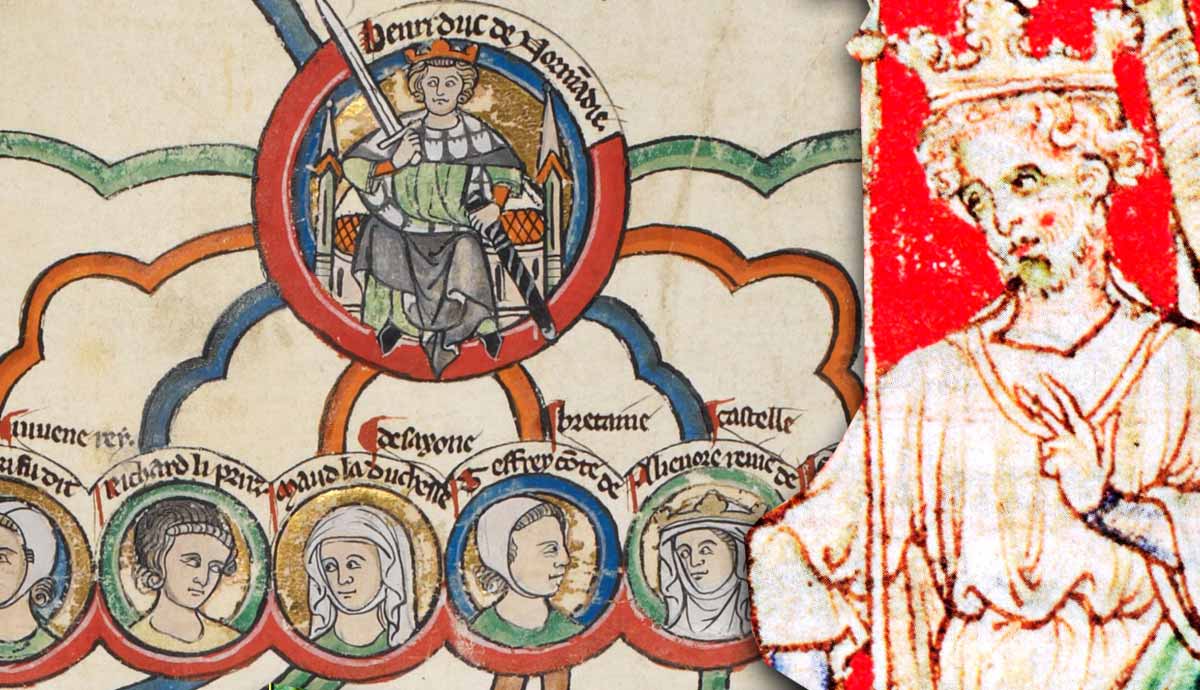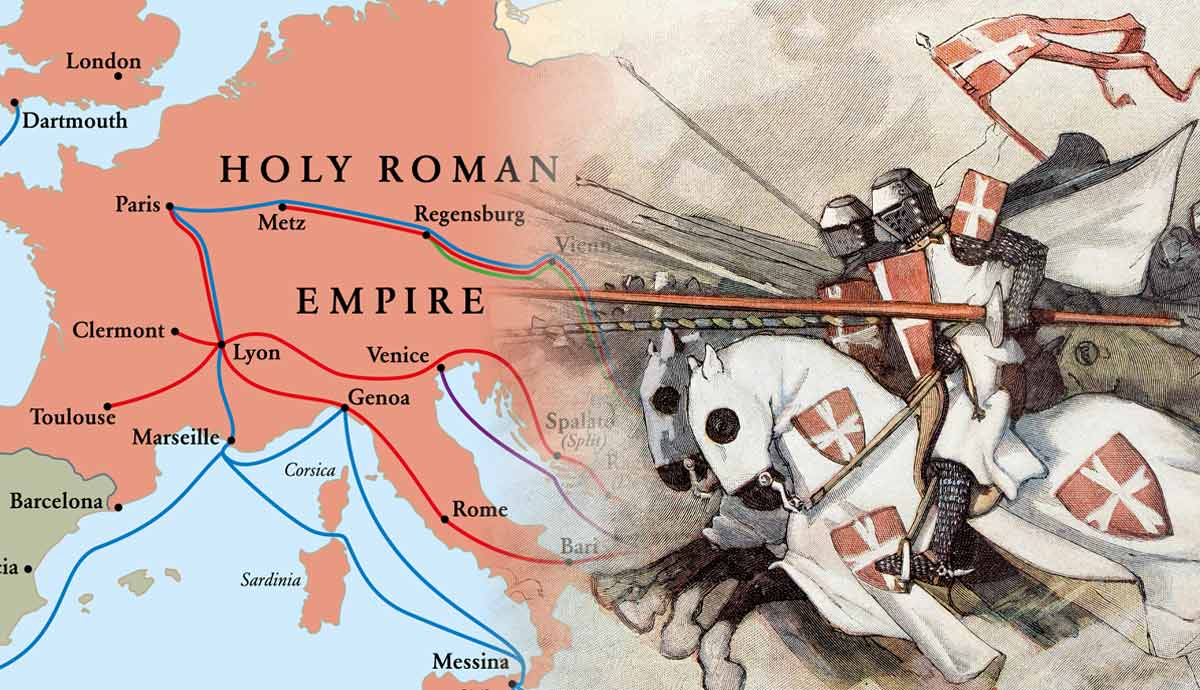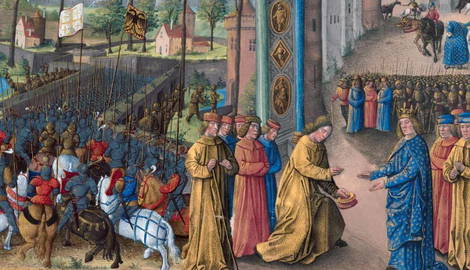

In 1147, Eleanor of Aquitaine, one of the most influential and wealthiest queens of the Middle Ages, embarked on the adventure of a lifetime. Along with her husband, King Louis VII of France, she responded to the papal call for the Second Crusade and headed to the Holy Land. Her participation as a queen was unprecedented, and consequently, her conduct on the Crusade was scrutinized by her contemporaries. An alleged extramarital incestuous affair and images of Eleanor riding as an Amazon have shaped perceptions of her to this day.
Eleanor and Louis Take the Cross
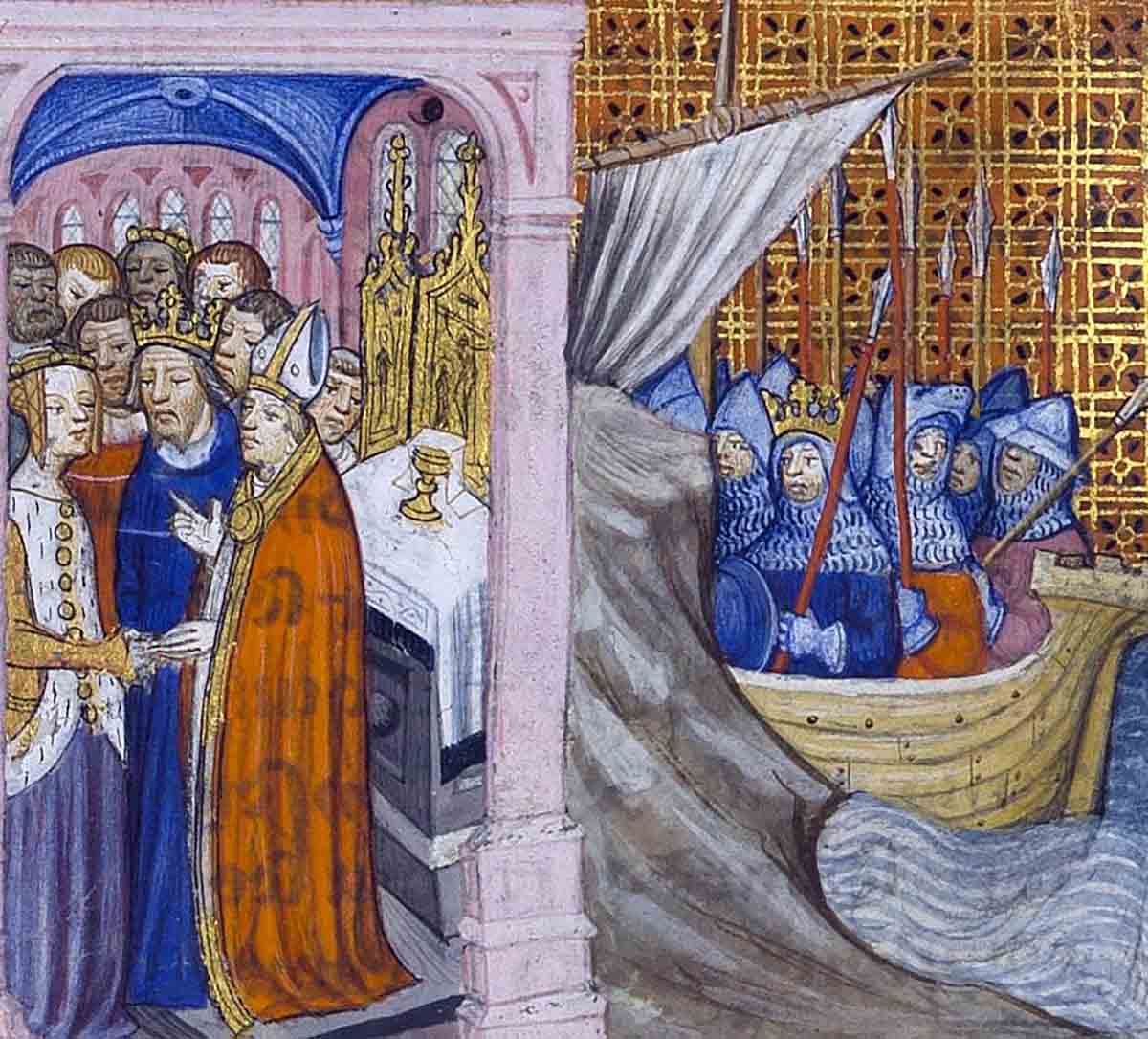
The marriage of Eleanor, Duchess of Aquitaine, to King Louis VII of France had begun to fracture as the couple embarked on the Second Crusade in May 1147. Eleanor had borne Louis one daughter in their ten-year marriage, and the king was impatient for a male heir. Taking the unusual decision to bring his wife on crusade, Louis had perhaps hoped to conceive a child during the expedition.
Eleanor’s participation had the unexpected effect of encouraging other women of noble stock to join their husbands on the arduous journey that would take them thousands of miles east. Each of these women also required female attendants, thus swelling the number of non-combatants and frustrating the progress of the army. Further hindering the army was Eleanor’s baggage train. Queens did not travel lightly, and Eleanor intended to demonstrate her wealth and status as she headed east with her sumptuous belongings.
Although crusading was still in its infancy, it was understood to be a holy mission, one that required piety and penance from its participants and the removal of all earthly distractions. Eleanor, by her mere presence, had attracted criticism from contemporary chroniclers who dubbed the expedition a cesspit of sin and sexual impropriety.
Did Eleanor of Aquitaine Really Dress as an Amazon Warrior?
The presence of an excessive amount of non-combatants, as well as Eleanor’s heavy baggage train, meant progress was slow. The French crusader retinue finally arrived at Constantinople in October 1147, where Eleanor and Louis would enjoy the hospitality of the Byzantine Emperor before crossing into Asia Minor. The Byzantine author, Niketas Choniates, when describing this royal visit, claimed:
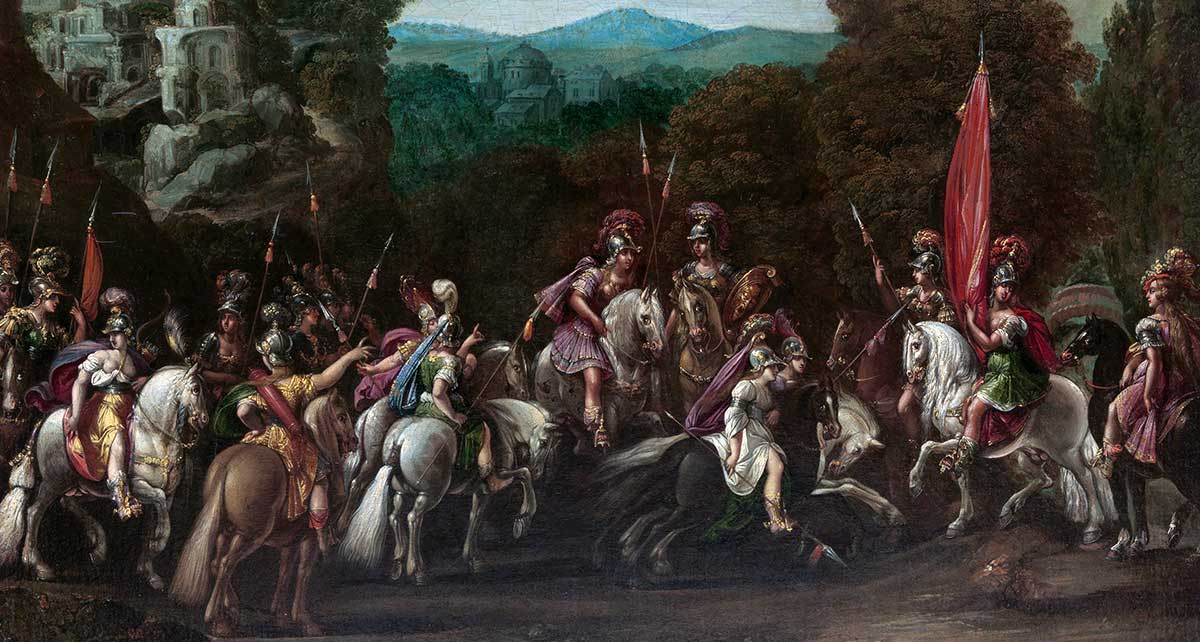
“Females were numbered among them, riding horseback in the manner of men, not on coverlets sidesaddle but unashamedly astride, and bearing lances and weapons as men do; dressed in masculine garb, they conveyed a wholly martial appearance, more mannish than the Amazons. One stood out from the rest as another Penthesilea and from the embroidered gold which ran around the hem and fringes of her garment was called Goldfoot” (Choniatēs, 1984, p. 35).
This passage helped fuel the later legend of Eleanor riding as an Amazon and is one of the most frequently cited sources behind the enduring image of Eleanor as a martial queen. It has been suggested that the reference to Penthesilea was a reference to Eleanor as one who stood out among the others. There are several issues with Choniatēs’ account. Firstly, he was not an eyewitness to events, writing his report of the royal visit 50 years after the fact.
Furthermore, Choniatēs does not explicitly state that Eleanor was among those purportedly riding in the manner of an Amazon, merely suggesting that such ladies were among the French retinue. Choniatēs’s account cannot be corroborated with other contemporary accounts; he may have used the story to emphasize Byzantine perceptions of Frankish excess and barbarity and to condemn the Crusades on the whole. Indeed, Choniatēs was serving as a Byzantine official when Constantinople was sacked in 1204 during the Fourth Crusade.
The Scandal at Antioch: Incest or Political Mutiny?
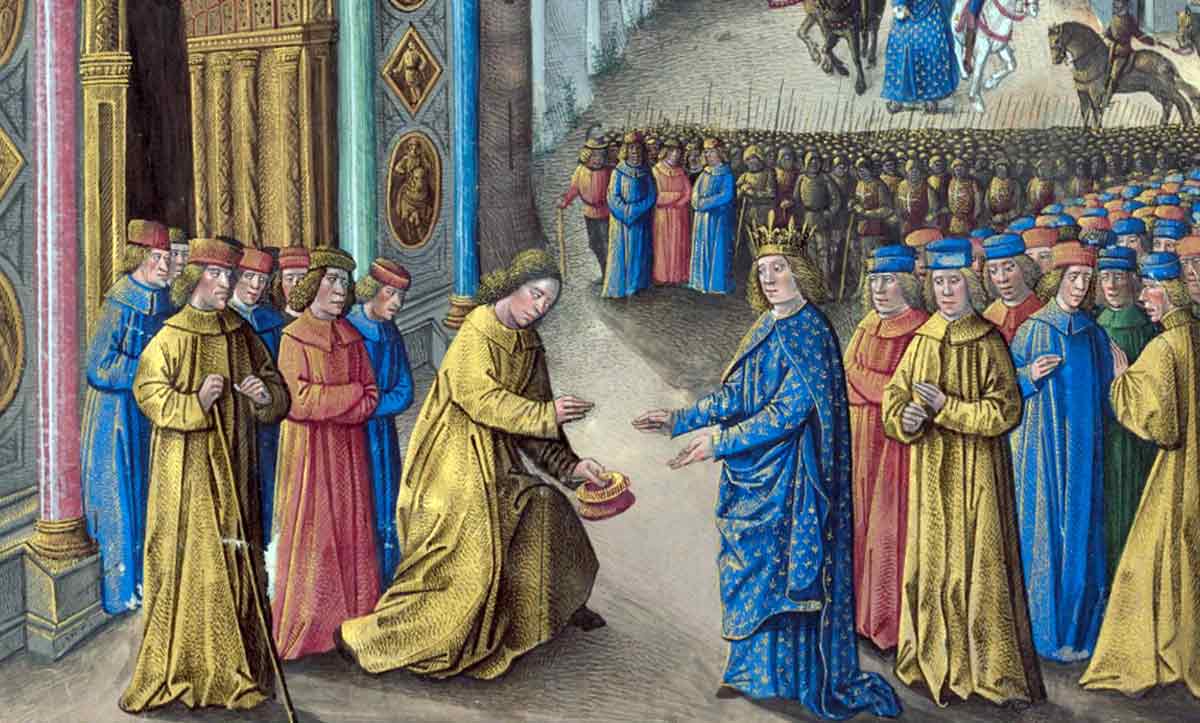
The French retinue arrived at Antioch in March 1148. The principality was ruled by Eleanor’s uncle Raymond of Poitiers. Eleanor may well have been eager to meet the uncle she had not seen since childhood. The pair shared a common native language, Occitan, which Eleanor would likely seldom hear at the court of her husband. The opportunity to converse in her native tongue would have been stimulating but also enabled communication between the niece and uncle to remain private.
Raymond was also young, handsome, and athletic. A renowned warrior, he stood in stark contrast to Louis, who was renowned for his piety. Indeed, contemporaries suggested Louis was more monk than king.
The time Eleanor spent with her kinsman led contemporaries to conclude that Eleanor was conducting a love affair with Raymond. William of Tyre, writing three decades after the event, accused Raymond of trying to steal Eleanor from Louis. He described Eleanor as “a foolish woman … she disregarded her marriage vows and was unfaithful to her husband” (William of Tyre, 1943, pp. 180–181).
Many contemporary chroniclers framed Eleanor’s conduct as a sexual scandal rather than a political protest. They had not considered Eleanor as a political actor in her own right, a wealthy heiress with a strong retinue of her own. She may have been working with her uncle to direct the course of the Second Crusade to suit Raymond’s ambitions.
Louis was intent on heading straight to Jerusalem and rejected Raymond’s proposal to send the crusading army to Aleppo and strike a decisive blow to the Muslims in Syria. Raymond found a willing ally in his niece, though her support for his expedition would ultimately be thwarted by Louis’ insistence that his wife join him in Jerusalem.
Why Eleanor’s Request for Annulment During the Crusade Shocked Europe

Louis’ decision to remove Eleanor from her uncle’s court enraged her. A furious Eleanor threatened to end their marriage by seeking an annulment. She reminded her husband of their kinship: they were third cousins once removed and shared common ancestors. Obtaining papal dispensation for such a union was relatively easy for a royal couple, and annulment on the grounds of consanguinity was fairly common. What made this episode remarkable was that Eleanor, rather than Louis, initiated the challenge.
Fearless, confident, and self-assured, Eleanor sought to use canon law against her husband. Louis was almost prepared to grant her request; he longed for a male heir, yet Eleanor had failed in this expected queenly duty. Rumors of her alleged affair with Raymond had already reached the shores of France, and Louis risked appearing weak and cuckolded in the eyes of his subjects.
Yet Louis ultimately rejected Eleanor’s demands for an annulment. He needed her financial and military support if he was to remain in the Holy Land and achieve anything of worth. Eleanor had likely funded much of Louis’ expedition, and without her backing, the Second Crusade would effectively have been over. Louis was persuaded to reconcile with his wife and continue the campaign.
Tensions continued, but the royal couple were at least publicly reconciled as they traveled to Jerusalem. It was in the Holy City that Louis, along with other leaders, decided upon a course of action at the Council of Acre. In the aftermath, both his marriage and military reputation lay in ruins.
How the Crusade Exposed Louis VII’s Military Failures
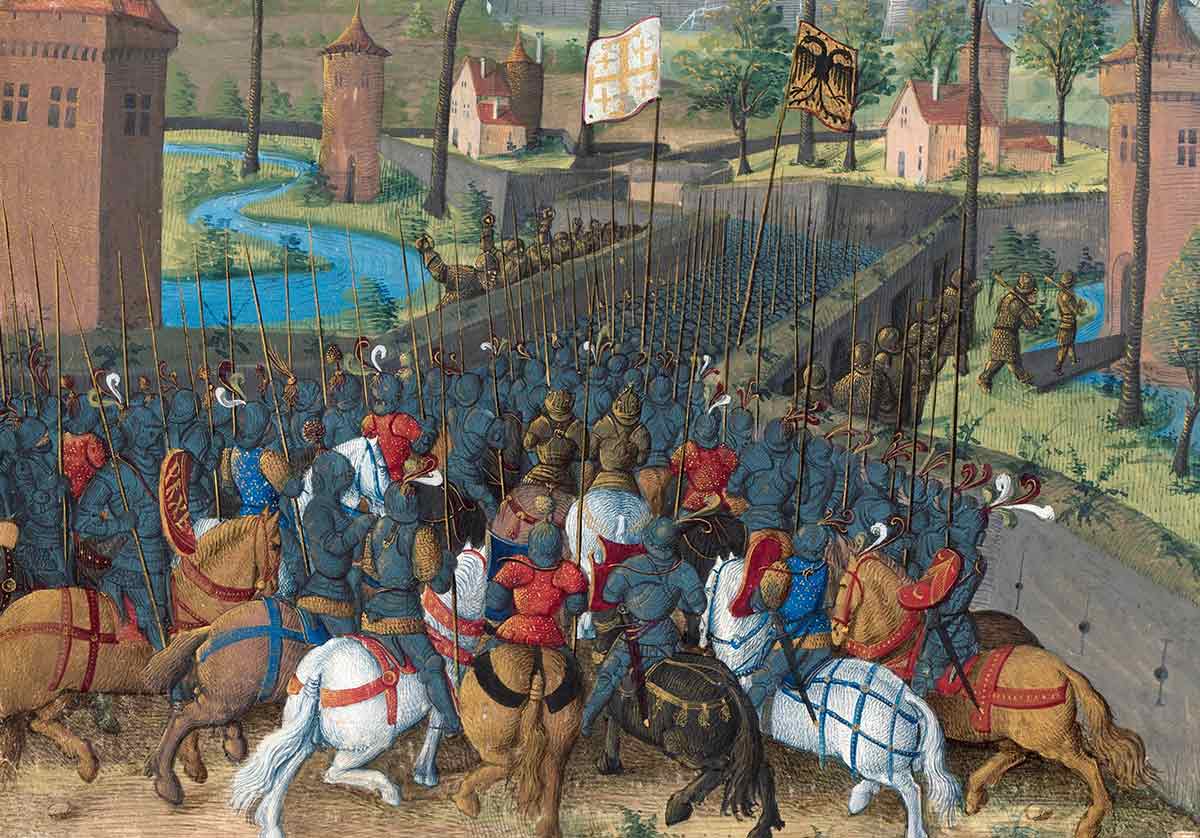
The Second Crusade had originally been called as a relief force to support Edessa in northern Syria, which had fallen to Zengi in 1144 and was now under the control of his successor Nur ad-Din. By the time Louis had reached Jerusalem in 1148, the city was a lost cause. Raymond of Poitiers continued to promote his proposal for an expedition to Aleppo, but had little support. The crusaders decided instead to target the Muslim stronghold of Damascus.
The crusaders laid siege to Damascus in July 1148. Having made little progress, the crusaders focused their efforts on a weaker section of the city walls. Abandoning the resource-rich orchards on the west side of the city, the crusaders shifted their forces to the exposed eastern plain, where a severe lack of food and water quickly forced a disastrous retreat.
An expedition that had started out so well, led by and funded by wealthy monarchs, had ended in failure. The crusaders considered who was to blame for the removal of divine favor. Some blamed Eleanor’s presence, interpreting the failure as a sign of divine disapproval. Her alleged sexual impropriety and perceived disobedience to her husband were cited as evidence that God had condemned the expedition.
Others looked to more tangible explanations: a furious Raymond had allegedly sworn to see Louis fail and had proposed the ill-advised maneuver, thus leading to disaster.
Defeated and humiliated, Louis returned to Eleanor in Jerusalem. The Second Crusade damaged his reputation for military prowess, and it now appeared that God had withdrawn his favor from Louis. He had produced no legitimate heir and had lost the opportunity to establish a lasting reputation for military valor in the Holy Land.
From the Holy Land to the English Throne
Eleanor and Louis left the Holy Land in April 1149. Their relationship had deteriorated to such an extent that they traveled westward on different ships. When Eleanor’s vessel was captured by a Byzantine fleet, it was not her husband but Roger II of Sicily who came to her rescue. Eventually arriving in Rome, where she was reunited with Louis, Pope Eugenius III attempted to repair the fractured marriage and forbade the couple from seeking an annulment. The pontiff’s counsel evidently had some effect, as a daughter was conceived while the couple were enjoying the Pope’s hospitality.
But the birth of Alice in 1150 could not save their marriage. Likely disappointed by the arrival of another daughter, Louis pursued the course of action first proposed by Eleanor in the Holy Land. Convening a church council, he requested an annulment, which was granted in March 1152.
Eleanor, now a free yet immensely wealthy woman and highly desirable bride, left the French court for her lands in Poitou and evaded several attempts to abduct her. She sent word to the young and handsome Henry of Anjou, the future King Henry II of England, and proposed marriage. The couple were wed in May 1152, just eight weeks after her divorce from Louis. The fact that Eleanor was even more closely related to Henry than she was to Louis was immaterial.
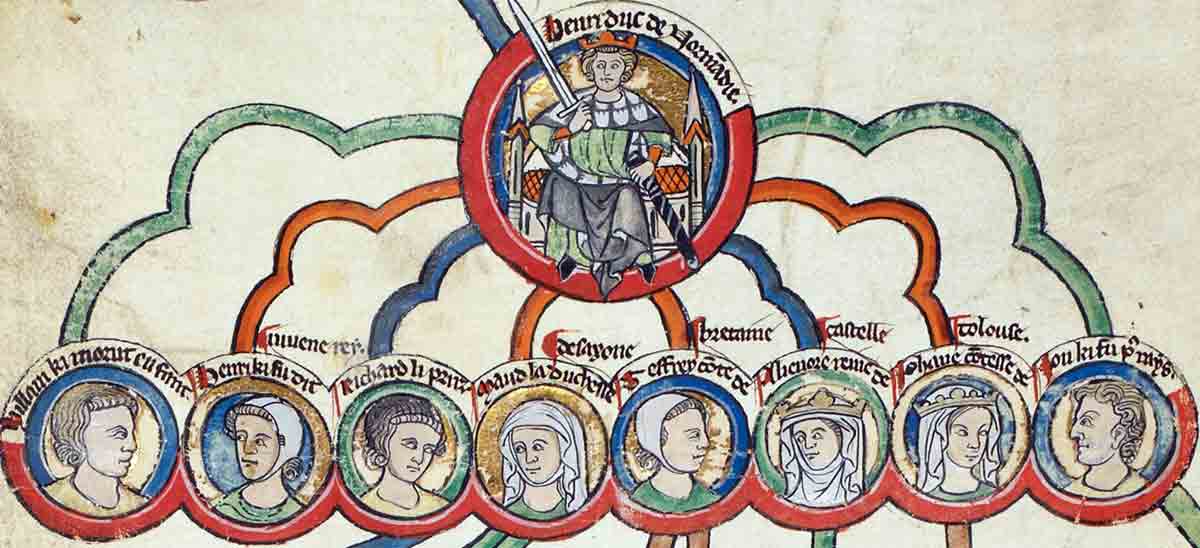
In a further blow to the French king, Eleanor quickly conceived and gave Henry the first of several sons, William, who was born in August 1153. William would die young, but Eleanor would give Henry four more sons, including three kings of England.

Upon marrying Henry, Eleanor was thirty years old and experienced in political affairs. She offered her new husband more than a decade of experience as they established the Plantagenet dynasty, which would rule England until 1485.
Eleanor’s alleged scandalous behavior during the Second Crusade allowed her to escape what must have been an unhappy marriage. Other women might have faded into obscurity, but not Eleanor. A powerful and wealthy woman in her own right, she enjoyed many freedoms denied to most women of her time. Eleanor chose her second husband from a multitude of potential suitors. The young and ambitious Henry offered her power, prestige, and wealth, yet her own ambitions were only permitted so far as her husband allowed.
Sources
- Niketas Choniatēs. (1984). O City of Byzantium: Annals of Niketas Choniatēs (H. J. Magoulias, Trans.). Wayne State University Press.
- William of Tyre. (1943). A History of Deeds Done Beyond the Sea (Vol. 2, E. A. Babcock & A. C. Krey, Eds. & Trans.). Columbia University Press.