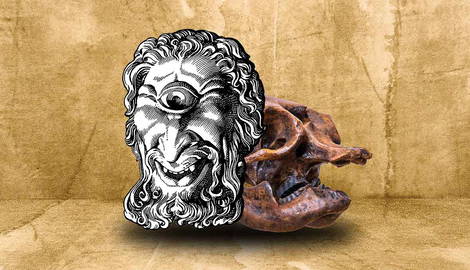

The Cyclops, a giant and terrible one-eyed creature, appears in many Greek myths, from making Poseidon’s trident to eating Odysseus’s men in Homer’s Odyssey. But where did the ancient Greeks get this idea of a giant, one-eyed creature? What inspired their myths? Recently, scholars have suggested that fossil remains of extinct animals could have inspired the myths about Cyclopes when they were discovered by the Greeks. How well-founded is this idea, and what similarities exist between animal fossils and the Greek Cyclops?
The Cyclops in Greek Myths and Stories
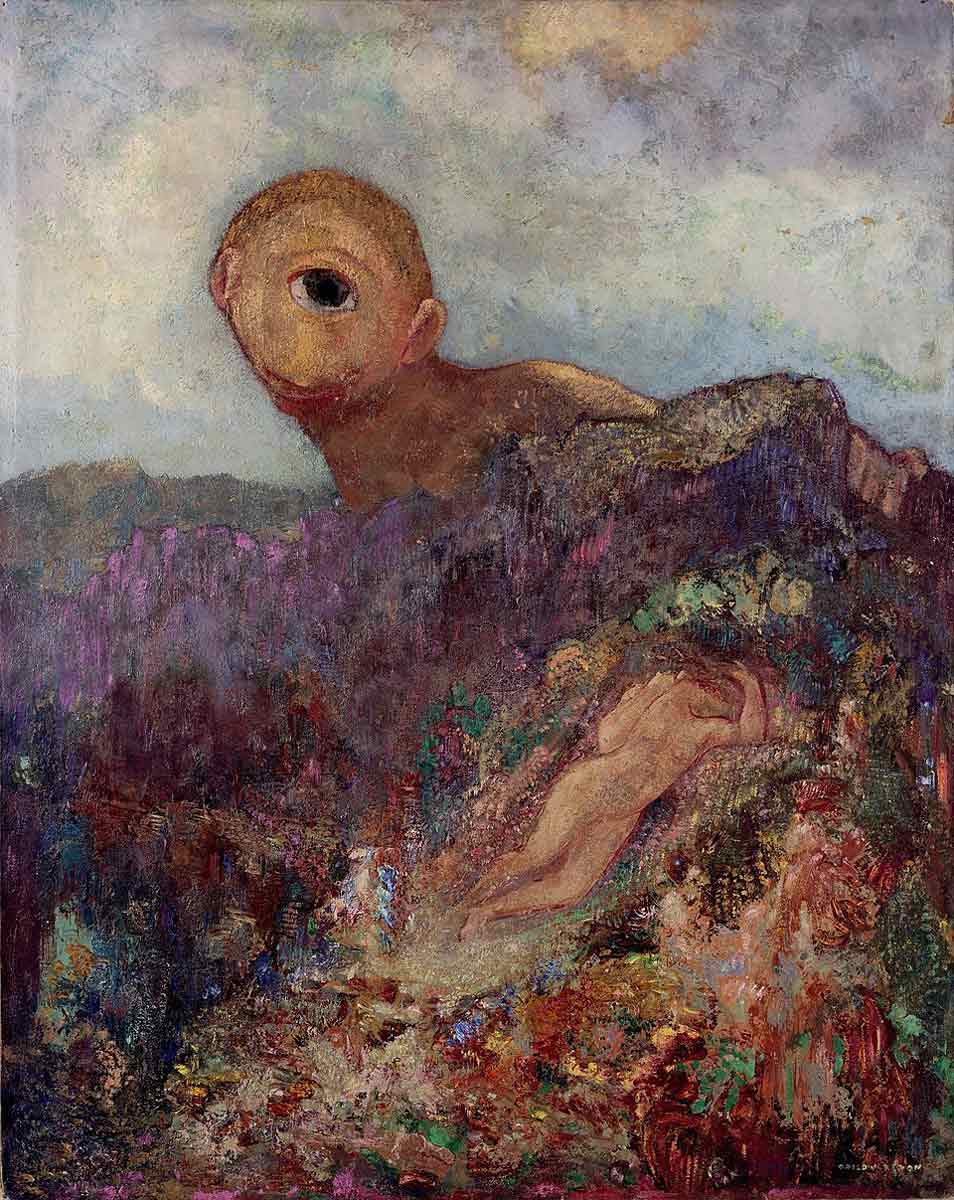
The Cyclops is one of the most intriguing figures in Greek mythology. Its name literally means “round eye.” But a Cyclops is not a single being; there are many of them across the Greek world, each differing in occupation and cultural characteristics.
The earliest written mention of the Cyclopes comes from Hesiod’s Theogony (8th–7th century BC), where they appear not as monsters, but as primordial craftsmen. He names three brothers, Brontes, Steropes, and Arges, whose very names evoke thunder, lightning, and brightness. According to Hesiod, the Cyclopes are the ones who forge Zeus’s thunderbolt.
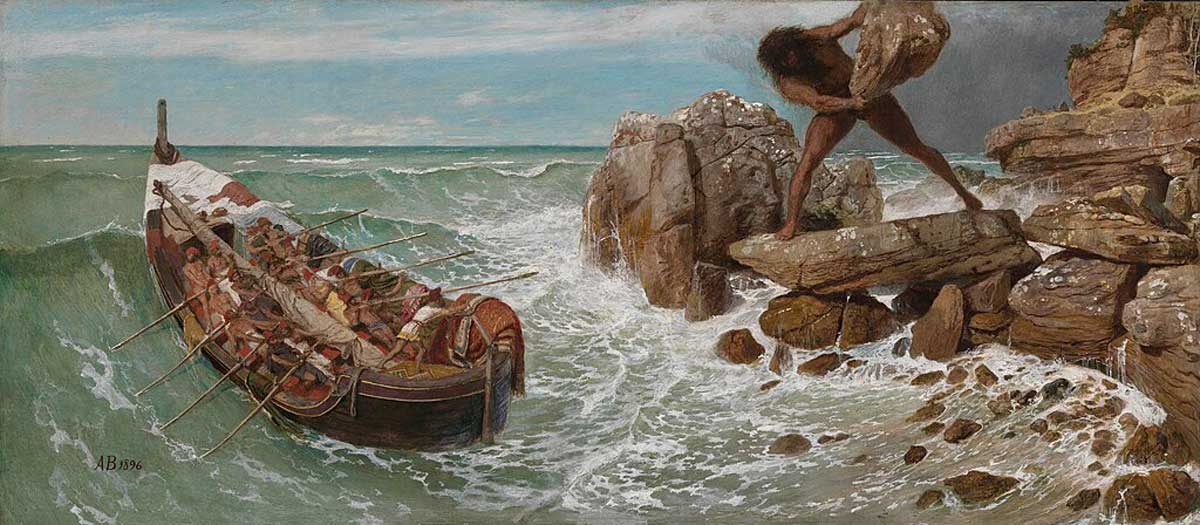
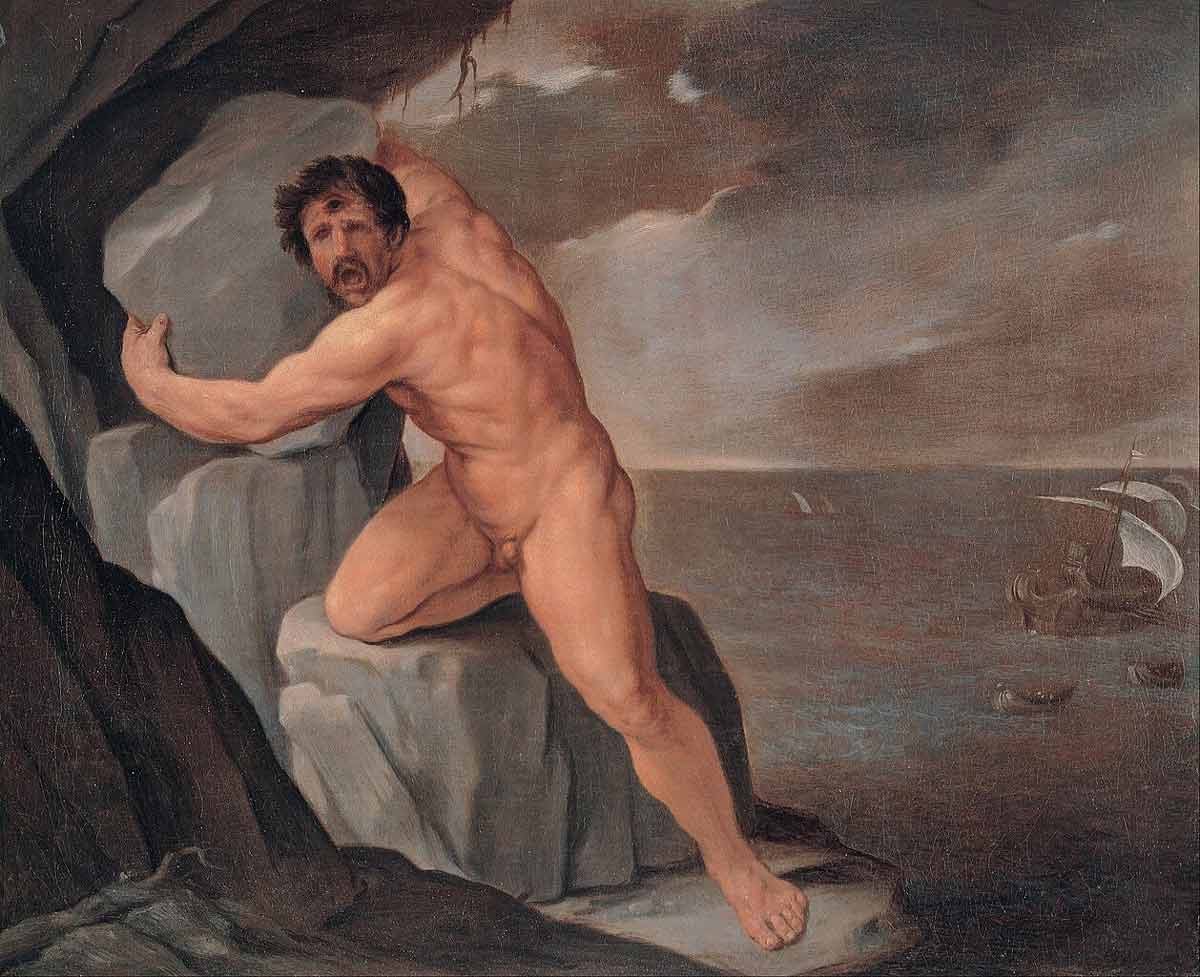
A dramatically different version appears in Homer’s Odyssey (c. 700 BC). Here, the Cyclopes are giant, lawless shepherds who live in isolation on a fertile island. The most famous among them is Polyphemus, who trapped Odysseus and his men in his cave and devoured some of them raw. Unlike Hesiod’s Cyclopes, Homer’s Cyclops is not a creator but a destroyer. His tale belongs to a much older Indo-European folktale motif of “the one-eyed giant.”
By the classical and Hellenistic periods, a third version of the Cyclopes has appeared in mythology. In this tradition, they become legendary master builders. Ancient Greeks, confronted with massive prehistoric stone structures, especially the walls of Mycenae and Tiryns, believed that such enormous stones could only have been lifted by giants.
All these versions of the Cyclopes include the details that they were enormous and had a single eye.
Fossils the Greeks Could Have Found in the Mediterranean
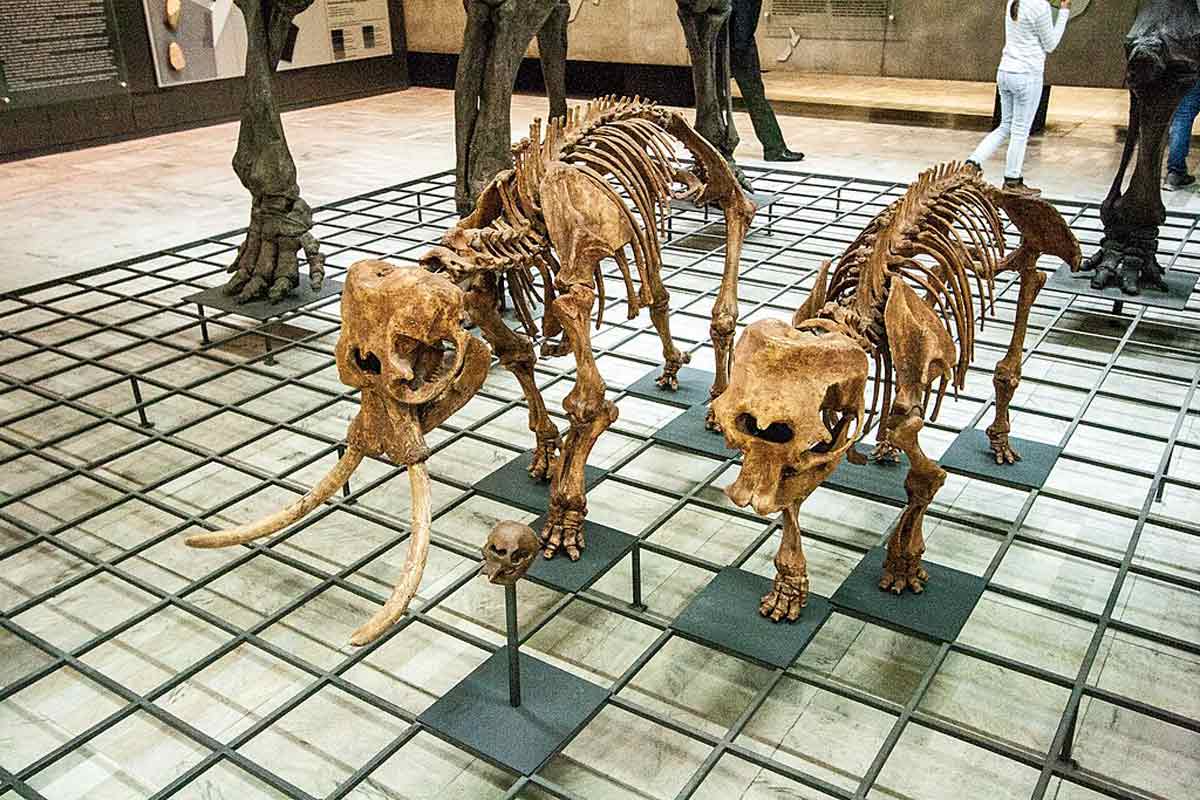
The ancient Greeks lived in a region rich with prehistoric fossil remains, especially on the Mediterranean islands. The most significant among these were the extinct Pleistocene dwarf elephants found on Crete, Cyprus, Sicily, Malta, and Tilos. These animals lived during the Pleistocene and disappeared long before Greek civilization emerged, but their bones were preserved in caves and along remote coastlines. Their skulls often washed out of caves or eroded from limestone cliffs, the kinds of places where ancient travelers, shepherds, or sailors could easily encounter them.
The ancient Greeks had no concept of prehistoric time as we understand it today, and they were unfamiliar with the scientific nature of the fossils they discovered. In addition to dwarf elephants, the Greeks also came across the fossils of larger animals such as mammoths and mastodons, although these certainly did not match the image of a Cyclops. Fossil beds on the Greek mainland, such as those in Thessaly and the Peloponnese, also preserved the remains of giant deer, prehistoric horses, rhinoceroses, and cave bears.
Why Elephant Skulls Look Like One-Eyed Monsters
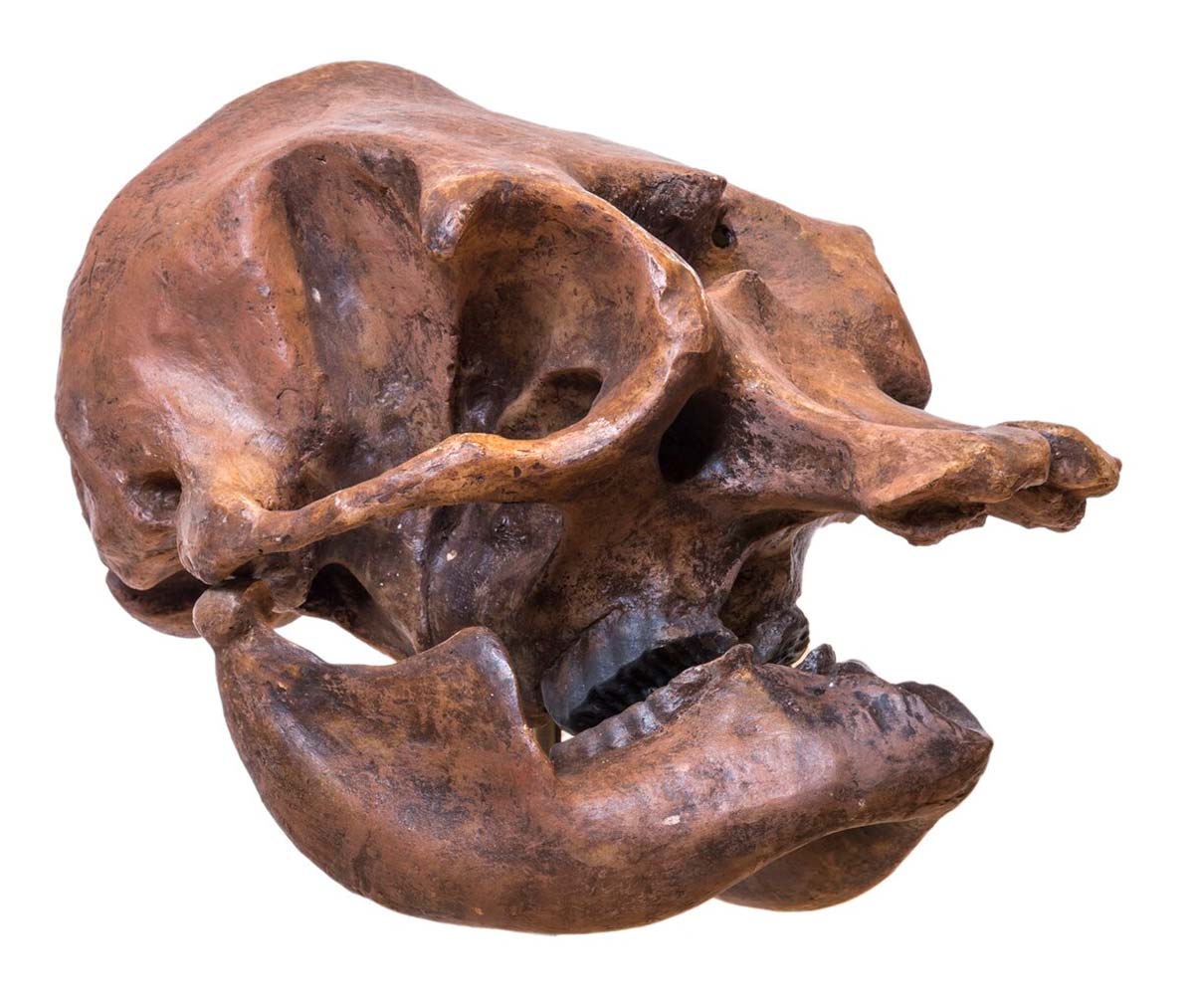
Elephant skulls, especially those of the dwarf species that lived on Mediterranean islands, have a distinctive anatomy that resembles one-eyed monsters. The most visually striking feature of an elephant skull is the large central opening in the middle of the forehead. To a modern biologist, this cavity is immediately recognizable as the attachment point for the elephant’s trunk, known as the nasal cavity. But without some knowledge of anatomy, this is impossible to know, especially if you have never seen an elephant in your life. It is important to emphasize that the dwarf elephants from this region went extinct around 1,000 years before the formation of classical Greek culture. No species of Mediterranean dwarf elephant survived long enough for the ancient Greeks to encounter them alive.
The eye sockets of the elephant are much smaller and positioned on the sides of the skull, often partially obscured or eroded in fossil specimens. As a result, the dominant central opening becomes the most noticeable feature. In dwarf elephants, this effect is even more pronounced. Their skulls are proportionally large compared to their bodies, thick-boned, and often well-preserved in caves or coastal sediments. Over time, erosion smooths the central cavity, making it appear even larger and deeper.
Did Fossils Really Inspire the Cyclops?
Is the resemblance between elephant fossils and the Cyclops merely a product of imagination, just like the Cyclops themselves, or is this theory grounded in scientific discourse?
The first person to propose this idea was Othenio Abel, an Austrian paleontologist and evolutionary biologist. He introduced it in the early 20th century in his publication “Die Vorweltlichen Tierreste im Mythus und Kult der Griechen” (1914). Around 60 years later, Dorothy Vitaliano, a geologist and science historian, developed the concept of geomythology, which examines how natural features and paleontological remains shape myths. In her work “Legends of the Earth” (1973), she also touched on the Cyclops and the possibility of linking this myth to ancient animal fossils.
The most vocal defender of this theory is Adrienne Mayor, an American historian of science at Princeton University. Mayor argues that ancient Greeks frequently encountered fossils, mammoths, mastodons, giant deer, and especially dwarf elephants, and interpreted them as evidence of giants, heroes, and monsters. She provides detailed documentation of fossil sites near ancient settlements and sanctuaries.
This is not a new approach. If we go further back, to ancient Greece and Rome, we see that Herodotus, Pausanias, Strabo, and Pliny the Elder all describe enormous bones being discovered, displayed in temples, and identified as those of heroes or giants.
“Here are also kept bones, too big for those of a human being, about which the story ran that they were those of one of the giants mustered by Hopladamus to fight for Rhea, as my story will relate hereafter.” (Pausanias, Description of Greece 8.32.5)
Do Fossil Sites Align With Cyclops Legends?
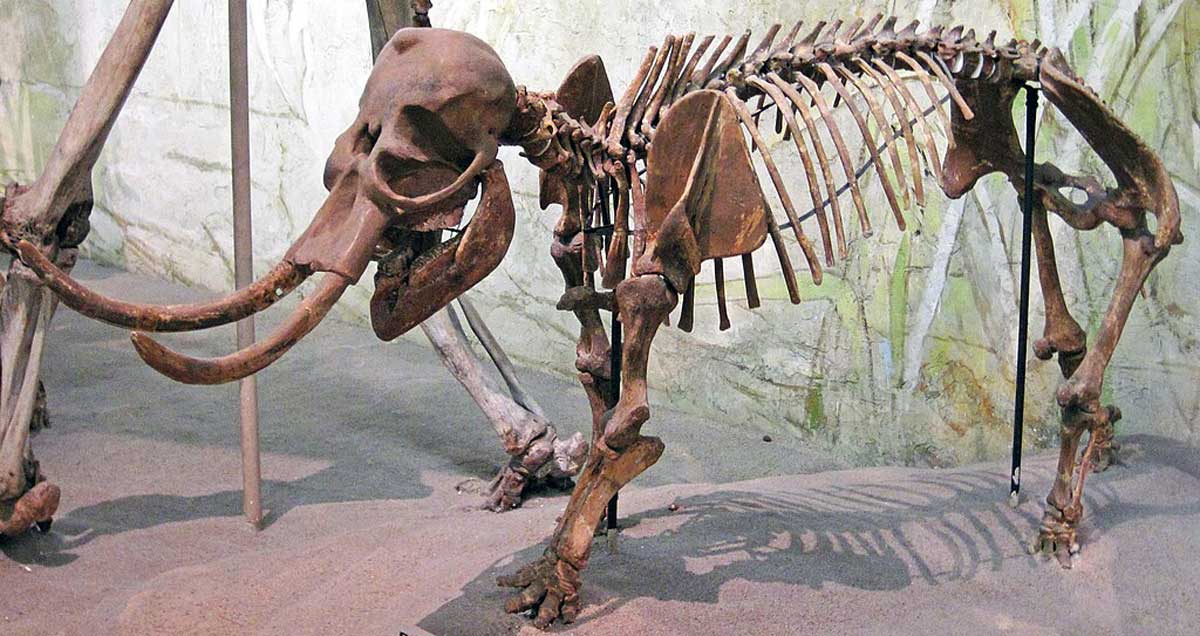
One of the strongest pieces of evidence that the myths of the Cyclops are rooted in fossils is the geographic overlap between the two. The places in the ancient world where stories of Cyclopes were most vividly told often coincide with regions rich in prehistoric elephant fossils. This overlap should not be ignored when examining this topic. The best example is Sicily, where the highest number of Palaeoloxodon falconeri fossils have been found, the very island where later Greek tradition placed the home of Polyphemus and the race of Cyclopes. When Greek colonists arrived in Sicily during the 8th century BC, they would have encountered these ancient skulls already eroding out of cliffs or exposed in limestone caverns.
Similarly, Crete, Cyprus, Malta, and Tilos are also locations where many of these elephant fossils have been found. Although Cyclopes are not necessarily mentioned on these islands, sailors and travelers moved freely across the Mediterranean. Fossils discovered on one island could easily circulate as stories elsewhere. It is also interesting that the fewest Cyclops stories come from mainland Greece, where the smallest number of dwarf elephant fossils has been found.
Skepticism and Counterarguments to the Fossil Theory
The theory that fossils inspired the stories of Cyclopes has no consensus among historians because, in essence, it is impossible to know for certain. While the idea that fossil elephant skulls helped shape the Cyclops myth is widely considered plausible and even compelling, not all scholars agree that fossils played a decisive role.
One of the major criticisms comes from classicists who argue that Cyclopes existed in Greek oral traditions before the Greeks settled in Sicily and came into contact with dwarf elephant fossils. The “one-eyed giant” motif appears across Indo-European folklore, extending far beyond the Mediterranean.
Another criticism is that ancient texts never directly connect Cyclopes with fossils, even though Greek authors did notice and comment on oversized bones. If they truly believed these were the remains of Cyclopes, someone might have mentioned it. It is also not correct to say that the ancient Greeks never encountered elephants of other species. Through warfare and trade, albeit on a limited scale, they did. Therefore, there were Greeks who knew elephant anatomy and who could have understood what the fossils represented.
Thus, the theory that fossil remains inspired the ancient Greek stories of the Cyclops is a widely accepted theory, not a proven fact. It remains a compelling intersection of mythology, paleontology, and human imagination.