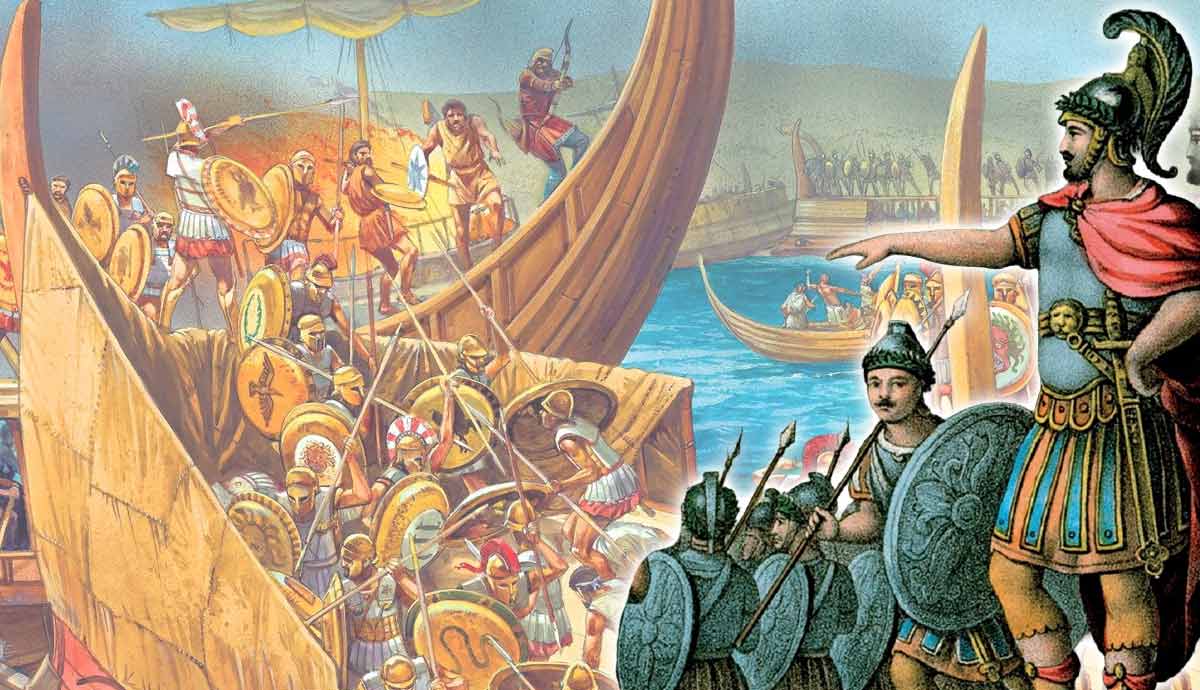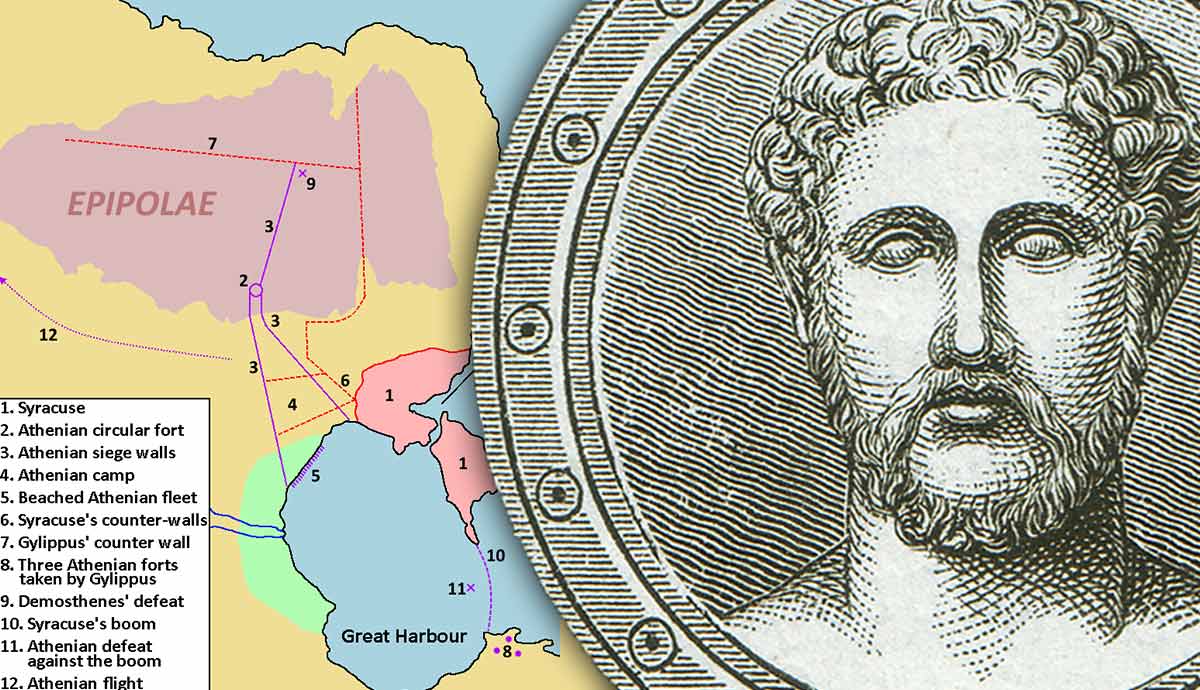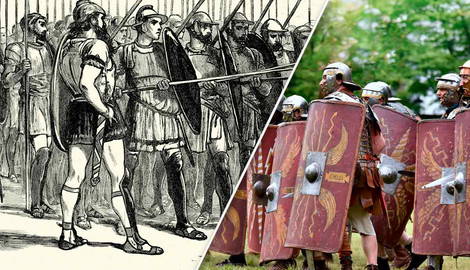
Since the time of Alexander the Great (336-323 BC), the Macedonians had dominated the eastern Mediterranean. Their heavy infantry phalanx rolled over the Greek cities and then the Persian Empire. To the west, Roman legionnaires had conquered Italy and were overwhelming Carthage. At the start of the 2nd century BC, a series of wars pitted these two military machines against each other. After almost two decades of indecisive combat, the first critical clash came in the early summer of 197 BC at Cynoscephalae.
Colliding Spheres of Influence: The First Macedonian War
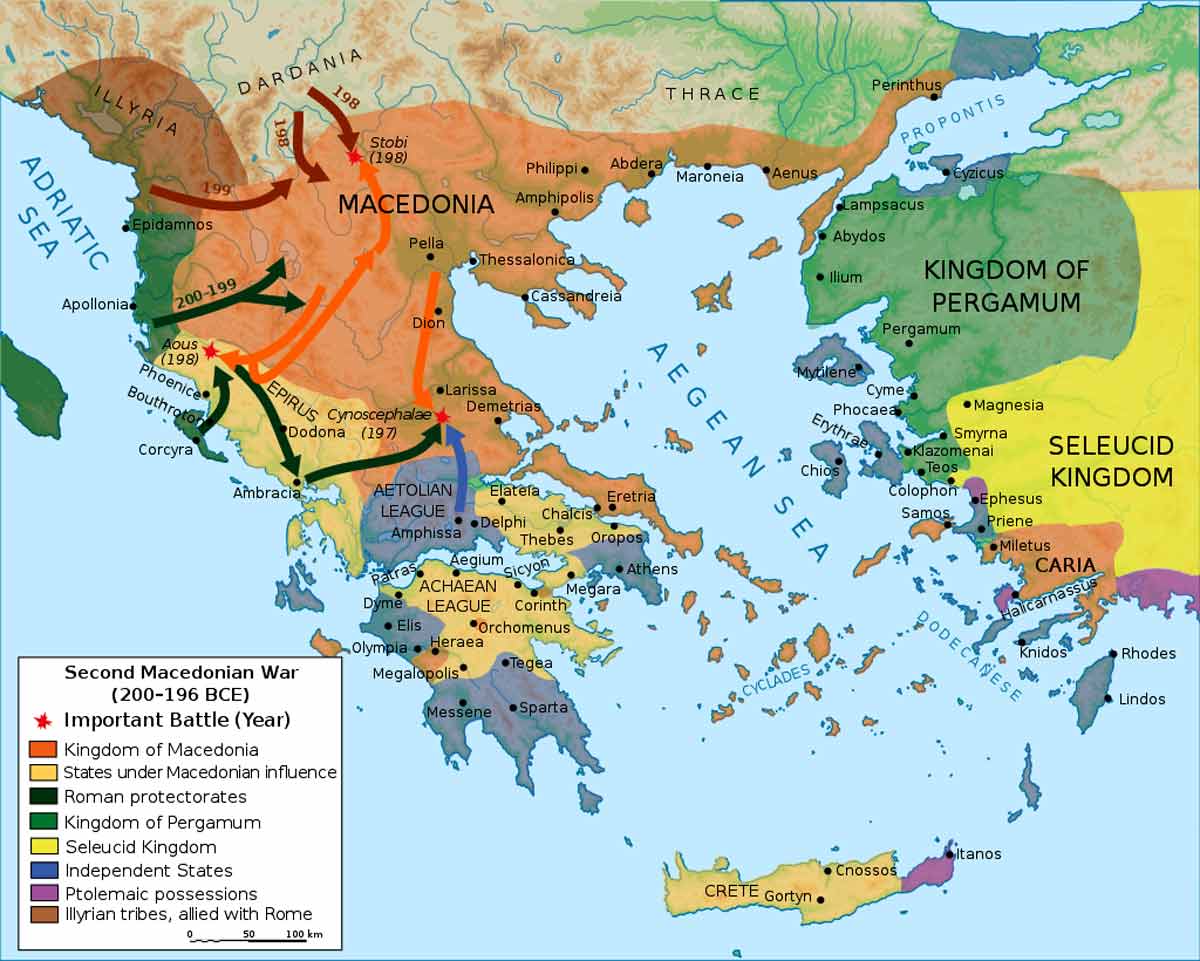
The First Macedonian Wer (215-205 BC) was a sideshow to the war between Hannibal and the Carthaginians and the Romans. The young Macedonian King Philip V (221-179 BC) had maintained his dynasty’s influence over Greece during his six-year reign. Now he was worried about Rome’s growing presence on the eastern coast of the Adriatic Sea and Macedonia’s western border. As Hannibal defeated Roman armies in Italy, Philip sought an alliance with the Carthaginians. In response, Rome went to war with Macedonia.
Both sides entered this conflict with limited ambitions. The Romans, fighting for their lives in Italy, sought only to prevent any assistance from reaching Hannibal. Philip aimed to remove the Roman threat from his own borders. Over the course of this ten-year war, Philip mostly made gains in the north, while Rome’s engagement was largely limited to its navy, with much of the fighting conducted by Greek allies. It was a stalemate, but it also deepened Roman involvement in Greece and the Aegean.
A Declaration of War: The Second Macedonian Wa
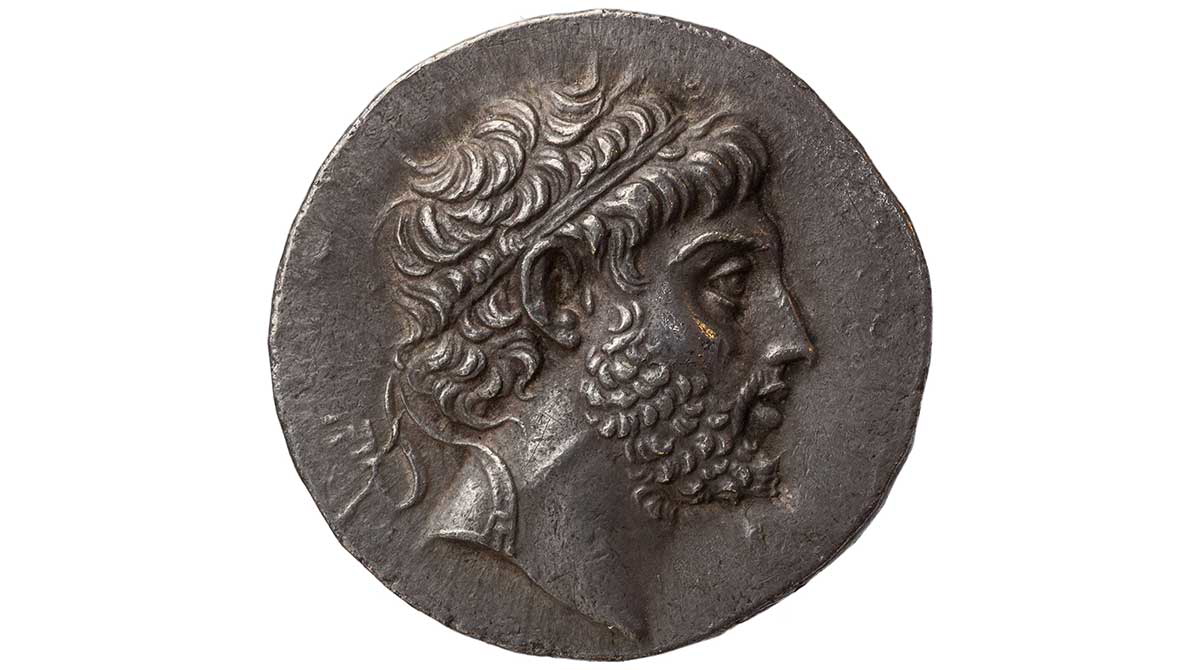
In 202 BC, Philip’s campaigns in Thrace and Asia Minor brought him into conflict with the Kingdom of Pergamon, a Roman ally, and the island of Rhodes. A seemingly minor incident of alleged religious sacrilege at Eleusis widened the conflict to Athens and prompted Macedonian raids on the city. While the King of Pergamum defeated the Macedonians at the Battle of Chios, the Rhodians, Pergamon, and the Athenians appealed to Rome. Initially, Rome only sent envoys to Greece to form a coalition against Macedon, which Philip took as a sign of weakness and license to continue his campaigns.
In 200 BC, Philip inflicted heavy damage on the countryside around Athens while a Roman fleet raided the key Macedonian base of Chalcis on the island of Euboea. The following year, Rome and its allies, now including the Aitolians and King Amynander of the Athamanians, pressured Macedon’s borders without making a breakthrough.
With no change in Philip’s behavior, despite some reservations from a war-weary populace, the Roman Senate called for war. Rome justified the war as a defense of their allies, but many relished the opportunities that came with the conflict.
The Ambitious Roman General Titus Quinctius Flamininus
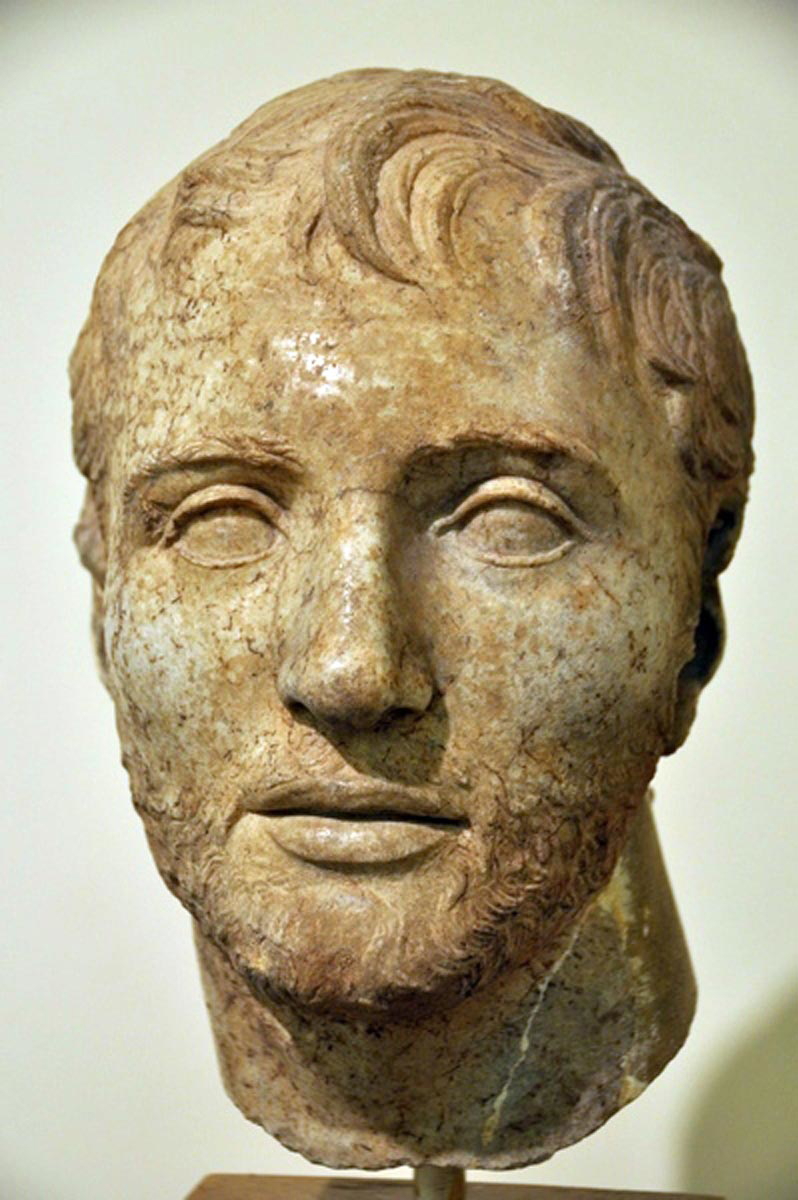
The war turned with the appointment of Titus Quinctius Flamininus to the command of Roman forces. From a prestigious aristocratic household, Flamininus had proved himself while serving as military tribune at the fortified city of Tarentum in southern Italy. When his commander died in 205 BC, the command was passed to the just 25-year-old Flamininus. He served there another three years, learning the Greek language and culture, and settling Scipio Africanus’ veterans from the Second Punic War, enhancing his reputation in Rome.
Flamininus decided to run for consul in 199 BC at just 30 years old. Initially, his candidacy was vetoed by the Tribunes of the Plebs as he had not held other lower offices on the cursus honorum, but the Senate forced through his candidacy, and he won the position for 198 BC. While he was elected in second place behind Sextus Aelius Paetus Catus, his colleague’s lack of military experience saw Macedon assigned to Flamininus.
Leaving for Greece immediately, Flamininus’ Greek education allowed him to win friends and dispel fears that the Romans were conquering barbarians. Soon Philip’s key Greek ally, the Achaeans, defected, leaving the Macedonians with few remaining friends.
A first attempt at peace in 198 BC failed as Philip could not accept Roman demands, which would have severely reduced Macedonian influence. Flamininus inflicted a defeat on Philip at the river Aous, significantly damaging the Macedonian army and forcing the king to retreat. Meanwhile, Roman and allied forces continue to pressure Macedonian positions in the Peloponnese and on Euboea. By the start of 197 BC, the war was going badly for Philip, but he was far from defeated.
Circling Forces: The Campaign of 197 BC
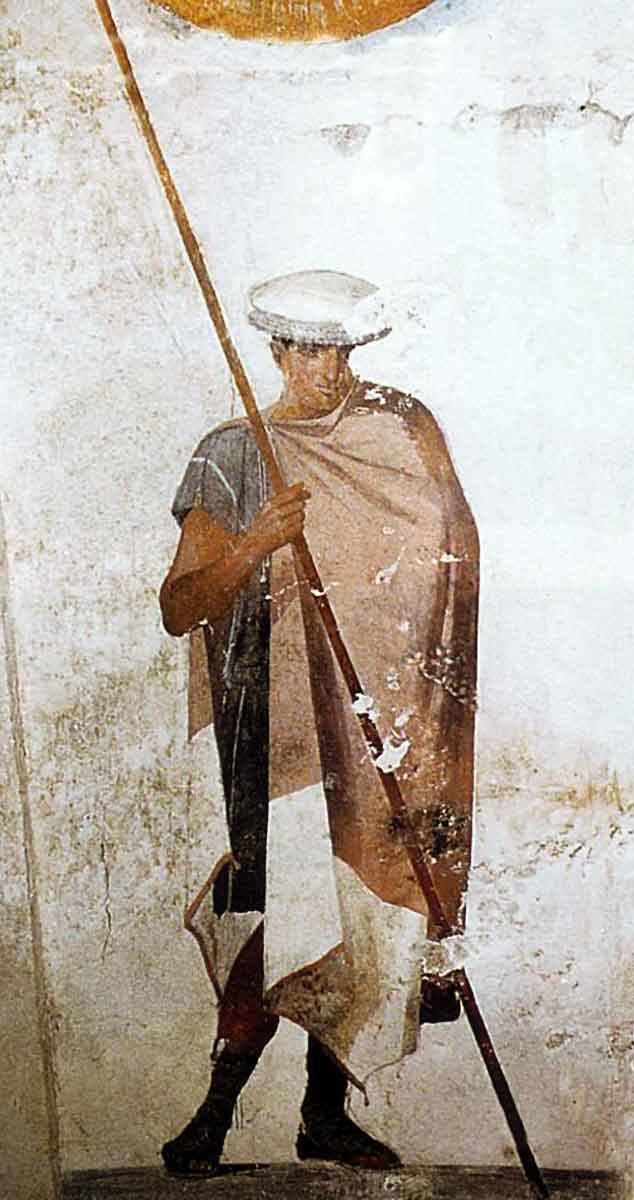
In the spring of 197 BC, the Roman and Macedonian armies moved towards each other. With its Greek allies, the Roman army was probably around 30,000 strong, including around 18,000 Roman infantry, some veterans of the Punic Wars. The Romans also had 20 war elephants. Philip’s army likely numbered around 25,000, as Macedonian resources had been stretched by recent wars. For this campaign, he had been forced to call up teenagers and those older than 55.
The early summer saw these two armies in southern Thessaly. Aware that Philip’s resources were at their limit, Flamininus aimed to block his access to supplies by cutting off the road to the Macedonian coastal base of Demetrias. After an inconclusive skirmish, Philip headed west to seek supplies around the town of Scotussa. Flamininus followed. Both armies were now marching west to the same destination.
A range of hills separated the two armies, making them unaware of each other’s presence. A storm and low, thick mist reduced visibility further. When scouts from the two armies started coming across each other in the mist around the hills known as Cynoscephalae (dog heads), few expected that the day would bring the decisive and long-awaited clash between the Macedonian phalanx and the Roman legion.
Phalanx vs Legion: Two Military Systems Clash on the Dog’s Heads Hills
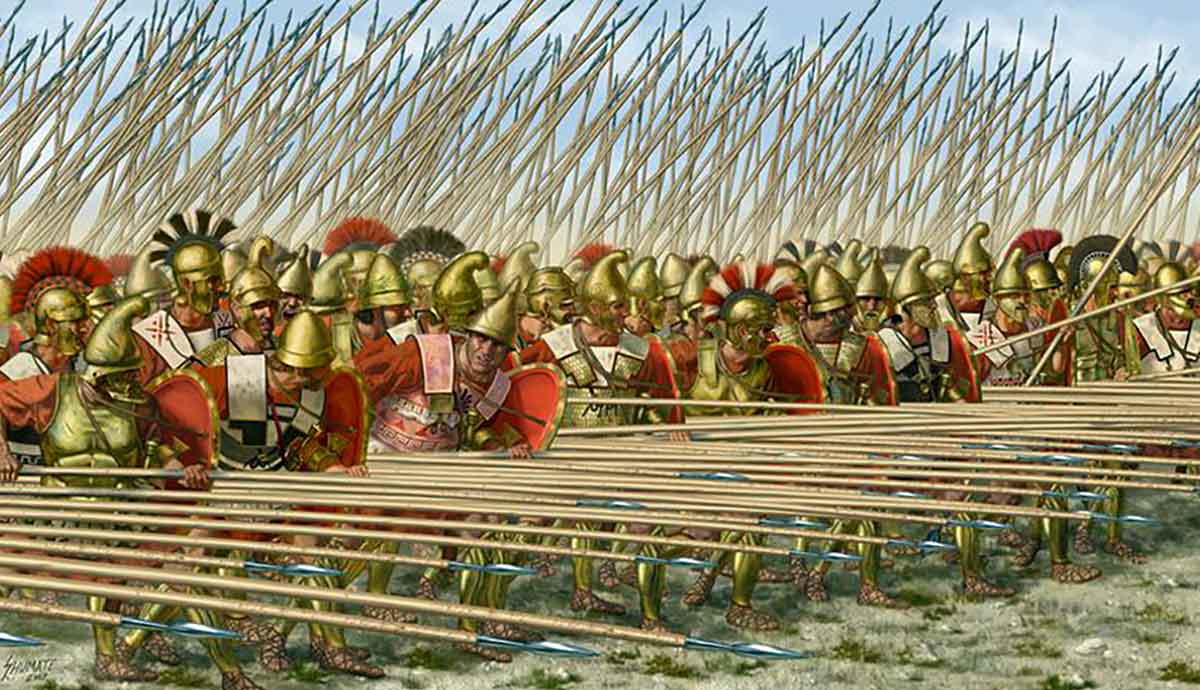
For 150 years, the Macedonian phalanx had crushed everything before it. Philip II of Macedon had created an army that his son, Alexander the Great, used to conquer the Persian Empire. At its core was the phalanx, a densely packed body of soldiers wielding an 18-foot pike known as a sarissa. The length of the sarissa allowed five spear points to project out in front of the first rank of soldiers. Massed in formations 16 men deep, this wall of spears was virtually unapproachable and unstoppable once it got moving.
While this collective was extremely strong, the individual soldier (a phalangite) was weak. The length of the sarissa meant the phalangite could only carry a small shield and sword or dagger. If their formation was broken, they were dangerously vulnerable. Therefore, the phalanx had to be deployed on suitably level ground.
The Roman legion of roughly 4,500-5,000 men was highly organized and divided into a variety of sub-sections rather than deploying as a single mass. They often went into battle in three lines, organized according to each rank’s experience. Each legionnaire was heavily armed and armored with a large shield, javelins, and a short stabbing sword. In contrast to the phalangite, a legionnaire could defend himself and would not be daunted by being divided into smaller groups.
How a Foggy Skirmish Escalated Into a Total War
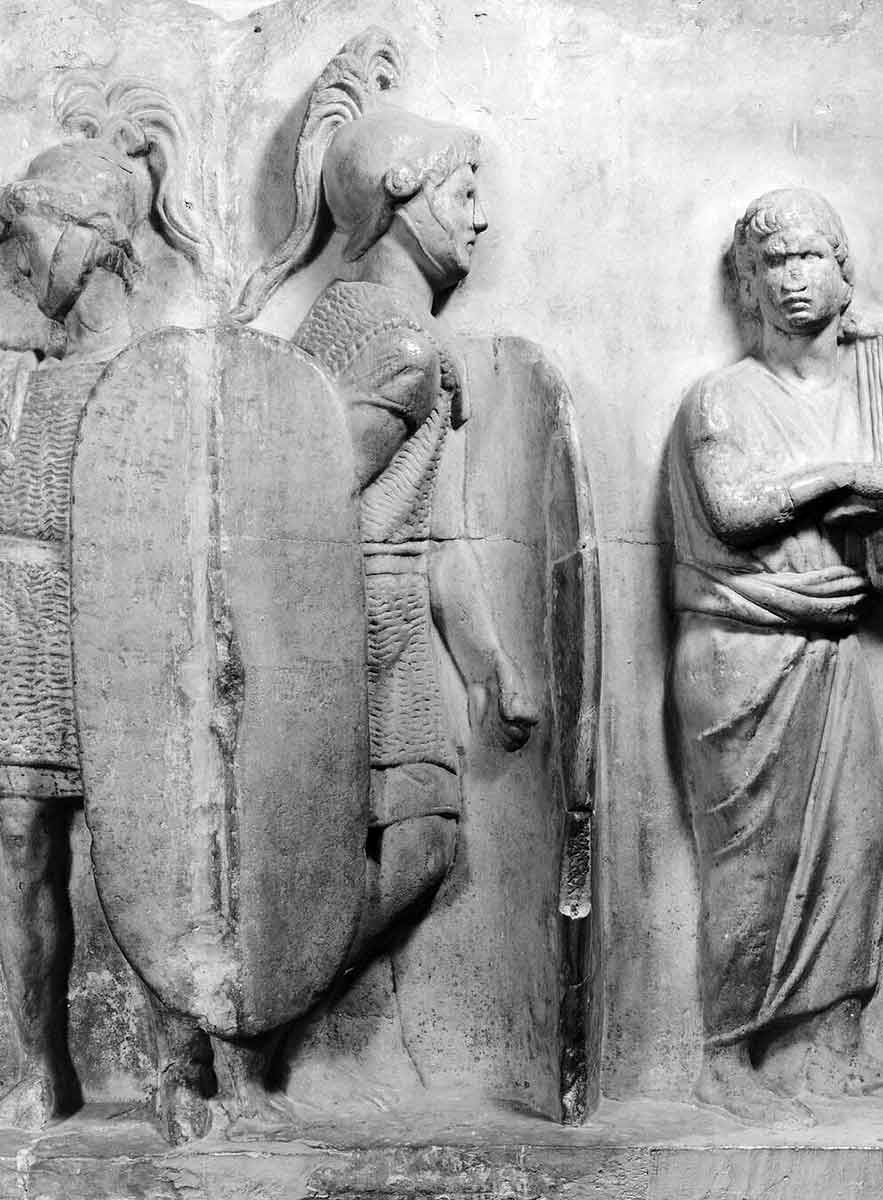
Though long anticipated, the battle that took place surprised both commanders. The first scouts confronting each other in the hills gradually drew in more units, creating a significant skirmish. As Philip reached the top of the range of hills, he was presented with a problem.
The Cynoscephalae hills, described at the time as “rough, precipitous and of considerable height” (Polybius 18.22), were not the smooth level ground suited to the phalanx. Nor was Philip’s army in position. Not anticipating a battle, part of his force had been sent out to look for supplies. The king was assembling a powerful force around him, but to his left, his units were still marching up. However, if Philip did nothing, he risked losing the forces currently engaged, which would weaken his already smaller force.
Macedon’s Crushing Right Wing vs Rome’s Fatal Left Flank Deployment
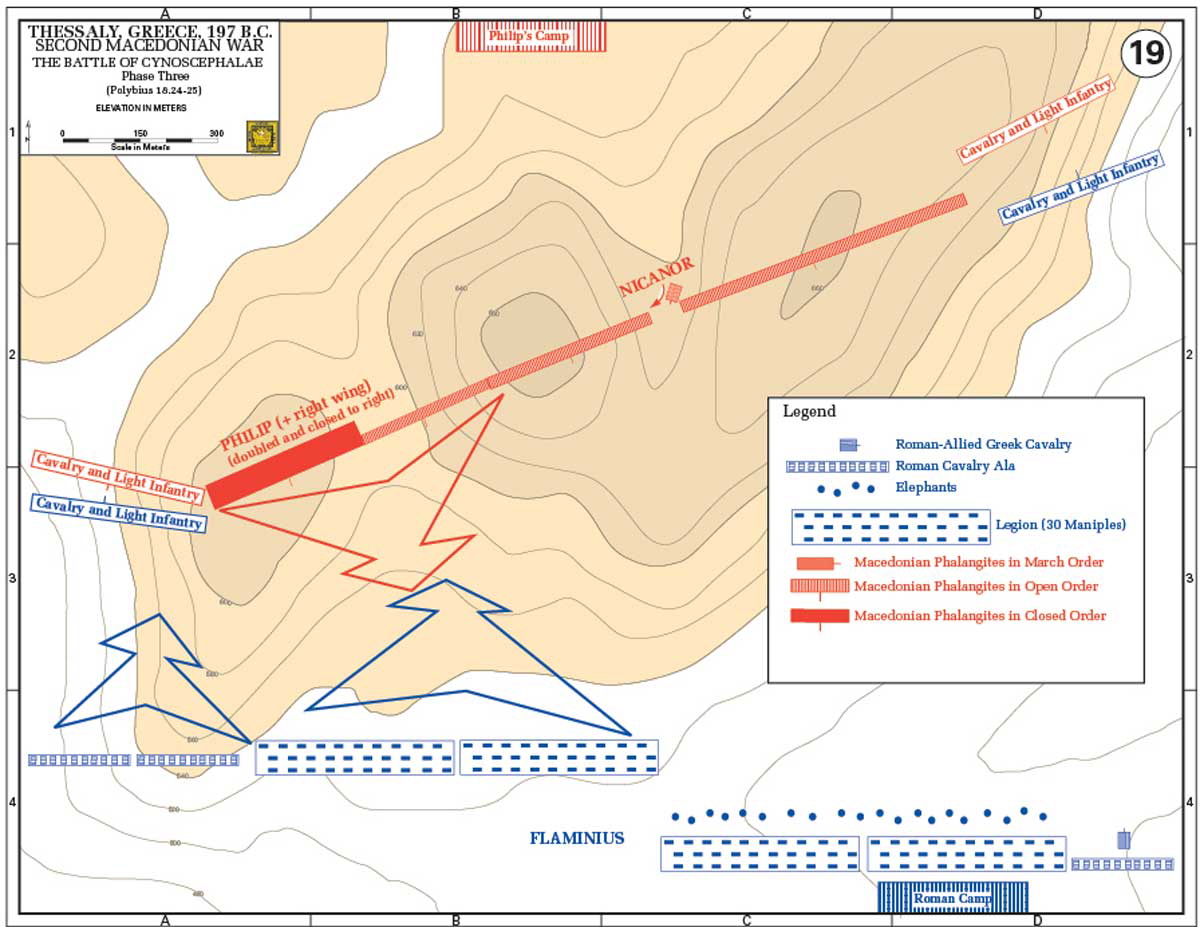
Philip decided to act, ordering his phalanx to deploy and to double its ranks from the usual 16 deep to 32, creating a tightly packed and powerful attacking force. The Macedonian left flank under Nicanor was ordered to come up as quickly as possible. Flamininus brought his main forces into position to prepare for the attack.
Both sides charged at each other on the right-hand side of the battlefield. With sarissas lowered and coming downhill, the Macedonians began to push back the Roman left. Seeing his forces retreat, Flamininus reacted by switching attention to the other side of the battlefield. The Roman right, led by 20 war elephants, attacked the Macedonian left and caught them before they were prepared. Upon the hills, the phalanx could not deploy correctly, and the whole Macedonian left wing was defeated.
How an Unnamed Roman Tribune Changed Ancient History
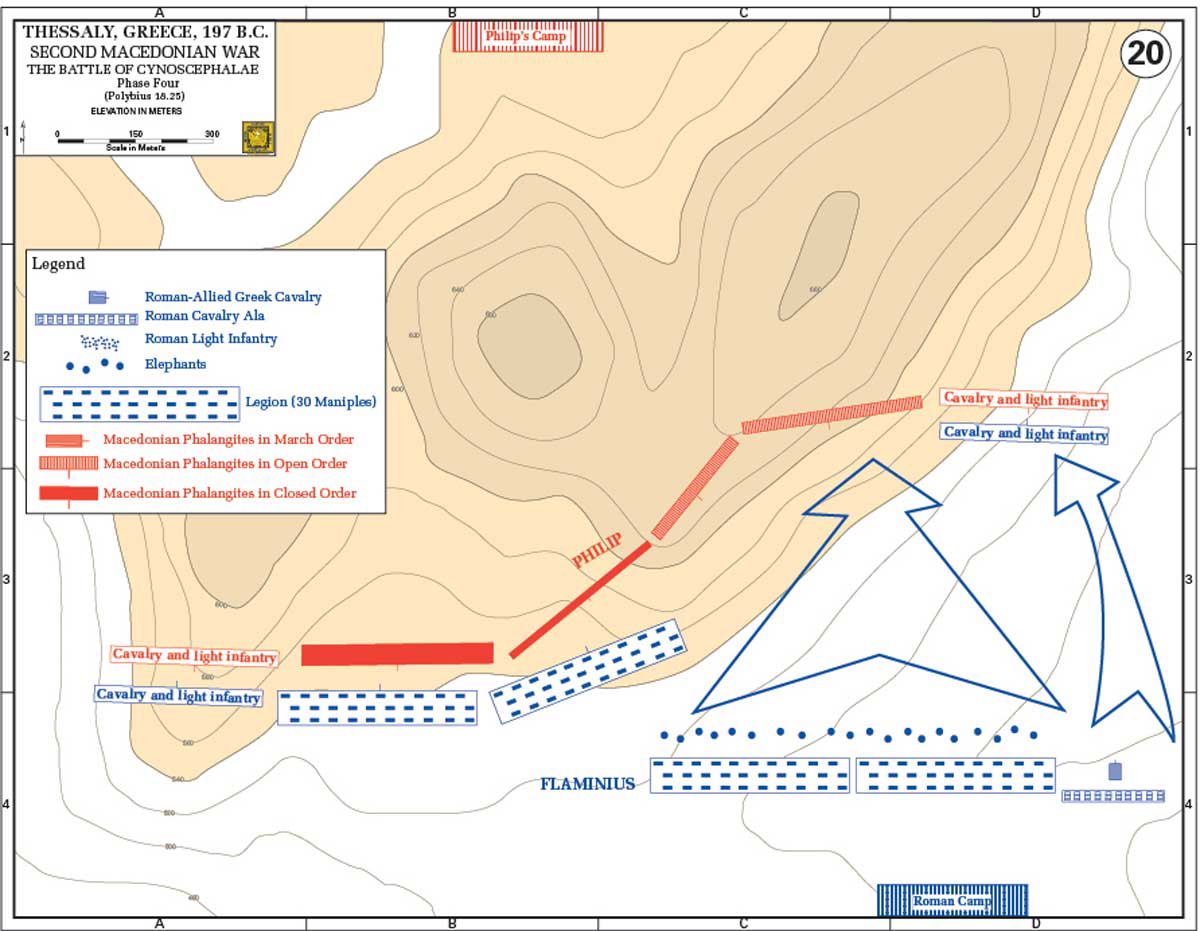
The day so far had been two separate battles. On the right, Philip was winning. On the left, Flamininus was equally triumphant. What swung this delicate balance was an unnamed Roman officer. Seemingly on his own initiative, a Roman tribune led 20 maniples (small units of around 120 men) from the advancing Roman right and turned on Philip’s soldiers. Having pushed up the hills in pursuit of the Macedonian, these Romans now attacked downhill into the vulnerable flank and rear of the phalanx. Having just been on the verge of victory, these phalangites were now practically defenseless, unable to turn their sarissas around or change formation. The Romans cut them down mercilessly.
Philip, seeing his soldiers cut down in front of him and his left wing defeated, pulled together what survivors he could and fled the field. 5,000 Macedonians were reported captured, and around 8,000 killed. The Romans are said to have lost about 700 men. The long-awaited clash between legion and phalanx had resulted in a decisive victory for Rome.
How Cynoscephalae Established Roman Supremacy Over Greece
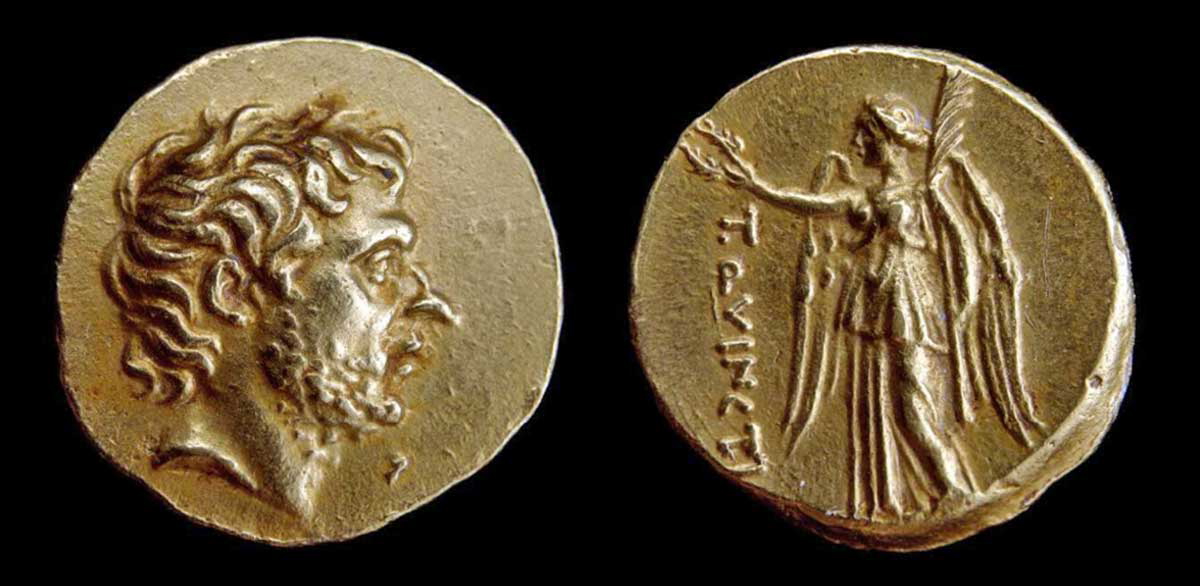
Reflecting on this battle and the decisive Battle of Pydna between the Romans and Macedonia in 168 BC, the Greek historian Polybius sought to understand the result (Polybius 18.28). After all, the Macedonian phalanx had dominated the battlefield for more than a century. The Greeks were shocked that it could be defeated in open battle.
Polybius found that the phalanx’s vulnerability was its inflexibility. It was powerful, but it only worked on certain battlefields. The Roman army, by contrast, was more flexible. It was not a dense mass, only able to move in one direction. Its units could split up, change direction, and deal with obstacles thrown up by the ground. A legionnaire could fight on his own. A Macedonian phalangite could not. As was seen in the battle, Roman officers were able to use this flexibility to take the initiative. Without orders from his commander, a lower-ranking Roman officer won the battle and the war. The superiority of the Roman legion would be proven again in the coming decades as the Macedonian wars continued.
In the immediate aftermath of Cynoscephalae, Philip was given relatively lenient terms as he offered the Romans help during the Seleucid War (192-188 BC). The Macedonians were constrained to their traditional kingdom borders and stripped of all Greek possessions. Nevertheless, Philip would slowly and skillfully rebuild his strength over his remaining years. Meanwhile, Flamininus solidified his favorable position in the eyes of the Greeks by declaring them free from their long Macedonian captivity.
That freedom, however, was strictly limited. It would not be long before Roman legions were once again marching on Greece and Macedonia. The Third Macedonian War raged between 171 and 168 BC, ending with Macedon and its territory divided into client kingdoms. The Fourth Macedonian War of 150 to 148 BC saw Macedon annexed directly as a province. Following the Achaean War in 146 BC, the rest of mainland Greece was annexed as a Roman Province.