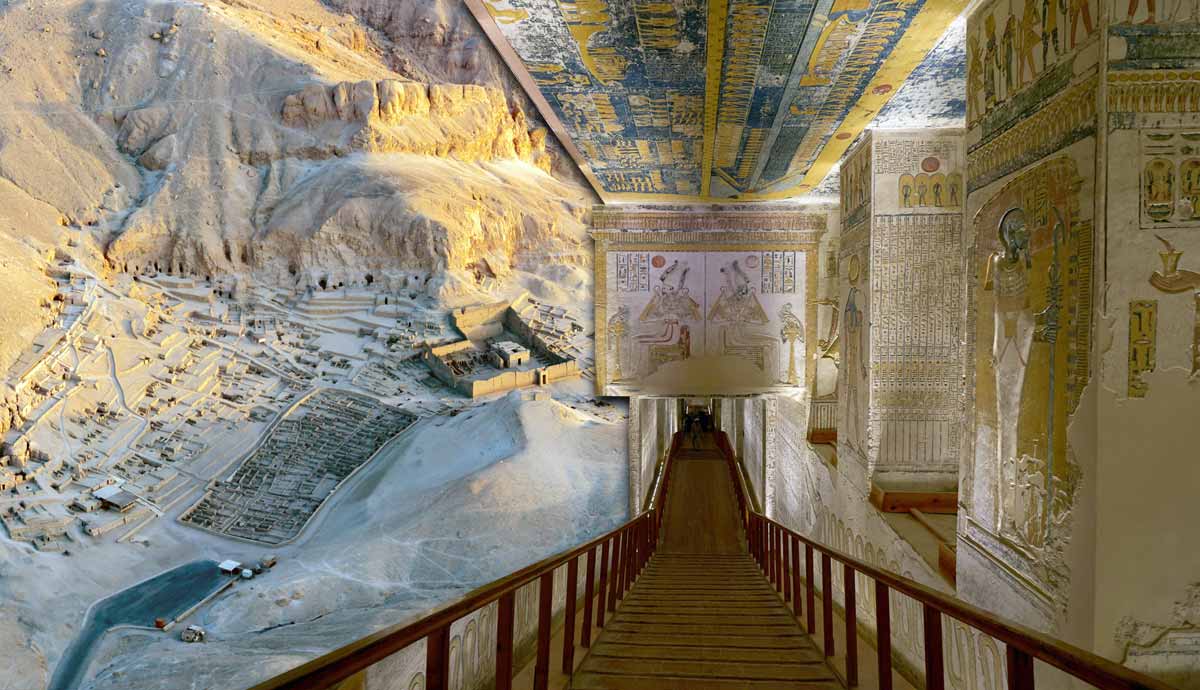

When early ancient Egyptian scribes created hieroglyphic symbols, they did not invent abstract shapes out of thin air. Instead, they reached into their homes, workshops, and kitchens. The Egyptians called their script Medu Netjer, meaning “divine words” or “Words of the Gods.” Thoth, the god of wisdom, magic, time, and measurement, invented hieroglyphs and gifted them to humanity. On a philosophical level, they believed that there was no difference between the symbol and what it represented, so it was important that the symbols could be tied back to things in the real world. Discover some of the everyday objects that inspired some of Egypt’s sacred hieroglyphics.
1. Hoe
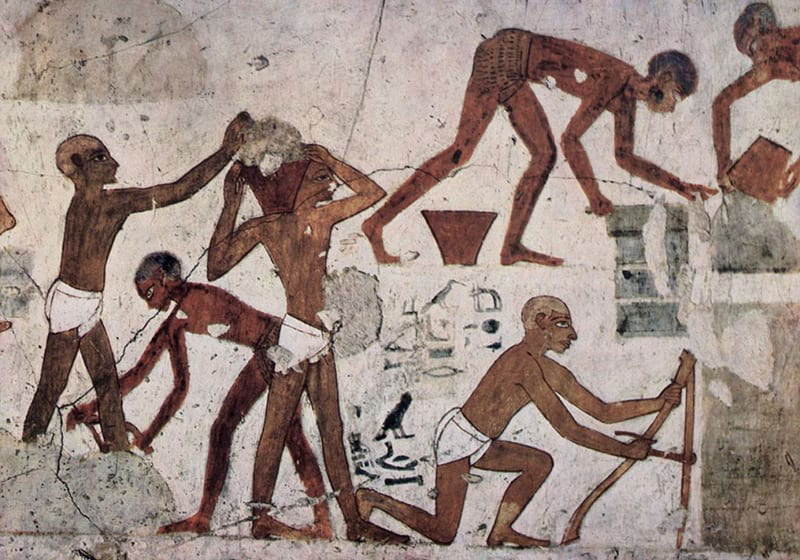
The Egyptian hieroglyph with the phonetic sound mr is based on the Egyptian wooden hand-hoe consisting of a long handle, a pointed blade, and a central rope binding the two pieces together at an acute angle. It forms the root for the word “love” or “beloved” (mry), frequently seen in royal titles. Hieroglyphics had both phonetic and pictographic meanings. It was also the ideogram or determinative for agricultural actions like “hoeing” or “hacking up the earth,” as well as nouns for “canal” and “pyramid.” In a society that was dependent on agriculture, this tool would have been ubiquitous. Farmers had to break up the soil before planting seeds. Builders constructing buildings in mudbrick would have used it to break up dirt clods as well.
2. Bread Loaves
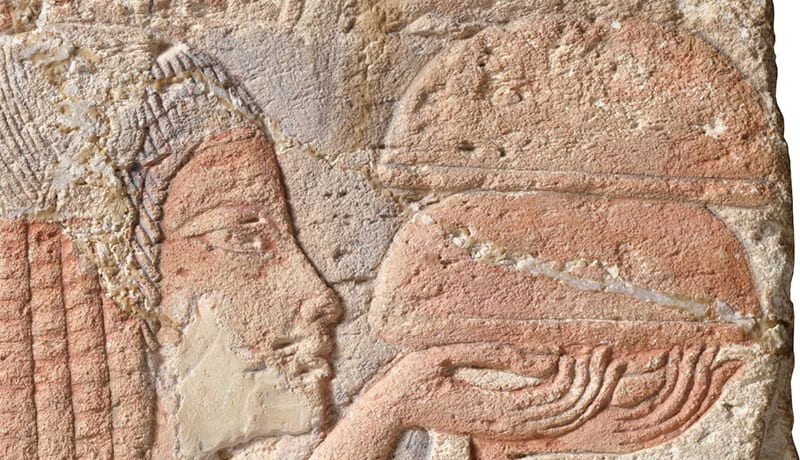
Bread was the staple of the Egyptian diet. Every tomb owner’s first wish from those still alive passing by the tomb was 1,000 loaves of bread and 1000 jugs of beer. The basic sign for bread shows a round loaf. The word “bread” is written with this sign as well as the letter “t.” It also served as the grammatical marker for the feminine gender placed at the end of nouns. Every feminine word in written Egyptian effectively ends with a visual loaf of bread. Archaeologists have experimentally recreated this bread, which probably was a sourdough.
3. Pot-Baked Bread
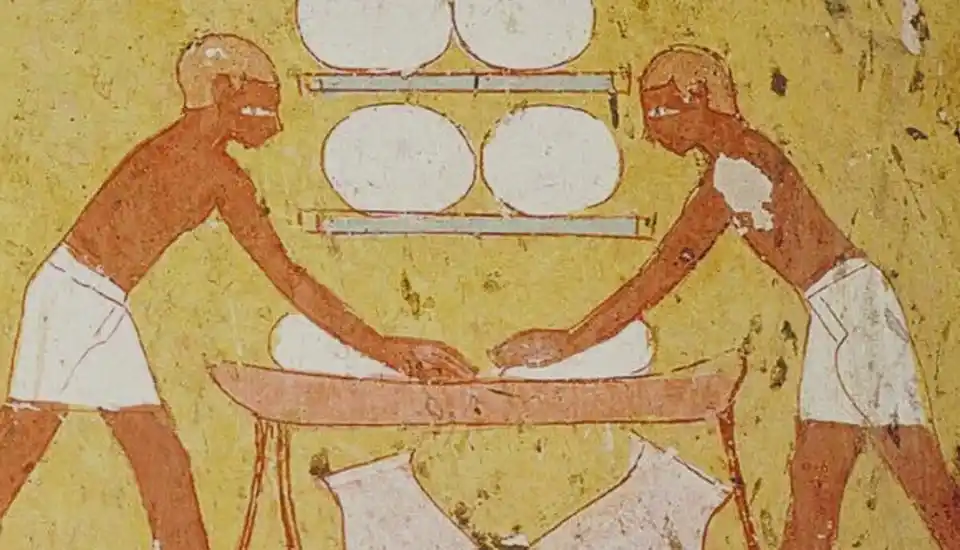
During the Old Kingdom, a special bread baked in conical pots was popular among the builders of the pyramids. Depicted as a tall, pointed loaf formed inside a conical clay baking mould, phonetically, it represents the sound d or di and serves as the logogram for the verb “to give” (rdi), as these distinctively shaped loaves were standard ritual offerings.
4. Offering Mat
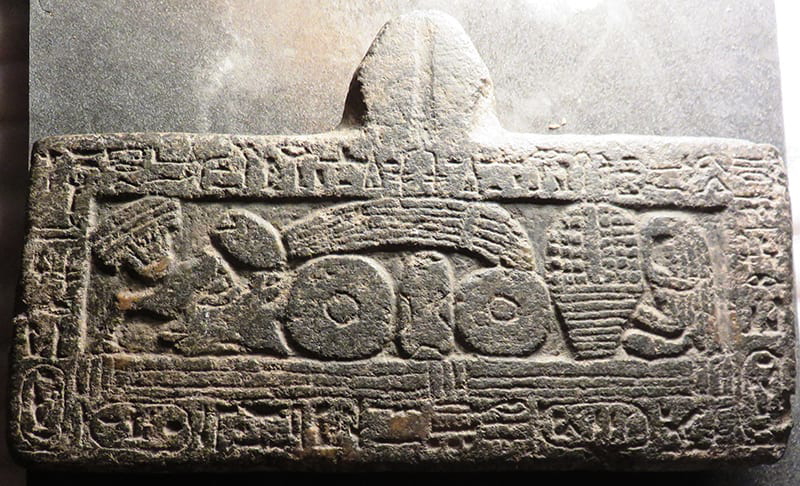
Sometimes the scribes combined basic hieroglyphic signs with other signs to make an entirely different sign. When the pot baked bread sign appeared on top of a sign depicting a reed mat, it represented an offering. It appeared in the most common offering formula that Egyptians inscribed in their tombs. Because it was a homonym, it also appeared in the words for “rest” and “peace.”
5. Flagpole
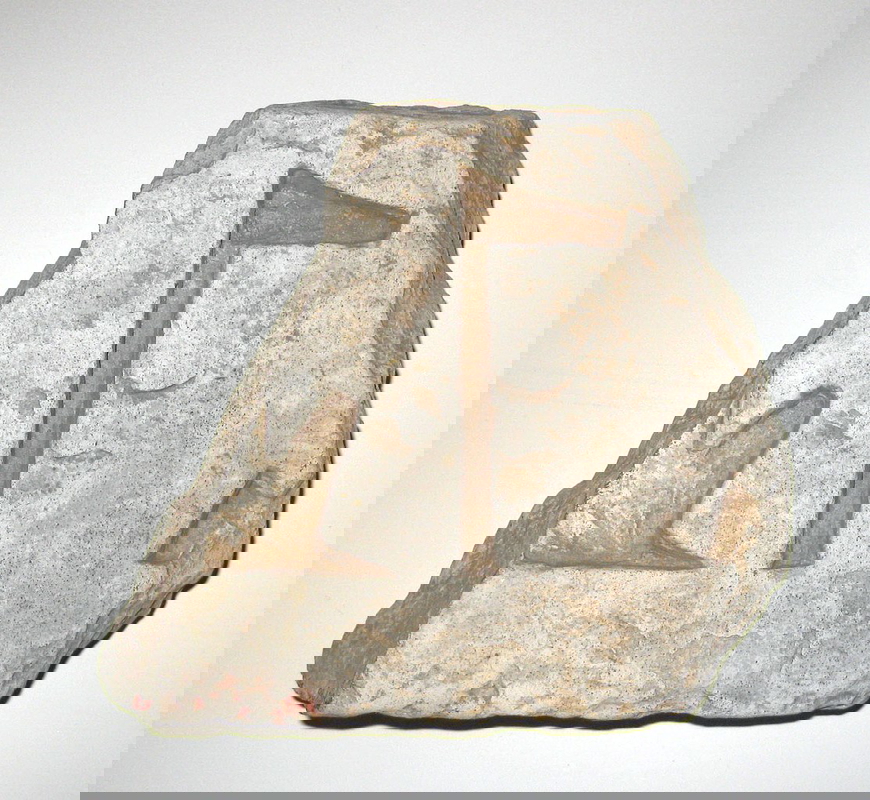
Only priests and royalty could gain access to Egyptian temples. The common man and woman would have only been allowed to enter the exterior precincts of temples. Flagpoles were set up in front of major temples like Karnak, Luxor, or Medinet Habu. While none of these flagpoles remain, there are niches in the walls of the temples where they would have stood. As such a distinctive aspect of temples, it is no wonder that these flagpoles were also the hieroglyph meaning “god.”
6. Pottery Kiln
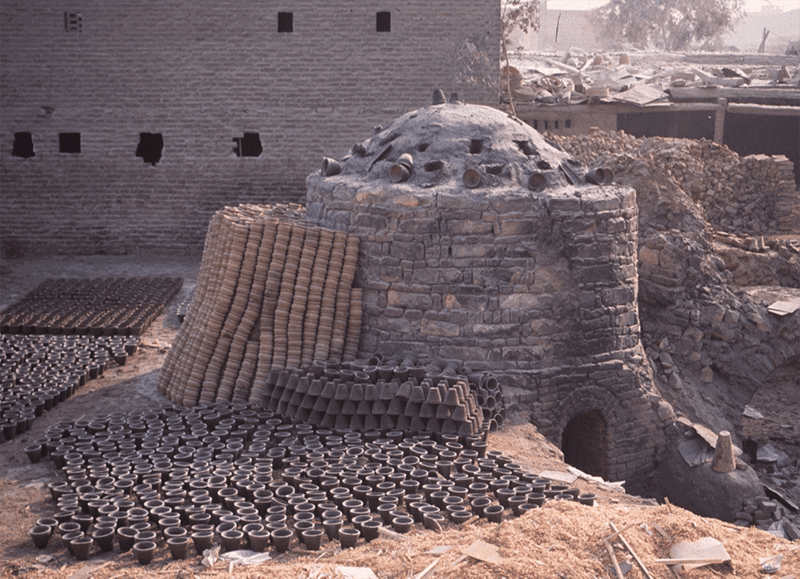
Ceramic pottery was the ancient Egyptian equivalent of modern plastic: ubiquitous and disposable. It was fired at high temperatures in kilns such as the one depicted in this hieroglyph. The hieroglyphic sign was an upright updraft kiln with a tapered cylindrical or beehive-shaped clay chimney structure used for firing ceramic vessels and preheating bread moulds. It represented the phonetic sound ta. It also represented the words for potter’s kiln or oven. The hieroglyph was also used in words relating to fire, burning, and thermal energy, as well as abstract concepts like “mysterious” or “secret,” derived from the hidden fire concealed inside the kiln enclosure.
7. Boat
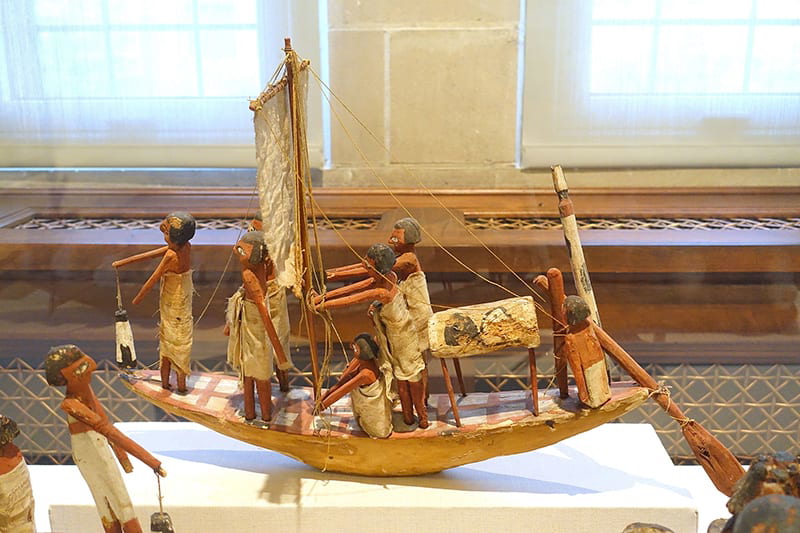
Boats served as the main form of long-distance transportation in ancient Egypt, the Nile River serving as a natural highway. The world’s longest river flows from the central African highlands to the Mediterranean Sea. This means that boats traveling downstream (northward) would float with the current. Because there is an almost constant breeze from the north in Egypt, sailors unfurl their sails for upstream (southward) travel. The interrelatedness between the wind, the north, and sailing was so close that the Egyptians used the sail sign in the word for “wind,” and the word for “north.”
8. Butcher Block
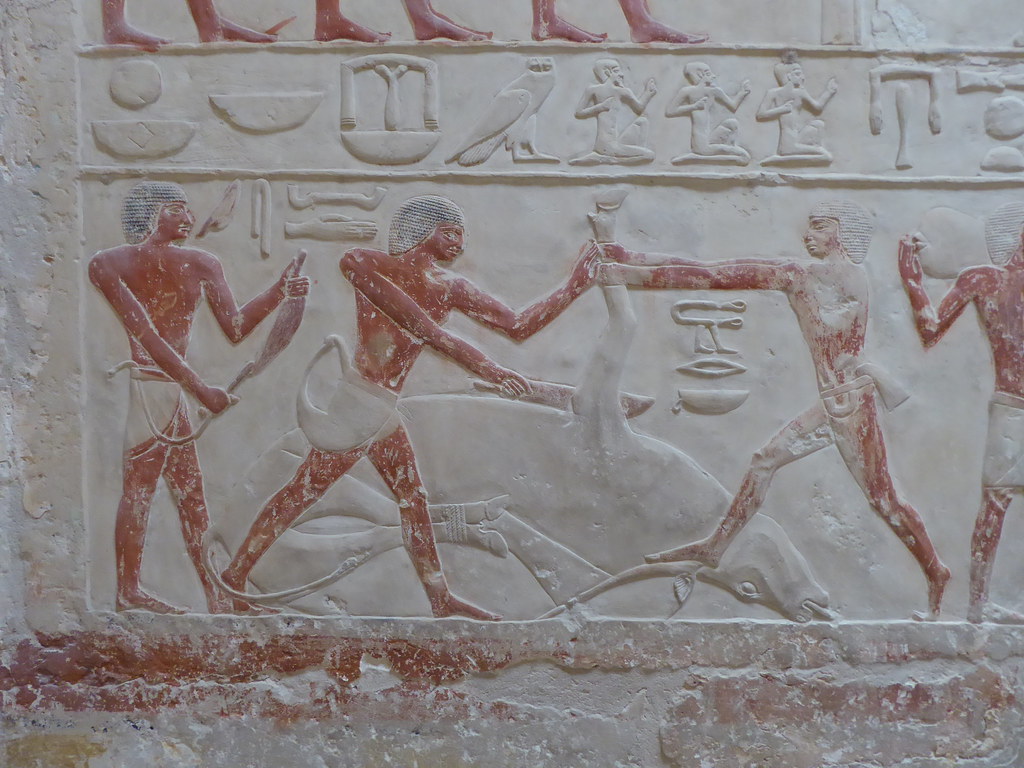
The butcher’s block also inspired an ancient Egyptian hieroglyph. It looks like a three-legged block, which is still used in Egyptian butcher shops. The symbol is primarily used as the preposition ẖr, meaning “under,” “beneath,” or “carrying/bearing.” The connection stems from the block sitting physically underneath carcasses during butchery. It also forms the root of key administrative and religious titles.
9. Nu Jar
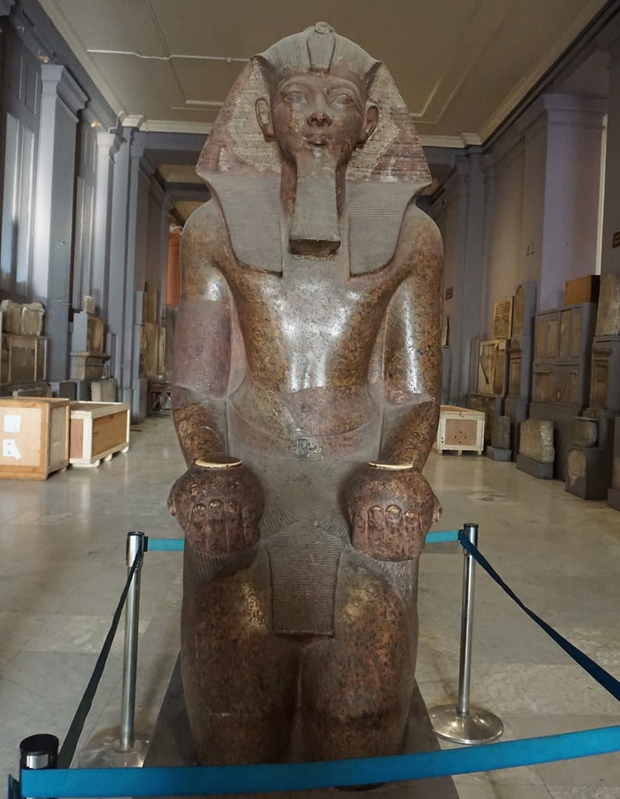
Nu Jars are one of the most frequently depicted reigious objects from ancient Egypt. The Nu Jar hieroglyph depicts a bulbous, spherical pot made of red clay or hammered metal, designed with a short neck and flat rim to hold liquids like water, wine, or milk. It is used to write the sound “nu” and in later times means “of” when used with plural words. In statuary from temples, the king often holds two of these pots while kneeling as an offering to the gods.
10. Scribal Tools
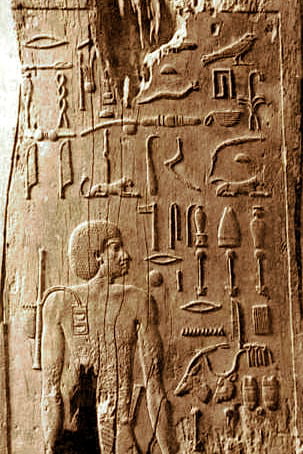
Many young boys in ancient Egypt dreamed of a career as a scribe. It provided a good income and a life free of hard physical labor. In fact, having a pot belly was considered one of the perks of the job. Literacy was probably only 5%, so scribes played an important role in society. These functionaries composed papyrus documents for those who could not write. Each scribe kept a kit that consisted of three parts: 1-A wood palette with black and red ink, 2-a tube for carrying reed pens, and 3-a leather sack for carrying extra ink and other supplies.
The scribal outfit hieroglyph depicts a complete portable scribal kit held together by a cord. It represents the sound ss and serves as the primary logogram for “scribe,” “to write,” “drawing,” and “painting.” The papyrus scroll hieroglyph serves as the primary determinative for abstract concepts. Invisible thoughts, emotions, laws, or measurements could only be made tangible by writing them down.
11. Sieve
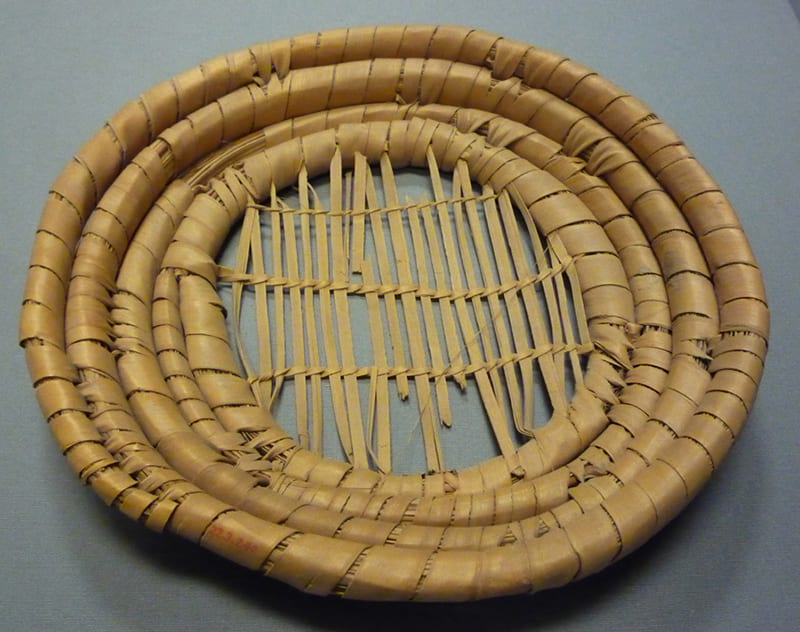
Looking like a round disc rendered with parallel horizontal, vertical, or crosshatched inner lines, Egyptologists long suspected the sieve sign represented a human placenta. It is primarily used to write the sound “kh.” It was also used in a word that meant “one who belongs to the kh,” namely an infant. That would make sense if the object were a placenta, but more likely the object is a sieve. It was also the verb “to become,” “to evolve,” or “to exist.”
12. Cartouche
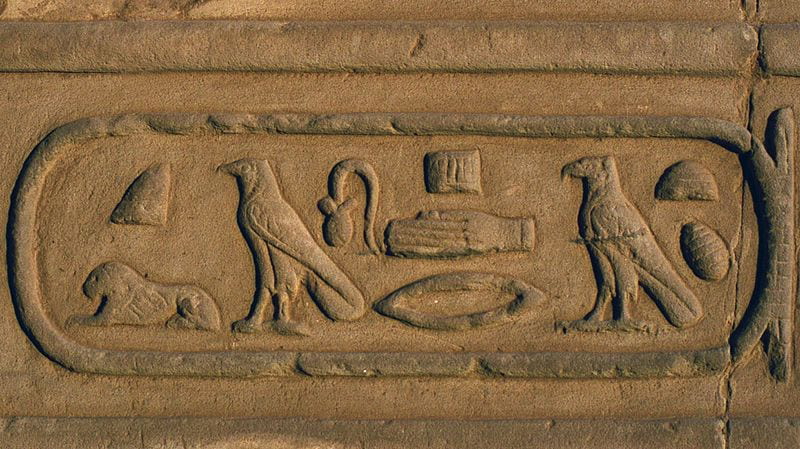
The cartouche is different from every other glyph in that it must always enclose other glyphs. It represents a rope and encloses two of the five names of royalty: the birth name and the throne name. A cartouche can be oriented horizontally or vertically, depending on the direction of the other text around it.