
Fauvism was an art movement that celebrated pure color over realistic imagery. Like the Impressionists and most other modern painters, Fauvists focused on scenes taken from daily life instead of showing heroic stories in their pieces. Among the most famous Fauvists were artists like Henri Matisse, Andre Derain, Georges Braque, and others. Read on to learn more about these Fauvist masters and their colleagues.
1. The Most Famous Fauvist Artist: Henri Matisse
The name Fauvists originates from the 1905 Autumn Salon. This was an annual exhibition organized by artists as a protest against the conservative and rigid values of the main Paris Salon. A group of artists, most of whom you will find on this list, united in their interest in bold color and painterly quality of images, exhibited their pieces together. They were inspired by the Impressionists in their treatment of urban scenes, but they preferred expressive brushwork to apparent realism. Their works were displayed in a room with one of Donatello’s sculptures. Entering the room, a conservative art critic called Louis Vauxcelles exclaimed that he saw Donatello among wild beasts (les Fauves in French), thus giving the name to the movement.
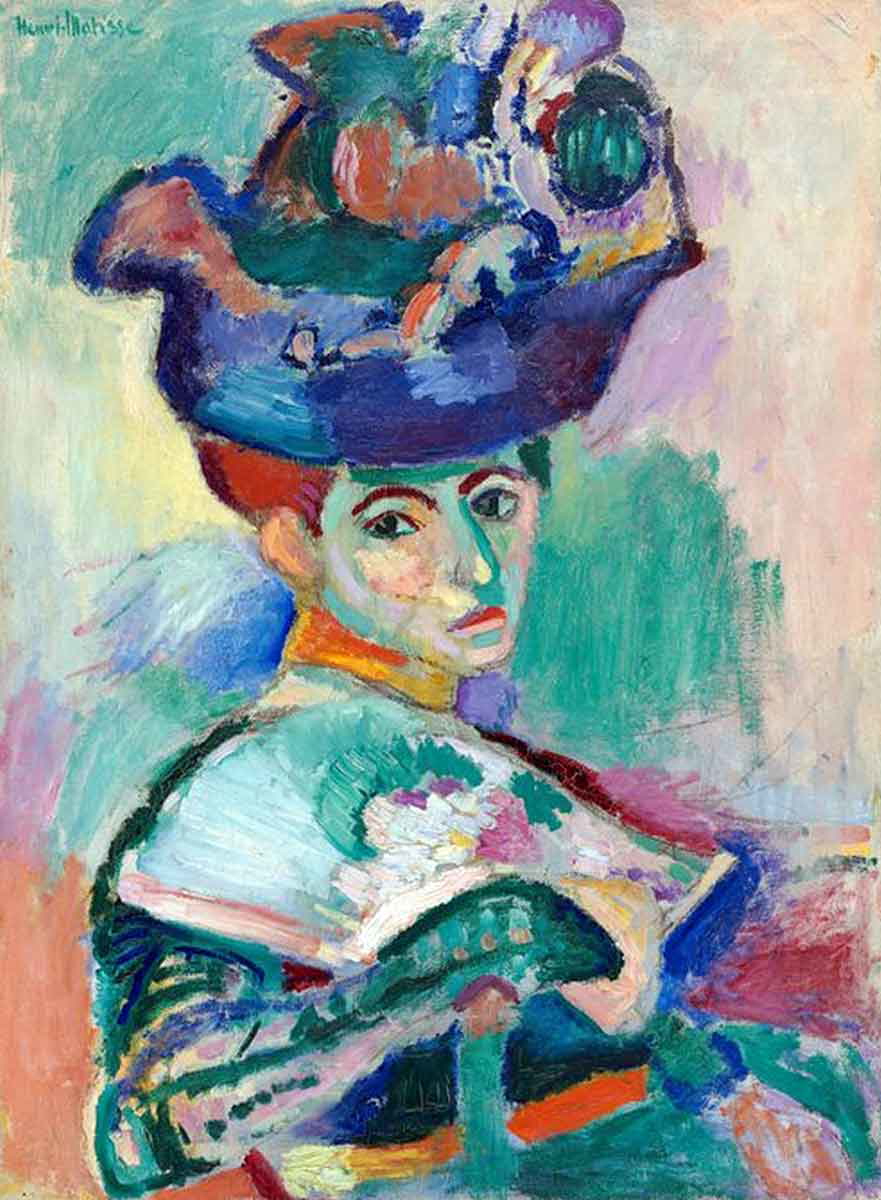
The most famous of all Fauvists was Henri Matisse, who ditched a promising career in law to pursue painting. Starting from Impressionism and Pointillism, he gradually moved to his own style. Matisse rarely used traditional perspective and illusion of depth, preferring to rely on color as his main instrument. Matisse was incredibly prolific and versatile, working with ceramics, textiles, and stage design. He even designed a chapel.
2. Andre Derain
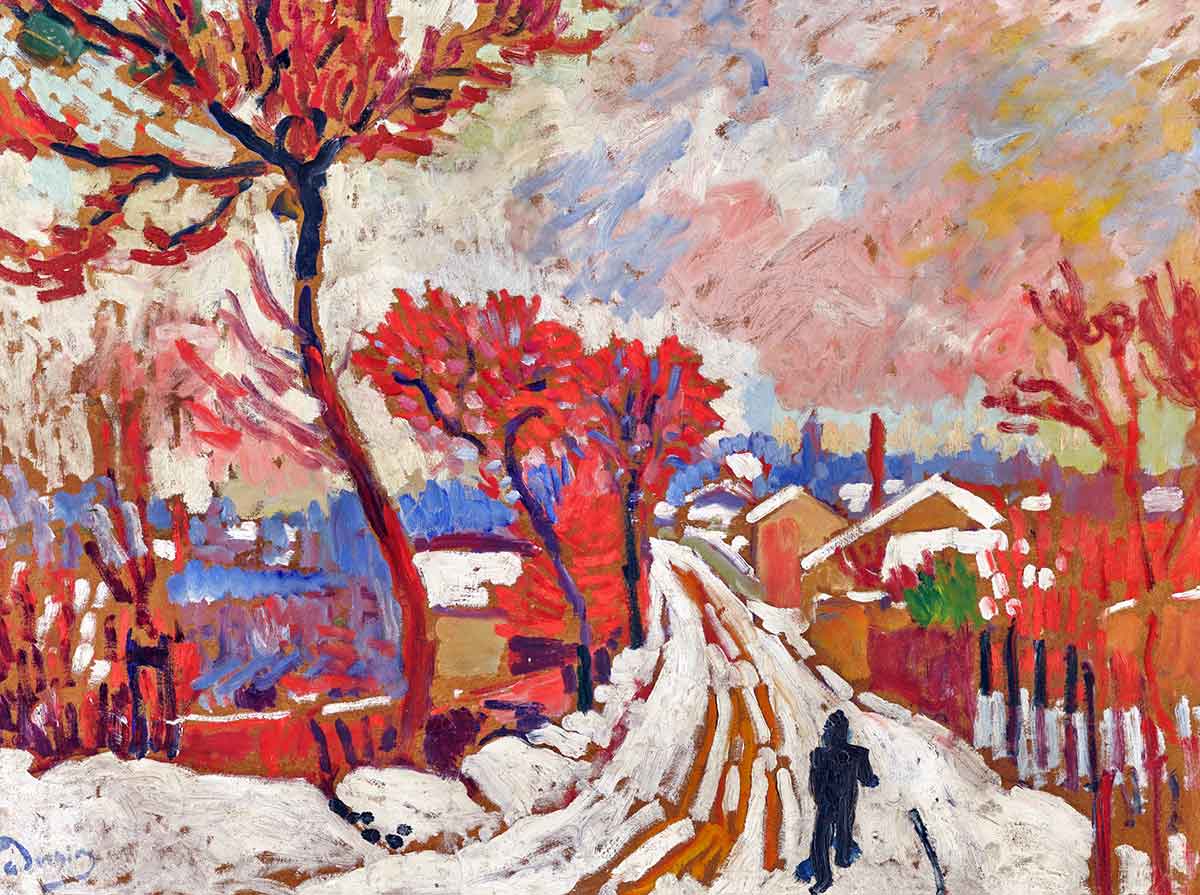
Together with Matisse, Andre Derain was considered the father of the Fauvist movement. His artistic style was based on the technique of Divisionism, when artists applied paint on small separate strokes of pure color. From Fauvism, Derain soon moved to geometric landscapes, similar to but not exactly like Cubist ones. Derain’s reputation suffered greatly during World War II. Unlike many of his colleagues who left France, he chose to stay in Paris. The Nazi occupants saw him as a valuable asset, demonstrating the eagerness of French creatives to accept the new order. He even made several official visits to Germany, which earned him a post-war label of a Nazi collaborator.
3. Georges Braque
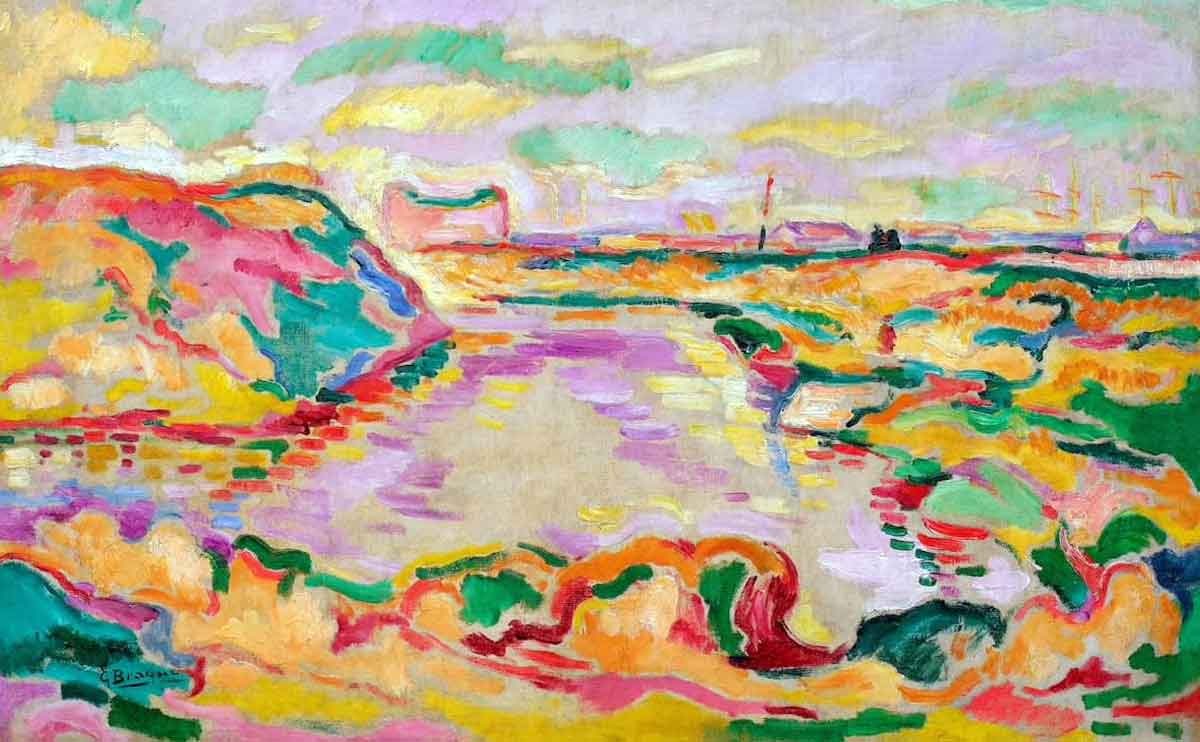
Although Georges Braque was more famous as a Cubist, his Fauvist period was no less remarkable. Braque was not a pioneer of the style, as he adopted it only after seeing the works of Matisse and Derain, yet nonetheless created work that was innovative enough. His Fauvist work became the starting point for Cubist thinking. His bold work with color and expressive form, combined with the influence of Paul Cezanne, soon led to the gradual geometrization of his form. These angels and shapes would soon become sharper and lead to the development of an entirely new type of art.
4. Kees van Dongen
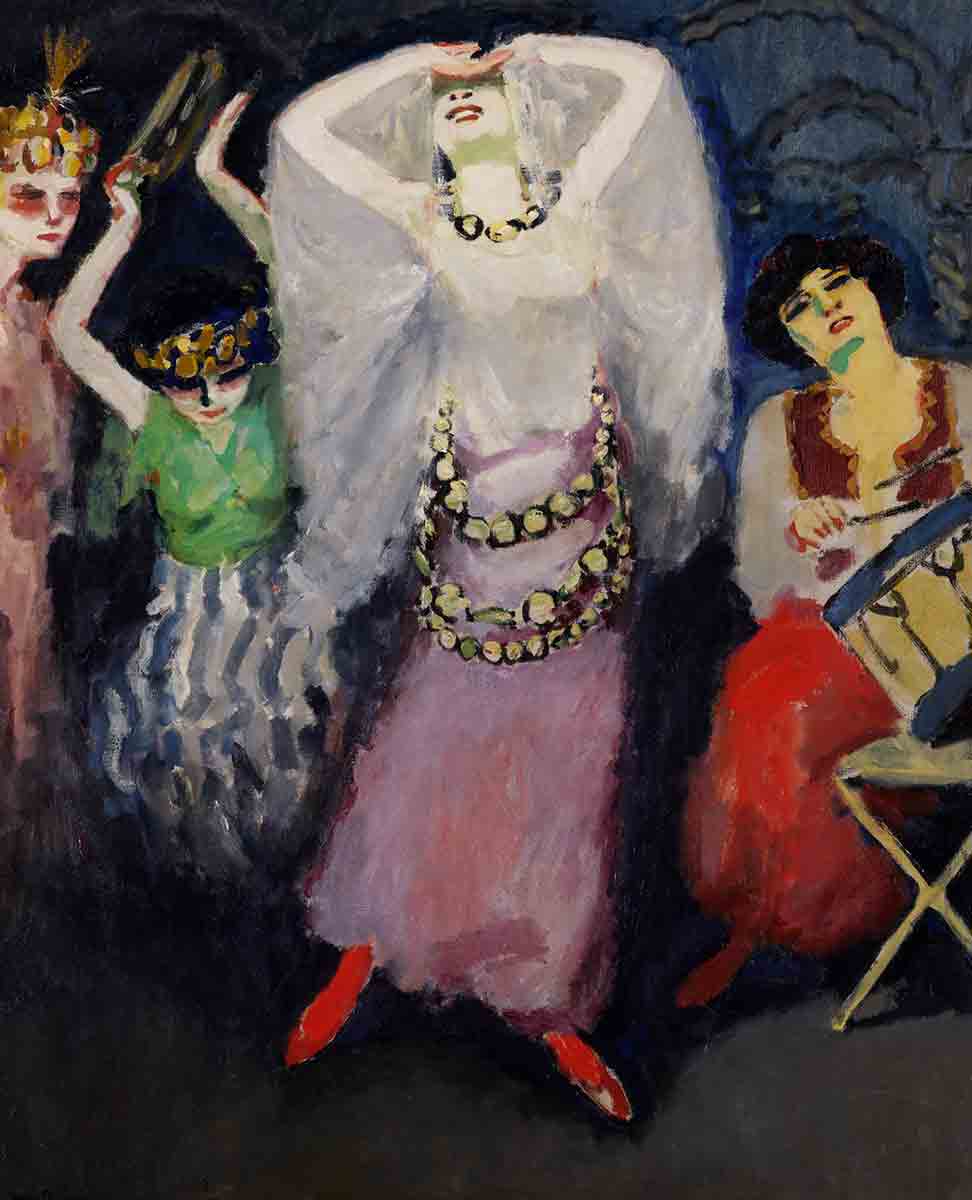
Kees van Dongen was a Dutch artist who started his career in Rotterdam as an illustrator. In 1899, he moved to Paris, where he quickly became part of the progressive artistic establishment. His works were exhibited in the famous 1905 Salon. Portraiture was van Dongen’s signature genre. Apart from the Fauvist circle, he also worked among Expressionists, preferring expressive, bold colors and lines to realistic precision. He also created a lot of erotic works, which Henri Matisse allegedly hated, thinking they overstepped the boundaries of good taste.
Kees van Dongen’s portraits were popular among affluent commissioners. In particular, he often painted wives of the rich and had a clear formula when creating a portrait that should be loved by many. He painted elongated silhouettes and enlarged the jewels the ladies were wearing. However, despite this commercial success, van Dongen’s works occasionally stirred up scandals. In 1913, a nude portrait of his wife was removed from the Paris Salon on the grounds of indecency. The issue was not with nudity itself but the fact that the model was the artist’s wife and not an unknown person or a sex worker.
5. Maurice de Vlaminck
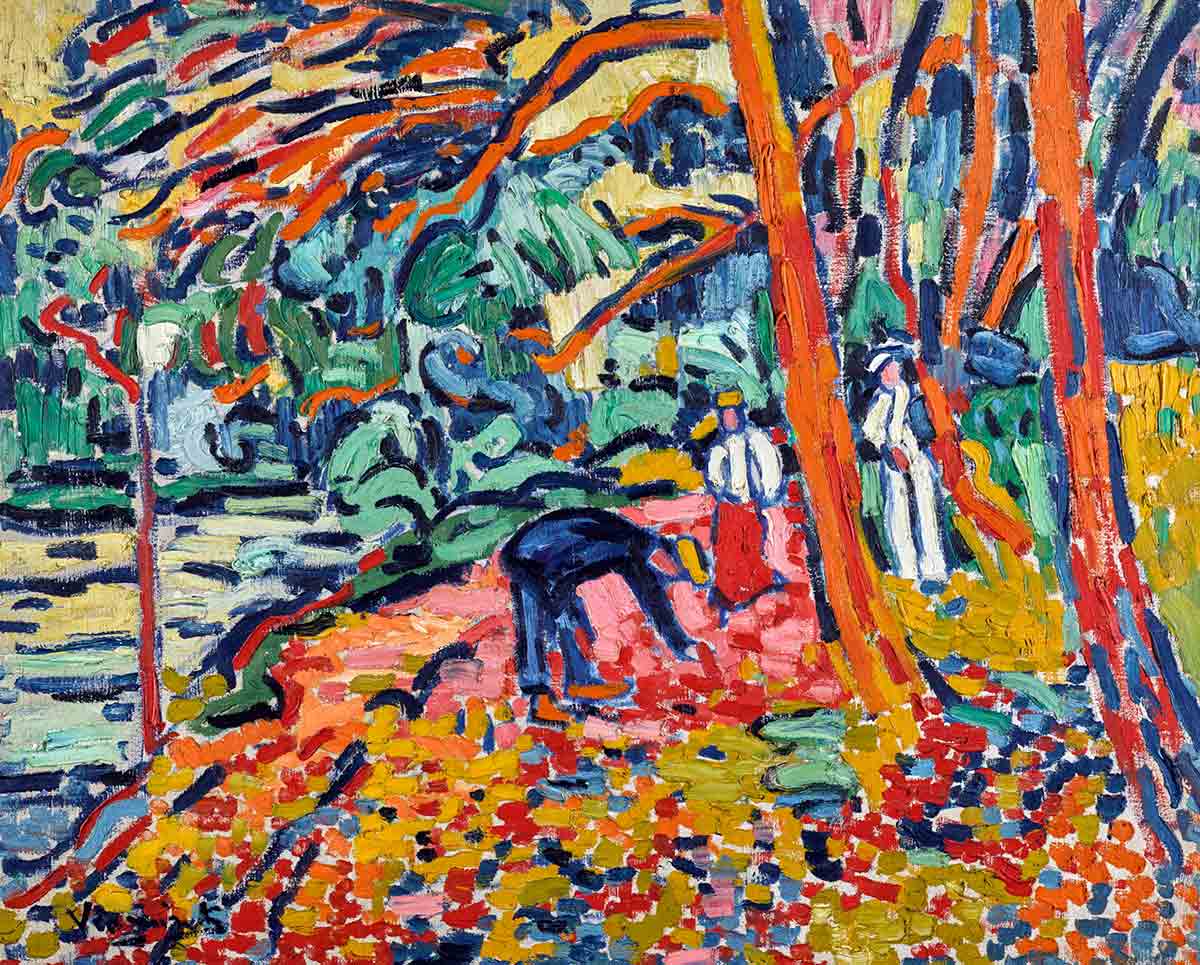
Maurice de Vlamick was considered the third greatest Fauvist after Matisse and Derain. Before moving to art, he was trained as a violin player. One of the decisive moments in Vlaminck’s career was his visit to a 1901 retrospective exhibition of Vincent van Gogh’s work. For years, his art retained the influence of the underestimated Dutch master. Vlaminck claimed he wanted to burn down the conservative Ecole des Beaux-Arts with his colors and create art without considering the artistic traditions that came before him. He was also not enthusiastic about numerous art theories created by his colleagues: he compared them to doctors’ prescriptions in the sense that one had to be really sick to follow them.
6. Albert Marquet
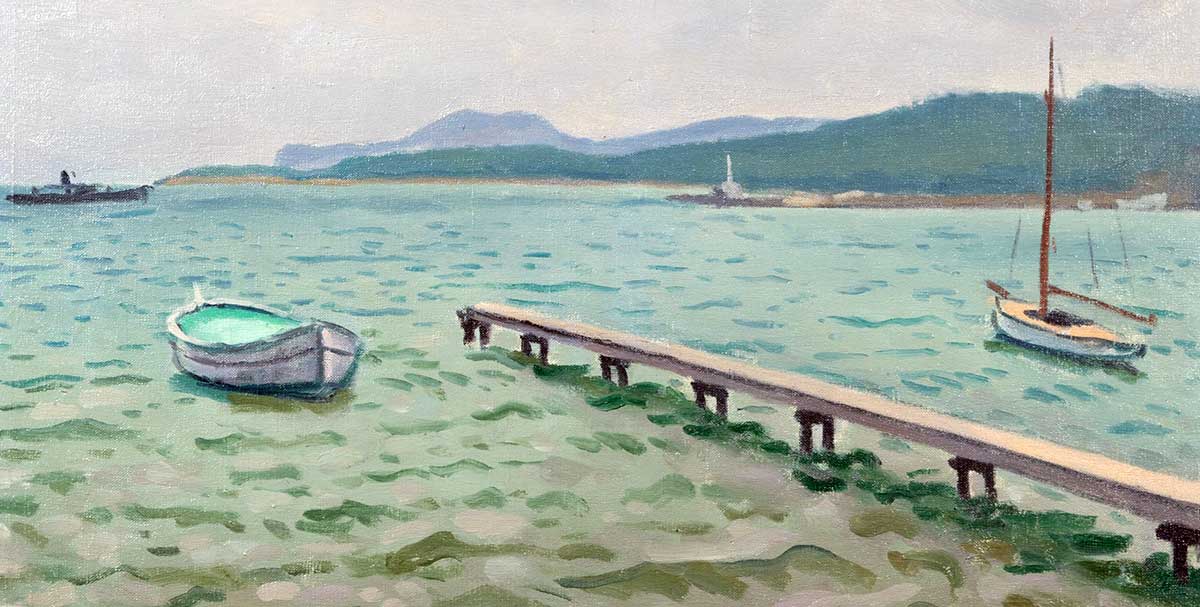
Albert Marquet was a student of the famous Symbolist painter Gustave Moreau. Moreau saw painting as a free play of imagination, completely detached from reality, and thus encouraged his students’ experiments with form and color, however unconventional they were. Marquet painted mostly landscapes and preferred to work with unmixed, pure colors. Unlike many of his fellow artists, he was not afraid of using pure black, painting bold contours and shadows. Albert Marquet learned to master colors out of necessity: in his early years, he was poor and could afford only the cheapest pigments. He learned how to balance the browns, grays, and other muted tones.
7. Georges Rouault
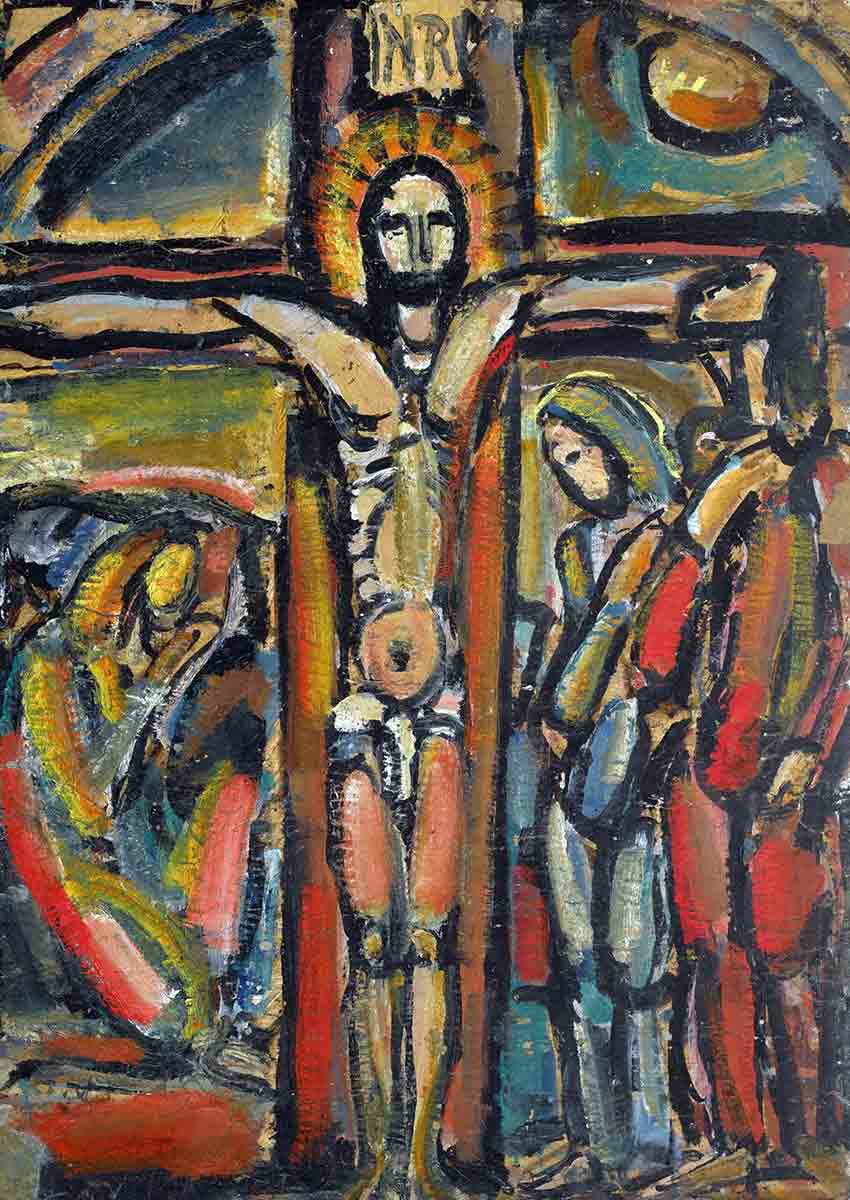
Georges Rouault was born into a working-class family and had to tailor his artistic inclinations to practical needs. As a teenager, he worked as a stained glass maker and restorer. Later, Rouault studied at Gustave Moreau’s studio and became Moreau’s museum curator after the artist passed away. Unlike many of his Fauvist friends, Rouault often painted allegorical and religious scenes, usually in dark tones. His early practice with glass left a lasting mark on his oeuvre: even after moving to oil painting, he kept the thick black contours and jewel-toned planes of color typical for glass.
Rouault designed his works to be “expressive, not beautiful.” His first oil paintings were heavily inspired by Gustave Moreau and Titian. Strictly speaking, he had little in common with the rest of the Fauvists: his works were dark, often with a mystical undertone or a tone of a bitter social satire.
8. Raoul Dufy
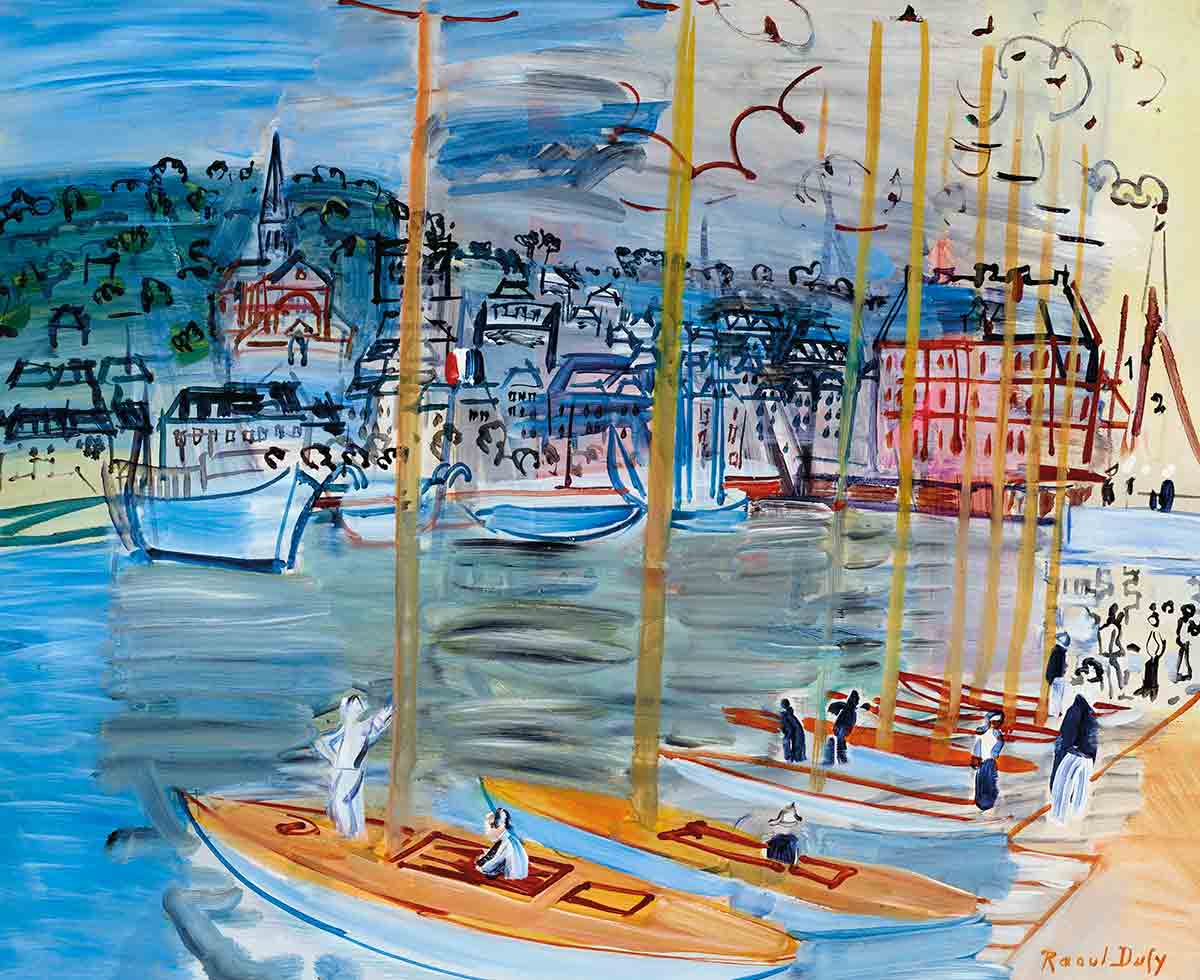
Raoul Dufy grew up in a poor family and had to quit school to earn a living in a coffee company. Working a full-time job as a 14-year-old, he managed to save money to attend private painting classes after work. Dufy’s office windows faced a seaport, so he frequently painted boats and sailors. The decisive shift in his career happened when he won a scholarship based in Paris, which allowed him to move and create art professionally.
Dufy deliberately avoided emotionally tense subjects and excessive drama. His works were joyful and uplifting, exploding with bold colors. His favorite color was blue, as he believed it was the only one that maintained its expressive independence when surrounded by others. Apart from fine arts, Dufy worked with furniture, stage design, and public art. He also collaborated with the legendary fashion designer Paul Poiret, designing textiles for his brand.
9. Jacqueline Marval: The Woman Fauvist Artist
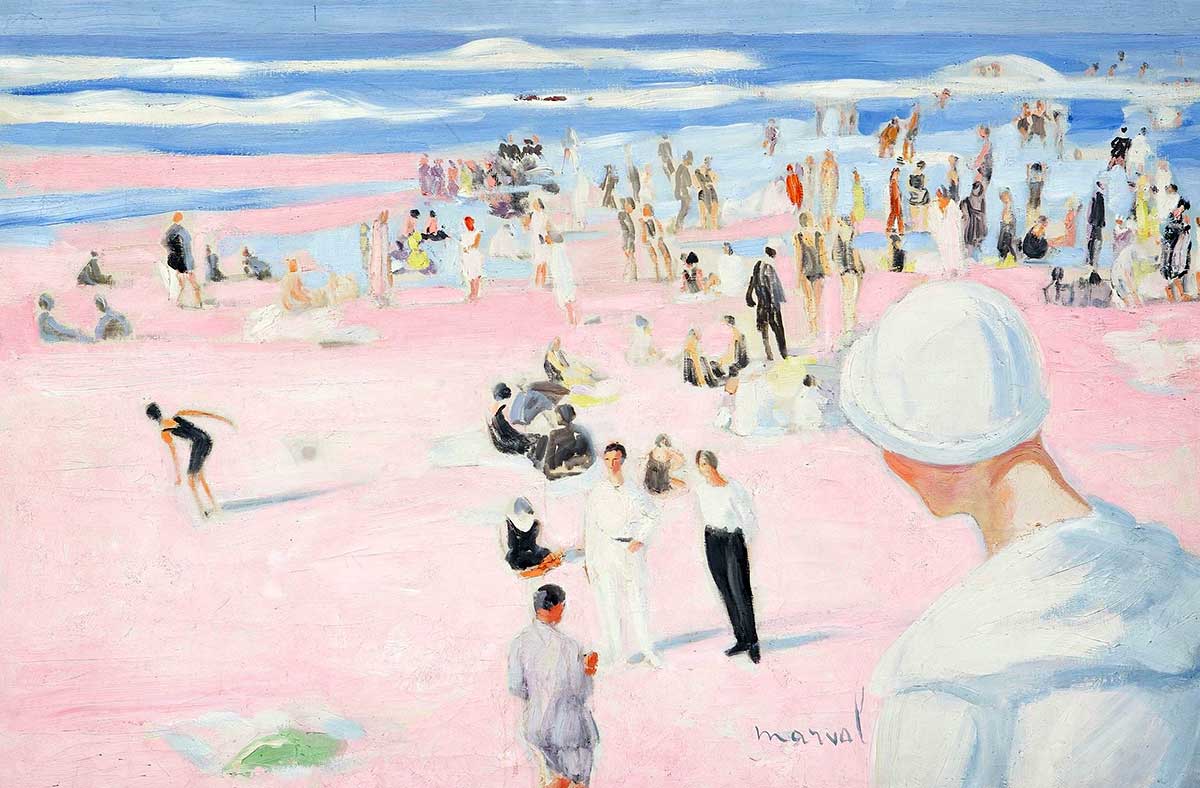
Unfortunately, women artists were rare among Fauvists. Jacqueline Marval was an exception, and her male colleagues encouraged her. Although she demonstrated artistic inclinations as a child, her parents, who were both school teachers, envisioned a similar career and a conventional marriage to a salesman for her.
Her artistic career began when she divorced her husband and moved in with a new partner, the Parisian painter Francois Joseph Girot, a student of Gustave Moreau and friend of many prominent Fauvists. Fellow artists and critics appreciated Marval’s work for its boldness of color and subject matter and confident brushwork. She mostly painted women—either nude in their bedrooms surrounded by precious objects and draperies or in groups spending time together on beaches and in living rooms. Marval was an active member of the artistic community and was one of the leaders of the campaign against prosecuting Kees van Dongen for the alleged indecency of his paintings.