
The alphabet’s origin story may be far older than previously thought. The subject remains passionately debated by scholars from different academic fields. A handful of inscriptions carved into stone could shift the birthplace of the alphabet from Phoenician ports to desert mines. The Proto‑Sinaitic puzzle is not merely about signs. It concerns an uncertain timeline and a complex list of possible inventors and base languages. How and through whom did it spread?
The Proto‑Sinaitic Script’s Hidden Origin
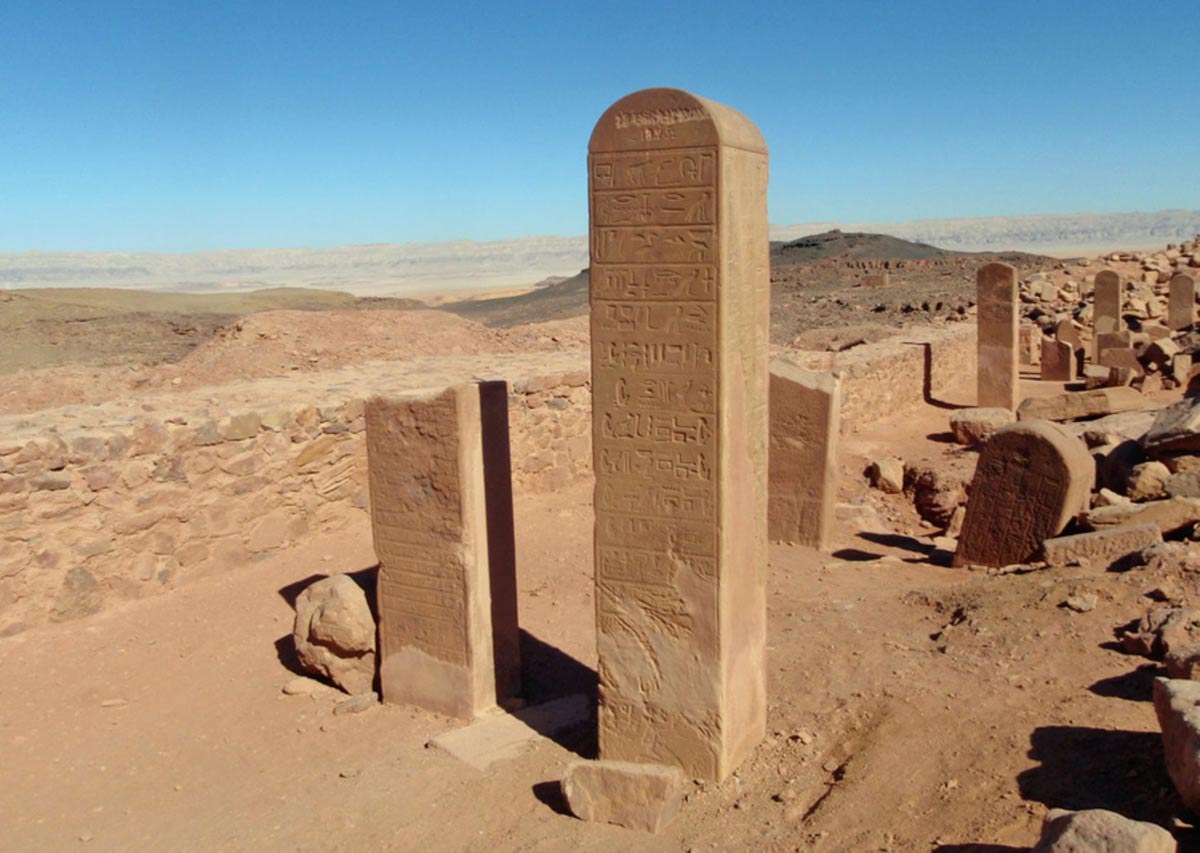
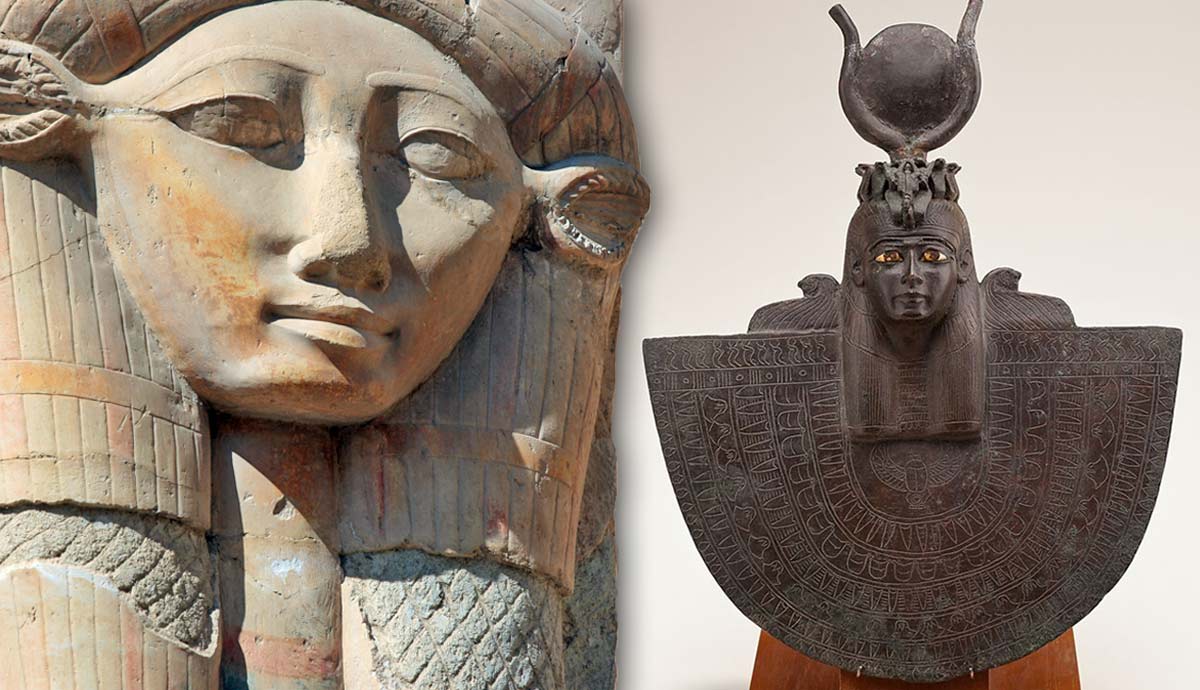
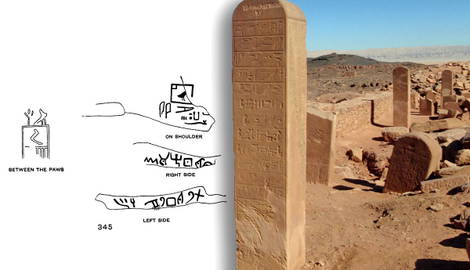
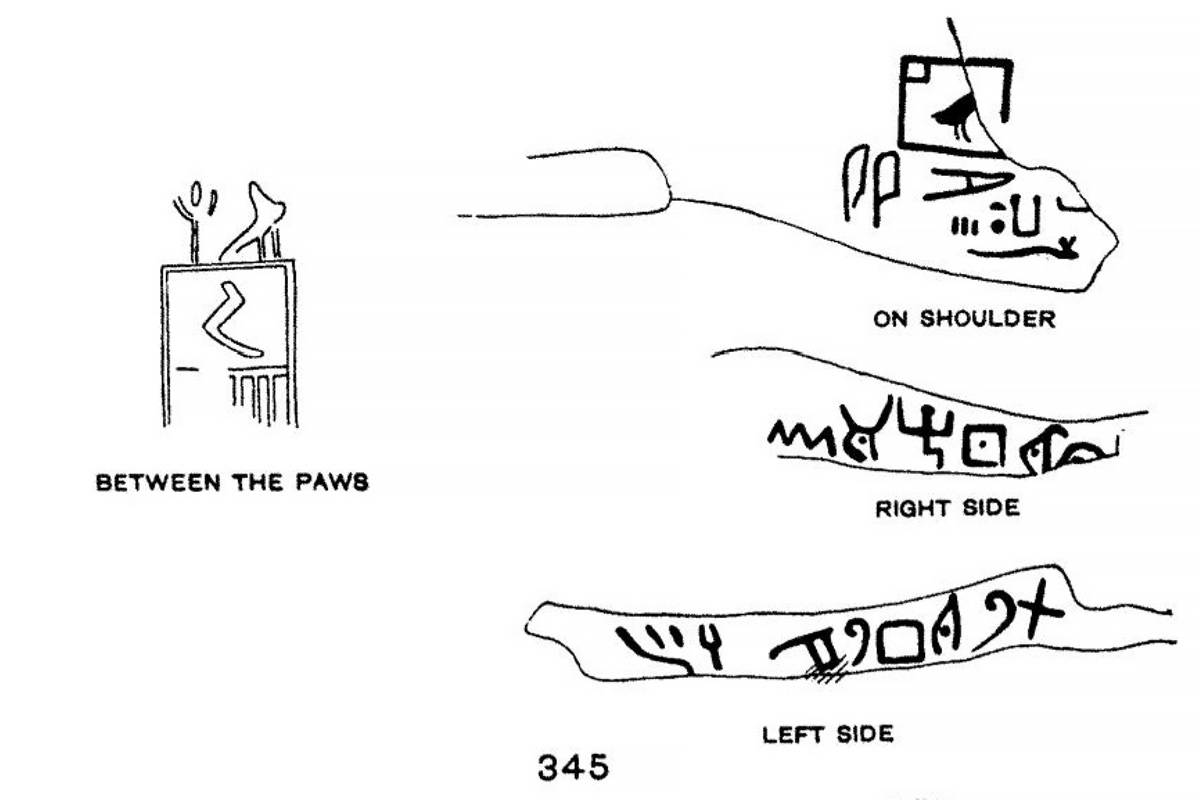
In 1905, British archaeologists Flinders Petrie and Hilda Petrie explored several sites in the Sinai Desert, which included Serabit el-Khadim, a turquoise mine in Egypt’s Sinai Peninsula. The site operated during the Middle Kingdom, between 2055 and 1650 BC. Petrie’s papers from the trip, published in 1906, mention an unknown script found among Egyptian hieroglyphic inscriptions carved into a small sphinx, stelae, and reused stone blocks inside the ruins of the nearby Temple of Hathor, goddess of mining and fertility.
The temple was built under Senwosret I (1962–1928 BC) and expanded by Amenemhat III (1860–1814 BC). It served as a spiritual center for laborers extracting turquoise and copper. Excavation notes from 1934 mention a miner’s graffito scratched into a temple pillar, possibly the earliest informal Proto‑Sinaitic marking found on site.
Earlier, in 1916, British Egyptologist Alan Henderson Gardiner (1879–1963) examined an inscription at Serabit el-Khadim. He argued that Semitic-speaking miners had adapted Egyptian signs into phonetic symbols. He identified the ox-head sign as “ʾalp,” meaning “ox,” and linked it to the glottal stop, a brief catch in the throat, represented by the symbol “ʾ”. Building on this idea, in 1948, American archaeologist and philologist William Foxwell Albright (1891–1971) analyzed two other inscriptions from the same site. He connected them to early Semitic laborers based on structure and vocabulary.

Raphael Giveon was an Israeli Egyptologist and museum curator. During the 1960s and 1970s, he rediscovered several previously lost inscriptions while reviewing museum archives and excavation records from Serabit el-Khadim.
In 2009, German Egyptologist and epigrapher Stefan Jakob Wimmer documented a Proto‑Sinaitic‑style inscription carved into a stone wall near a copper‑smelting camp at Timna, in Israel’s southern Arava Valley. The valley formed a strategic corridor between Egypt and the Levant. Timna was worked by Semitic‑speaking laborers during the Late Bronze Age (c. 1550–1200 BC). Its location and inscriptions make it central to debates about early alphabet development.
Wimmer’s find, published in the Journal of Ancient Egyptian Interconnections (2009), revealed a West Semitic personal name and title carved in Proto‑Sinaitic. The inscription showed phonetic spelling rather than pictorial symbols, confirming the script’s linguistic intent. Timna’s discovery expanded the Proto‑Sinaitic script’s geographic range and deepened debates about its connection to Sinai and Canaan.
Among Wimmer’s discoveries was the word “Ba‘alat” (lady or mistress), a Canaanite term (Northwest Semitic, 1800–1200 BC), written in Proto‑Sinaitic. This was significant because it showed the script could spell out a recognizable Semitic word, offering clear evidence of phonetic writing rather than pictorial symbols. Timna’s inscription expanded the Proto-Sinaitic script range and paved the way for later finds.
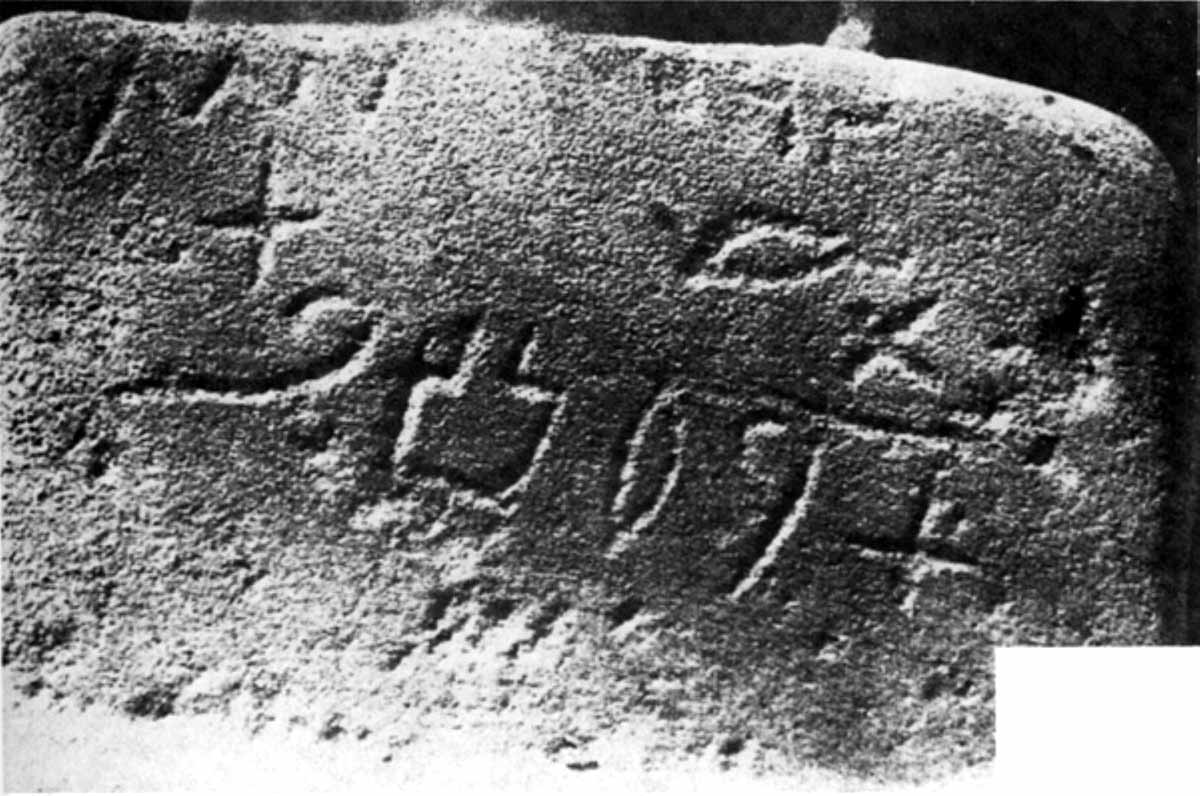
The search continued. In 1993, American Egyptologists John Coleman Darnell and Deborah Darnell, an archaeological illustrator, discovered two inscriptions carved into limestone cliffs.
They found these at Wadi el-Hol, a desert valley between Thebes and Hiw that served as a caravan and military route during Egypt’s Middle Kingdom. What they uncovered resembled Proto-Sinaitic and may date to 1800 to 1900 BC. Their location along a strategic passage linking Nile settlements suggests the script may have spread through trade and military movement.
Between 2006 and 2020, Israeli Egyptologist Orly Goldwasser identified new inscriptions in mining records and temple fragments from Sinai and Upper Egypt. Her findings included examples from Wadi el-Hol.
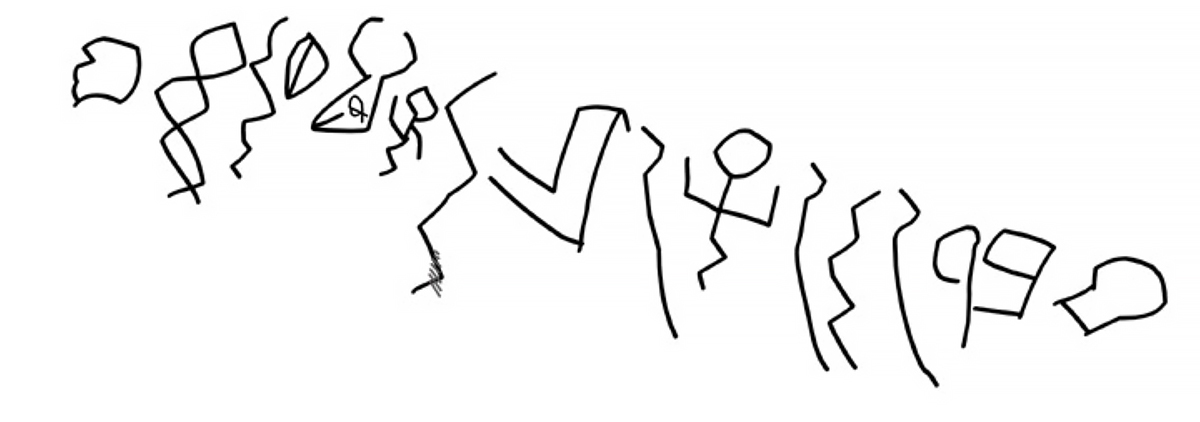
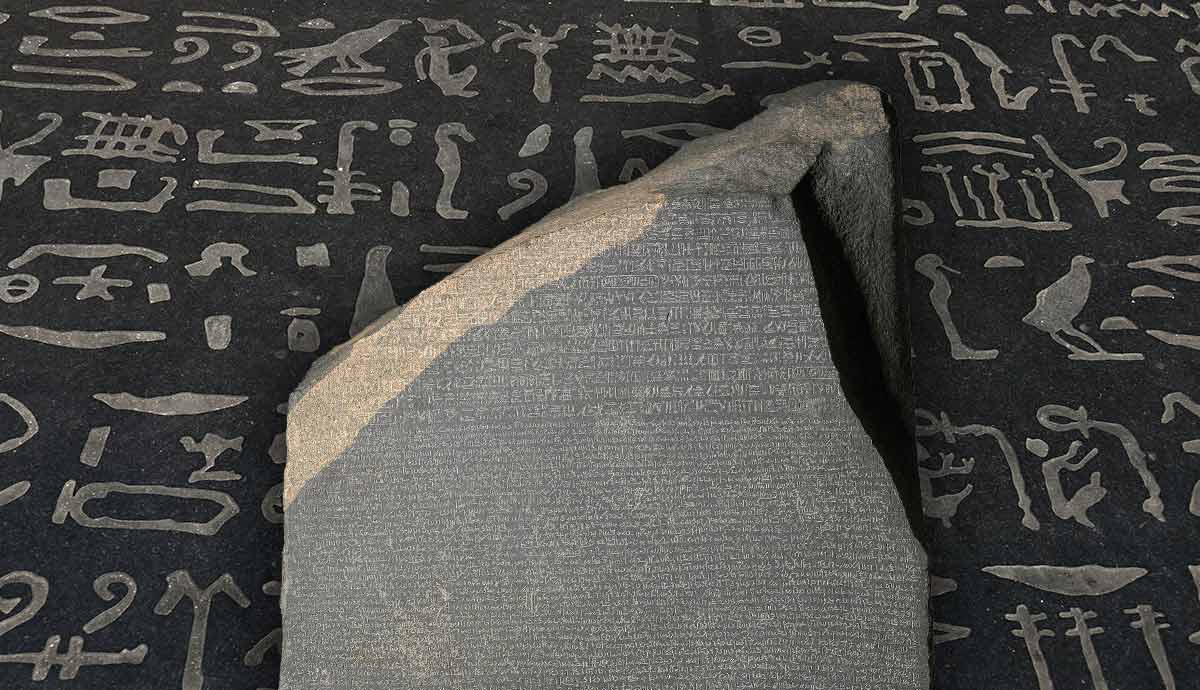
The known corpus includes several dozen inscriptions, mostly fragmentary and carved into stone. They differ from Egyptian hieroglyphs (logographic and syllabic, 3200–400 BC) and Phoenician abjads (1050–800 BC). An abjad uses symbols for consonants only, leaving vowels implied, as in Semitic languages like Arabic and Hebrew. Proto-Sinaitic may be the earliest known example.
Some historians argue that the script was invented by miners with no formal training. Others suggest it was a simplified adaptation by Semitic workers familiar with Egyptian signs. Each carving supports the idea that the origin of the alphabet may lie in Sinai, Timna, or Wadi el-Hol, not Phoenicia.
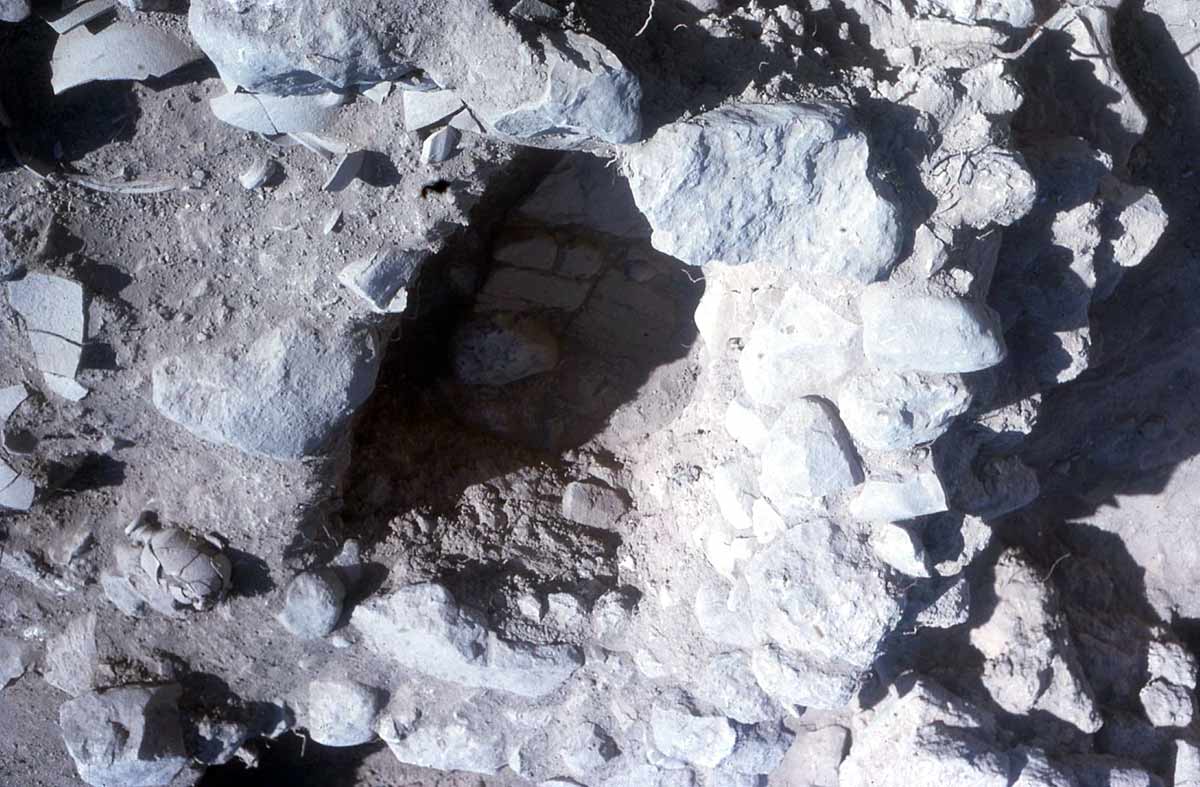
In 2016, Israeli archaeologists Yosef Garfinkel and Madeleine Mumcuoglu excavated an elephant ivory comb at Tel Lachish. The site was a fortified city in southern Israel, occupied by Canaanites (a Northwest Semitic people) during the Early and Middle Bronze Age (c. 3300–1550 BC), and by Judahites during the Iron Age (c. 1200–587 BC). Judahites lived in the biblical kingdom of Judah, which formed after the split of ancient Israel. They spoke early Hebrew and left inscriptions that help trace alphabet development.
The comb measured about 1.4 by 1 inch and was originally cataloged as a hygiene tool. In 2021, Mumcuoglu identified a faint carving in early Canaanite script (used c. 1800–1200 BC). High-resolution imaging revealed the sentence: “May this tusk root out the lice of the hair and the beard.” Dating to around 1700 BC, the comb holds the earliest known complete phonetic sentence in an alphabet. This find has reinforced a broader theory.
From Symbols to Sounds: Tracing the Alphabet’s Origin
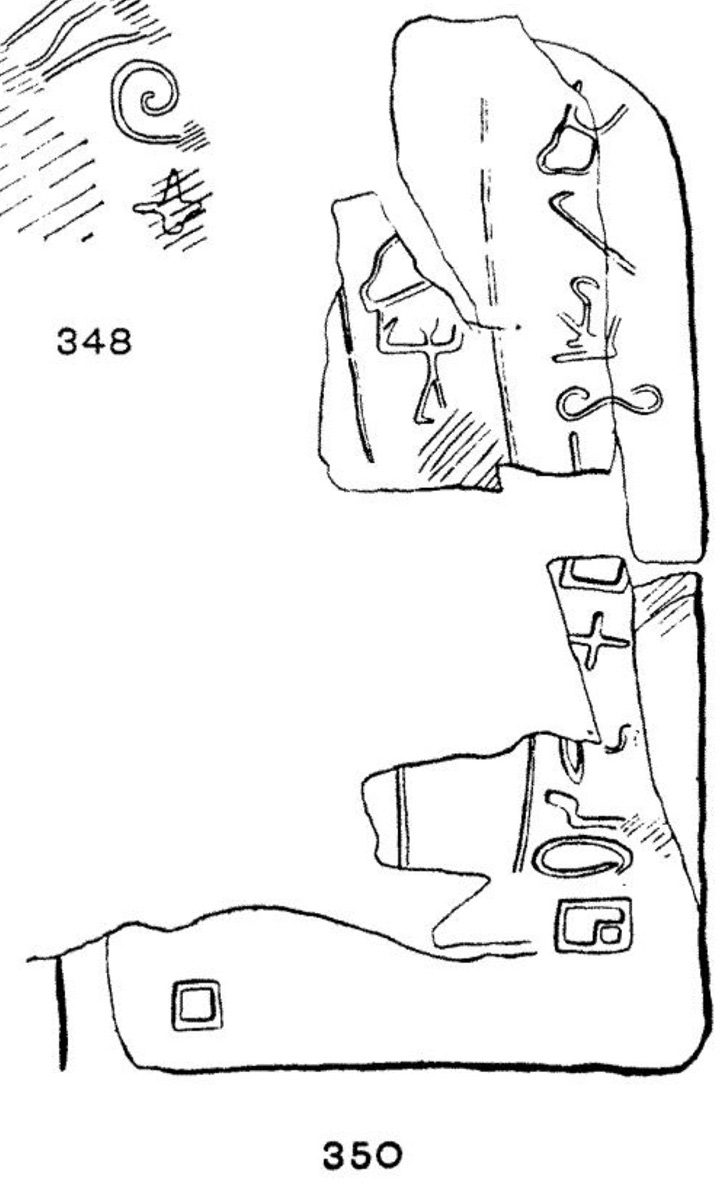
Building on earlier theories, Goldwasser argued that Semitic workers, excluded from Egyptian scribal schools, simplified hieroglyphs into phonetic symbols. Their system used fewer signs and relied on sound: portable, practical, and accessible to non-elites.
Proto-Sinaitic reduced hundreds of hieroglyphs to two dozen consonantal symbols. This simplification was revolutionary in the development of the alphabet. It shifted writing from elite control to broader use. A 2015 survey at Wadi el-Hol recorded directional inconsistencies and sign clustering, suggesting experimentation with layout before standard writing conventions emerged.
Building on Gardiner’s ox-head identification, other early examples include “bēt” (“house”) and “mēm” (“water”), which evolved into Phoenician and Hebrew abjads. In 2010, Goldwasser found a recurring sequence at Serabit el-Khadim that may represent “ʾab” (“father”), suggesting phonetic intent. The carvings show both left-to-right and right-to-left layouts, confirming that writing direction was still fluid. Some mimic Egyptian hieroglyphs but retain only sound value.
The shift from ideogram (meaning) to phoneme (sound) allowed abstract thought to be encoded linearly. By 1500 BC, similar signs appear in Canaanite contexts, implying regional transmission. This leap from image to sound changed how language was recorded, remembered, and shared.
The system lacked vowels and bilingual texts, so scholars rely on visual comparisons and reconstructed vocabulary. Interpretations vary: some see phonetic letters, others symbolic shorthand.
Who Owns the Alphabet? Competing Claims
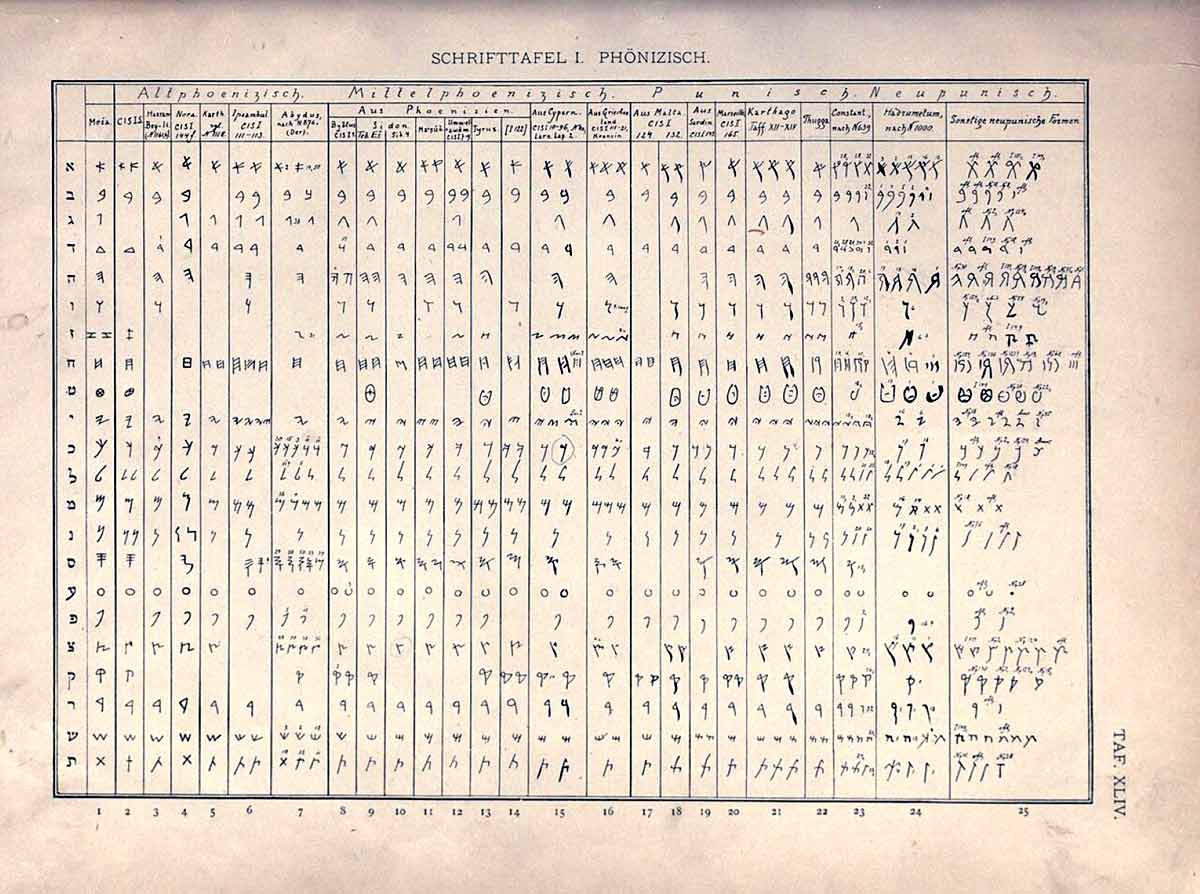
Alphabet origin theories shape national narratives in Egypt, Israel, and Algeria. Some link Proto-Sinaitic to Egyptian, Semitic, Hebrew, or Berber traditions, influencing museums, curricula, and heritage efforts.
Michael Shelomo Bar-Ron is a retired rabbi, an expert in ancient Hebrew, and an independent epigrapher at Ariel University. He has spent eight years concentrating on studies of Proto-Sinaitic and early Semitic scripts and their relationship to early biblical traditions. His Hebrew-based translations and biblical links to Proto-Sinaitic scripts are strongly contested by various Egyptian and Semitic academic teams, who cite Serabit el-Khadim and Wadi el-Hol inscriptions to support their competing claims about the script’s origin.
Douglas N. Petrovich, a professor of Biblical History and Exegesis, holds advanced degrees in theology, ancient history, linguistics, and Near Eastern archaeology. He spent over ten years researching Proto‑Sinaitic inscriptions from Serabit el‑Khadim and Wadi el‑Hol before publishing The World’s Oldest Alphabet: Hebrew as the Language of the Proto‑Consonantal Script in 2016. His book presents a timeline of the inscriptions, proposed authors, translations, and connections to Israelite miners and biblical narratives. Petrovich argues the script represents ancient Hebrew, paralleling Bar‑Ron’s Proto‑Sinaitic proto-thesis and igniting controversy because his primary background is biblical scholarship.
One such claim draws on a rural site. Izbet Sartah was a small Iron Age I (c. 1200–1000 BC) settlement near ancient Aphek, a biblical city. It was occupied around 1200 BC and now sits beneath the modern Israeli city of Petah Tikva. In the late 1970s, Israeli archaeologists Moshe Kochavi (1928–2008) and Pirhiya Beck found the Izbet Sartah ostracon, a pottery shard used for writing. It contains five lines of text. The final line features an abecedary (alphabet listing), one of the earliest known in the Levant. Hebrew epigraphers view it as evidence of early Hebrew literacy outside elite scribal circles.
In 2022, Algeria’s Epigraphy Conference linked Berber identity to Proto-Sinaitic. North African academics debated the claim. In 2024, UNESCO urged collaborative research amid rising national assertions. The origin of the alphabet, thus, remains a contested mystery and cultural prize.
The Proto-Sinaitic Puzzle That Won’t Stay Buried
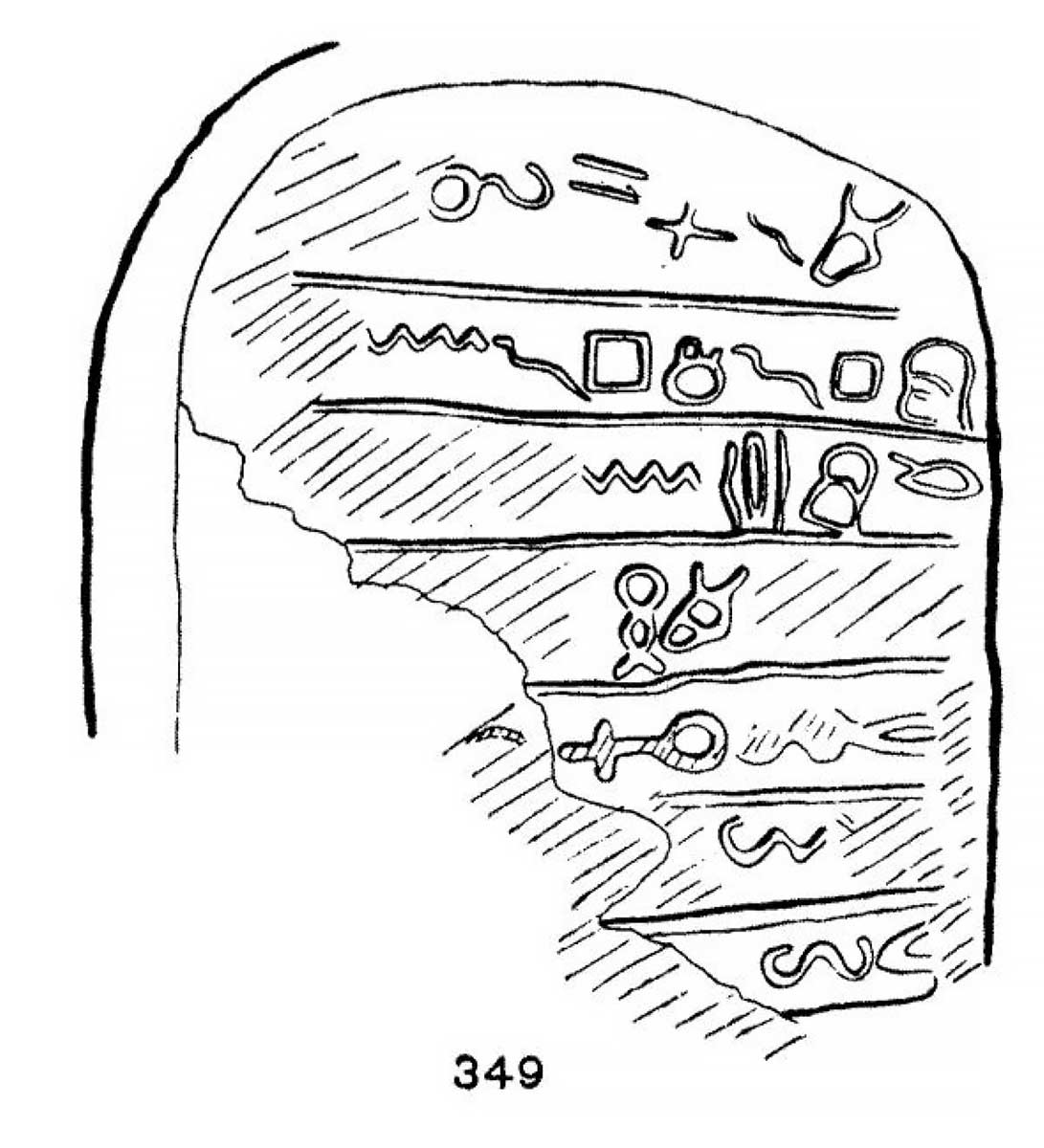
The Proto-Sinaitic script samples are scarce and hard to interpret. Between 2021 and 2024, technologies like multispectral photography and 3D modeling revealed faded signs and surface carvings. Despite these advances, the corpus remains small. Yet recurring sign patterns suggest a coherent system. Most inscriptions are brief and isolated. They show internal structure and recurring sign patterns. This suggests the script follows a coherent system.
Some inscriptions show spacing and repeated signs, hinting at sentence structure and common words.
In 2021, University of Haifa researchers used reflectance transformation imaging (RTI) to detect faint carvings at Serabit el-Khadim, distinguishing intentional marks from erosion and expanding the corpus.
In 2023, Hebrew University researchers found signs near Timna matching early Phoenician forms (1050–800 BC), suggesting script overlap. Without organic material, radiocarbon dating is impossible, so the timeline relies on stylistic and archaeological context. Researchers hope for bilingual inscriptions to confirm phonetic values.
Each new scan reshapes the debate among experts. In 2023, multispectral photography at Timna mines revealed repeated “house” signs, suggesting phonetic consistency. In 2024, an RTI scan at Serabit el-Khadim uncovered a previously undocumented sign resembling early Aramaic resh (a consonantal letter for “r”), used c. 900 to 700 BC in Northwest Semitic scripts. These findings prompted renewed debate about regional script overlap and transmission.
The alphabet’s origin story remains unresolved, shaped by technology, interpretation, and the search for meaning.
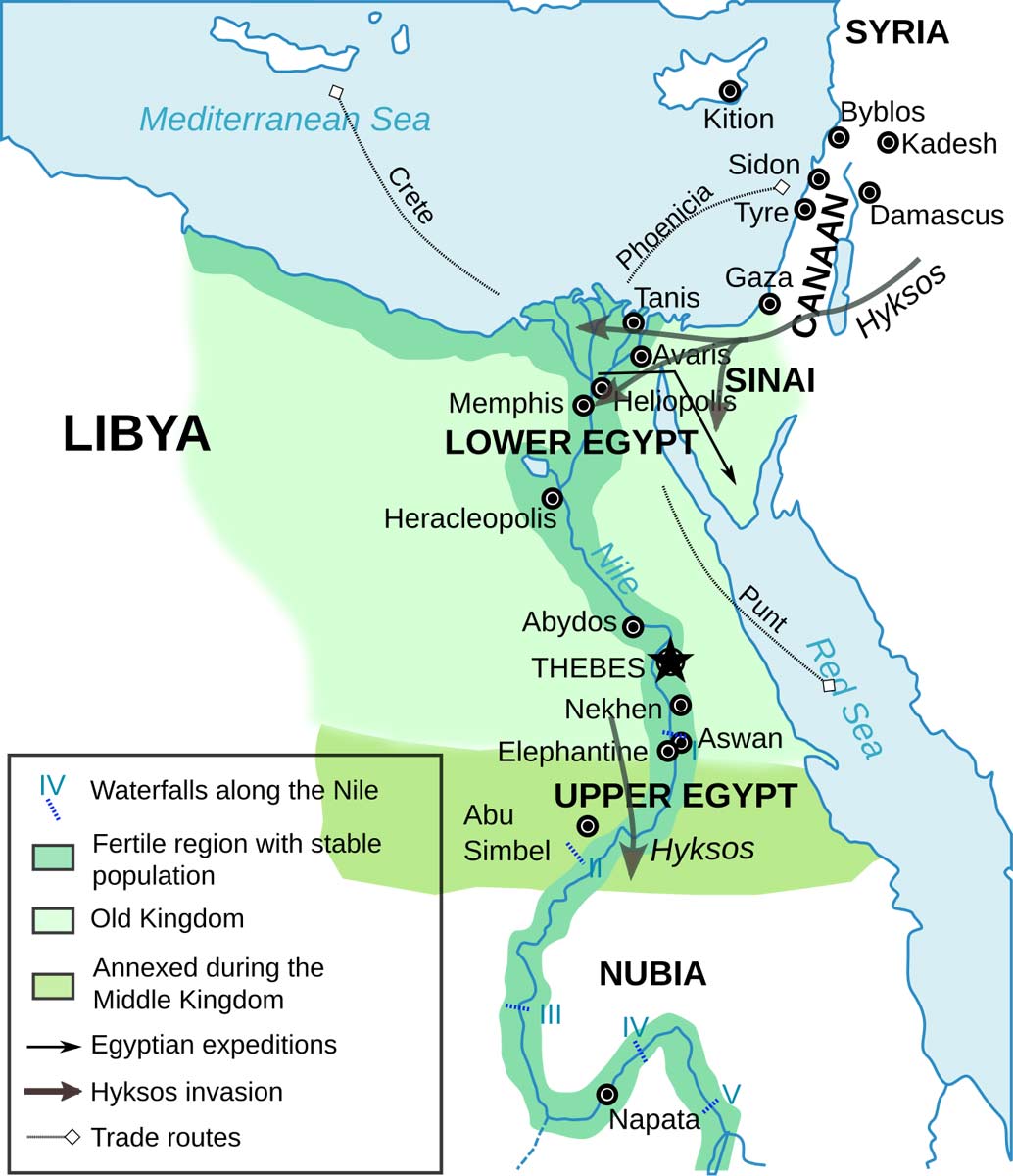
Some historians date the earliest inscriptions to Amenemhat III in Egypt’s Middle Kingdom; others argue for Thutmose III (1479–1425 BC) in the New Kingdom. Dating shapes attribution, historical context, and claims of priority.
Despite the uncertainty, Proto-Sinaitic may have influenced later scripts. Its signs resemble early Phoenician letters, which shaped the Greek and Latin alphabets. The shift from images to sounds changed how people recorded speech and meaning. It marked a cognitive leap from sacred symbols to everyday writing.
If this script came first, it shifts the origin of literacy from royal courts to desert mines. These signs opened a revolution in language and civilization. The origin of the alphabet is a living question—and the answer may still surprise us.