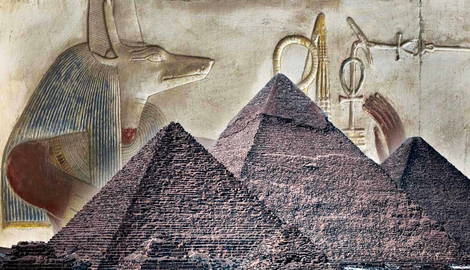
The pyramids are not the first religious monuments created by mankind. But while we are left to speculate about the purpose of earlier monuments from their architecture and artifacts, we have a better understanding of the purpose of the pyramids thanks to the Pyramid Texts: extensive hieroglyphic texts carved on the inner walls of the underground chambers of some pyramids. Nevertheless, the pyramids are often mistakenly referred to as tombs, which misrepresents their true purpose. The pyramids were “immortality technology” designed as vehicles to secure the pharaoh’s immortality. The Pyramid Texts not only describe this process, but were part of the magic transformation.
From Mastabas to Pyramids: Tombs or Temples?
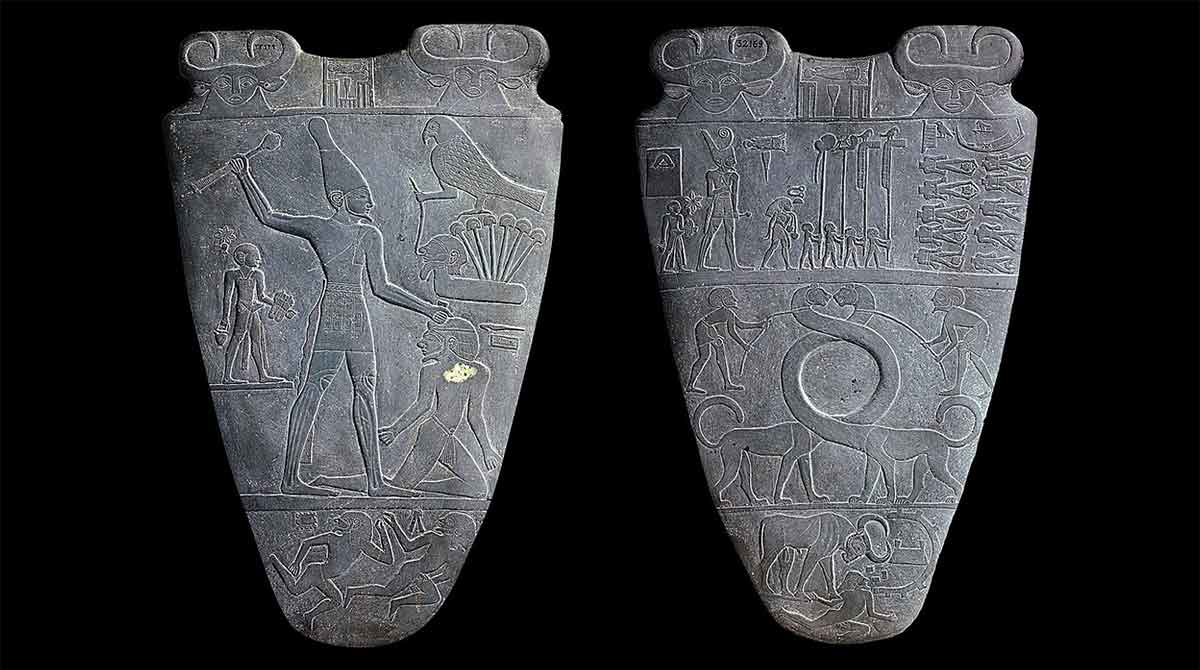
While Egyptian religion, culture, and beliefs changed significantly over the millennia, from early in pharaonic history, the idea of the pharaoh as an incarnation of the divine on earth was already well established. Because the gods are immortal, for the pharaoh, death need not be the end.
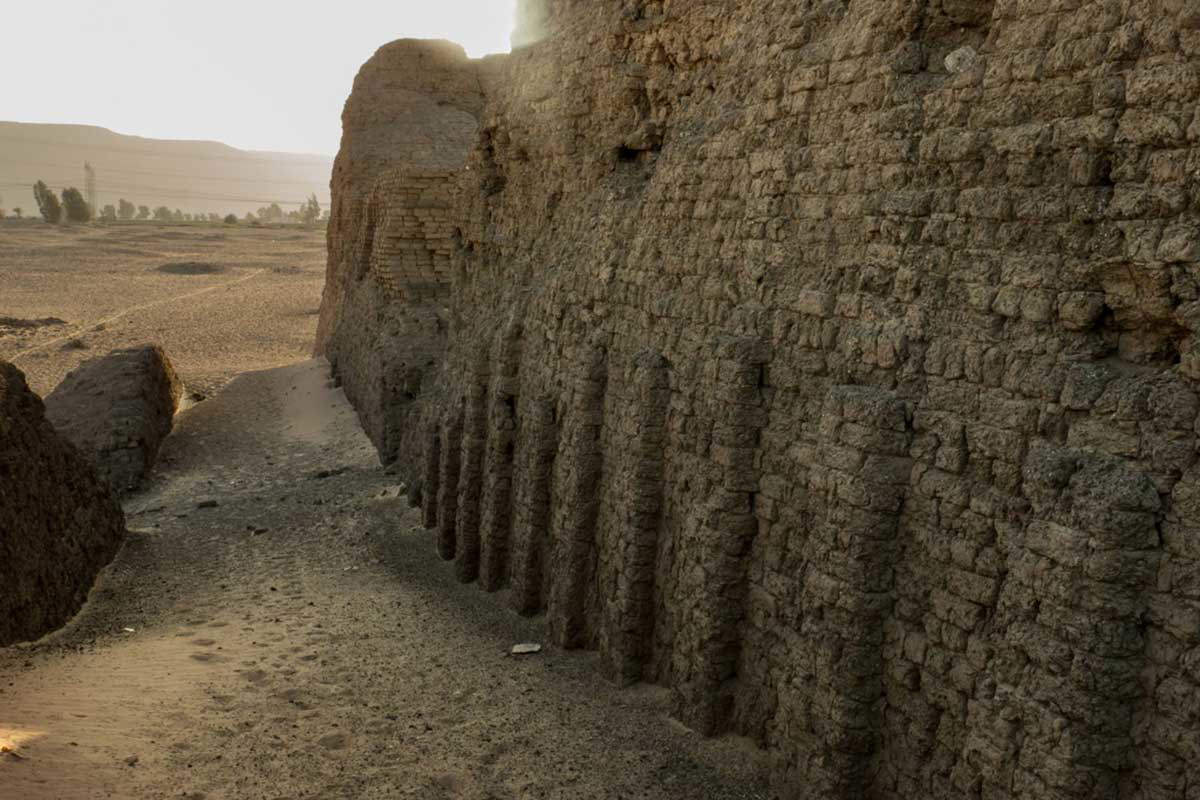
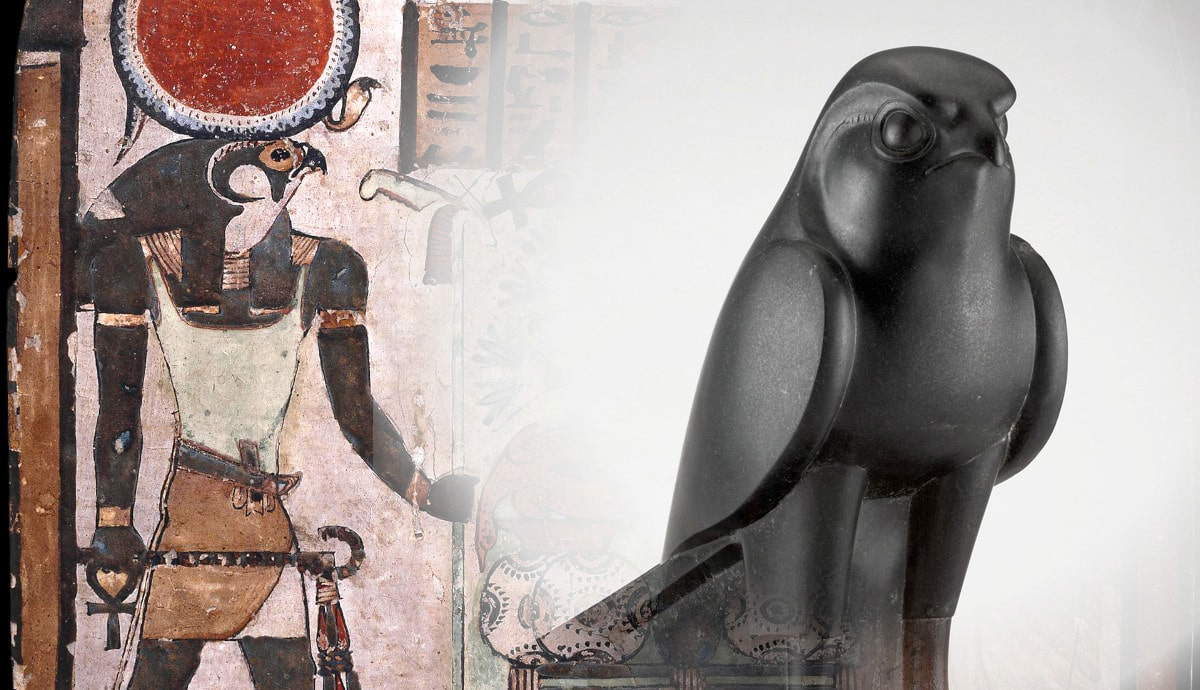
Consequently, the treatment of the remains of the mortal incarnation of the pharaoh after death mattered. Early in pharaonic history, from at least 3000 BC, his mortal remains were interred in mastabas: flat-roofed rectangular structures with sloping sides made from mudbrick. Pharaonic mastabas seem to have been modeled on an early temple of Horus in the early city of Hierakonpolis. This reinforces the idea of the pharaoh as an incarnation of Horus on earth, and the idea of his final resting place not as somewhere mortuary, but as somewhere the mortal and divine intersect.
Mastabas were gradually replaced by grander monuments made of more durable stone. The first pyramids were built in the 27th century BC during the Third Dynasty. These continued to be the preferred mortuary monuments of the pharaohs throughout most of the Old and Middle Kingdoms.
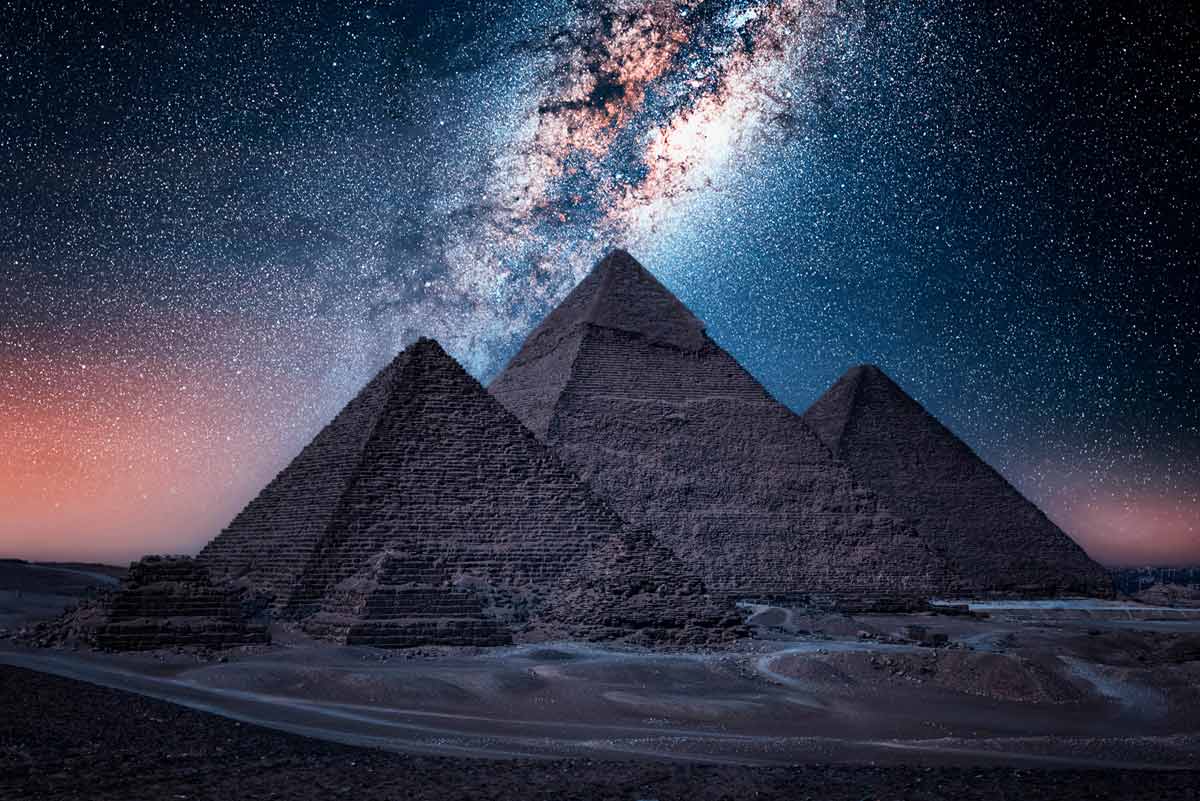
Also more than tombs, based on their architecture, scholars believe that the pyramids were designed as conduits that helped the pharaoh travel from the mortal realm to join the imperishable stars of the northern sky that never set, or to ascend toward Orion, the celestial manifestation of Osiris in the southern sky.
Discovery of the Pyramid Texts: Advancements in Immortality Technology
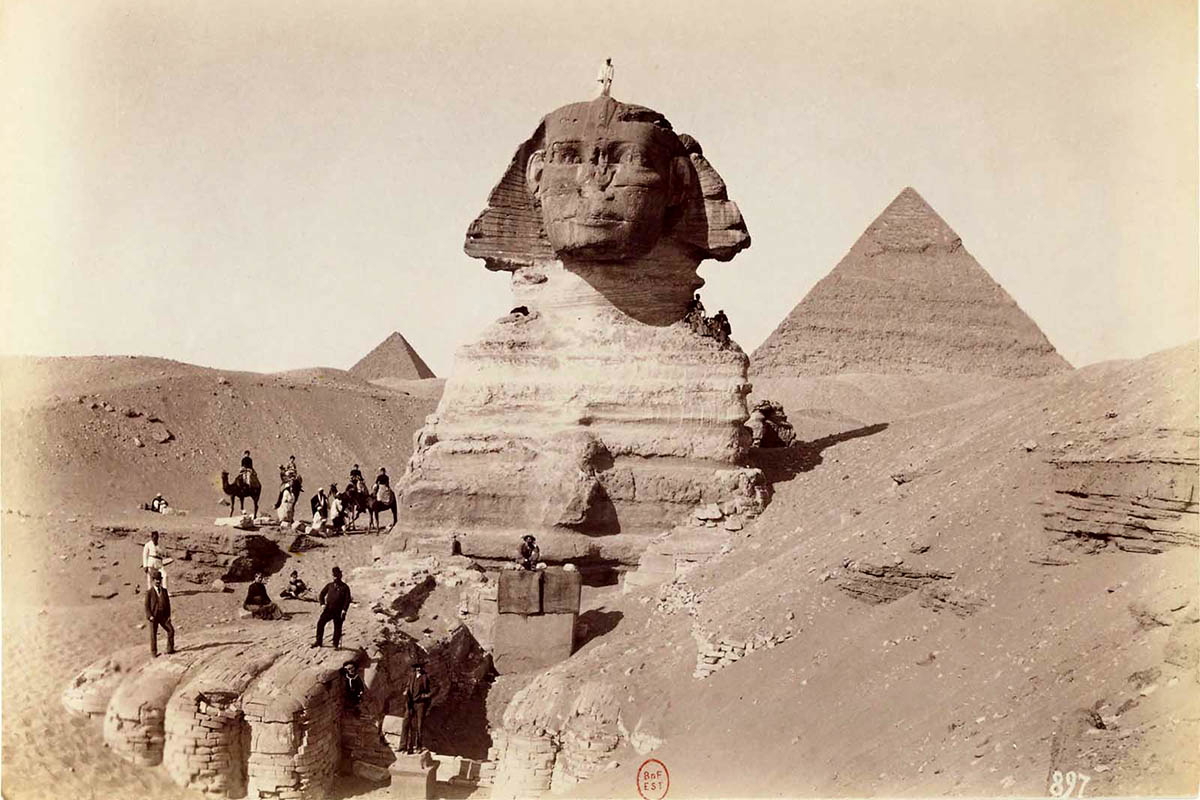
While the pyramids were far from untouched over the millennia by grave robbers and stone scavengers, modern excavations only began in the early 19th century. The Great Pyramids at Giza garnered the most attention due to their excellent state of preservation and were quickly considered standard.
In 1880, French Egyptologist Gaston Maspero discovered the largely destroyed remains of what turned out to be the pyramid of Pepi I of the Sixth Dynasty at Saqqara. While much of the above-ground structure was destroyed, he was able to gain access to subterranean rooms. He found that the walls of these rooms were covered in hieroglyphic texts. When he reported the find to the director of excavations in Egypt, Auguste Mariette, he was told that he could not have found the remains of a pyramid, because these texts were not a feature of the Great Pyramids at Giza.

Maspero would soon be vindicated when he found a second structure, later confirmed to be the pyramid of Merenre I, Pepi’s successor, inscribed with the same hieroglyphic texts. While this finding was still rejected by Mariette, Maspero discovered three more ruined pyramids at Saqqara with the same texts over the next year. He would publish the texts in 1894 as “Les inscriptions des pyramides de Saqqarah,” kicking off decades of study.
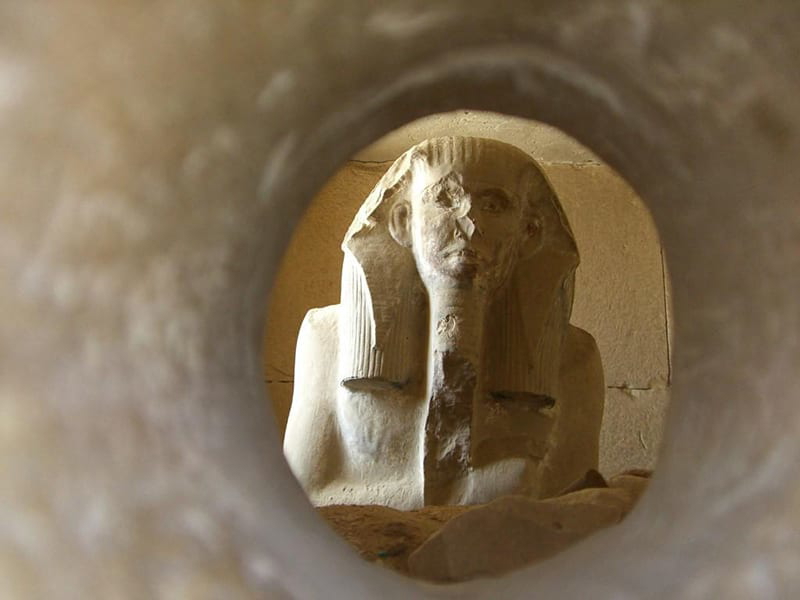
To date, eleven pyramids, belonging both to pharaohs and queens, have been discovered with these hieroglyphic texts on the interior walls of their underground chambers. The oldest belongs to Unas, the last pharaoh of the Fifth Dynasty. He ruled in the 24th century BC, around 300 years after the construction of the Great Pyramids. The text also appears in nine pyramids from the Sixth Dynasty, dating from around 2300-2150 BC, plus one pyramid belonging to Qakare Ibi of the Eighth Dynasty, dating to around 2100 BC. This suggests that the Pyramid Texts represent an advancement in immortality technology of the pyramid.
The Pyramid Text of Unas: The Template
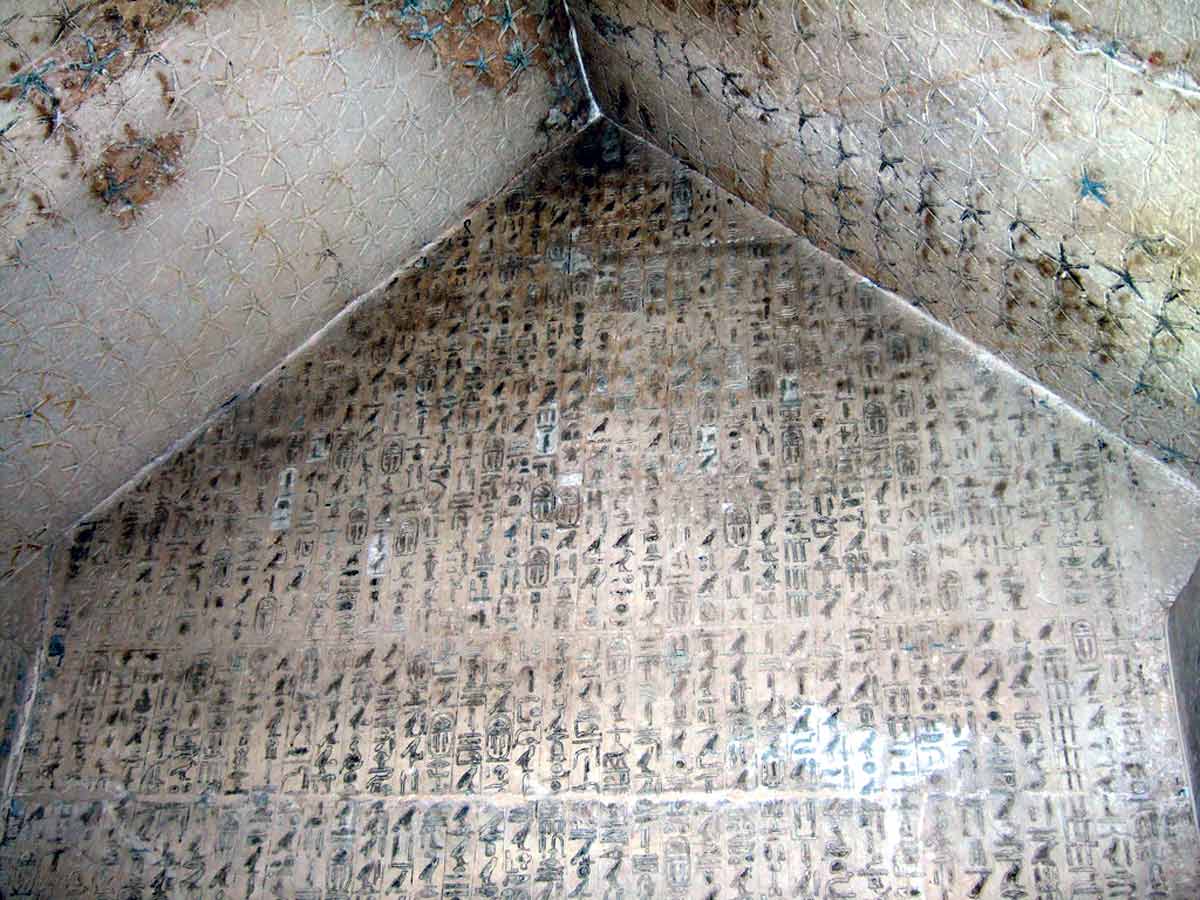
The Pyramid Text of Unas is often taken as the baseline exemplary for all Pyramid Texts. However, different versions appear in each pyramid; for example, queens usually have an abbreviated version, while the text in the pyramid of Pepi II is nearly three times as long as the text of Unas. This can make reviewing the complete corpus of the Pyramid Texts extremely challenging.
Nevertheless, the text of Unas is not only the best preserved, but it is also the earliest text explaining the Egyptian conception of life after death and ideas around immortality. For simplicity purposes, this overview will draw mainly on the text of Unas, with additions from other copies where appropriate.
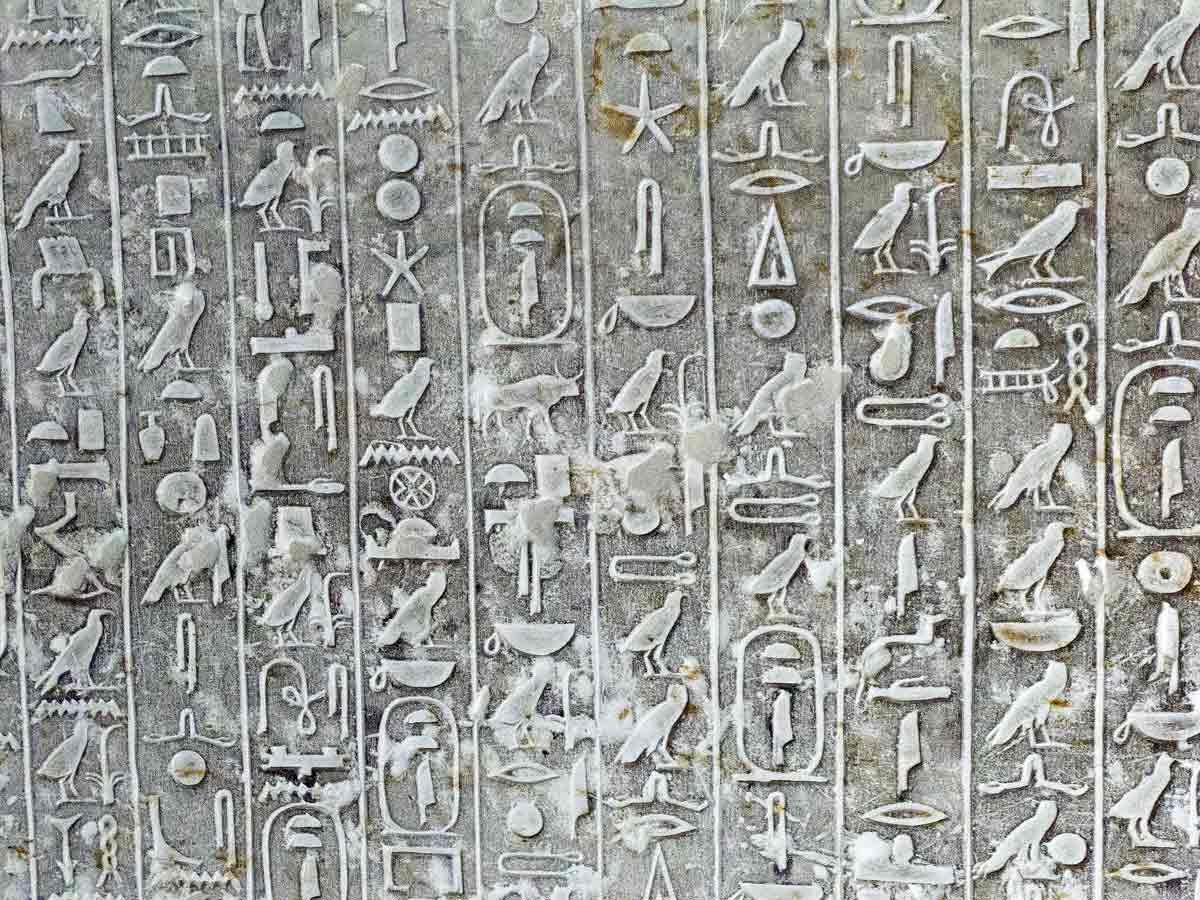
Much of the text in the Unas pyramid seems archaic for the period, suggesting that it draws on older source material. Scholars believe that it draws on spells that were previously just recited as part of rituals for the dead pharaoh and that the innovation was to make those spells “concrete” through inscribing them on the pyramid walls. This seems confirmed by examples of placeholders in the text where the name of the pharaoh should have been written, suggesting mistakes were made when copying the text from a generic document.
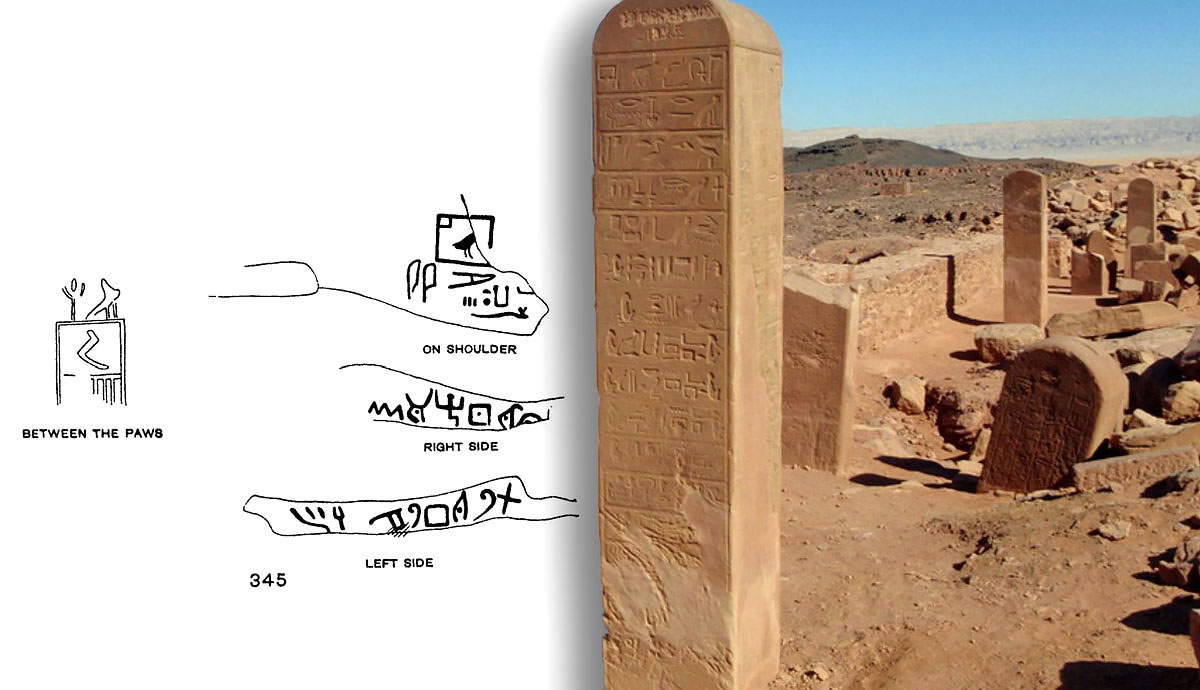
The ancient Egyptians believed their hieroglyphs, called medu netcher or “words of the gods,” were invented by the god Thoth and contained divine creative powers and were conduits of magic, called Heka. Hieroglyphs not only recorded life, but had the power to shape existence.
A Book of Incantations and Spells
The Pyramid Texts are a sequence of ritual incantations placed in a specific sequence on the walls of the pyramid chambers. Read in order, they are a magical ritual that guides the pharaoh to immortality.
The Egyptians believe that human beings are made up of at least three, and possibly as many as five, distinct elements. Two of these elements are the Ka, which is the animating force of the body, and the Ba, which is the personality, consciousness, and memories of the person. Upon the death of the physical body, the Ka is released, but to achieve immortality, the trapped Ba must also be released to reunite with the Ka. This then became a new immortal entity known as the Akh, which could enjoy immortality.
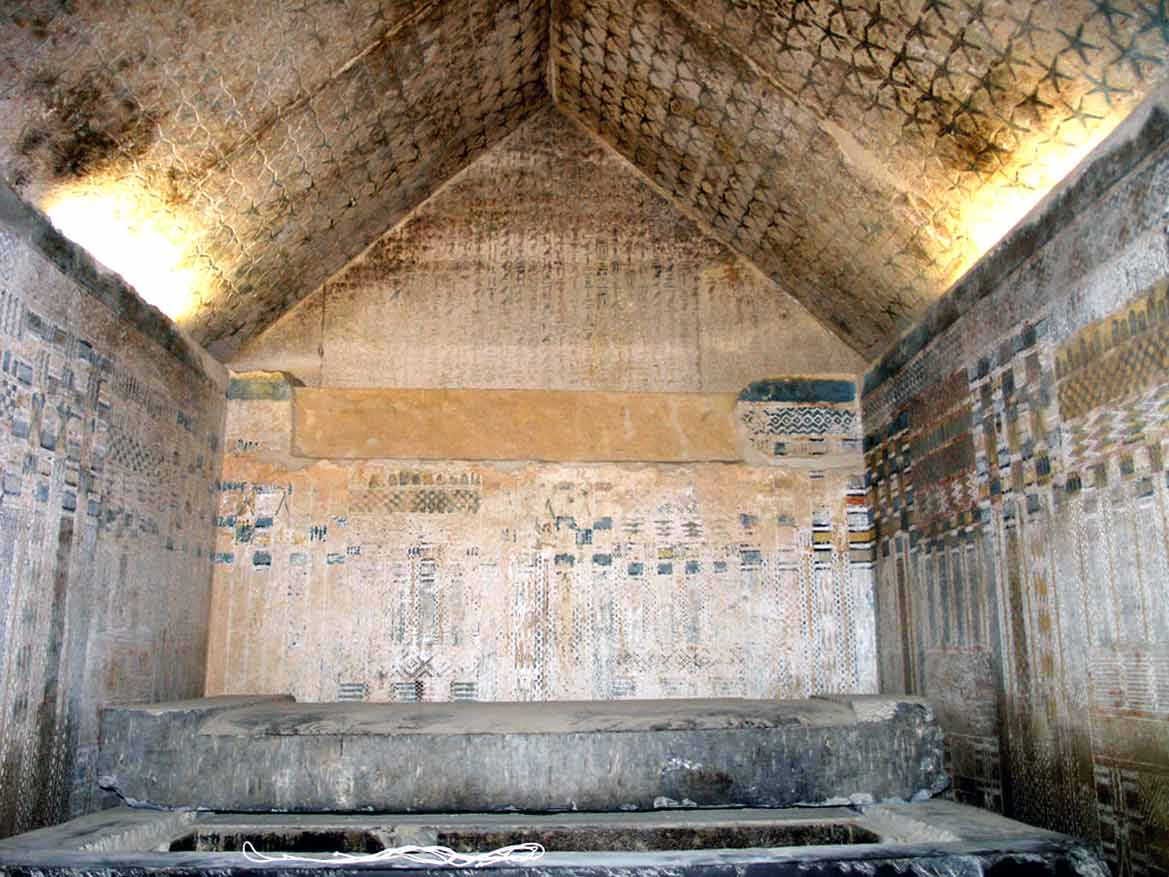
The spells of the Pyramid Texts can be divided into two categories: ritual incantations and personal spells. Ritual incantations are written in the second person and said on behalf of the pharaoh. These may reflect the words spoken by priests during mortuary rituals and the Opening of the Mouth Ceremony. Personal spells are written in the first person and are there for the pharaoh to recite to protect himself on his journey.
In the case of Unas, the texts were laid out and read in the following order:
| Sarcophagus Chamber West Wall | Ritual incantations focused on the burial itself to protect the body; for example, there are spells to protect the body from worms and snakes. |
| Sarcophagus Chamber North Wall | Ritual incantations in the form of offerings to ensure that the Ka is appropriately fed with food, drink, and incense. |
| Sarcophagus Chamber South Wall | Ritual incantations to facilitate the pharaoh’s transformation through identification with Osiris. |
| Antechamber and Corridor | Personal spells as the pharaoh departs the chamber and climbs the celestial ladder to join the gods. |
Key Themes of the Pyramid Texts: The Ancient Egyptian Afterlife
The complete corpus of the Pyramid Texts contains more than 750 spells that serve different purposes. While the texts vary, consistent themes about immortality and the universe take center stage.
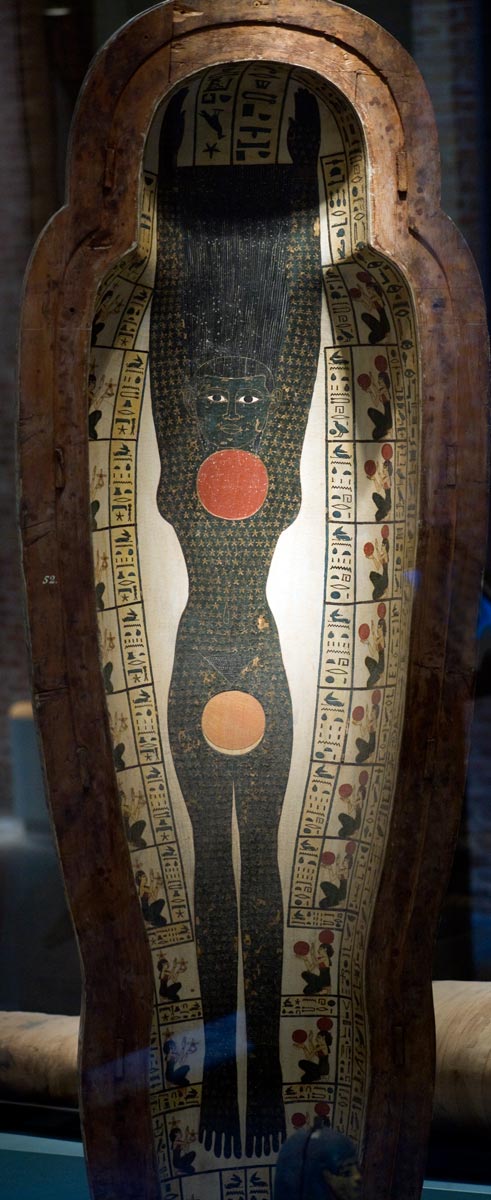
The rituals of revival that are played out in the Pyramid Texts reflect in “microcosm” how the Egyptians believed the universe worked in “macrocosm.” At the time, the Egyptians envisioned the world as a finite realm of land and water surrounded by and contained by a firmament, embodied by the god Shu. The sky above is the goddess Nut, and the earth beneath is the god Geb. The sun barge of the god Ra travels across the sky each day, and in the evening is swallowed by Nut. It then travels through her body, which contains the underworld, or the Duat, during the night. At sunrise, she gives birth to the sun anew.
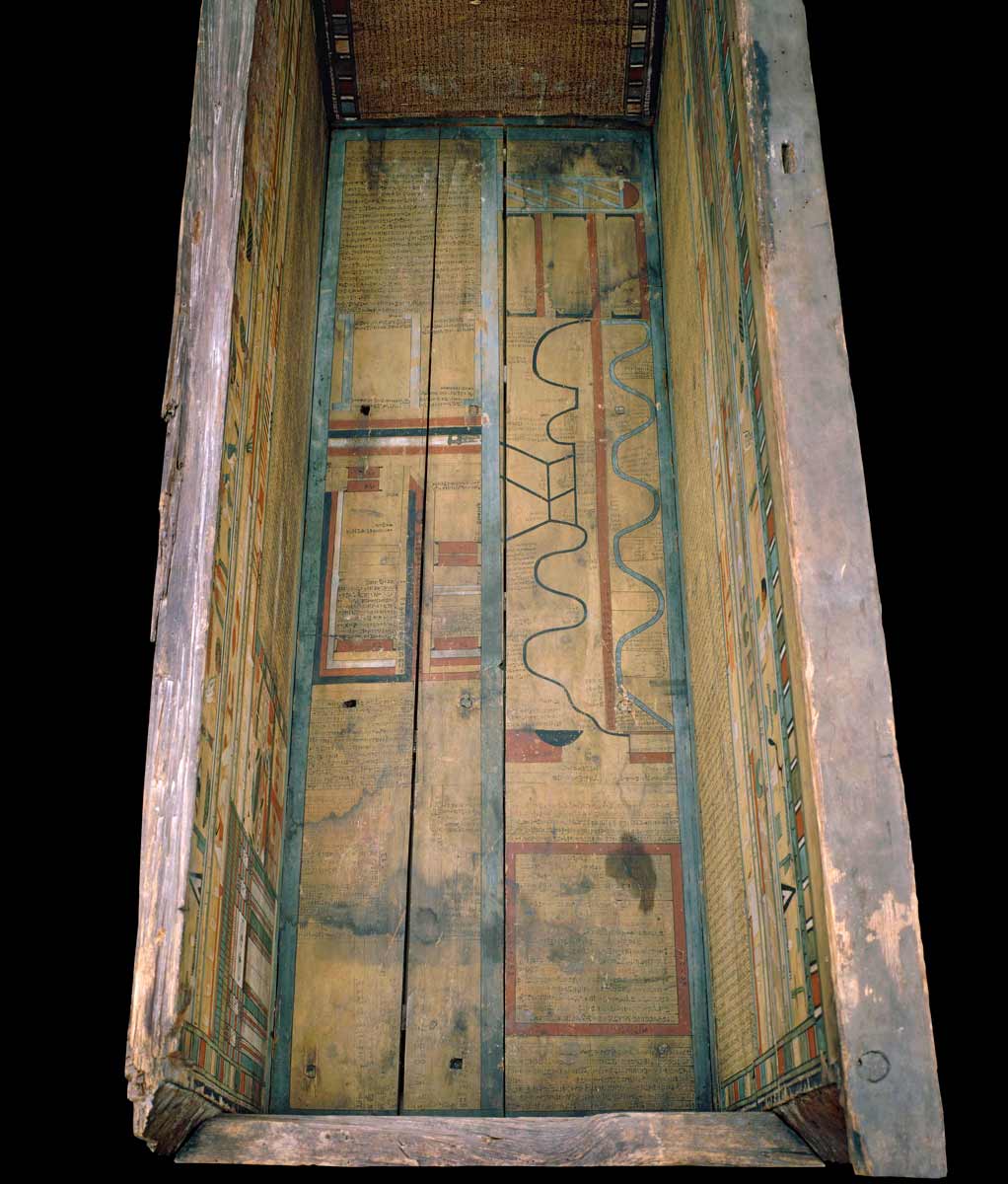
Osiris, dwelling in the Duat, meets with Ra when he reaches the deepest part of Nut’s body. There, Ra, as the divine Ba, and Osiris, as the divine Ka, merge into a single entity for a moment. This is a catalyst for life that allows Ra to recharge and re-emerge at dawn. As such, Osiris was associated with the regeneration of the sun, the Nile, the land, and the pharaoh, allowing him to emerge from the Duat and join the gods. As Osiris grew in popularity over the millennia, his mythology expanded into the more familiar myth of the death of Osiris at the hands of Seth and rebirth through his sister-wife, Isis.
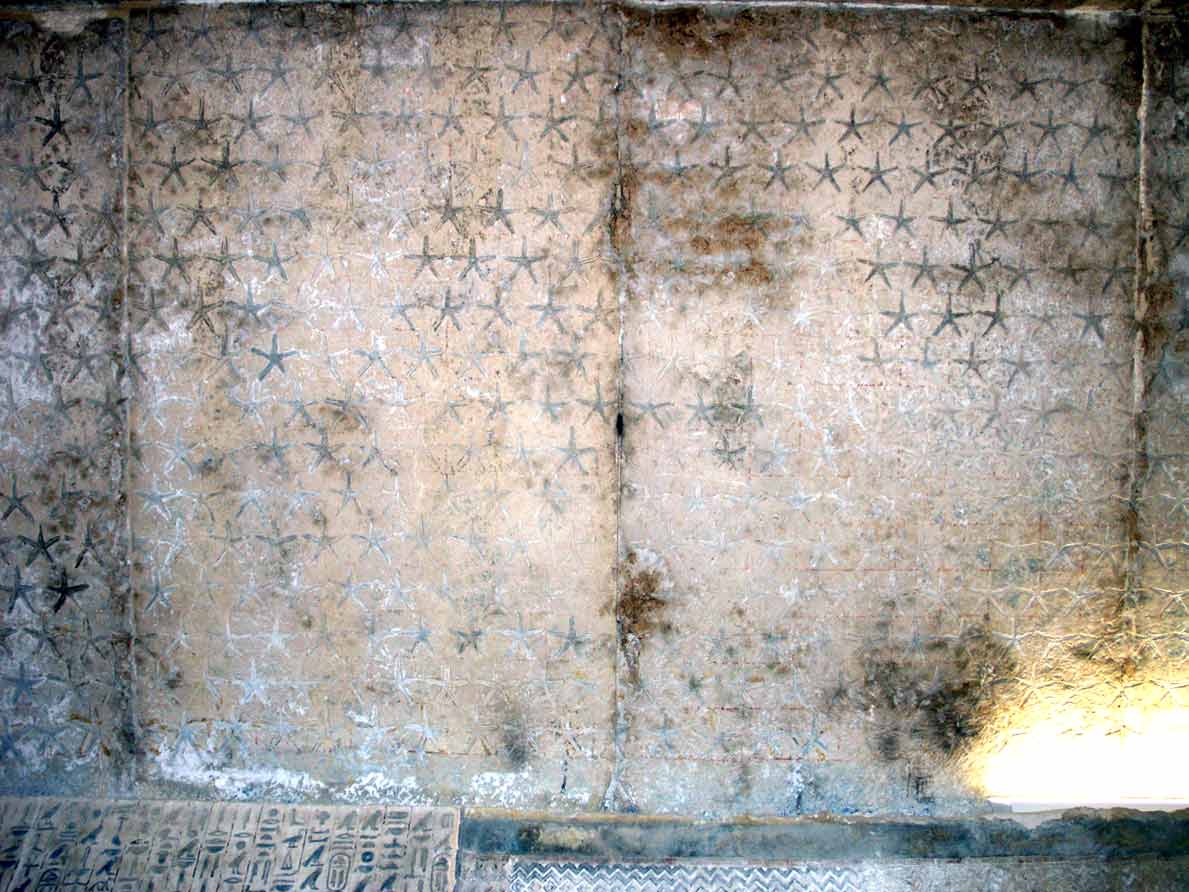
The Pyramid Texts describe this greater process and place the pharaoh within it. Spells are then used to unite the pharaoh’s Ka with Osiris, so that it can be rejoined to his Ba in the Duat and he can be reformed as an Akh and dwell among the imperishable stars, consistently depicted on the inside roof of the sarcophagus chamber. This is why the Pyramid Texts were written in blue or green ink, as symbols of regeneration and matching the color of Osiris’ skin.
The infamous Cannibal Hymn, which only appears in the Pyramid Texts of Unas and Teti, appears to describe the king hunting and eating parts of the gods. This echoes the goddess Nut devouring the sun barge. It suggests that the pharaoh must become one with the gods through metaphorical consumption to be devoured by Nut.
The protective spells suggest that the Duat was considered a dangerous place. After all, it was here that the monster Apophis attacks Ra’s sun barge each night. Thus, the spells for the pharaoh included ones to counteract snake venom, to guard against the demons that attack Ra and the pharaoh, and to call on other gods, such as Anubis and Thoth, to defend the pharaoh.
Evolving Immortality Technology: Democratization of Funerary Texts
| Pyramid Texts | c. 2700-2150 BC | Exclusively for the pharaoh and members of the royal family |
| Coffin Texts | c. 2150-1550 BC | Mainly available to the elite who could afford funerary equipment such as painted wooden coffins |
| Book of the Dead | c. 1550-50 BC | Broadly accessible immortality spells written on papyrus scrolls |
When Unas was interred in his pyramid in the 24th century BC, gaining immortality and spending eternity with the gods was something that only the pharaoh and members of the royal family could achieve. But over time, beliefs about the afterlife changed, and more people could gain access to the afterlife, at least if they could afford the right rituals, such as mummification, and had the right spells.
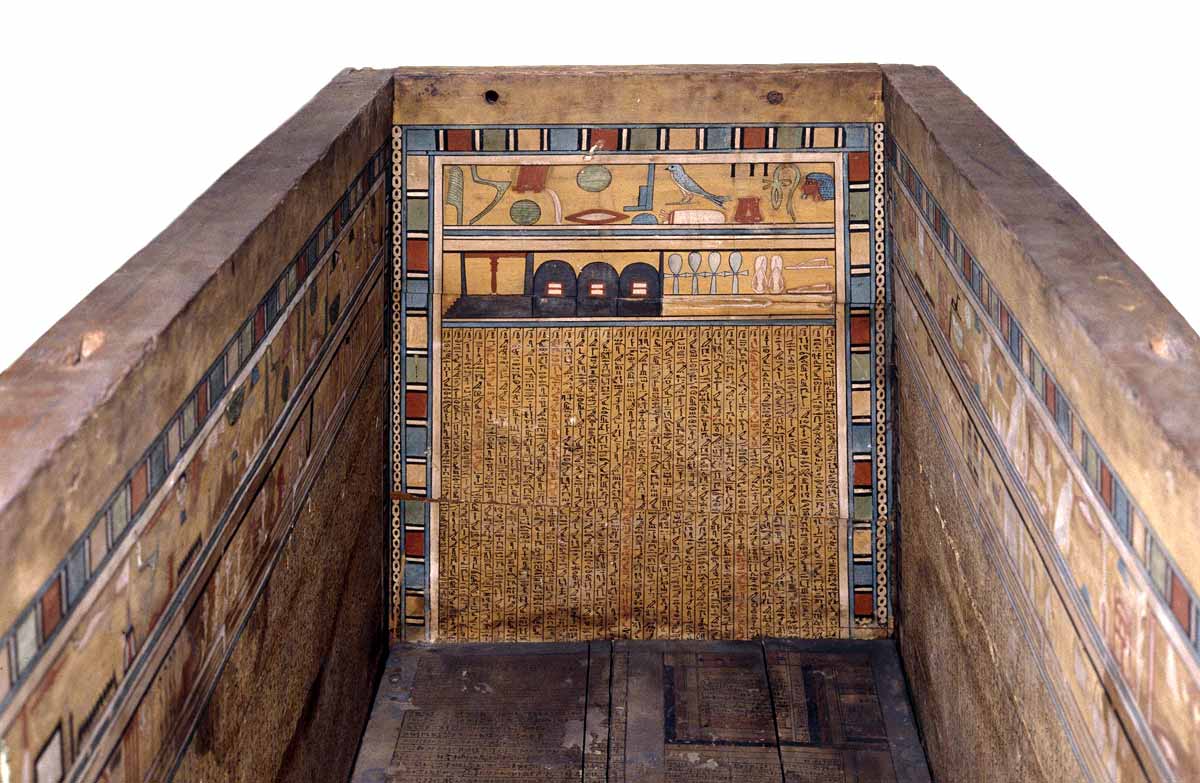
The Coffin Texts emerged in the Middle Kingdom, around 2100 BC. Using the Pyramid Texts as a starting point, the text was expanded with a greater focus on how the everyday desires of the person were achieved in the immortal realm. This was accompanied by the emergence of Shabti figures to serve the person. There was also a greater emphasis on Osiris as the key to immortality, as, unlike the pharaoh, many of the people who used the Coffin Texts were not already divine.
These new concerns expanded the list of spells from around 750 to almost 1,200. While they were mostly written on coffins, giving the collection of texts their name, they were also written on tomb walls, canopic chests, papyri, and other funerary objects.
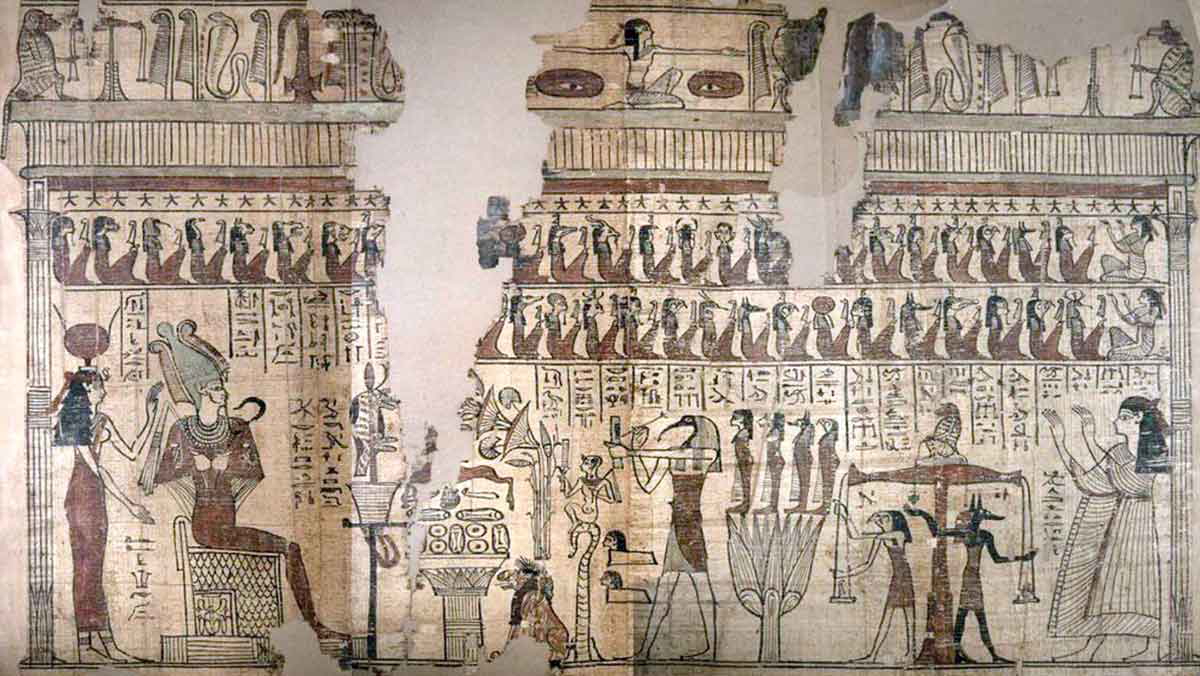
The Book of the Dead emerged at the start of the New Kingdom, around 1550 BC. This further democratized access to immortality as these personalized papyrus scrolls produced by professional priests were far more affordable. While based on the same ideas as the Pyramid Texts and the Coffin Texts, the spells were much more focused on surviving the journey to the Duat and then successfully passing the Weighing of the Heart Ceremony, though this idea was already present in the Coffin Texts.
With access to immortality expanded, this idea of a test of worthiness increased in importance. The heart of the deceased is weighed against the feather of Ma’at. If the heart is lighter than the feather, the dead could join the gods in immortality. If it is heavier, the heart is devoured by the monster Ammit, and the person consigned to oblivion.
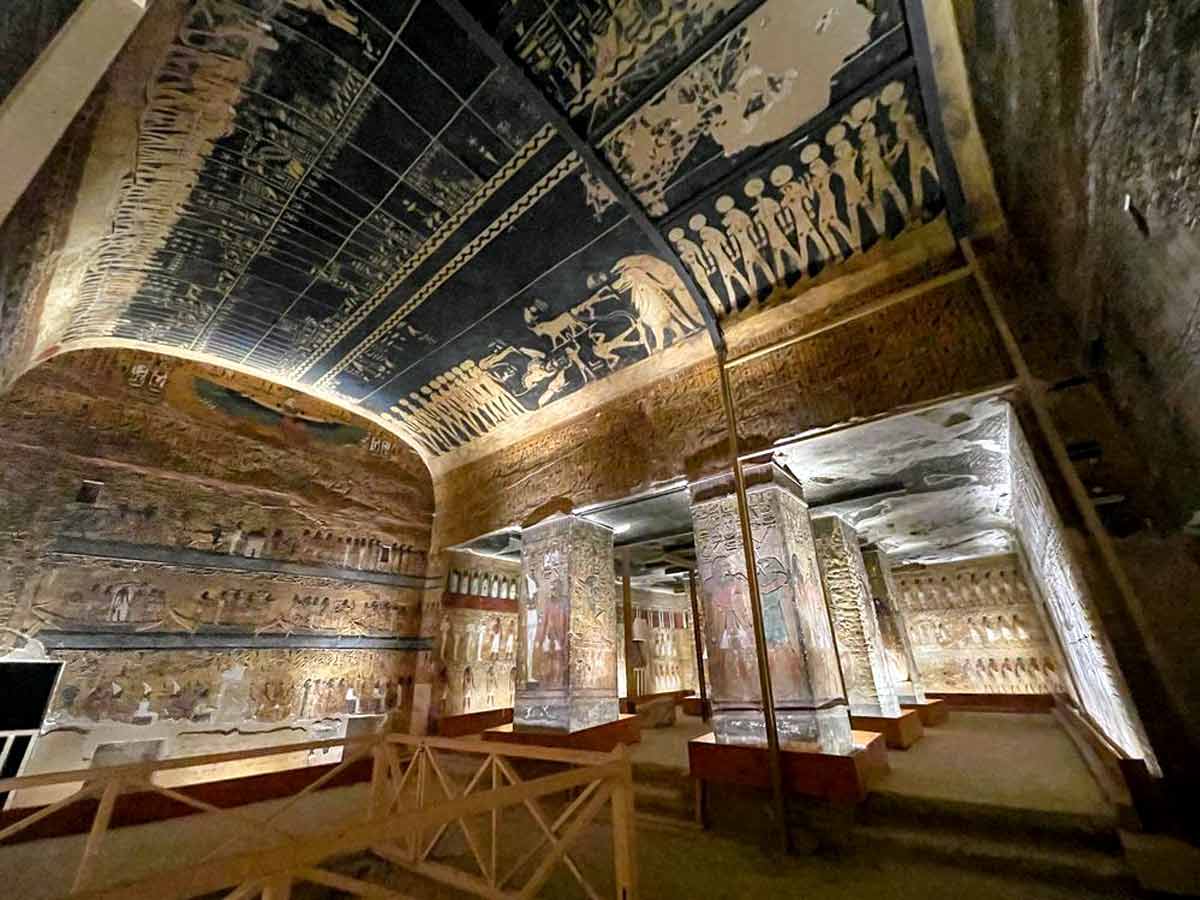
While we call this collection of texts used to achieve immortality the Book of the Dead, the Egyptians themselves called it “Spells for Coming Forth by Day.” This is a reference back to the Pyramid Texts and emerging from Nut at sunrise with the gods. It was also only one of several immortality texts used in later Egypt. Others included the “Amduat” (of things in the Duat), “Book of Gates” (which the deceased passed through on their journey to the Duat), and “Book of Caverns” (describing Ra’s journey through the 12 caverns of the Duat). But most importantly, rather than being about death, all of these books are tools for achieving eternal life. This is why they are more appropriately called “immortality technology.”