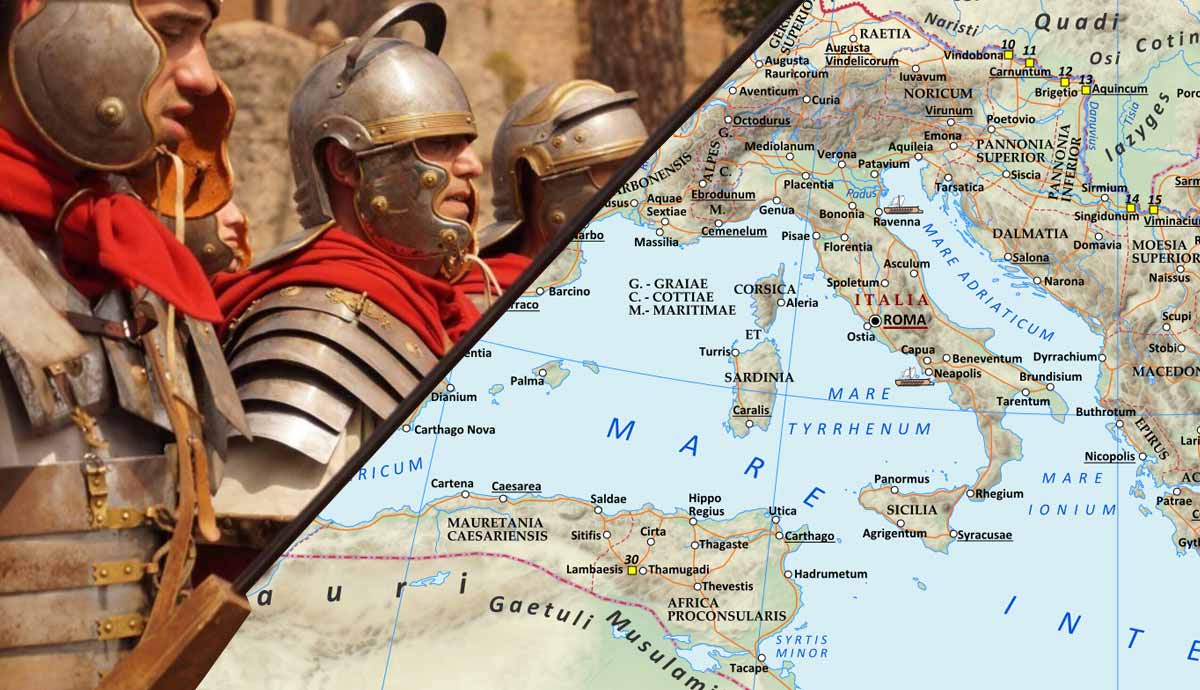
The Phoenicians were prolific merchants and explorers who traveled from their home in the Levant across the ancient Near East and Mediterranean, planting colonies and trading outposts around the ancient world. Wherever the Phoenicians went, they took their language with them, and they were pioneers in this area too. They developed the first true alphabetic script. The useful tool was adopted by other cultures, including the ancient Greeks, who in turn influenced the ancient Latin alphabet, which is the basis of most modern Indo-European languages, including English.
Ancient Phoenician Mariners and Merchants
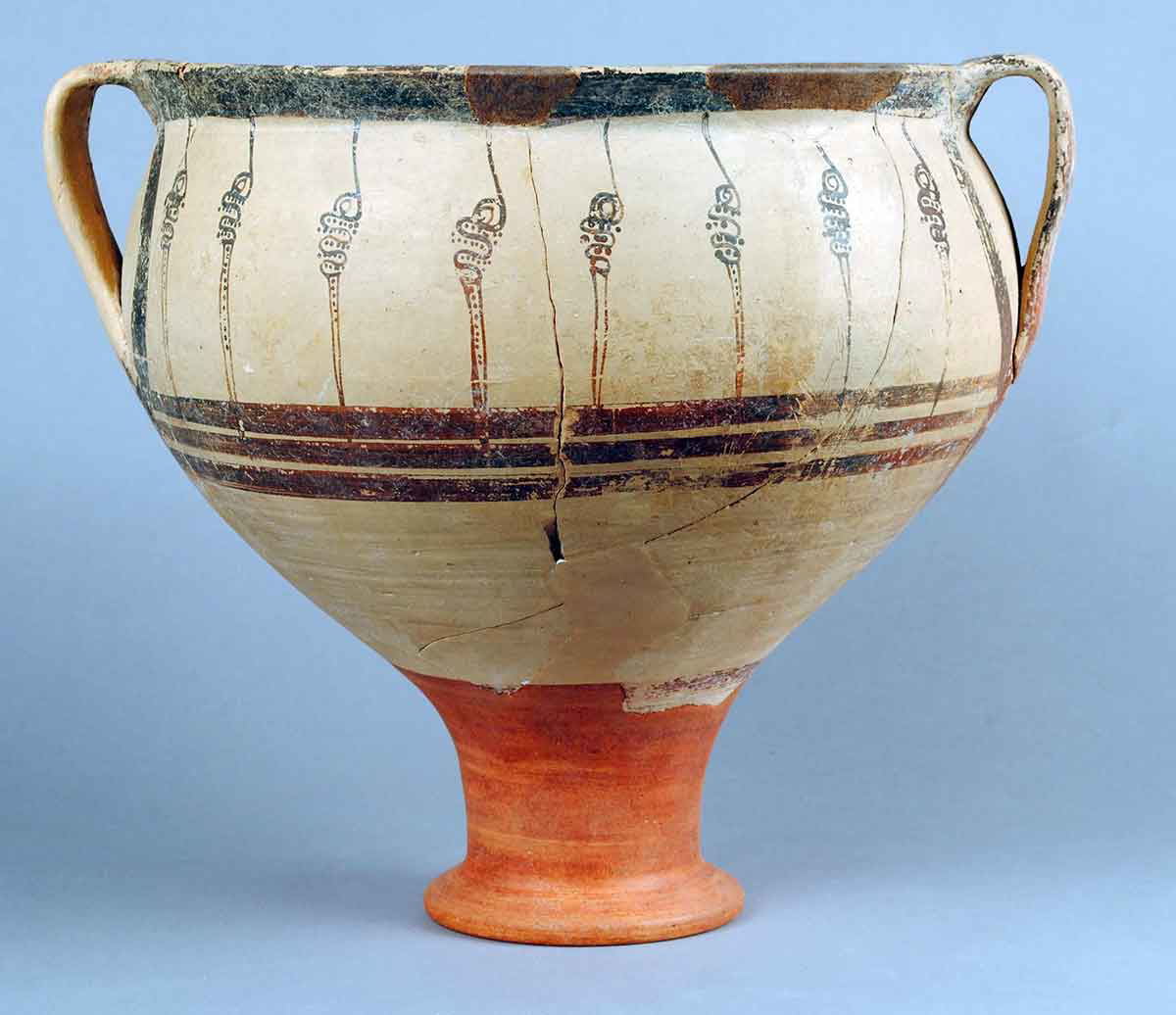
The Phoenicians were Semitic-speaking people who primarily inhabited several coastal cities in the Levant, including Byblos, Tyre, Arvad, Berytus (Beirut), and Sidon. There was no Phoenician empire or unified state. Each city was an independent city-state. The Phoenicians never referred to themselves as “Phoenicians” in their own written texts but as members of their respective city-states.
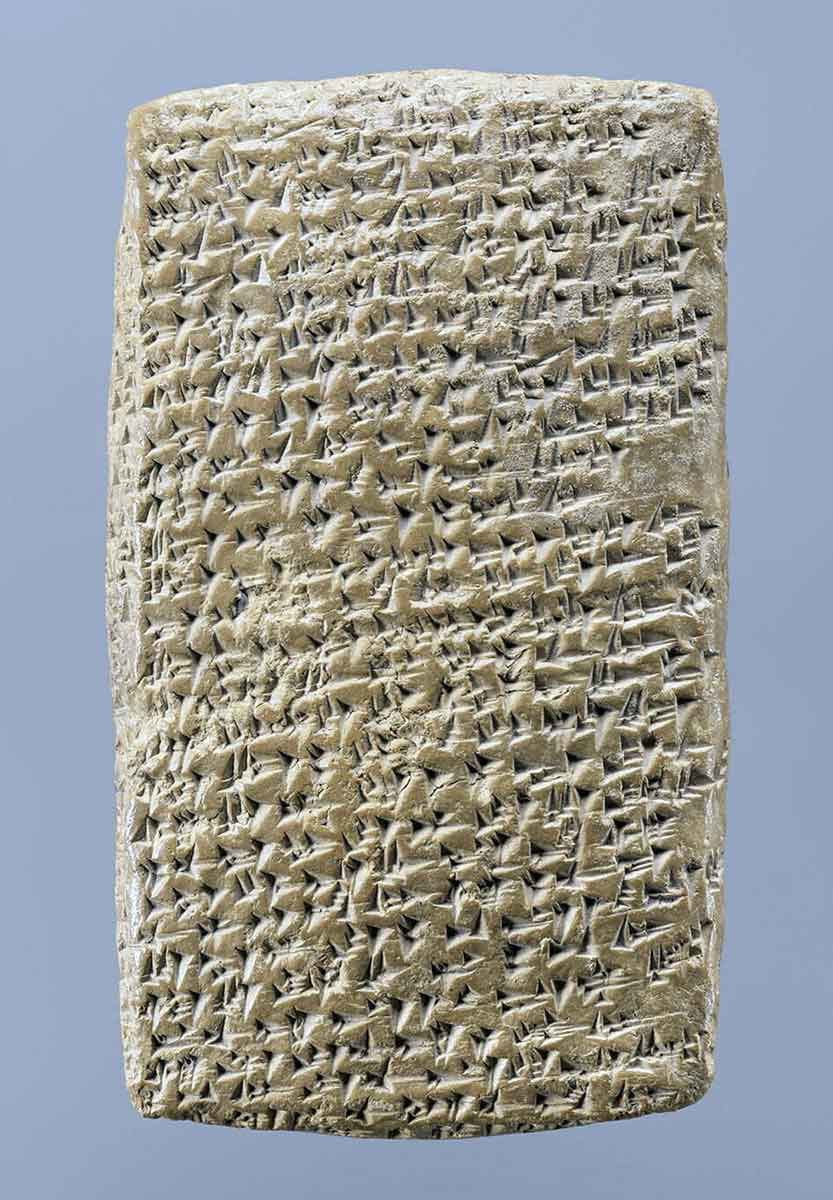
The earliest recorded references to the Phoenicians date from the Late Bronze Age Egypt (c. 1500-1200 BC). The “Annals of Thutmose III” (c. 1479-1425 BC) mention Byblos extensively as a vassal of New Kingdom Egypt. The Egyptians called them “Asiatics.” Byblos was also mentioned in the “Amarna Letters” (1360-1332 BC) as an important city that was a source of contention between the Egyptians and Hittites.
For reasons still unknown, the Phoenician cities escaped the ravages of the Sea Peoples that plagued the end of the Bronze Age. This allowed them to fill the trade void after the destruction of the Ugarit people of the Levant, who dominated the tin and copper trade routes essential for the production of bronze.
The Phoenician “Golden Age” began under King Hiram I of Tyre (c. 971-939 BC). Hiram is best known for his relations with King Solomon of Israel, who, according to Ezekiel 27 of the Old Testament, received cedar from the king of Tyre to build the first Temple in Jerusalem.
The Phoenicians were best known for manufacturing a purple dye they extracted from murex shellfish. Known throughout the Mediterranean and Near East as “Tyrian purple,” it formed the basis of their trading empire. Modern scholars believe the term “Phoenician” is an ancient Greek word that referred to the purple or crimson color of Tyrian purple. The Phoenicians also produced and traded finished goods such as jewelry, carved ivory, bronze vessels, and oils. As the Phoenicians began to establish trading posts throughout the Mediterranean basin, they also became known as explorers.
Phoenician Explorers
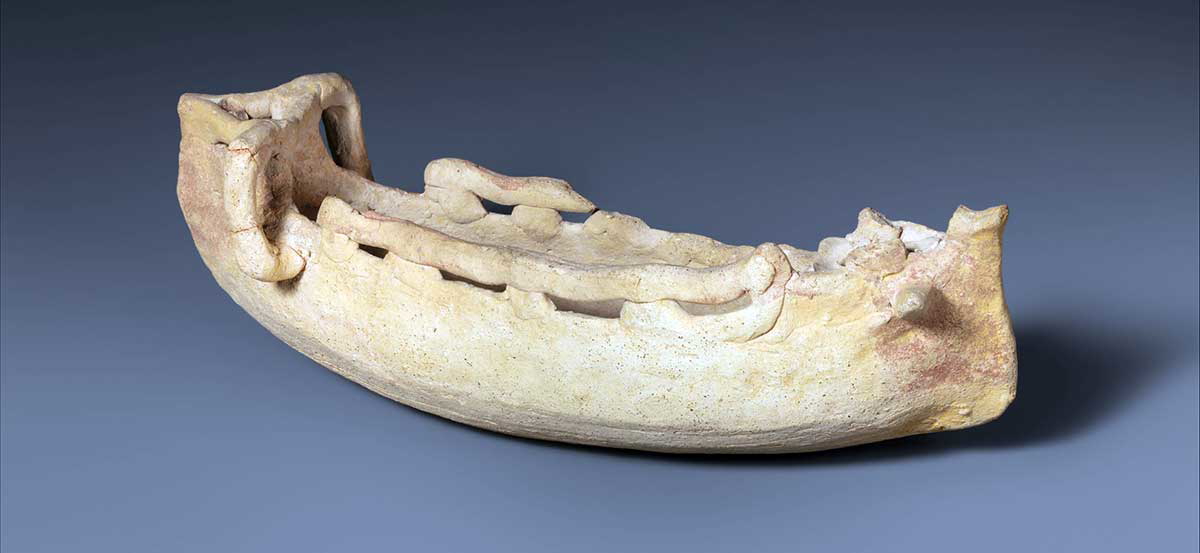
The 1st century BC Greek historian Strabo wrote that the Phoenicians explored the regions beyond the Pillars of Hercules (Strait of Gibraltar) “a short time after the Trojan War” (c. 13th or 12th century BC). The chronology may be a bit generous, but other ancient sources indicate that the Phoenicians visited Britain. The 5th-century BC Greek historian Herodotus claimed that a Phoenician naval expedition circumnavigated Africa, starting in the Red Sea. Although other sources cannot corroborate this voyage, it demonstrates that the Phoenicians had a reputation among their ancient peers as excellent explorers.
The Phoenicians’ trade and exploration prowess led them to establish colonies throughout the Mediterranean. The most notable Phoenician colony was Carthage, established in 814 BC in North Africa. From Carthage, more colonies were established in Utica, southern Sicily, coastal North Africa, and coastal Mediterranean Spain. As the Phoenicians explored and traded their way across the Mediterranean, they brought their language and style of writing with them.
The Spoken Phoenician Language
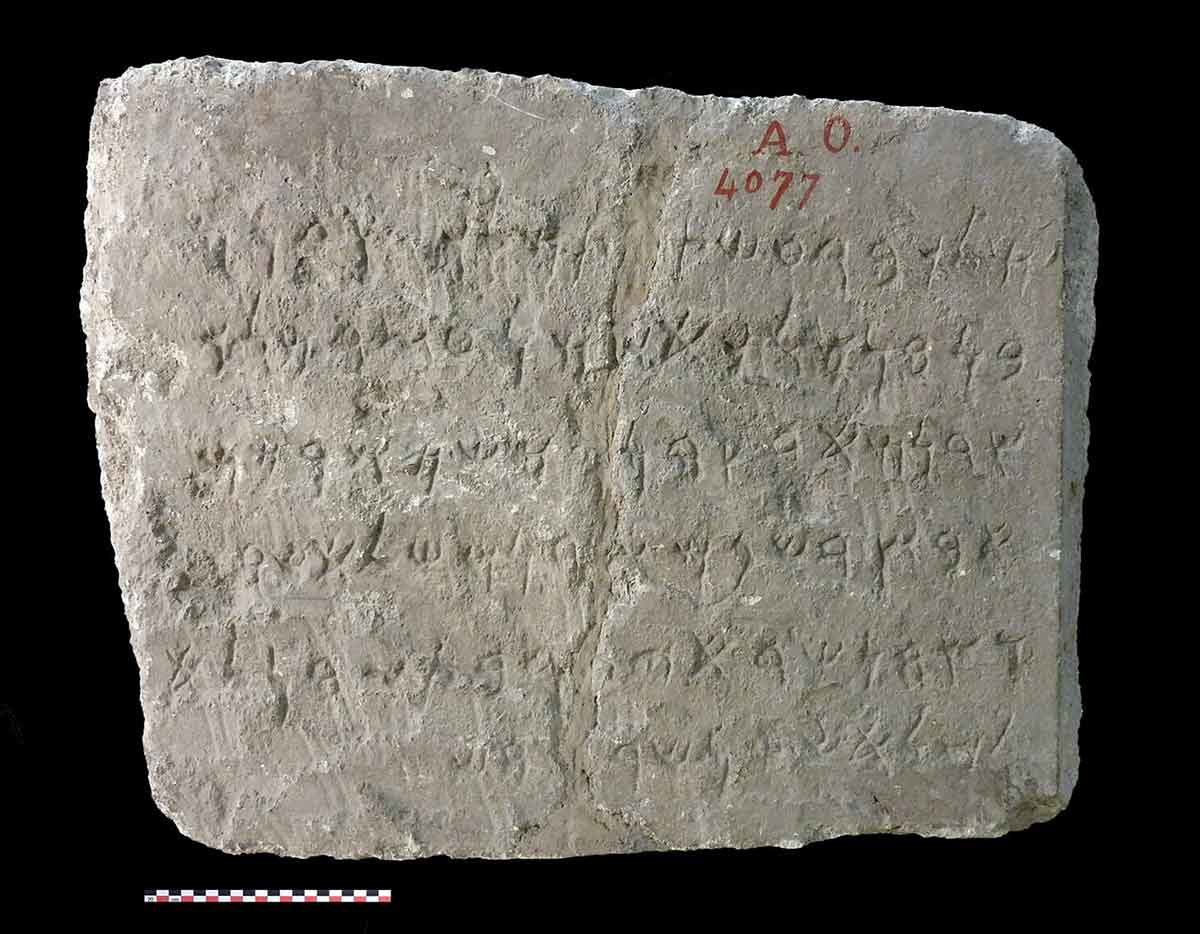
The Phoenician language was part of the Semitic linguistic-cultural family and specifically a member of the Northwest Semitic branch. Many scholars consider it a dialect of the Canaanite language, closely related to Moabite, Ammonite, Edomite, and Hebrew, rather than a distinct language. This probably means that spoken Phoenician would have been difficult to discern from spoken ancient Hebrew. The differences would have been more about content than grammar or linguistics. However, some scholars believe that Phoenician had more vowel and consonant shifts.
Phoenician-Canaanite likely became an important spoken language in many of the most important ports in the first millennium BC. Mariners and merchants from many different backgrounds probably had to know some Phoenician and would have been heard on the streets of Memphis, Rhodes, Melos, and Ostia. With that said, Phoenician-Canaanite never became a lingua franca and was likely only spoken by a very specific group of people. The written Phoenician language, however, had a far greater impact on world history.
The Written Phoenician Language
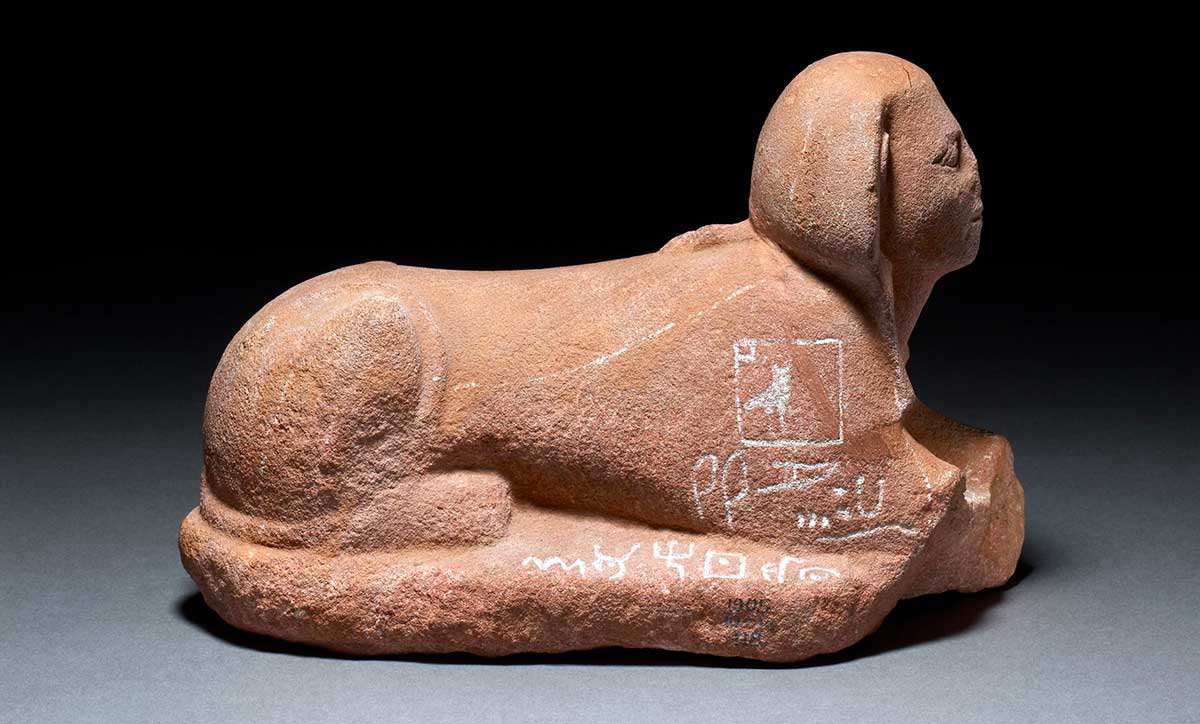
Most modern scholars believe that the Phoenician written language was fully developed by the mid-11th century BC, but how and where it developed is a source of debate. Because there are no traces of the written language’s development in the Levant, most scholars have looked elsewhere for its origins. Some scholars have argued that written Phoenician can be traced to Cyprus or Crete.
The most broadly accepted theory comes from Egyptologist Alan Gardiner. He identified ten inscriptions from the Sinai Peninsula as “proto-Phoenician” or “proto-Sinaitic” based on their similarity to true Phoenician. The inscriptions have been dated to the 18th century BC, when the Egyptians exploited the region for mining. Gardiner argued that because the inscriptions were non-Egyptian but resembled Egyptian in some ways, they were made by non-Egyptian workers from the Levant.
In support of his thesis, Gardiner offered several points. First, he stated that the script had to have derived from a form of writing that was at least partially pictographic/idiomatic. Second, the location of the inscriptions was geographically close to the Levant. Finally, he noted how Egyptian grammar and syntax had some similarities to the inscriptions, including a lack of vowels and a full alphabet of consonants. Egyptian and Phoenician are both Afroasiatic languages.
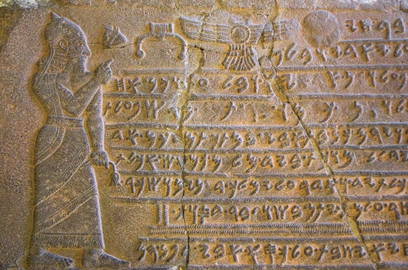
This script, sometimes referred to as “Early Alphabetic,” transitioned into what is considered true Phoenician writing in the mid-11th century BC. This “Early Linear Phoenician,” as it became known, may have developed in Byblos and spread to the other Phoenician cities. The style of writing became fixed in a right-to-left direction, as can be seen in the inscriptions of the Ahiram Sarcophagus.
Surviving Phoenician Inscriptions
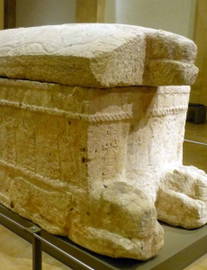
The Ahiram Sarcophagus is named after King Ahiram of Byblos (c. early 1000s BC), who was one of the kings of Phoenicia’s early Golden Age. The text on the sarcophagus demonstrates the typological evolution of the style of Phoenician writing, with impressive, elongated strokes. There are 22 consonants represented in the inscription, which was the alphabet the Phoenicians used throughout their history.
In addition to the Ahiram Sarcophagus, there are a number of other notable early Phoenician inscriptions, although scholarly debates over their dates are common.
There are no extant examples of Phoenician historiographical annals or mythological literature, which sets them apart from their peers in the Mediterranean and Near East at the time. The lack of historiographical and mythological texts has also made dating the extant inscriptions difficult because there is often a lack of historical context.
Scholars generally use typology for dating. Although this method can be useful, it can misattribute archaizing inscriptions, giving them an earlier date. With that said, scholars have been able to reasonably trace the progression of written Phoenician through a number of inscriptions. In addition to the Ahiram Sarcophagus, the Azarba‘al Inscription from Byblos is generally dated to the 11th or 10th centuries BC. The Abiba‘al Inscription is a text on a statue of the Egyptian king, Shoshenq I (c. 945-924 BC).
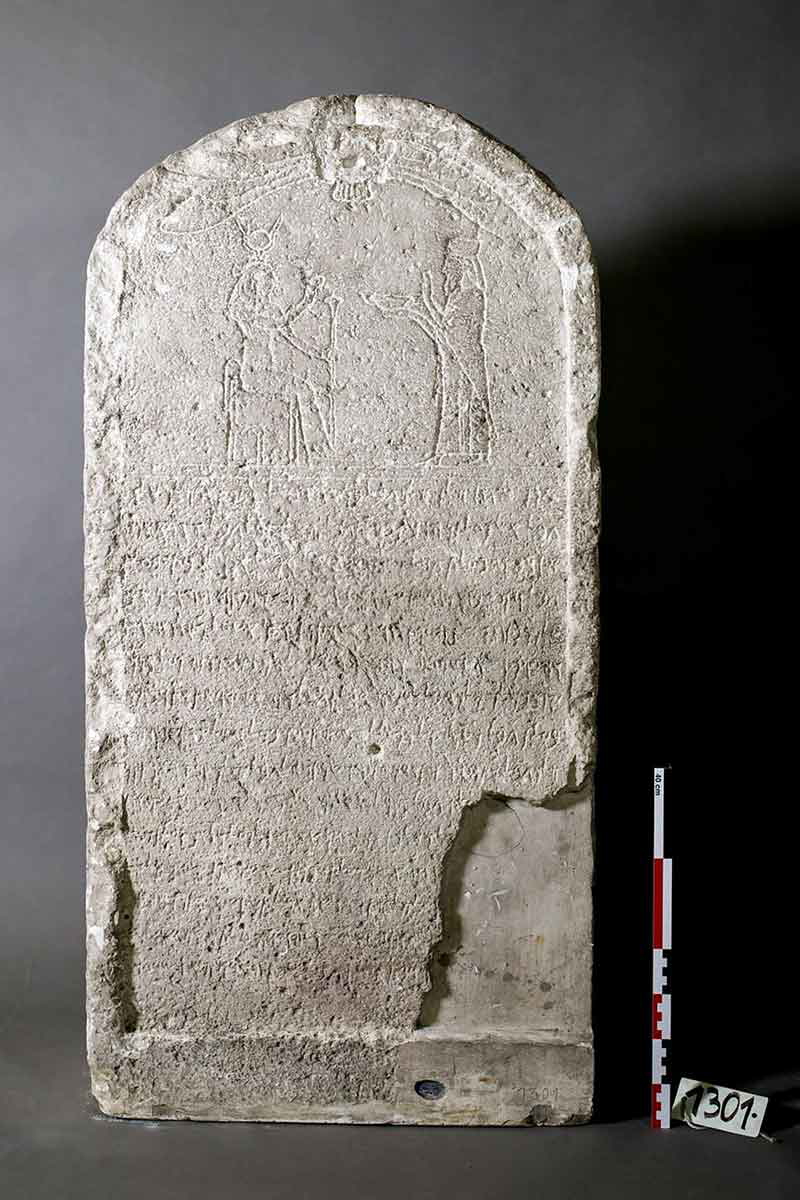
Scholars were able to group and chronologically organize the previously mentioned Phoenician texts through a combination of typology and historiography. As Byblos became less important later in Phoenician history, most of the important inscriptions were made in Tyre and Sidon.
Two of the most important later inscriptions were also sarcophagus inscriptions. The first has been dated to King Tabnit I (c. 549-539 BC), who was the second Sidonian king to be a vassal of the Achaemenid Persians. The second inscription was written on the sarcophagus of Tabnit’s successor, Eshmunazar II. These are two notable examples of later Phoenician inscriptions, because by that time, Aramaic was becoming the lingua franca of the Near East.
The Dissemination of Phoenician Writing
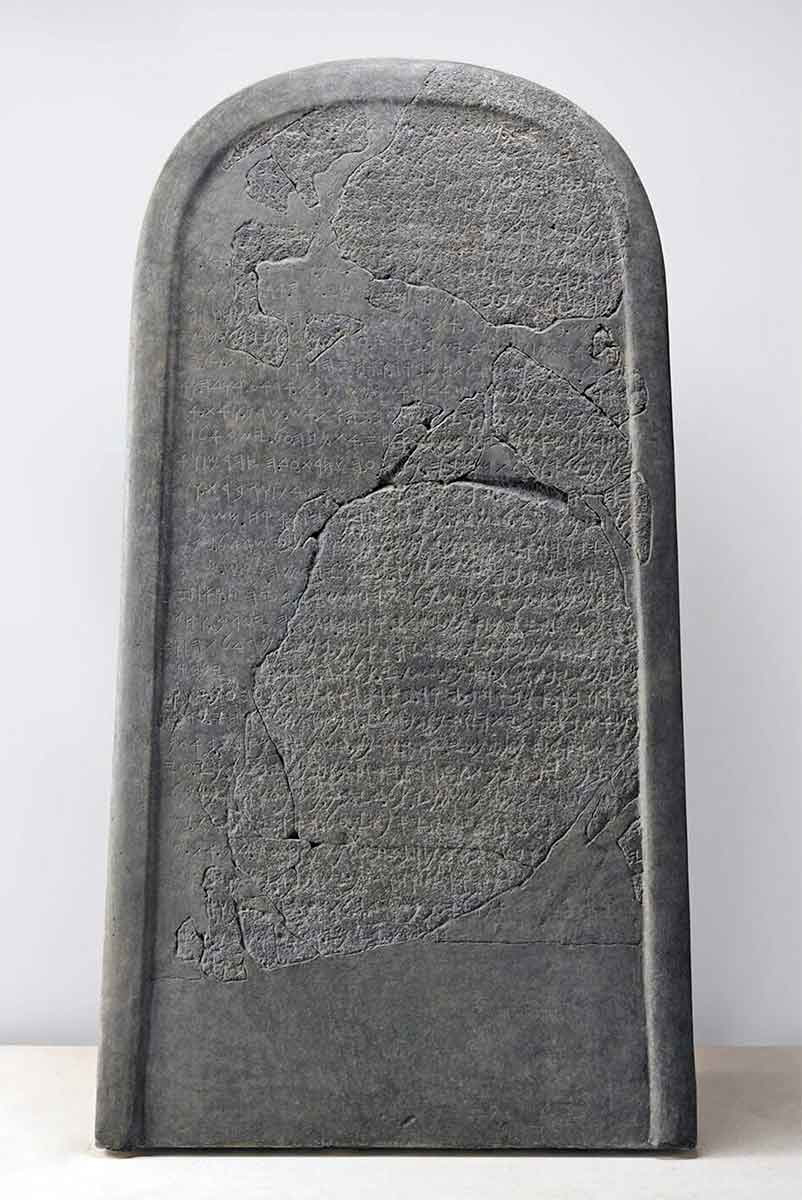
As widespread as the spoken Phoenician language became by the 6th century BC, written Phoenician was even more extensively utilized throughout the region. By the 9th century BC, the Phoenician alphabet was adopted by other Semitic-speaking peoples in the Near East and used for the written forms of Aramaic, Hebrew, Ammonite, Moabite, and Edomite.
The method of this diffusion is uncertain, although there are two credible theories. Aramaic would later become the lingua franca of the Near East, but Aramaic scribes employed the Phoenician script, which points to a scribal diffusion. According to this theory, Phoenician scribes shared their knowledge of writing with other Semitic peoples, who realized the usefulness of the alphabet and adopted it.
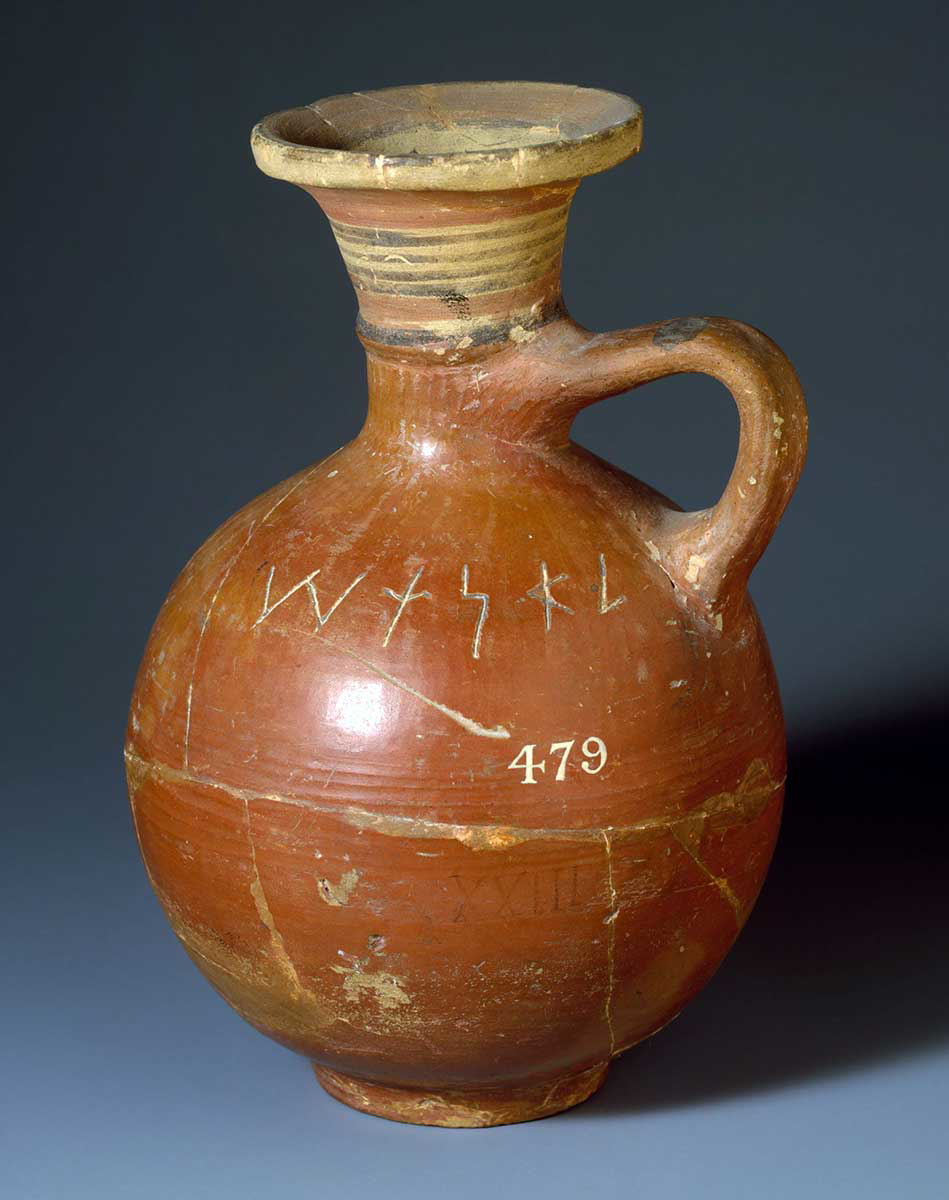
More recently, Reinhard Lehmann has offered another theory. According to Lehmann, the Phoenician script diffused to other Semitic peoples through multiple cultural vectors, including scribes. He further argued that because the Phoenician culture and spoken language were nearly indistinct from that of the other Canaanite peoples, they likely had a shared scribal culture. Whichever way the Phoenician script diffused from Phoenicia proper, it is possible to trace its journey.
One of the earliest texts that utilized the Phoenician script outside Phoenicia proper is known as the “Moabite Stone” or “Mesha Stela.” The Moabite Stone has been dated to the early 9th century BC, during the reign of King Mesha (c. mid-9th century BC). The text is important because it verifies the biblical King Mesha from II Kings 3:4. It also demonstrates the similarity between written Phoenician and written Moabite.
Punic Phoenician
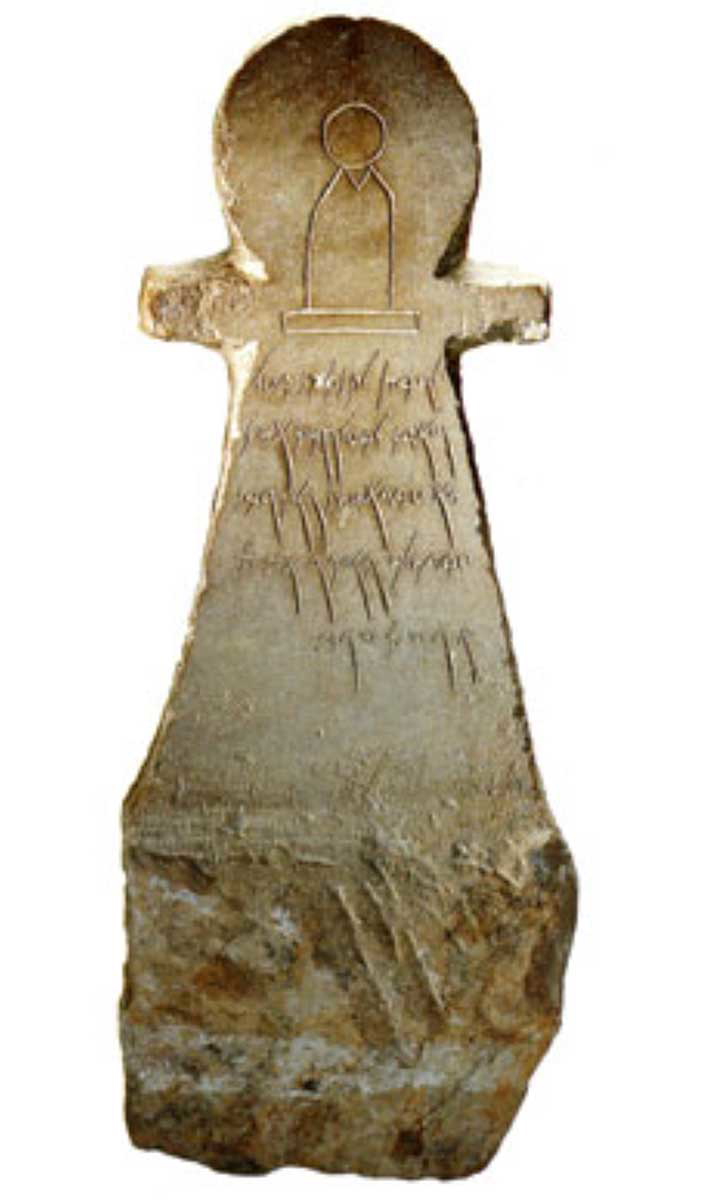
The Phoenician script would have an even bigger impact beyond the Levant and Near East. When the Phoenicians began colonizing Carthage and the western Mediterranean in the 9th century BC, they brought their spoken and written language with them. Due to the distance between Carthage and the Phoenician homeland, a new dialect of Phoenician developed in Carthage that became known as Punic. Punic was spoken widely in all Carthaginian colonies, including Sicily, Sardinia, Malta, the Balearic Islands, and southern Spain. By the 6th century BC, a new Punic script, based on the original Phoenician script, emerged.
Although the Punic script was essentially Phoenician, it added two notable elements that made it unique. First, it employed a more elegant form of cursive than traditional Phoenician. Also, it began incorporating vowels by the 4th century BC. Most extant Punic inscriptions are religious texts and business documents, many of which date from the 3rd and 2nd centuries BC.
The Phoenician Script and the Greeks
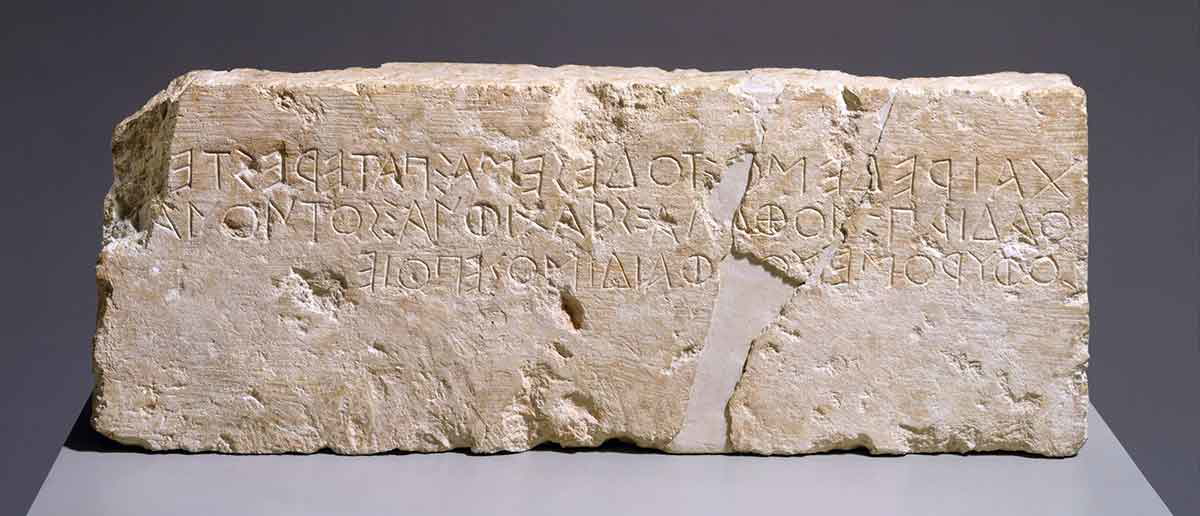
The examples of the dissemination of the Phoenician script so far have all been in related languages. But ancient Greek was an Indo-European language, so it was derived from an entirely different linguistic-cultural group. How and when the Greeks adopted the Phoenician script is a source of debate.
Some have argued that the Greek adoption of the Phoenician script took place as early as the mid-2nd millennium BC. What is certain is that by the 8th century BC, the Greeks were using the Phoenician alphabet. But they were writing their texts left to right instead of right to left as the Phoenicians had done.
It will likely remain one of history’s mysteries how the adoption took place. Greek merchants may have adopted it from their Phoenician counterparts to facilitate trade, possibly on the Greek island of Euboea. The Greeks would further modify the script to include vowels. The Romans adopted the script from the Greeks and further adapted it. The rest is linguistic history.