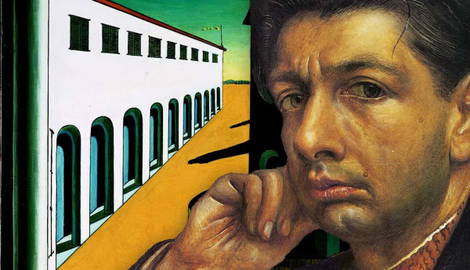

The mysterious painter Giorgio de Chirico constructed his own nonexistent cities in the middle of nowhere based on his childhood memories, dreams, and experiences. His paintings were intriguing and slightly disturbing, with sunlit squares and deserted streets evoking strange anxiety and terror. He was one of the founding fathers of Italian modernism yet hated modern art with passion, looking for inspiration in the works of the Old Masters. Read on to familiarize yourself with the most important works by Giorgio de Chirico.
1. The Child’s Brain: The Influential Work of Giorgio de Chirico
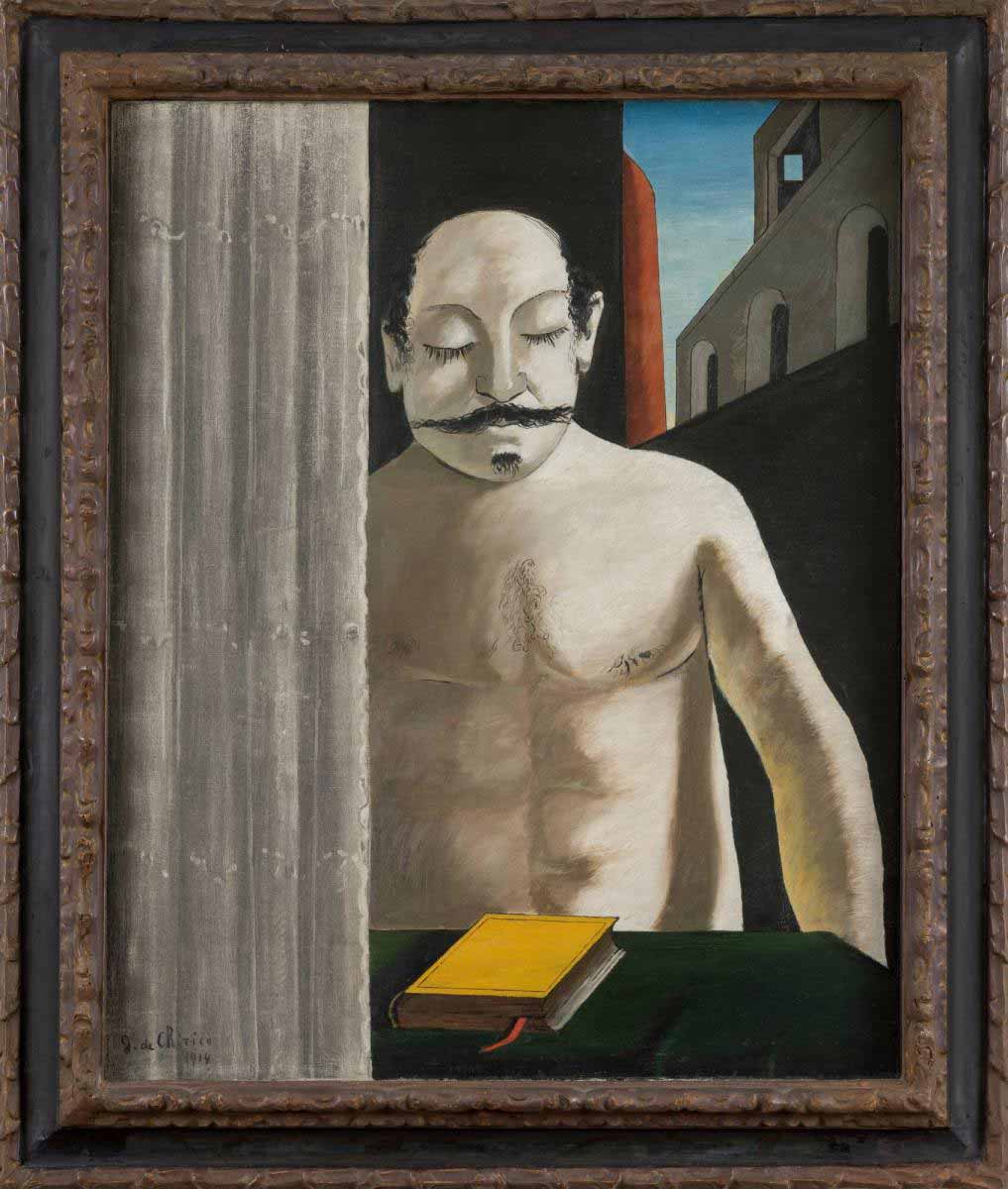
Giorgio de Chirico was born in 1888 in Greece into a family of Italians of Greek origins. His parents were hereditary nobility, and the artist proudly admitted that his father, Sicilian baron Evariste de Chirico, was the only sibling in his family who expressed the desire to work in his life. De Chirico’s father passed away when the artist was only seventeen, but he remained a lasting and recognizable figure in his mature works. According to de Chirico’s memoirs and the recollections of family friends, the future artist admired his father, yet their relationship was never as close as he wished it to be. He craved affection, which his father, an educated and intelligent man raised in an upper-class environment, was unable to express.
The Child’s Brain lingers between a childhood memory and a Freudian nightmare. The father is present yet passive, with his eyes closed. His nude torso and the position of a book on a table in front of him suggest possible sexual connotations of the scene, possibly accidentally witnessed by the artist in his early years. Like many artists of his time, de Chirico read Sigmund Freud and reflected upon his theories of childhood and sexuality.
Apart from the significance of the father figure to the artist, the painting had a remarkable life of its own. Soon after its completion, the future leader of the Surrealists, Andre Breton, saw it from the bus window and was so impressed that he jumped off at the next stop to buy it immediately. Despite de Chirico’s later scorn for modern art, Breton’s encounter with his work helped establish Surrealism as we know it.
2. Gare Montparnasse (The Melancholy of Departure)
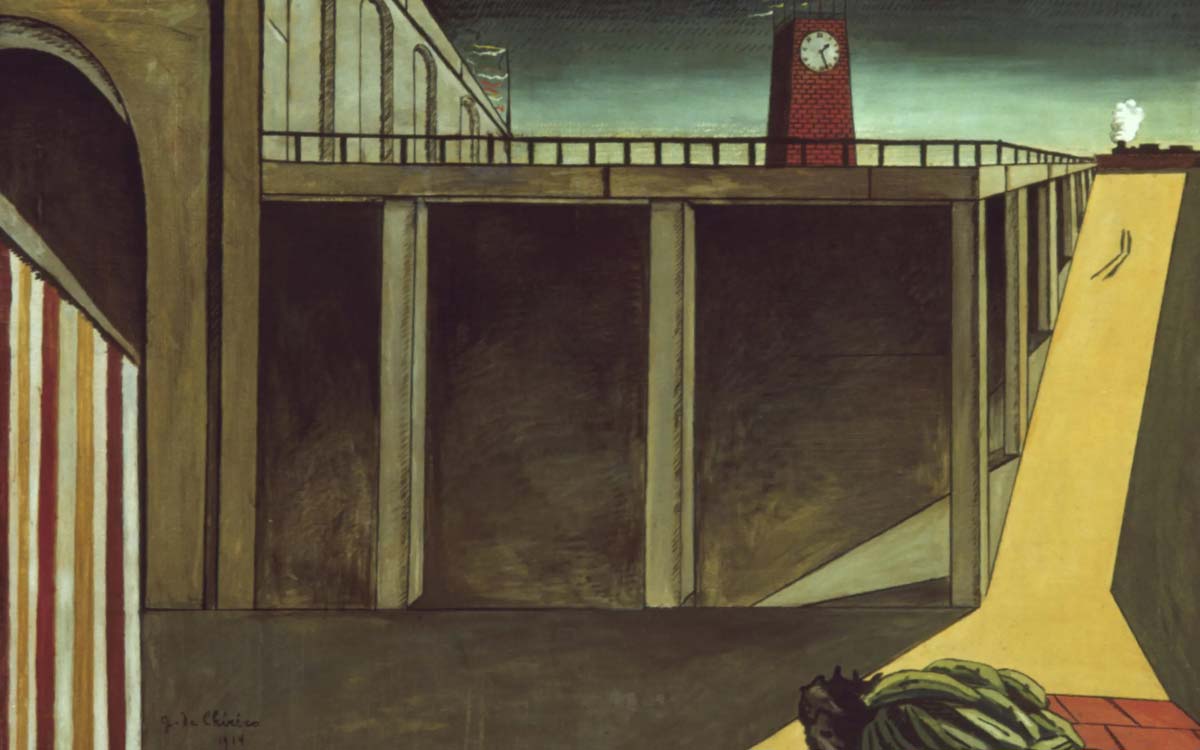
Trains and railway stations were among the most popular motifs used by de Chirico in his works. Like the paternal figure with a recognizable mustache, they occurred from the artist’s family history. His father was a railroad engineer who worked on railway construction in Greece. His projects were meant to reorganize and reconstruct the vast and empty spaces of Thessaly province. In a similar manner, Giorgio de Chirico reorganized his imaginary spaces. To him, engineering was the method of perceiving and studying deep space. Apart from the philosophical perspective, drafts and instruments from his father’s desk have certainly affected de Chirico’s technical skill and inclination.
A railway station represents a liminal space—the point of transition and transformation. Unlike other spaces occupied by humans, stations, and airports are designed not to be inhabited or interacted with in any productive manner but only to be left behind for a more promising, desirable, or important location. This status grants liminal spaces an uncanny feeling of impermanence and blurred identity. De Chirico reinforces these feelings by leaving these spaces empty. Designed to contain moving and transforming human beings, empty railway stations evoke anxiety and identity crises caused by the inability to define one’s state of existence.
3. The Mystery and Melancholy of a Street
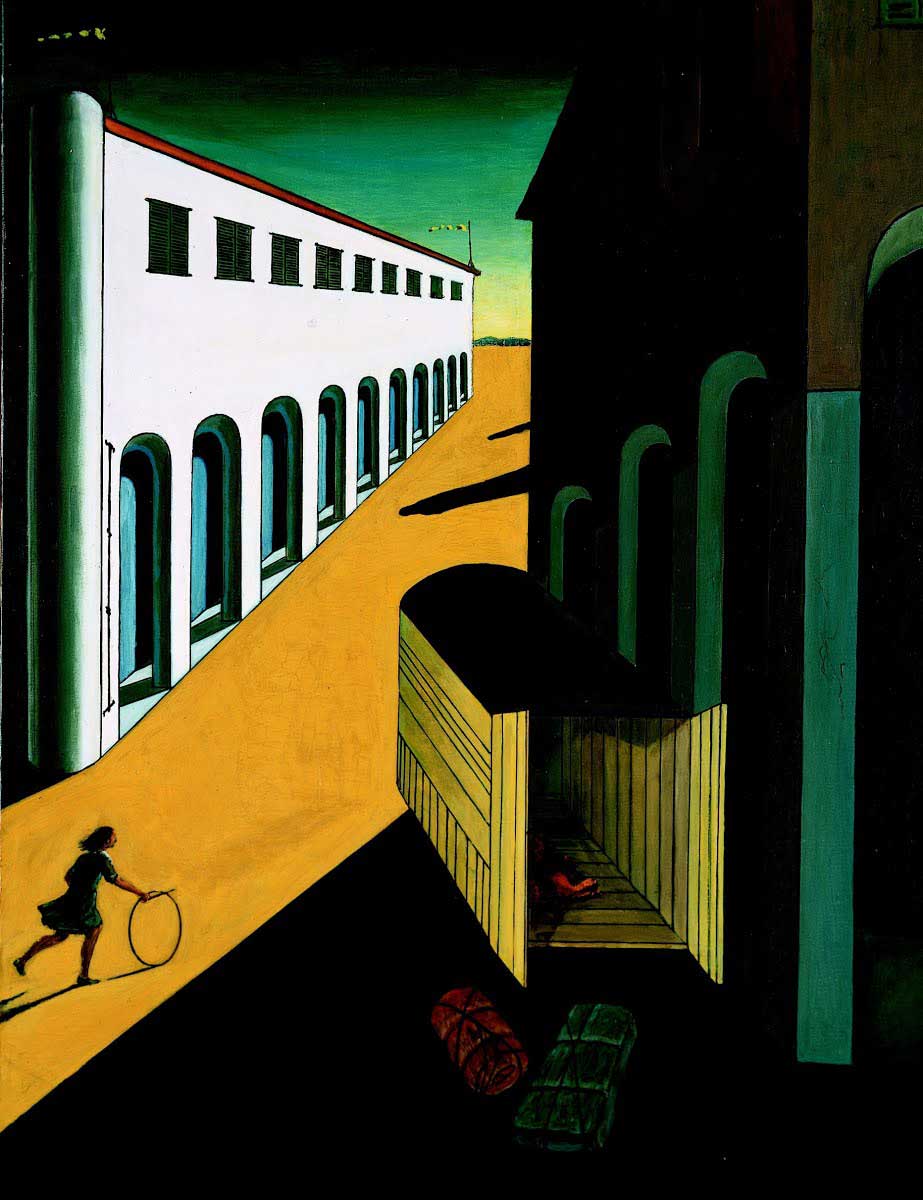
Unlike most other paintings by de Chirico, The Mystery and Melancholy of a Street contains a surprisingly dynamic and lively element: a small dark figure of a little girl running with her hoop. Some art experts believe that de Chirico borrowed the figure from another iconic pointillist painting by Georges Seurat, A Sunday on La Grande Jatte. Most likely, de Chirico recognized the hallucinatory qualities of Seurat’s technique. Images created by thousands of small primary-colored dots seemed to move on their own, nauseating the viewer.
However, de Chirico’s running girl could not for sure be categorized as a living being. In the contrasting deserted cityscape, the figure seemed to be nothing but a deceptive shadow, luring the unsuspecting viewer into a trap. The shadow moves from one dark corner to another, as if afraid to be captured and dissolved by light. The menacing presence of something yet unsees is intensified by another silhouette. An immobile tall figure hides behind the corner, casting a dark shadow on a sunlit piazza.
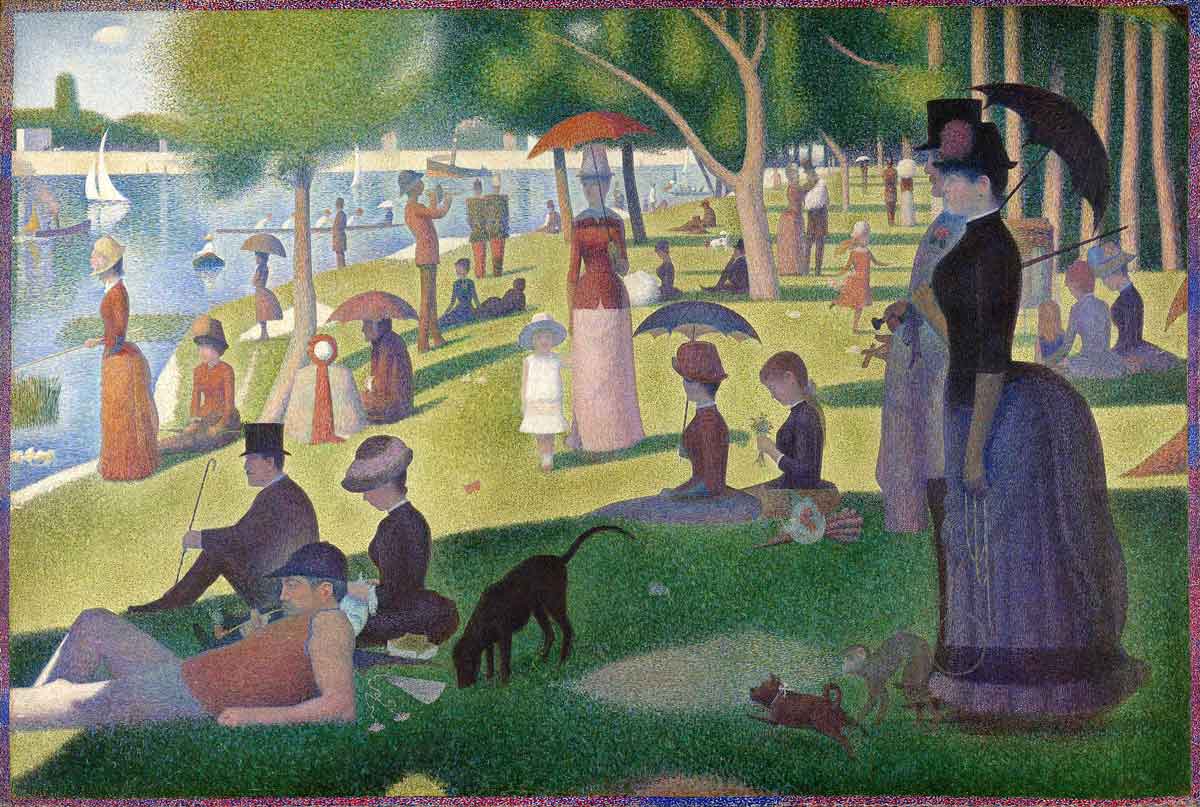
Yet, despite allegedly borrowing the figure from one of the most significant paintings in the history of Modern art, de Chirico despised modernism with his entire heart. He even called it one of the two most disastrous aspects of contemporary civilization, rivaled only by Nazist ideology. In his art and studies, de Chirico relied mostly on the works of the Italian Old Masters and their centuries-long traditions. In his later years, he even attempted to destroy most of his early paintings, which were much more experimental than those of his mature period. He even confronted art historians and rejected the attribution of some paintings. Fortunately, Giorgio de Chirico did not succeed, with enough of his old works still preserved in museums and private collections.
De Chirico’s scorn for modern art was personal. His early works, presented at the time when Cubism and early abstraction dominated the scene, were often dismissed as ‘decorative’ by pro-avant-garde critics. Over the years, he distanced himself from the rest of the Modernists, constructing the myth of the misunderstood and isolated painter.
Ironically, despite this intense hatred, it was de Chirico who played the decisive role in forming one of the two most important movements in the history of Italian modernism—the Metaphysical painting. The second crucial movement was Futurism, which soon cross-contaminated with de Chirico’s theory. One of the most influential futurists of his era, Carlo Carrà, briefly worked with de Chirico in 1917 before moving to more archaic forms of painting inspired by Giotto.
4. The Disquieting Muses
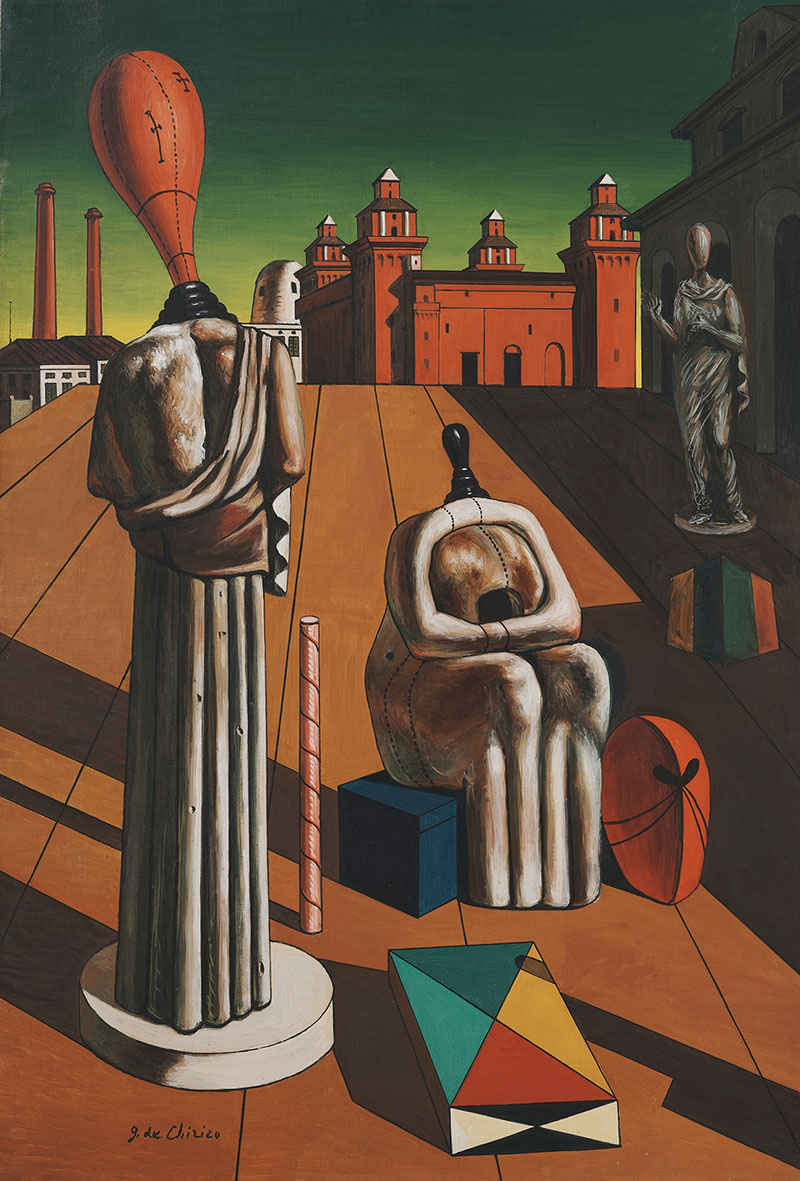
This Metaphysical painting focused on representing the unseen and unreal while using familiar objects and classical architecture. There were no fantastic creatures, strange forms, or fairytale actions involved. The surreal effect of deceit was created by elements that would not raise any suspicion in any other setting. Deserted spaces and contrasting light question the purpose and appropriateness of these objects and blur the line between the animate and the inanimate. The mannequins, depicted in one of the many versions of the famous Disquieting Muses painting, evoke terror because of the blurred distinction between life and death. The painting later inspired the famous poet Sylvia Plath to write a poem with the same name.
Relying on Italian architecture and memories of his Greek childhood, de Chirico found another inspiration in German philosophy. The keys to his oeuvre can be found in the writings of Nietzsche and Schopenhauer. In his writings, Nietzsche often suggested a hidden meaning behind everyday objects, an unseen life underneath the existing reality. Apart from sharing ideas, the philosopher and the artist had one more thing in common: both found physical reflections of their concepts in the Italian city of Turin. There, Nietzsche spent his final years calling it the only suitable place for him. Giorgio de Chirico found his dramatic contrast of light and shadow created by the arches and covered walkways of Turin.
5. Giorgio de Chirico’s Self-Portrait
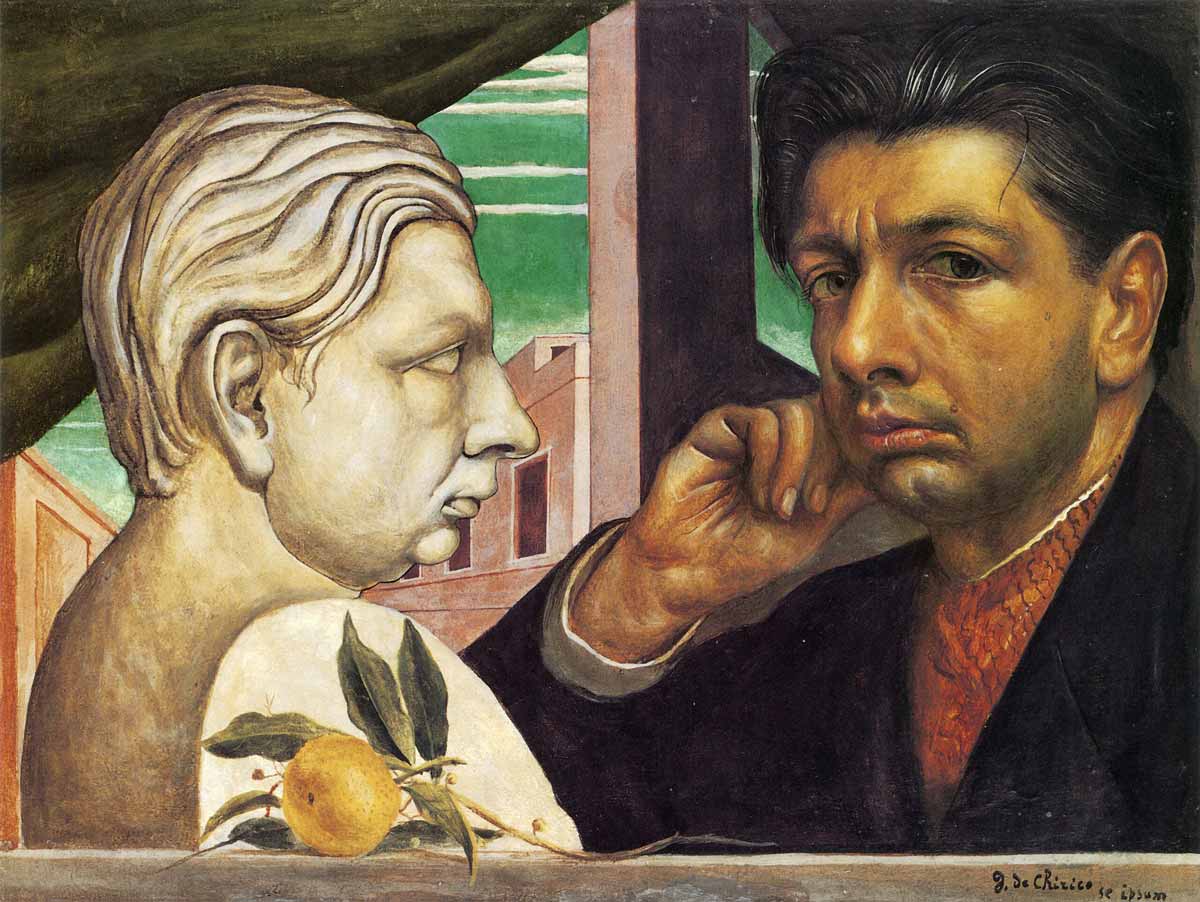
Self-portrature was particularly important for de Chirico, especially in his 1920s period. Then, he started to doubt his previous artistic beliefs and connections and began further distancing himself from other artists. This self-portrait remains a perfect illustration of the company in which de Chirico wanted to see himself: the angle and pose of his portrait were copied directly from sixteenth-century paintings. Next to it is a painted sculptural bust of the artist in profile—an homage to the art of Classical Antiquity.
At that time, de Chirico adopted not only compositional but also technical methods of the old masters. Apart from his usual oil paint, he began to use tempera—an egg-based medium widely employed by painters before the 1500s. Tempera dried quickly and did not allow for mixing colors, so artists had to paint gradients with small strokes of unmixed colors. Starting from the 1920s and until his death in 1978, Giorgio de Chirico saw his mission in reviving the principles of traditional techniques and iconography. Still, his early period of work remains his most famous and influential.