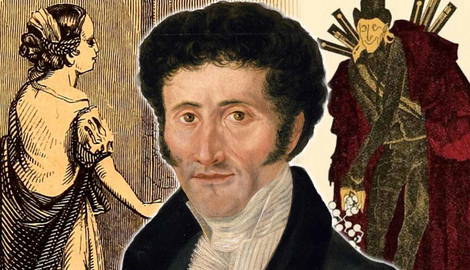

One of the key figures of German Romanticism, ETA Hoffmann was not just a composer and music critic, but also an author and important innovator of tales of the fantastic, supernatural, and uncanny. Drawing on folkloric elements, childhood imaginings, and the deep workings of the subconscious, Hoffmann’s stories have profoundly shaped literary history since they first appeared in the early 19th century. Beyond that, they have provided inspiration for operas, ballets, films, and television shows. Here are five of his most compelling works.
1. The Nutcracker and the Mouse King
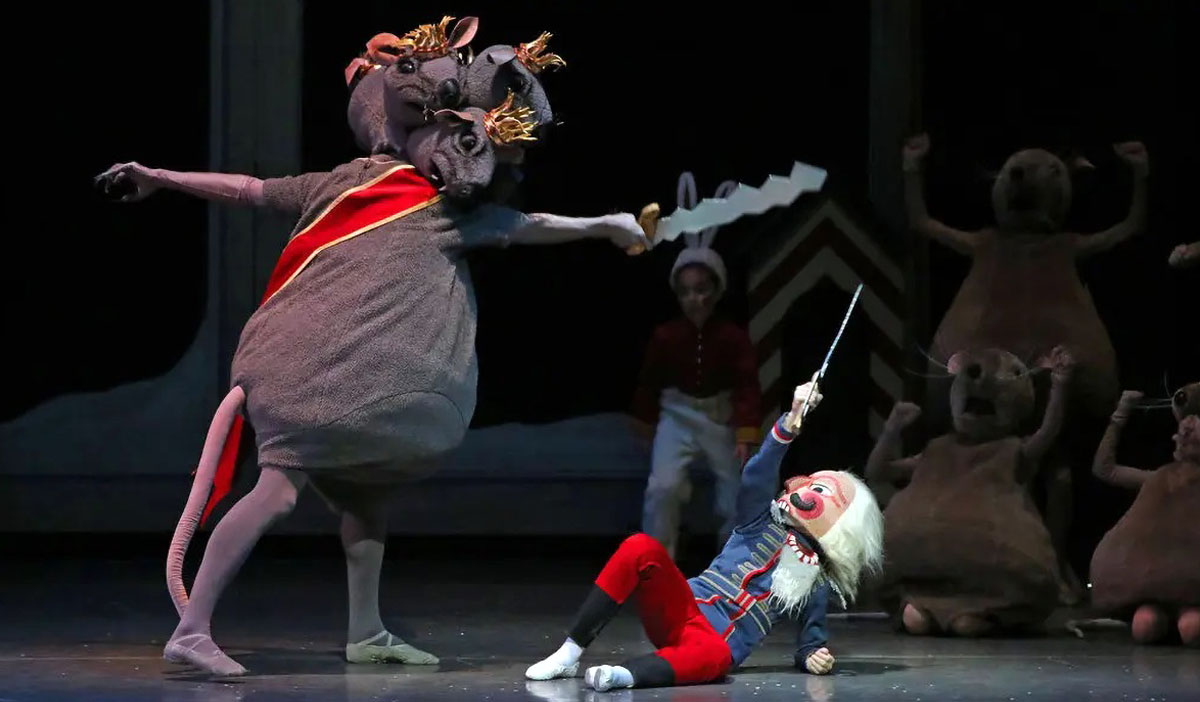
Every Christmas, a ballet company somewhere is bound to be performing The Nutcracker. First performed in 1892, the ballet was a collaboration between Russian composer Pyotr Ilyich Tchaikovsky and choreographer Marius Petipa. Tchaikovsky’s sugary score, Petipa’s delicate and dazzling set pieces, and the enchanting scenery (The Nutcracker was intended as a “ballet-féerie,” a subgenre of ballet that relies on spectacular visual effects) are all elements that capture the magic of ETA Hoffmann’s original short story, first published in 1816.
There are minor differences between Hoffmann’s story and Tchaikovsky’s ballet: the heroine is named Marie in the story and Clara in the ballet, while the ballet does not include a subplot from the story that details how the young prince was turned into a nutcracker. Tchaikovsky’s and Petipa’s libretto was not based directly on Hoffmann’s story but on an 1844 adaptation by the French author Alexandre Dumas père.
By and large, though, the ballet retains the essential components of Hoffmann’s story. On Christmas Eve, young Marie is given a nutcracker in the traditional shape of a soldier figurine by her imposing and mysterious godfather, Herr Drosselmeyer. More interested in his own toy soldiers, Marie’s brother Fritz accidentally breaks the nutcracker, but Drosselmeyer (who turns out to be a skillful toymaker) manages to do some remedial repairs, and Marie sets down the nutcracker to rest.
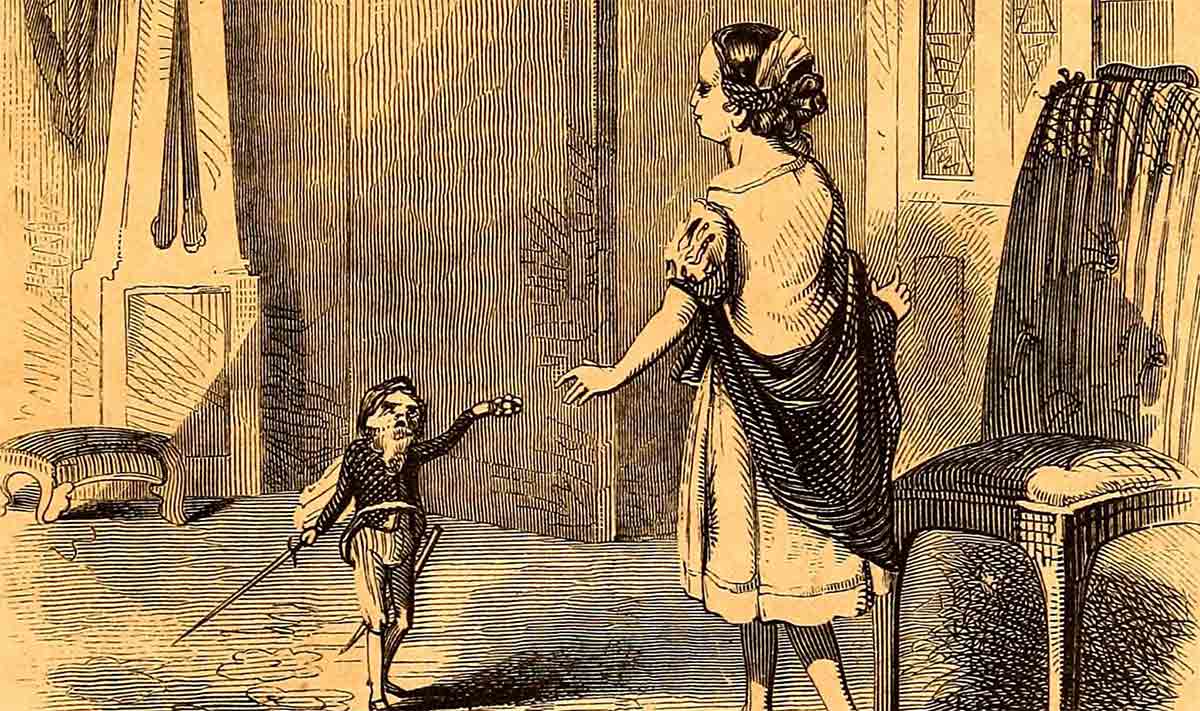
Overnight, she goes to check on the invalid and finds the house under attack by the terrifying, seven-headed Mouse King and his army of mice. The nutcracker, now grown to human size, defends Marie, backed by an army of gingerbread men and the children’s other toys, and Marie clinches the battle at the last moment by throwing her shoe at the Mouse King.
Tchaikovsky was drawn to The Nutcracker and the Mouse King because, characteristically for Hoffmann, it blurs the lines between reality and fantasy through the lens of childhood. In its young female heroine, Marie, the story celebrates childhood as a time of access to imaginative dreamscapes that, as adults, we long to recover.
The story emphasizes Marie’s ability to find magic in ordinary household objects such as the grandfather clock and the toy cabinet, and the adults’ insistence that she is only imagining things. Although the story employs a classic trope by consigning its most exhilarating moments to dreams, there is no moment when the author pulls away the curtain and definitively says: “It was only a dream.” There is no clear division, in Hoffmann’s writing, between the dream world and reality.
2. The Sandman
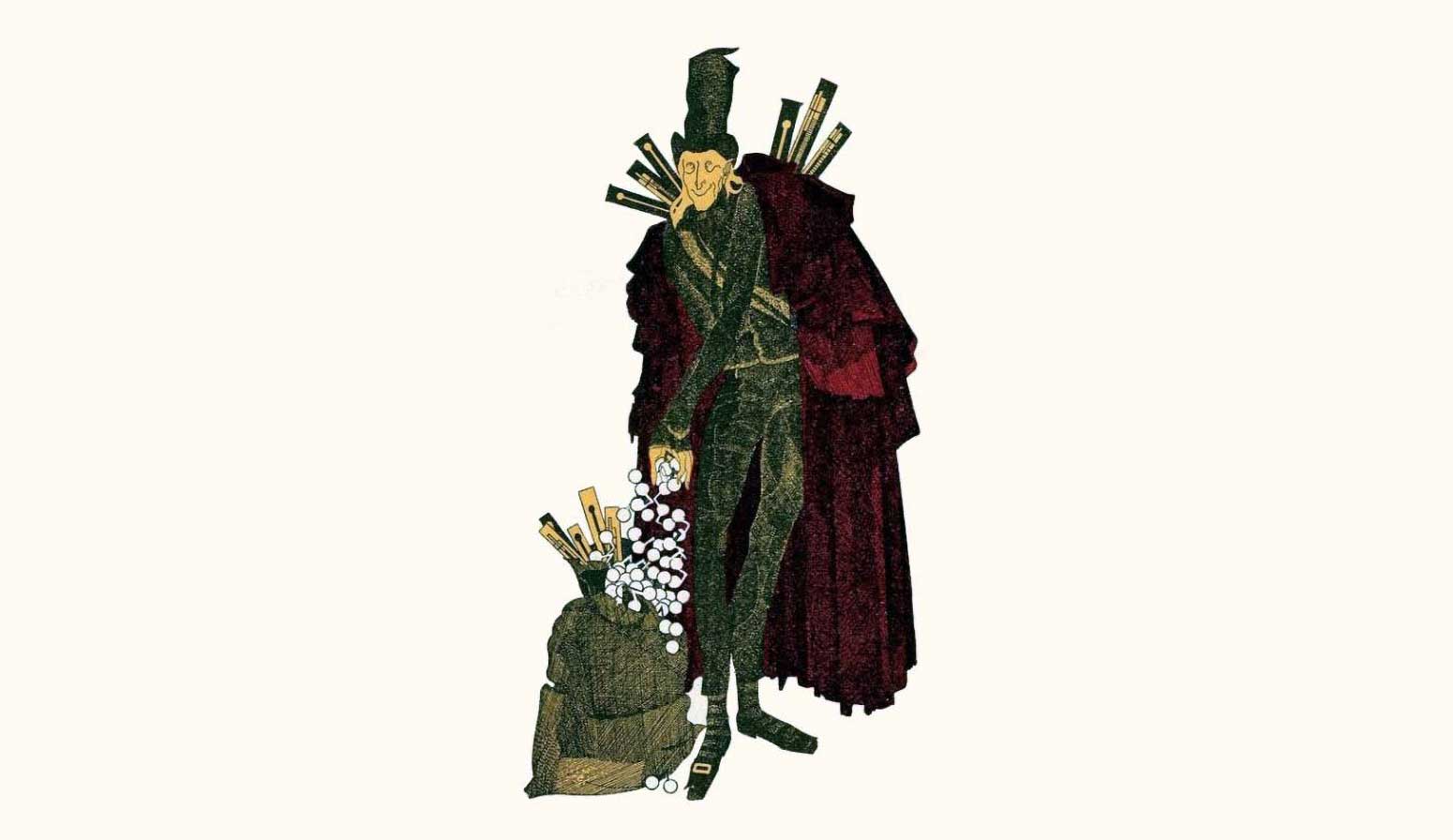
One of Hoffmann’s other best-known stories similarly fascinates readers because of its exploration of dreams and the unconscious. The Sandman is a truly terrifying story whose complexities, both psychological and literary, give it its power to surprise and entrance readers even today.
Beginning with a series of letters between the protagonist, Nathanael, his fiancée Clara, and Clara’s brother Lothair, the narrative soon unravels as the narrator (a friend of Lothair) interjects and confesses that he has contrived to open the story in a way “calculated to arrest your attention.” Henceforth, he promises, the story of Nathanael’s “ominous life” will get only more bizarre—but, he insists, it is all true, for “nothing is more wonderful, nothing more fantastic than real life.”
The opening letters establish that all through his childhood, Nathanael lived in fear of the Sandman, a character from folklore who is said to scatter sand onto our eyes as we fall asleep to help us sleep soundly and peacefully. Nathanael, though, associates the Sandman with having to leave his parents at night, and his fears are worsened by old wives’ tales about this evil visitor throwing sand into children’s eyes so that they will pop out and he can steal them. Worse still, he imagines that a lawyer friend of his father’s, Coppelius, is the Sandman in disguise—a grotesque figure whom Nathanael sees, one day, conducting a mysterious alchemical experiment. Surrounded by apparitions of eyeless faces, Coppelius pulls embers out of a furnace and hammers them into shape: “Eyes here! Eyes here!,” he cries, advancing on a terrified Nathanael before his vision (was it real or a hallucination?) ends.
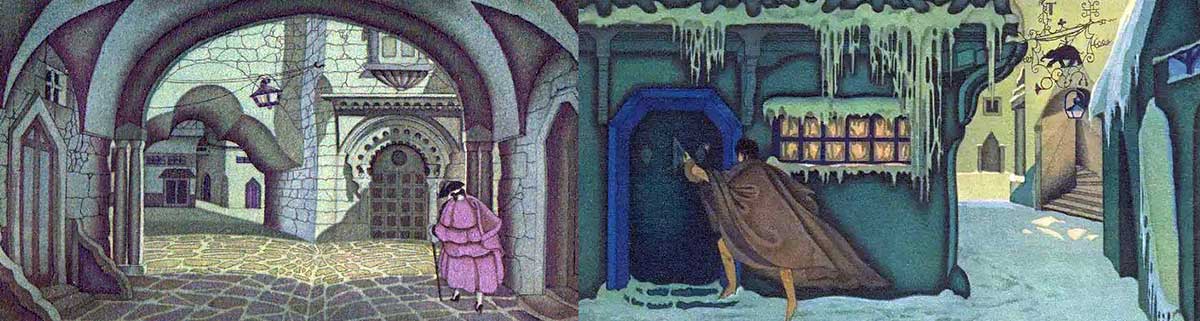
Later in the story, an older Nathanael has moved away but is still so haunted by Coppelius that he becomes suspicious of a glasses merchant he meets called Coppola, who hawks his wares by shouting about “fine eyes.” Nathanael has also fallen in love with the daughter of Coppola’s friend Spallanzani, Olympia, a beautiful, accomplished pianist and singer, but responds stiffly and mechanically to his advances. As it turns out, Olympia is an automata created by Spallanzani with the help of Coppola. Finding the two men tussling over her, Nathanael discovers not only that Olympia is a doll but that Coppola is really Coppelius. As the fight ends with Olympia’s glass eyes falling out, Nathanael is dragged back into the psychic trauma of his childhood.
Hoffmann’s story has had an afterlife as vivid as the tale itself. Its exploration of women’s objectification through automata was especially suggestive for works of opera and ballet, which place women front and center whilst obliging them to perform mechanically. Jacques Offenbach’s opera Les contes d’Hoffmann (1851) used the plot of The Sandman for its first act, while the ballet Coppélia (1870), with music by Léo Delibes and libretto by Charles-Louis-Étienne Nuitter, borrowed names and the central conceit from Hoffmann’s tale.
The Sandman also caught the attention of Sigmund Freud, who offered a psychoanalytic reading in his 1919 essay The Uncanny. Though not the first to theorize about the uncanny (an unsettling sensation of simultaneous familiarity and unfamiliarity), Freud took up the suggestion of his predecessor, psychiatrist Ernst Jensch, that Hoffmann’s stories were a perfect literary case study of the phenomenon. Discussing the story’s eyes motif, which he understands as indicative of the Oedipus myth or castration complex, Freud calls Hoffmann “the unrivaled master of the uncanny in literature.”
3. Ritter Gluck

Hoffmann’s first published story was another uncanny tale and an early example of the doppelgänger in literature. While The Nutcracker and the Mouse King and The Sandman bear some imprints of Hoffmann’s musical pursuits, and indeed most of his stories involve music in some way, Ritter Gluck (1809) actually features a composer—or does it?
The narrator of Ritter Gluck meets a mysterious stranger in Berlin’s Tiergarten as the two listen to one of the orchestral performances that typically took place in such parks in the 19th century. They find they have a shared admiration for the music of Wolfgang Amadeus Mozart (whose middle name Hoffmann adopted as a sign of his own admiration) and Christoph Willibald Gluck.
The stranger gets the orchestra to perform the overture to one of Gluck’s operas, and the narrator suspects he must therefore be a Kapellmeister—a music-master employed to write and perform for a German church or court. But the stranger is given to sudden disappearances and is gone before the narrator can work out who he is and where he has come from.
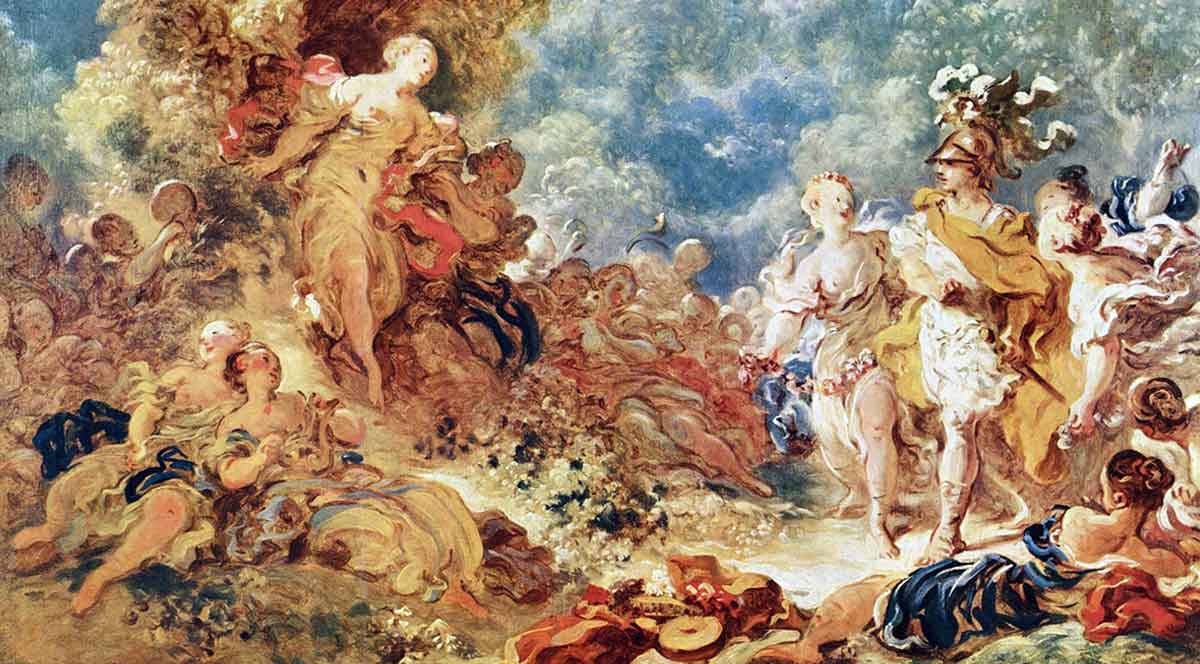
They meet again, and the stranger laments the sorry state of the music scene in Berlin, where the orchestras neglect Mozart and, worse, ruin Gluck. He disappears again, and the narrator eventually finds him outside a theater where Gluck’s opera Armide is being performed. Promising to give the narrator a better rendition of the work, the stranger takes him to a curious house, where everything is furnished in an outdated style. The stranger performs a masterful and true-to-the-original version of Gluck’s overture and finally reveals—or claims—that he is Gluck.
Hoffmann’s story is set in 1809 when the real, historical Gluck had been dead for over twenty years. This might account for the outdated furnishings of the stranger’s house: perhaps he is Gluck’s ghost, lingering in his strangely unchanged surroundings. Or perhaps the stranger is just a Gluck aficionado, who convinces himself, because he can play his music so brilliantly, that he really is the composer—it is for the reader to decide.
4. The Life and Opinions of Tomcat Murr
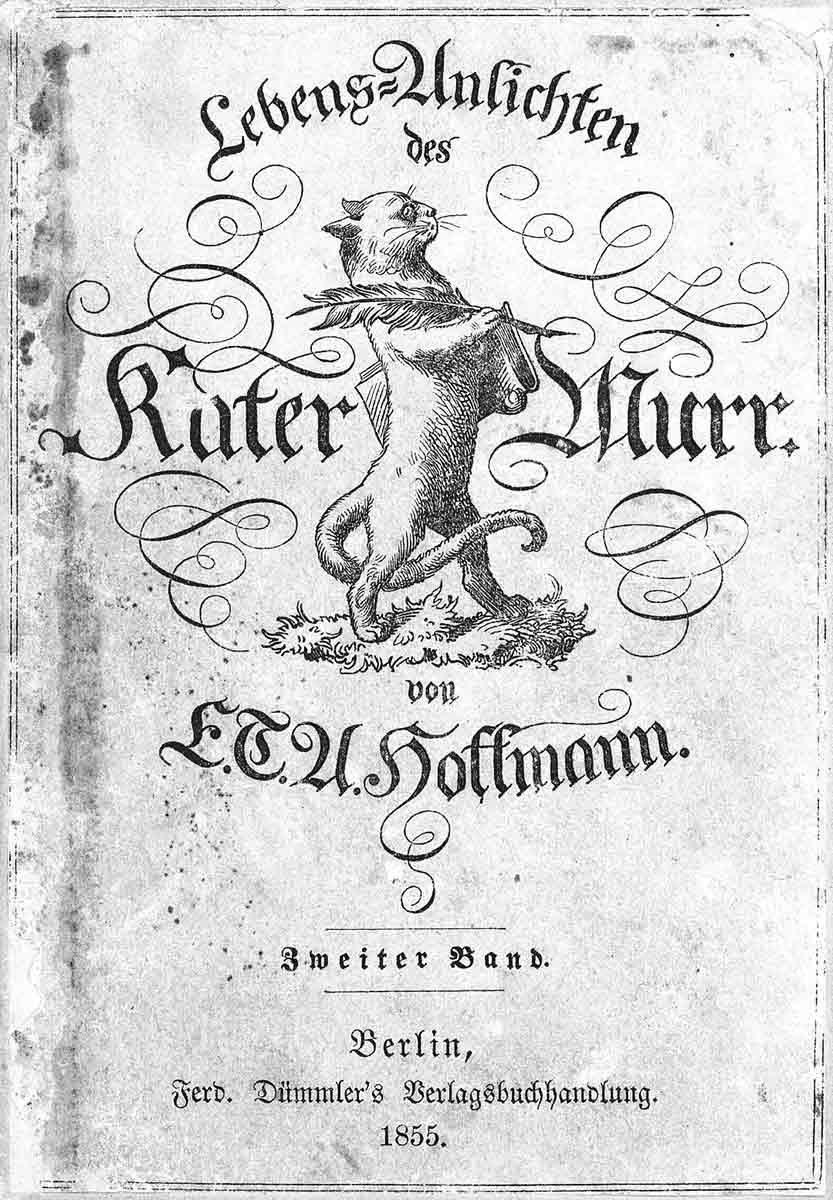
One of Hoffmann’s most unusual works, the novel The Life and Opinions of Tomcat Murr was left unfinished on the author’s death in 1822. Its title pays homage to a similarly experimental novel, Laurence Sterne’s The Life and Opinions of Tristram Shandy, Gentleman (1759). However, while Sterne’s work was a freewheeling take on the conventions of the Bildungsroman or coming-of-age novel, in which the protagonist narrates the story of their life from beginning to end (Tristram Shandy does not get to his birth until Volume Three), Hoffmann’s satire goes a step further: the protagonist proudly telling his life story is not a human, but a highly literate cat.
For much of Tomcat Murr, we are reading, as the title suggests, the life and opinions (he has many) of a cat named Murr, who has secretly learned to write by raiding the library of his owner, the magician Master Abraham. But, as the novel’s full title suggests, Murr has not used totally blank paper for his memoirs: we are reading The Life and Opinions of the Tomcat Murr together with a fragmentary Biography of Kapellmeister Johannes Kreisler on Random Sheets of Waste Paper.
Murr’s memoirs are frequently interrupted—sometimes mid-sentence—by passages from Johannes Kreisler’s biography. Like the ghostly Gluck in Hoffmann’s earlier story, Kreisler is a Kapellmeister employed by a court to write music. The grouchy, eternally unfulfilled Kreisler’s sections of the novel tell of his unrequited yearning for a beloved muse, Julia, and the mistreatment he receives as a jobbing composer from society.
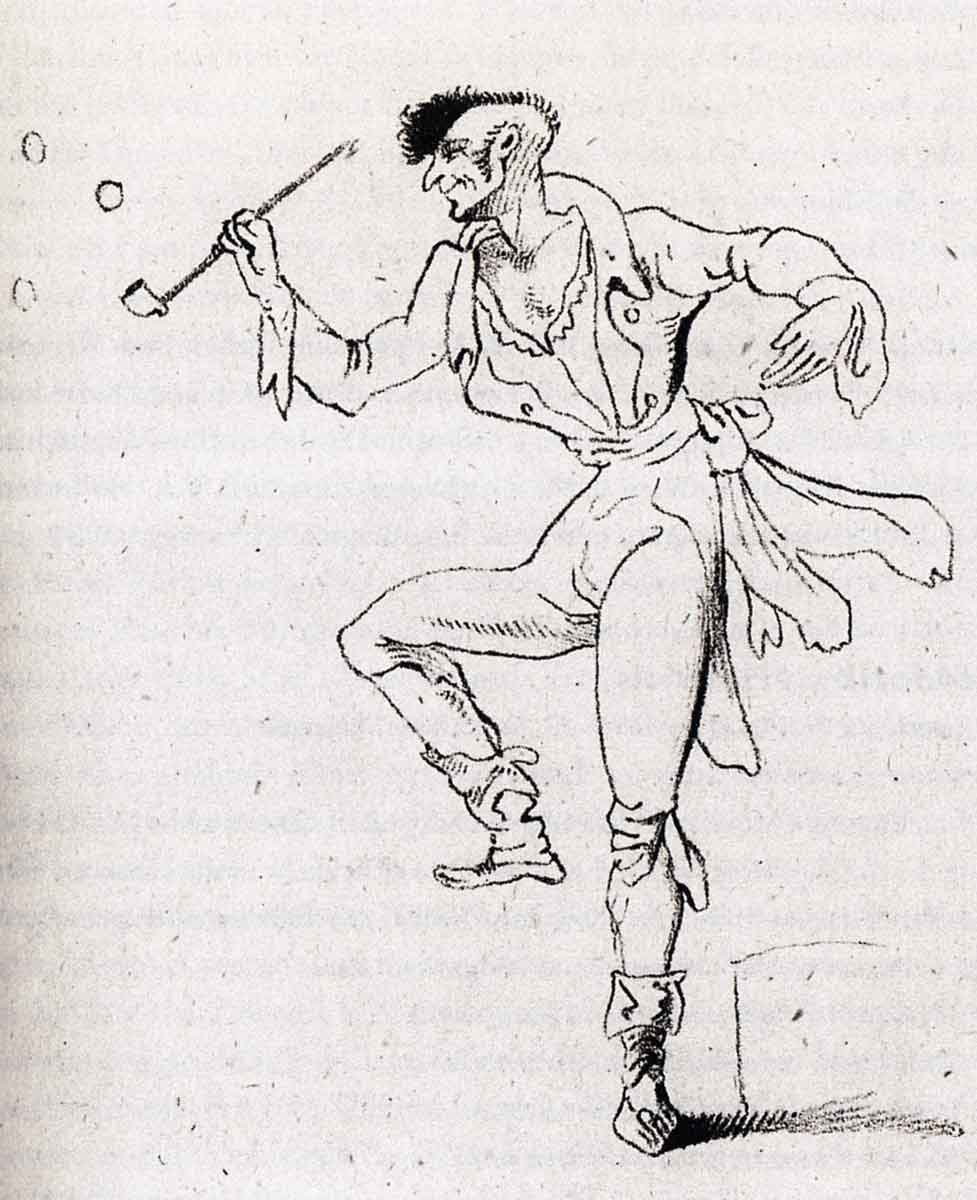
If this complex narrative structure and the inclusion of a proto-magical-realist literate cat were not innovative enough, Hoffmann’s novel contains another postmodern flourish. Johannes Kreisler was not just a character in Tomcat Murr, but featured in a series of earlier, semi-fictional writings about music that Hoffmann published under the title Kreisleriana (1813). Using Kreisler as a mouthpiece allowed Hoffmann to distinguish between his music criticism and more satirical, often scathing, pieces of writing about the contemporary music world.
Like the blurring of reality and fantasy in Hoffmann’s other works, the invention of Kreisler has both helped and hindered later critics and historians in understanding Hoffmann’s own life and opinions, since it is hard to draw a line between the author and his alter ego. Kreisler may have been fictional, but he seemed to many to embody the values of Romanticism so completely that his importance in literary and musical history is equal to that of his creator. The composer Robert Schumann was so inspired by Kreisleriana that he wrote a set of piano pieces under the same title, while a young Johannes Brahms styled himself as Johannes Kreisler (Schafer 1975, 119).
5. The Golden Pot

First published in 1814, the novella The Golden Pot is another work that displays Hoffmann’s remarkable capacity to include a host of stereotypical Romantic fairytale elements and, simultaneously, to work outside the parameters of form, style, and genre. Like The Sandman and Tomcat Murr, The Golden Pot employs an unusual structure, told as a series of twelve “vigils,” and features a metanarrative device: towards the end of the novella, the narrator becomes a character in the tale.
Magical touches abound in The Golden Pot, although unlike the other stories mentioned here, these are less suggestive of childhood fantasies or childhood trauma and more connected to traditions from folklore, mythology, and even alchemy and theology. There is a lovelorn student protagonist, Anselmus; an old apple-monger who turns out to be a witch; a mysterious archivist, Lindhorst, who turns out to be a salamander; and his daughter, Serpentina, with whom Anselmus falls in love. Set to work by Lindhorst transcribing ancient Arabic and Coptic texts, Anselmus is also tasked with not spilling a drop of ink on the originals, a task he succeeds in with the help of Serpentina.
As a fire snake, Lindhorst has been sent out from the mythical land of Atlantis. He can only return when he has succeeded in marrying off his three snake daughters to humans, bestowing at the same time their dowry: a golden pot. But when the apple-monger bewitches Anselmus with a magic mirror, he comes to believe that the salamander and Serpentina are not real and mistakenly splashes one of the ancient texts with ink. Lindhorst (or the salamander) takes revenge by imprisoning him in a tiny crystal bottle. Eventually, after a battle between the witch and salamander, all is well, with Anselmus and Serpentina finally ending up in Atlantis.
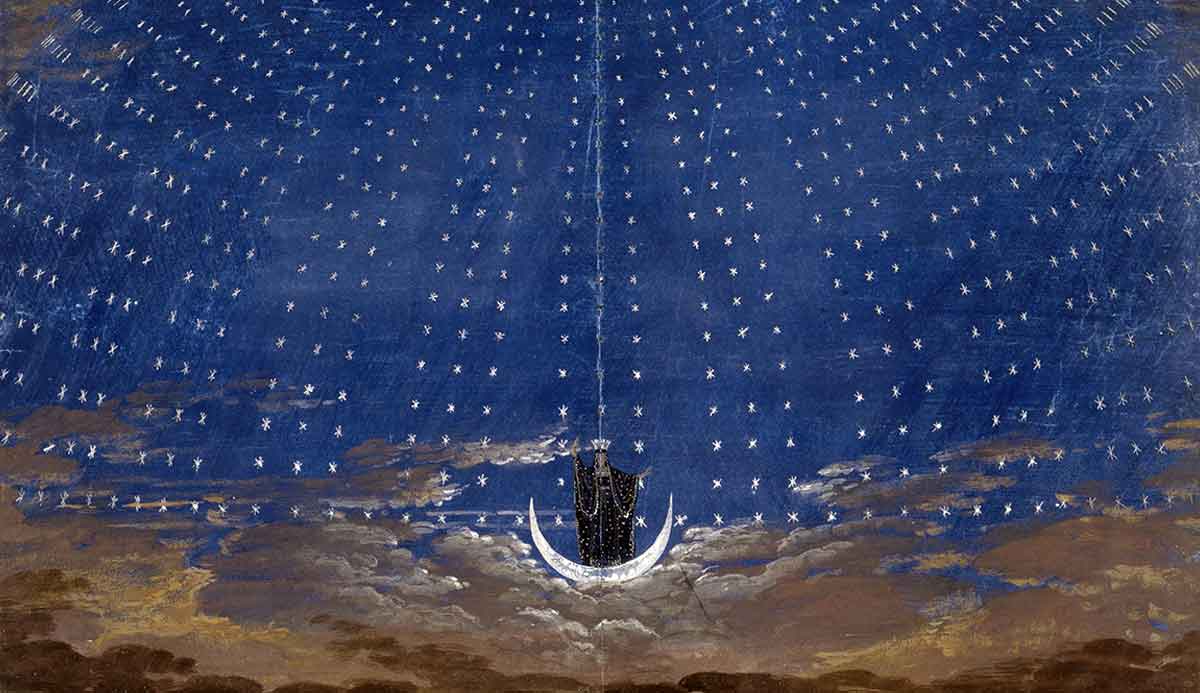
Just as The Sandman lent itself to operatic and balletic retellings, The Golden Pot is steeped in the theatrical culture of its time. Hoffmann was working as a music director in Dresden while he wrote the novella. During this time, he conducted Mozart’s The Magic Flute, which has similar themes of the protagonist undergoing trials to win the love of a magician’s ward. Hoffmann was also working on his own opera, Undine (premiered in 1816), which is similarly about an anthropomorphic woman-creature who gains immortality through the love of a human man. These touches, along with the apple monger with a magic mirror who recalls the witch in Snow White and the Seven Dwarves (first published by the Brothers Grimm in 1812), make The Golden Pot a quintessential fairytale. Its idiosyncratic manner of telling, however, is pure Hoffmann.
Reference List:
Schafer, R. Murray (1975). E.T.A. Hoffmann and Music. Toronto: University of Toronto Press.