
In 1949, at 8100 Sunset Boulevard in Los Angeles, next to Schwab’s Pharmacy, a small restaurant opened called “Googie’s Coffee Shop.” It garnered a reputation as a hangout for young celebrities. Marilyn Monroe, James Dean, Dennis Hopper, Lee Marvin, and Steve McQueen were all said to be regular customers.
The restaurant offered classic American diner fare, but it wasn’t the food or the customers that launched this restaurant to fame. It was its own unique architectural style.
Spurring an entire (sub)movement within mid-century modernism, “Googie architecture” became a staple design of the 1950s and lasted until the 1970s.
Googie’s Coffee Shop and the birth of an Architectural Movement
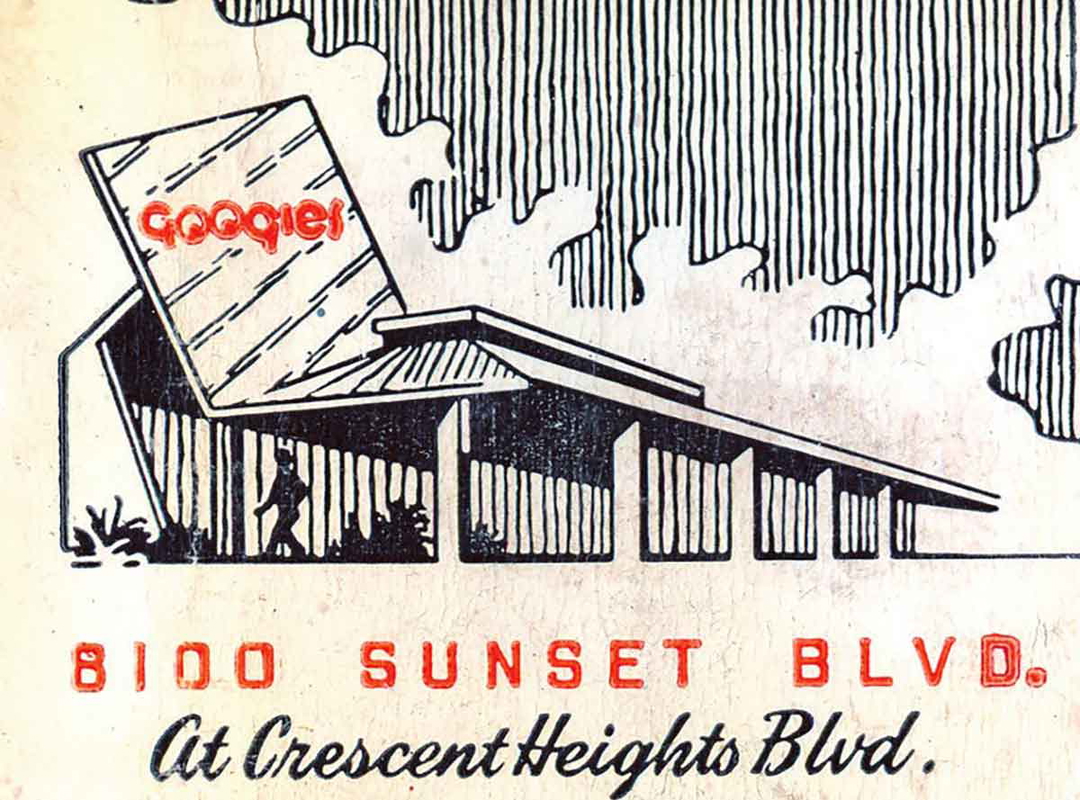
Architect John Lautner designed the building, featuring geometric abstraction and an upswept roof that looked like a launching ramp. It featured a red roof of cellular steel decking, walls of plate glass, and a large red triangle that caught the eyes of those who passed by. Its quirky form punctuated Atomic Age design and fostered features that would be replicated en masse in a culture receptive to creative innovation.
“Googie” as the name for the style of architecture was coined by Architecture critic Douglas Haskell, who wrote a scathing article on the style in the February 1952 issue of House and Home magazine. Despite his distaste for the style, the name stuck, and others followed the example of Lautner and built Googie architecture across the United States.
Architectural Features of the Space Age Style
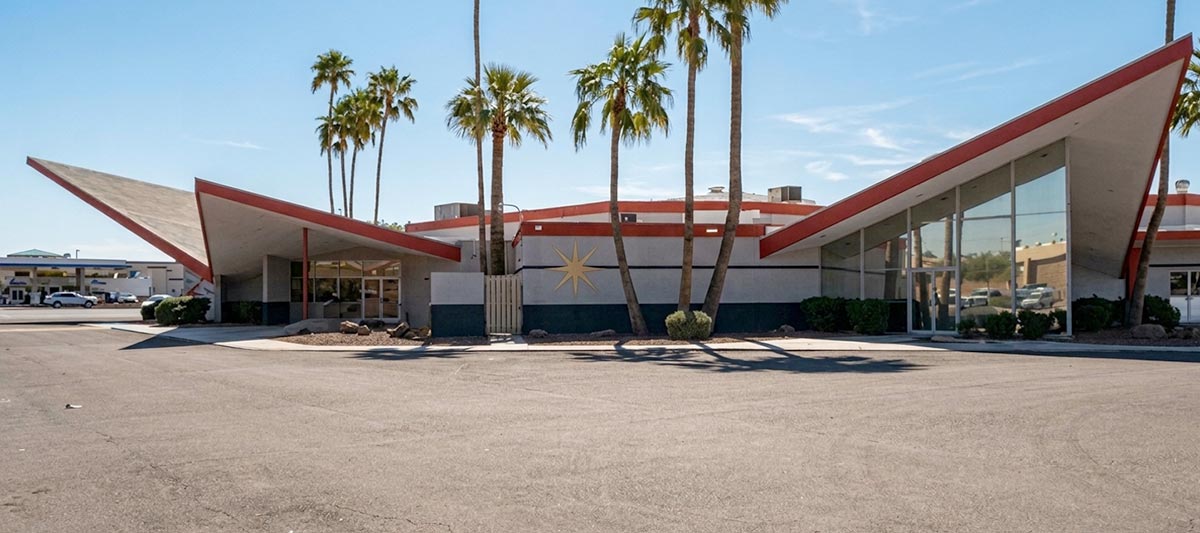
Influenced by the Streamline Moderne architecture from the 1930s with its futuristic optimism, Googie architecture became extremely popular due to its distinctive features and conspicuous qualities. It was incorporated into roadside shops, gas stations, motels, and diners.
Googie architecture features gravity-defying, upswept roofs resembling wings and rocket fins, parabolic arches, starburst motifs, boomerang and flying saucer designs, with neon lighting and large lettering to grab attention. The imagery references the Space Age and is whimsical in nature. Colorful and exaggerated, Googie architecture reflects a childlike optimism that has at times been described as naive.
Why Elite Architectural Critics Dismissed Googie Design
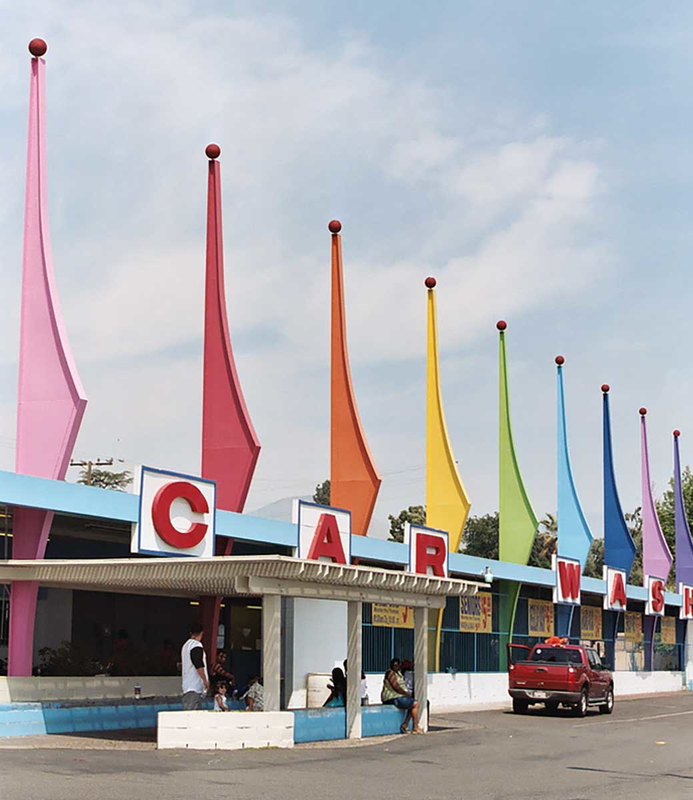
Many critics despised Googie design. To them, it was flashy, vulgar, roadside commercialism that ignored traditional design principles.
Architectural writer Mary Mix Foley wrote in 1957 of the architecture, “It is depressing to contemplate the raucous ugliness which is taking over our land.”
Later, William Bronson, who documented California’s roadside landscape in his 1968 book How to Kill a Golden State, stated, “It’s atrocious design—phony, dated, child-oriented trash.”
This was not serious architecture. It was design for replaceable light-commercialism, and in the minds of many, it did not deserve the same consideration as other contemporary movements.
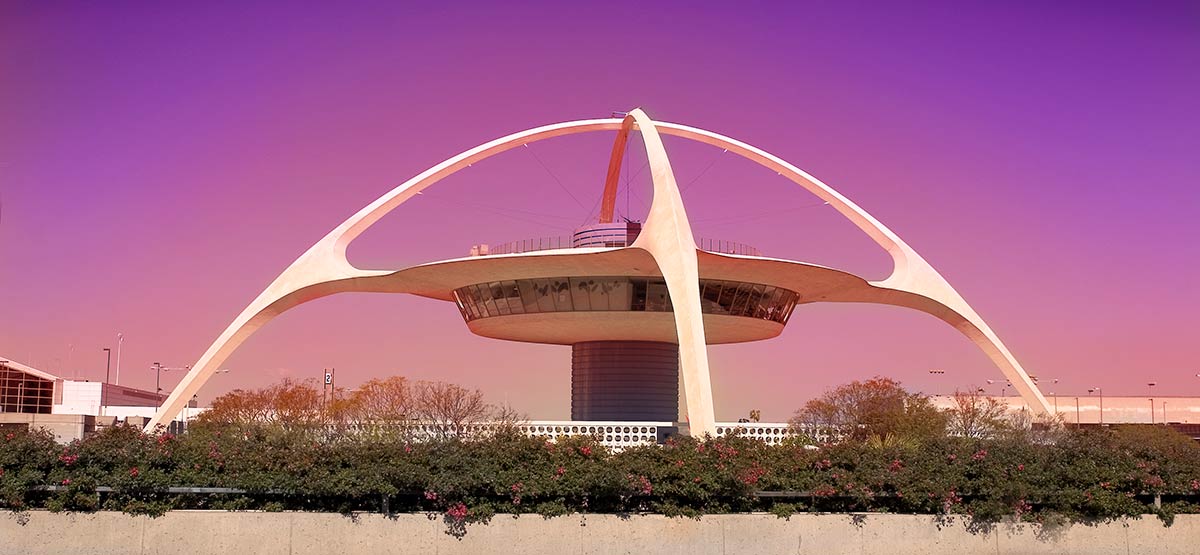
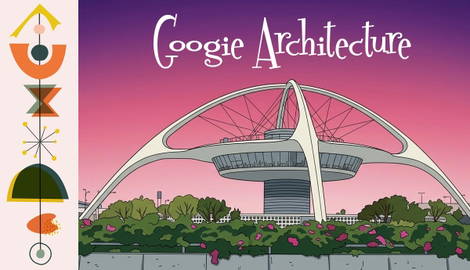
Nevertheless, Googie design was incorporated into some iconic city landmarks with official approval from city planners. Such examples include the Space Needle in Seattle and the Theme Building at Los Angeles International Airport.
The Lasting Cultural Legacy of Googie Architecture
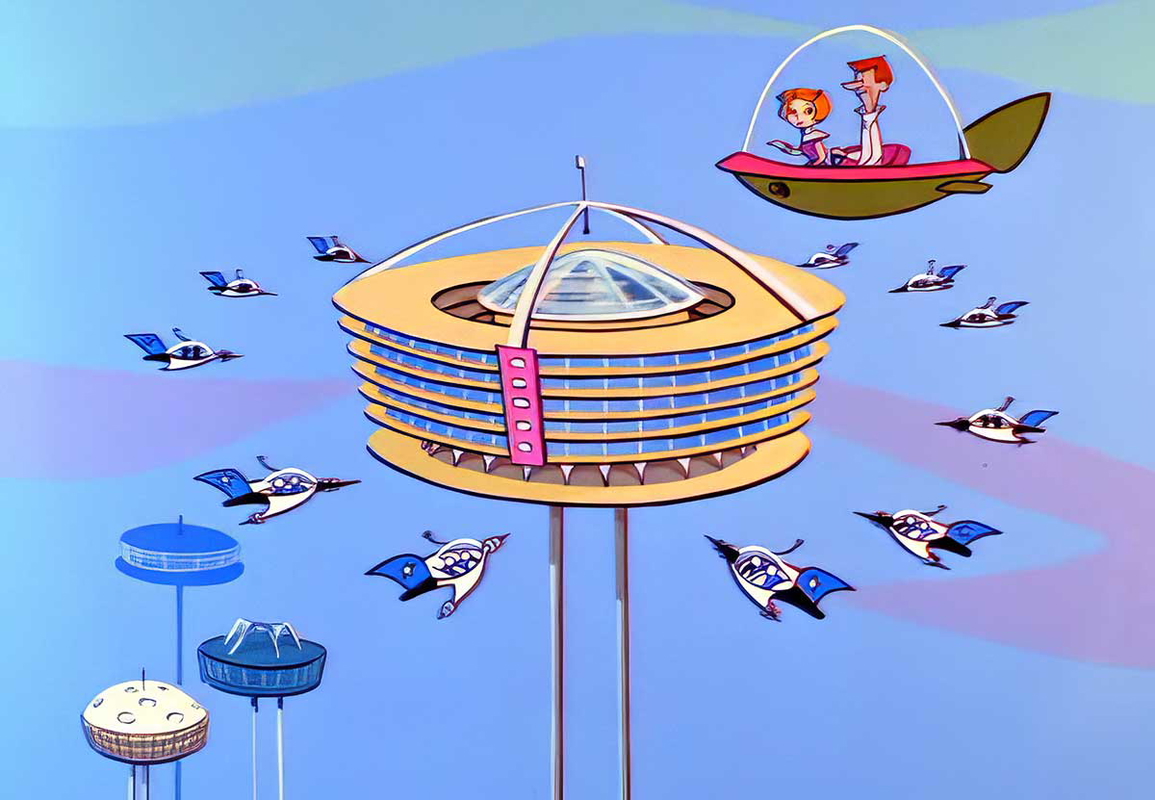
Googie architecture influenced other media such as graphic design and commercial branding, consumer products, interior design, as well as pop culture and animation. Googie was (and still is) a design based on futurism, and it was a popular motif for science fiction in the 1950s and 1960s. A particularly good example is the Jetsons cartoon, which aired from 1962 to 1963. The aesthetic, including all the buildings, was undeniably inspired by Googie architecture.
By the time the 70s rolled around, the movement was long past its heyday, superseded by other architectural movements that ditched the exaggerated optimism and focused on stripped-down functionality.
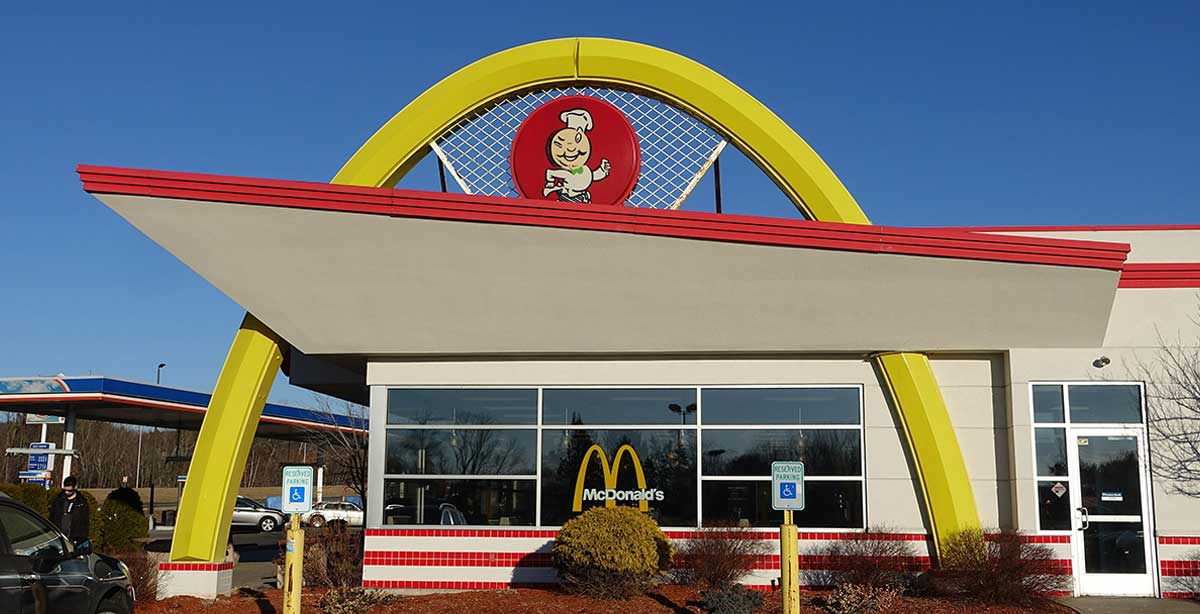
The design, however, lives on in retro-futurism, and buildings continue to be purposefully designed as a homage to the era and the movement, while the design aesthetics of Googie can be found in popular media that references the style, such as the Fallout series of video games (and now a TV series as well).