
In 1519, Hernán Cortés landed on the Mexican coast with a few hundred men and marched on Tenochtitlan, capital of the Aztec Empire. Barely two years later the empire was in ruins and thousands dead. While guns, steel, and horses each played a role in the conquest, none of them can explain how a few hundred Spaniards made themselves masters of Tenochtitlan. The conquest would have never succeeded without the support of Indigenous allies and a lethal epidemic.
The Tlaxcalans and Other Indigenous Allies
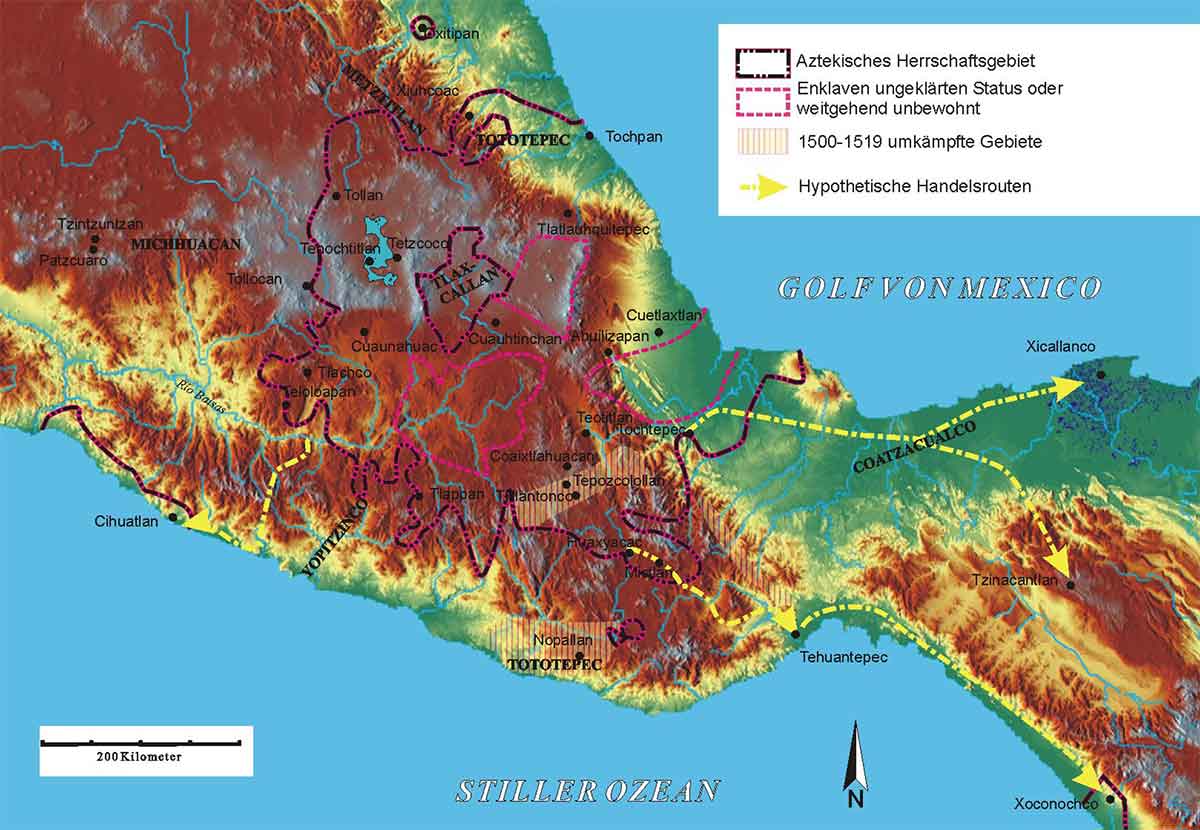
The 600 Spanish soldiers that Cortés led towards Tenochtitlan could hardly expect to subdue the city. As the Spanish expeditionary force marched inland, they clashed with the Tlaxcalans, an important rival power who refused to pay tribute to the Aztecs. Despite the initial hostilities, Tlaxcalans saw in them an opportunity to strike at their ancient rival and joined forces with the Spanish expedition. Cortés was bolstered by thousands of warriors, vastly increasing his army. The Tlaxcalans also brought with them a wealth of knowledge about the terrain and the Aztecs.
Cortés would have had no hope without their support. The small Spanish numbers could never sustain a protracted campaign. The Tlaxcalans were followed by other peoples who were resentful of tribute demands from the Aztecs and other political grievances. These further swelled his forces as he advanced inland. Each new addition to his banner brought more supplies and warriors, replenishing his army after each battle with the Aztecs. The final siege of Tenochtitlan was primarily fought by these allies, not a small contingent of conquistadors.
The Smallpox Epidemic That Devastated the Indigenous Population
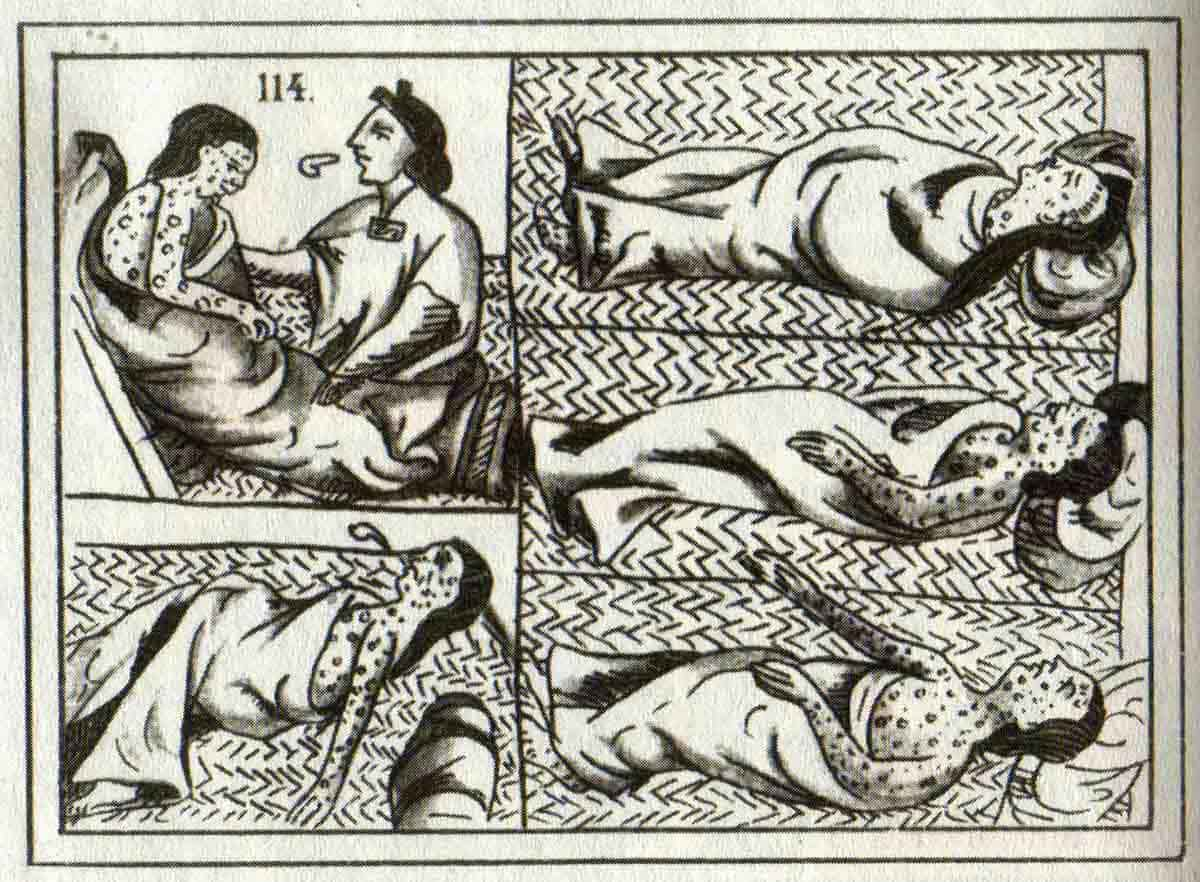
Disease was another crucial factor in the collapse of the Aztec Empire. Smallpox came to Mesoamerica around 1520, believed to have been carried by a member of a Spanish relief expedition. It spread like wildfire through Indigenous populations who had never encountered it before. With no acquired immunity, the Aztecs and other Indigenous peoples were devastated by the disease, far outstripping the fatalities from the war. In Tenochtitlan it killed Cuitláhuac, the emperor who had driven Cortés out, decapitating the Aztec leadership in the middle of a crisis.
Cuauhtémoc, his successor, took over a capital that was reeling from the high death toll and struggling to rebuild. By comparison, Spanish soldiers were far less vulnerable as they had been exposed to smallpox before. Historians believe this disease was the single decisive factor in the collapse. Estimates suggest millions of people succumbed to the disease across central Mexico within a single generation. The following decades would see successive epidemics further ravage the land, combining with war and famine to devastate the population in central Mexico.
The Political Fragmentation of the Aztec Empire
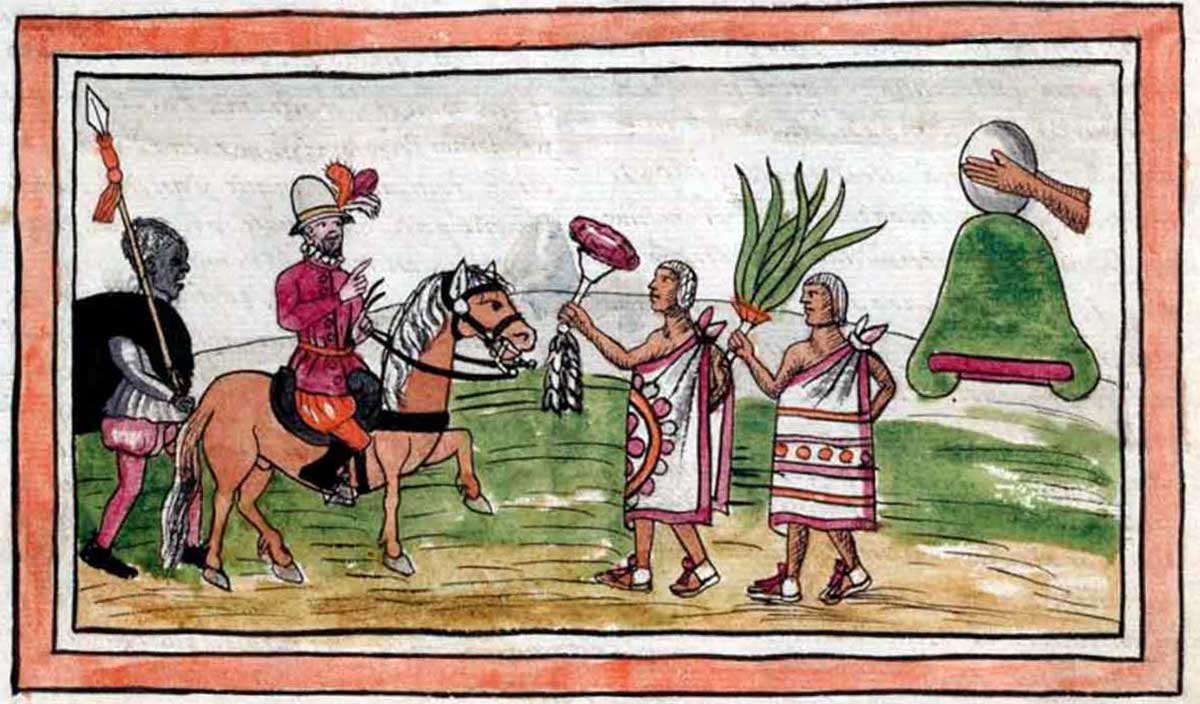
The empire Cortés encountered in 1519 was held together by tribute and military power rather than by a shared political identity. The Aztecs ruled through a tributary system where city-states were dominated by threat of military action and periodic warfare. The core of the empire consisted of a Triple Alliance between the cities of Tenochtitlan, Texcoco, and Tlacopan.
Tenochtitlan’s regular demands for tribute, such as sacrifices, caused deep resentment among their subjects. It ensured a steady stream of allies for the Spanish when they landed. Cortés exploited these political rivalries, taking care to present himself as a cobelligerent rather than a conqueror.
The unknowns of a Spanish alliance were weighed against years of Aztec dominance with many local rulers taking the chance to gamble on the newcomers. Early Spanish victories over the Aztecs demonstrated that the empire was vulnerable and encouraged disgruntled subjects to rise up. Any unified response was further hamstrung by the split of the Triple Alliance when a faction in Texcoco under Ixtlilxochitl II sided with Cortés. This further isolated Tenochtitlan as it gave the Spanish another stronghold and fresh allies. Competing loyalties and long held grievances caused many Aztec subjects to defect to the Spanish coalition.
Cortés’s Diplomacy and Intelligence Gathering
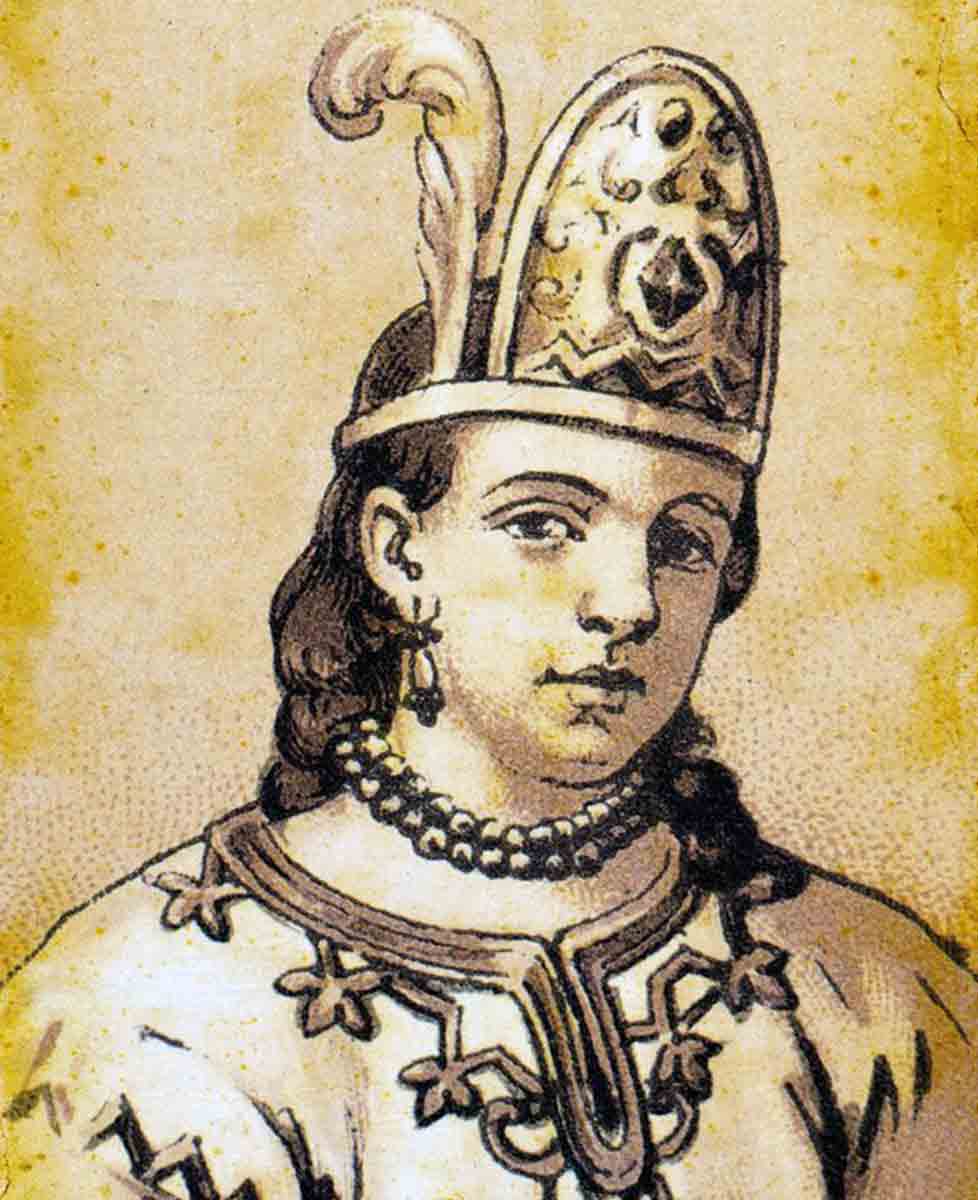
Cortés made extensive use of politics and intelligence to inform his military victories. Prior to landing at Veracruz he had obtained translators, shipwrecked Spaniards who had learned some local languages during their stay in Yucatán. But his most famous translator was a woman named Malintzin, better known as La Malinche, an enslaved Nahua woman who served as Cortés’ primary interpreter and advisor. Her linguistic skills and knowledge of regional politics were a valuable asset to the conquistador, aiding him in forging local alliances. Through her and other intermediaries he was able to gain intelligence on the Aztecs and exploit local rivalries to his best advantage.
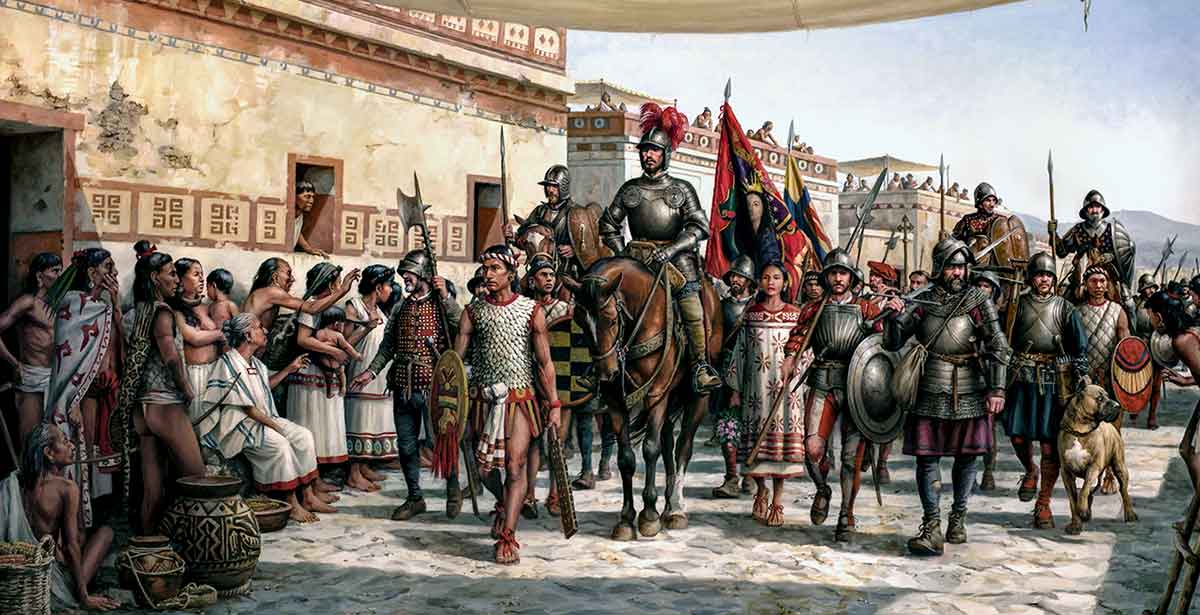
Cortés, ever eager to exploit division, accepted entreaties from both the Aztecs and Tlaxcalans. He agreed to march to Tenochtitlan through Aztec territory while accepting the offer of Tlaxcalan warriors and porters. He was able to peacefully enter the city despite massacring the population of Cholula en route. Cholula, a sacred city, was poorly defended and was easy prey for the Spanish and their Tlaxcalan allies. The massacre was a chilling warning for many of the cities in the region as they recognized the conquistadors’ deadly capabilities. Awed, the Aztecs invited him to enter Tenochtitlan without resistance. Once in the city he was able to take Emperor Moctezuma II hostage.
Military Technology in Context
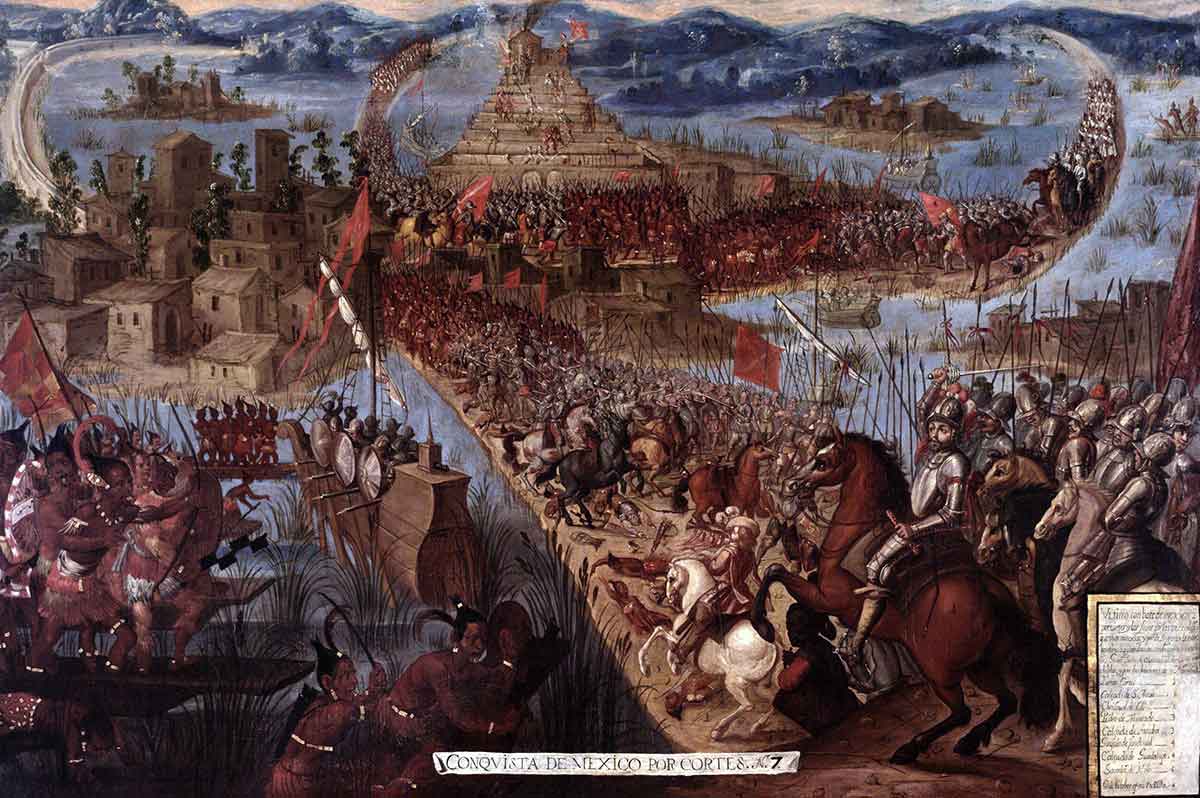
Spanish military technology such as steel swords, crossbows, horses, and cannon did have an impact on the conquest of Mexico, but not to the extent popular history portrays. Steel blades were more durable than obsidian weapons and cannon could break up massed formations of warriors. Horses caused shock and confusion among local warriors as they were unknown in the Americas.
All these advantages were on a small scale as the Spanish numbered in the hundreds at most. Firearms were slow to reload and prone to misfiring. The Aztecs adapted quickly to Spanish tactics, learning to avoid open engagements where cavalry were effective. The siege warfare in Tenochtitlan neutralized many of the Spanish advantages, forcing them into a brutal attritional street fight.
Technology was a bonus to the Spanish rather than the decisive factor in the conquest of the Aztec Empire. It aided the smaller Spanish contingents to survive individual battles and undoubtedly gave a nasty shock to their opponents in early encounters. But the small Spanish numbers would never have conquered a densely populated empire on their own. Cortés lost many troops during his retreat from La Noche Triste. His numerous local allies mattered far more to the campaign’s outcome than any Spanish technological advantage. During the final siege, the Aztecs dug pits to cripple Spanish horses and concealed spikes in the shallow waters to damage Spanish naval vessels.
The Fall of Tenochtitlan
The final siege of Tenochtitlan in 1521 is a clear convergence of all these factors rather than them working in isolation. Cortés blockaded the city by land and water, using brigantines to patrol the lake. This severed the city from its supply routes, further weakening its chances for survival.
The survivors of the smallpox epidemic now faced starvation behind the walls of Tenochtitlan, but they fought with remarkable tenacity for nearly three months under their last emperor, Cuauhtémoc. The Aztecs inflicted serious casualties on the allied coalition, frequently forcing them to retreat. The coalition’s numerical superiority gradually made its weight felt and the Spanish systematically destroyed Tenochtitlan’s infrastructure, fighting their way into the city street by street while razing buildings to deny the defenders cover.
When Tenochtitlan finally fell in August 1521 it was the culmination of months of disease and open warfare. The grueling siege would not have been possible without the local support, supplies, and intelligence provided by Cortés’s Indigenous auxiliaries. The Spanish were integral to the coalition but numerically they were only a small part of the force that eventually took the city.
1521 was an apocalyptic end for the Aztec Empire, facing a regional alliance of its neighbors and having suffered through a smallpox epidemic and months of conflict. Spanish military technology gave them an initial edge but the conquest and colonization of Mexico could not have been possible without Cortés’ Indigenous allies, fueled by years of resentment against the Aztecs.