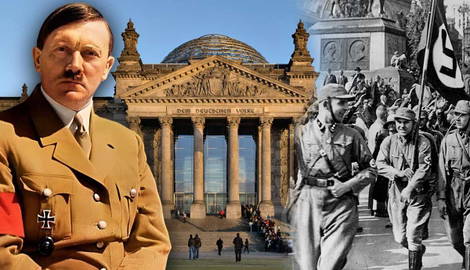

Adolf Hitler, one of the most infamous figures in history, rose to power during the Great Depression. People may be surprised to learn that he was popular, even when the Nazi Party was a fringe extremist group. His political success began slowly. In 1923, his stint in prison actually increased his popularity. Then, when he became Chancellor of Germany in 1933, he immediately began enacting his plans for total control of Germany. His ascension as a totalitarian dictator was calculated and supported. But how did Hitler actually rise to power?
Who Was Adolf Hitler?
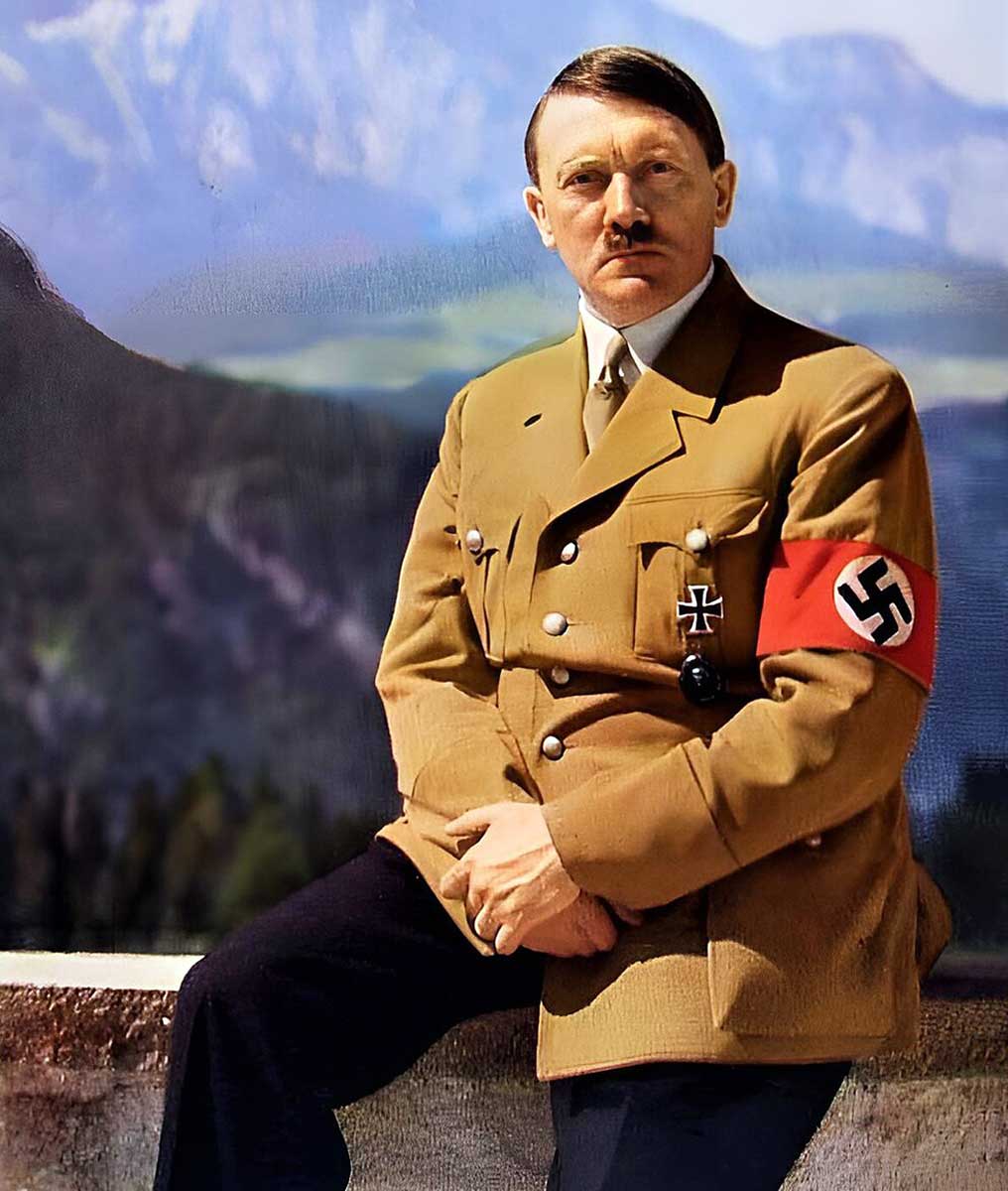
Adolf Hitler was the dictator of Nazi Germany from 1934 to 1945. He was born on April 20, 1889, in Braunau am Inn, Austria, and died by suicide on April 30, 1945, in the Führerbunker, a bunker in Berlin, Germany.
Hitler’s childhood and family life was troubled. His father, Alois, was abusive and controlling. His mother, Klara, was Alois’ third wife, and historians believe that she was also his niece, making their children products of inbreeding. There are many interesting things about his life, such as that Adolf and his sister Paula were the only two of Klara’s six children with Alois to survive to adulthood.
Hitler was also a vegetarian, and he did not hunt like his closest friends. He was obsessed with his half-niece Geli, who was found shot in the chest in his apartment in 1931, where he had sequestered her. Her death was ruled a suicide and swept under the rug.
Both of his parents died when he was a teenager, and he spent several years painting before joining the military in World War I. He initially may have tried avoiding being conscripted to the Austrian military, and then he requested permission to join the Bavarian Army in Germany. Hitler was 25 when WWI began, and he was promoted to Gefreiter (Lance Corporal) during the conflict.
When Did Hitler Rise to Power?
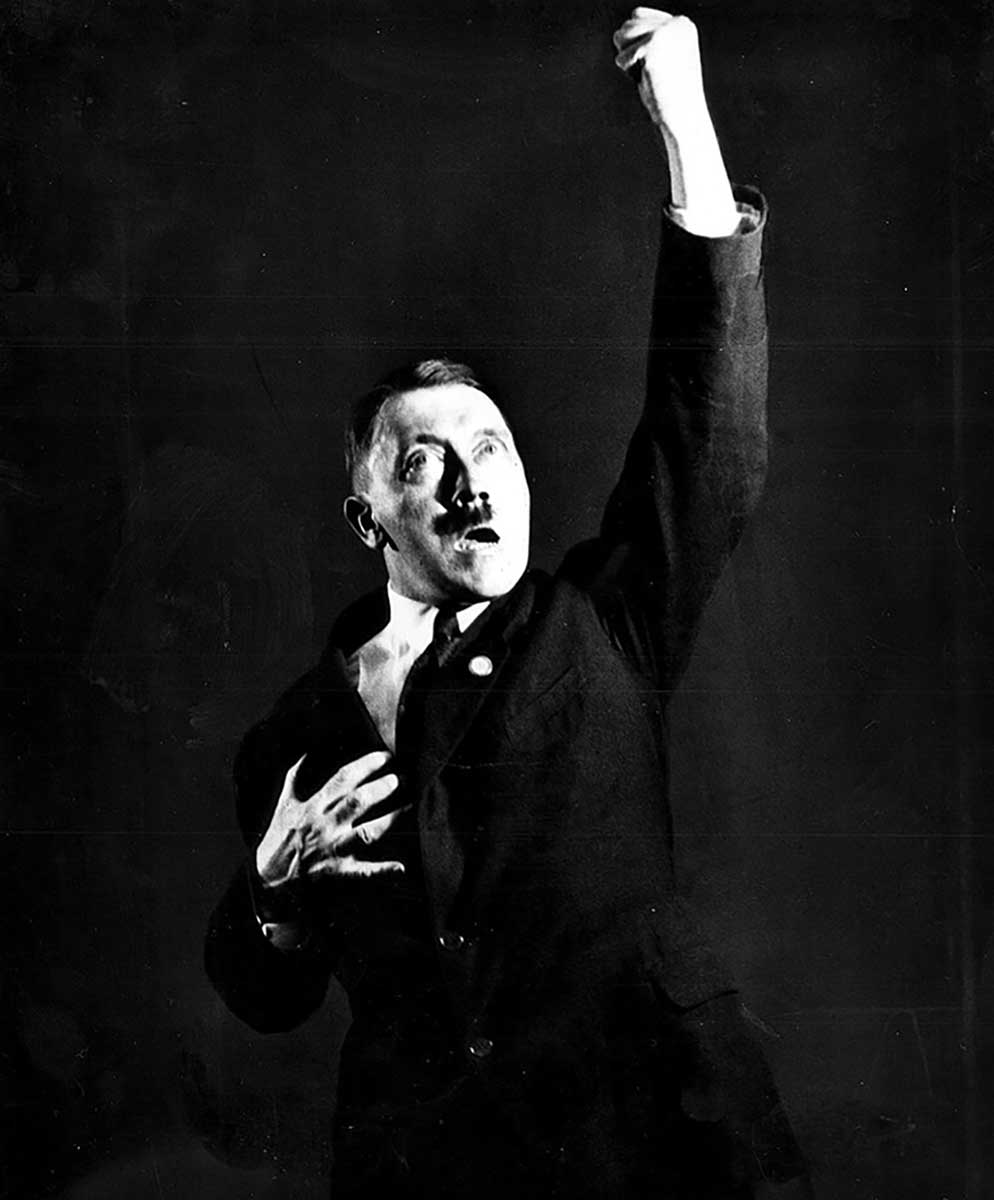
Hitler’s rise to power truly began in 1919, after World War I. His influence was largely based on his public speaking skills; he could persuade people easily, and his energy would rile up the crowds. His speeches were performances of propaganda.
After the war, Hitler was recruited to work as an undercover intelligence agent with the Bavarian Reichswehr (army). The work included educating people on German history, nationalism, and the fear of Bolshevism (otherwise called Marxism or Communism).
The army organized “national thinking” courses, and Hitler’s oratory skills impressed Captain Karl Mayr, who gave Hitler the title of “education officer.” He gave speeches condemning Bolshevism and promoting German nationalism at the Munich barracks to influence the soldiers.
Part of his assignment was to infiltrate the German Workers’ Party (DAP) to spy on their activities. He realized his strength in oration and propaganda during his time as an intelligence agent, and he became infatuated with the DAP and its founder, Anton Drexler.
Drexler was antisemitic, anti-Marxist, anti-capitalist, and highly nationalistic, and he was drawn to Hitler, inviting him to become a member of the DAP in September 1919, shortly after he infiltrated. Within a few months, Hitler became the propagandist for the DAP and quickly became one of the most influential people within the party.
The Nazi Party
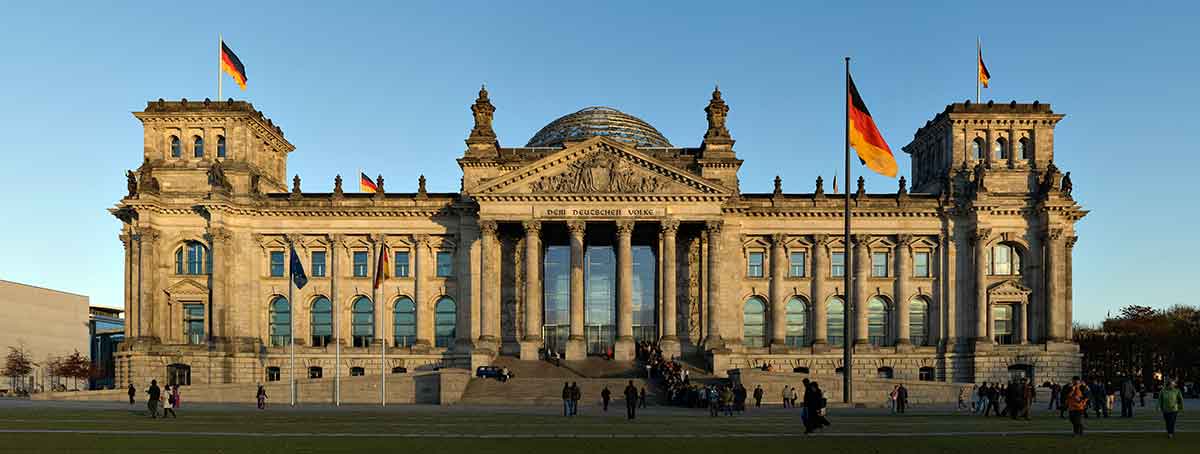
In February 1920, Hitler initiated the DAP’s name change. The German Workers’ Party became the Nationalsozialistische Deutsche Arbeiterpartei (National Socialist German Workers’ Party), or NSDAP, otherwise known as the Nazi Party.
A foundational part of the NSDAP was the 25 Point Program, which intended to reinvent Germany by:
- segregating Jewish people from society and stripping them of their rights;
- colonizing land;
- redefining citizenship to exclude non-Aryan Germans;
- preventing immigration;
- nationalizing industries;
- controlling educational institutions;
- demanding freedom of religion—but only for those who would not endanger the state—and more.
The Nazi Party began to garner support from right-leaning voters by appealing to their “nationalism,” and they attracted support from left-leaning voters by calling themselves “socialist.”
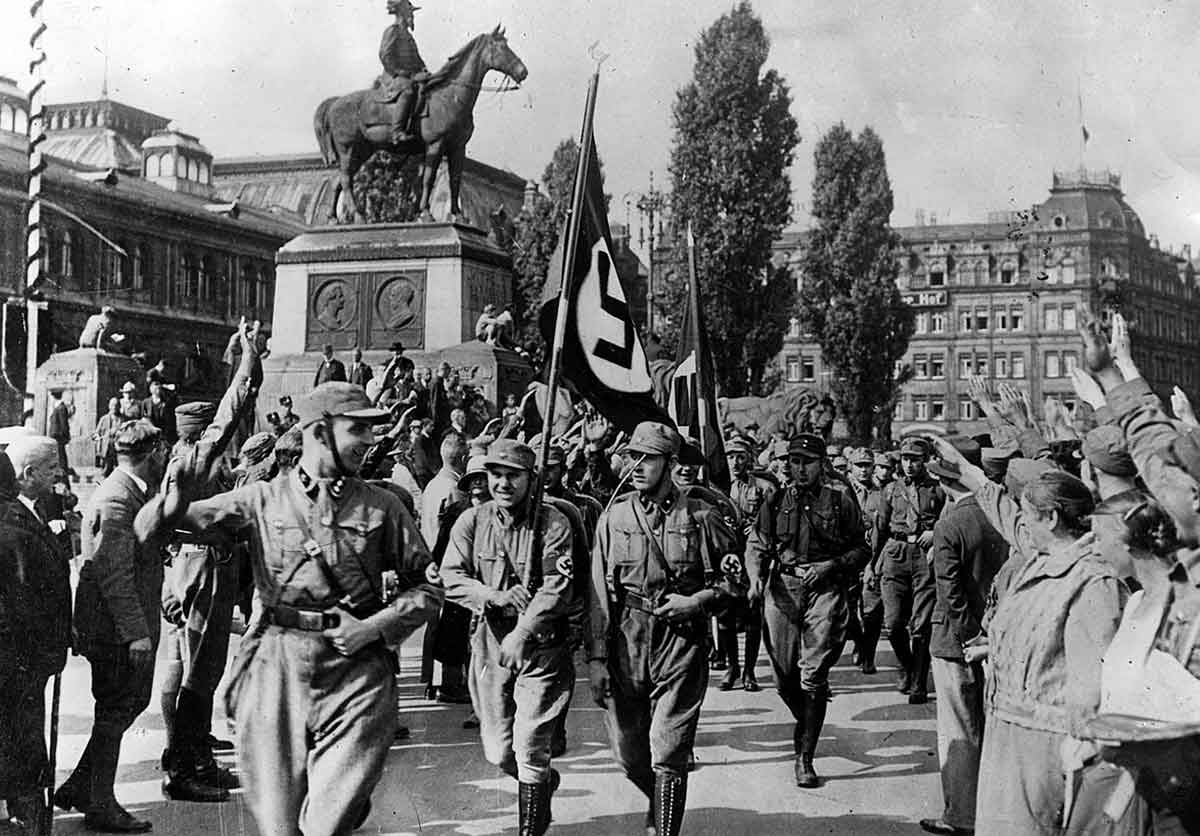
Nazism was an extreme form of fascism; it was a far-right, totalitarian, dictatorship that hinged on antisemitism and white supremacy. The Nazi Party began as a fringe group that did not have much support, and at first, the Nazis who marched through the streets in small protests were ridiculed. However, they started to gain traction, increased the membership of their party, and spread their fascist rhetoric around enough to convince the general populace of their abilities to lead.
Germany’s Economic Crisis and Antisemitism
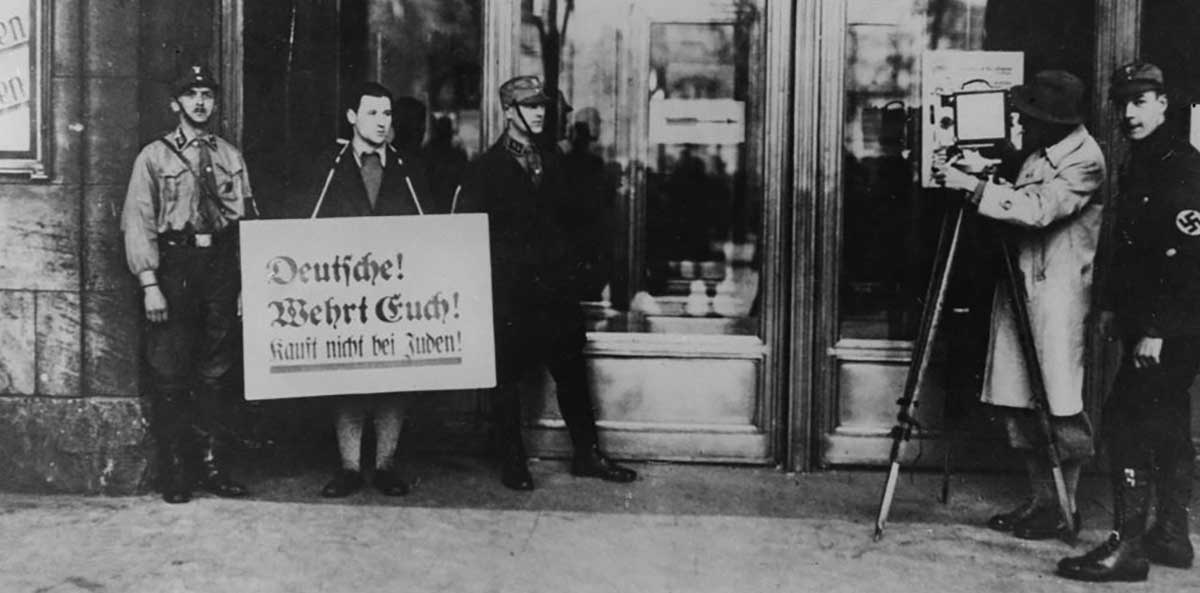
In the 1920s, the Nazis depended upon civil unrest in Germany in order to push their nationalistic and antisemitic propaganda. After WWI, the Weimar Republic was required to pay roughly 33 billion dollars in reparations as part of the 1919 Treaty of Versailles, which gravely affected the economy.
Inflation rates skyrocketed; the value of the mark (the German currency) fell at a rate never seen before. In 1918, 8.9 marks were equal to 1 US dollar. By 1923, the exchange rate had risen to 4.2 trillion marks to 1 US dollar. Money was essentially worthless, foreign aid stopped, unemployment rates soared, and the government handed out “coupons” for small amounts of food staples.
People were hungry, depressed, poor, and angry at the government. Violence broke out among the citizens in street brawls, political parties became extremists, and the Nazis used the disastrous state of Germany for their political advantage. They promised more jobs and better working conditions; they vowed to restore prosperity to Germany’s image, remilitarize the country, and end the Jewish and communist influence.
Europe had a long history of antisemitism, and the Nazis capitalized on that. Citizens wanted somebody to blame for the issues Germany faced, and the Nazis turned the Jewish population into the scapegoat. They blamed Jews for the loss in WWI and for their ensuing poverty, pointing out that many Jewish families were still wealthy. Then, they blamed an alleged “international Jewish conspiracy” for the Wall Street Crash of 1929 and for the assassination of Ernst vom Rath, a German diplomat, in 1938 in Paris. The Nazis turned the murder into an opportunity to launch a nationwide wave of anti-Jewish violence known as Kristallnacht.
By 1921, Hitler had ousted the old leadership of the Nazi Party, securing his place at the top. Under his control, the Nazis organized rallies and met in beer halls—popular establishments for gathering to drink and be entertained.
The Beer Hall Putsch
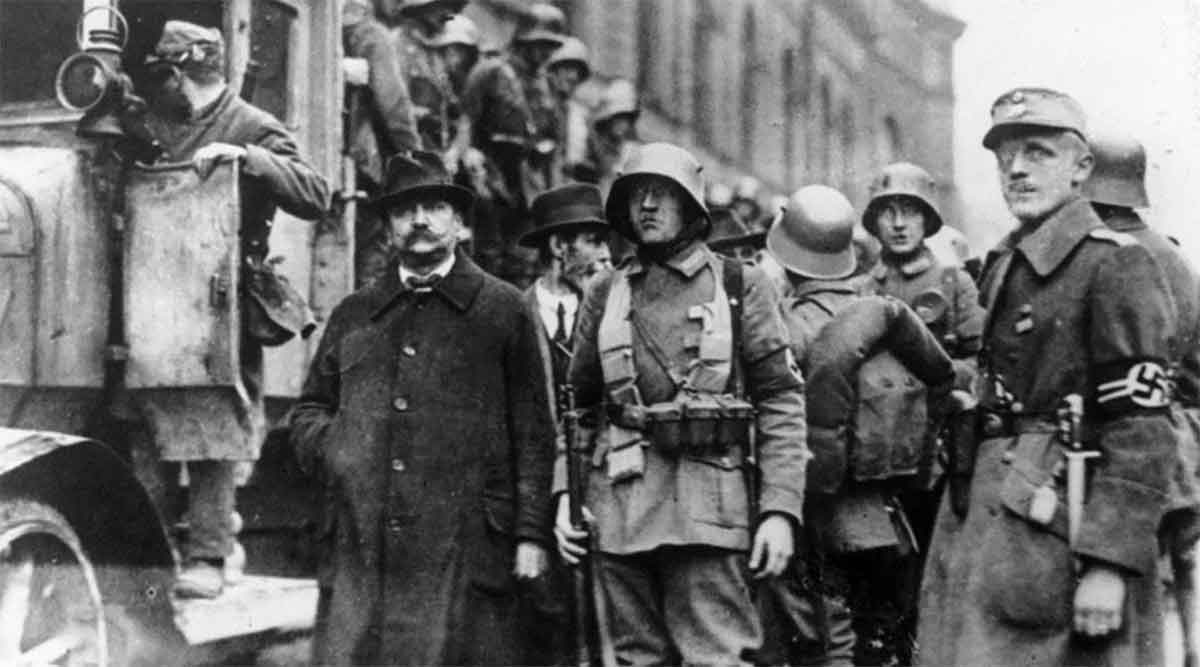
On November 8 and 9, 1923, the Nazis attempted to seize control of the German government. The Munich Beer Hall Putsch was a failed coup d’etat to overthrow the Weimar Republic from Munich, the capital of Bavaria and the birthplace of the NSDAP.
That night, when the Nazis were gathered in the Bürgerbräu Keller beer hall, Hitler fired a pistol at the ceiling and declared that the national revolution had begun. Hitler announced that they would overthrow the Bavarian government and create a new one. They discussed, spread their ideas, designated people for new government positions, and drank throughout the night.
On the morning of November 9, the Nazis began marching. However, the Bavarian police thwarted the coup as they neared the Bavarian Defense Ministry. Over 2,000 Nazis gathered for that march led by Hitler and the Sturmabteilung, the Nazi Party’s assault division. The police met the Nazis in the city center in front of the Odeonsplatz and Feldherrnhalle. The ensuing brawl between the Nazis and about 130 police resulted in the death of fifteen Nazis, four policemen, and dozens of injuries.
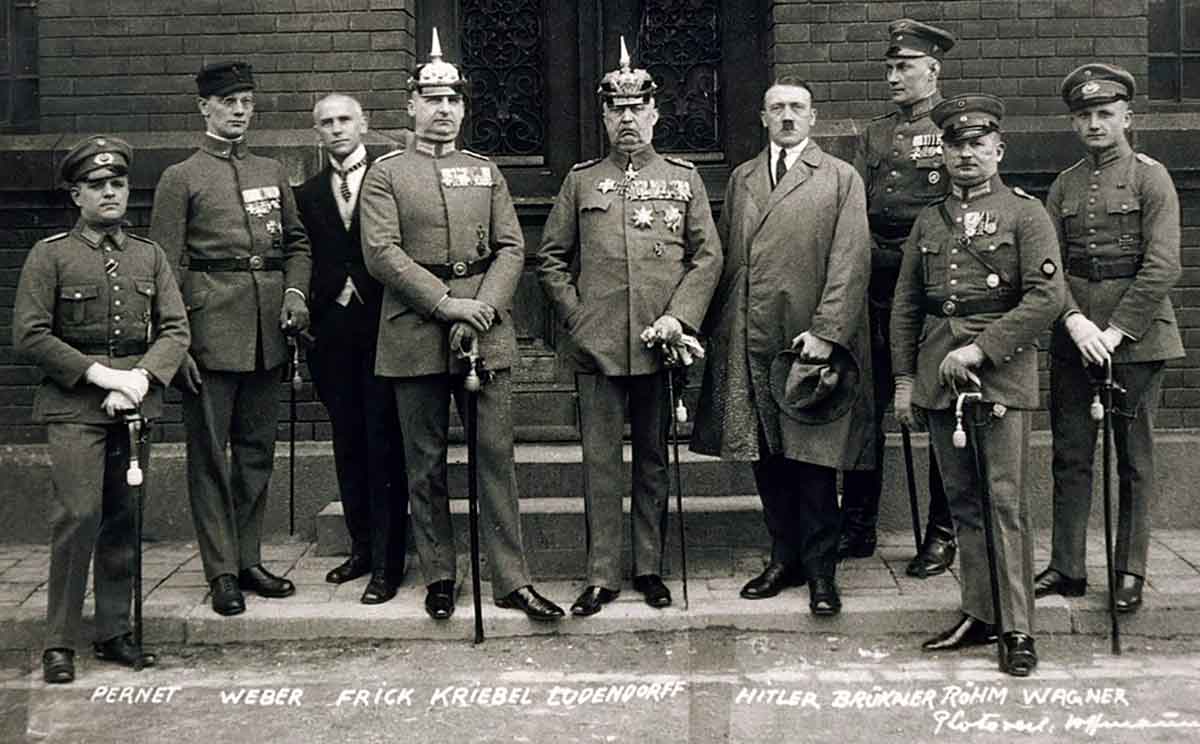
Hitler evaded arrest that day, he was spirited away to a safe house but was arrested two days afterwards. He was charged with high treason and imprisoned with some of his co-conspirators. Police raided the NSDAP headquarters, its propagandist newspaper was banned, and a few Nazis were forced into hiding or else face arrest.
The trial lasted from February 26 to April 1, 1924. Hitler took sole responsibility for the Munich Beer Hall Putsch, explaining his actions as a selfless obligation to the betterment of Germany. The lay judges were largely biased in favor of the Nazis, and the presiding judge, Georg Neitherdt, had to persuade them not to acquit Hitler.
Hitler and Rudolf Hess, his deputy, were sentenced to serve a five-year sentence in the mildest type of prison in Germany. After only eight months of Hitler’s five-year sentence, he was released for good behavior.
How Did Hitler Rise to Power? Hitler’s Popularity
During Hitler’s time in prison, he dictated his autobiography to Rudolf Hess, a man belonging to his inner circle. Hess wrote it for him as Hitler paced in his cell ranting. Mein Kampf means “My Struggle,” and was published in 1925 as his autobiographical manifesto for political change. The book outlined his political ideology and plans for Germany. The first volume was published in 1925, and the second the next year. The book was over 700 pages in total.
Mein Kampf became wildly popular, and Hitler made about 1.2 million Reichsmarks by 1933 from its sales. The book was highly sought-after. It was translated into eleven languages and had sold 5.2 million copies by 1939. People became enamored with Hitler because of his manifesto and ignored his antisemitic statements and plans for a totalitarian regime.
Hitler’s popularity began rising while he was in prison, and it was not just in Germany, people around the world admired him. People gravitated toward him because he was a talented public speaker, had charisma, and was a highly effective propagandist.
Nazi Dictatorship
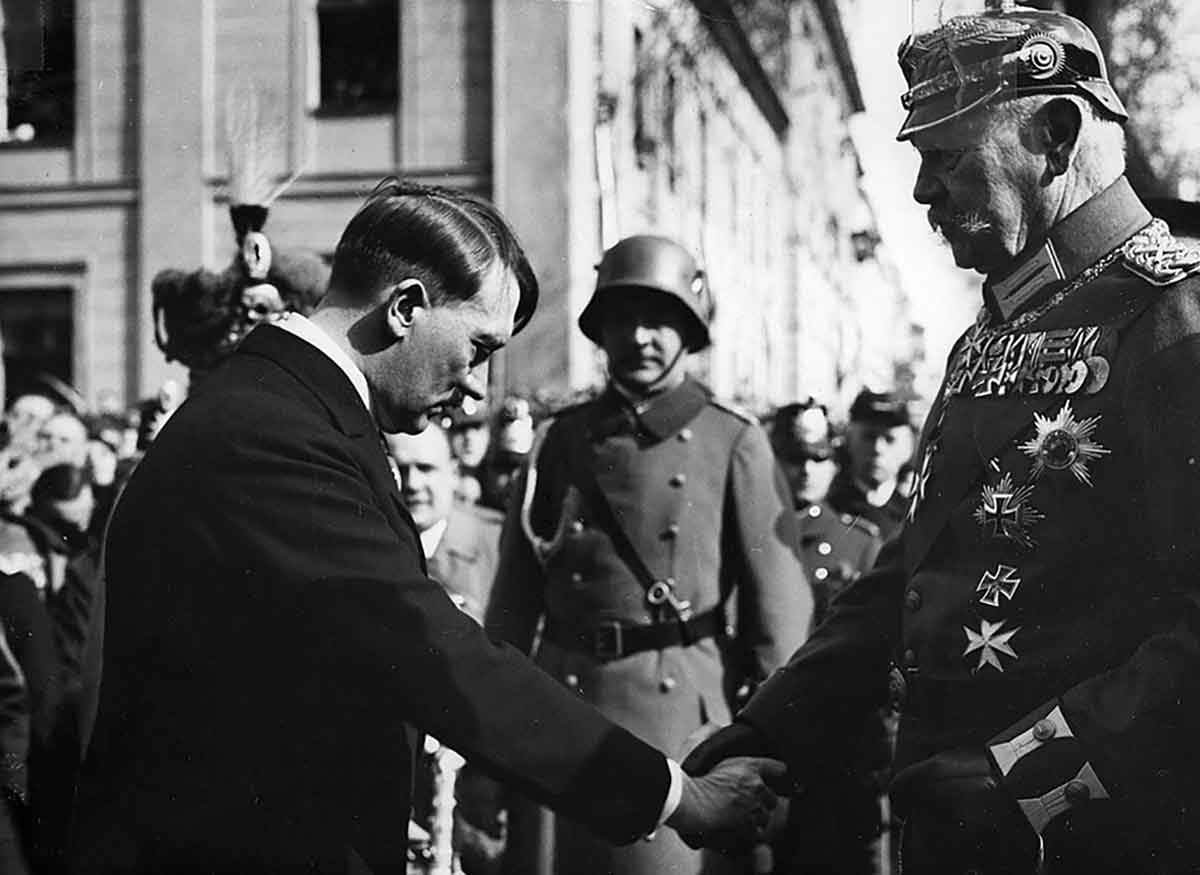
In the 1932 German presidential race, Hitler came in second place, with over one-third of the vote. He lost to Paul von Hindenburg, who was the German President from 1925 to his death in 1934. In the parliamentary election held the same year, the NSDAP became the largest party in Germany.
In order to curb Hitler’s power and satisfy him, von Hindenburg appointed him as the Chancellor of Germany in January 1933. The presidential office had more power under the Weimar Republic than today, and the chancellor had less power. However, Hitler quickly consolidated power and set himself up to become the ultimate ruler of the new German Empire: The Third Reich.
Hitler became the Chancellor on January 30. On February 27, the Reichstag (German legislative building) was burned down. The Nazis blamed the communists for the arson and used that attack as a pretext to strip people of their civil rights. A state of emergency was declared, and the Nazis began purging communists and other opponents from the government to root out what they thought of as “the evil.” Anybody who challenged or questioned Hitler was deemed an enemy and expelled, ensuring that Hitler had no opposition.
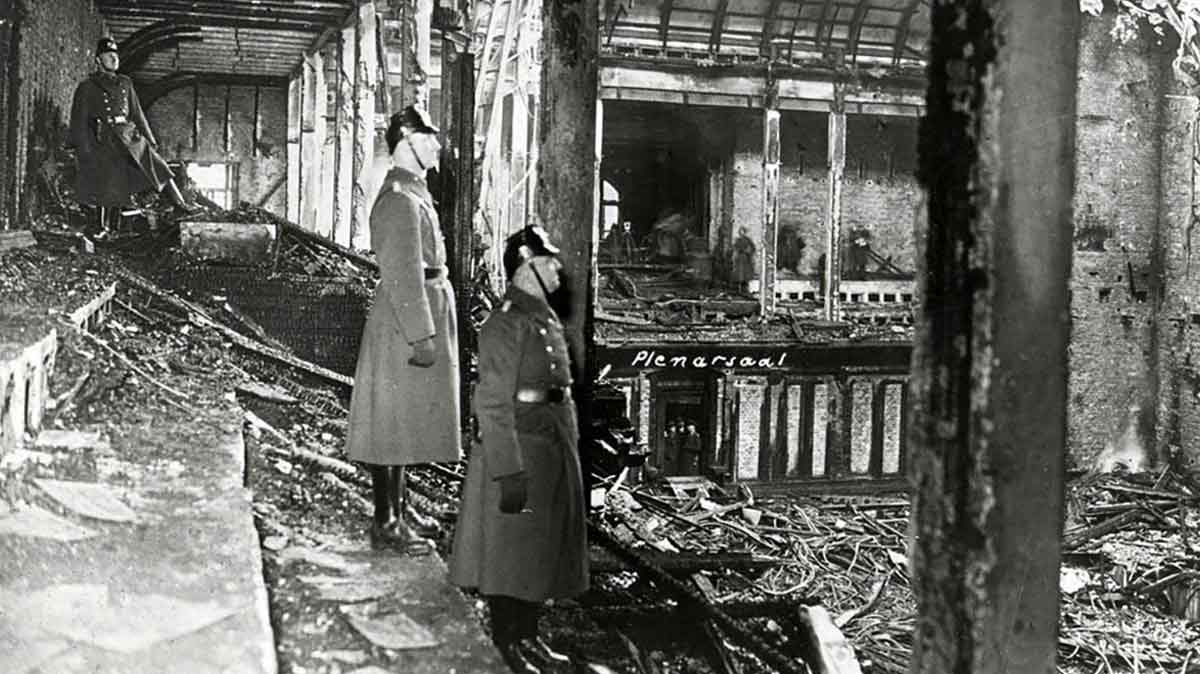
The day after the Reichstag fire, Hitler requested von Hindenburg to sign the Reichstag Fire Decree, which took away many citizen rights and freedoms:
- Freedom of press
- Freedom of expression
- Freedom of association
- Freedom of assembly
- Habeas corpus
- Freedom of privacy of correspondence
The Reichstag Fire Decree also allowed for search and seizure warrants to be issued beyond the legal limits. The measure went into effect one month after Hitler’s ascension as the Chancellor.
Then, just a few weeks later, on March 23, 1933, Hitler gained the powers of a dictator with the Enabling Act of 1933. The act gave Hitler the ability to create and sign laws without the approval of the Reichstag (the German parliament) or the president. This was the defining moment when Germany switched from the democratic Weimar Republic to the Nazi regime.
On August 2, 1934, President von Hindenburg died. The day before, Hitler passed the Law Concerning the Head of State of the German Reich. The measure stated that the role of the President and Chancellor would be combined, and all power would be given to Hitler upon von Hindenburg’s death.
Hitler secured his position as the Führer, the ultimate leader of Germany’s Third Reich.