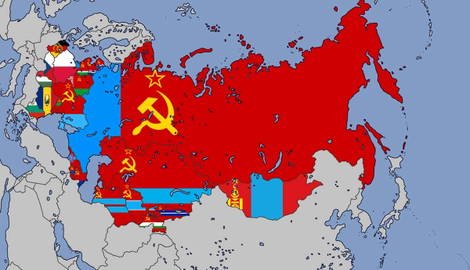

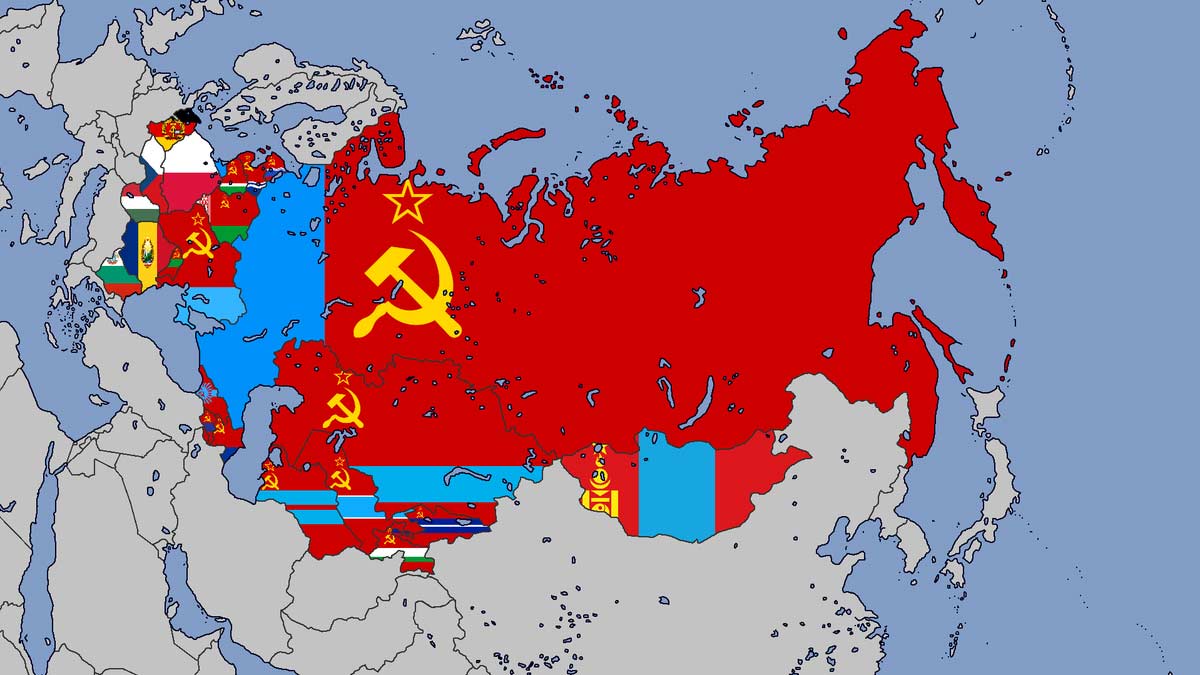
The Soviet Union dominated Eastern Europe after World War II, becoming a world superpower. Russia functioned as the puppet master of the 14 other countries that constituted the USSR from 1922 to 1991. After WWII, the Soviets implemented their communist system by installing Stalin-esque governments in nine more countries. The USSR controlled the education, press, radio, police, agriculture, and military in each of those satellite states.
What Is a Satellite State?
A satellite state is a formally independent country entirely controlled by another. In this case, the dominant country was the Union of Soviet Socialist Republics. The USSR was comprised of Russia, Ukraine, Belarus, Uzbekistan, Kazakhstan, Georgia, Azerbaijan, Lithuania, Moldavia, Latvia, Kyrgyzstan, Tajikistan, Armenia, Turkmenistan, and Estonia. Their satellite states were Albania, Poland, Bulgaria, Romania, Czechoslovakia, East Germany, Hungary, Yugoslavia, and Mongolia.
In 1955, the Warsaw Pact was created as an opposing force to the NATO pact, but it was also a way for the Soviets to tighten their reigns on their satellite states. Each state was forced to depend on the Soviet Union politically, economically, and militarily. Additionally, the pact prevented states from getting international aid for their efforts to gain independence. The Warsaw Pact was a contributing factor to both the Polish Uprising of 1956 and the Hungarian Revolution of 1956.
In these satellite countries, every aspect of life was controlled by the Soviets, including education, press, radio, agriculture, economics, politics, religion, the military and police, and everything in between. The military and economic control was overt, but there were several secondary, psychological methods of oversight and domination. They beat people down (physically and mentally), starved them out, and manipulated them into submission.
Networks of Secret Police
Secret police psychologically manipulated entire populations into submission to the USSR. After World War II, the Soviet secret police began implementing laws and exerting control over the satellite states. They killed the anticommunist resistances, purged governments of anybody who was not a communist and enforced their political and economic system.
The USSR had the Ministry of State Security (MGB), which functioned as its own entity from 1946 to 1953 before it was merged into the Ministry of Internal Affairs (MVD). The MGB was the secret police organization. After WWII, it was responsible for gaining control of the Eastern Bloc countries. The Soviet intelligence organizations went by many names: Cheka (1917-1922), GPU (1922-1923), OGPU (1923-1934), NKVD (1934-1941), GUGB (1941-1943), NKGB (1943-1946), MGB (1946-1953), MVD (1953-1954), and KGB (1954-1991).
Undercover police organizations that resembled the USSR’s were propped up in many satellite states. In East Germany (officially known as the German Democratic Republic), the Ministerium für Staatssicherheit, or Stasi, controlled its people with informants on the payroll. The Stasi allowed the ruling party to maintain power by purging anybody who was not a communist. In Poland, the Soviets created the Ministry of Public Security, another intelligence agency committed to spying and upholding the elite party.
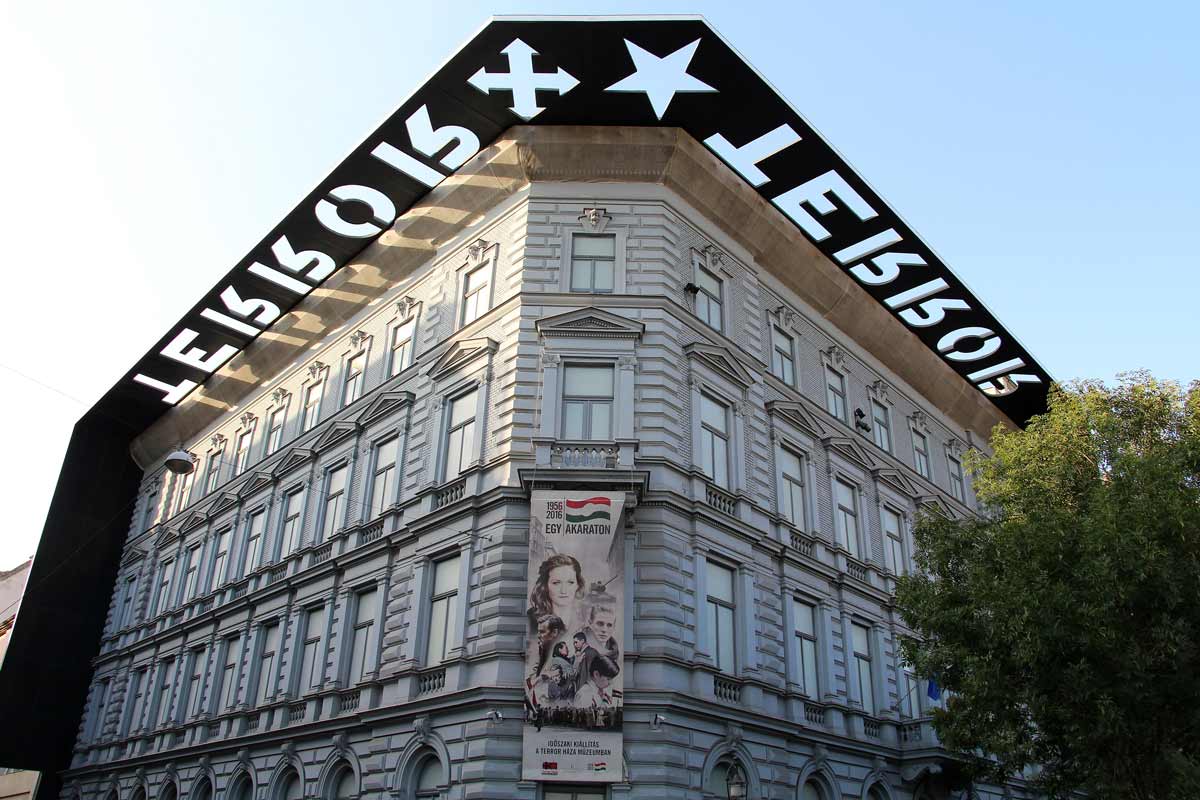
In Hungary, there was the State Protection Authority, first known as the State Security Agency, an extension of the KGB. Today, Budapest’s House of Terror Museum exhibits the terror imposed on Hungarians by both the fascist and communist regimes. The Fascist Arrow Cross party first used the building to interrogate, torture, and kill their victims. Then, the secret police under the communists’ control used the building for the same purposes.
In A Concise History of Hungary (2021), Miklós Molnár, a Hungarian author and professor, explains that an estimated more than 16% of the population was arrested for a crime against the regime between 1945 and 1956. At the time, Hungary had a population of less than ten million people, meaning 1.6 million of them were arrested for something within those eleven years. Over 80% (1.3 million) of those arrests occurred between 1950 and 1953 alone. Hungarians were interrogated, beaten, and sometimes killed or deported. Almost half (700,000) were imprisoned for a crime (whether real or imagined) and most often without evidence.
Secret police committed similar—or identical—crimes against the populations of the other satellite states. However, it has been said that those perpetuated in Hungary were some of the most, if not the most, brutal of all the Eastern Bloc. The only other rival for cruelty was the Albanian secret police, the Directorate of State Security. Citizens of the satellite states were repressed in the same manner as citizens of the USSR.
In Romania, there was the Department of State Security, and Czechoslovakia had the State Security. These organizations conducted state-sanctioned terror by organizing mass arrests, show trials, political purges, deportations to gulags, and generally instilling fear and hatred in the citizens.
Media Censorship
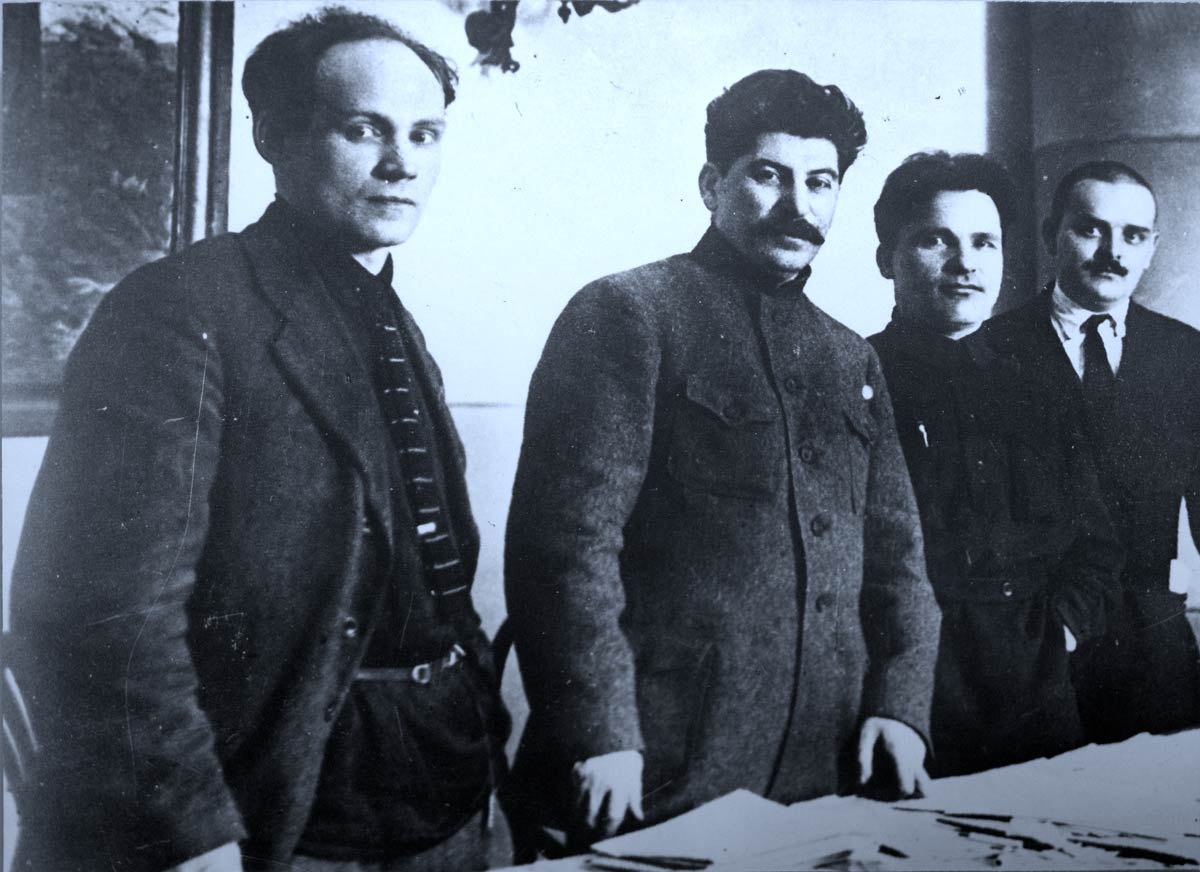
The Soviets kept their subjects in check through their obsessive control over the media, press, and academia. All printed material was controlled and censored before and after publication to ensure that it would comply with communist norms and to hide the truth. Bolsheviks, early communists who hated the censorship of the Russian Tsarist government, imposed their own similar form of censorship on the USSR.
Radio, newspapers, magazines, books, and later TV broadcasting were all micromanaged to maintain approved communist ideology. In the satellite states of the Eastern Bloc, the media was controlled just as strictly as in the USSR. Government propaganda was pushed, and the truth was covered up. Citizens were sometimes forbidden from accessing foreign media like Radio Free Europe. Traveling to and from Western countries and receiving mail from them was also restricted.
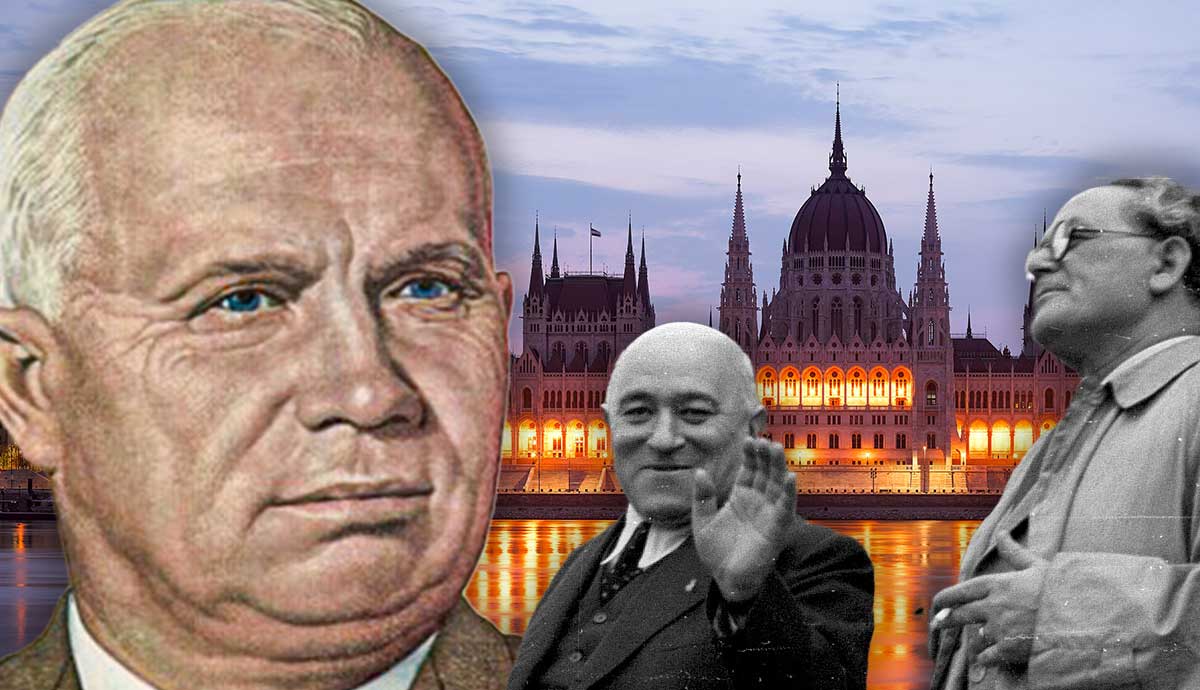
All Eastern Bloc’s radio and TV media outlets were owned and managed by the USSR, and political organizations often owned printed media. Nikita Khrushchev, premier of the USSR, once admitted that “the press is our chief ideological weapon.” They manipulated people into believing the propaganda and supporting them. Controlling the narrative in the media and censoring the truth kept people uninformed and prevented resistance. An uneducated population was an obedient population.
Indoctrination in Schools
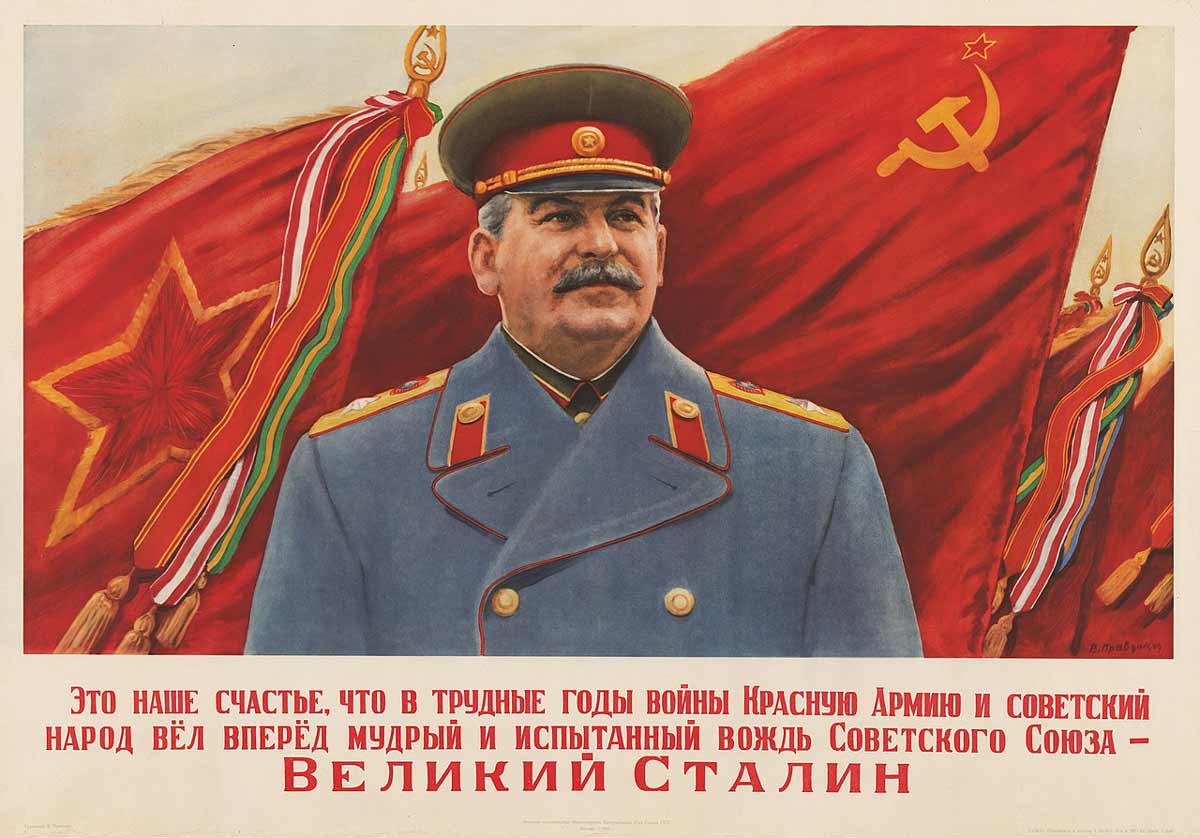
Education was another useful weapon that the communists used to control their subjects. They knew that by indoctrinating young children in schools, they would be able to create loyal servants to the state. They used this method in the USSR and in their satellite states whenever they could. Education in their schools boiled down to spying and brainwashing.
The secret police organizations would have spies planted in schools to report any of the teachers who did not fall in line. In Hungary, at least, the monthly stipend for the informants could rival or beat the salary teachers received. It could be a lucrative activity to report fellow teachers for anticommunist activities. Teachers who did not sing their praises to Stalin and the Soviet Union or those who may have looked annoyed during a meeting could be arrested by the secret police in the middle of the night.
These informers would also spy on the school children by asking probing questions to young ones, such as: “Do you have a picture of Stalin in your home?”—which was a requirement—or, “What radio stations do your parents listen to?” If the child admitted that their parents did not have the required portrait of Stalin or listened to any station other than the approved communist broadcast, then the police could take one or both parents. Children were conditioned to believe nothing was more important than loyalty to the state.
Anti-Religious Indoctrination
In addition to destroying allegiance to one’s family, the Soviets also needed to demonize religious leaders as anti-state to eliminate loyalty to religion. While the USSR had an ideological goal to eliminate religion and become atheistic, religion was never officially outlawed. Religious beliefs persisted even through intense discrimination. Religious leaders were often arrested for not conforming or halting services, sometimes put on a show trial, and sometimes executed.
For example, in 1949, Hungarian priests and church leaders were made to swear an oath to the constitution and, therefore, to the communists; if they refused, they were jailed. The religious persecutions certainly made the point very clear to the Hungarians—if it could happen to the church, it could happen to anybody.
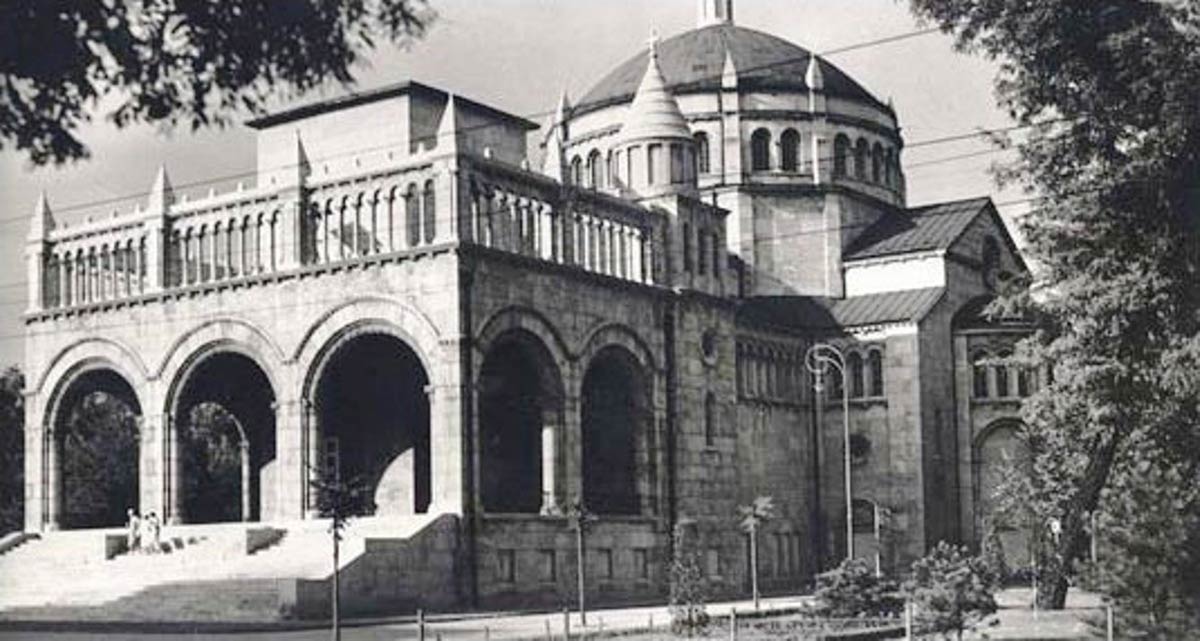
In 1951, a statue of the Great Teacher Stalin was unveiled on the site of the destroyed Regnum Marianum, a church that was built in 1931 to symbolize the appreciation for the collapse of the short-lived 1919 Soviet Republic. The communists demolished one of Budapest’s most important churches and erected a statue that would remind everybody of their authority. The freedom fighters of the Hungarian Revolution tore that statue down on October 23, 1956.
Collectivization and the Control of Agriculture
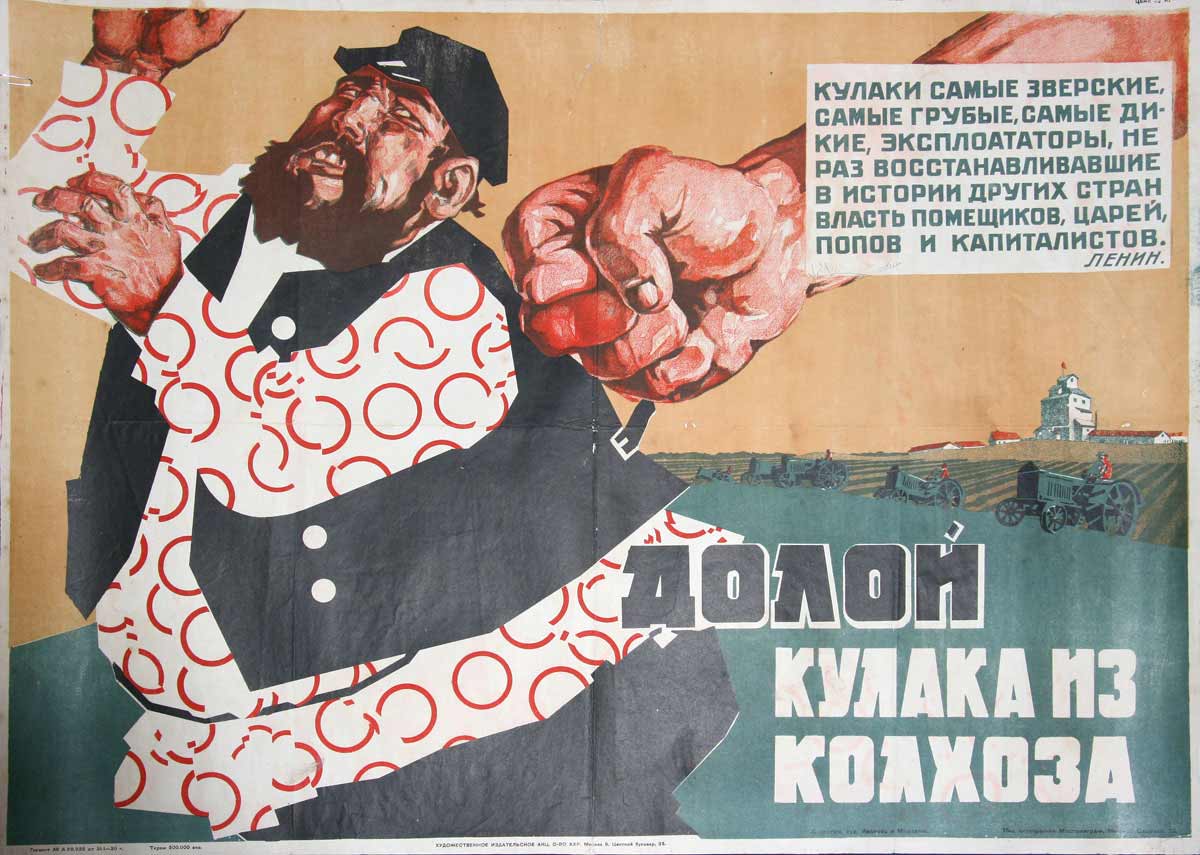
One of the main tenets of communism was collectivization, a form of agricultural control the Soviets exerted. The Communist Manifesto of 1848 makes convincing arguments for a communist society in opposition to a capitalist one. Unfortunately, the USSR did not practice Communism as Marx and Engels intended.
Forced collectivization was introduced in the late 1920s, with policies that sounded pleasant on paper. These policies sought to integrate individual land and properties into collectively controlled (Kolkhozes) or state-controlled (Sovkhozes) farms. The allegedly compelling reason for collectivization was placing wealth back into the hands of the working class. It was supposed to give the workers ownership of industries rather than the bourgeoisie (upper or elite class) the communists hated so much. The wealth was instead taken by the state while millions of farmers faced genocide and poverty.
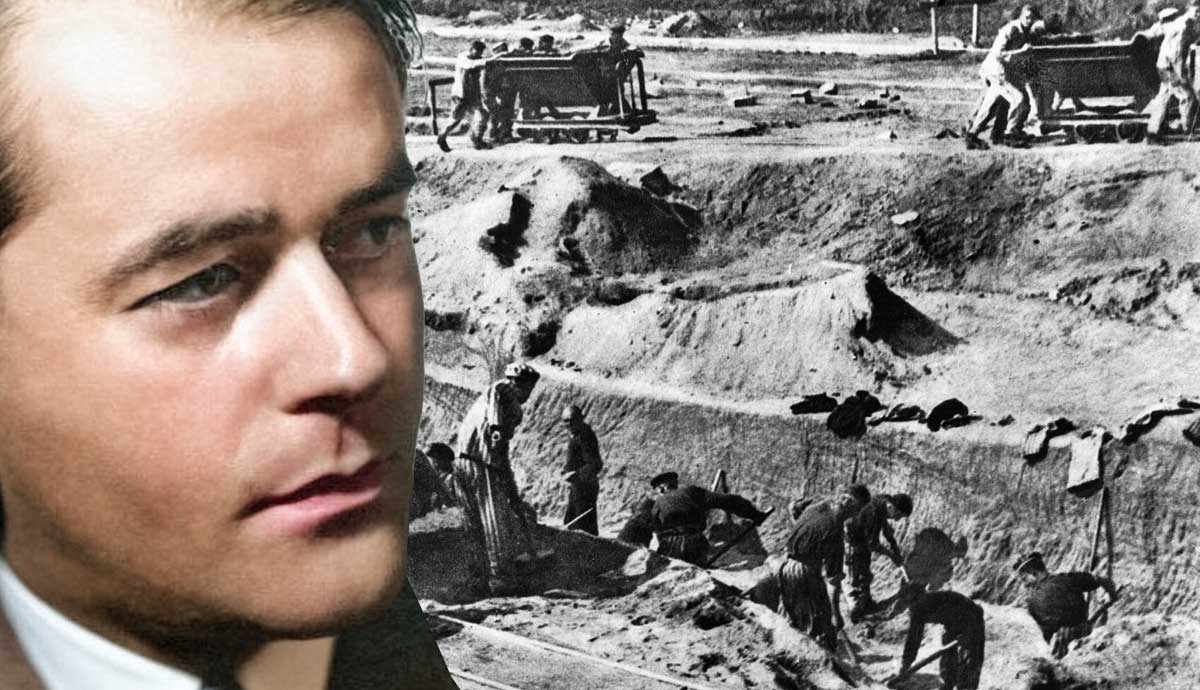
The Soviets replaced privately owned peasant farms with collectively owned farms and deported millions of farmers to seize their land. If the farmers did not agree to forfeit their land, they ran the risk of imprisonment, deportation, or even death. If they killed their livestock or burned their farms to prevent the Soviets from seizing them, they ran the same risks.
The USSR’s reasons for enforcing collectivization were to increase the food supply for the growing population of cities, to get raw materials, and to export goods for the quotas the state created for the farmers to meet. However, this came at the expense of millions of rural farmers who were deported, murdered, starved to death, or faced grave food insecurities.
Ethnic Cleansing of Kulaks
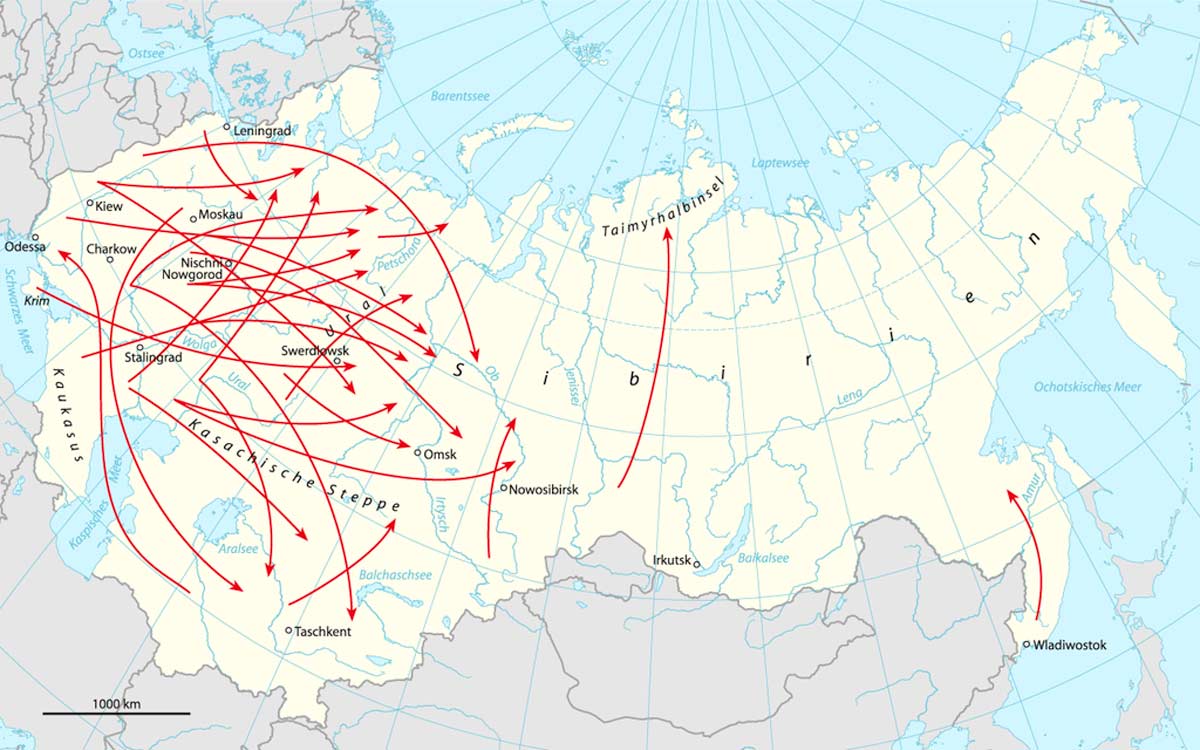
The communists went after the kulaks, “wealthy” peasants who had at least a few acres of land, a few large animals like horses or cows, and could afford to hire at least one farm hand. Over 80% of the population in the USSR were farming peasants, but only 1% of them were wealthy enough to hire help on their farms—but they were still peasants. Soviet communists called kulaks “class enemies” and “enemies of the state,” claiming that they were hoarding food on their farms.
Between 1917 and 1937, up to 15 million kulaks were deported to Siberia and central Asia. Between 1930 and 1931, 1.8 million of them were victims of deportation. Kulaks were denounced by their neighbors, their land was confiscated, their children were barred from a university education, and finally, they were deported.
In the (non-USSR) countries the Soviets occupied, at least 5.8 million ethnic minorities were forcibly displaced from their homes and deported to settlements within the USSR. They were not allowed to return until after Stalin’s death. However, most could not or did not want to.
The Soviets gained control of most of the land and agricultural production, forcibly displacing farmers if they refused to give up their land. In communist countries, famines occurred several times as a direct result of collectivization. Poor planning for resources, the lack of agricultural workers after deportations, and food hoarding or exports by the state were contributing factors to these famines.
Intentional Famines
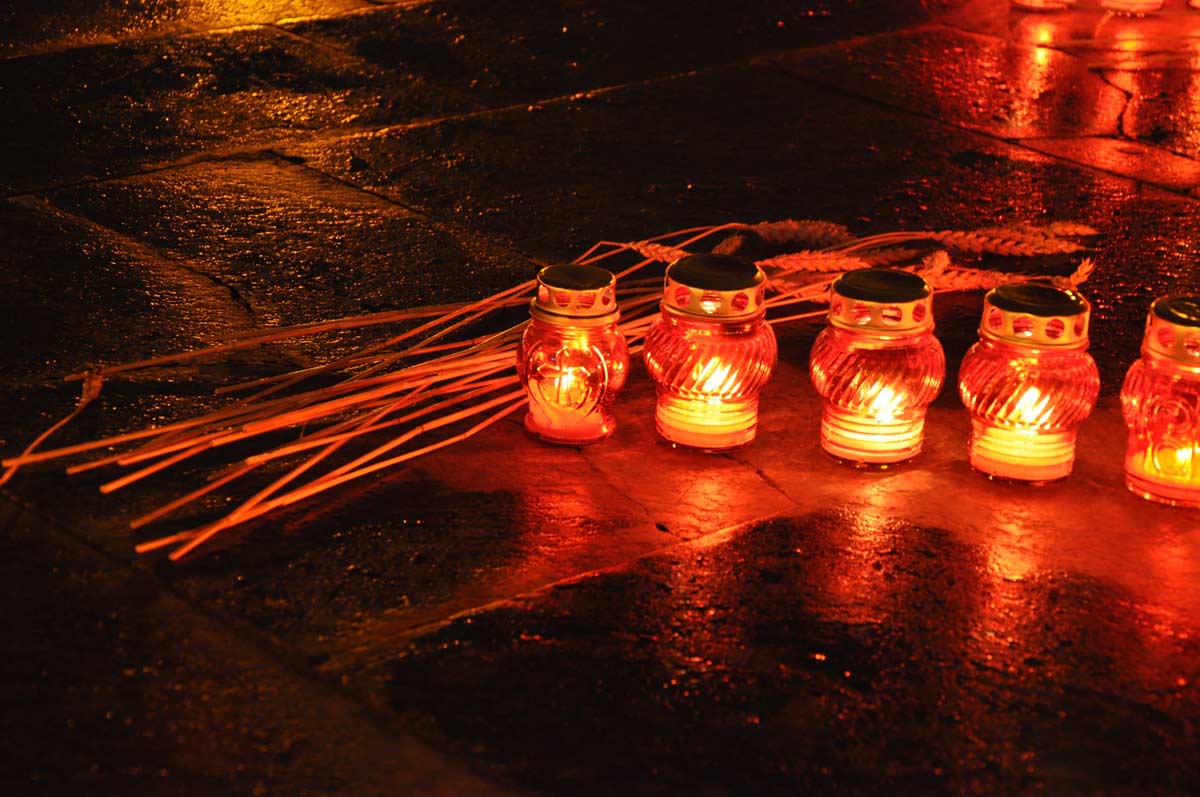
Between 1930 and 1933, the great Soviet famine starved to death at least 5.7 million up to 7 million people, primarily in Ukraine. The famine, known as the Holodomor, was intentional, as it was used as a tool to stomp out resistance growing within Ukrainian nationalism. Millions of people were starved to death as a direct result of collectivization, and the Soviets in control were aware.
Then, from 1946 to 1947, another great famine resulted in the death of between 1 and 1.5 million people. Among the causes of that famine were collectivization, the loss of manpower and equipment from WWII, a drought in the summer of 1946, and a tremendous amount of grain being exported despite the obvious food shortages.
Historians sometimes differ on whether these famines can be classified as genocides, but the fact is that they were entirely preventable. Most importantly, the USSR was aware of the starvation and intentionally let people die.
Prominent communists always had enough to eat, even in the satellite states where food insecurity was prevalent. Hoarding resources and keeping people starving was a method of control the Soviets utilized to keep people fighting for survival instead of fighting against them.
The USSR effectively controlled its satellite states through military, political, and economic domination. However, that was not enough to maintain its grip on these countries. Collectivization, intentional famines, food insecurity, secret police organizations, and propaganda through the media and education were other vital methods the Soviet authorities used to exert their control over the satellite states.