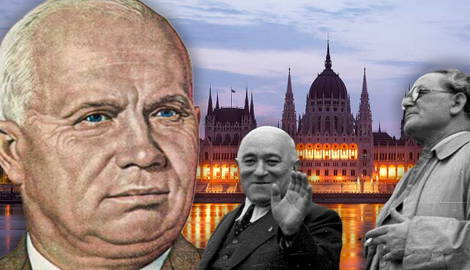

Nothing happens overnight or in a vacuum. Every action has a reaction, and when the oppressed stand up to their oppressor, it is often violent—but not nearly as violent as the oppressor. The Hungarian Revolution of 1956 is no exception. While it did begin quite literally overnight, late on October 22, just one day after the students began organizing the protest, the spark of resistance had been ignited long before. Several critical events between 1953 and 1956 directly influenced the Hungarian Freedom Fighters in their plight for freedom.
1. March 5, 1953: The Death of Joseph Stalin
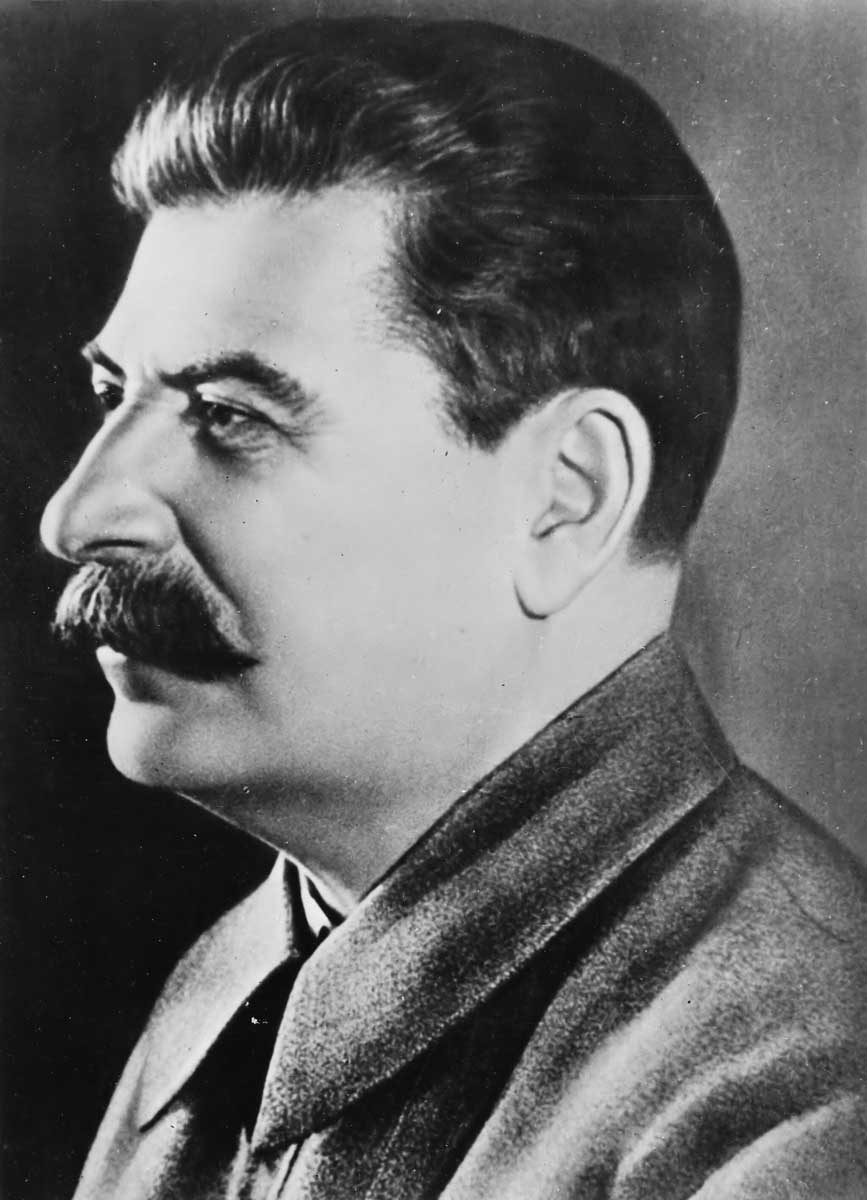
Joseph Stalin, the dictator of the USSR, died of a brain hemorrhage after suffering a stroke. After 29 years in absolute power, his death ended the era of Stalinism, arguably the most ruthless and brutal period of the USSR’s history. On the surface, citizens of the USSR were distraught about his death, but many believed that a positive change was on the horizon. In their satellite states like Hungary, people longed for that change, and it seemed within reach by 1956.
Stalin held the position of Premier (prime minister, or leader) and the First Secretary of the Communist Party, the most powerful position in the USSR. His successor for the premiership, Georgy Malenkov, did not make many strides, but his successor for the First Secretary position, Nikita Khrushchev (later the premier as well), began the process of de-Stalinization to reverse the oppressive policies and create reforms that would not have been possible under Stalin. Without Khrushchev’s “thawing” out of the USSR, revolutionary change would not have been thought possible in satellite states like Hungary.
2. June 16-17, 1953: The East German Uprising
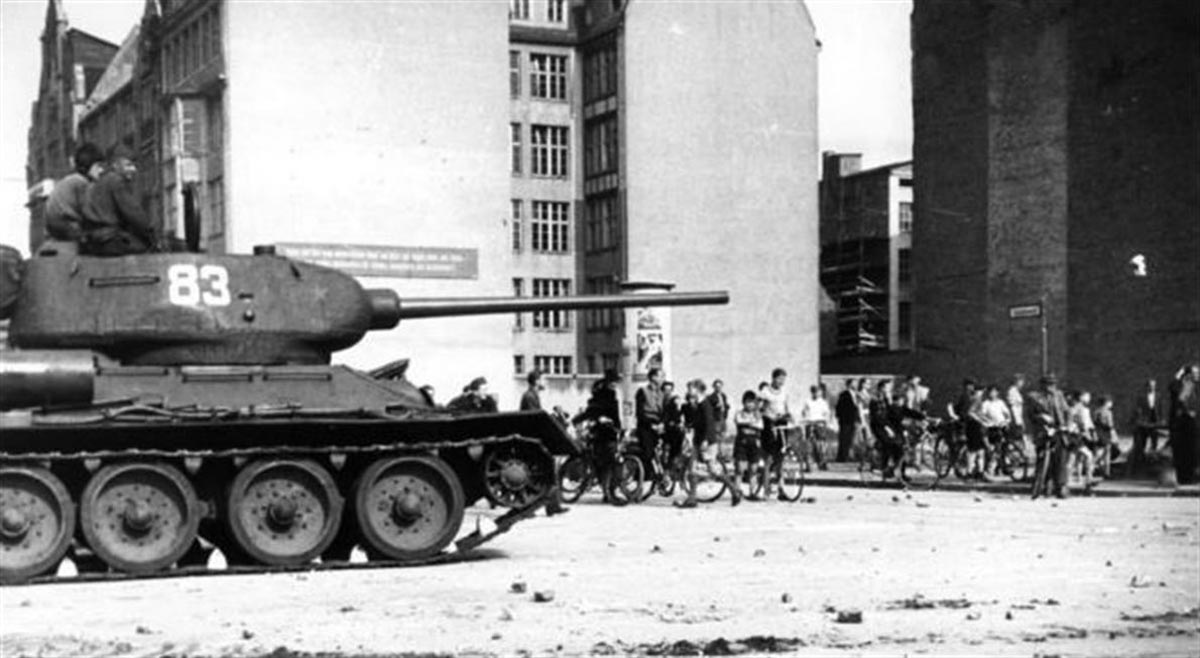
After Stalin’s death, the citizens of East Germany rose up in protest against the Soviet occupiers on June 16, 1953. They sought self-determination and freedoms that people enjoyed in the West. The uprising began when construction workers went on a strike in opposition to the production quotas the communists required of them without an increase in their wages. By the following day, at least one million people were demonstrating in the streets in about 700 cities and villages across East Germany. They were also protesting the declining living conditions and the Soviet oppression, and the rest of the Eastern Bloc watched in anticipation. East Germany’s uprising sparked the Polish and Hungarian uprisings three years later.
It was an intense event; many of the protestors became violent, martial law was enacted, and the Soviets and German police suppressed the protests. Up to 300 protestors were killed, and although they were crushed, it was the spark that ignited the idea of resistance against the Soviet regime across the Eastern Bloc. The United States even offered to give East Germany food assistance so they could continue striking in protest and still have enough to eat, but the government did not allow that assistance to reach the citizens.
Aside from that, the US did not attempt to intervene on behalf of resistance movements in Eastern Bloc countries. The US later created a policy of standing on the sidelines and allowing rebellions such as the East German Uprising to occur in Soviet-occupied countries without shutting them down or giving them assistance. The assumption was that the rebellions would be crushed by the Soviets, which would give the USSR bad PR and continue fueling the Red Scare.
3. May 14, 1955: The Warsaw Pact
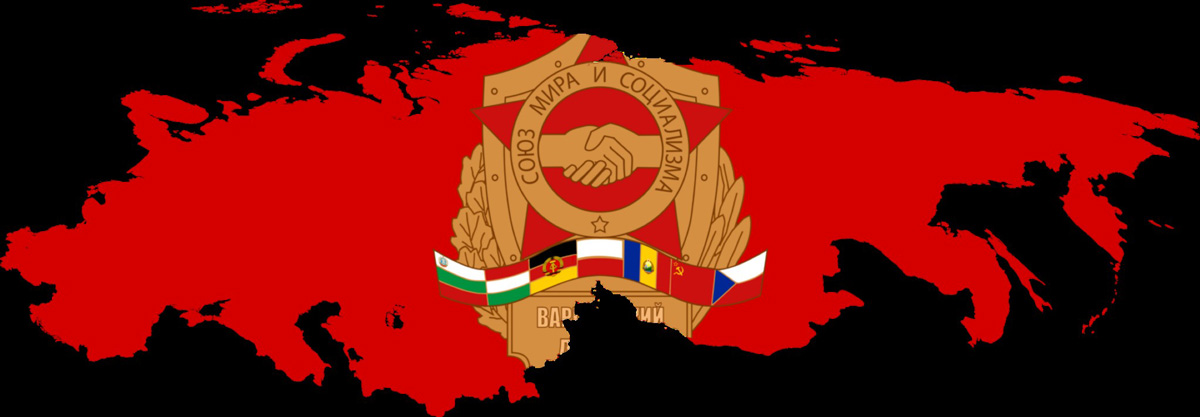
The Warsaw Pact—officially called the Warsaw Treaty of Friendship, Cooperation, and Mutual Assistance—was signed by the Soviet Union, Albania, Bulgaria, Czechoslovakia, East Germany, Hungary, Poland, and Romania. The pact was created to oppose the newly signed NATO pact, an attempt to gain more international diplomacy, to unify military organization among the USSR and its satellites, and a method for the Soviets to keep a tighter grip on their satellite states.
On the eve of the revolution, Hungarian student revolutionaries created a list of 16 demands for political and economic reform and presented it to the government on October 23, 1956. One of their demands was to withdraw from the Warsaw Pact and declare Hungary neutral. Both Poland and Hungary protested the Warsaw Pact in 1956, and the Soviets brutally crushed both, partly because the resistance did not receive international assistance.
If the Soviets invaded any of their satellite states, it would be considered an internal affair, like a family fight, and other countries—especially NATO countries—could not come to the rescue, or else they would risk a war with the USSR. Hungary’s revolutionary prime minister, Imre Nagy, announced that Hungary was declaring itself neutral on November 1, day ten of the revolution, making it possible, if not likely, for international intervention.
Because of that, the Soviets wavered with the decision to invade, fearing an international conflict. However, after Nikita Khrushchev spoke with several other communist leaders, they mostly all encouraged him to invade and crush the resistance. The Soviets were also confident that international intervention from NATO countries would not happen, as they were involved in the Suez Canal Crisis in Egypt at the time, so their attention was divided. Khrushchev was also confident that the US would not risk a confrontation with them.
4. February 25, 1956: The Secret Speech & Khrushchev Thaw
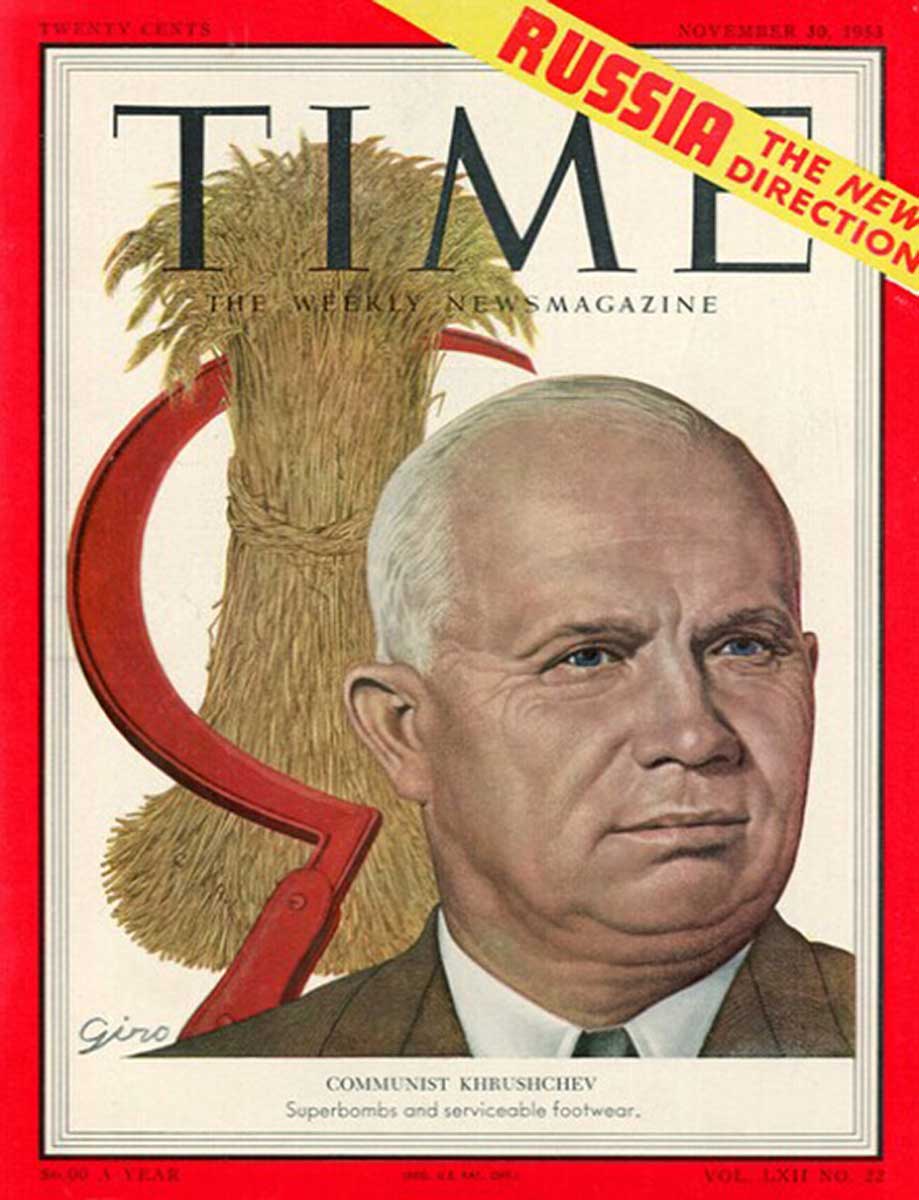
Nikita Khrushchev denounced Joseph Stalin in a confidential speech to a select group of delegates in the Communist Party congress titled “On the Cult of Personality and its Consequences.” On March 1, the speech was printed and distributed to officials in the USSR. However, a spy for Shin Bet, the Israeli Security Agency, obtained a copy of the speech and passed it along to the US.
Khrushchev criticized Stalin, the cult surrounding him, the imprisonment and detention of millions of people in gulags, and Stalinist policies that had reigned terror in the USSR for decades. His speech appalled some, and there were rumors of illnesses like heart attacks and suicides afterward. There were many rumors in the USSR, but what was not just a fanciful rumor was the political purges that marked the Stalinist regime, something of which Khrushchev was critical. By denouncing Stalin, he paved two paths: the first was for people to criticize Khrushchev for his process of de-Stalinization, and the second was for people to start openly criticizing Stalin rather than keeping quiet.
This was during the Khrushchev thaw of the USSR, a period from Stalin’s death in 1953 to the mid-60s, during Khrushchev’s time in power. After nearly three decades of limited freedoms, political and social purges, famines, and general oppression, the boot was finally lifted. It was a crucial period of reform that allowed Soviet and satellite states alike to dream of freedom.
5. June 28-30, 1956: The Polish Uprising
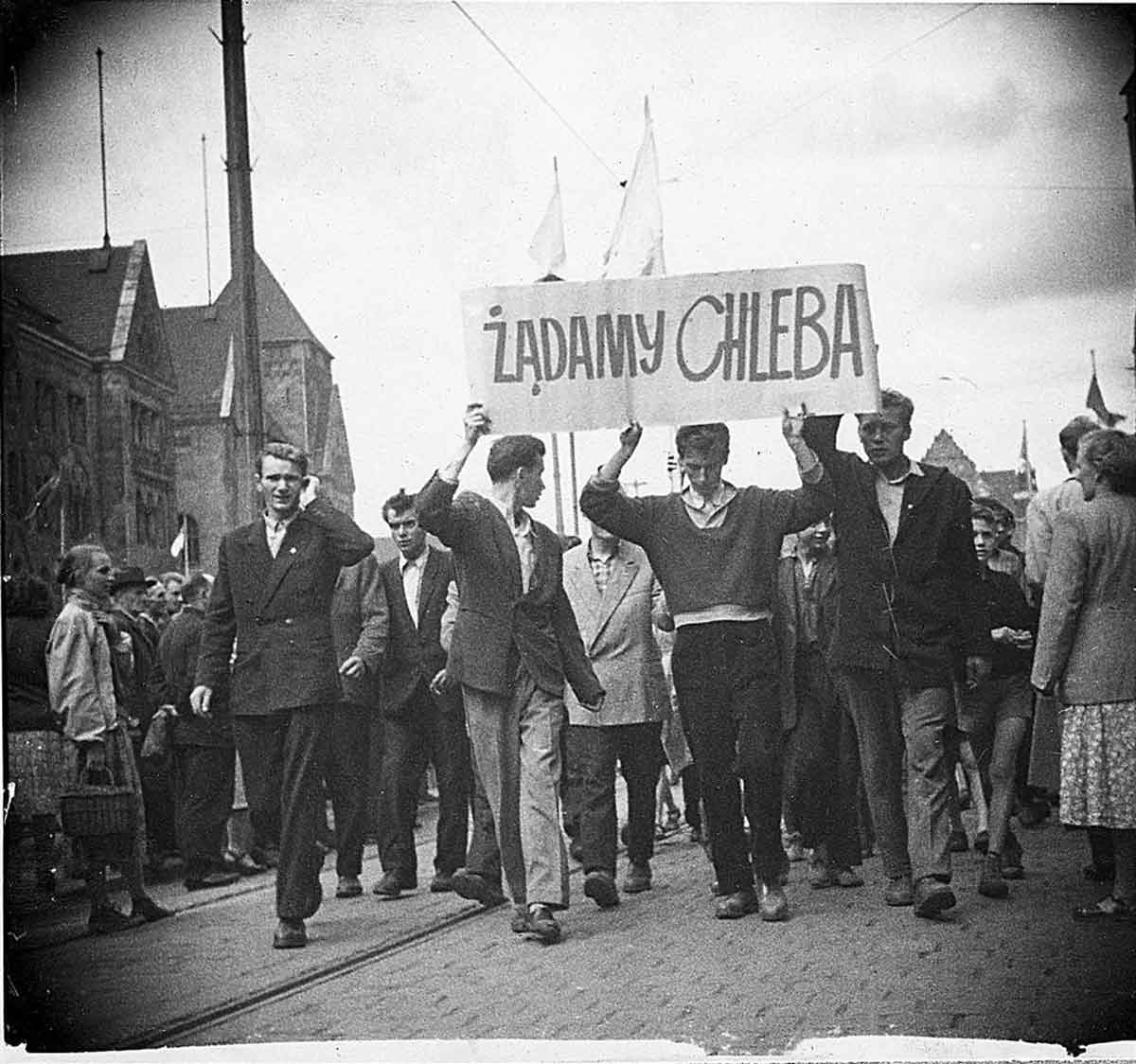
On June 28, 1956, almost three years exactly since the East German Uprising, the citizens of Poland began protesting the Soviet regime. Instead of going to work, industrial employees started striking early in the morning, protesting the work quotas, tax increases, recent laws that diminished working conditions, the cost of food, and worsening living conditions. By the afternoon, roughly 100,000 Poles had joined the spontaneous protest in the city of Poznań, Poland.
The protests turned violent when the local police were unable to tame the crowd, and the Soviets stamped out the protest within a day. This, however, sparked more protests across the country, lasting several months. The communists realized that political reform was quite necessary and made some of the concessions demanded by the protestors, such as wage increases and providing a new, more moderate leader: Władysław Gomułka. This was a pivotal moment in Poland’s history, and the communists attempted to censor historical documents about this transitional period.
The students who organized the protest that triggered the Hungarian Revolution on October 23 were directly inspired by the Poles; they hoped that if the Poles were able to achieve change, then they could, too. In fact, when the Hungarian Revolution began, protests broke out in several Eastern Bloc countries in support of the Hungarians as well, including in Poland.
6. July 14, 1956: Seven Hungarians Hijacked a Plane
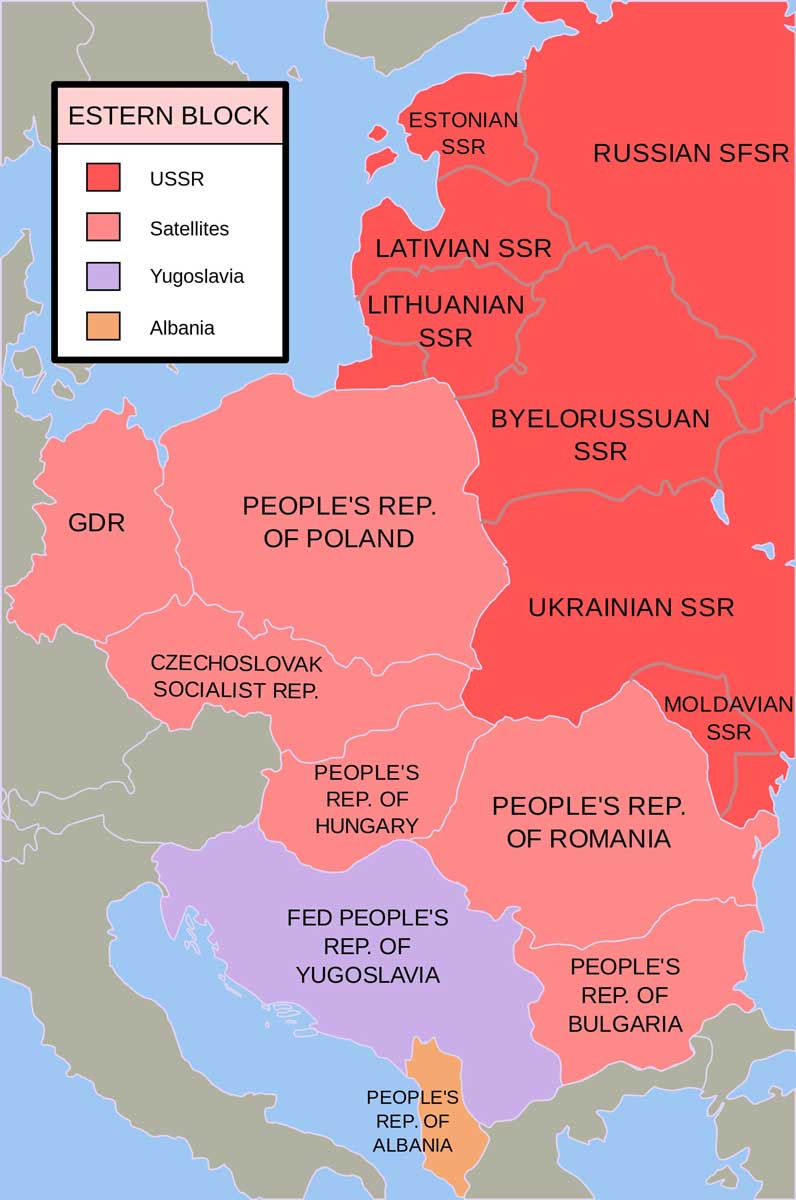
The Soviets had imposed harsh restrictions on the citizens of their satellite states regarding the influence of the capitalist West. They did not allow access to consumer imports, citizens could not listen to radio stations broadcast from the West, they could not communicate with people in Western nations without the secret police reading the letters, and they were not able to travel freely. It was also difficult—if not impossible—for Hungarians to travel to Western countries. Life in Hungary was severely oppressed, and young citizens, especially, were unhappy with the extreme rule of the puppet government.
The Soviets also put a wire fence around the border, planted landmines in the no-man’s land between countries, and placed guards everywhere, making an escape by foot highly unlikely to succeed until 1956. Between May and October 1956, a large project was undertaken to remove the minefield and the fences that the Soviets installed. This made it much easier to escape by foot, and roughly 190,000 refugees fled Hungary after the Revolution of October and November.
Then, seven Hungarians hijacked a plane to flee to the west on July 13, 1956. A twenty-five-year-old industrial laborer named Frank Iszak, his wife Anais, and their co-conspirators successfully commandeered a plane and flew west, desperate to escape Soviet oppression.
After a mid-air fight among them, the crew, and the KGB agent on board, they realized the plane was low on fuel. They needed to land before they crashed. Miraculously, as they emerged from the fog in the Alps, they saw a landing strip below them. They were prepared to commit suicide if they landed in a country like Czechoslovakia, East Germany, or even Austria because they would surely be returned to Hungary and executed for their crime. But, by sheer luck, they landed on a NATO air force base under construction in Ingolstadt, West Germany. When they landed, they were given medical attention and offered asylum, and Hungarians back home started dreaming about the possibility of escape from the iron grip.
Frank Iszak wrote about his experience in two books, Freedom Flight (2016) and Free For All to Freedom (2011).
7. October 6, 1956: The Reburial of László Rajk
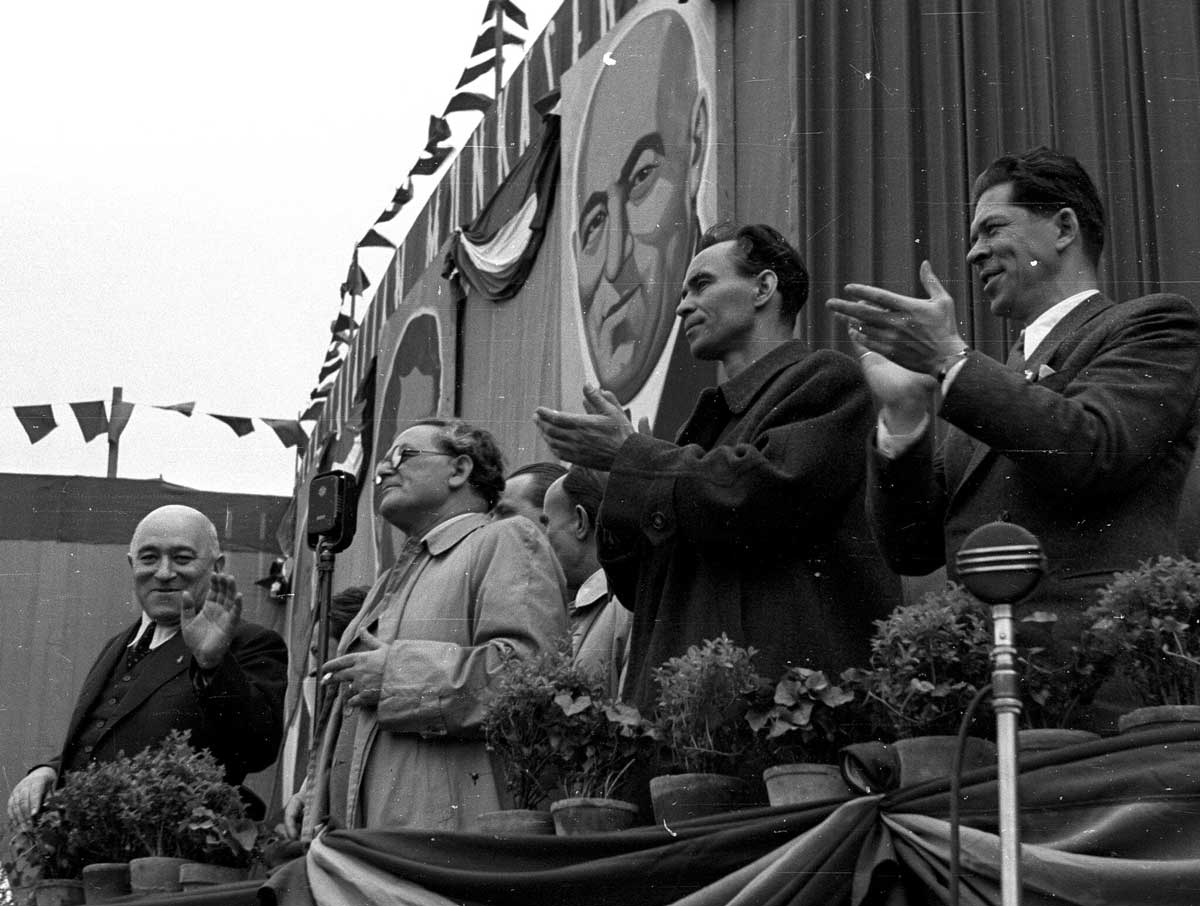
Paradoxically, the reburial of László Rajk fueled the resistance. He was despised by citizens while he was alive because he was a powerful communist, he helped organize the Hungarian secret police, his policies impeded and dissolved freedoms of religion and speech, and he initiated the first show trials in Hungary.
Show trials were a commonality; they were essentially a theatrical production in which the judge and jury had already decided that the defendant was guilty, regardless of evidence. In the USSR during the Great Purge (1937-1938) alone, about 1.5 million political opponents, religious leaders, kulaks, and Red Army leadership were arrested, tried, and at least 700,000 of them were executed.
When the prime minister of Hungary, Mátyás Rákosi, felt threatened by Rajk’s popularity and influence, Rákosi accused him of being a spy (a common tactic) to eliminate him. Rajk and his wife were imprisoned, and Rajk became a victim of a communist show trial. They executed him on October 15, 1949, and he ascended to the status of a national hero.
Rajk was a victim of betrayal, something that many Hungarians despised about the communists, so they viewed him as a patriot, even a martyr. They did not necessarily expunge him of his crimes, but he became a victim of the regime, so they ignored his past.
He was reburied almost seven years later, on October 6, 1956, in the Kerepesi Cemetery. About 100,000 people went to mourn in the reburial procession in the pouring rain. Afterward, around 500 students marched to protest against the communist regime. The police dispersed the small demonstration, but just 17 days later, the Hungarian Revolution of 1956 would begin, and it would not be stamped out as easily.
References
Iszak, Frank. (2011). Free For All To Freedom. Create Space.
Korda, Michael. (2006). Journey to a Revolution: A Personal Memoir and History of the Hungarian Revolution of 1956. HarperCollins Publishers.
Mertz, Dawn-Eve. (2024). Young Men Go West: The Hungarian Revolution of 1956 and One Teenager’s Risky Escape. Kleo Press.
Michener, James. (1957). The Bridge At Andau. Random House, Inc.
Molnár, Miklós. (2001). A Concise History of Hungary. Cambridge University Press.
Rayfield, Donald. (2004) Stalin and his Hangmen. Random House.
Sebestyen, Victor. (2006). Twelve Days: The Story of the 1956 Hungarian Revolution. Pantheon Books.