
Amelia Earhart, the first woman to fly solo across the Atlantic Ocean, remains one of the most celebrated figures in aviation. Besides setting records as a pilot, she was an active supporter of women’s rights, encouraging others to pursue their passion for aviation through her popular autobiography and public lectures. In July 1937, while flying across the central Pacific Ocean to fly around the world, she disappeared. Amelia Earhart’s fate remains an enduring mystery to this day.
Amelia Earhart’s Early Life
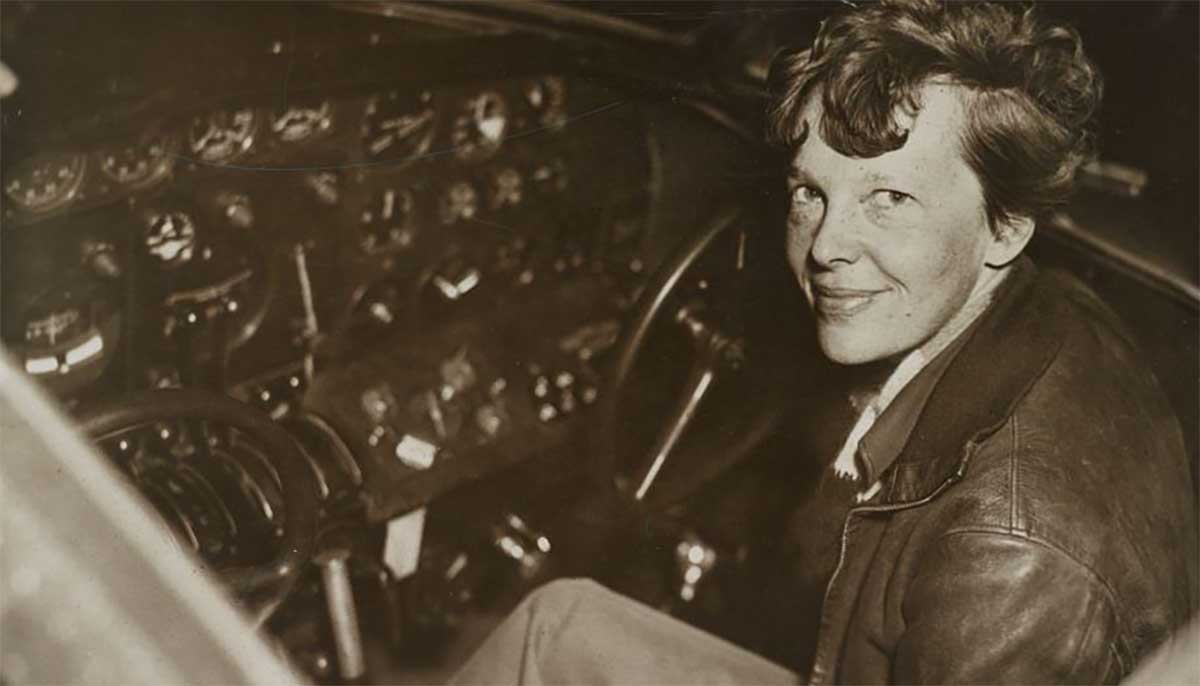
Amelia Earhart was born on July 24, 1897, in Atchison, Kansas. Due to her father’s battles with alcoholism, she was raised mainly by her maternal grandparents. Because her father struggled to find suitable work, Amelia and her family were often forced to move, making it hard to build lasting friendships. Settling in Chicago in 1915, Amelia attended Hyde Park High School, excelling in chemistry and sports. The challenges Amelia faced from a very young age instilled in her a strong sense of independence and resilience that would later define her career.
Amelia had an adventurous and ambitious spirit, striving for independence and success. She wrote: “I advocate for every girl training along some line so she has something she can do to support herself.”
After graduation, while visiting her sister in Toronto, Canada, Earhart volunteered to serve as a nurse to assist the Red Cross in caring for wounded soldiers returning from World War I. During this time, she met with many wounded pilots and had the opportunity to observe the Royal Flying Corps training near the hospital. Amelia quickly developed an intense admiration for aviators and was inspired to pursue a career in aviation.
Following the end of World War I, Amelia enrolled in Columbia University’s medical program. However, she spent only a year there, being forced to relocate once again, this time to California to reunite with her parents.
Becoming a Pilot
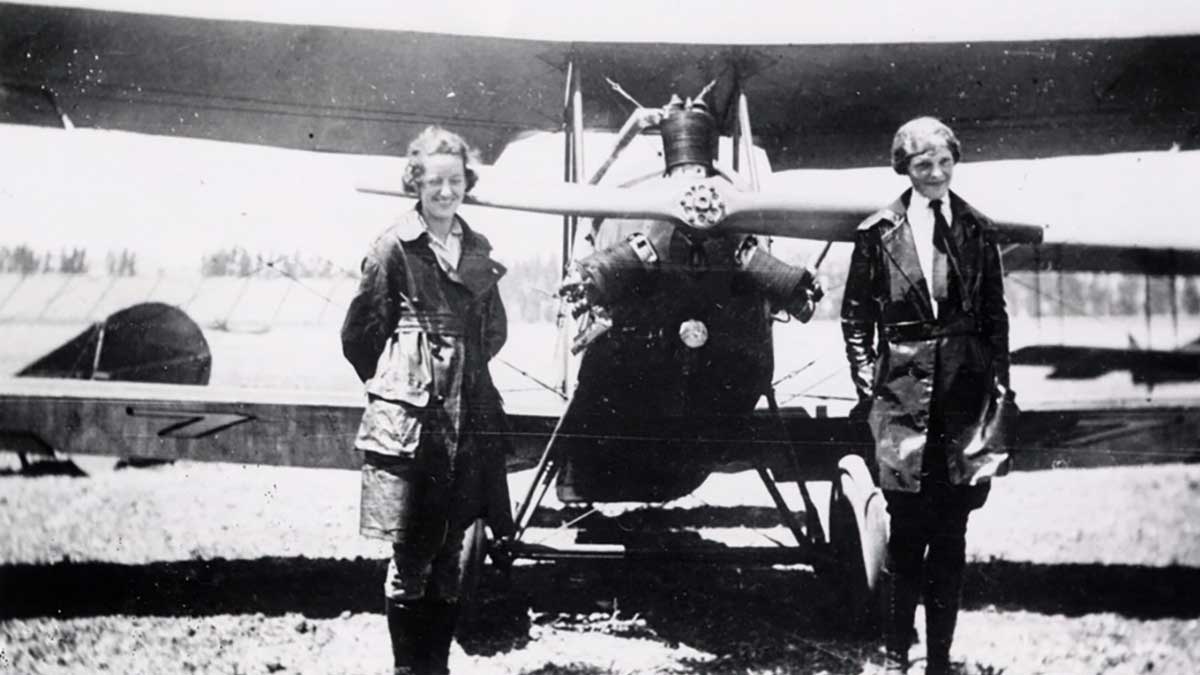
Amelia took her first flight in December 1920. Along with her father, she attended “an aerial meet” at Daugherty Field in Long Beach, California—a common amusement in the early 1920s, where aviators demonstrated the skills they had acquired during the war. The next day, Amelia experienced her first ten-minute passenger flight with pilot racer Frank Hawks. This flight changed Amelia’s life. Later, she recalled: “As soon as we left the ground, I knew I myself had to fly.”
Soon she took lessons from one of the few women in aviation, Neta Snook, a test pilot. In just two years, in 1922, Amelia Earhart “set the women’s altitude record of 14,000 feet.” In 1923, the Fédération Aéronautique Internationale officially licensed Earhart to fly, making her the 16th woman to hold such a license.
The First Transatlantic Flight & Earhart’s Rising Fame
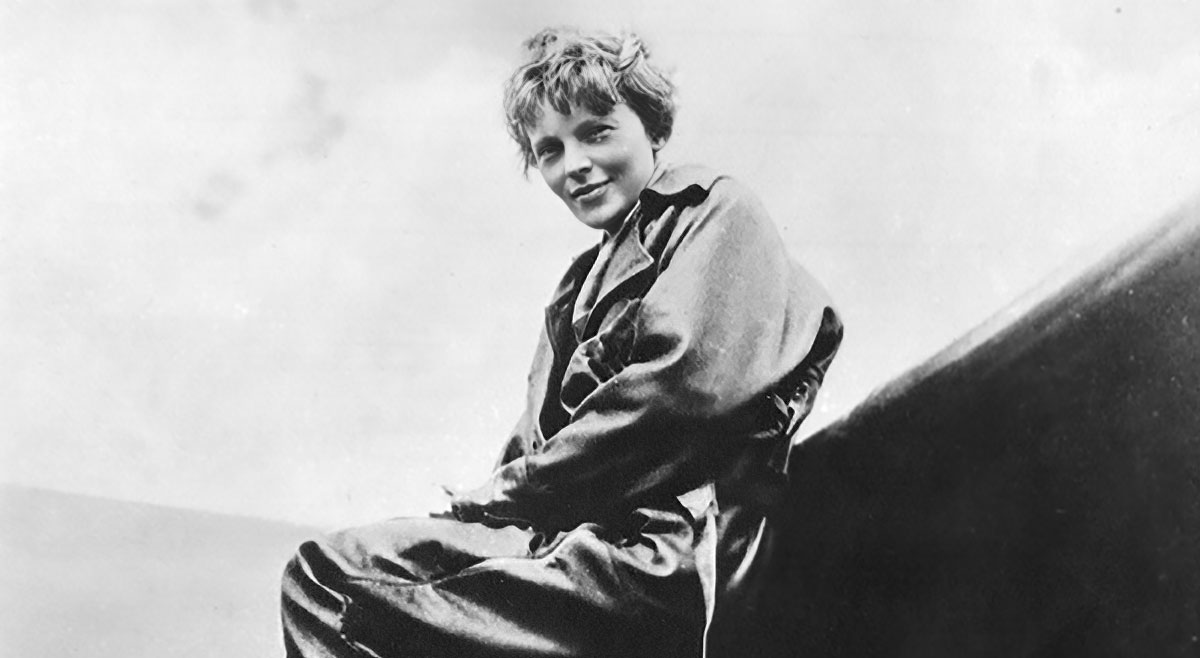
In April 1928, a well-known publisher, George Putnam (who later became Amelia’s husband), offered Amelia Earhart the opportunity to fly over the Atlantic, albeit as a passenger.
Following the global sensation of Charles Lindbergh’s solo Atlantic crossing in 1927, George Putnam became involved in organizing the first flight across the Atlantic executed by a woman. The idea originated with Amy Phipps Guest, a wealthy socialite and aviation enthusiast who had initially hoped to make the flight herself but was unable due to safety reasons. She resolved instead to sponsor another woman. Putnam was tasked with finding someone who possessed both exceptional flying skills and the right public image.
Amelia Earhart, working as a social worker in Boston at the time, caught their attention. Her skill and physical resemblance to Lindbergh earned her the moniker “Lady Lindy” and secured her place on the flight. Putnam and Earhart were introduced through mutual aviation circles. It was a turning point: a symbolic journey that earned Amelia Earhart international prominence.
The reason behind choosing Amelia as a passenger for a Transatlantic Flight was that the project coordinators envisioned the transatlantic flight to be too dangerous for a woman to pilot. Historian Amy Sue Bix wrote: “She was invited aboard to represent the liberated, yet still feminine, all-American girl—an educated, socially-gracious woman comfortable with modern technology.”
On June 17, 1928, Earhart took off from Trepassey Harbor, Newfoundland, with pilot Wilmer Stultz, copilot Louis Gordon, and mechanic Louis E “Slim” Gordon. After 20 hours and 40 minutes, their plane successfully landed at Burry Point, Wales, in the United Kingdom, despite the heavy weather conditions.
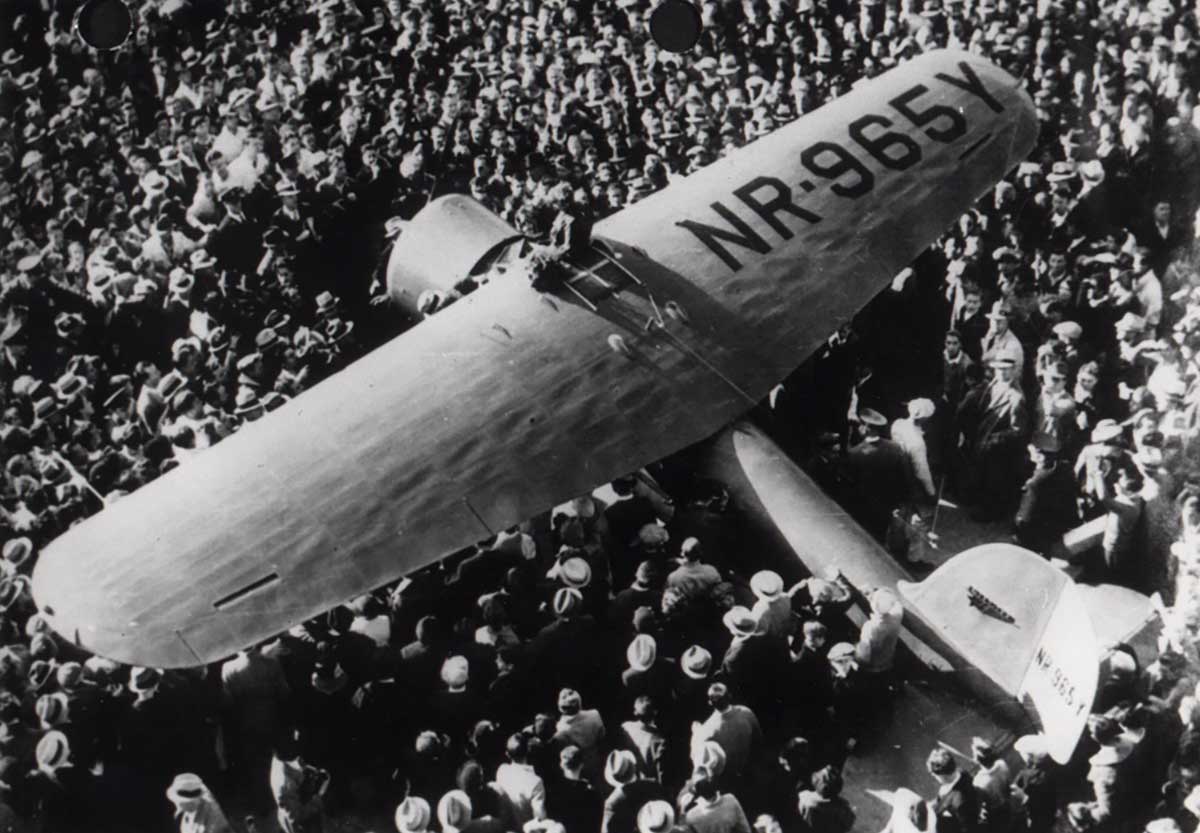
Even though this was a major event, later Amelia recalled that she felt that she “was just baggage, like a sack of potatoes,” as she described the experience. Then she added, “Maybe someday I’ll try it alone.” And she did.
Upon returning to the United States, Amelia received wider public attention, both from the media and government officials. Being in the spotlight allowed her to raise funds for her solo flights.
Amelia was fearless and risky in pursuing her goals, as she once said, “The most effective way to do it is to do it.” During the following years, her efforts were rewarded. Amelia Earhart became the first woman pilot to complete a nonstop flight solo across the Atlantic Ocean between May 20 and 21, 1932. On January 11, 1935, she also became the first person to complete a solo flight from Hawaii to the US mainland across the Pacific Ocean.
Through these achievements, Amelia’s idea of planning one of the most ambitious and sensational flights executed by a woman, a solo flight around the world, soon materialized.
Amelia Earhart’s Solo Flight Around the World & Disappearance
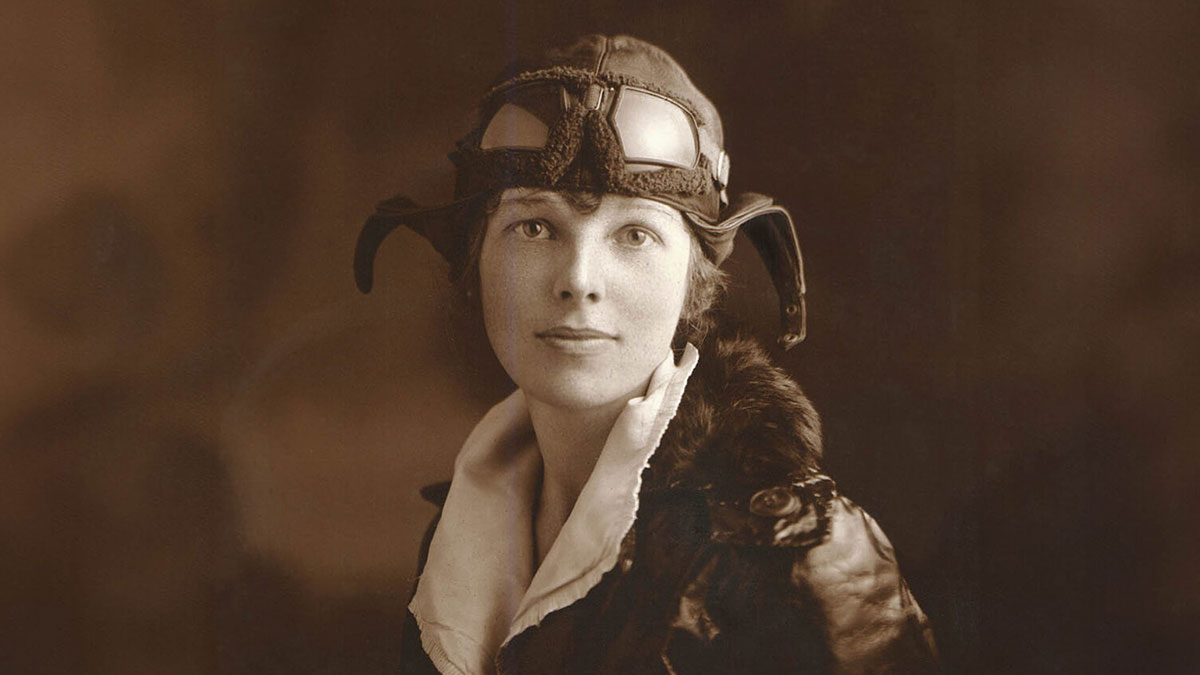
Amelia Earhart’s first attempt to fly around the world failed due to technical problems with her trusted plane, Lockheed Electra. The plane needed intensive repairs in California. During this time, Earhart and Putnam, who managed her career, acquired additional resources for a new trip.
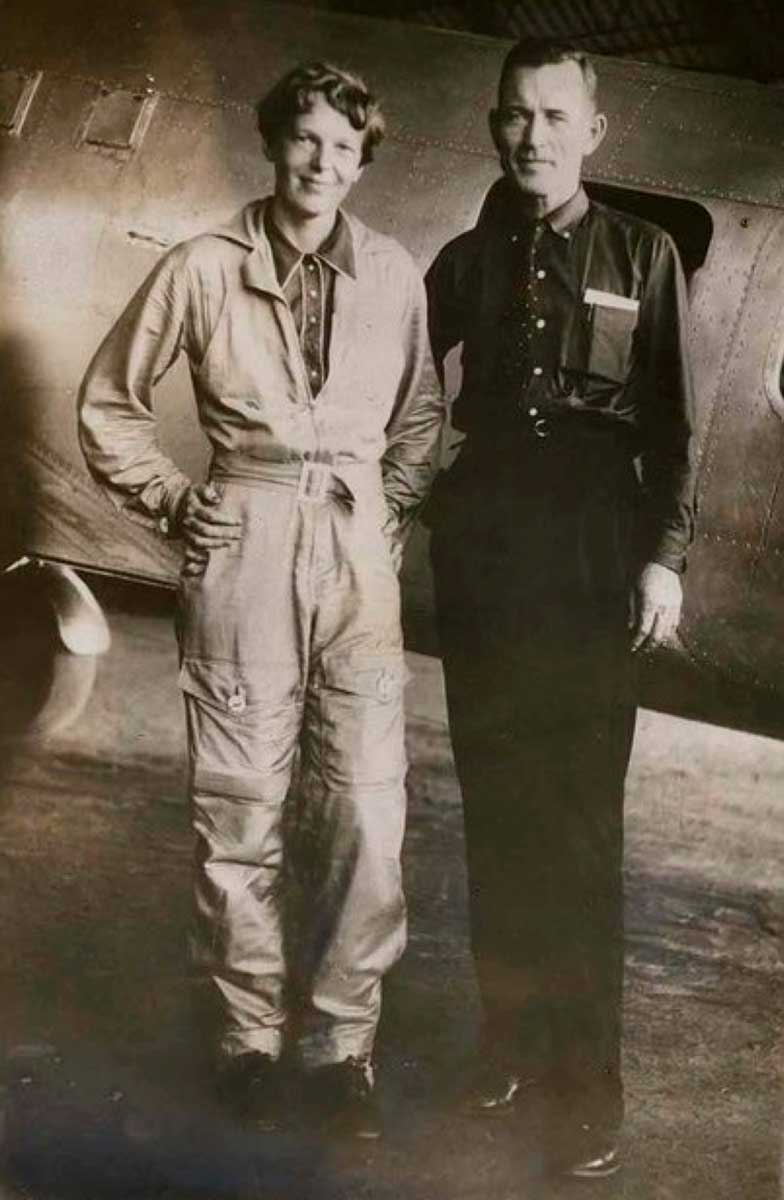
Eventually, on June 1, 1937, Earhart and her trusted navigator, Fred Noonan, took off from Miami, Florida, to fly around the world. They touched down at certain locations in South America, Africa, India, Southeast Asia, Australia, and Lae, New Guinea, to refuel.
Lockheed Electra landed in Lae, New Guinea, around June 30, 1937. At this stage, about 22,000 miles (35,000 km) of the journey had been completed. The remaining 7,000 miles (11,000 km) would be over the Pacific Ocean. They departed the next day, disappearing en route.
The search began almost immediately after the US Coast Guard cutter Itasca lost contact with Amelia. Sixty-six aircraft, nine ships, and an estimated $4 million rescue operation later (about $75 million in 2025), the fate of Earhart and Noonan still remains a mystery. On January 5, 1939, the Supreme Court of Los Angeles declared Earhart and her navigator legally dead.
What Happened to Amelia Earhart?
Several theories exist as to what happened to Amelia Earhart. Some of the most widely circulated conspiracy theories suggest that Amelia and her navigator were captured and taken prisoner by the Japanese army, blamed for spying over the Japanese-occupied islands. However, there does not exist an official document or statement supporting this version.
According to the Nikumaroro Castaway Theory, supported by The International Group for Historic Aircraft Recovery (TIGHAR), Amelia and Noonan managed to reach the uninhabited Island of Nikumaroro in the western Pacific Ocean, about 350 nautical miles southeast of Howland, and died there.
On this island, between 1989 and 2017, some pieces of a wrecked aircraft had been found by TIGHAR expeditions and underwater searches. However, the DNA evidence recovered on these parts did not confirm they belonged to Amelia, and this theory remains unproven to this day.
The most widely accepted answer to the question of what happened to Amelia Earhart, as well as the one supported by the most substantial evidence, is the Ocean Crash Theory. According to this version of events, Amelia and her navigator crashed into the Pacific Ocean and drowned after running out of fuel while trying to locate tiny Howard Island. This is the official statement of the United States government’s final report as well.
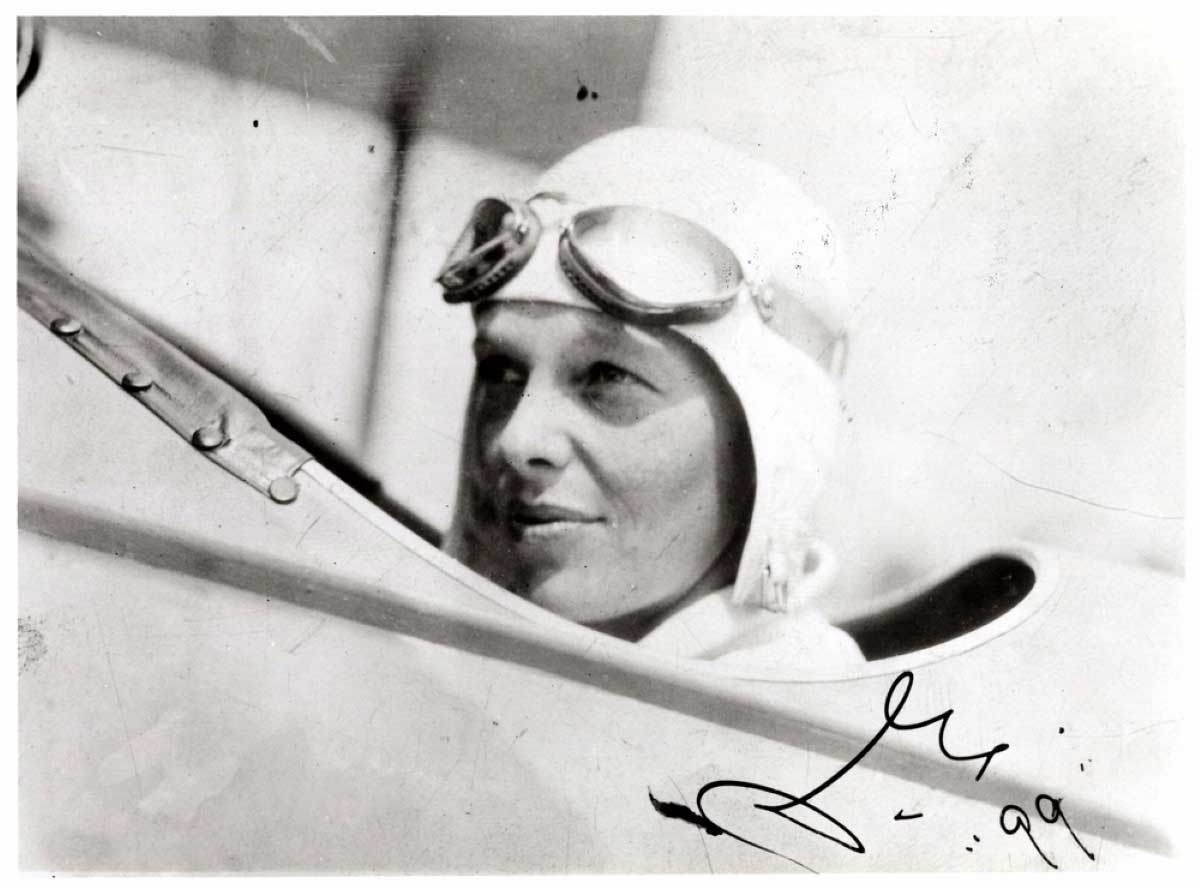
The evidence supporting the Ocean Crush Theory is as follows:
Radio Transmission Problems From the Very Beginning
In an attempt to make space for more fuel, Amelia and Noonan left behind radio equipment with shorter wavelength frequencies that could broadcast radio signals to farther distances. As Earhart and Noonan approached the probable location of Howland Island, they switched to a north-south control route to locate the island. They attempted to receive visual and audio signals from the Itasca, but radio communication was very poor.
Miscommunication Between Amelia Earhart and Itasca
The agreed-upon check-in times were different: Earhart and Noonan used Greenwich Mean Time, while Itasca used Marine Time, resulting in a 30-minute discrepancy between their schedules.
At 07:20 on July 2, 1937, Earhart contacted the Coast Guard vessel, confirming that they were 20 miles southwest of the Nukumanu Islands. Again, at 07:42, the Itasca cutter received another transmission from Earhart, “calling Itasca we must be on you but cannot see you but gas is running low been unable to reach you by radio we are flying at 1000 feet.”
Earhart and Noonan believed they were flying in a north-south direction. However, it is believed that Noonan’s map showed that they actually were five nautical miles off Howland’s position. The US Coast Guard Itasca cutter intentionally burned fuel in its boilers to give Amelia a visual signal of Howland’s location, but the attempt to establish visual contact failed.
No Confirmed Landfall
Despite extensive search and rescue efforts, there was no definitive evidence that the Lockheed Electra landed safely on any of the nearby Howland and Baker Islands.
Deep Sea Levels
This part of the Pacific Ocean is known to be very deep and vast, which could explain why search and rescue attempts were unsuccessful.
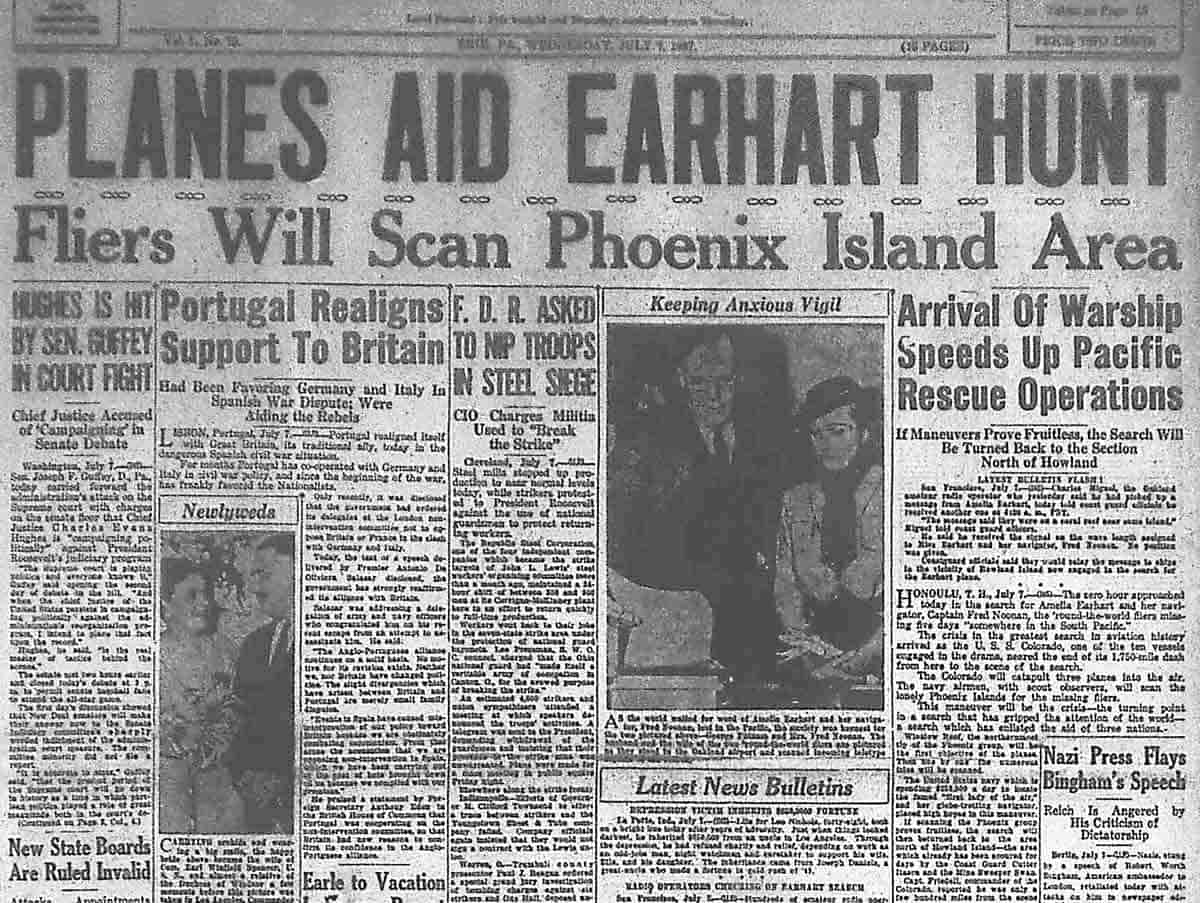
As technology evolves, however, it is possible that more evidence might surface.
Had Amelia Earhart’s solo flight been successful, she would have celebrated her 40th birthday on July 24. When in Miami, preparing for a flight, while speaking to her close friend, Carl Allen, the aviation correspondent for the Herald Tribune, she said, “As far as I know I’ve only got one obsession—a small and probably typically feminine horror of growing old—so I won’t feel completely cheated if I fail to come back.”
Her mysterious disappearance, along with her achievements, dedication to equal rights for women, stamina, and strong character, continues to live on to this day, cementing the image of a young record-breaking Amelia Earhart worldwide.