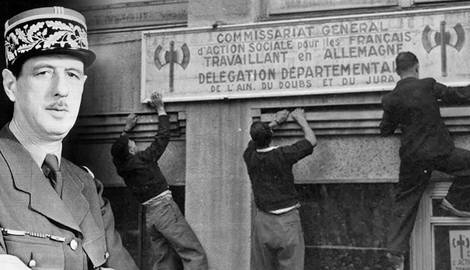

The term Épuration (from the French épurer—to “purify” or to “purge”) began in France following the liberation of Paris on August 25, 1944. Épuration, or denazification in postwar France, came in waves. The first wave, known as Épuration sauvage, was wild and uncontrolled. The second wave, Épuration légale, directed under a legal framework, was more structured. French citizens suspected of collaborating with the Nazis during the occupation were arrested and detained in specialized camps established by order of Charles de Gaulle. All stages of Épuration represent a complex part of French history, reflecting the challenges of achieving national unity.
Nazi Occupation: The Background of Denazification
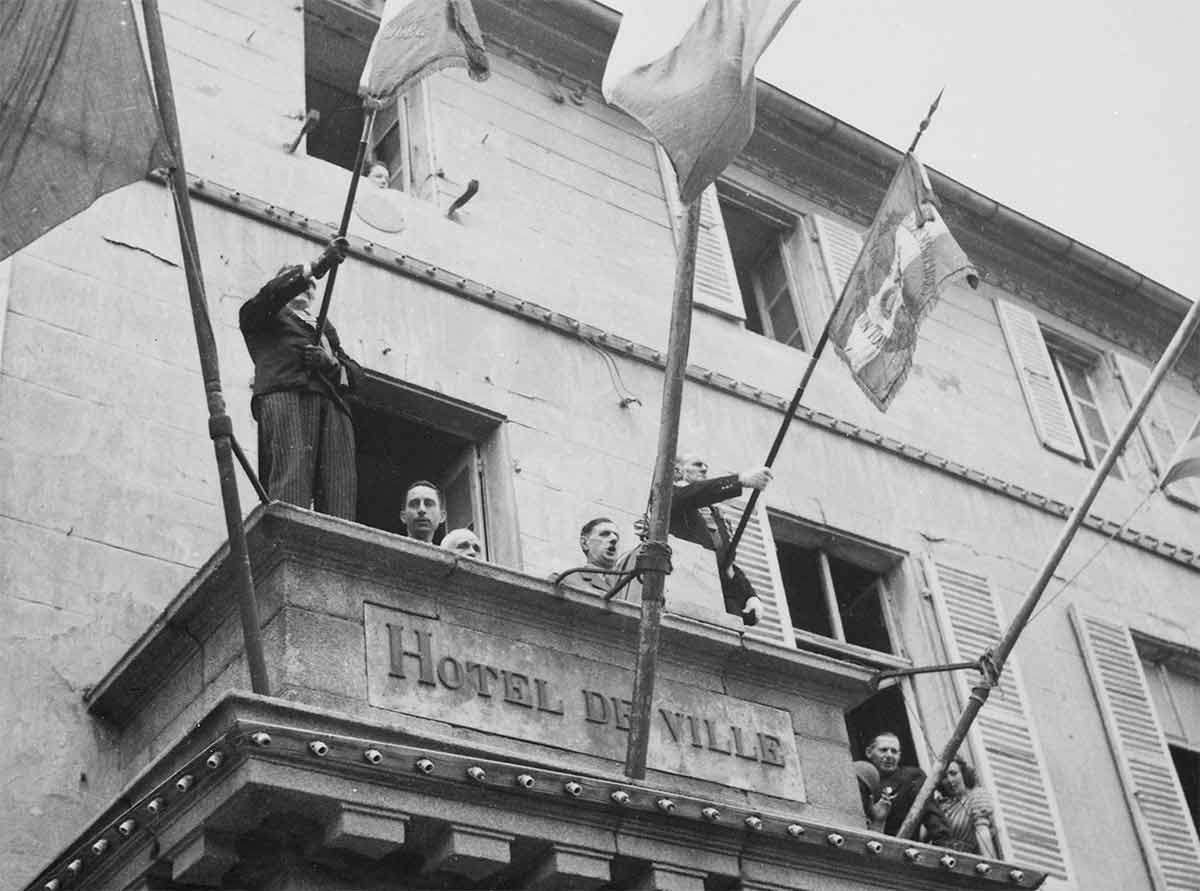
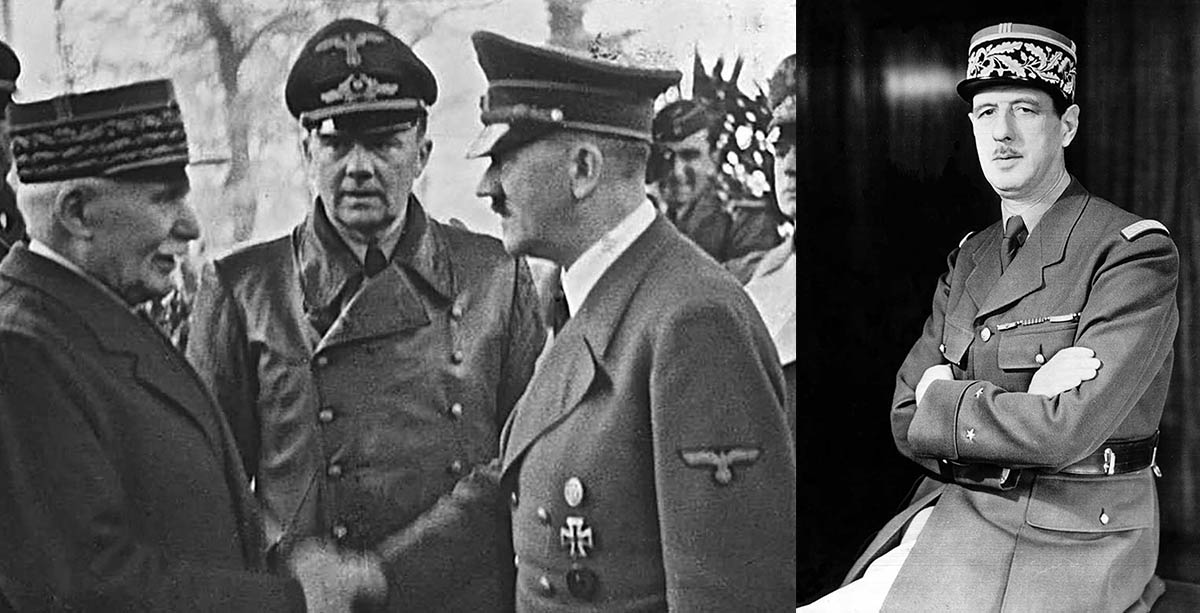
On July 10, 1940, Nazi Germany defeated France in the Battle of France, marking the start of the country’s Nazi occupation. The same month, the French Parliament passed an act granting the leadership to Marshall Philippe Pétain and establishing the Vichy government, a state under the control of Nazi Germany. Nominally in charge of the civil administration of France, the Vichy government collaborated with the Nazi authorities and provided support for their anti-resistance measures.
About 90% of the French population, including the military, either supported the newly established administration of the Vichy government or were too frightened and exhausted to oppose their rule. Due to the socio-economic challenges war-torn France was facing, many were forced to collaborate with the Nazi regime to acquire food and necessary goods for their family, and some willingly chose to peacefully coexist with their occupiers.
During this period, the Provisional Government of the French Republic in exile emerged under the leadership of Charles de Gaulle. De Gaulle created Free France and led the Allied forces towards liberating France in June 1944. Within de Gaulle’s government, discussions regarding purging French society of the people collaborating with the Nazi occupiers began months before the end of World War II in 1945, resulting in the extrajudicial and uncontrolled purges of French society immediately after the Allies entered France to de-occupy it.
Épuration Sauvage in Postwar France
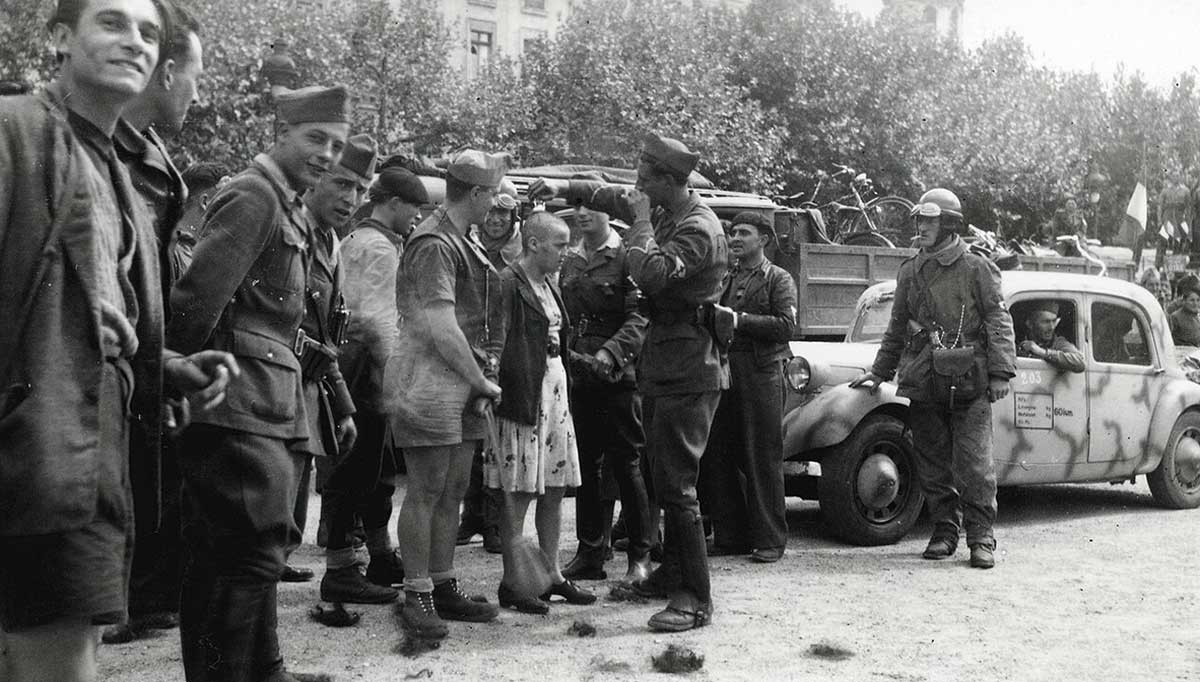
Épuration sauvage (wild purge), also known as the spontaneous and unofficial purge, began in northern France in June 1944. It occurred almost simultaneously with the entry of the Allied forces and de Gaulle’s Free France into the region.
Épuration sauvage primarily affected the most vulnerable members of French society—women. Any woman who had formed a romantic relationship with a German soldier was accused of “collaboration horizontale” (horizontal collaboration). These women were often single, widowed, or married to prisoners of war being captured in Germany or conscripts of the Service du travail obligatoire (Compulsory Work Service), or STO. The Vichy government had established the STO to help the Nazis’ struggle with labor shortages. Some accusations made against these women were false, often fabricated on the grounds of personal revenge.
The punishment for “horizontal collaboration,” typically executed by the French resistance members, was often humiliating, degrading, and brutal.
David Bruce, an American diplomat, politician, and intelligence officer actively involved in the Western powers’ intelligence operations in Europe, wrote in his diary:
“The inhabitants had shaved the heads of twelve women who had been sleeping with German officers and soldiers. They must henceforth speak about the village. The Frenchmen with us think it is a very fitting and salutary punishment.”
Épuration sauvage did not stop at head shaving. Some women experienced harsher punishment—being stripped naked, engraved with swastikas, paraded in the streets, abused, stoned, kicked, beaten, spat upon, and sometimes even killed.
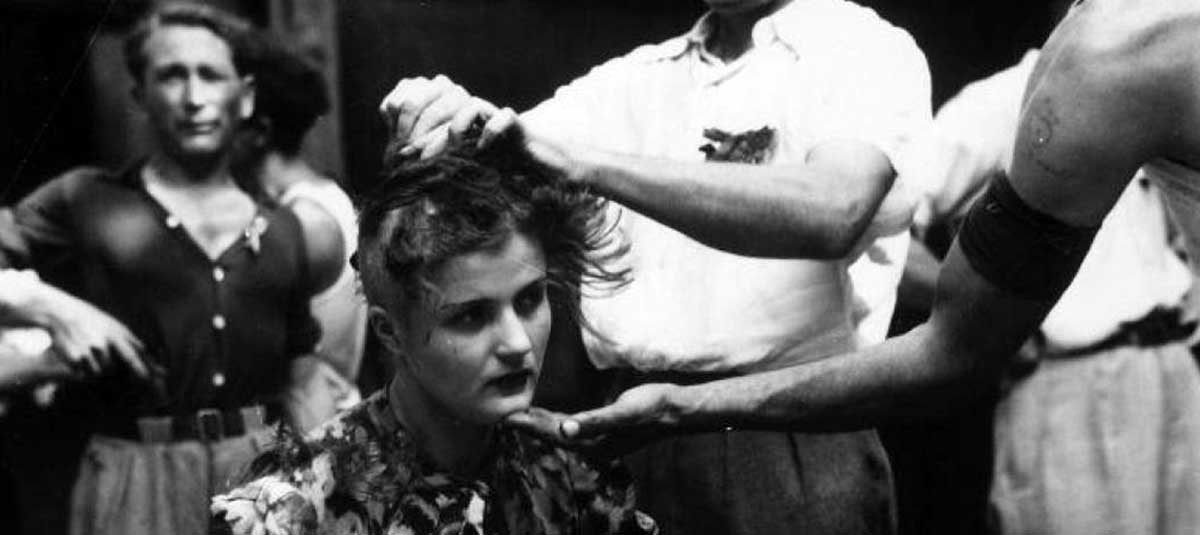
Not only working-class women were the subject of abuse. For instance, Jacqueline de Broglie, a prominent French socialite, novelist, and poet from a privileged family (her mother was Daisy Fellowes, a well-known heiress and fashion icon), was also accused of horizontal collaboration and publicly humiliated.
Reportedly, about 20,000 French women were affected by the wild purge that occurred in waves between 1944 and 1945—historian Anthony Beevor remarks that the figure may be higher.
Épuration sauvage and the subsequent brutal acts illustrated the split and anger in French society the Nazi occupation had created.
Épuration Légale
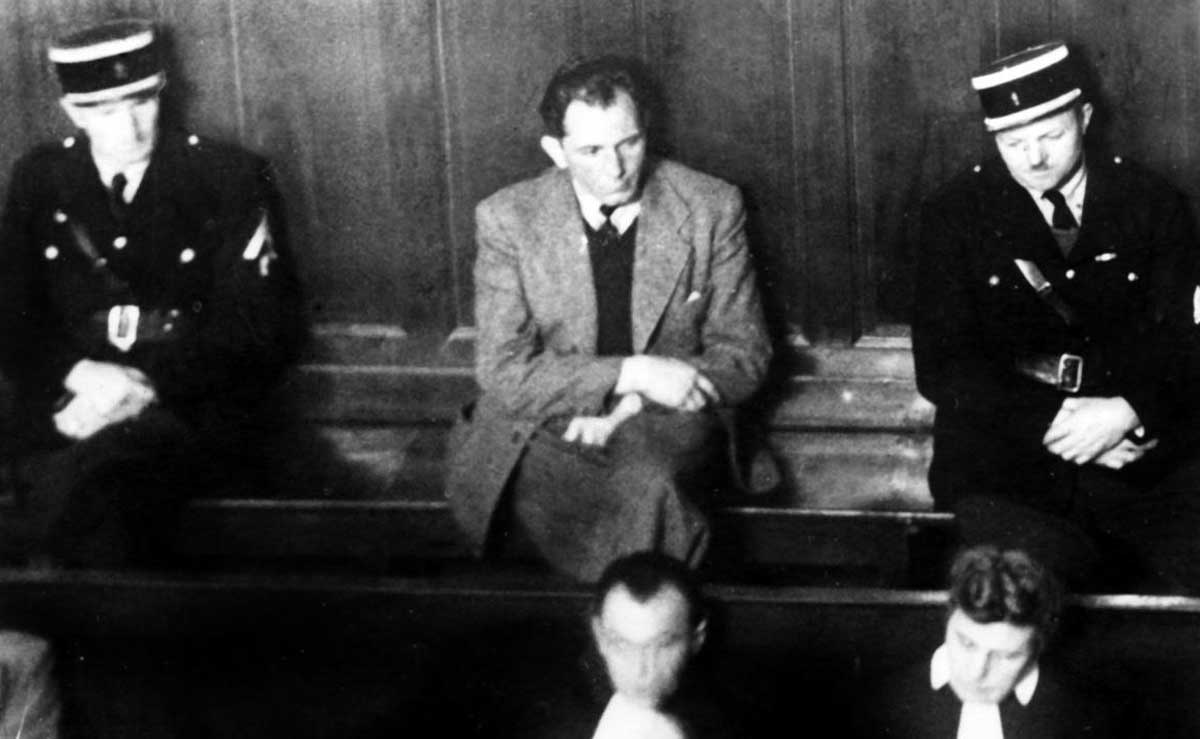
Épuration légale (legal purge) represents the next phase of denazification. Unlike the previous denazification wave, the second purge was formalized in a legal framework created by Charles de Gaulle’s provisional government. It started in September 1944, right after the liberation of the capital city of Paris, and aimed to restore the civil order in post-World War II France.
The preparatory work for Épuration légale began earlier in February 1944, when Charles de Gaulle established the General Studies Committee and the National Judicial Committee. These committees were tasked to develop the legal framework for purging Nazi collaborators and restoring legal order after the liberation of France and the end of World War II.
The joint document the committees produced outlined two categories of collaborators to be punished under the Épuration légale:
- French citizens directly assisting the Nazi occupants, to whom the existing Criminal Code was applicable (direct collaborators);
- French citizens indirectly assisting the Nazi occupants, for whom a new legal framework needed to be developed (indirect collaborators).
On March 15, 1944, the Conseil National de la Résistance (National Council of Resistance, or CNR) defined the instances of offenses that would be characterized as collaboration with occupiers:
-being a member of a collaborationist organization;
-being involved in propaganda;
-denunciation;
-any form of zeal in favor of the Germans, including economic collaboration;
-black market activities.
Under the command of Charles de Gaulle, the French government established judicial tribunals bringing justice to the detained collaborators, including the former members of the Vichy government.
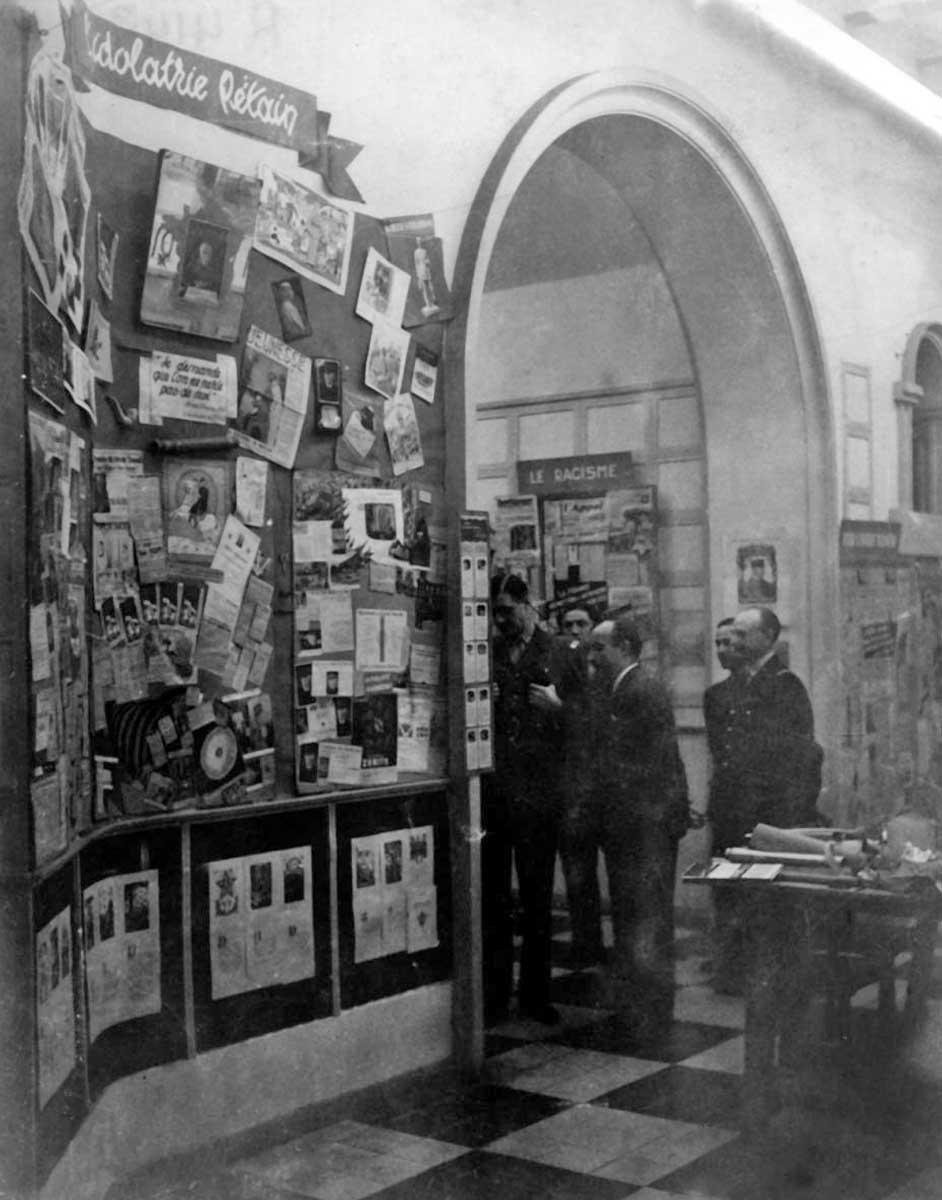
Three distinct types of tribunals emerged, operating on the legal basis of the Ordonnance du 26 juin 1944 (Ordinance of June 26, 1944)
- Under the first type, trials were held in criminal courts and were intended for individuals who broke Article 75 of the French penal code, which prohibited treason and sharing information with the Nazis. The criminal courts tried many people, including members of the Vichy government, such as Marshal Philippe Pétain, who was sentenced to death in 1945. However, Charles de Gaulle later commuted Marshal Philippe Pétain’s sentence to life imprisonment due to his age and military service for France in World War I. Another leader of the Vichy government, Pierre Laval, was also sentenced to death in October 1945;
- Trials under the second type (civil trials) applied to individuals who did not directly break the law but whose actions were defined as “unpatriotic” to national integrity. The punishments for such actions were milder, and included loss of basic civil rights;
- The third type of trial was more symbolic, based on public opinion. Public figures from the entertainment industry were mainly affected by these procedures. For instance, a well-known French actress, Arletty, accused of romantic relations with a German officer, was detained and sentenced to 18 months in prison in 1945. Reportedly, Arletty cynically pointed out: “My heart is French, but my ass is international.”
Other celebrities were forced to flee the country; for example, Coco Chanel, who relocated to Switzerland and only returned to France in 1950.
The Administrative Purges
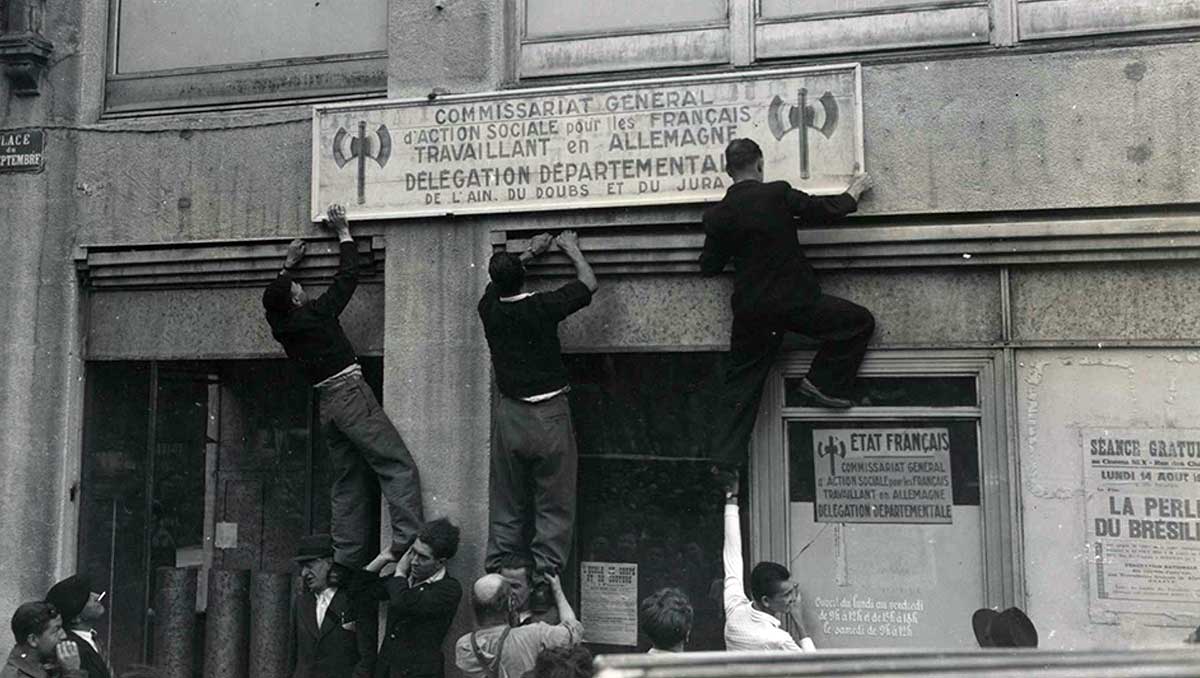
As part of Épuration légale, a considerable number of administrative purges were also carried out. In this sense, under the newly established civil courts, a new concept of “national unworthiness” emerged. The convicted people, accused of “national unworthiness,” were deprived of fundamental civil rights: the right to vote and the right to serve in the military or public sector.
Administrative purges greatly affected the mass media outlets. Indeed, during this period, almost all collaborationist newspapers disappeared, such as the Mémorial des Deux-Sèvres, or moved underground, like, for example, the Nouvelle République. Le Petit Courrier changed the name to Courrier de l’Ouest. Some viewed the emergence of the new newspapers as breaking ties with the Vichy government, and the birth of the new free press felt promising as a way of achieving national reconciliation.
Even though the exact number of those affected by the purges is hard to specify, it is said that about 10,000 summary executions alone were carried out during the initial stage of the liberation. Following Charles de Gaulle’s Provisional government’s consolidation of power in 1944, the French courts issued 6,763 death sentences up until 1951; however, two-thirds of them were in absentia, meaning that convicts were outside the French borders or into hiding. Eventually, only about 767 executions were carried out.
The End of Denazification in Postwar France
The different waves of denazification in France had both a moral and a judicial dimension, making it one of the most controversial parts of postwar France’s history.
Minister of Justice Francois de Menthon of Charles de Gaulle’s provisional government said: “Tomorrow, when one looks back on the way the purge was carried out in France, we won’t have to blush.”
De Gaulle himself, though demanding harsh punishments for governmental collaborators with Nazi Germany, said in his speech delivered on October 8, 1944: “France needs all its children, even if at times some of them made mistakes.”
De Gaulle commuted well over 1,000 death sentences, which reflected his vision of reconciling and reuniting war-torn French society.
However, others, like the liberal Roman Catholic novelist and journalist Francois Mauriac, believed France’s wounds could not heal while the purge continued.
By the second half of the 1940s and the beginning of the Cold War, many found themselves released from prison and had their basic civil rights reinstated. The final act of amnesty was passed in 1953.