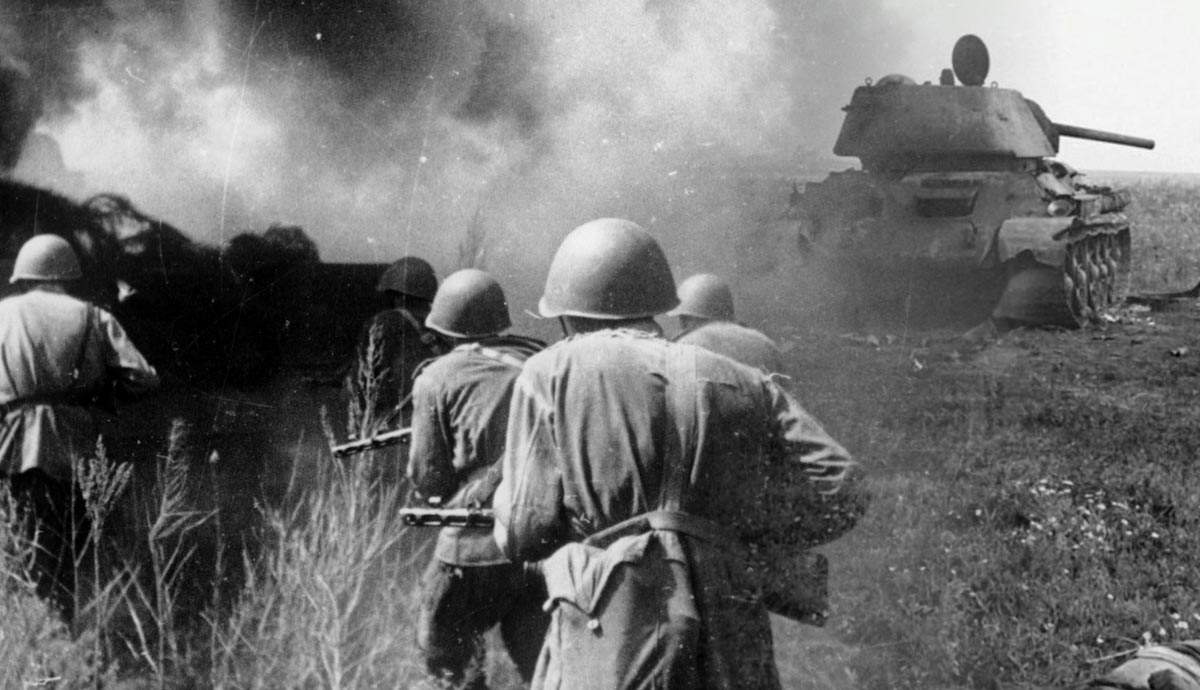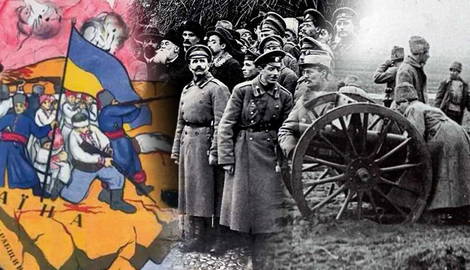

In November 1917, Ukraine’s Central Rada declared the creation of the Ukrainian People’s Republic, followed by a proclamation of full independence in January 1919. The republic struggled against Bolshevik opposition and invasion from the east while navigating its complex political relations with German and Austro-Hungarian authorities. Despite efforts to gain recognition and military support, the Ukrainian People’s Republic was unable to secure the position, leading to its defeat by the Bolshevik Red Army in 1920. Most of Ukraine would remain under Soviet rule for the next 70 years.
The Beginning of an Independent Ukraine: The Autonomous Ukrainian People’s Republic
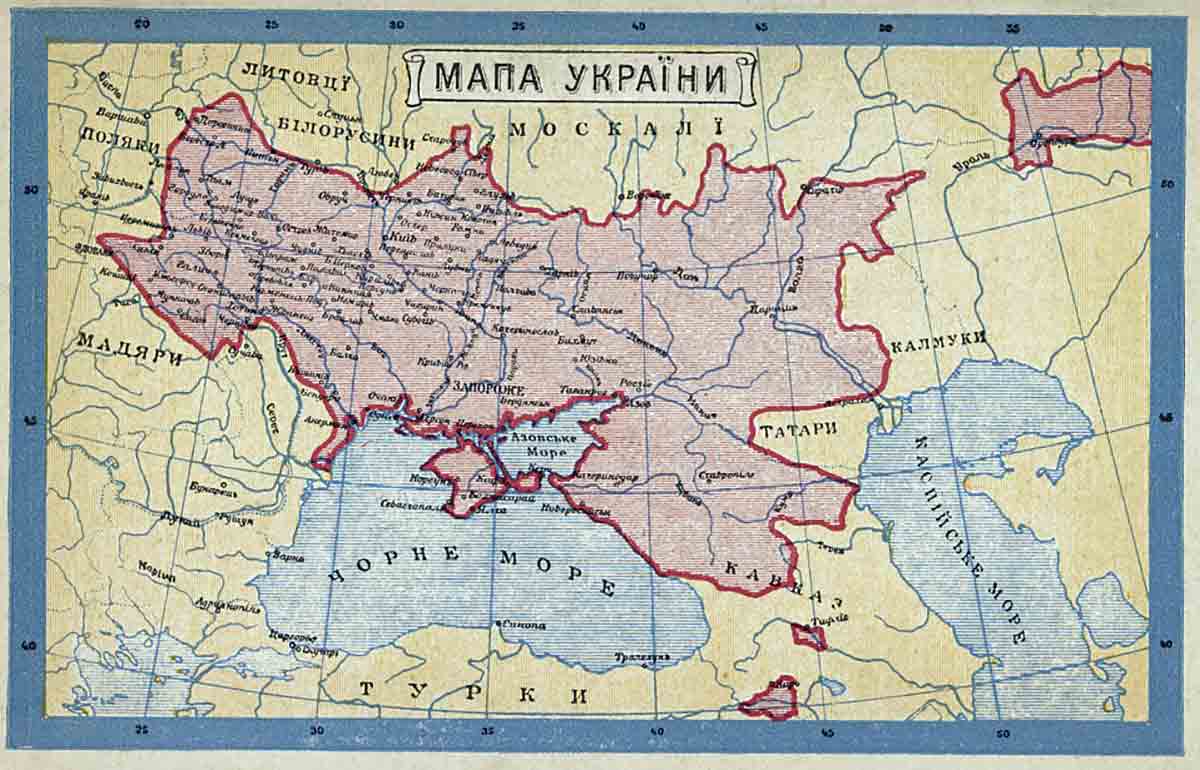
The Ukrainian territories had been partitioned between major European powers up until the end of World War I in 1918. The Russian Empire controlled Ukraine’s central, southern, and eastern parts, while western Ukraine was first part of Poland and then Austria-Hungary.
The Russian Revolution in 1917 and the abdication of Tsar Nicholas II set the stage for the birth of independence movements across the Russian Empire, including East Ukraine. With the revival of the press as well as the establishment of professional associations, the national self-awareness of the Ukrainians increased.
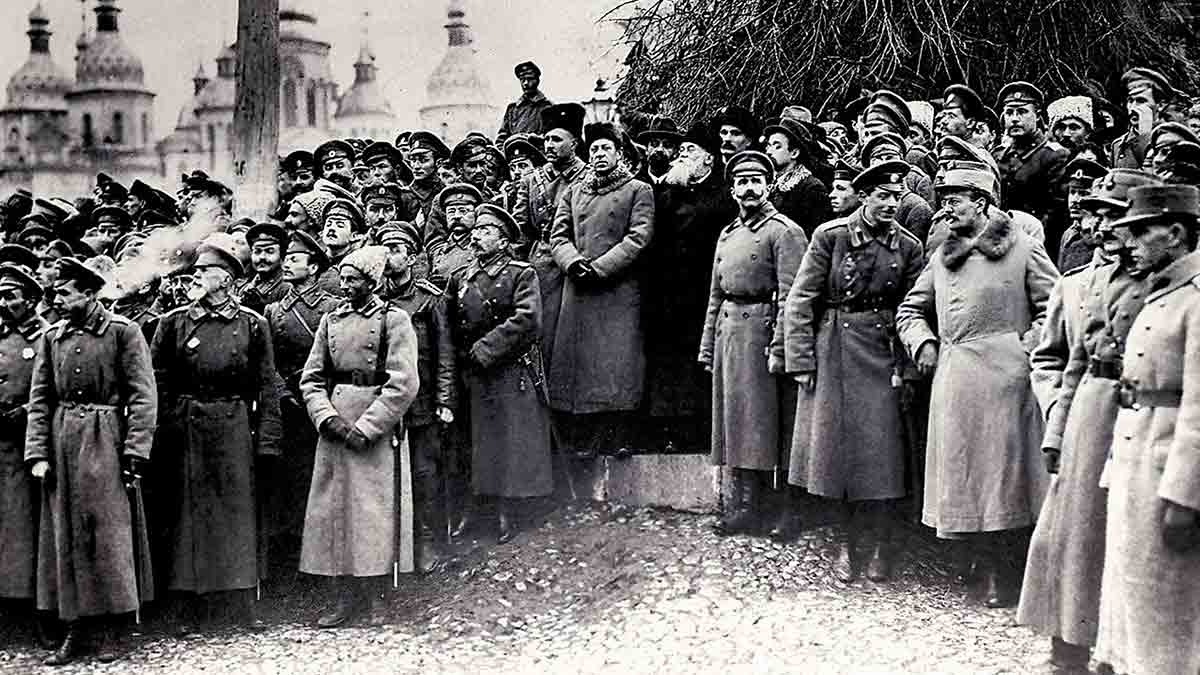
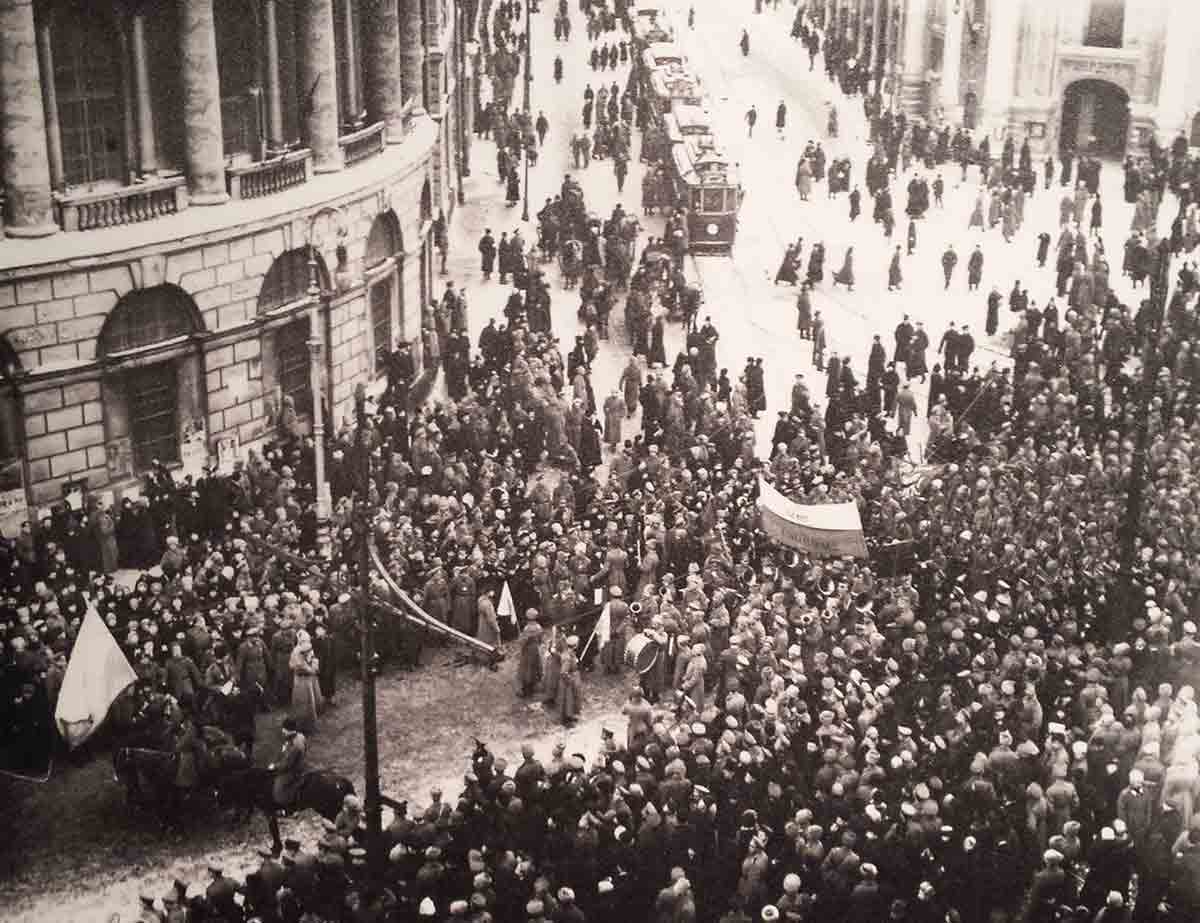
Almost immediately after the abdication of Tsar Nicholas II in March 1917, the Central Rada, under the leadership of historian and nationalist Mykhailo Hrushevsky, was born in Kyiv. In April of the same year, about 100,000 Ukrainians expressed their support for the Central Rada by marching in the streets of Kyiv.
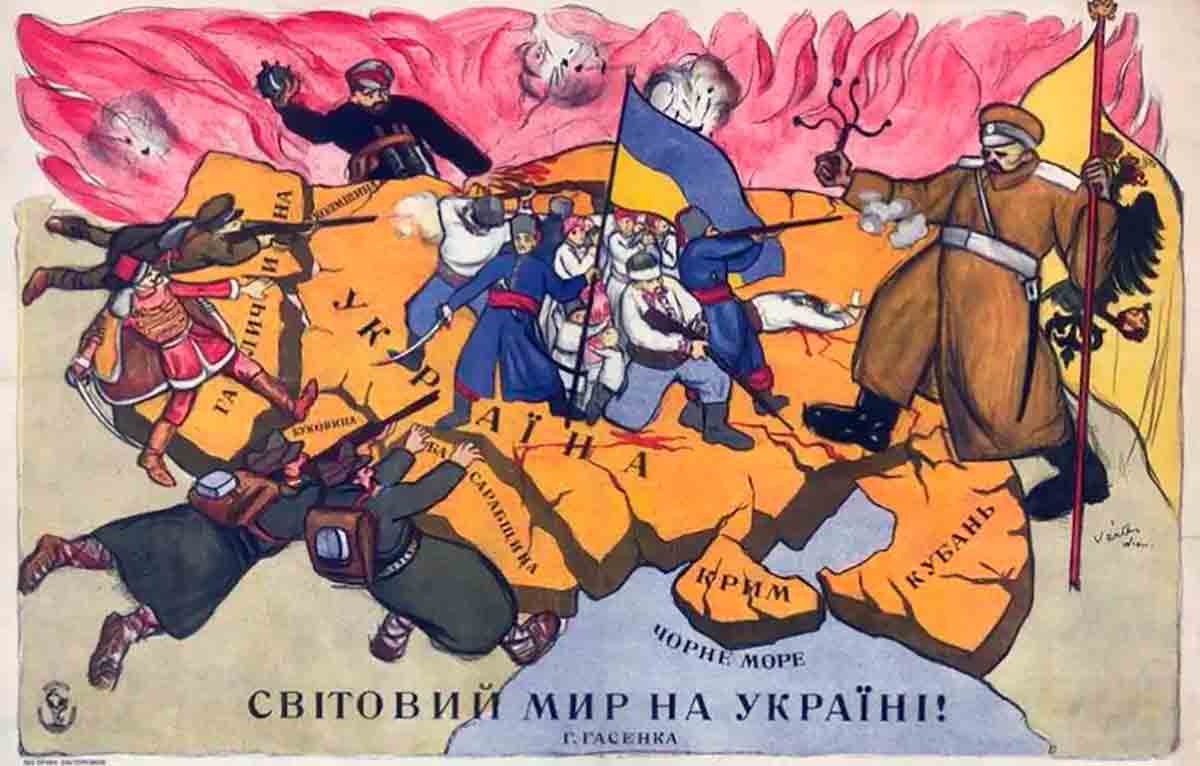
Almost immediately after its creation, the members of the Central Rada embarked on the process of securing political and legal recognition of its functioning. Aiming to gain the status of legitimate representative of the Ukrainian nation, in May 1917, the Ukrainian delegation, headed by Volodymyr Vynnychenko, arrived in Petrograd, Russia. The key focus was to achieve “national and territorial autonomy” within Russia. Eventually, on June 23, 1917, the Central Rada declared Ukrainian autonomy, claiming:
“Let there be a free Ukraine. Without separating from all of Russia, without breaking away from the Russian State, let the Ukrainian people on their own territory have the right to manage their own life.”
On November 20, 1917, the Central Rada proclaimed the Third Universal, officially establishing the Ukrainian People’s Republic as an autonomous entity within Russia.
Proclaiming the Independent Ukrainian People’s Republic
The October Revolution in 1917 saw the victory of the Bolsheviks in Russia. Earlier in 1914, the founder and leader of the Bolsheviks, Vladimir Lenin, declared the right of self-determination to be one of the basic principles of the oppressed nations, including the right of secession. In his 1914 work The Right of Nations to Self-Determination, Lenin stated:
“Complete equality of rights for all nations; the right of nations to self-determination; the unity of the workers of all nations—such is the national program that Marxism, the experience of the whole world, and the experience of Russia teach the workers.”
Inspired by Lenin’s speech, the Central Rada, represented by the General Secretariat, issued a number of laws defining citizenship, working conditions, and land ownership and creating an army in Ukraine.
However, the hopes of establishing an autonomous Ukraine within Bolshevik Russia soon shattered, and the Russian Revolution did not bear the results the Central Rada expected. Instead of cooperation, the Russian provisional government favored centralization and control, mirroring the imperialistic characteristics of the newly overthrown tsarist Russia.
Severe socio-economic conditions amid the still ongoing World War I further intensified public discontent, causing resentment and turmoil, especially in rural areas of Ukraine. This highlighted the Russian authorities’ ineffectiveness or unwillingness to address the socio-economic needs of the Ukrainian people.
The Bolsheviks dismissed the idea of an independent Ukraine. On November 7, 1917, they grew increasingly intolerant of the Ukrainian state, even though it remained aligned with Russia. Lenin’s vision of the rights of self-determination was overshadowed by Ukraine’s economic resources and geographic significance for the aims of the Bolshevik revolution.
The first All-Ukrainian Congress of Soviets was held in December in Kharkiv, where the Bolsheviks declared the creation of the Ukrainian People’s Republic of Soviets, a communist puppet state. Additionally, the Bolsheviks began organizing military offensives to re-establish control over Ukraine.
Witnessing the rapid change in the political climate, the Central Rada shifted its policy focus from autonomy within Russia to proclaiming the complete independence of the Ukrainian state.
In November 1917, following the national elections in Ukraine, the pro-independence candidates had acquired the majority of seats. Full independence was declared only on January 22, 1918. The declaration was followed by the invasion of the Bolshevik forces, who fostered internal rebellion.
The Bolshevik Uprising in Kyiv
The Kyiv Uprising began on January 29, 1918, and lasted until February 4. Led by the Kyiv Committee of the Russian Bolshevik Party, the rebels first attacked the Pedagogical Museum, where the Central Rada was located.
On the same day, representatives of the Kyiv Council of Workers’ and Soldiers’ Deputies presented an ultimatum to the Central Rada of Ukraine, requesting the transfer of power to the Bolsheviks and the disarmament of Ukrainian military units.
The Central Rada rejected the ultimatum and demanded unconditional capitulation. The Bolshevik Uprising of January 1918 lasted for seven days, causing heavy casualties among both the rebels and the defenders of the Ukrainian People’s Republic.
Meanwhile, the Battle of Kruty unfolded northeast of Kyiv near the Kruty railway station (modern-day Chernihiv Oblast) on January 29-30, 1918. The Battle of Kruty represents one of the most tragic events in the history of the newly independent Ukrainian People’s Republic. Bolshevik forces clashed with a small number of student cadets near the railway station. Three hundred out of the 400 Ukrainian soldiers were killed in a five-hour battle.
Ultimately, Ukrainian forces were compelled to retreat. The Bolsheviks advanced to the capital city of Kyiv. Ukrainian forces’ sacrifice in Kruty delayed the Bolshevik advance, allowing the Ukrainian government to evacuate Kyiv and regroup temporarily in Zhytomyr, west of the capital.
By February 4, the Bolshevik Red Army, commanded by Mikhail Muravyov, occupied Darnitsa, the bridges over the Dnieper, and attacked Kyiv with heavy artillery. A significant part of the city was destroyed during the street battles. Exhausted by street fighting, the Ukrainian forces could not resist. Four days later, on February 8, 1918, Bolshevik forces entered Kyiv.
Deteriorating Russian-Ukrainian Relations & Searching for Allies
The government of the Ukrainian People’s Republic, aware of the shortage of material and military resources, sought to form alliances with foreign powers. However, in the context of the still ongoing World War I, the Entente countries (United Kingdom, France, and Russia) felt reluctant to engage in a new confrontation.
Desperate for support, the Ukrainian People’s Republic turned to the Central Powers (German Empire, Austria-Hungary, the Ottoman Empire, and Bulgaria) even though their defeat in World War I was already apparent.
The Brest-Litovsk Peace Treaty, signed on February 9, 1918, between the People’s Republic of Ukraine and the Central Powers, was a direct result of these developments. This treaty was part of broader negotiations at Brest-Litovsk, which also involved Soviet Russia. In December 1917, the Bolsheviks initiated an armistice with the Central Powers to withdraw from World War I and focus on consolidating their rule amid growing civil unrest in Russian territory. The final Treaty of Brest-Litovsk between Soviet Russia and the Central Powers, signed on March 3, 1918, officially ended Russia’s involvement in World War I.
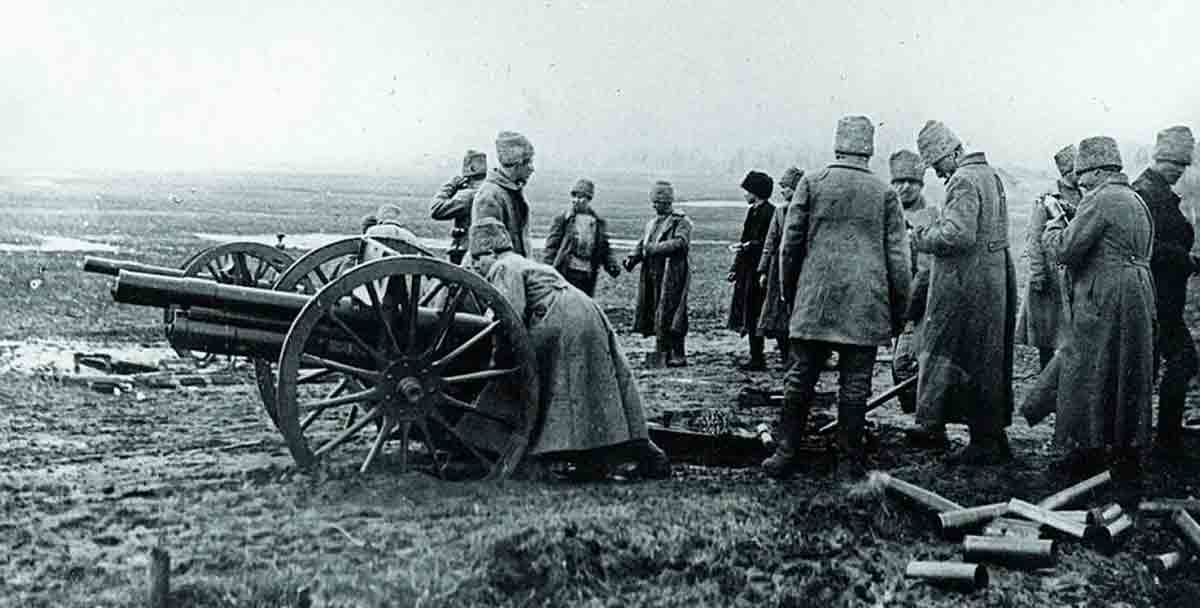
Under the February treaty with Ukraine, the Central Powers recognized the Ukrainian People’s Republic as an independent state. They pledged to militarily assist the Ukrainian People’s Republic to expel Bolshevik forces from Ukrainian territory. In return, Ukraine promised to provide significant amounts of grain and other resources to the Central Powers, which were experiencing shortages due to the war.
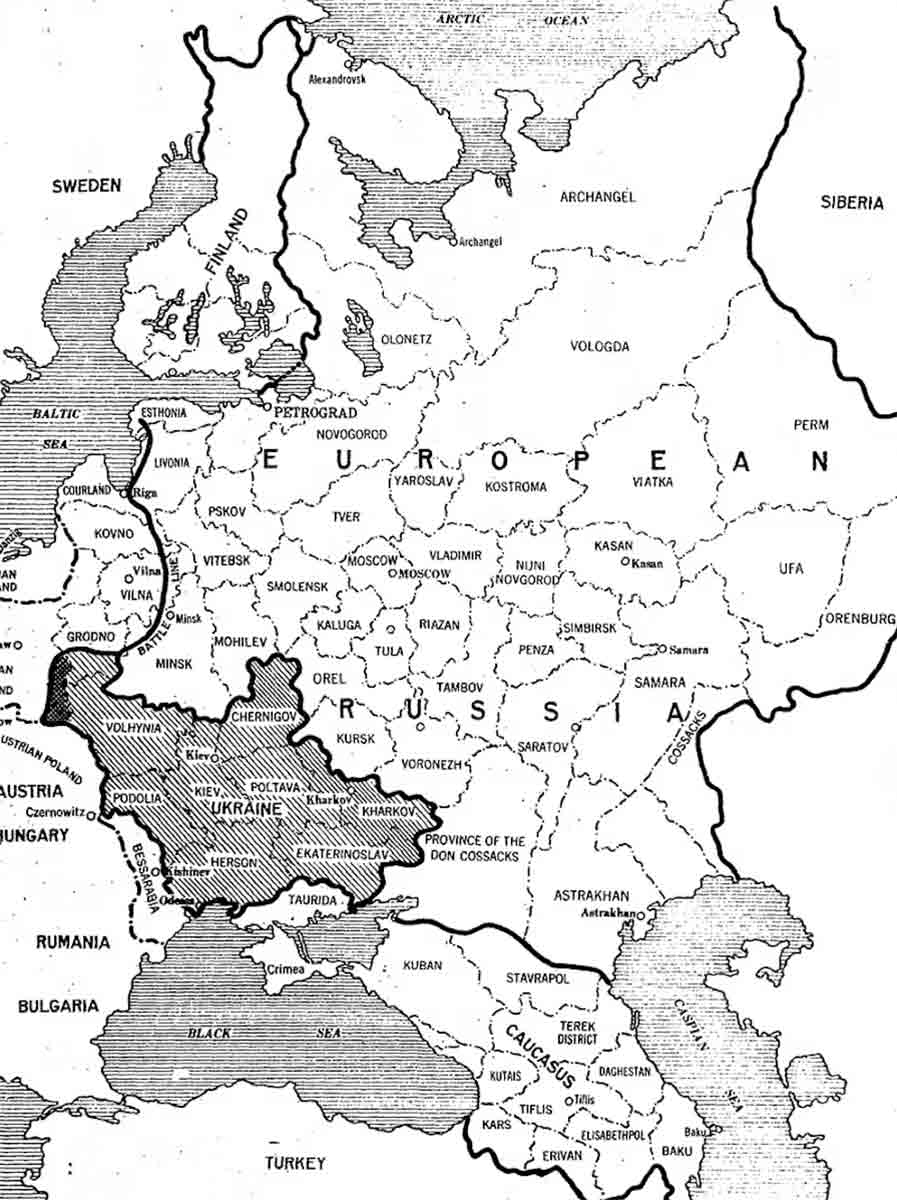
The recognized boundaries of Ukraine extended west to the pre-war Austro-Hungarian-Russian border and north along a line encompassing parts of modern-day Poland and Belarus to Vyhonivske Lake.
The Brest-Litovsk Peace Treaty proved to be effective. On March 1, 1918, the Bolshevik forces retreated from Kyiv, allowing the Ukrainian government to return to the capital.
The Era of the Hetmanate
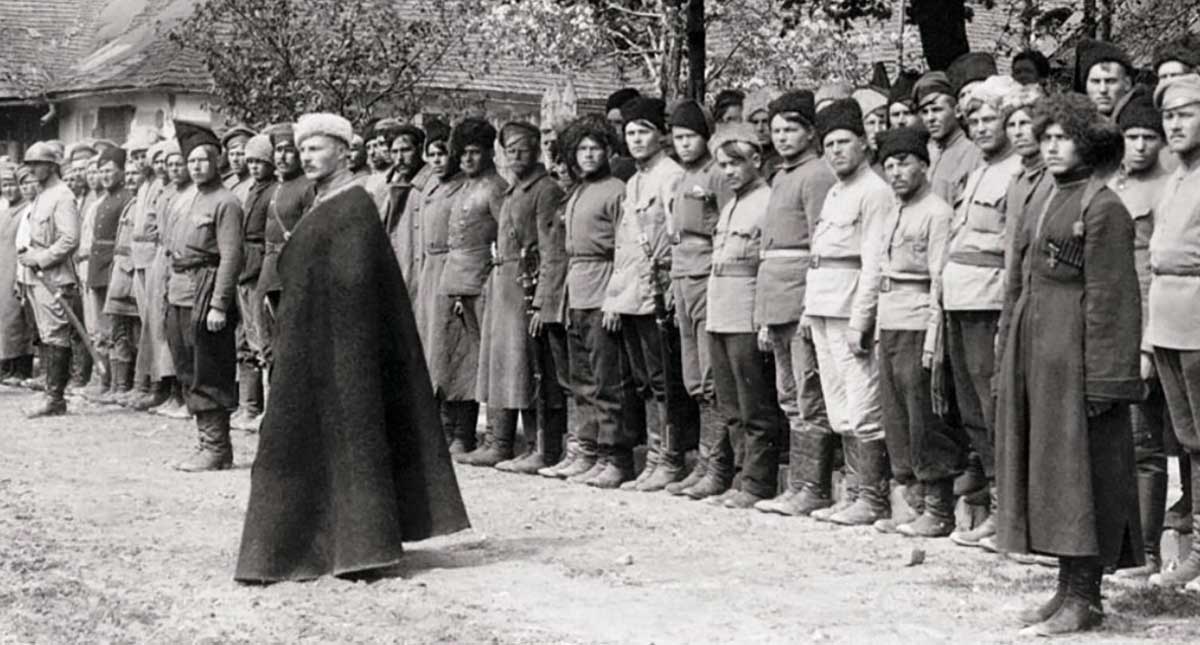
The de-occupied Ukrainian People’s Republic faced significant challenges and destabilization. Political polarization and corruption further eroded trust between the Ukrainian People’s Republic and its German allies.
The German Ambassador Alphons Mumm von Schwarzenstein stated, “Permanent cooperation with these people, who, due to their socialist theories, fail to understand the real state of affairs, is impossible.”
As a result, on April 28, 1918, Germany dismissed the Central Rada. Pavlo Skoropadsky was declared the Hetman (the authority) of all Ukraine. Skoropadsky’s regime, known as the Hetmanate, began. Skoropadsky, even though unpopular within the political establishment, introduced new reforms and laws, reintroducing the Ukrainian language in schools and opening new banks and governmental agencies to strengthen the state institutions.
In November 1918, Germany was defeated on the Western Front, and the German troops left the territories of the Ukrainian People’s Republic. Without German military support on Ukrainian territories and facing mounting pressure, Skoropadsky signed the Federal Charter with Russia, declaring that Ukraine would become part of the federal Russia. Skoropadsky’s policy was met with strong resistance. The Directorate of Ukraine and the Ukrainian Social Democratic Labor Party organized an uprising on November 16, 1918.
Despite the initial failure, the Siege Corps of Sich Riflemen (a military formation composed of Ukrainian volunteers) proved instrumental, and the directorate successfully ousted Skoropadskyi, who was forced to flee to Germany. On December 14, the Directory’s troops entered Kyiv, re-establishing control over the Ukrainian People’s Republic.
The victory appeared short-lived, however, as the Bolshevik forces would enter Kyiv shortly after.
The Unification of Ukraine & Alliance With Poland
Following the end of World War I, the Austro-Hungarian Empire collapsed. The Western Ukrainian People’s Republic emerged on the territories of Galicia, Bukovina, and Transcarpathia. The new republic entered into a conflict with Poland over Eastern Galicia, a region populated by Ukrainian and Polish minorities.
The conflict culminated in the Polish-Ukrainian War from November 1918 to July 1919. Polish forces acquired control over the city of Lviv in Ukraine, forcing the government to relocate to Stanyslaviv (modern-day Ivano-Frankivsk in Western Ukraine). The end of World War I and the Paris Peace Conference granted Poland control over Eastern Galicia.
Both the Western Ukrainian People’s Republic and the Ukrainian People’s Republic, facing oppression and occupation from neighboring countries, declared the unification of Ukraine on January 22, 1918. However, the unification appeared to be symbolic, as both states had separate armies and governments.
With the end of World War I and the defeat of the Central Powers, the Bolsheviks, under the leadership of Vladimir Lenin, annulled the Brest-Litovsk Treaty, invading the territories of defeated Germany, as well as Ukraine. By early 1919, the capital city of Kyiv and other major urban centers fell under Bolshevik control. On the other hand, opposing White Forces, headed by General Denikin, occupied Odesa and other key cities in southern Ukraine.
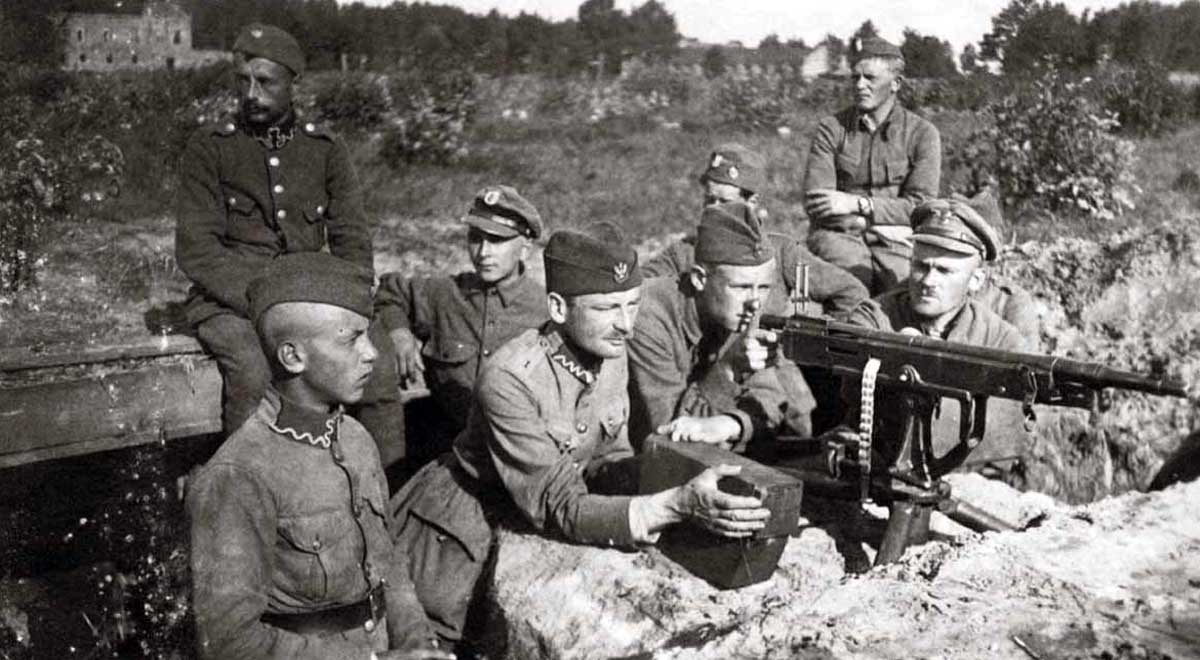
The Ukrainian People’s Republic, under the leadership of Symon Petliura, concluded an alliance with Poland, known as a Warsaw Agreement, signed on April 21, 1920. According to the agreement, Polish forces would militarily assist Ukrainians in pushing back the Russian troops, while Ukraine pledged to cede Eastern Galicia to Poland.
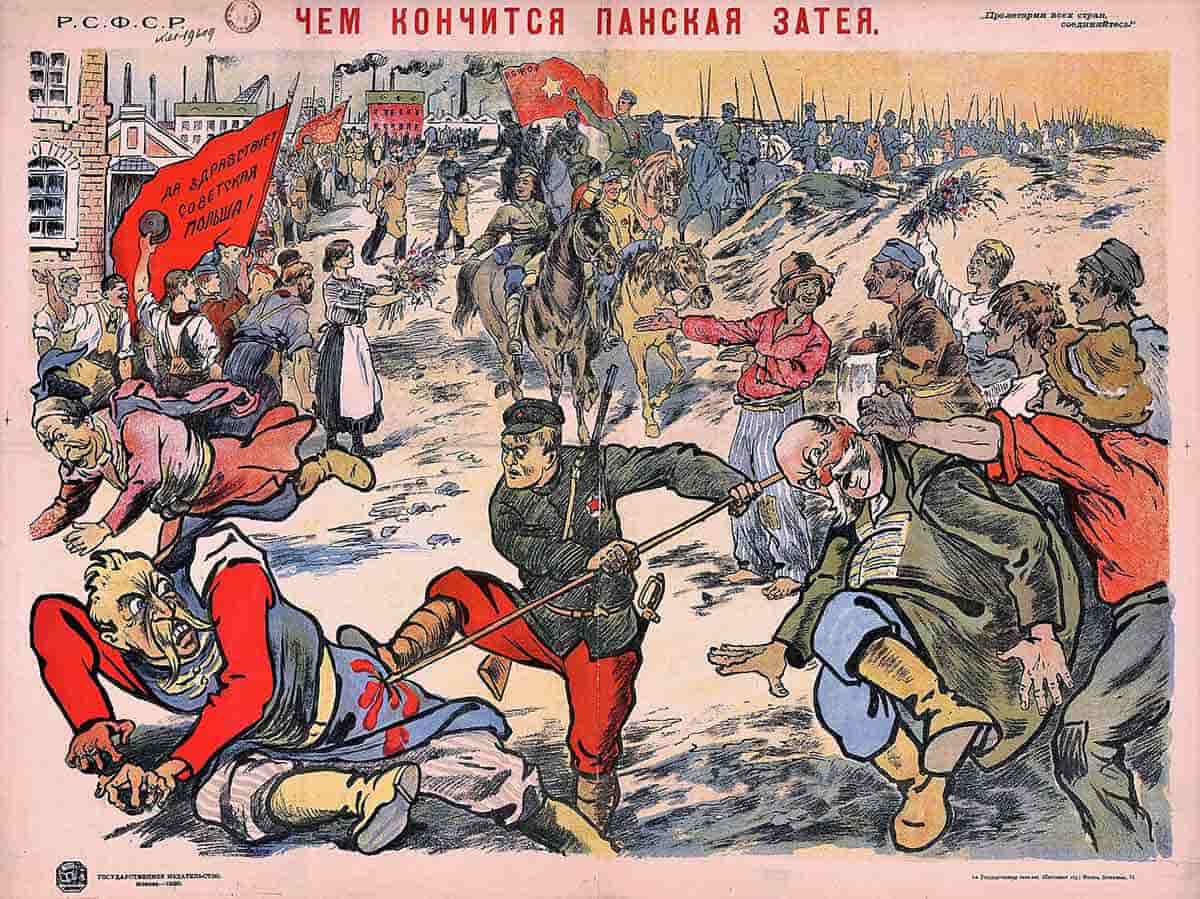
The Alliance resulted in the Soviet-Polish War of April-June 1920, also known as the Kyiv Offensive. The offensive aimed to secure Ukrainian territory for Poland by creating a buffer zone with Russia. The Ukrainian state would join the Polish-led “Międzymorze” federation of East-Central European states. Even though the declared goal of the Polish intervention was to assist the creation of a sovereign Ukrainian state, many saw it as a new occupation aiming to seize central and eastern Ukrainian territories.
Despite the initial military success, existing political instability prevented the Polish-Ukrainian alliance from gaining public support. By May 1920, the Red Army, under the command of Mikhail Tukhachevsky, had advanced, forcing the allied forces to retreat to Poland.
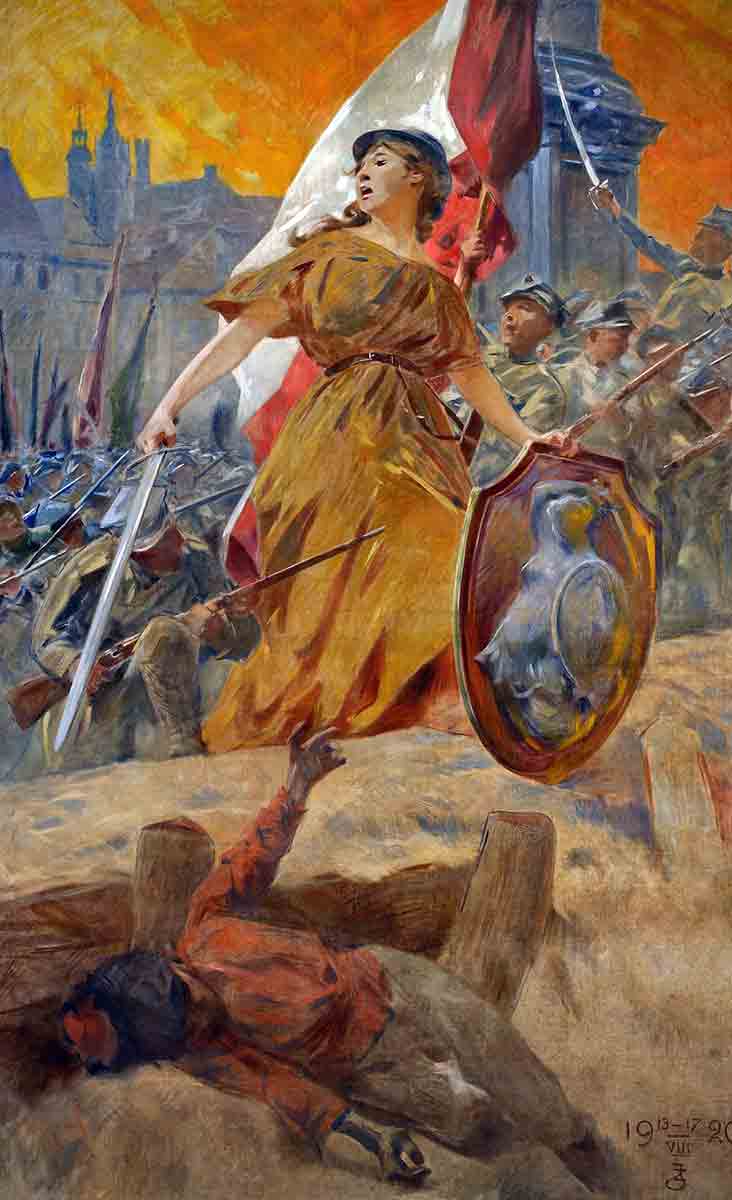
The Battle of Warsaw, often referred to as the “Miracle on the Vistula,” represents a decisive event in the struggle to establish an independent Ukrainian state. Unexpectedly, the Polish forces managed to defeat the Red Army. The victory pushed the already drained Soviet authorities, who were also facing internal socio-political instability, to seek a way out of the exhausting military operations.
The Treaty of Riga & the End of the Ukrainian People’s Republic
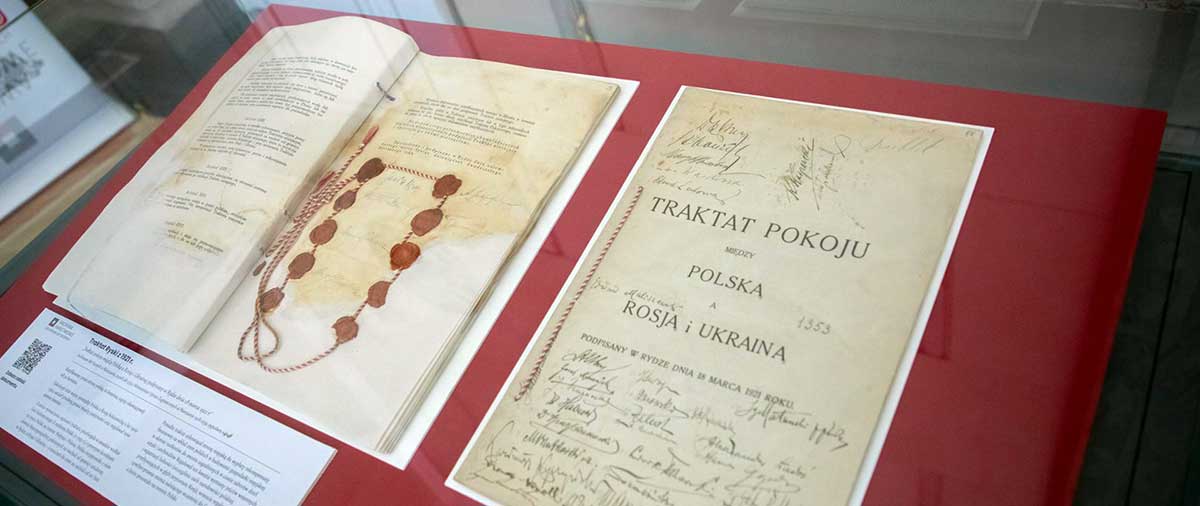
The Treaty of Riga, signed on March 18, 1921, effectively ended the military confrontation between Polish and Soviet forces but did so at the expense of the independence of the Ukrainian People’s Republic. According to the treaty, Ukraine was partitioned between Poland and Soviet Russia. Western Ukraine was ceded to Poland, while Soviet Russia acquired control over the central and eastern regions of Ukraine, extinguishing any remaining hope for establishing an independent Ukrainian state. On these territories, the Ukrainian Soviet Socialist Republic would be formed in 1922.
The leader of the independence cause, Symon Petliura, as well as other political figures, went into exile, operating as a government in exile and advocating for an independent Ukraine, which would not materialize until 1991.