Far from being a united entity, the ancient Greek world was made up of hundreds, if not thousands of independent, city-states. Most were small, with limited impact on history beyond their immediate region, before disappearing. Others, however, endured, creating a lasting impact on history that is felt even to this day. Here are ten of the most important and influential Greek city-states, their significance, what made them unique, and why they are remembered thousands of years later.
| City-State | Primary Focus | Notable Achievement or Legacy |
| Athens | Politics, Culture & Arts | Popularized democracy and birthed foundational Western philosophy (Socrates, Plato). |
| Sparta | Militarism & Discipline | Created a professional warrior class; perfected the phalanx; famous for the stand at Thermopylae. |
| Corinth | Trade & Strategic Location | Controlled the diolkos (land track for ships); namesake of the elaborate Corinthian column and helmet. |
| Syracuse | Wealth & Intellectualism | The most important Greek colony in Sicily; home to the legendary mathematician Archimedes. |
| Thebes | Military Innovation | Smashed Spartan hegemony at the Battle of Leuctra; pioneered the oblique order battlefield tactic. |
| Knossos | Bronze Age Naval Power | Center of the Minoan civilization; developed Linear A and early monumental architecture. |
| Delphi | Religion & Prophecy | Home to the Oracle of Apollo, whose predictions influenced the outcomes of major wars. |
| Argos | Art & Longevity | One of the world’s oldest continually inhabited cities; home to the famous sculptor Polykleitos. |
| Elis | Religion & Athletics | Controlled Olympia; host of the Olympic Games and home to the Great Temple of Zeus. |
| Miletus | Philosophy & Science | Birthplace of philosophy; home to pre-Socratic thinkers like Thales who studied natural phenomena. |
1. Athens
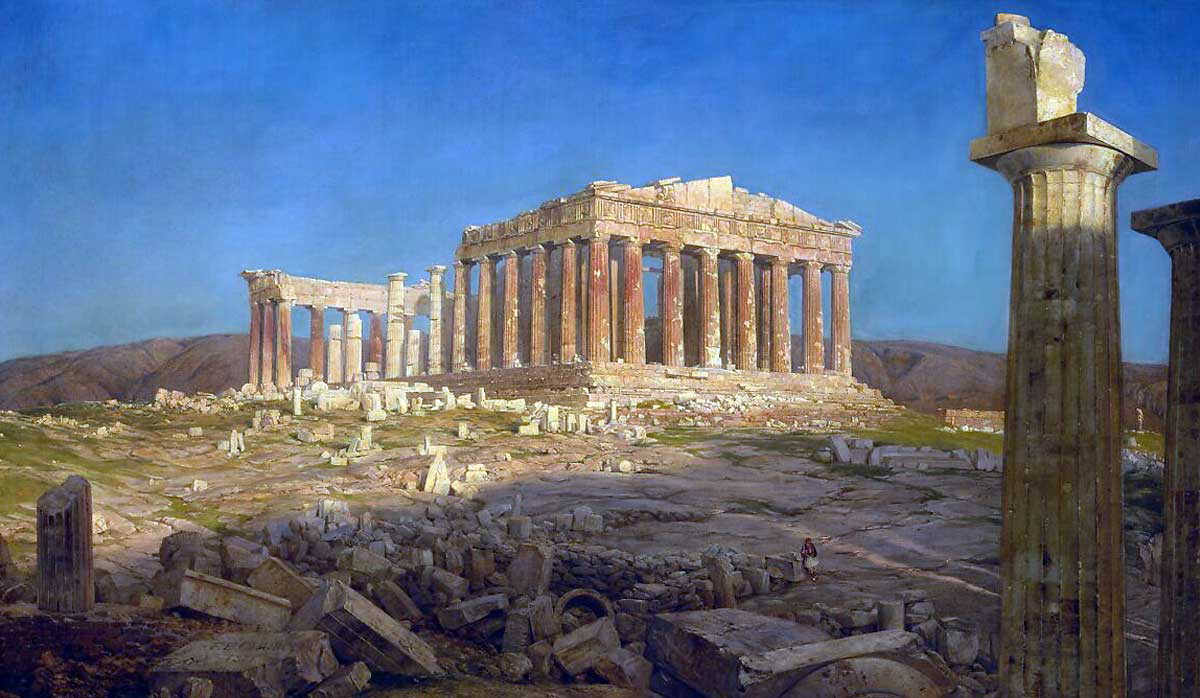
When most people think of ancient Greece, they are probably thinking of Athens. One of, if not the largest and most powerful of the Greek city-states. Athens was always at the forefront of Greek politics, culture, and influence. Though they didn’t invent it, probably their greatest and longest lasting achievement was popularizing the concept of democracy. Rather than rule by a king, priest, or tyrant, Athens pioneered the idea of citizens (in their case, only free, adult men) being able to participate in the government through a direct democracy. This concept has spread and is the cornerstone of modern political theory.
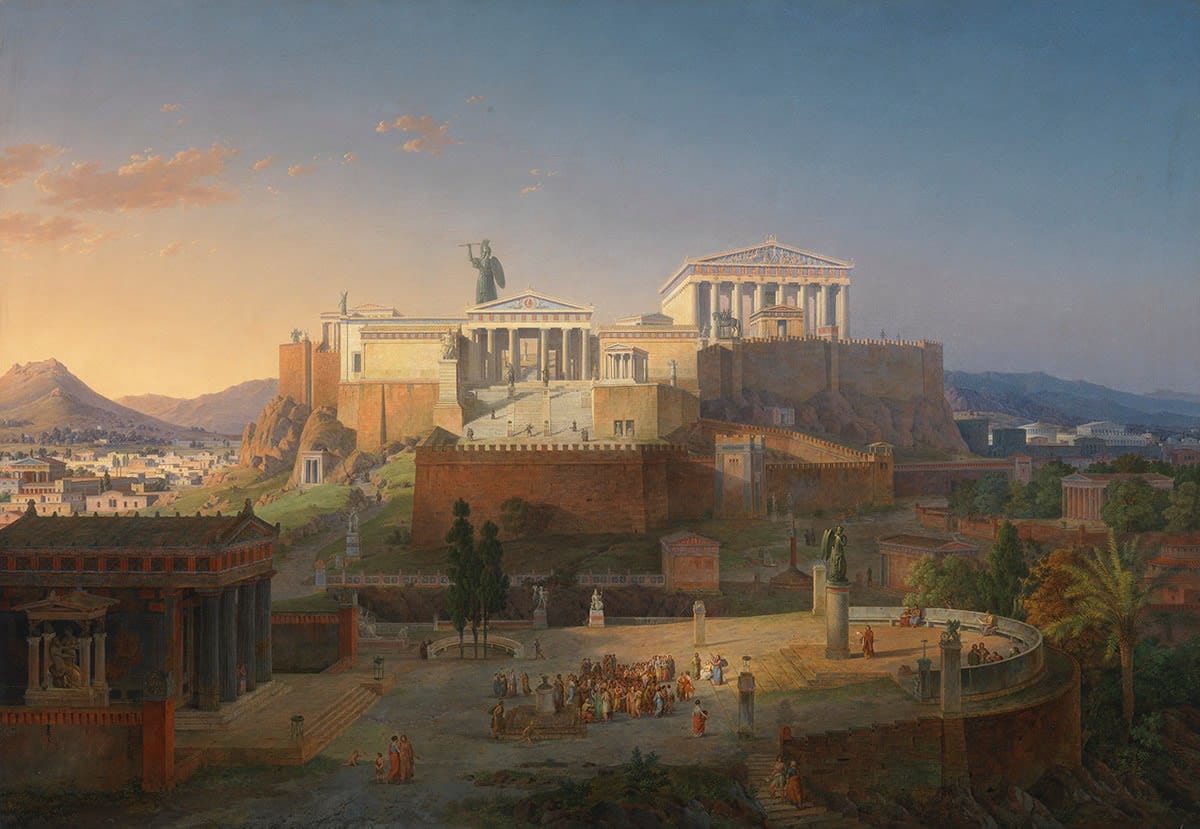
Athens was also home to some of the greatest thinkers to ever live, with the likes of Socrates and Plato laying the basis for empirical thought that did not rely on the supernatural. They established ideas that underpin modern science, philosophy, and theology. More than any other city-state, Athens placed an emphasis on the arts and theater, being a center for statue and sculpture making, music, and plays. The works of Athenian playwrights like Euripides, Aristophanes, and Sophocles still have a place in the Western literary canon, influencing poets and authors thousands of years later.
Athens was also an economic powerhouse, with the wealth from trade funding a proto-empire throughout the Greek world. This economic influence led to the creation of a powerful navy, which was used as a bulwark against the encroaching Persian threat. Their ships were the decisive factor that kept Western civilization free from Persian control. After the Persian Wars, Athens was the wealthiest and most powerful city-state, and they used their influence, becoming the archetype of Greek culture centuries later.
2. Sparta
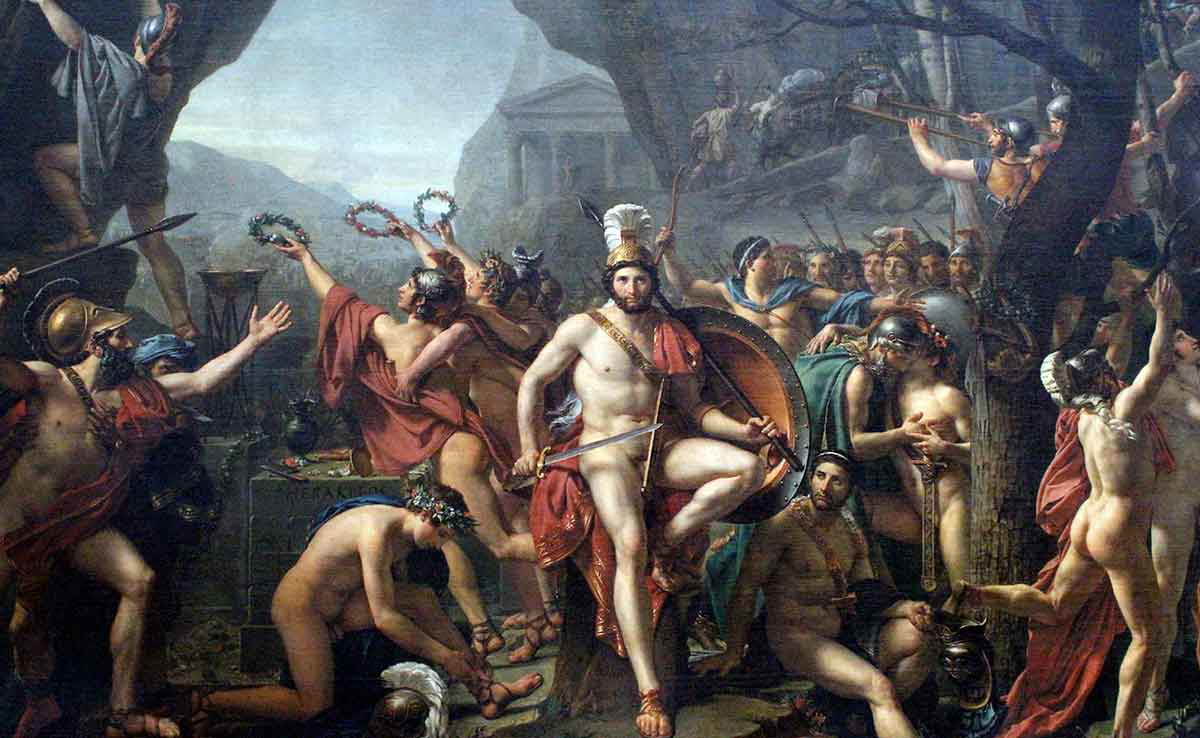
If one city-state was a counterpoint to Athens, it would be Sparta. Near constant rivals, Sparta is unique among the Greeks. They did not create philosophers or pioneer new forms of government. Their monumental architecture was non-existent and their art limited. Instead of great wonders, they produced warriors. Devoting themselves entirely to militarism, the Spartans did away with ostentatious wealth and aesthetics, instead forging their society into austere, terse, and disciplined soldiers.
While all Greek states had slaves, Sparta took the idea to new heights, enslaving an entire population of fellow Greeks, the Messenians, who were called helots. With such a large pool of manpower providing all their needs, Spartan males were able to devote themselves entirely to military pursuits, training for which started at the age of seven. Taught to endure any struggle, they perfected the phalanx, the dense block of spearmen that would soon spread to other Greeks as the primary form of warfare. Since they were professionals and not part time militia, their military power was unrivaled in the Greek world, on land at least.
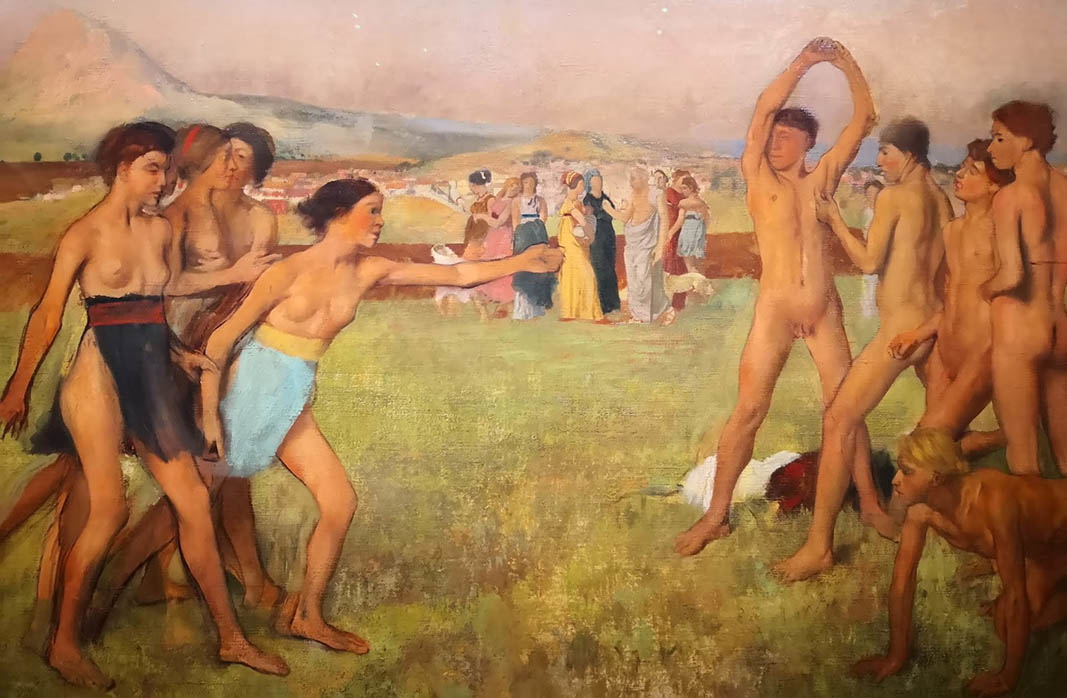
When the Persians invaded, the first major resistance was Spartan king Leonidas and three hundred Spartans leading a Greek army, fighting to the bitter end at Thermopylae. After the Persian navy was smashed at Salamis by the Athenian led navy, the remaining Persians were finally defeated the following year at Plataea. The core of the Greek army was made up of Spartans. After a grueling three decade long war against Athens, the Peloponnesian War, the Spartans defeated their rivals, setting themselves up as the hegemon, or strongest power in the Greek world. Though they would eventually fall, Sparta remains a byword for militarism, discipline, and toughness. The word Spartan has come to mean austere, blunt, and to the point, a legacy that rivals any monumental architecture by their peers.
3. Corinth
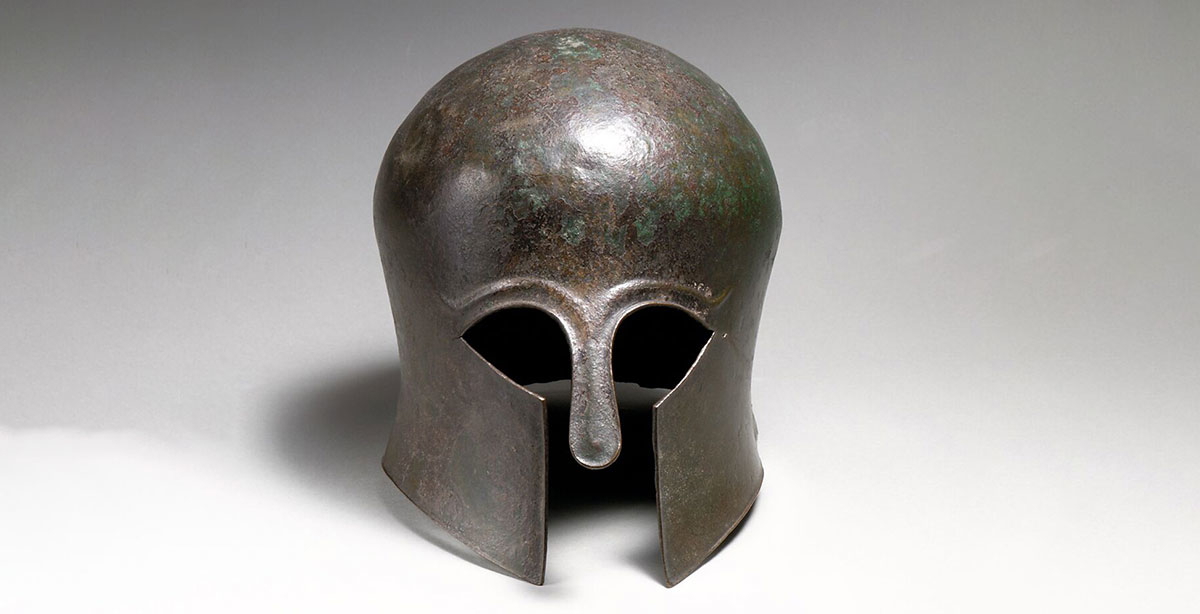
Lesser known, but still significant, is the city-state of Corinth. Part of its role in Greek history is due to its location at the Isthmus of Corinth, a narrow passage that connects the Peloponnese to the rest of mainland Greece. This strategic location places it at the center of the Greek world, both physically and metaphorically, being the divider between Athenian and Spartan spheres of influence.
This strategic location made it a center for trade, with economic networks that stretched across the Mediterranean. This was facilitated by the creation of the diolokos, a paved track that cut across the isthmus, allowing Greek ships to cut across land rather than sailing around the Peloponnese. This bolstered the Corinthian economy, making them rivals of Athens. They used their strategic and economic clout to great effect, supporting the Spartans during the Peloponnesian War, giving monetary backing to the economically stagnant Spartans.
They were also patrons of the arts, especially pottery, with Corinthian pottery known for its fine details and exquisite craftsmanship. In addition, one style of columns, a hallmark of Greek architecture, is named after the Corinthians. It is the most elaborate and ornamented of the three major styles. Corinth also gives its name to the Corinthian helmet, the enclosed piece of headgear that is synonymous with Greek warriors. Whether it was actually developed in Corinth is hotly debated by scholars. In short, Corinth was an economic and cultural power to rival Athens that still fell under Sparta’s sphere of influence.
4. Syracuse
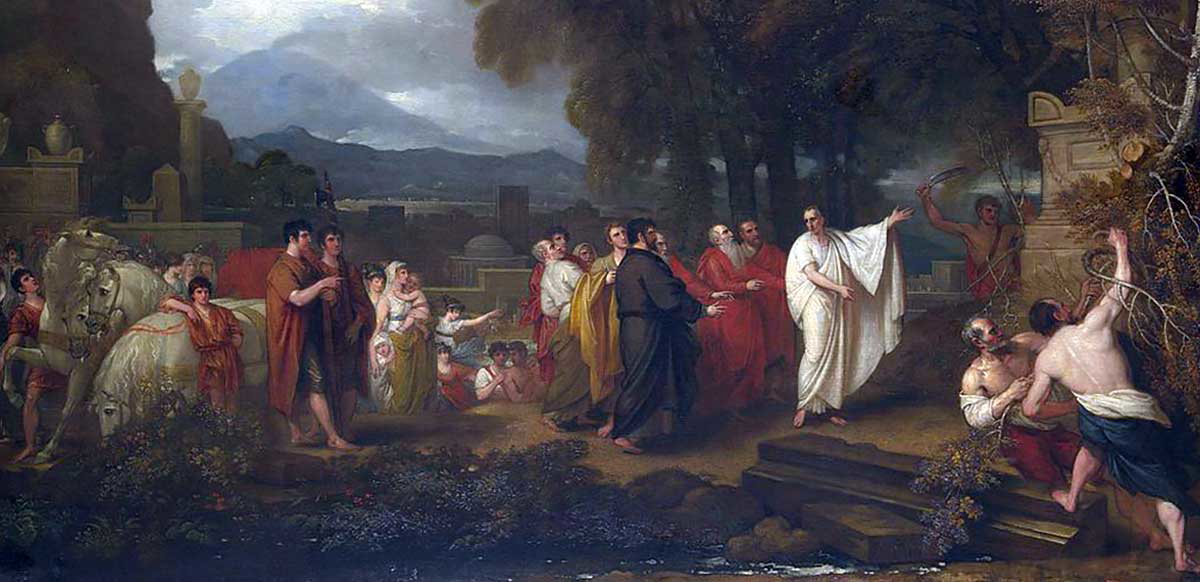
Greek influence was not confined to Greece. Eager to expand, the Greek city-states sent colonists around the Mediterranean and even to the Black sea, stretching their influence from the Iberian peninsula to the Crimea. Arguably the most important was Syracuse, founded by Corinthian settlers in the 8th century BCE. Located in Sicily, the city came to dominate the local region, being the most important city on the island.
A major trade center, Syracuse became a byword for wealth, with the phrase “the tithe of Syracuse would not be sufficient for them” becoming part of the Greek lexicon for wealth and greed. It was also a cultural and intellectual center, featuring many prominent temples and theaters. Centuries after its heyday, the Roman statesman Cicero stated it was the most beautiful of Greek cities. It was also the home of Archimedes, one of the foremost intellectuals of history.
Syracuse was also a major military power. The dominant city in Sicily, their wealth became the target for many invaders. During the Peloponnesian War, they were invaded by Athens. This was a disaster for the Athenians, and marked a turning point in the conflict. They would also be targeted by Rome. But even under Roman domination, Syracuse would still be the center of political, cultural, and economic influence in Sicily.
5. Thebes
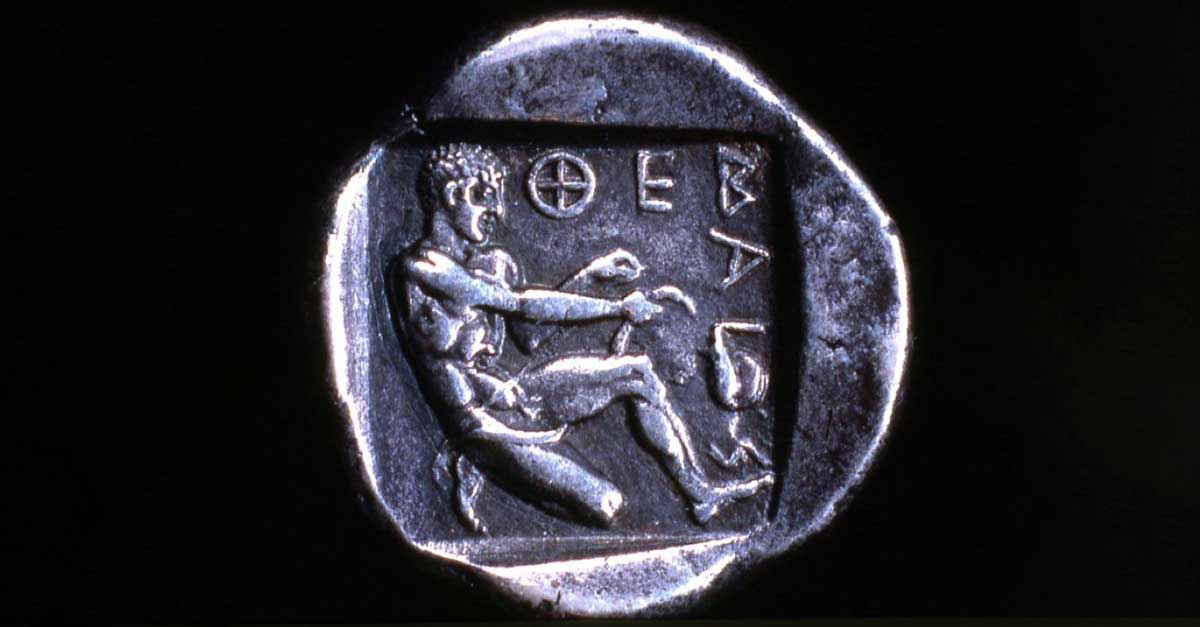
After the Peloponnesian War, the Spartans were the hegemon of Greece. This would not last, and they would soon be undone by another rising force. Thebes, located in Boeotia, west of Athens, was an economic and military power that was the leading member of the Boeotian League, a coalition of city states in central Greece. When Leonidas and the three hundred Spartans made their last stand at Thermopylae, four hundred Thebans stayed as well, while the rest of the Greeks withdrew. The Thebes eventually surrendered to the Persians, and sided with the invaders at the battle of Plataea the following year. This cost them control over the Boeotian league and the enmity of the other Greeks. Angered by their treatment by the haughty Athenians, they would be firm supporters of Sparta during the Peloponnesian War.
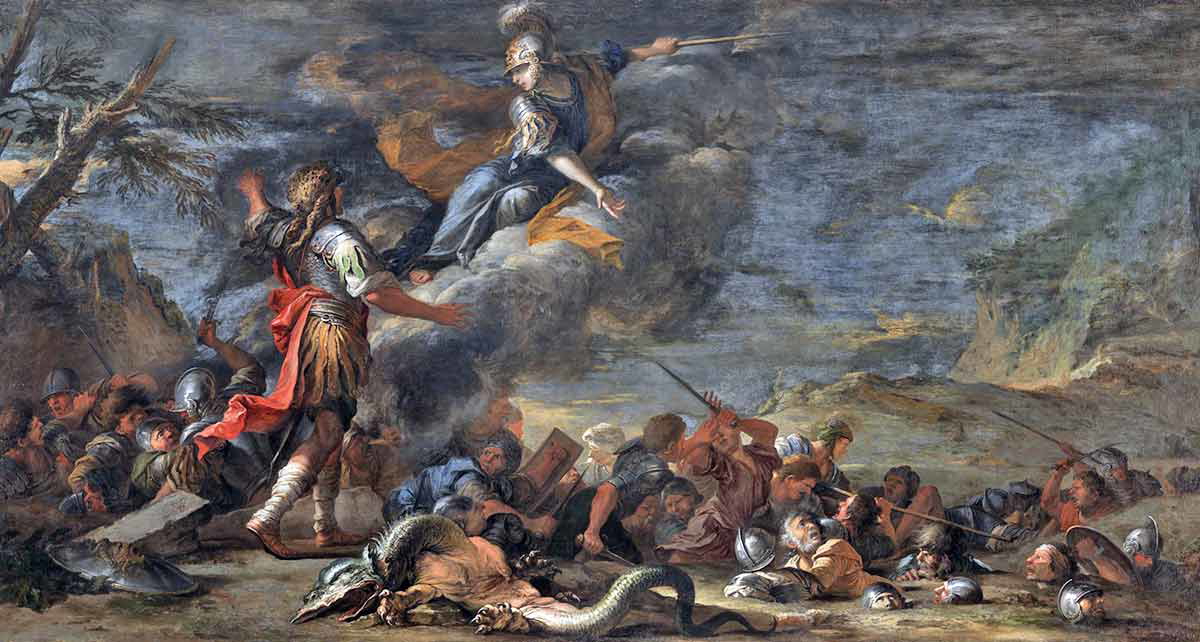
When the fighting was over, the equally arrogant Spartans alienated their Theban allies. Once again, the Thebans spearheaded a coalition of city-states, now with the primary task of defeating the Spartans. Under the leadership of Epaminondos, Thebes innovated new battlefield tactics, such as the oblique order, placing the bulk of their forces on one side of the battle line. This smashed the Spartans at the battle of Leuctra in 371 BCE.
With Sparta defeated, Thebes enjoyed their hegemony over the rest of Greece, though this was short lived and were soon conquered by Philip of Macedon. The tactics they employed greatly influenced the Macedonians, and when Philip’s son Alexander the Great launched his conquest of Asia, these methods were the cornerstone of the legendary general’s playbook.
6. Knossos
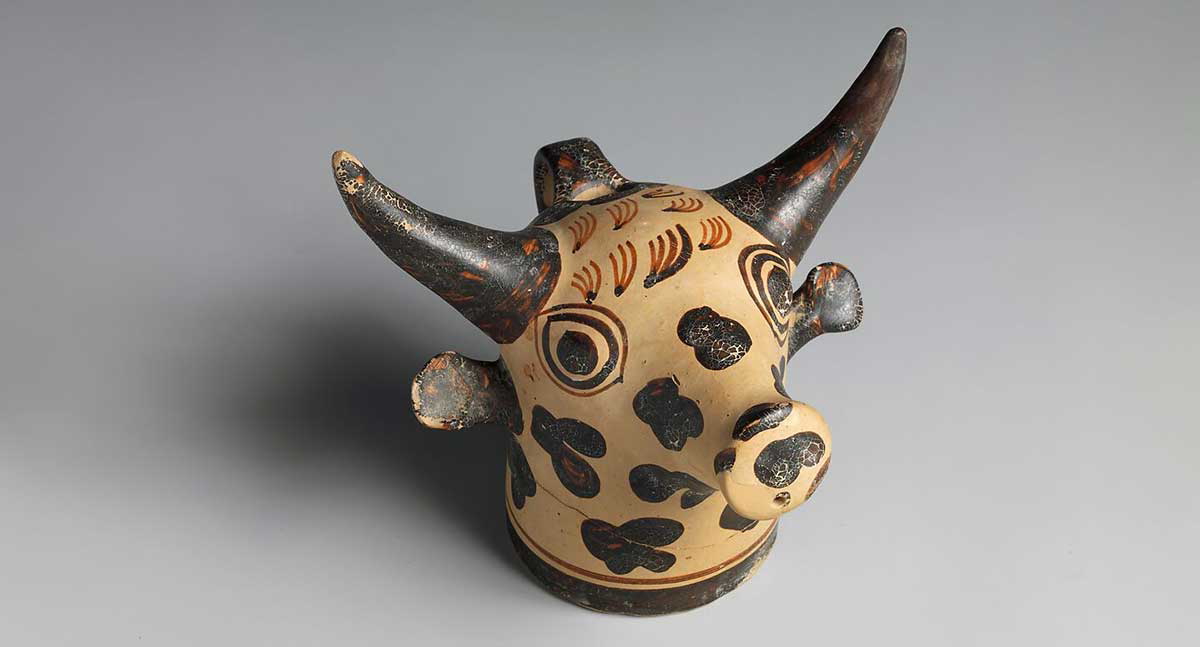
Before the Greeks were Greeks, another civilization dominated the Mediterranean Sea. The mysterious Minoan civilization was the dominant naval and trade power in the waterways of the Late Bronze Age. The Minoans were centered around the city of Knossos on the island of Crete. The first inhabitants of Knossos arrived around 7000 BCE, making it the oldest settlement on Crete and one of the oldest in Europe.
During the Bronze Age, the settlement expanded and included a massive palace complex that was over three acres in size. Named by archaeologists after the legendary king Minos, the Minoans developed an expansive trade network. Their ships crisscrossed the seas bringing copper, tin, wine, textile, and other valuables to other Bronze Age nations. Additionally, they developed an early form of writing, Linear A, which led to the creation of Linear B, used by the Mycenaeans, and was a prototype of the Greek alphabet. They also developed a unique style of pottery and pioneered monumental architecture.
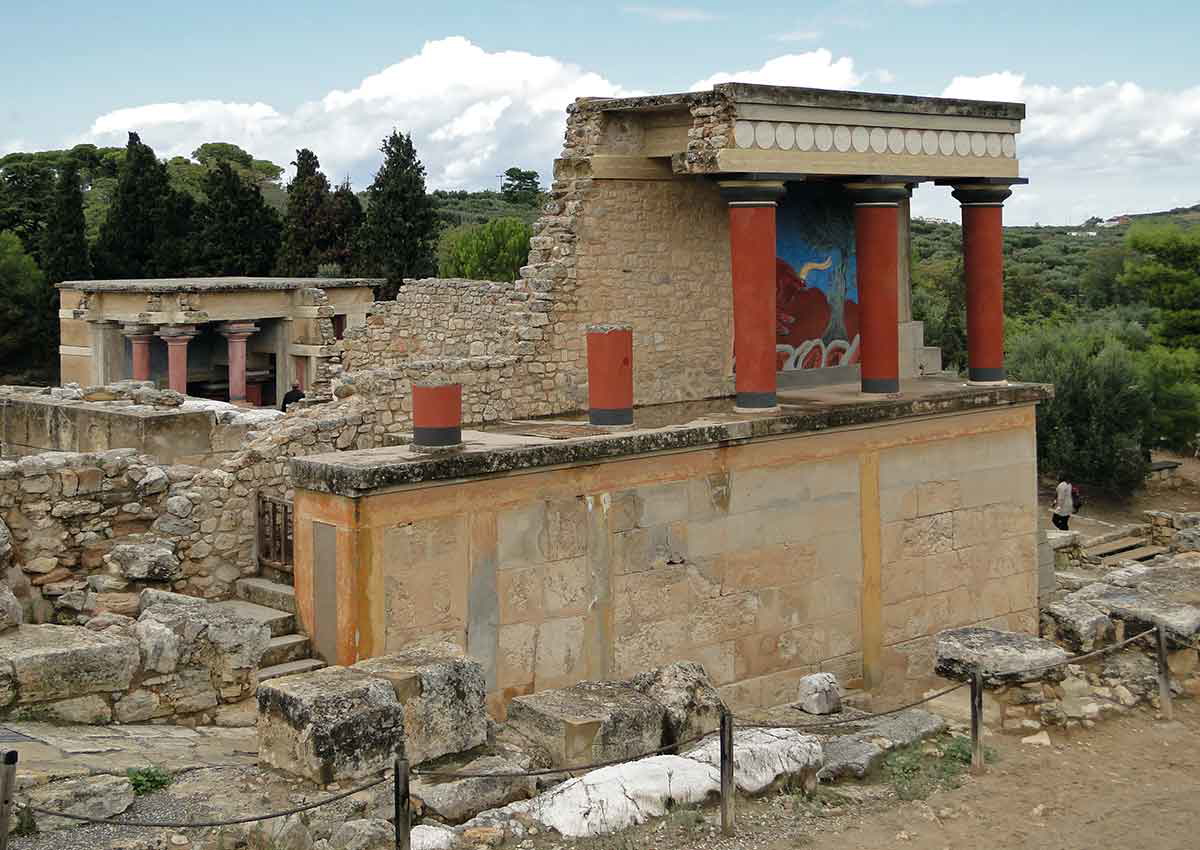
Though primarily a seaborne empire, they influenced mainland Greece, helping give rise to the Mycenaean civilization. This would be the Minoan’s undoing, as the Mycenaean civilization would conquer Knossos, ending the Minoan civilization. Though much of their society and history is still shrouded in mystery, Minoan art, architecture, writing, and language were the prototype for Greek civilization.
7. Delphi
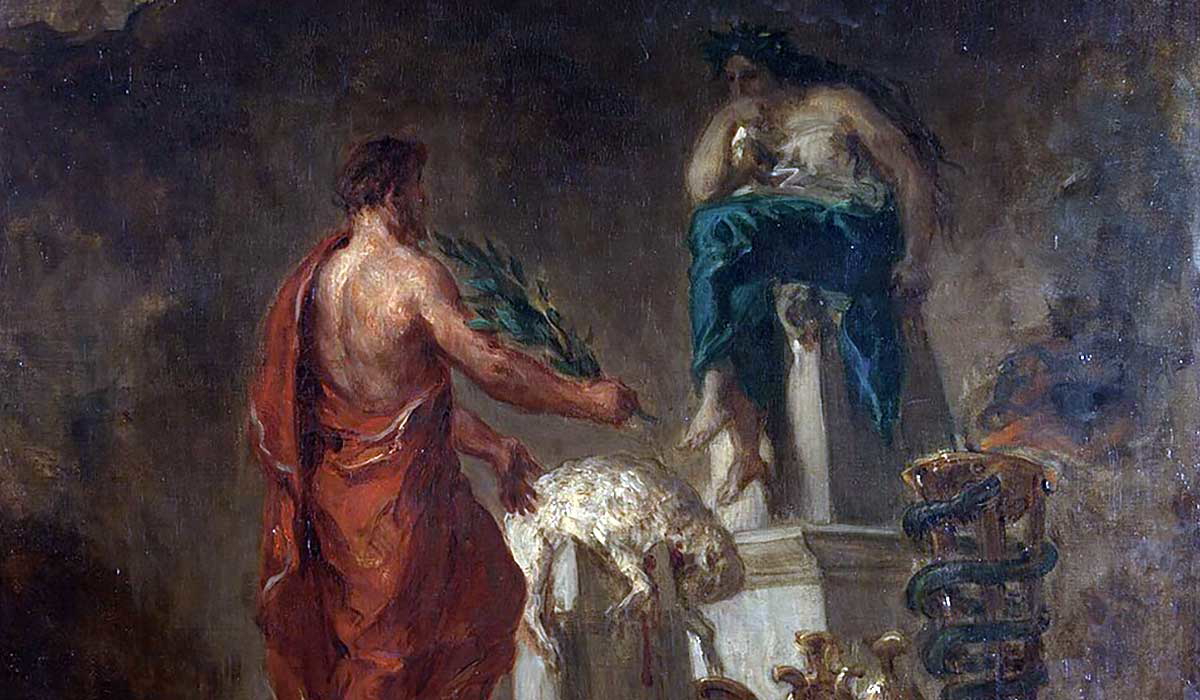
Delphi was not a military, artistic, or economic power, but still had tremendous influence on Greek civilization. Despite their famous philosophers, the ancient Greeks were highly superstitious and placed a tremendous amount of importance on oracles. There were many oracles around the Greek world that supposedly predicted the future. By far, the most famous was the Oracle at Delphi. Home to a temple of Apollo, founded by Minoan colonists, the Oracle was believed to speak directly to the god himself and give insight into the future.
The Delphic Oracles ranged from personal matters to decisions of international significance. When Persia invaded, the Oracle was consulted, and her predictions led to the battles of Thermopylae and Salamis. The words of the Oracle could see the rise and fall of empires and were taken very seriously. Even after conquest by the Romans, predictions were still made, though with much less influence. The Delphi Orance continued well into the Christian era, only ending in the late 4th century by order of emperor Theodosius.
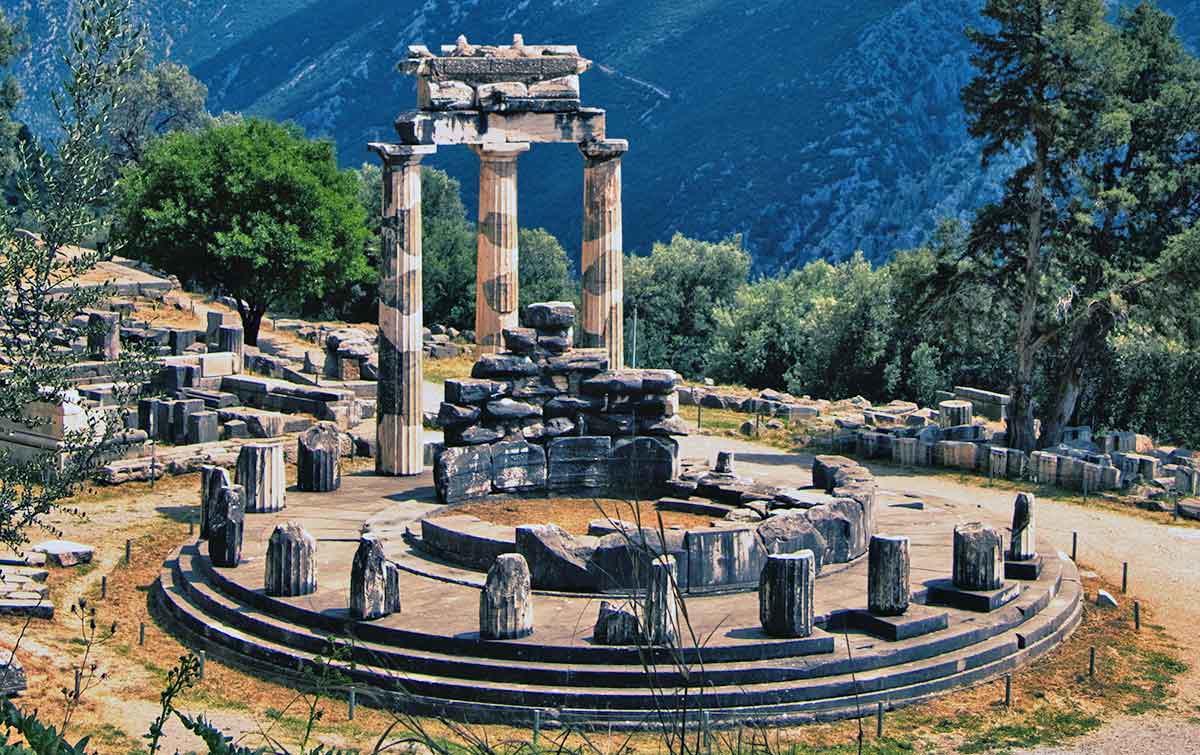
The Oracle was a middle aged woman who would receive visions from Apollo. Unfortunately, these were often gibberish, and her statements were “translated” by a priest, whose honesty was ambiguous at best. Though the Greeks believed it was a god speaking through the Oracle, modern archaeology has discovered the Temple of Apollo was built on a fault line where gasses such as methane and ethylene leeched to the surface. These gasses can cause hallucinations and trance-like behavior. Whether the predictions were divine, mundane, or something else is irrelevant. What does matter is the Greeks believed that Apollo was speaking and acted accordingly. The fates of nations hung on the words the Oracle uttered.
8. Argos
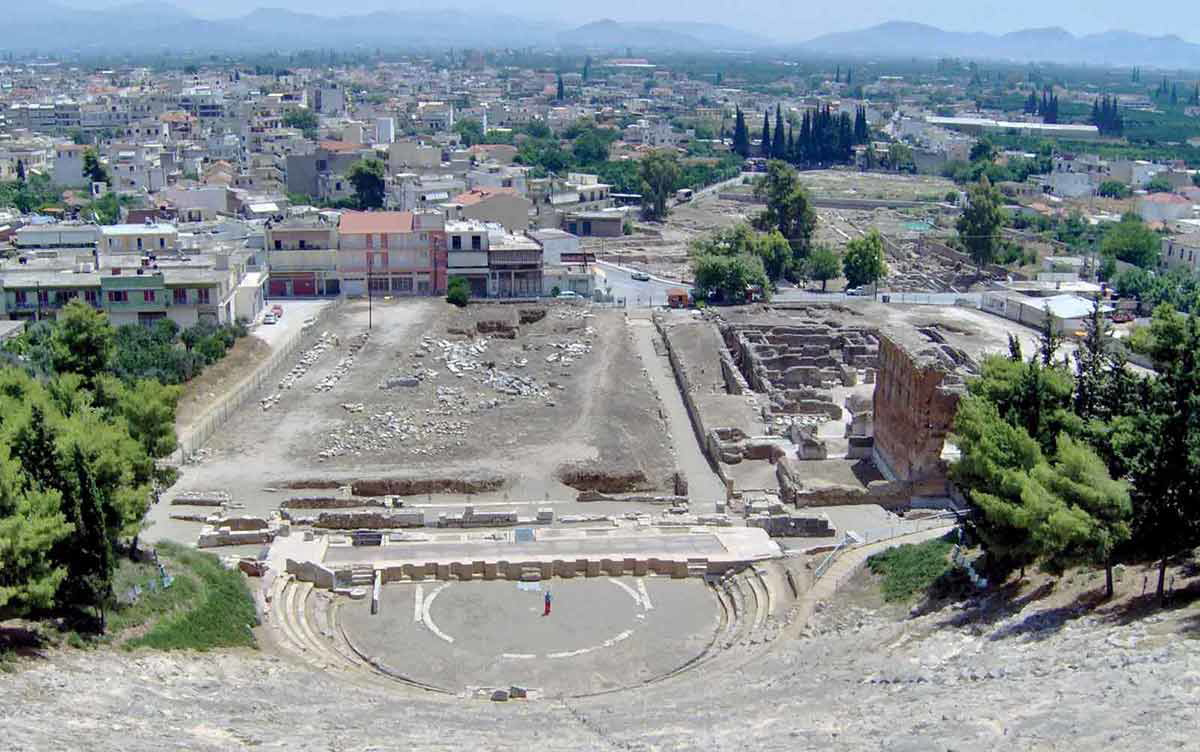
Argos is one of the oldest continually inhabited cities in the world and the oldest in Europe. This longevity has given the city a tremendous amount of significance in Greek culture. Politically, it was neutral, mostly due to isolation after staying out of the Persian Wars. It was technically an Athenian ally during the Peloponnesian War, but its contribution was minimal. All of this was despite rivalry with Sparta for dominance over the Peloponnese. While its political impact was limited, it had a much more significant cultural footprint.
As the oldest Greek city, many mythological events have been traced to Argos, including being the homeland of the hero Perseus. It was also a major artistic center, with the famous sculptor Polykleitos making his home here. Argos was also one of the earliest adopters of democracy. Many also believe that the phalanx formation used by Greek soldiers was developed in Argos, though this is difficult to confirm. While not as famous as its neighbors, its political neutrality, long existence, and artistic contributions are worthy of mention.
9. Elis
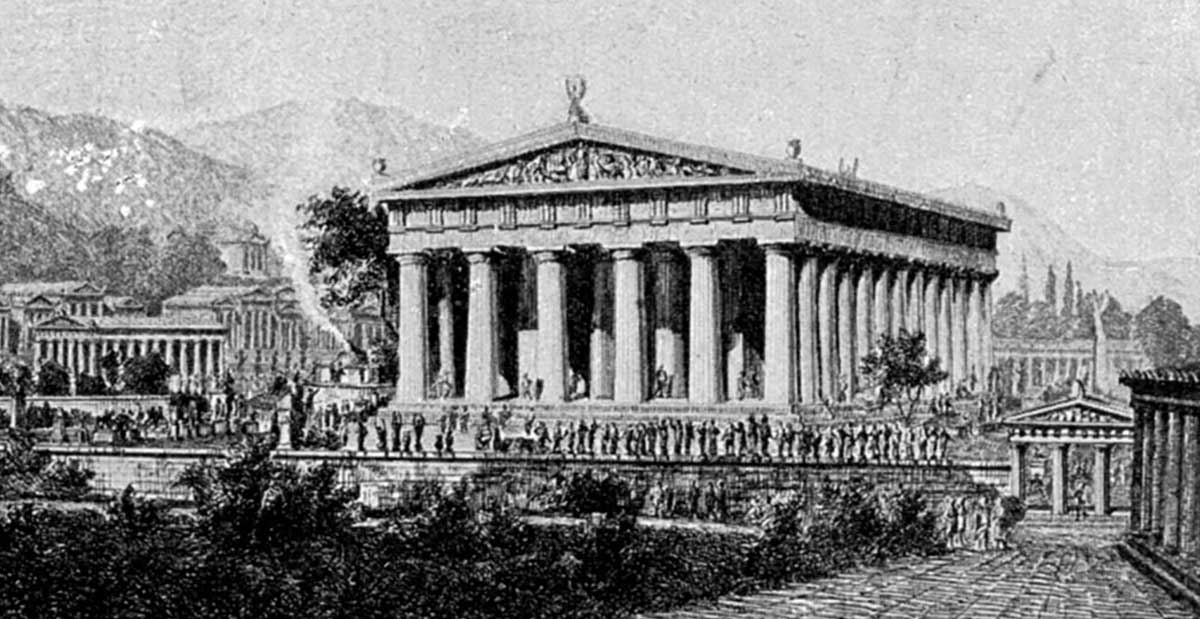
All Greek city-states had temples devoted to the worship of their gods, but some were more significant than others. Elis, located in the northwest Peloponnese, was located near and controlled Olympia, one of the most significant places in Greek religious beliefs. It was this proximity that gave Elis tremendous cultural importance.
In honor of the king of the gods, one of the Seven Wonders of the Ancient World was built. The Temple of Zeus at Olympia is one of the largest temples built in the Doric style, which emphasizes strength and simplicity. The temple was centered around a massive statue of the god seated on a giant throne. There were many other temples and sacred spaces in the city and surrounding region. Elis was also the home of the Olympic Games, the most important athletic event of the Greek world. This combination of religious, cultural, and athletic significance makes it a vital part of the ancient Greek world.
10. Miletus
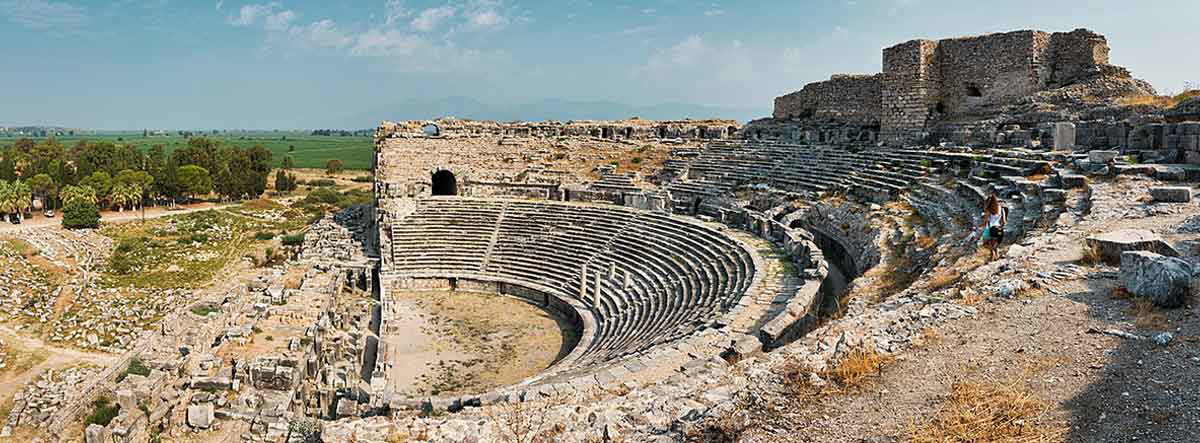
Located in Asia Minor, Miletus was a major trade hub and established colonies throughout the Mediterranean as well as on the Black sea. Its location also made it a place of cultural exchange, being located in Asia, linking Greece to the Near East and Egypt more than the mainland city-states. This was not always a peaceful existence. Miletus was at the center of the Ionian Revolt, a rebellion against Persian domination that would eventually lead to the Persian Wars.
While Athens is given credit for its intellectual influence, the birth of philosophy begins much earlier in Miletus. Long before the rise of the Athenian schools, pre-Socratic philosophers such as Thales of Miletus, Anaximander, and Anaximenes were the first to ponder ideas such as the origins of the universe and the real cause of natural phenomena. This makes Miletus the birthplace of philosophy, science, and scholarship.