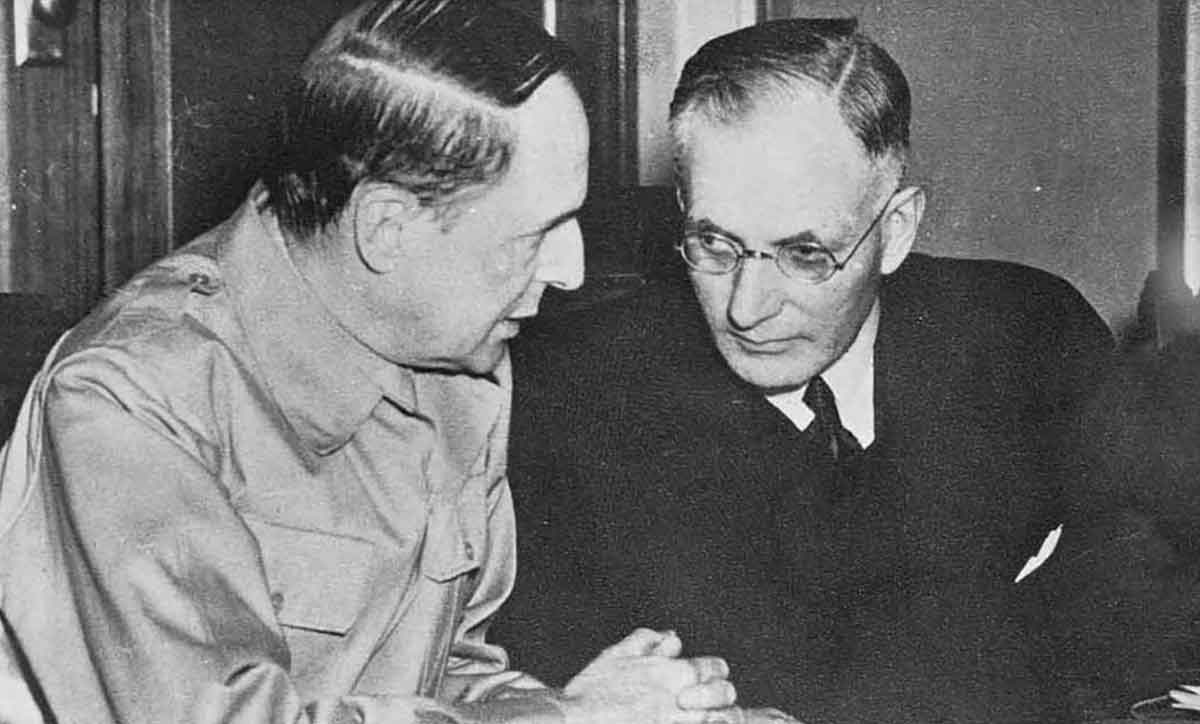
As a result of close ties established by US President Franklin Roosevelt and Australian Prime Minister John Curtin during WWII, the United States and Australia formed an alliance. This alliance remains in place to this day and has since expanded with the creation of AUKUS. This has led to the misconception that Australia is in NATO. While Australia does not have an alliance with any European country, it works closely with NATO member states.
Australia and the Grand Alliance in WWII
When Australia entered WWII on September 3, 1939, it did so because its government hoped to retain close ties with Great Britain and was a Commonwealth country whose head of state in 1939 was King George VI. Its forces went to the Middle East and Greece to fight alongside other British Commonwealth forces. Its leadership also supported British strategic planning in Asia, and sent forces to support the defense of Singapore.
However, the Japanese entry into the war and repeated British defeats in Asia led Canberra to question London’s utility as an ally. Winston Churchill viewed Australia through a colonial lens and thought he could order their forces around. By early 1942, Prime Minister John Curtin ordered most of the Australian army fighting in North Africa to return home. Churchill begged Curtin to keep his forces in North Africa, but Curtin feared a Japanese invasion and redeployed his military resources accordingly. He had the support of the United States, which saw Australia as a bulwark against Japan.
For the rest of the war, the Americans and Australians worked together to chip away at Japanese control of the Pacific. While some Australian commandos, ships, and pilots stayed in Europe, the majority of the country’s war effort was directed at defeating the Japanese military. Even though the Americans left the Australians to conduct operations of lesser importance, they still played a major role until the end of the war. The close ties between Washington and Canberra during the war assisted in the creation of a formal alliance after the war.
The Creation of NATO and SEATO
As part of an effort to create a new alliance aimed at rebuilding Western Europe and deterring the Soviet Union, France, Britain, Belgium, the Netherlands, and Luxembourg signed the Brussels Treaty of 1948. This was a new collective security arrangement but it was too weak without American backing. Despite opposition from Republicans focused on Asia affairs, the Truman administration gained enough support to enter the alliance. The North Atlantic Treaty of 1949 established the US-led alliance that would dominate transatlantic relations for generations to come.
Initially composed of the United States, Canada, Belgium, Denmark, France, Iceland, Italy, Luxembourg, the Netherlands, Norway, Portugal, and the United Kingdom, NATO accepted Greece and Turkey in 1952, West Germany in 1955, and most Eastern European states after the end of the Cold War. On paper, NATO’s primary focus was on Europe, but the organization established ties with strategic partners countries around the world. It became the world’s most powerful alliance and countered the USSR and the communist states in Eastern Europe.
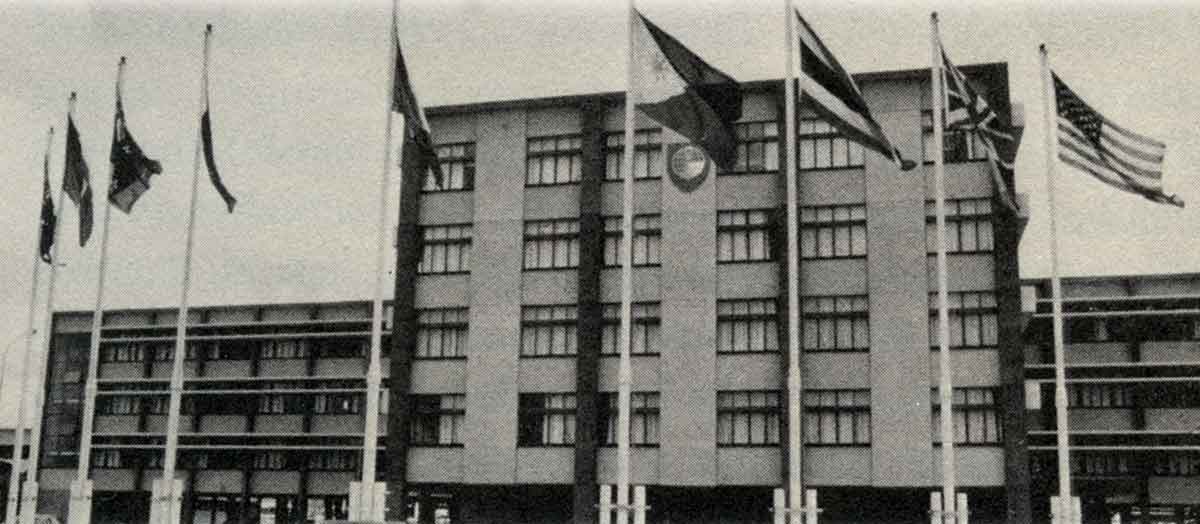
Alongside NATO, American policymakers formed the Southeast Asia Treaty Organization with its allies in the Indo-Pacific region. In February 1955, Thailand hosted a conference in Bangkok officially creating SEATO. It was composed of the United States, France, Great Britain, New Zealand, Australia, the Philippines, Thailand and Pakistan. While the US government considered SEATO a vital component of its policy to contain communism was part of the justification for American involvement in Vietnam, it had few formal military functions beyond joint exercises and dissolved in 1977.
The Creation of ANZUS
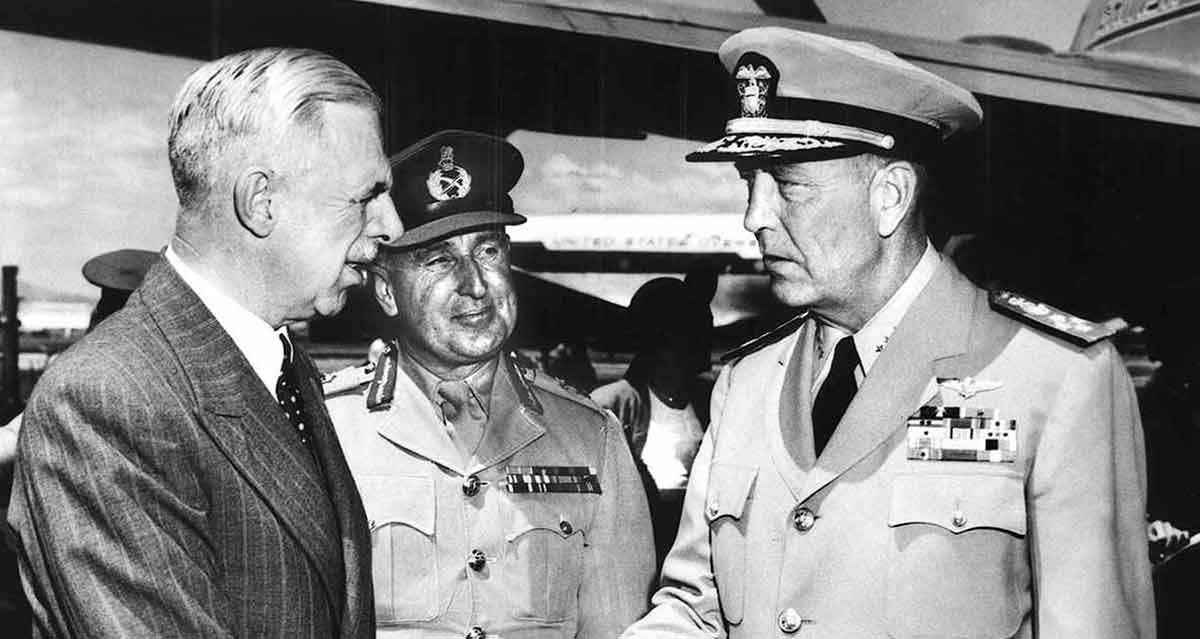
Before Australia joined SEATO in 1955, it signed a treaty with New Zealand and the United States to counter the spread of communism in the Pacific. The ANZUS Treaty marked the first time that Australia was formally tied to the United States in security matters. Canberra feared that they could not stand up to the communists alone and believed that European countries were too weak. Australian leaders also made it clear that they would only support the rearmament of Japan if they were given a security guarantee by the US.
After several rounds of negotiations, US Secretary of State John Foster Dulles signed the treaty at a summit in San Francisco with the Australian and New Zealand ambassadors. The British were upset that they hadn’t been included in the talks, but Robert Menzies’ government believed that Britain’s power in the Pacific was waning. The Australians saw America as the new hegemon and sought to strengthen ties with Washington instead of London.
While the treaty did not have a collective defense clause similar to NATO’s Article V, it did ensure close security and intelligence cooperation between the member states. Australia’s large intelligence community proved to be an effective partner of the CIA and FBI. American bases remained in Australia after their establishment in WWII as part of the treaty. Canberra also agreed to keep some forces in Japan as part of the postwar occupation force. While New Zealand withdrew from the treaty in the 1980s, the agreement remains the basis for the security relationship between the United States and Australia.
Australia and NATO in Vietnam
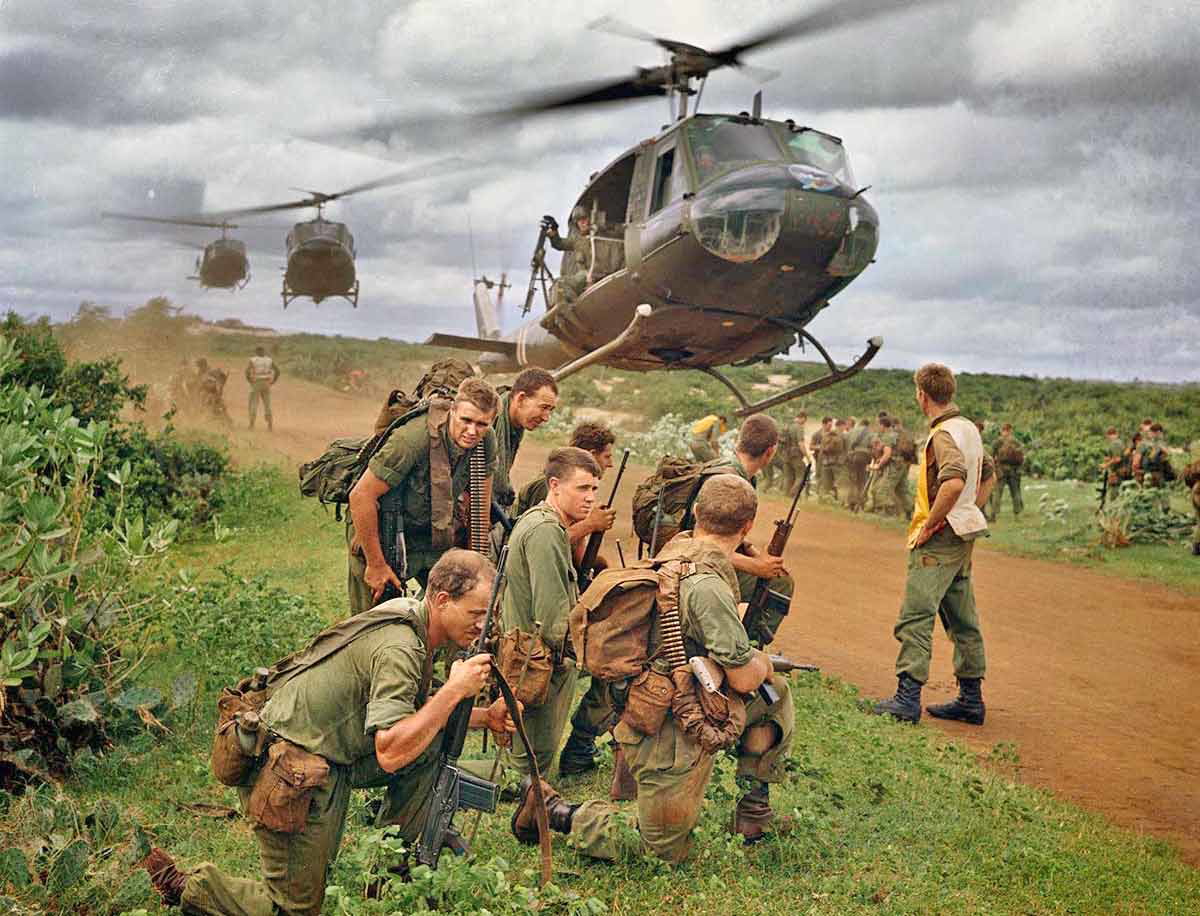
When American forces first started getting seriously involved in combat in Vietnam, it looked for support from its allies across the world. While the United States had the support of most NATO members in the Korean War, the Vietnam War had few supporters outside Washington. France did not want to reenter the country after its failure to reestablish colonial rule in the First Indochinese War of 1945-1954. Other NATO members were tied up with obligations closer to home. NATO’s leadership feared enmeshing itself in the growing quagmire that Vietnam was proving to be for American forces.
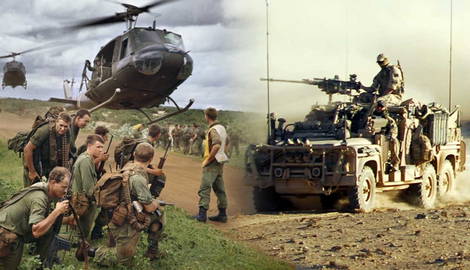
The Australian government under Robert Menzies and his successor, Harold Holt, rallied to the American cause. Starting in 1962, Australia and New Zealand began deploying forces to South Vietnam. They aimed to train South Vietnamese forces and began to fight alongside them. With prior experience in fighting in the jungles of Malaysia and Borneo, Australian forces proved to be effective allies to the Americans. Notwithstanding the war becoming more unpopular in Australia, Holt’s government doubled down and committed more troops. Even after his disappearance and death, Australian forces continued to fight in Vietnam.
Once it became clear the American-led coalition could not win, Australia decided to begin scaling down military operations in the country. Prime Minister Gough Whitlam was skeptical of American goals in the region and began to align his country more closely with European NATO members.
The Development of Australia’s Relationship With NATO Over Time
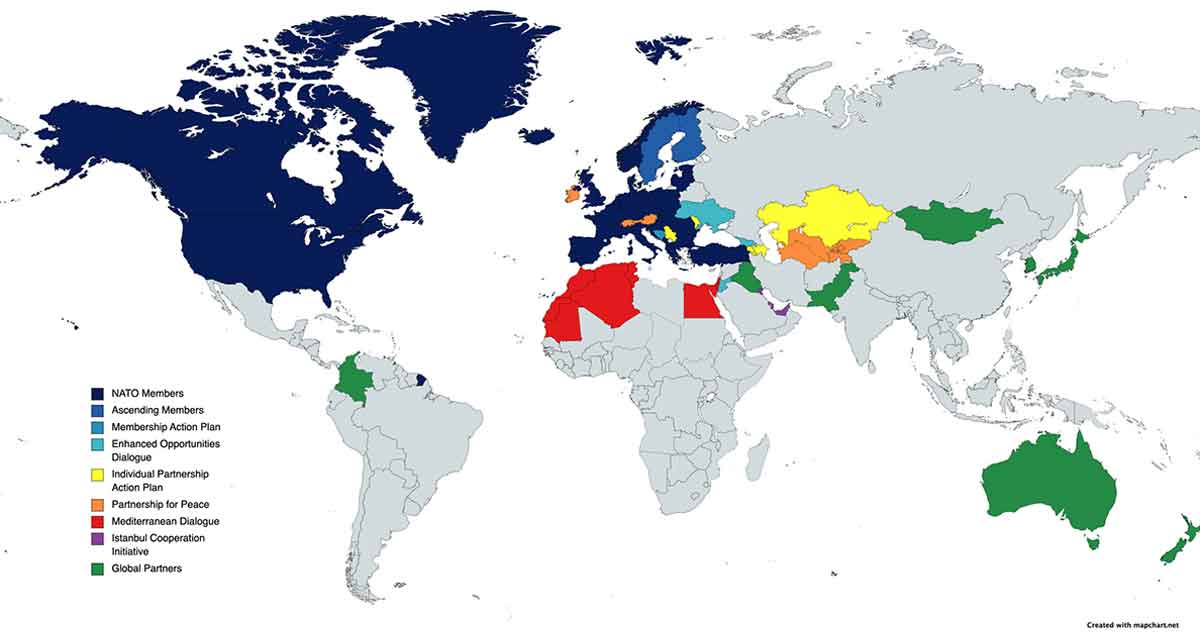
Notwithstanding policy differences that existed between Australia’s leadership and NATO, the country has grown very close with the alliance and many of its members. Thanks to Australia’s heavily Anglophone diaspora population, it remained closely aligned to North America and Western Europe. Australia’s military was armed and trained to NATO’s standards from the moment NATO created its joint military apparatus. Its intelligence community established ties with NATO intelligence agencies. Canberra knew that in order to defend its territory, it needed to maintain ties with a number of NATO member states beyond just the Americans.
After Australia’s pivot to focus on Asian affairs, it did not initially support NATO’s defense plans in Europe. Successive governments in Canberra thought that communism in Asia posed a greater threat than communism in Europe. However, both Labor and Liberal governments agreed to maintain ties with European NATO members in defense and intelligence fields for security purposes. When Australia sent forces to Korea, it attached them to a British-led force. It also purchased a lot of equipment from European arms manufacturers.
During the 1950s, Australia agreed to allow Britain to test nuclear weapons in the Outback since there were no suitable test sites in the United Kingdom. Starting in 1952, the UK tested a bomb in Maralinga and began testing more of them. As time went on, the UK’s bomb tests grew bigger. While Australia did not obtain any nuclear weapons of its own, it did join research with British scientists on nuclear blasts. This ended in 1963 when the UK suspended its tests.
Australia and NATO in the 21st century
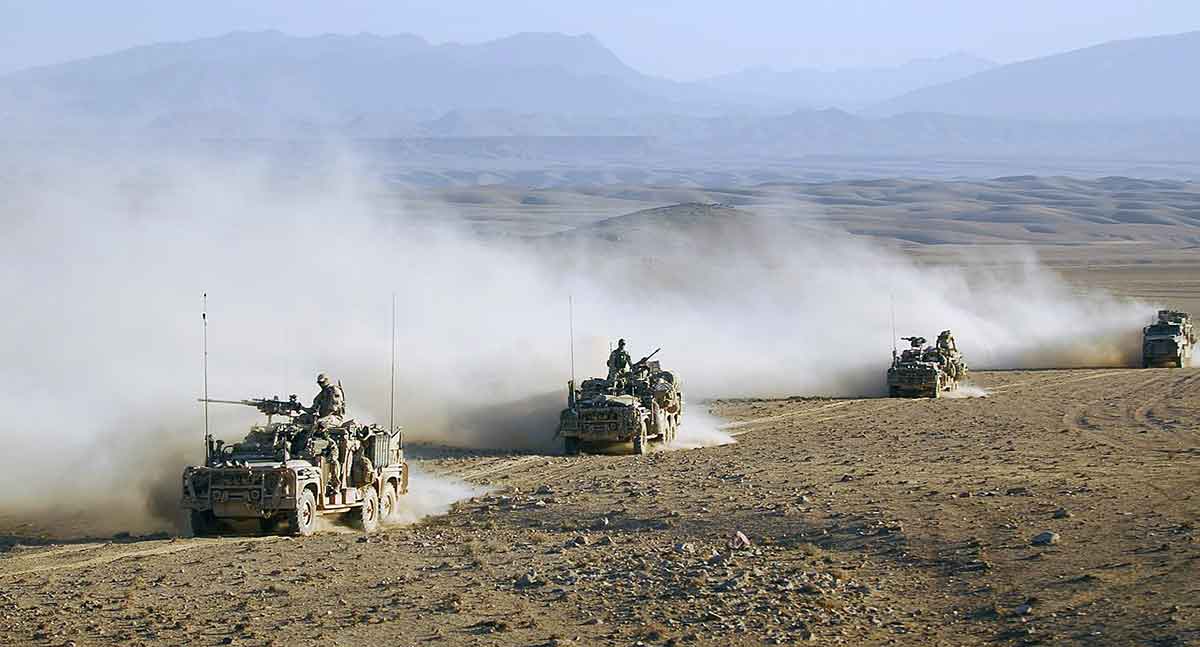
In the aftermath of the September 11 attacks, Australia’s ties with NATO became much closer. In addition to its commitment to the ANZUS Treaty, Australia feared that Islamist terror movements could start attacking Australasian targets. Canberra began to deploy special forces teams to Afghanistan following NATO’s invasion of the country and the toppling of the Taliban. Australia’s involvement in Afghanistan lasted until the final withdrawal of Coalition forces in 2021. Its involvement in the Five Eyes Intelligence Alliance expanded to include counterterrorism intelligence sharing.
In 2013, Australia joined the Individual Partnership and Cooperation Programme. Its navy and air force increased its involvement in NATO task forces when operating in the Indian Ocean or the Mediterranean. While it does not have a formal defensive alliance with most NATO members except the US, its partnerships with NATO ensures that, in the event of a major security threat, the alliance will be there to help them.
In 2021, Australia signed a new agreement with the US and Britain that fundamentally altered its relationship with the West. The AUKUS deal, signed by President Joe Biden, UK Prime Minister Boris Johnson, and Australian Prime Minister Scott Morrison. The provisions involved a new nuclear submarine program for Australia, repudiating an existing deal with France. Nevertheless, the treaty demonstrated Australia’s willingness to work with other NATO members to strengthen its military capacity. It also showed NATO’s increasing interest in Asia affairs. Australia has proven over the past years to be in a hybrid relationship with NATO: a key partner of the organization but not a full member.