
Pauline Boty was a British Pop Art painter. Boty was often inspired by Marilyn Monroe and portrayed her in various artworks. By analyzing Boty’s paintings of Marilyn, let’s explore Boty’s artistic and personal interpretation of notions such as womanhood, celebrity culture, and femininity.
The Wimbledon Bardot: Pauline Boty’s Life and Career
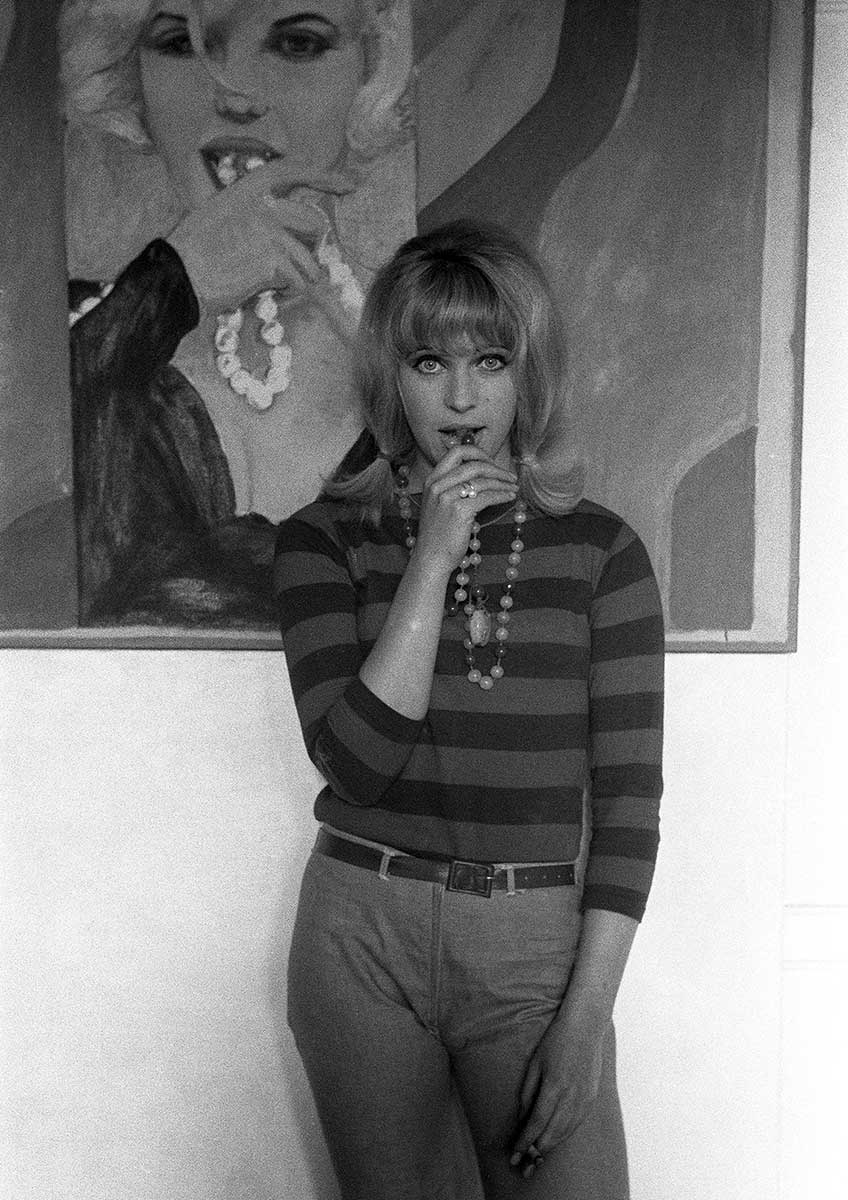
Pauline Boty, who was born on March 6, 1938, left a lasting and relevant legacy even though she lived a short life, sadly passing away at the age of only 28. She is considered to be one of the most important representatives of British Pop Art, especially since she was the only acknowledged female member of the movement at the time. When Boty expressed her desire to be an artist, her father was very much disapproving.
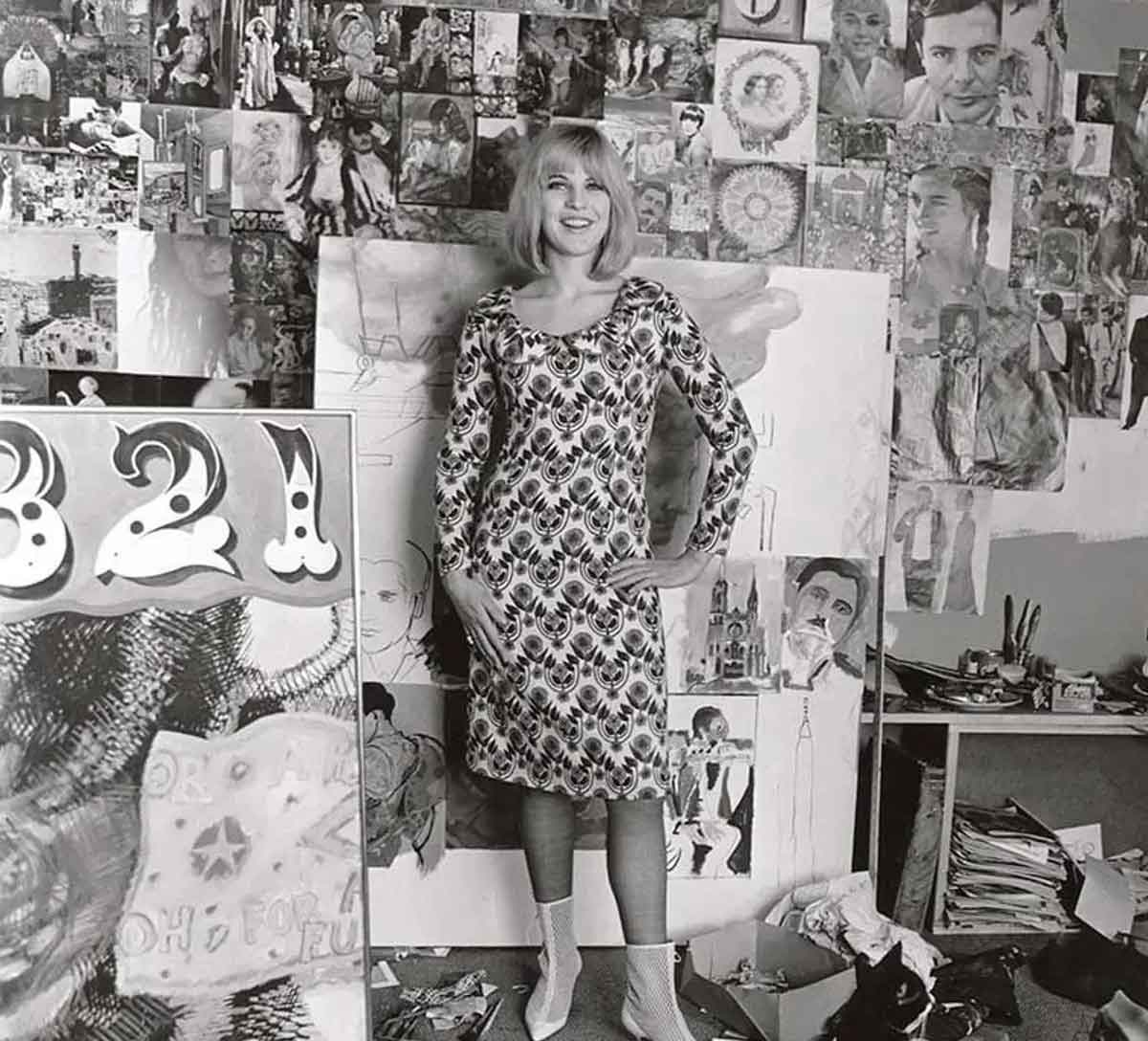
Thanks to her mother, who herself was forbidden by her own parents to pursue an artistic career, Boty was able to attend the Wimbledon School of Art. It is there that she earned the nickname the Wimbledon Bardot because of her resemblance to the French actress and sex symbol Brigitte Bardot. Comments about Boty’s physical appearance would follow her work for the rest of her life and career. Sometimes her attractiveness would benefit her, but mostly it overshadowed her art. She often wasn’t taken seriously since, in the eyes of the public, her beauty automatically made it impossible for her artwork to be of any quality.
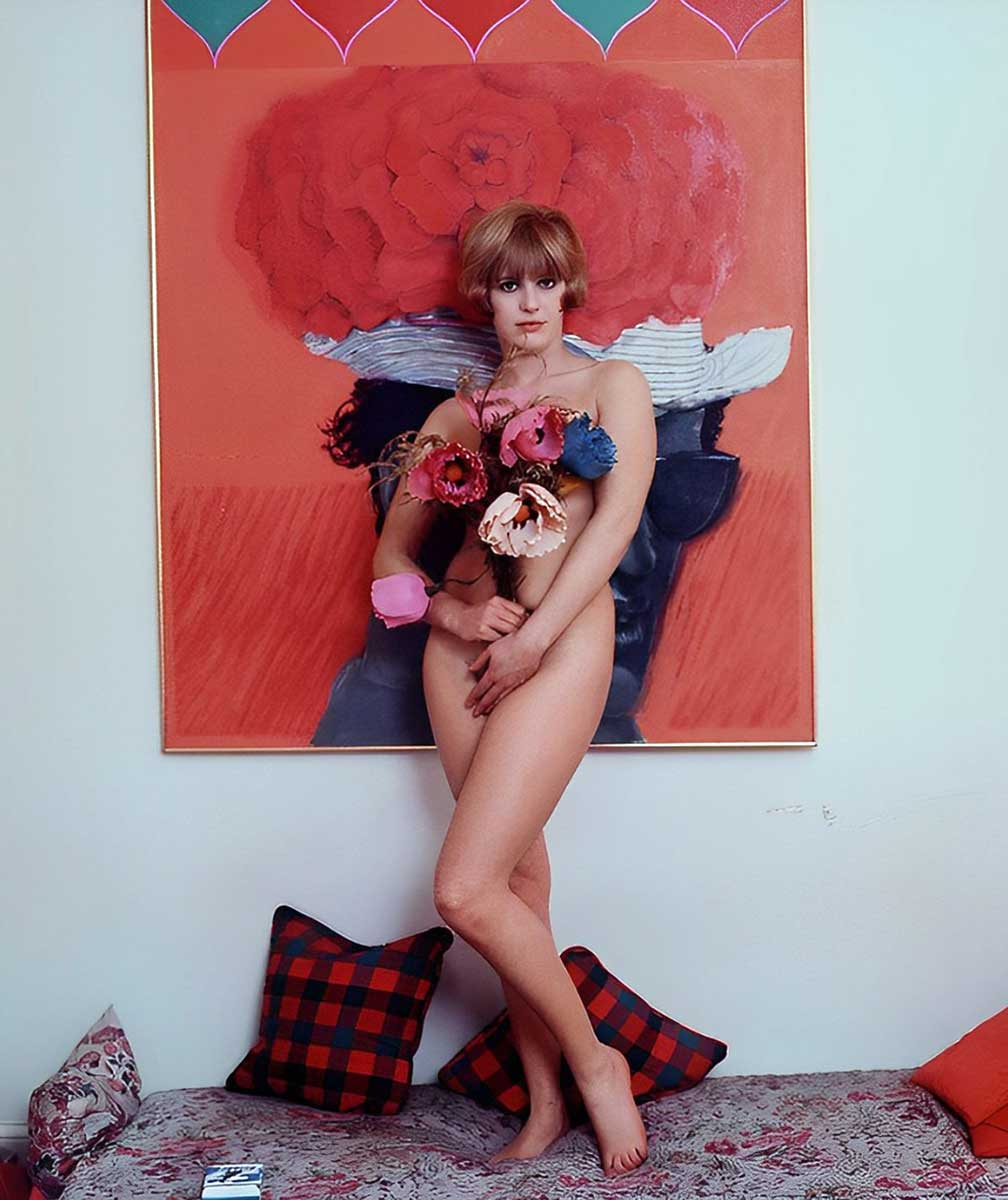
Sexism was also a steady companion of Boty’s throughout her life, not only in terms of interpreting her as an artist but also when it came to her education. She went to the School of Stained Glass at the Royal College of Art, and she considered enrolling at the School of Painting, but she decided against it since men had a much greater admission rate than women. Finally, Pauline Boty had a brief acting career as well. It brought a lot of attention from the press, who would often praise Boty much more as an actress and a beautiful woman, neglecting her role as an artist. This comes as no surprise since, at the time, it was far more acceptable for a woman to pursue an acting career. It was seen as a more feminine choice than trying to fit into a male-dominated art field.
It’s a Man’s World: The British Pop Art and Pauline Boty
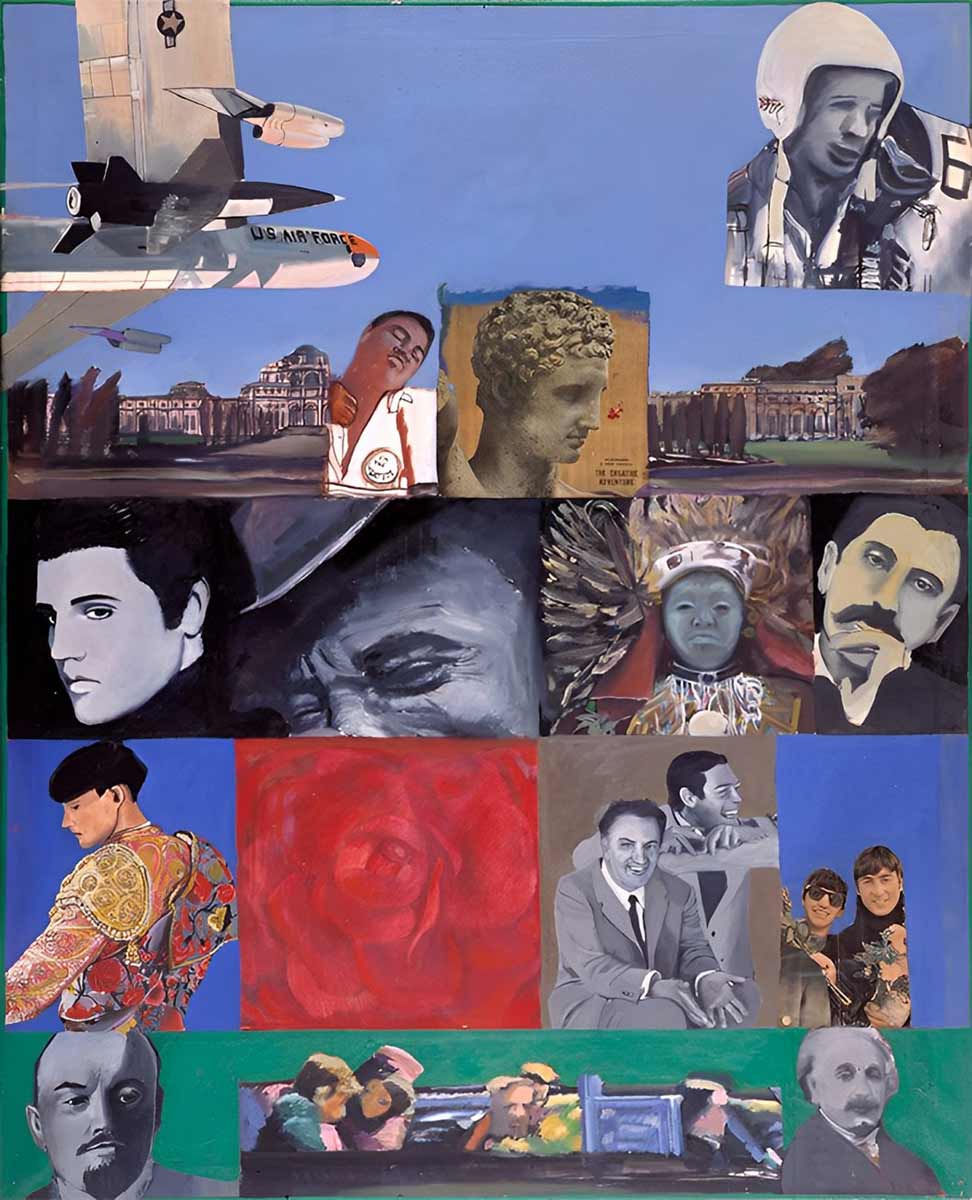
Pauline Boty’s art had been forgotten for almost three decades. After her death, all of her works were transferred to her brother’s farm, where they didn’t see the light of day until the 1990s. After curator David Mellor and academic Dr. Sue Tate rediscovered her art, interest in Pauline Boty skyrocketed. The reasons why Pauline Boty continued to be unnoticed for so long are numerous. Firstly, she was the only acknowledged female member of British Pop Art and her approach to it was different than that of her male colleagues. While she did use popular culture and celebrities as inspiration for creating art, the gaze she adopted was female, not male. Boty celebrated female sexuality by often sexualizing famous men such as Elvis Presley or Jean-Paul Belmondo in her art. In that way, Boty reversed the roles, making herself a spectator who finds pleasure in watching men.
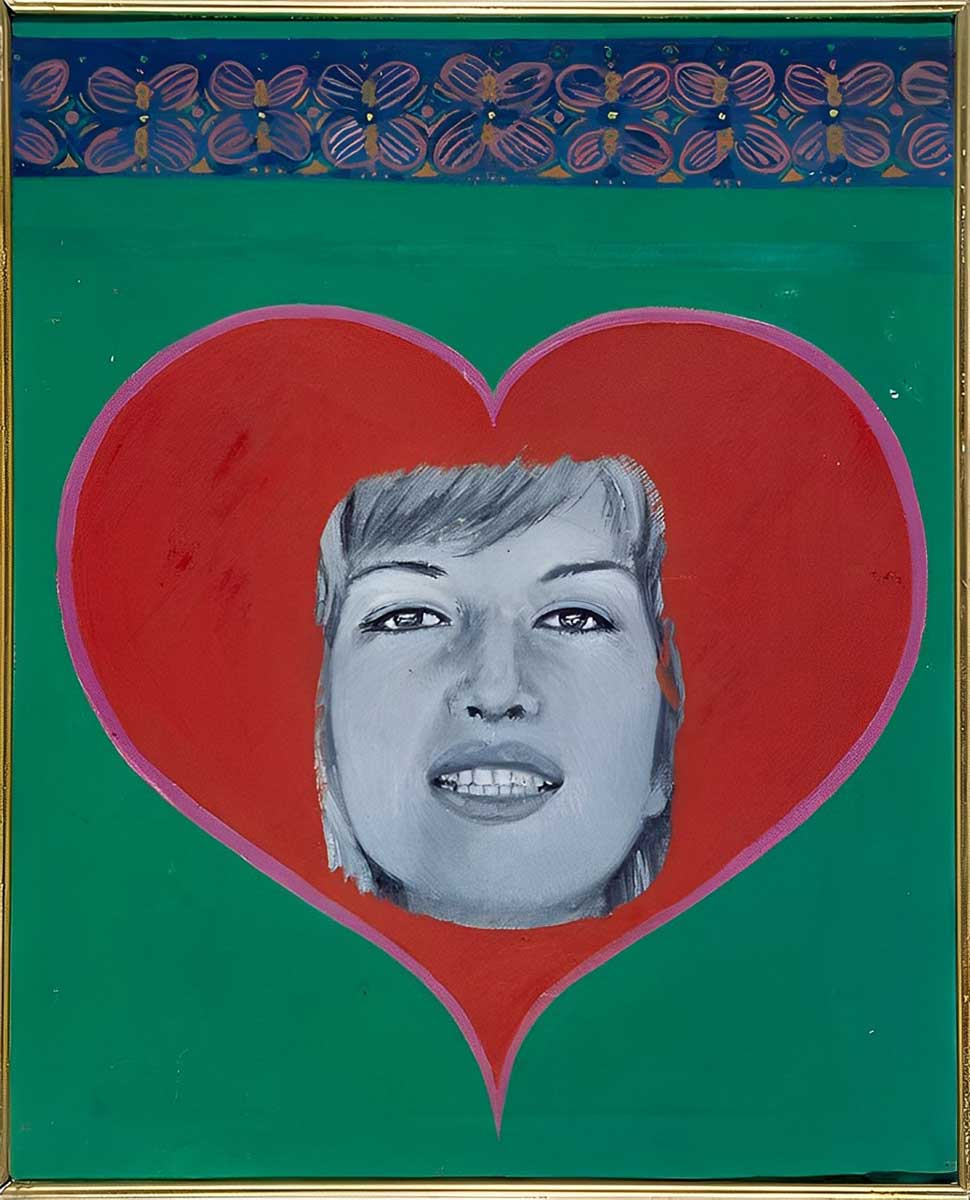
Moreover, Boty admired female sex symbols such as Monica Vitti and especially Marilyn Monroe, often portraying them in her work. On the one hand, she saluted the sexual freedom of women and actresses who openly reveled in their womanhood. On the other hand, she took a critical stance towards the way mass media represented these women since they were often subjects of objectification, stereotype, and prejudice regarding their physical appearance.
Ultimately, one of the crucial factors why Boty was unknown for a long time lies in the fact that she died young. Her husband, literary agent and political activist Clive Goodwin, as well as her daughter Boty Goodwin also died prematurely. Therefore, Boty had no family that would promote her legacy. Art historians also proved to be of little help in discovering her art through the years. Fortunately, in the early 1990s, David Mellor took an interest in her and went to her brother’s garage to salvage the paintings that were practically rotting there.
The Ultimate Sex Symbol: Marilyn Monroe
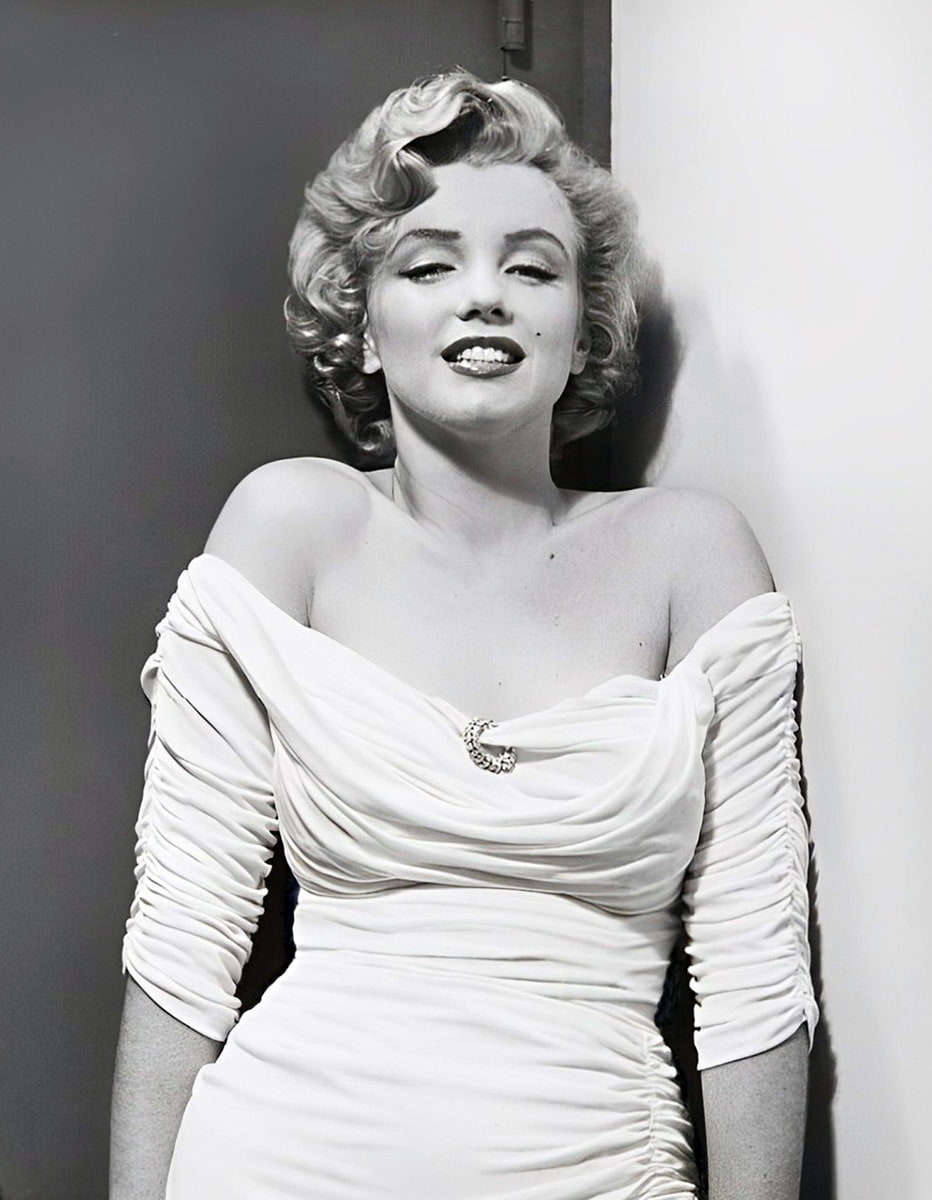
Marilyn Monroe is an iconic figure whose seductive and sensual image is familiar to people all over the world. This blonde bombshell has divided feminists when it comes to how she should be seen—was Marilyn Monroe a victim of a misogynistic and sexist society, or was she a proto-feminist heroine? Marilyn Monroe was exploited throughout her whole career and even posthumously. Big Hollywood production companies realized that her dumb blonde persona was very much profitable, so they took advantage of it to the maximum. As a result, Monroe couldn’t escape the repetitive roles of sexy but not very bright women, not only in the movies she made but also in her own life. Thanks to the mass media that further pushed this image of Monroe, she was equated with the protagonists she played.
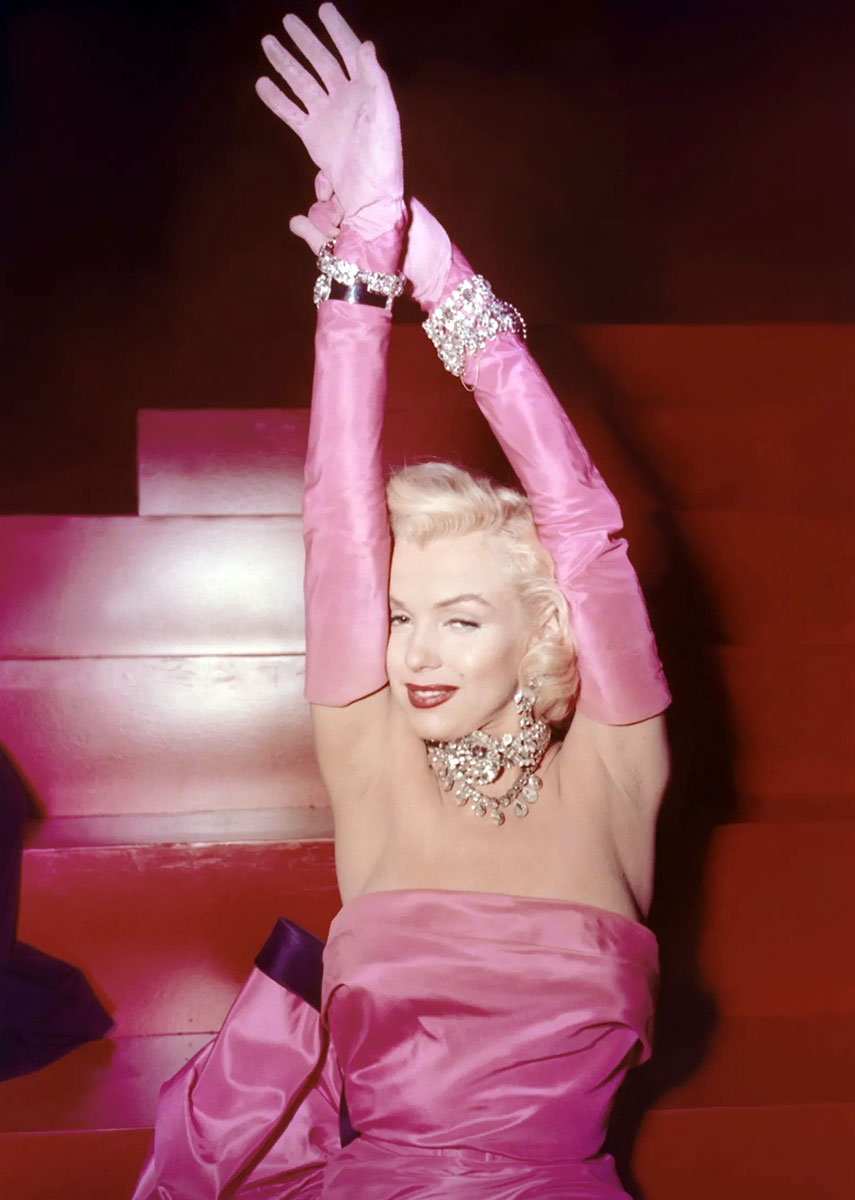
In contrast, Marilyn Monroe’s embracement of her own sexuality and femininity is considered by some to be of a feminist nature. She was aware of her sex appeal and the effect she had on men, and she relished in her womanly power. At a time when sex was taboo, spoken about only behind closed doors, Monroe’s open seductiveness was groundbreaking. Furthermore, she refused to be labeled as a one-dimensional caricature, so she started her own production company in order to have more power over the movies she would star in. In a way, this act was revolutionary since she was the second woman in the U.S. to achieve such a thing (the first one was a silent movie actress Mary Pickford).
Finally, it comes as no surprise that Pauline Boty identified so much with Marilyn Monroe. They were both talented, beautiful, and highly underestimated. Just like Boty, Monroe relished her physical appearance and sexual playfulness. The bright side is that she was celebrated because of it, while the downside is that it put her in a seemingly inescapable dumb blonde box.
The Only Blonde in the World
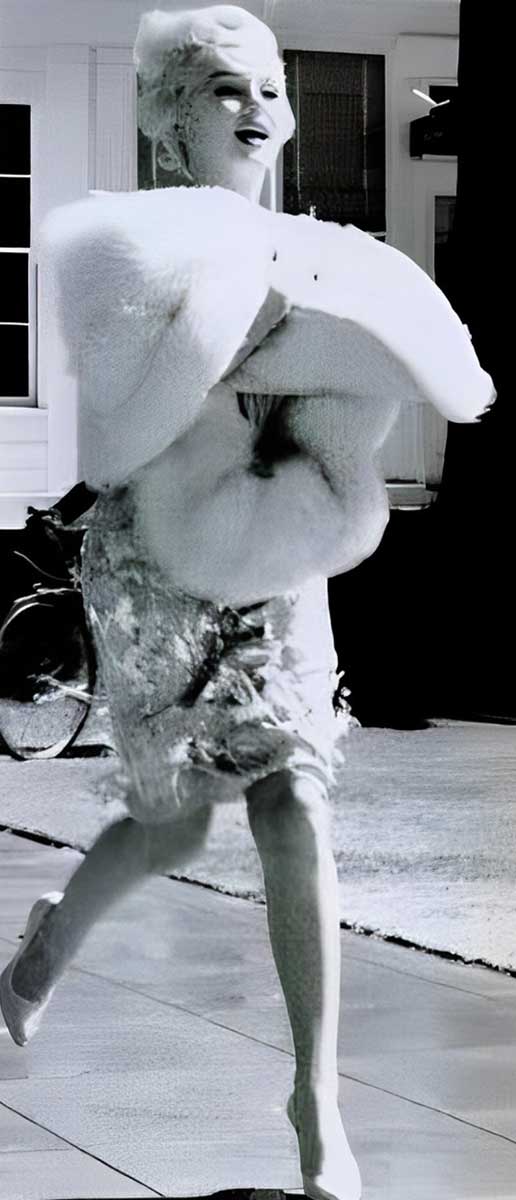
The title of Boty’s 1963 artwork comes from TIME Magazine’s piece that was dedicated to Marilyn Monroe after her sudden passing. In the spirit of Pop Art, Boty appropriated a still from the 1959 movie Some Like it Hot that was published in LIFE Magazine. This painting is a perfect display of Boty’s knowledge of stained glass, since she drew inspiration from this technique in creating the composition. The image of Marilyn is put in a panel which is further framed by golden color.
Monroe is represented as an unattainable fantasy rather than an actual person. The abstract background of vivid colors, flattened perspective, and wide brushstrokes engulf Monroe’s figure, thus enhancing that sense of dreaminess and her being an untouchable ideal.
The title of the painting also puts Monroe on a pedestal by pointing out that she had become the one and only epitome of feminine beauty. Having employed a magazine photo of a fictional character Sugar Kane which Marilyn played, Boty put an emphasis on the constructed image of Monroe. By representing her in a sequin dress, high heels, and luxurious fur, Boty highlighted Marilyn’s glamorous persona.
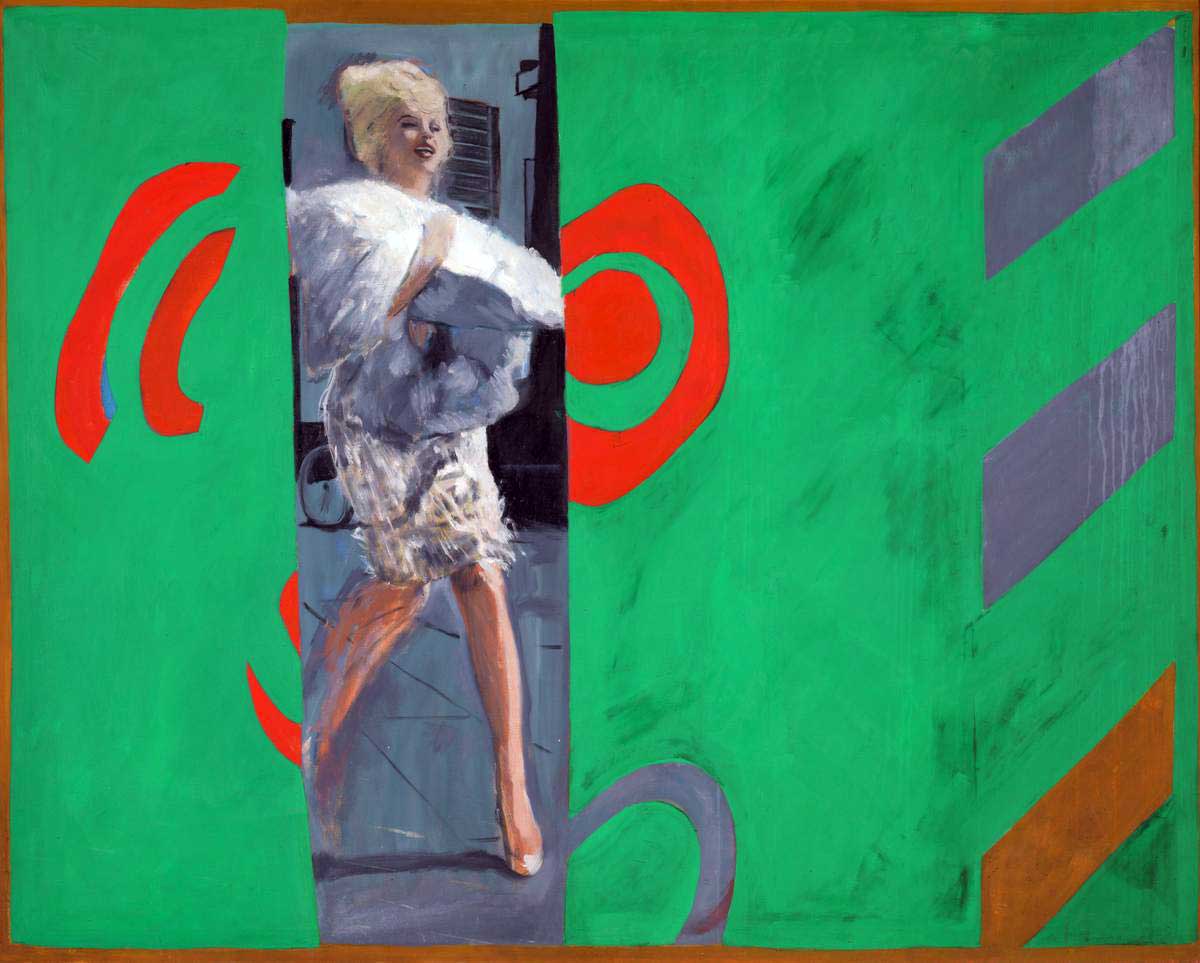
Finally, the bold greens and reds can have a double meaning. On one hand, that abstract background can be interpreted as a visual representation of the Hollywood dream, splendid success, and tremendous fame. On the other, those colors that threaten to overwhelm Monroe’s figure can allude to her uncertain future after the movie was made since she faced some heavy personal problems—she suffered a miscarriage, divorced her husband Arthur Miller, and her mental health declined. In conclusion, Boty managed to achieve two clashing goals. She celebrated Monroe’s beauty, sensuality, and fame through this work. However, she also underlined the fact that Monroe’s out-of-this-world popularity depersonalized her, depriving her of genuineness and authenticity in the mass media culture.
Color Her Gone: Pauline Boty’s Tribute to Marilyn Monroe
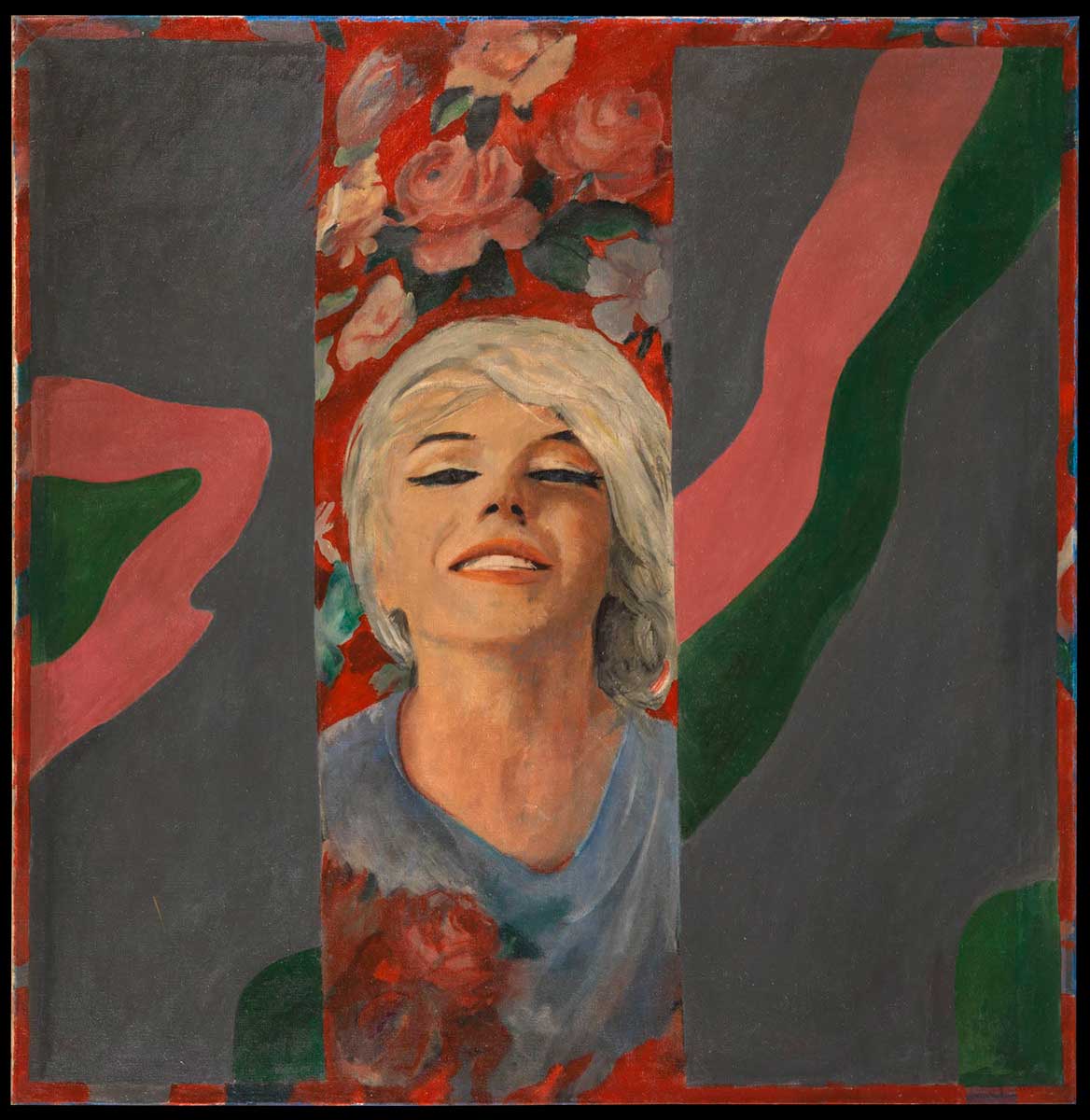
Affected by Marilyn Monroe’s tragic death, Pauline Boty created Color Her Gone in 1962. The photo she used was the one published by TOWN Magazine the same year. Monroe was photographed at the Santa Monica Beach just weeks prior to her passing. Boty also appropriated the title, using a verse from Barbra Streisand’s song My Coloring Book.
It is interesting that Pauline Boty decided to pay tribute to Marilyn through this particular painting. Monroe was known for her glamour and elegance, so one would expect Boty to capture that kind of Marilyn when honoring her. Surprisingly, Boty chose to depict a not-very-common image of Monroe showing a laidback and casual Marilyn. Wearing a simple blouse and no heavy makeup, it seems that Boty wanted to explore the person behind Marilyn’s public persona.
Furthermore, by painting enlarged flowers around Marilyn’s portrait and by using a vivid color palette, Boty celebrated Monroe’s femininity, but also her life in general. Sue Tate, an art historian, said that this work was clever and sad but also full of joy. Her remark gives the best description of Boty’s relationship with Monroe. While she sympathized with the way the press often treated Marilyn as a dumb blonde, Boty was also enchanted by her magnetism, allure, and femininity.
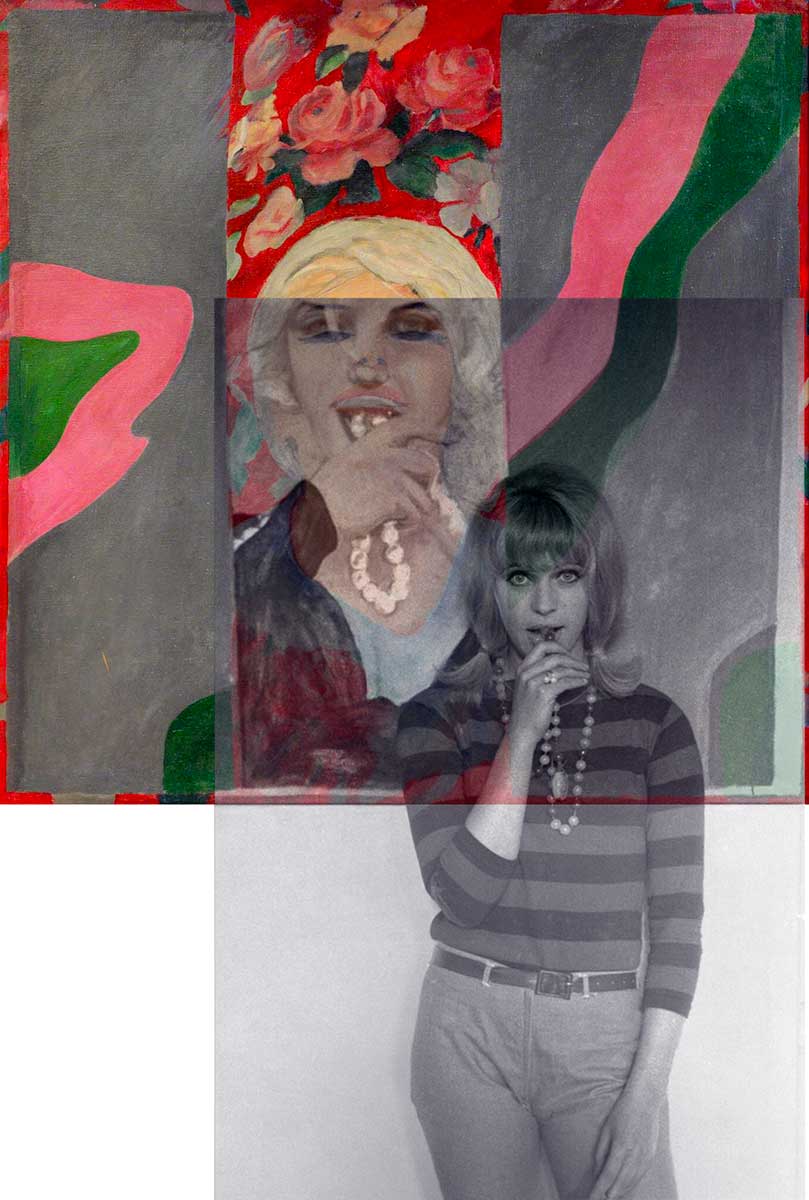
Finally, in January 2024, Sue Tate made a fascinating discovery. It was believed that Boty’s 1962 painting Marilyn with Beads was lost. Tate thought differently, so she teamed up with the Gazelli Art House and Christopher Gregory from the Pauline Boty Organization to investigate the hidden layers beneath Color Her Gone. Reflectogram revealed that Color Her Gone was actually painted over Marilyn with Beads. This puts a whole new light on Boty’s work since it shows that she contemplated a lot about Marilyn and the way she wanted to represent her. As Tate points out, “the reflectogram allows us to see the highly complex development of the composition and a high level of planning.”
Pauline Boty’s Epitaph to Something’s Gotta Give
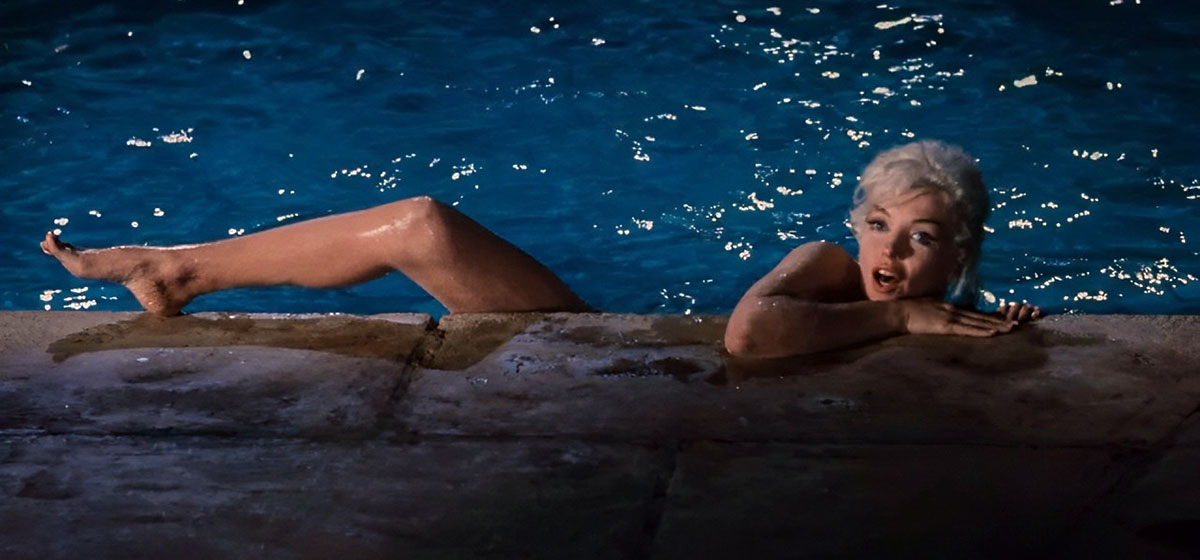
Something’s Gotta Give is the last movie Marilyn Monroe starred in. Although it was unfinished, and Monroe was even fired from it at one point due to her alleged unprofessional behavior, the scenes that were filmed became iconic. That especially goes for the pool scene, which Boty decided to immortalize on her canvas.
Monroe made a groundbreaking decision to film nude. With a big smile, she playfully splashes in the pool, enjoying her nakedness to the fullest. This kind of openness to the body, sexuality, and nudity represented an important milestone in Hollywood movie production history. Boty recognized the significance of Monroe’s act, so she used a photo of Marilyn from the pool scene as an inspiration. The blues and the greens of the water enhance the bright red color that materializes female sexuality and femininity. Furthermore, the statue of a Siren in the lower part of the painting symbolizes the veneration of Marilyn Monroe, making her a goddess of liberated sexuality.
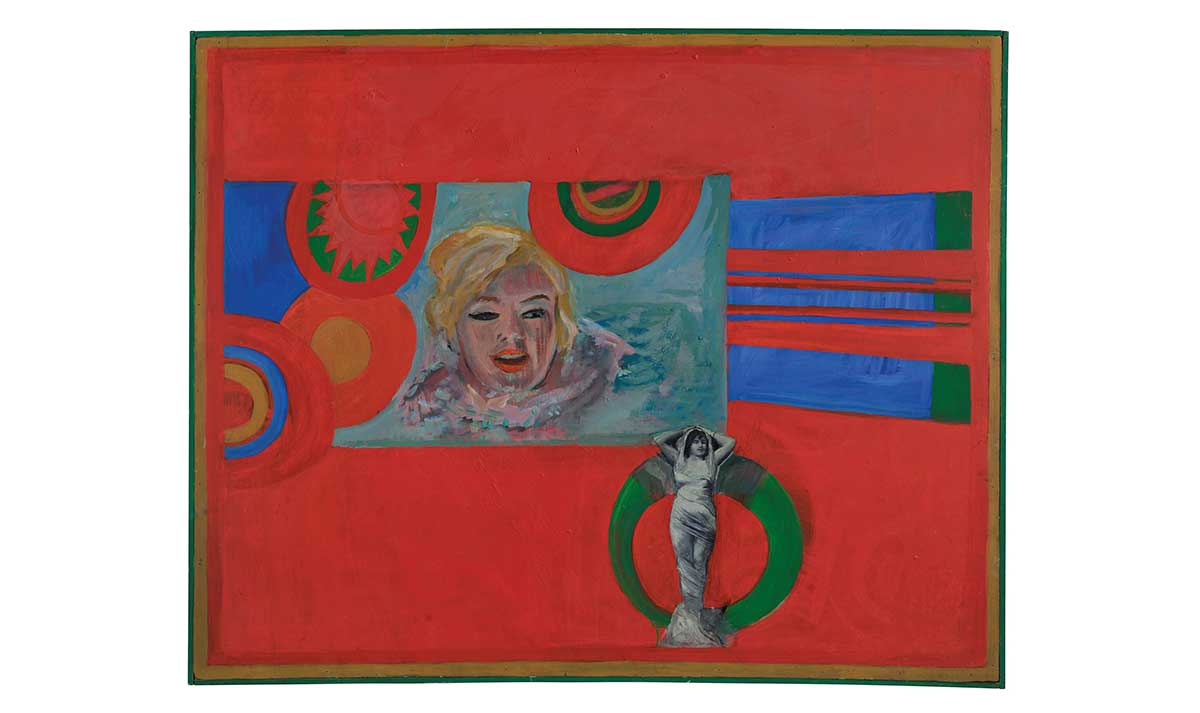
Ultimately, just as Marilyn Monroe refused to abandon her femininity in order to receive more dramatic roles, Pauline Boty refused to become a sexless artist for the sake of being taken seriously. Boty rejected the idea of negating her own sexuality and the joy she found in her feminine traits in order to be perceived as a gifted intellectual. Not surprisingly, Boty chose to make an epitaph to Marilyn Monroe that would celebrate her body and sensuality, insisting that a woman can be beautiful and intelligent at the same time, and that one doesn’t exclude the other. Marilyn Monroe was living proof that brains and talent can come hand in hand with sexiness and allure. Boty strongly identified with this idea of a freed woman who can enjoy her sexuality without any guilt or embarrassment and still manage to have a relevant career of great quality.