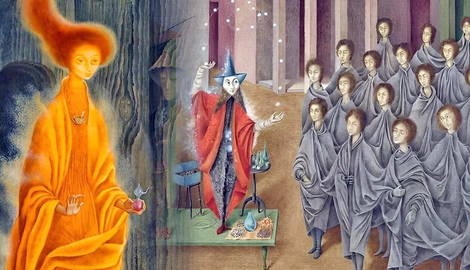

Remedios Varo is often introduced in relation to Frida Kahlo, but her work demands attention on its own terms. A Spanish Surrealist painter active in the first half of the 20th century, Varo created intricate, dreamlike worlds shaped by science, alchemy, religion, and psychology. Her paintings offer layered narratives and a distinctive visual language that set her apart as one of Surrealism’s most intellectually ambitious artists.
The Life of Remedios Varo: Exile, Surrealism, and Reinvention
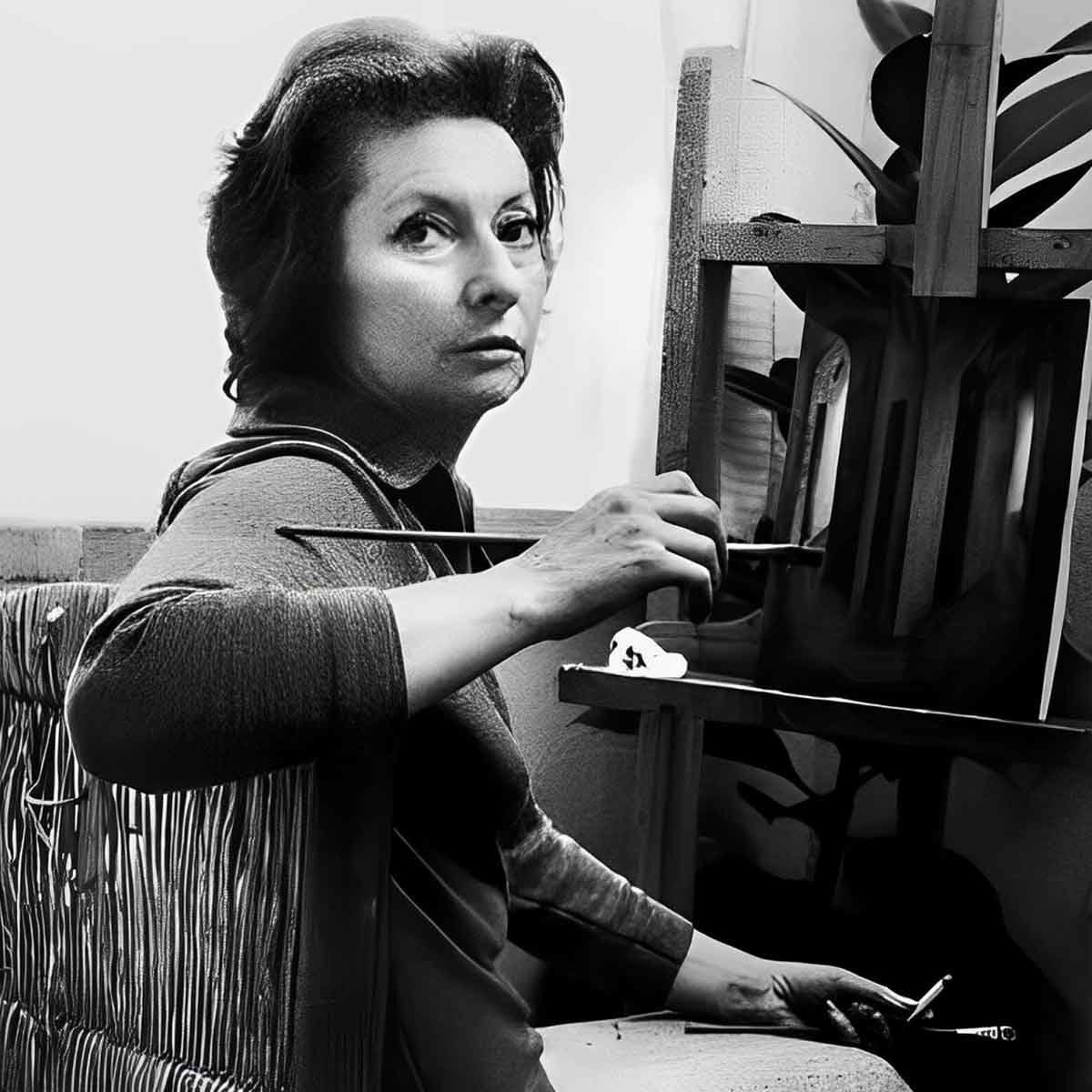
Remedios Varo was a female Surrealist painter born in Angles, Spain, on December 16th, 1908. Although she died at the age of only 53 due to a sudden heart attack, it is estimated that she left approximately 384 artworks behind her. During her early formative years, her father, Rodrigo, was a supportive and influential figure. He was a hydraulic engineer, and Remedios was infatuated with his technical drawings.
Motifs such as machinery and hydraulics would show up later in Varo’s art. Her father encouraged her to pursue an artistic career, so she enrolled in the School of Fine Arts in Madrid in 1924. There, she was under the guidance of a renowned Spanish painter, Manuel Benedito. Varo successfully completed her education in 1930.
After graduating, Varo traveled around Europe. In Barcelona, she formed her first artistic circle of friends, which included Oscar Domínguez, a Spanish surrealist painter, and Esteban Frères, a French surrealist and Dadaist poet. Later, in Paris, Varo met some of the pioneers of Surrealism: Andre Breton, Leonora Carrington, and Max Ernst.
Unfortunately, Varo’s artistic development in Europe was disrupted by two major historical events. First, she had to flee from Spain when the Spanish Civil War broke out in 1936, and when it ended in 1939, she was banned from returning by the fascist dictator Francisco Franco. After the beginning of World War II, Varo sought refuge in Mexico alongside other Surrealist artists, including Carrington. What was intended to be a temporary solution proved permanent. Remedios Varo spent the last 13 years of her life in Mexico.
Science, Alchemy, and the Occult in Varo’s Art
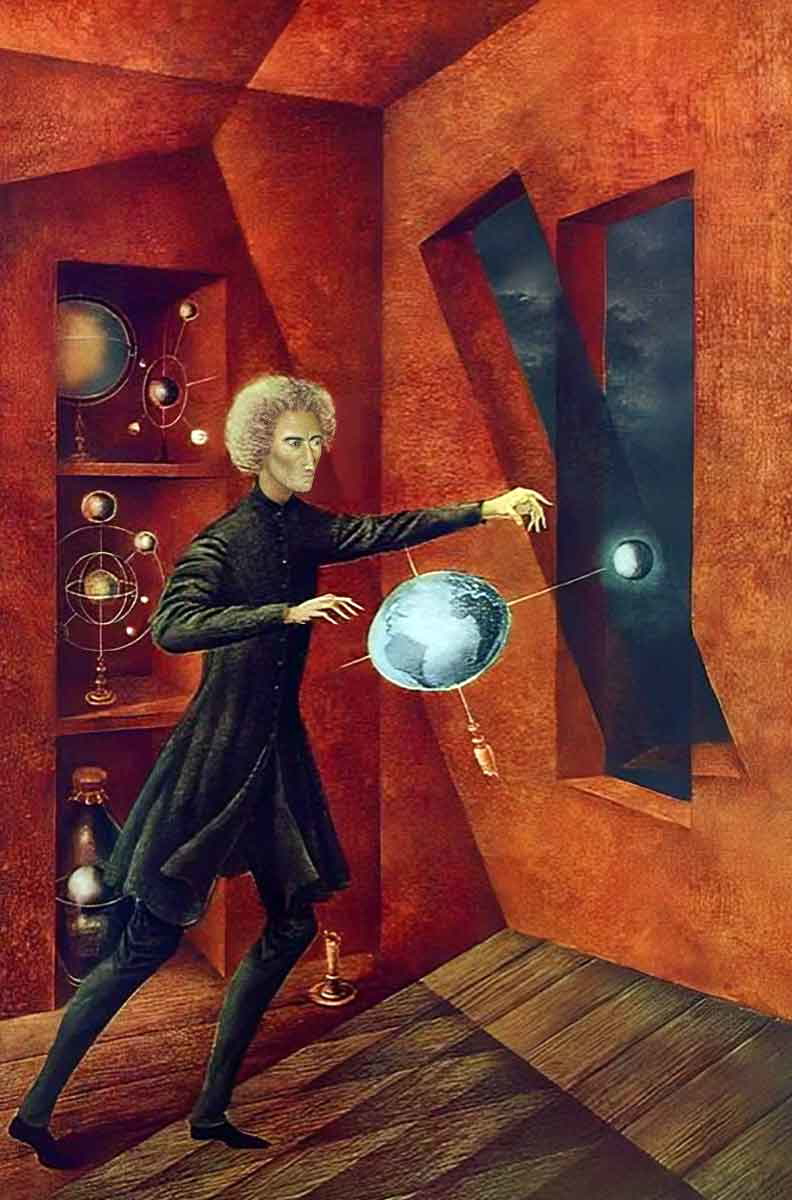
Remedios Varo, influenced by her father’s profession, demonstrated an interest in science from an early age. The Phenomenon of Weightlessness is a key example of how this fascination impacted her art. The scene is set in an illogical space in which the room is duplicated and positioned at an asymmetric angle. This aspect emphasizes revelations regarding the relativity of gravity.
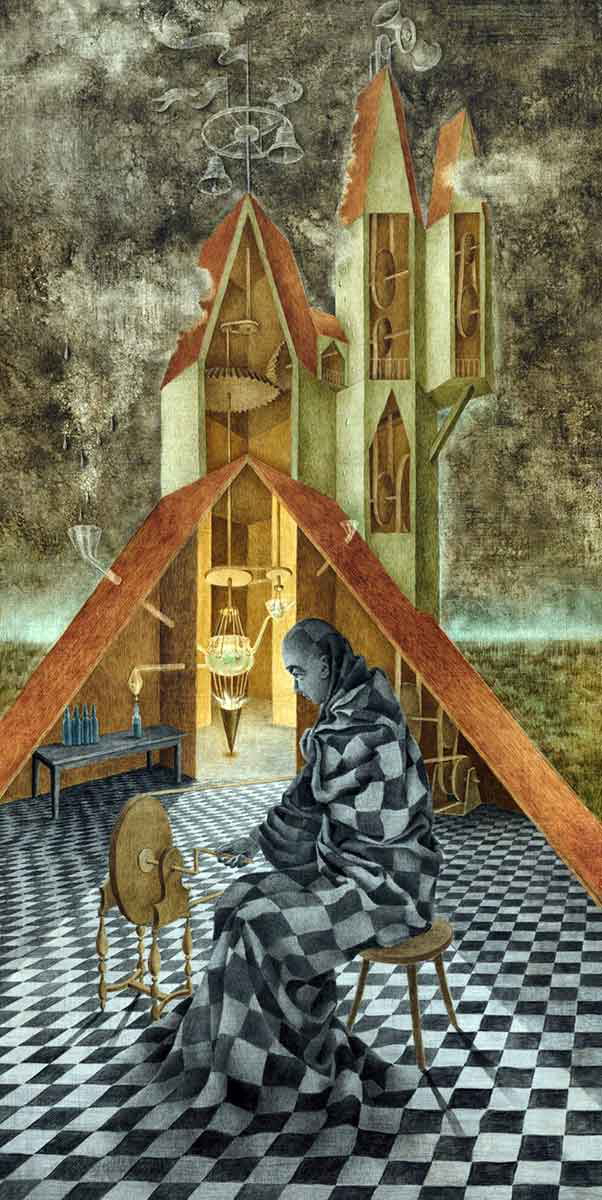
As a Surrealist, Varo was naturally drawn to surreal, illogical, and preternatural phenomena. Thus, she expressed her interest in alchemy in numerous works. While science was accepted in the real and rational world, alchemy was put aside and labeled as nonsense and borderline witchcraft. But the magical and otherworldly aspects of alchemy found their significant place in Varo’s opus.
Useless Science or the Alchemist encapsulates these qualities. A ghostlike creature, engaged in an enigmatic experiment, is set in a peculiar-looking laboratory. The dominant colors here are also worth noticing. According to alchemistic theories, the colors black, white, yellow, and red allude to the four-stage chemical reaction that produces the elixir of life.
Religion, Rebellion, and the Subconscious
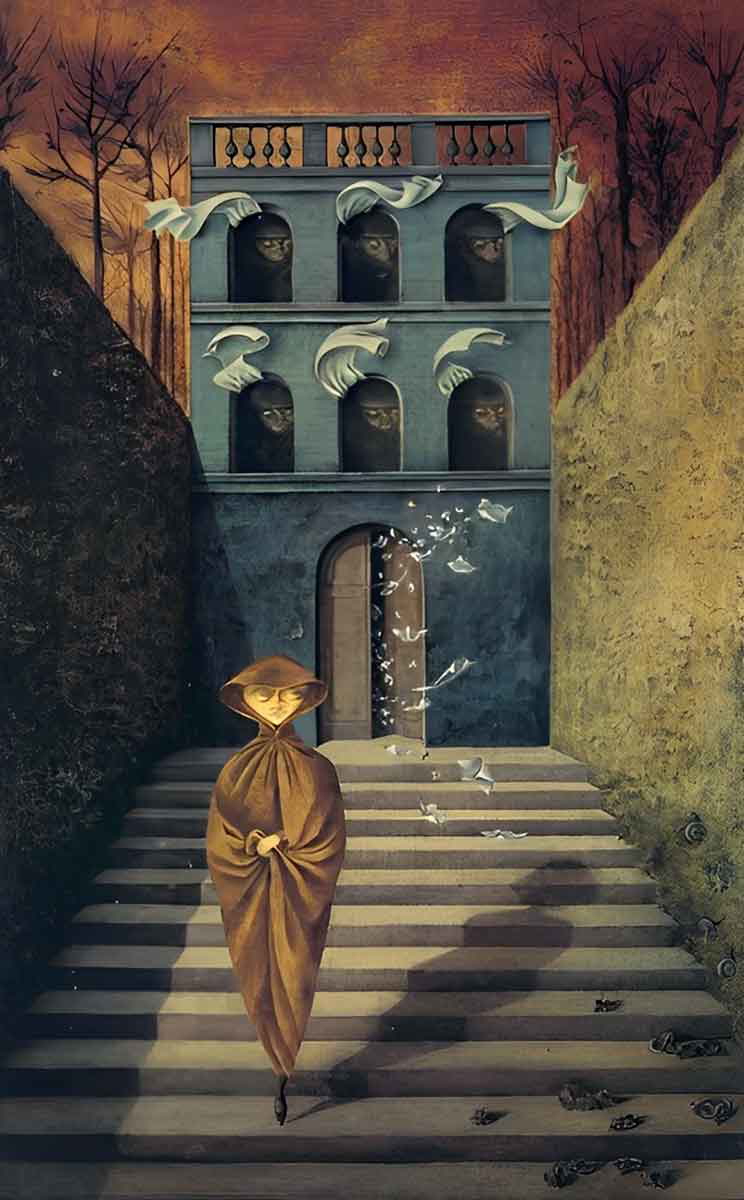
Religion plays a huge part in the artwork of Remedios Varo. Having attended a Catholic convent school as a young girl, she was exposed to strict discipline and dogmatic teaching. This experience fostered her critical thinking and questioning of authority. Consequently, Varo tackled Christianity in a multifaceted manner in her paintings.
In her painting titled Rupture, the central figure is depicted descending the stairs while leaving behind a stern-looking building with unsmiling guards. The main figure, with her heart-shaped face, almond eyes, and aquiline nose, resembles Varo herself. The scene could be interpreted as Varo’s act of cutting ties with the rigidity of religion and tradition. She is off to explore the forbidden domain of magic, alchemy, and even witchcraft.
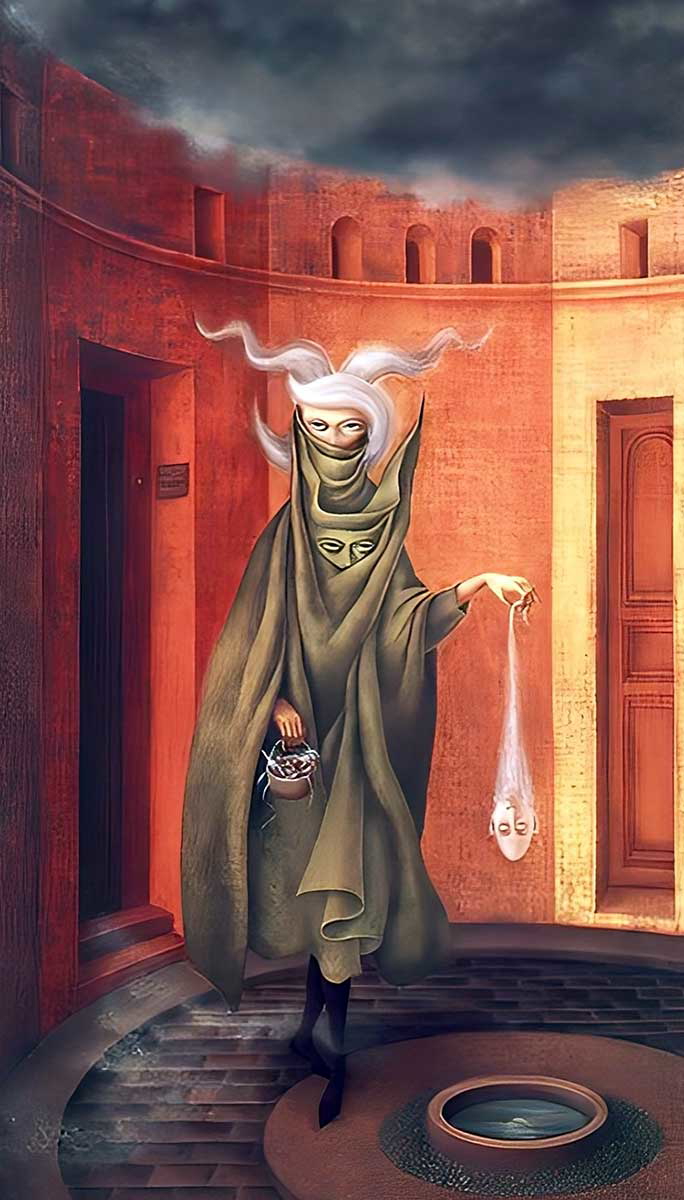
Like her fellow Surrealists, Varo expressed interest in psychology and psychoanalysis, particularly in Sigmund Freud’s and Carl Jung’s theories of the subconscious. The central figure in her Woman Leaving the Psychoanalyst also resembles Remedios Varo. Thus, Varo resonated with the depicted woman’s intention to explore the unconscious mind and her suppressed desires.
This piece can also be analyzed from a feminist perspective. The woman in question is depicted holding the head of an old man, preparing to throw it into a well. This act can be perceived as an act of rebellion. The portrayed woman is ready to reject and free herself from patriarchal notions and limitations symbolized by the man’s head. Although Varo never explicitly addressed gender inequality, her art depicted empowered women. By giving female bodies androgynous forms, Varo freed women from being objectified.
How Remedios Varo Used Surrealist Techniques to Access the Subconscious
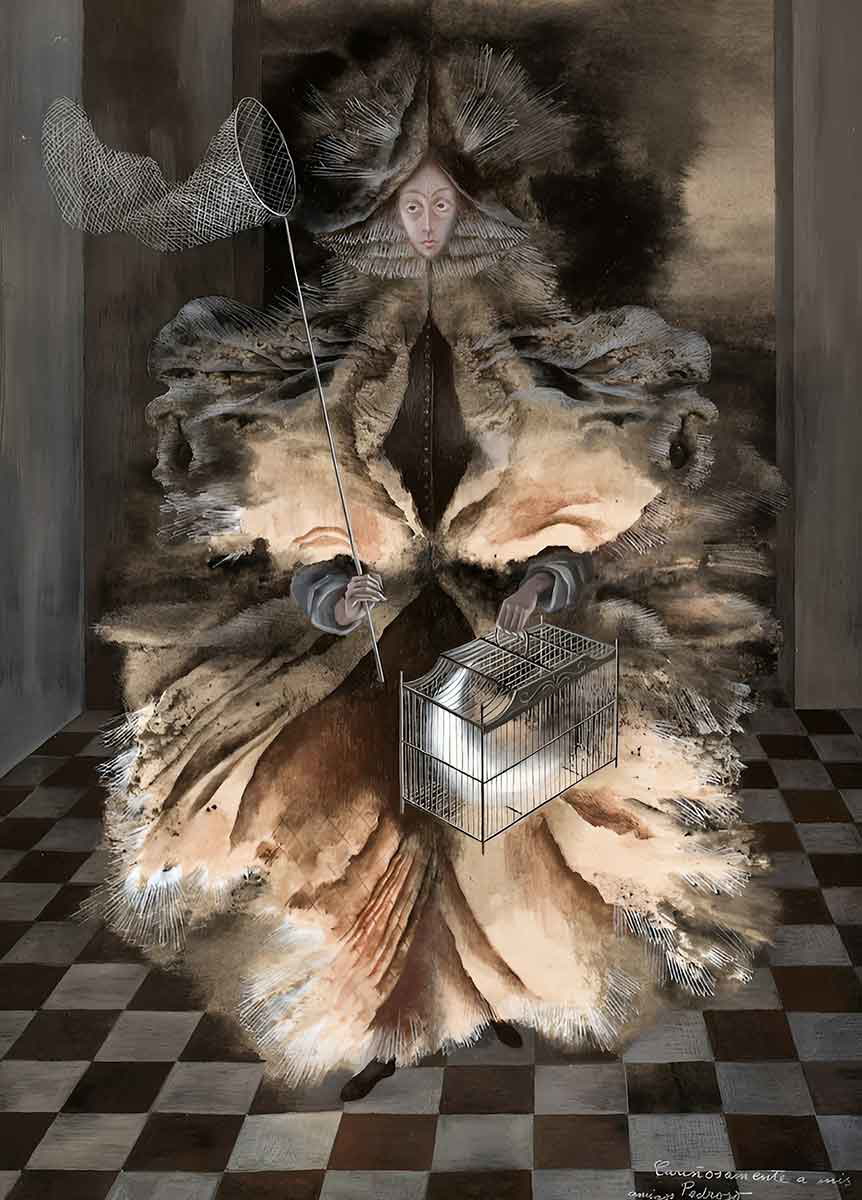
Surrealist artists loved to experiment with untraditional techniques, and Remedios Varo was no exception. Although she predominantly produced oil paintings, she incorporated unorthodox methods into her art. Interested in automatism and in freeing her imagination from conscious control, Varo employed techniques such as decalcomania, grattage, and soufflage.
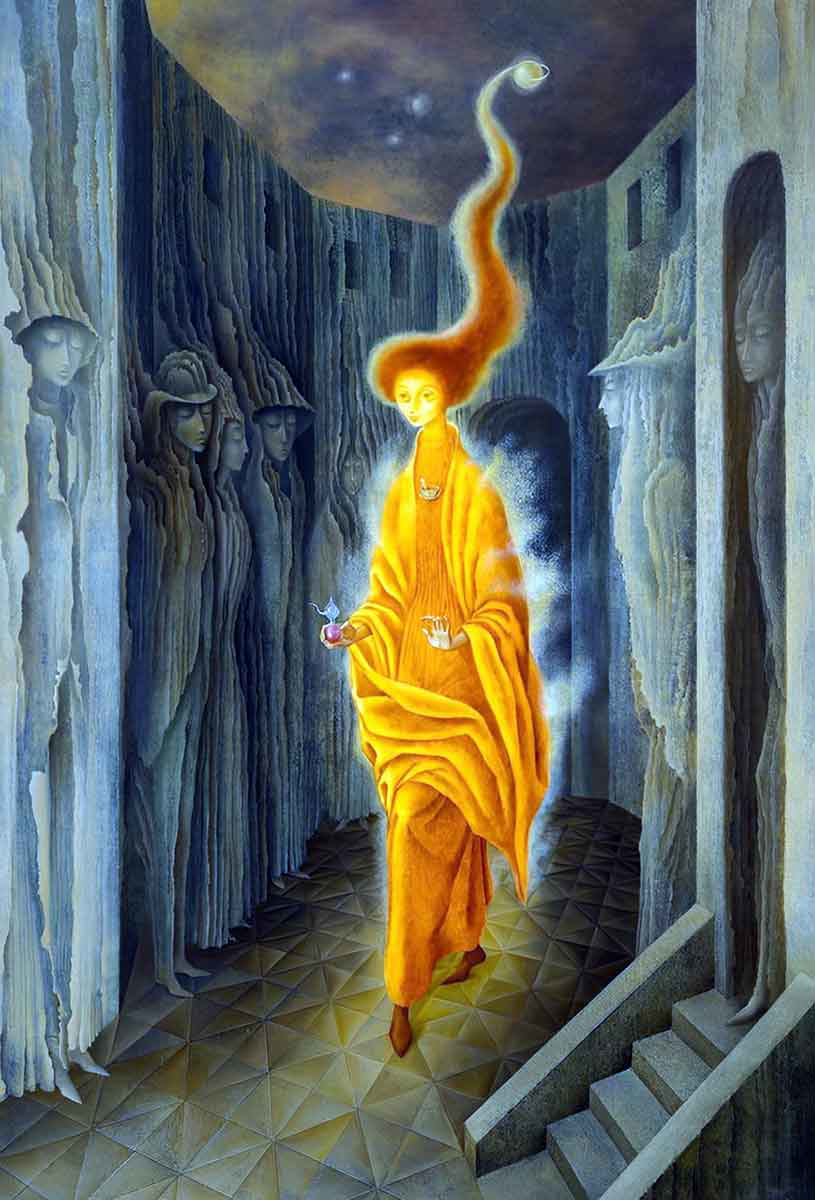
Decalcomania is a surrealist painting technique characterized by applying a single material (such as paper, aluminum foil, or glass) to a freshly painted surface and then peeling it off. The process yields unpredictable, spontaneous patterns. The accidental nature of this technique is closely linked to Varo’s exploration of the subconscious and imagination. Using this method in The Star Catcher, Varo created a biomorphic pattern visible on the protagonist’s garment and on a portion of the background.
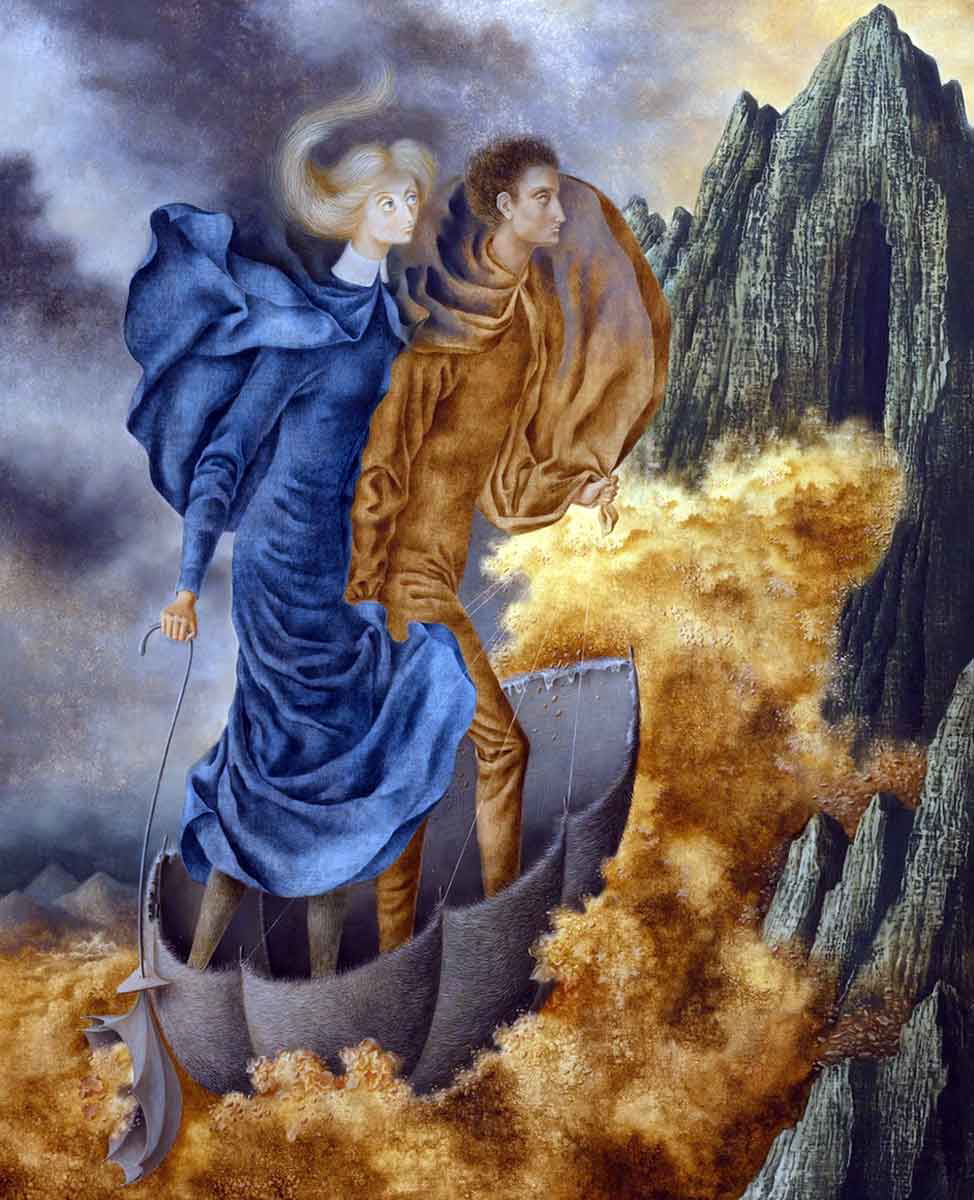
Most likely invented by Max Ernst, the technique of grattage produces unexpected, chance-driven results. Varo employed grattage in her painting The Escape, which is most evident in the detail of the rocks. She scraped the surface with a sharp-edged tool while the paint was still wet. This revealed underlying layers of paint, which in turn created textured and unpredictable patterns. Therefore, this method provides a dynamic interplay between control and chance.
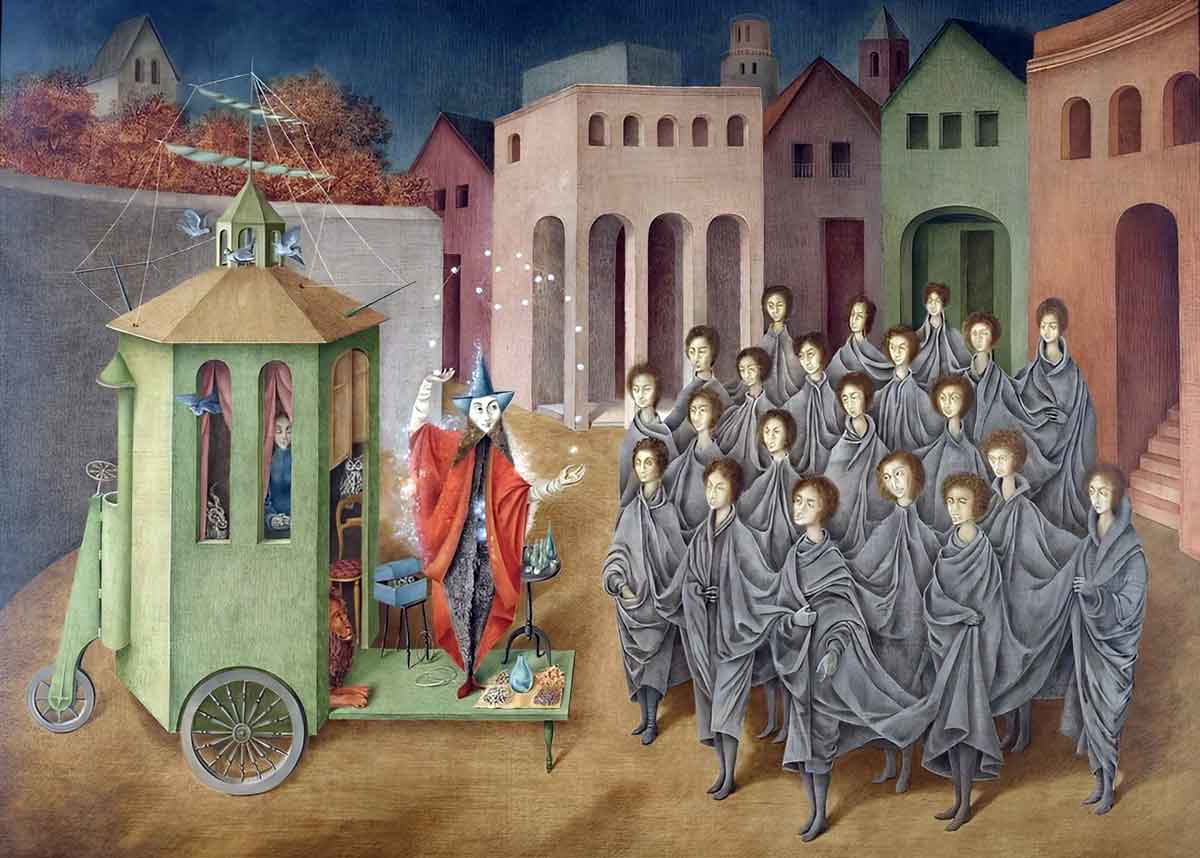
Soufflage is one of the surrealist painting techniques discovered by the painter Jimmy Ernst. In this method, the artist applies paint in very thin, fluid layers and then blows air (often through a straw) to disperse and manipulate the wet material, resulting in ethereal, delicate patterns. Varo employed soufflage to create the lower part of the magician’s robe in her painting The Juggler.
The Three Witches: Friendship, Collaboration, and Surrealism in Mexico
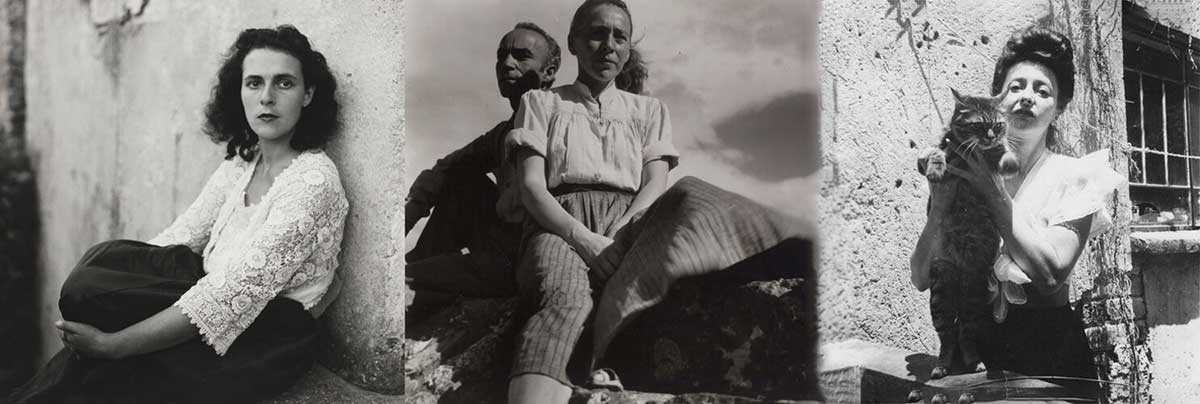
Remedios Varo collaborated with many other Surrealist artists, including the British artist Leonora Carrington and the Hungarian artist Kati Horna. Since all three relocated to Mexico, they formed a close friendship. Because of their shared interest in spiritual practices and the occult, they earned the nickname “The Three Withces” among their friends and colleagues.
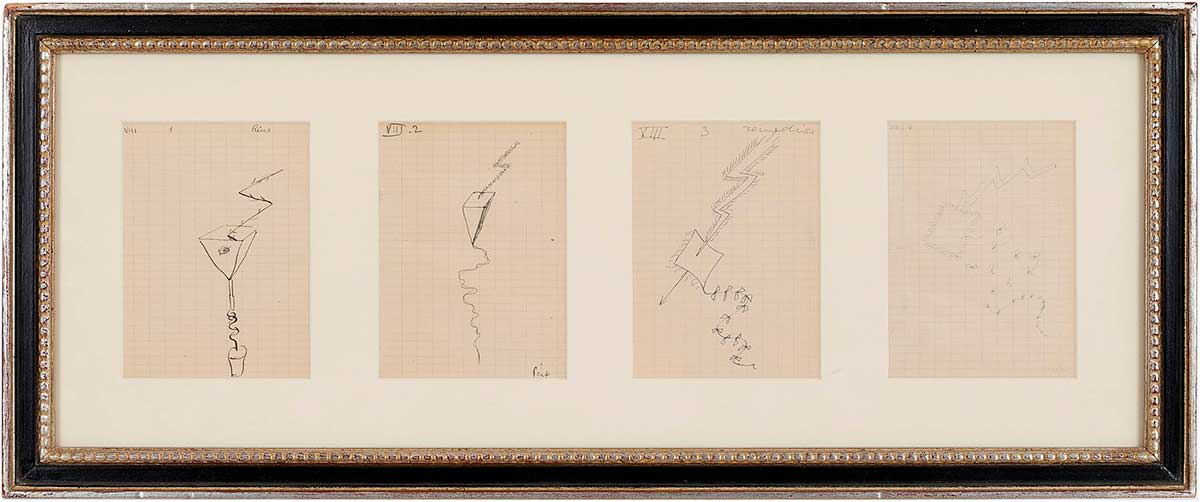
Remedios Varo also frequently collaborated with other artists. She participated in a collaborative work called Game of Communicated Drawing with Robert Rius, Benjamin Peret, and Andre Breton. This series had a game-like nature. Each participant was shown a drawing for three seconds, after which they had to recreate what they had seen.
Varo also participated in a Surrealist game, cadavre exquis (“exquisite corpse”), with Esteban Frances, Marcel Jean, and Oscar Domínguez. The game involved multiple participants, each contributing to a collective composition without prior knowledge of others’ drawings or writings. This method was intended to elicit subconscious associations in participants.
Rewriting the Surrealist Canon: The Legacy of Remedios Varo
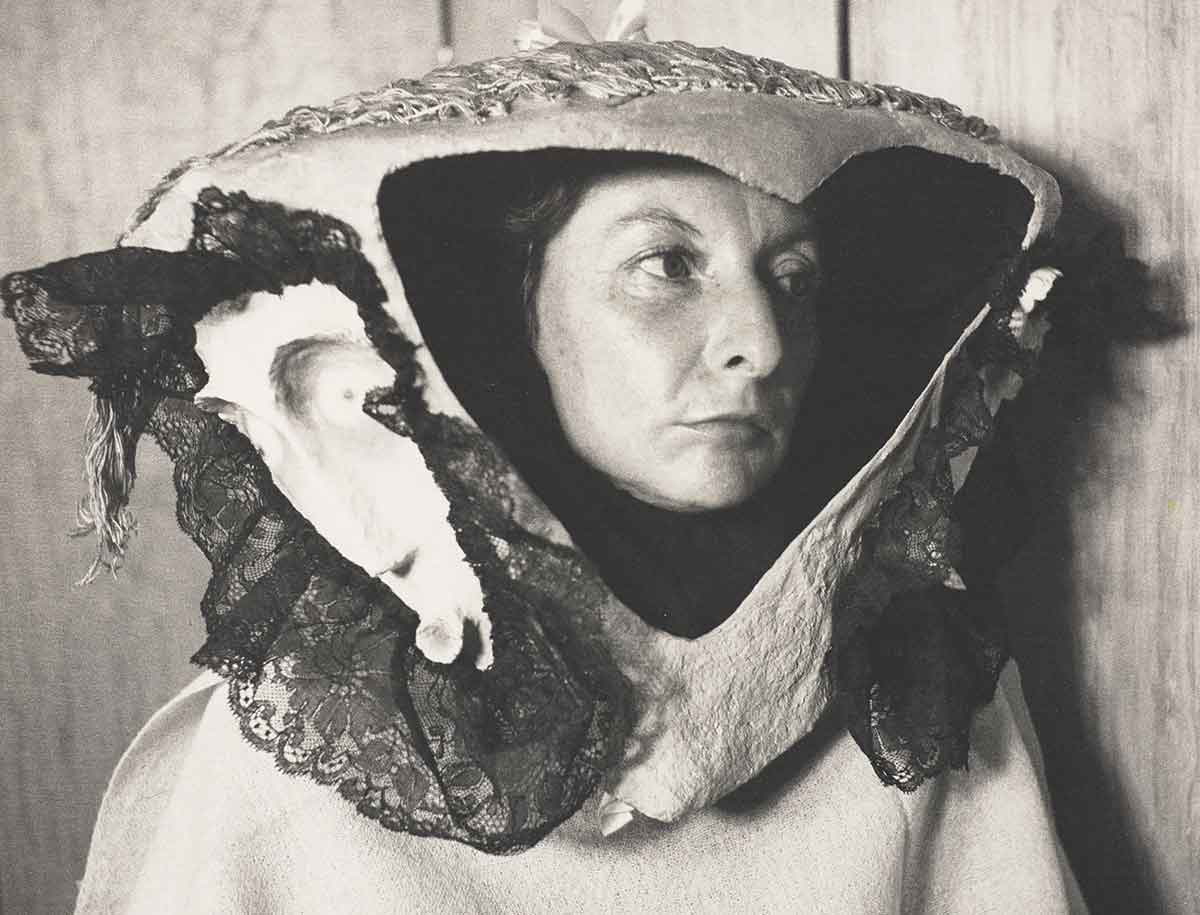
Remedios Varo is a vital representative of Surrealism. She developed a distinctive artistic style within the movement, characterized by dreamlike creatures inhabiting mysterious spaces and engaging in mystical, otherworldly activities. Varo also demonstrated expertise in numerous fields, including science, alchemy, psychology, and religion, thereby giving her artworks multilayered meanings. In addition, she collaborated and interacted with prominent Surrealist figures.
Varo’s art is also of crucial importance to gender studies and feminist theory. Although she did not explicitly identify as a feminist, the way she depicted women undermined traditional patriarchal values. Her paintings often feature strong, independent female figures undertaking roles commonly perceived as masculine. Moreover, Varo never objectified the women she portrayed; her female characters were depicted as possessing depth, intellect, and creativity.
Ultimately, Remedios Varo’s career highlights the need to broaden the canon of female Surrealist art. Frida Kahlo has become an enduring symbol of women’s Surrealism, often eclipsing other artists. Varo’s work demonstrates the need for greater attention to diverse and lesser-known women artists in art history and cultural discourse.