
The 20th century in the US was filled with a notable number of Black female artists who produced high-quality art. Due to overt racism and sexism, their accomplishments have gone under the radar. However, in the last couple of decades, art historians have shown more interest in exploring and rediscovering important Black women artists. The superb and diverse artistic production of Augusta Savage, Alma Thomas, Betye Irene Saar, Norma Merrick Sklarek, and Carrie Mae Weems secured them a starring role in art history.
Double Discrimination: Black Female Artists VS. Racism and Sexism

The 20th-century Black female artists in the United States were deeply influential in reshaping art history, challenging stereotypes, and asserting their identities despite systemic barriers and underrepresentation. Since they were not only Black but also women, they were often subjects of double discrimination. Racism and sexism were common occurrences throughout their careers. That’s why many of them used their art as a tool for fighting for civil rights, racial equality, and women’s liberation.
Black women were often excluded from mainstream art institutions, exhibitions, and critical discourse until the latter half of the 20th century. Their contributions were frequently overlooked in favor of their male counterparts or white feminist artists. When included, their works were often pigeonholed into “Black art” or “women’s art” categories, rather than being seen as integral to the broader art historical narrative.
For much of the century, Black women artists were invisible in mainstream media as well, but movements like the Harlem Renaissance and the Black Arts Movement offered some visibility. The rise of feminist art history in the 1970s helped bring some attention to their work, but it often centered on white women. Black women artists had to create their own platforms and networks to gain recognition.
The contributions of Black women artists have reshaped the canon of American art, influencing younger generations and expanding conversations about gender, identity, and politics. Institutions today are increasingly committed to recognizing their importance, but there is still work to be done to ensure they receive the recognition and representation they deserve.
Augusta Savage: Lift Every Voice and Sing
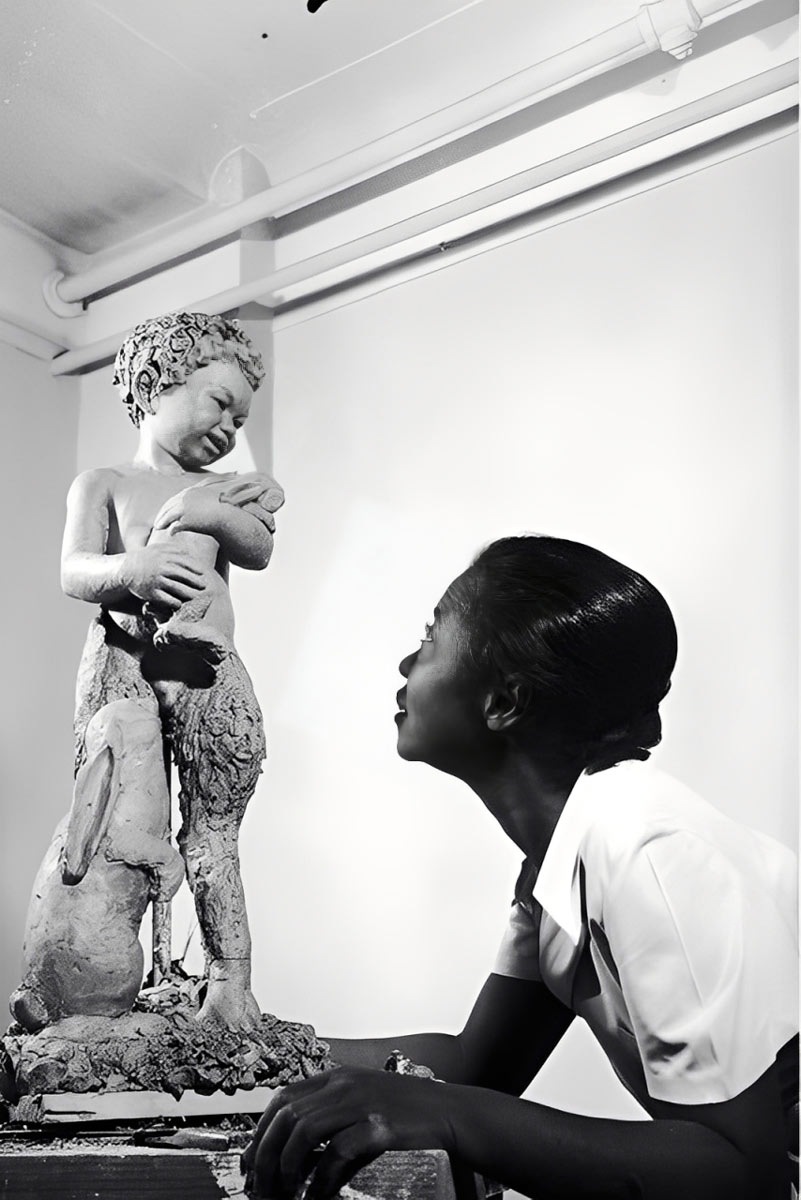
Augusta Savage, born in 1892, was a very unique and important figure in her time and in the history of Black art in general. She was a pioneer in more ways than one. She was the first Black member of the National Association of Women Painters and Sculptors. Three years later, in 1937, she became the first director of The Harlem Community Art Center. Finally, Augusta is recognized as the founder of the first gallery in Harlem. However, throughout her whole career, Augusta’s art and undertakings faced difficulties and obstructions in the form of racism, sexism, and poverty.
One instance of firsthand racism she experienced was in 1924, when her application for a Special Summer Scholarship was denied due to her being Black. In spite of this, Augusta wasn’t discouraged. She made this bigoted decision public by mailing letters to newspapers.
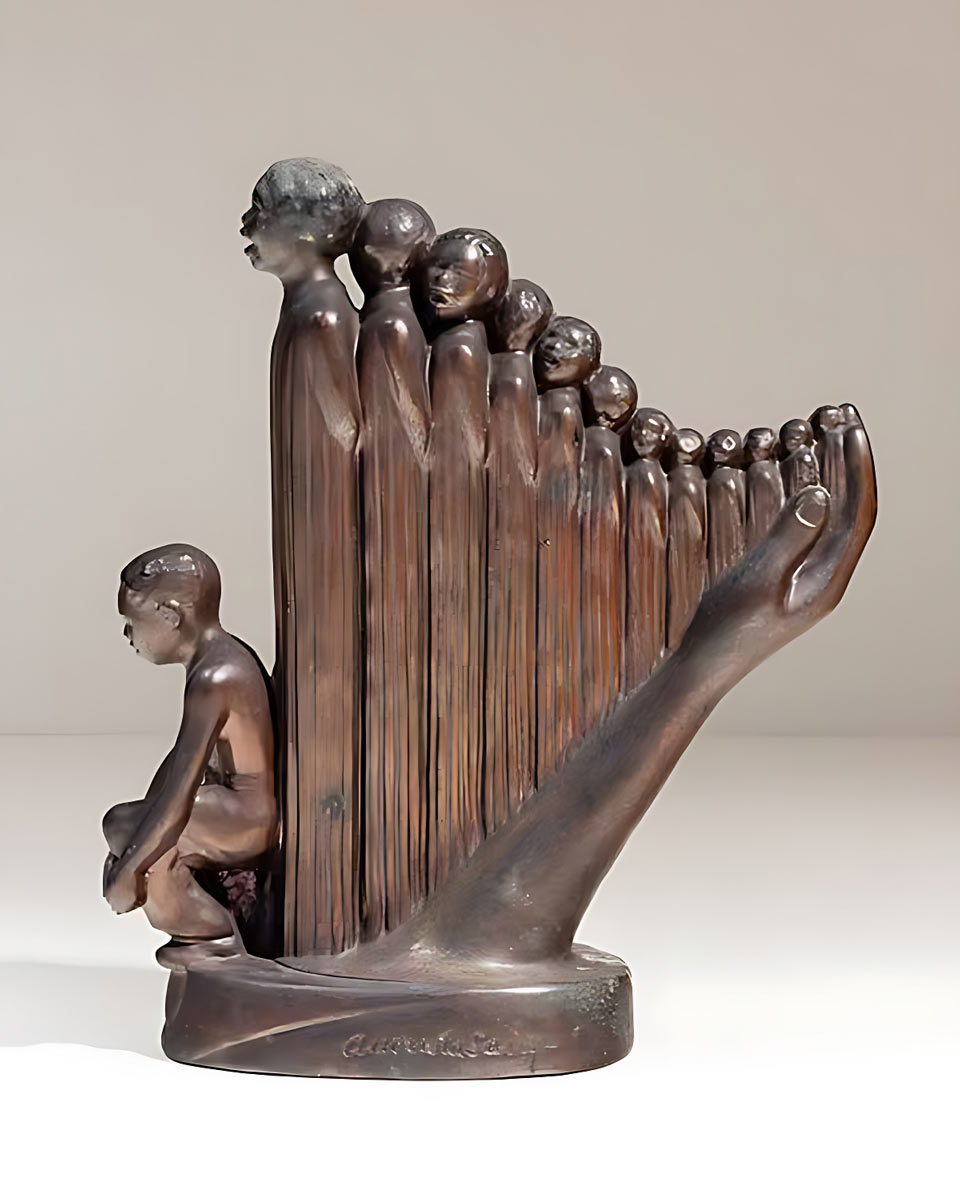
The work she created for the New York World’s Fair in 1939 is considered to be her most important art piece. She was commissioned to produce a sculpture that symbolized the musical contributions of African Americans. Lift Every Voice and Sing, also known as The Harp, was a work that consisted of 12 stylized Black singers arranged in graduated heights, which were supposed to represent harp strings.
Poverty followed Augusta Savage constantly. The previously mentioned Gallery in Harlem had to be closed because of insufficient funds, while Augusta herself had to leave New York and move to a much more rural town of Saugerties. She died in 1962.
Alma Thomas: Discovering Beauty in the Everyday
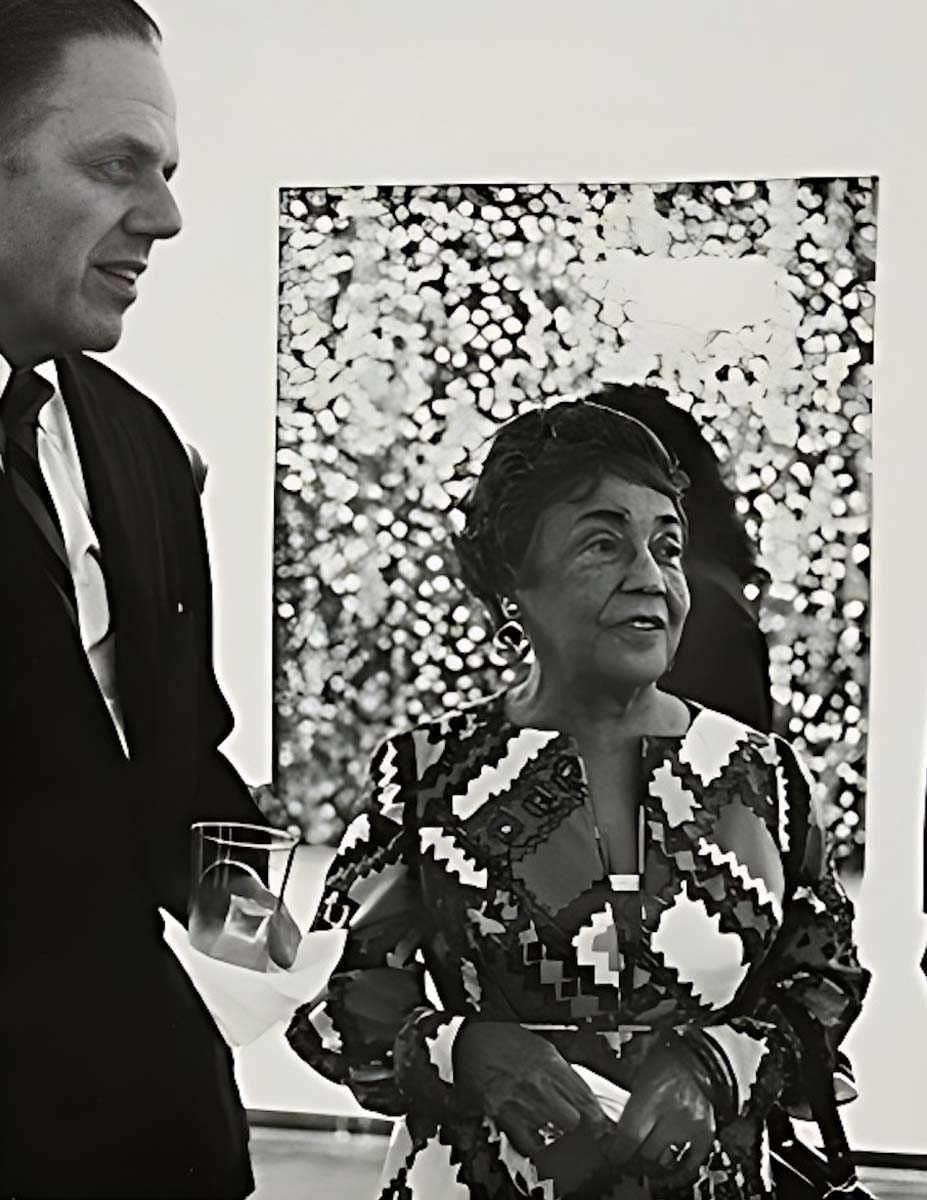
Alma Thomas (1891-1978) is a fascinating phenomenon in art history because she became a full-time professional artist at the age of 68. Upon retiring from her 35-year teaching career at Washington Shaw Junior High School, she was able to entirely focus on art production.
Even though she was a Black female artist, her art was not shaped by politics, race, or gender. Alma was more interested in exploring the power of abstract forms, the beauty of the creative spirit, and visual energy of colors. She was very much fascinated by Kandinsky’s theory of color which explored the emotional capabilities each color possessed. Another big influence in her art were Byzantine mosaics and their geometric and abstract patterns.
However, it is important to note that Alma Thomas endured discrimination as a Black woman artist and was frequently criticized for her commitment to abstraction, which contrasted with the figurative and symbolic approaches employed by many of her Black contemporaries in their artistic resistance to oppression.
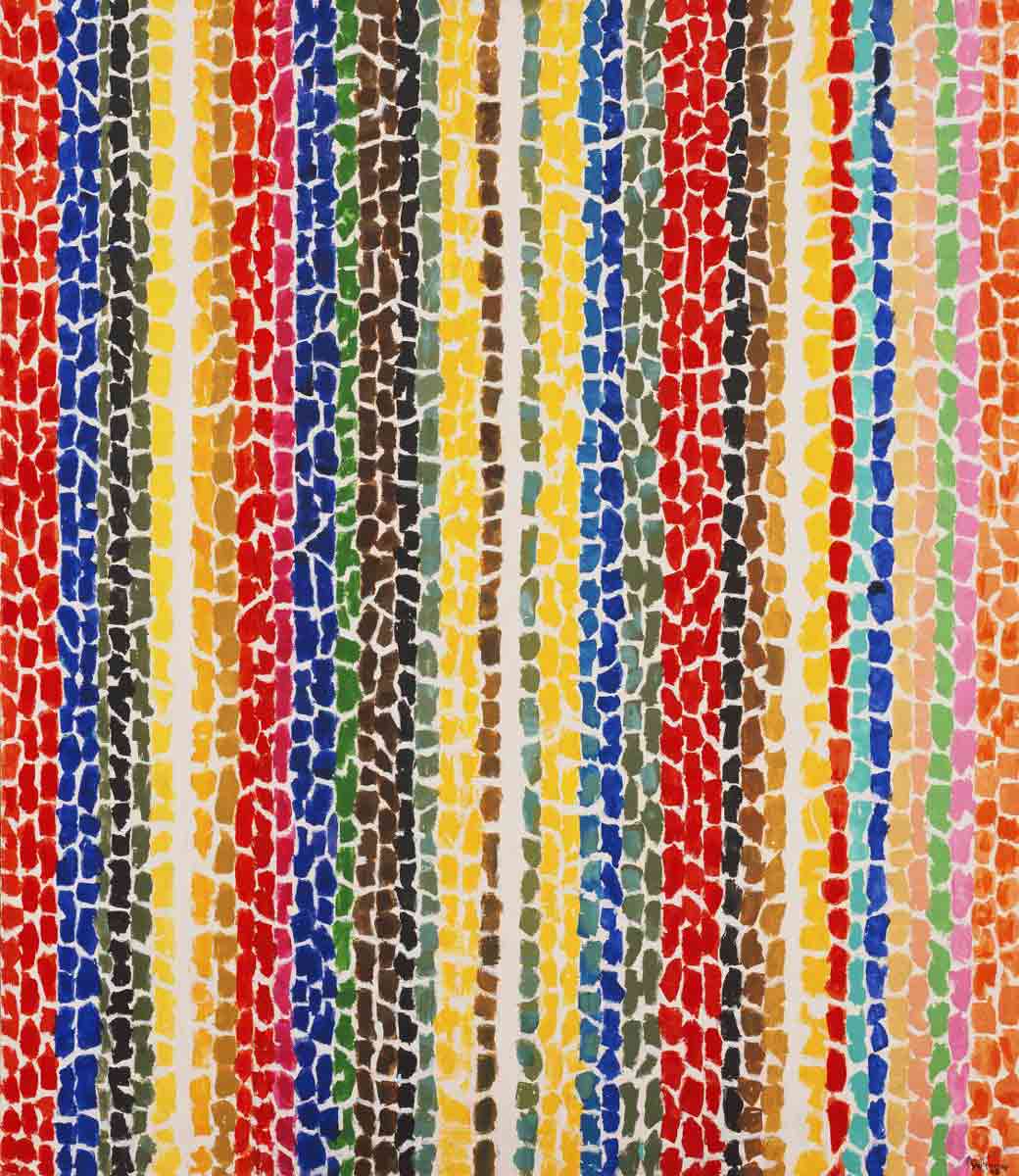
From the mid-1960s, Alma Thomas started producing Color Field paintings, drawing inspiration from the New York School and Abstract Expressionism. However, she had a very original and unconventional approach to abstract art. She didn’t use masking tape for the outlining of shapes. She actually drew faint lines with a pencil, which she didn’t erase when the painting was finished, so they remained visible. At the age of 81, Alma Thomas was the first Black female artist to have a solo exhibition at the Whitney Museum of American Art in 1972.
Betye Irene Saar: The Liberation of Aunt Jemima
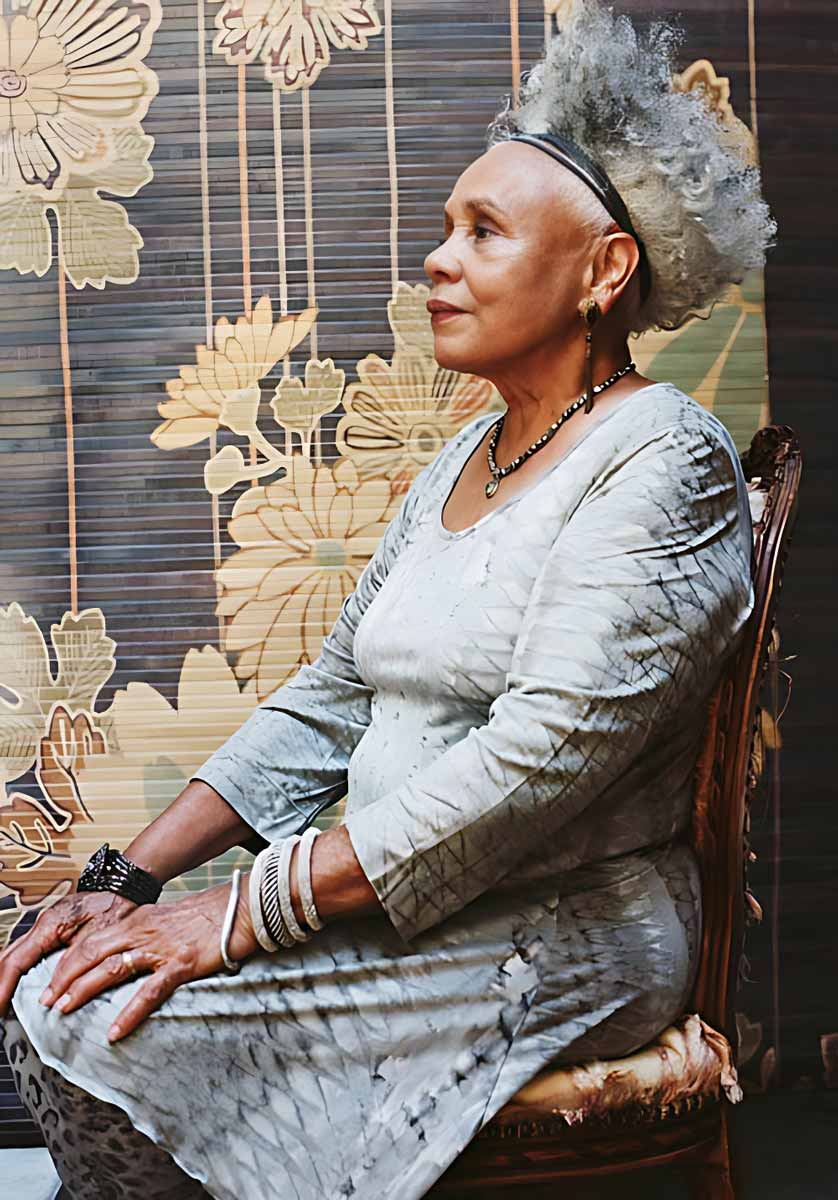
Unlike Alma Thomas, Betye Irene Saar was very much interested in political and racial issues African Americans faced in the US. Born in 1926, she studied interior and textile design, bookbinding, and illustration at the University of California in Los Angeles. Having become an accomplished printmaker, she is best known for her collages and assemblages that explore notions of race, femininity, and African American and African heritage. Especially after the assassination of Martin Luther King, Betye’s art became increasingly radical and political.
Active within Black artistic circles, she was deeply shaped by countercultural movements, spiritual symbolism, and esoteric imagery. She also gathered stereotypical representations of Black men and women circulating in American popular culture—through advertisements, toys, postcards, and similar objects—which she reconfigured into hybrid assemblages that oscillated between enchantment, satire, and intimacy.
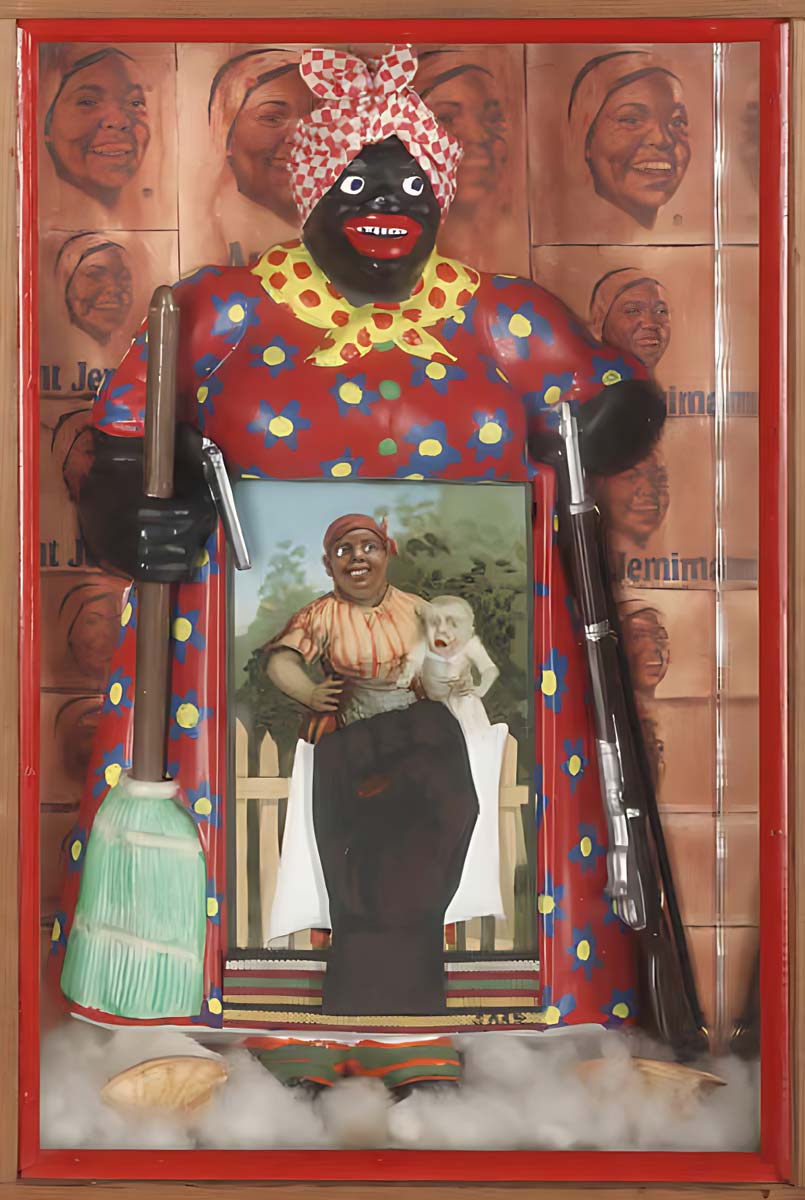
One of her most notable assemblages is a 1972 work titled The Liberation of Aunt Jemima, which was inspired by a racist stereotype of Mammy, a character played by Hattie McDaniel in Gone with the Wind (1939). The wooden figure holds a rifle and a hand grenade, thus serving as a symbol of opposition to both bodily violence and the damaging power of demeaning stereotypes and images. Betye generally rejected the notion of white feminism on the basis of it being blind to issues of race. She focused primarily on the Black female body in her art.
Norma Merrick Sklarek: The Rosa Parks of Architecture

Harlem-born artist, Norma Merrick Sklarek (1926-2012), was the first African American woman to become a licensed architect, first in the state of New York in 1954 and later in California in 1962. In 1945, Norma enrolled at Columbia University, where she obtained a Bachelor’s Degree in Architecture in 1950. She was the only Black woman in her class. Upon graduating, Norma had to face the reality of racism.
While applying for jobs, she had been rejected by nineteen companies. “They weren’t hiring women or African Americans, and I didn’t know which it was working against me,” Norma said when describing her frustrating search for work. Even after obtaining a position in corporate firms, for most of her career, she assumed roles of project managers instead of an architect.
However, Norma remained unfazed by discrimination and did a pretty much unprecedented thing in 1985. She cofounded the biggest woman-owned architectural company in the US with Margot Siegel and Katherine Diamond. Norma Sklarek was the first African American woman to co-own such a firm.

In her designs and creations, Norma displayed a strong belief that functionality and practicality are the main qualities of buildings. She believed that buildings should improve people’s homes, workplaces, and overall environments. As she herself stated, architecture shouldn’t be just a parade of the architect’s ego.
Having all this in mind, it becomes clear why Norma Merrick Sklarek’s nickname was the Rosa Parks of Architecture. The pioneering nature of her accomplishments served as inspiration to other women and people of color, proving that gender and racial discrimination can be overcome.
Carrie Mae Weems’s Kitchen: Black Female Artist and Domestic Spaces
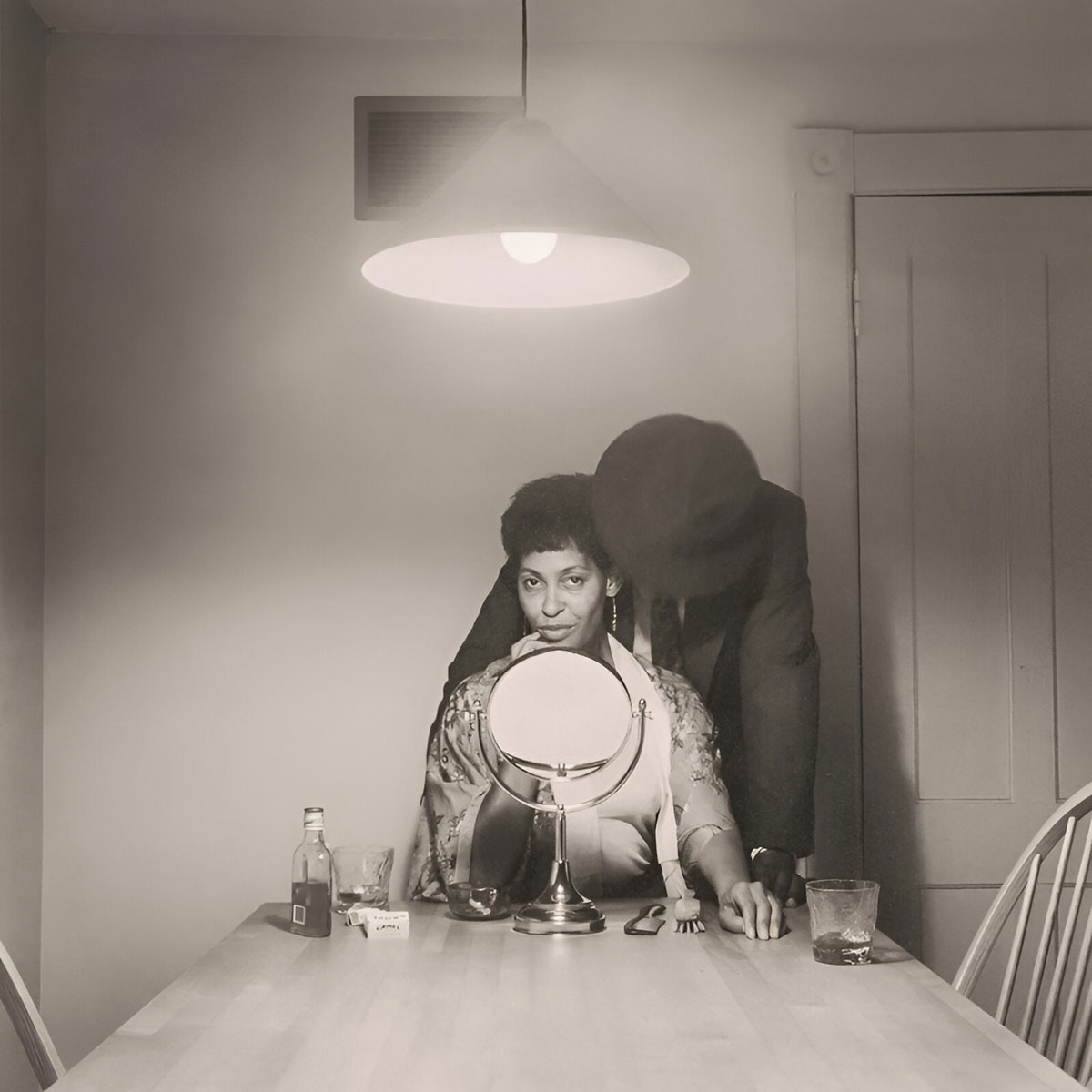
Carrie Mae Weems, a Black female artist born in Oregon in 1953, is best known for her photography. She gained recognition in the early 1990s with her groundbreaking Kitchen Table Series, a collection of 20 black-and-white photographs accompanied by 14 text panels. In this series, Weems appears as the central figure, posing in various scenarios within a kitchen setting. While her approach shares similarities with Cindy Sherman’s exploration of gender and identity, Weems delved deeper, addressing themes like politics, sexism, identity, and race.
Set in the quintessentially domestic space of the kitchen, the series portrays the fluid and multifaceted roles of its protagonist: a strong, central female figure. Using simple elements such as a kitchen table, dim lighting, and an uncluttered backdrop, Weems emphasizes the character’s inner world—her emotions, moods, and relationships. Some photographs highlight her interactions with family and friends, revealing their complexity, while others focus on her introspection and self-awareness. Through these images, Weems embodies various roles: wife, mother, friend, and Black woman.

The Kitchen Table Series was a pivotal moment for the representation of African Americans in art. Before this, Black communities were largely invisible in mainstream art and art history. By depicting Black characters as the primary subjects, Weems created a space for Black audiences to see themselves reflected in her work. However, the artist cautions against reducing her work to a solely racial perspective. While the series holds significance in relation to the Black experience, Weems has stated that it is not exclusively about race. She challenges the notion that art by Black creators must always center on Blackness, contrasting this with the universal assumptions often made about work by white artists. This series remains a powerful exploration of identity, relationships, and the human experience, making it a landmark in art.