
Our fascination with vampires goes back a long way, before they became the standard fare of Halloween costumes and campy melodrama. Several cultures across the globe have a folkloric tradition surrounding undead, human-like creatures who prey on human blood. In 19th-century Europe, the idea of vampirism gained popular currency as a metaphor for various kinds of insidious influence. At the same time, the cartoonish image of the vampire was brought to prominence in Bram Stoker’s novel Dracula. Since then, vampires have only gone from strength to strength.
Vampires in Folklore
There are versions of vampiric creatures in the folklore of cultures across all the continents. West Africa has the tree-dwelling Sasabonsam, which feeds on humans passing through forests; Madagascar has the ramanga, which specifically drinks the blood of nobles. The Aztecs believed in Cihuateteo, spirits of women who died in childbirth, who might steal the spirits of children. Many cultures across North, Central, and South America believe in the chupacabra, a vampiric cryptid that preys on livestock. The Mandrurgo, in the folklore of the Philippines, appears as a beautiful young woman by day, but sucks men’s blood by night.
In fact, blood-sucking demons feature in just about every ancient mythology: the fear they encapsulate is perennial, though the form they take shifts with time and place. But the version of the vampire which conquered the novel, starting in the 19th century, was a variation on Slavic folklore which began to spread early in the 18th century.
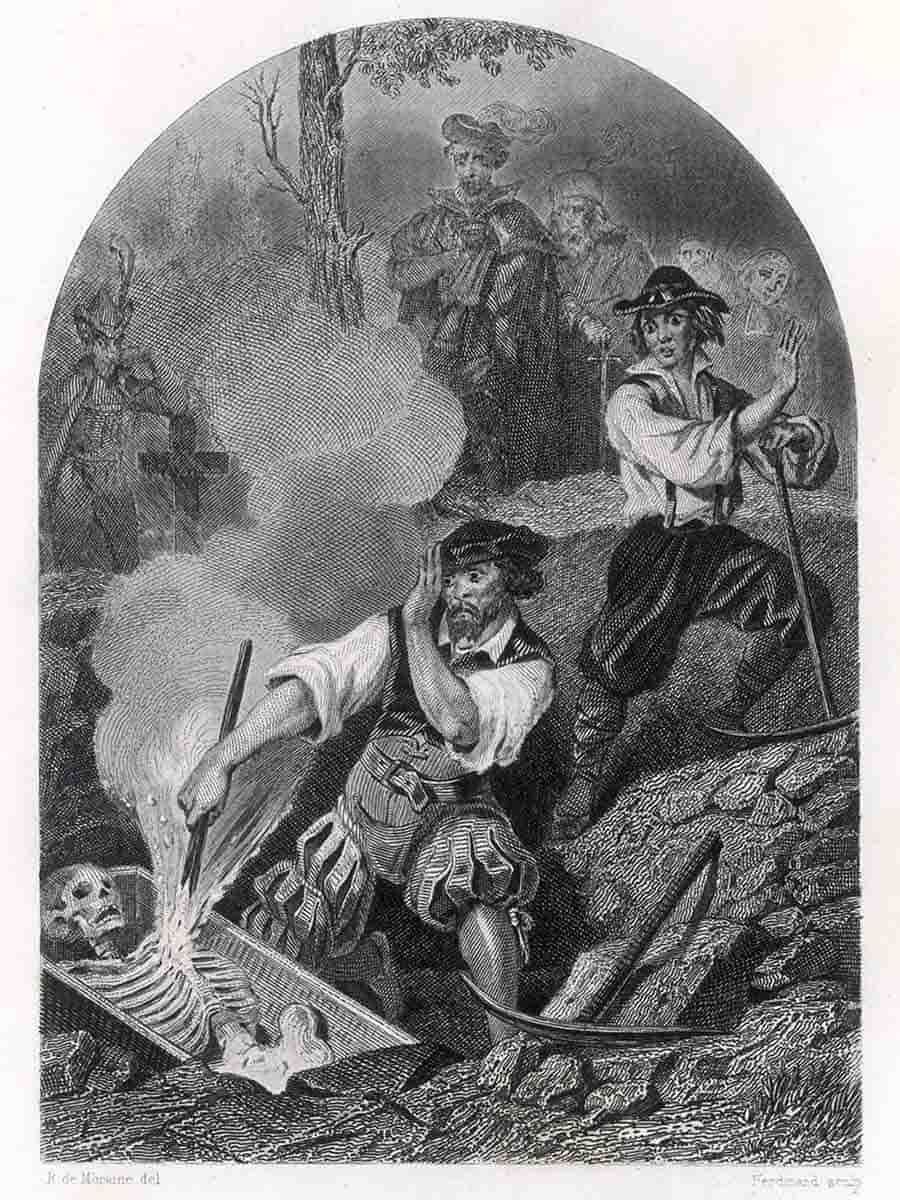
These vampires were undead people, the inspirited corpses of those who had lived evil lives or been buried in unconsecrated ground. They often appeared in their shrouds, their mouths dripping, their bodies ruddy and bloated from feasting on blood. One bite from them could turn healthy, living people into vampires, too. Most features of the folkloric vampire’s appearance relate to concerns about burying the dead safely, respectfully, and—crucially—for good. They reflect a culture’s fears about what might happen if the dead refuse to stay buried.
Vampires in Romanticism
Folklore concerning vampires in places such as Bulgaria and Romania mostly spread orally until the 18th century, when ethnographers began to record folk traditions in writing. One important, if sometimes under-acknowledged, strain of the Romantic movement in literature was its authors’ interest in folk traditions, excavating material for their tales from sources beyond those which had previously kept writers busy: Greco-Roman mythology and the Bible. These authors also benefited from the opportunity to travel more extensively than many of their forebears, encountering these stories firsthand and carrying them home.
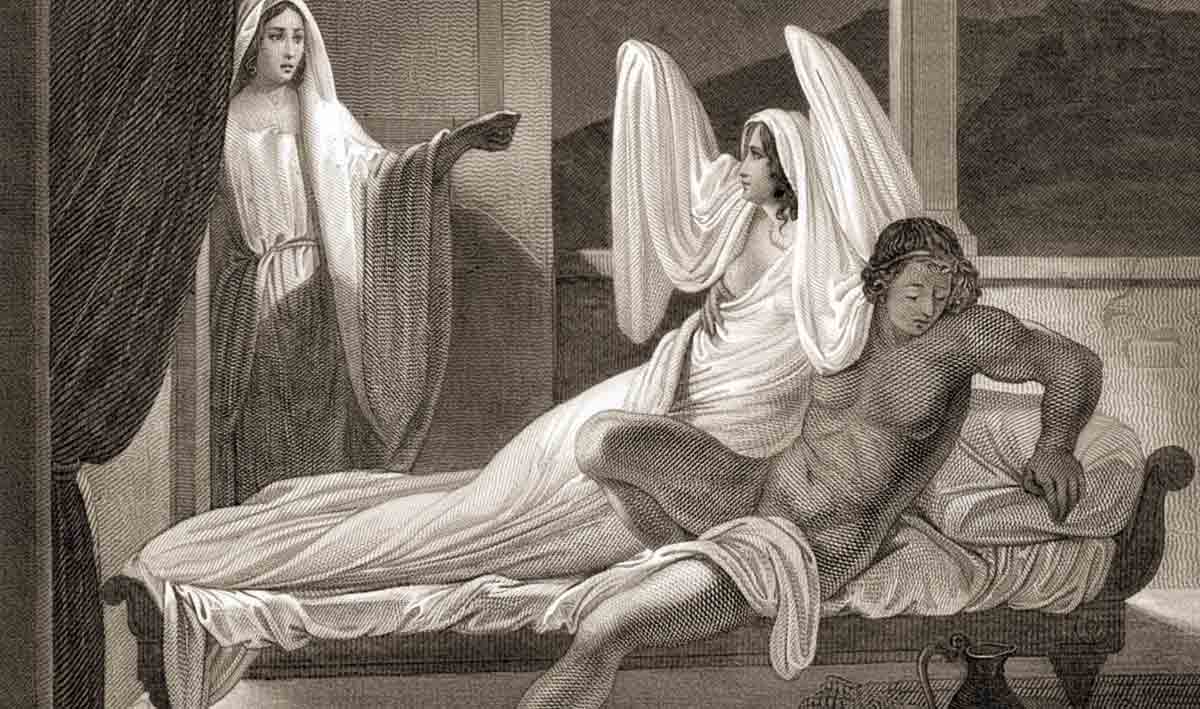
Robert Southey’s Thalaba the Destroyer (1801), inspired by the poet’s travels in Portugal and encounters with ancient Islamic tales, includes a sinister vampiric spirit. Samuel Taylor Coleridge, who traveled and shared ideas with Southey, wove vampirism into his poem Christabel (1816). The innocent title character is preyed upon by the mysterious Geraldine, who cannot pass certain thresholds and is averse to Christian prayer.
Lord Byron‘s The Giaour (1813), with a similar Orientalist slant to Southey’s Thalaba, describes vampires as those “rent” from their tombs, who haunt the place where they died and suck the blood of those left there. But Byron was to have an even more important role in bringing the vampire into popular culture—not as a poet, but as a character himself.
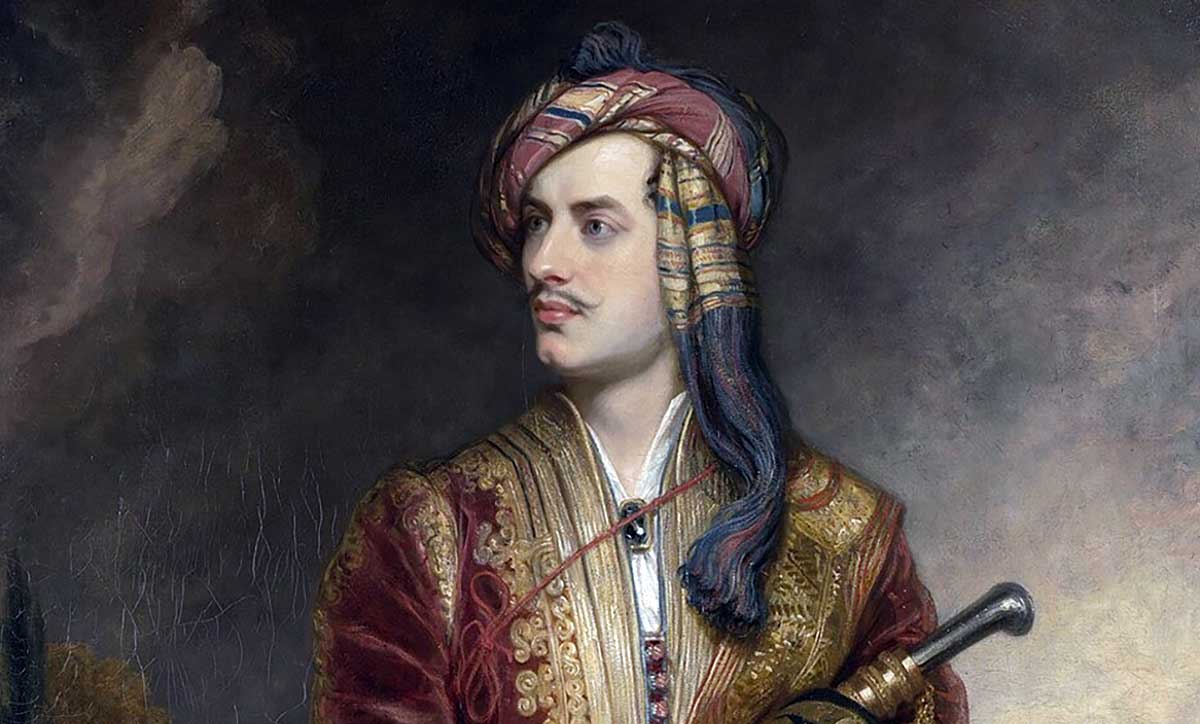
During the infamous gathering of Romantics at the Villa Diodati on Lake Geneva in 1816, Byron’s physician John Polidori wrote a novella called The Vampyre. The storytelling contest that produced Mary Shelley’s Frankenstein also led to Polidori’s tale about a mysterious, charming aristocrat, Lord Ruthven, who corrupts everyone he encounters. Ruthven’s powers are indiscriminate: he will prey on any impressionable young woman or man, and will not stop until he has drained their blood.
Polidori’s story conspicuously blends elements of the Eastern European folk character with elements previously absent from any tales about vampires, such as the vampire’s high social status and charisma—elements which recall Byron himself. Whether this is because The Vampyre drew on Byron’s own, unfinished story from the Villa Diodati contest, or because Polidori envisioned Byron as (socially, at least) a kind of vampire, Polidori’s version of the vampire had a decisively transformative effect on subsequent depictions of the vampire.
Penny Dreadfuls and Sensation Fiction
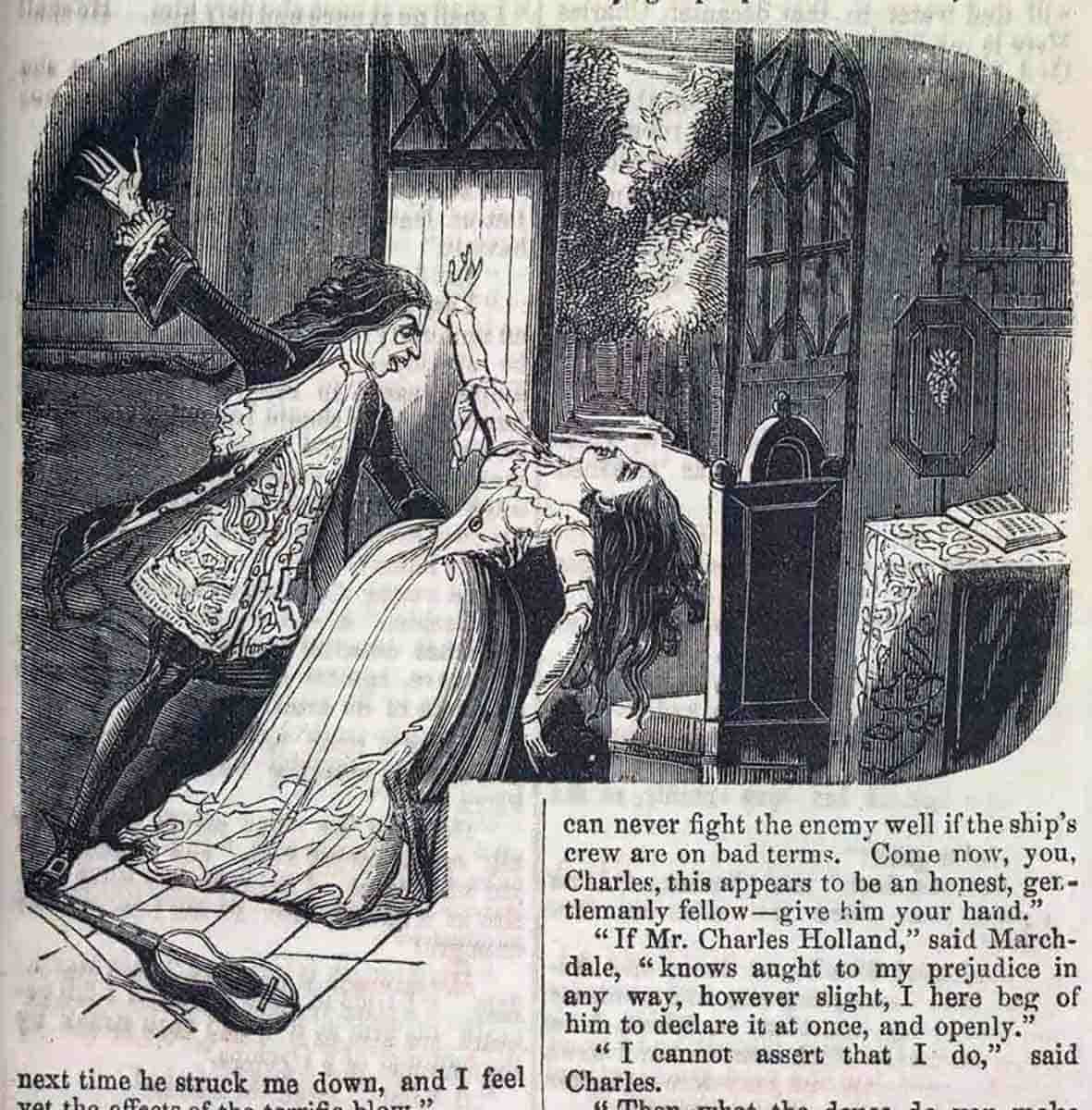
In mid-19th-century Europe, novels and magazines took hold of the literary market thanks to new printing technologies—and vampires took part in this takeover. Readers were gaining a taste for sensational, Gothic horror, and penny dreadfuls (the name for novels serialized in cheap magazines) satisfied their appetites.
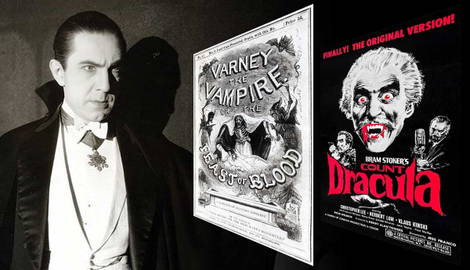
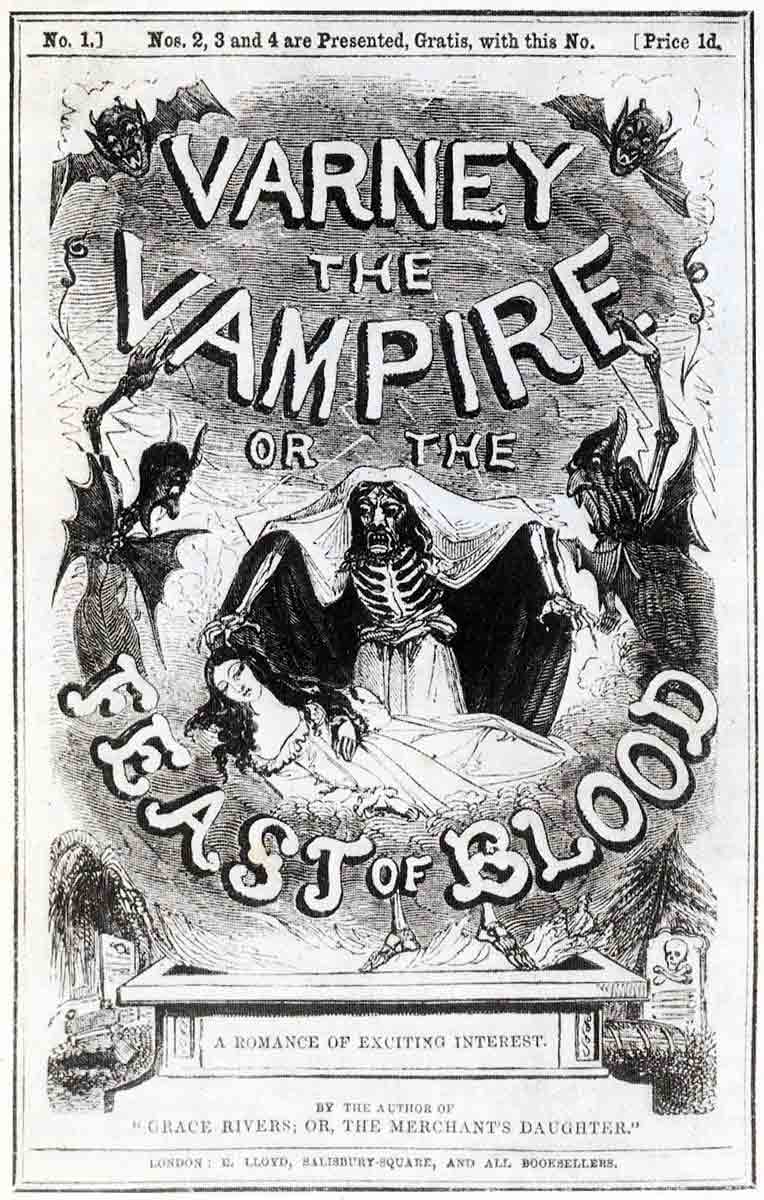
Varney the Vampire (1845-47) takes up the two strains of vampirism in Polidori’s novel: the literal vampire, who sucks blood to stay alive (or, more accurately, undead), and the metaphorical vampire, who drains their victim of their lifeblood in more figurative ways.
Varney is another aristocratic vampire. In taking a once-wealthy family as his victims, Varney prefigures Stoker’s Dracula, a destitute nobleman who craves a return to his former glory—a financial vampire. Varney is also the first fictional vampire to have an important iconographical feature: fangs.
Thrillers and sensation novels gave readers insight into the vampire’s motives, even transforming the malign figure of folklore into a sympathetic creature who is in thrall to their instincts. In Florence Marryat’s The Blood of the Vampire (1897), the protagonist, a mixed-race woman who has grown up in Jamaica, discovers with horror that her influence over others is fatal. The title unexpectedly turns our attention away from the blood of the victims to that of the vampire, blending the Gothic tradition with prevalent (and generally racist) late-19th-century ideas about miscegenation and degeneration.
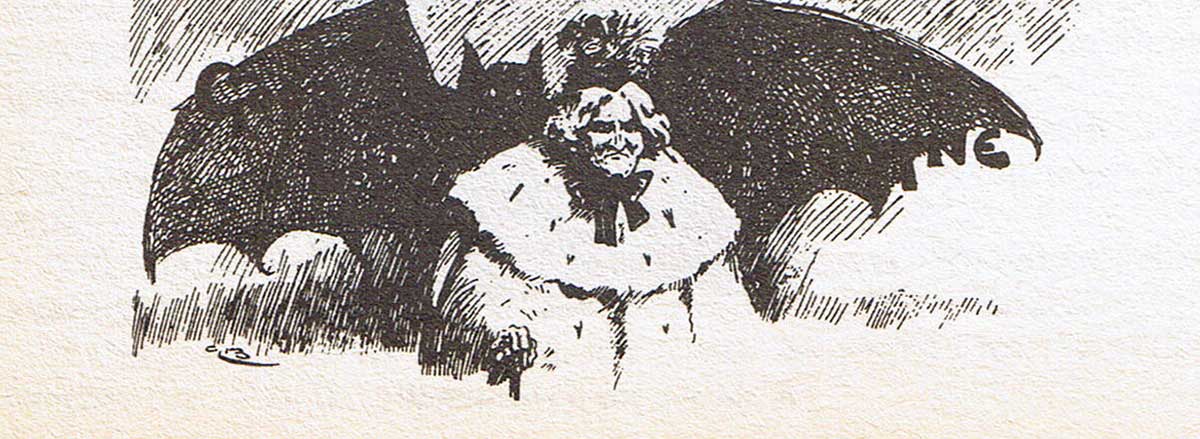
The bestselling sensation novelist Mary Elizabeth Braddon similarly put a scientific spin on the vampire’s obsession with blood in Good Lady Ducayne (1896). Despite the sinister bat hovering in the illustration on the title page, this novel features a distinctly medical vampire, who drains her victims’ blood through a combination of chloroform and transfusion, after engaging their help in her experiment to prolong her life as long as possible. The novel eerily echoes the vampiric undertones that linger in medicine and beauty treatments today.
The Emergence of the Gothic
While the 19th century saw the vampire take on forms far beyond its folkloric incarnation, the most popular and enduring vampires in fiction from this time are the literal ones, who come forth from unquiet graves to suck the blood of innocent victims. Their refusal to stay dead, their dealings in darkness, their part-human monstrosity, and their inexplicably seductive hold over their victims made vampires a key feature of the Gothic genre.
By the second half of the century, Gothic novels as a form often featured a story within a story, or stories cobbled together out of various modes such as letters, newspaper fragments, and documents. This was particularly effective in stories about vampires, heightening the sense of the vampire as an elusive, uncontainable figure whom no amount of description or taxonomization, by whichever narratorial authority, can capture.
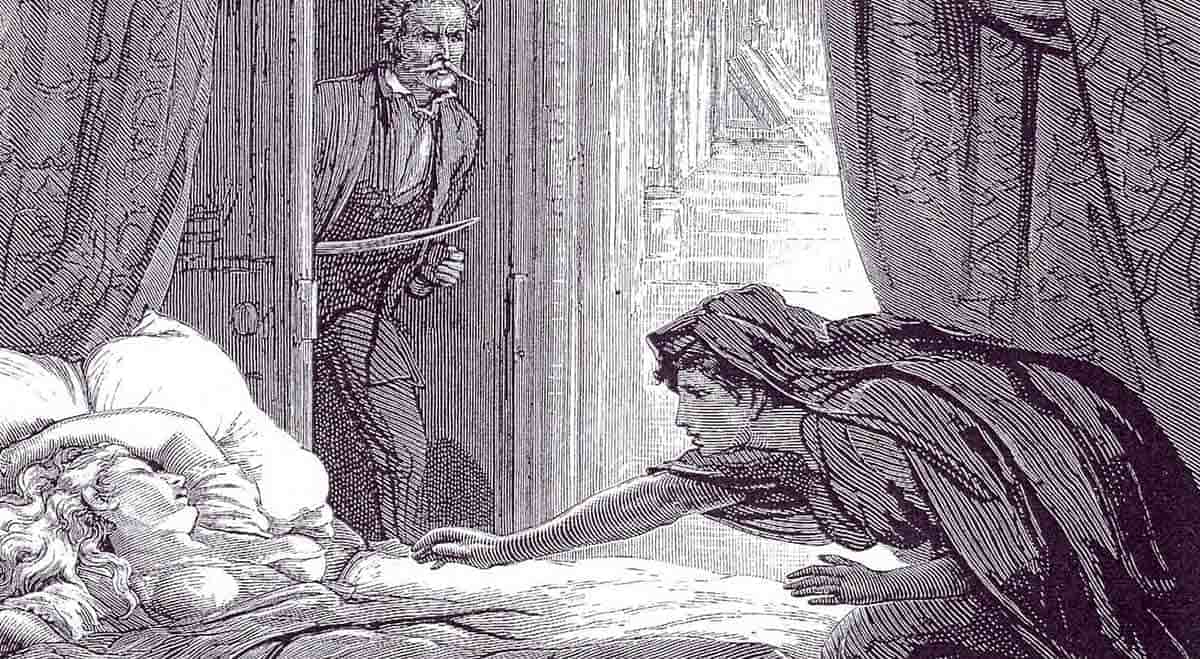
Carmilla (1872) by Joseph Sheridan Le Fanu uses this multi-layered narrative to enclose the firsthand testimony of a woman seduced by a female vampire inside a pseudoscientific casebook. Le Fanu wants the reader to imagine that this vampire might really have existed, while conveying at the same time the force of her seduction.
Carmilla is one of the most seductive vampires in literature. What was a latent homoeroticism in the relationship between Christabel and Gertrude in Coleridge’s Christabel becomes, here, overt. Carmilla openly caresses her victim and mounts her like a succubus, the mythological female demon who seduces men in their sleep. Only, unlike the succubus who drinks men’s bodily fluids to survive, Christabel sucks the blood of another woman.
Carmilla, along with earlier novels such as The Vampyre and Varney the Vampire, was an influence on the most famous vampire novel of all time, Bram Stoker’s Dracula (1897). In all of these stories, the vampire comes from an ancient, noble line, reflecting dual anxieties: inside the noble families, an anxiety about the purity of their bloodline, and outside them, an anxiety about their power over lower-born people. The vampire’s restricted movements and desire to infuse their bodies with the blood of others encode concerns about social mobility in a fast-changing world.
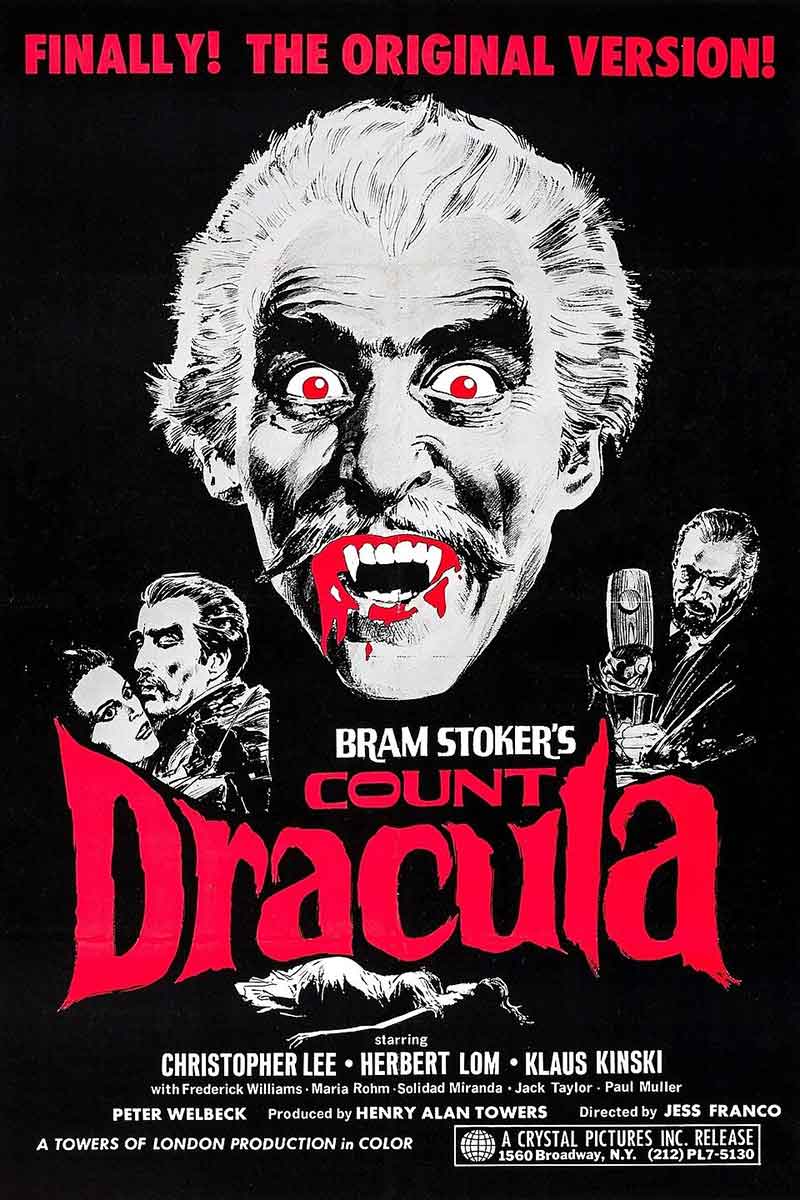
Dracula satisfies the reader’s desire to encounter a truly Gothic villain while connecting this villain to deeper contemporary concerns. Less overt than Carmilla with its homoerotic vampirism, Dracula nonetheless tapped into debates of the day about gender and sexuality, especially through its representations of Lucy Westenra, who falls prey to Dracula’s charms, and Mina Harker, a resourceful heroine who has attracted much feminist discussion. With Dracula, the vampire’s conquest of the novel was complete, and it soon began to transcend the pages of fiction.
Vampires in Art
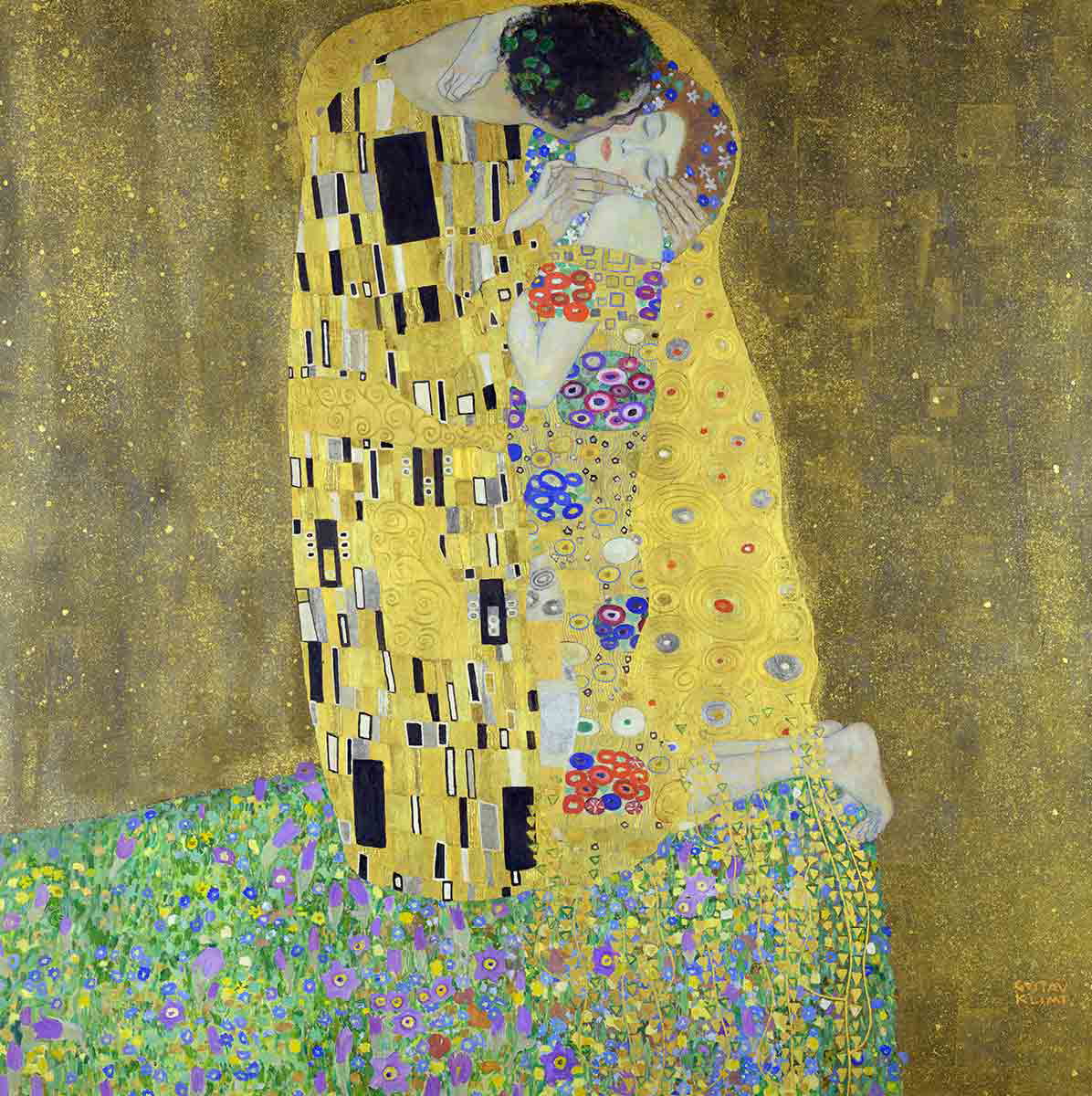
By the early 20th century, the word ‘vampire’ was being shortened to ‘vamp’ to refer to alluring, but dangerous, women. Although the most prominent vampires in fiction thus far had been male, a trope surrounding female vampires emerged in visual culture, taking its cue from the seductive charms of Le Fanu’s Carmilla and the Brides of Dracula in Stoker’s novel.
Images of deadly vampiric women were also inspired by the 19th-century trope of the femme fatale. In Victorian Britain, changes in women’s legal status and repeated attempts to regulate the sex work industry brought about heightened fears of female sexuality. While unbridled female sexuality has been a perennial source of anxiety in cultures across the globe, it took center stage in mid- to late-19th-century art.
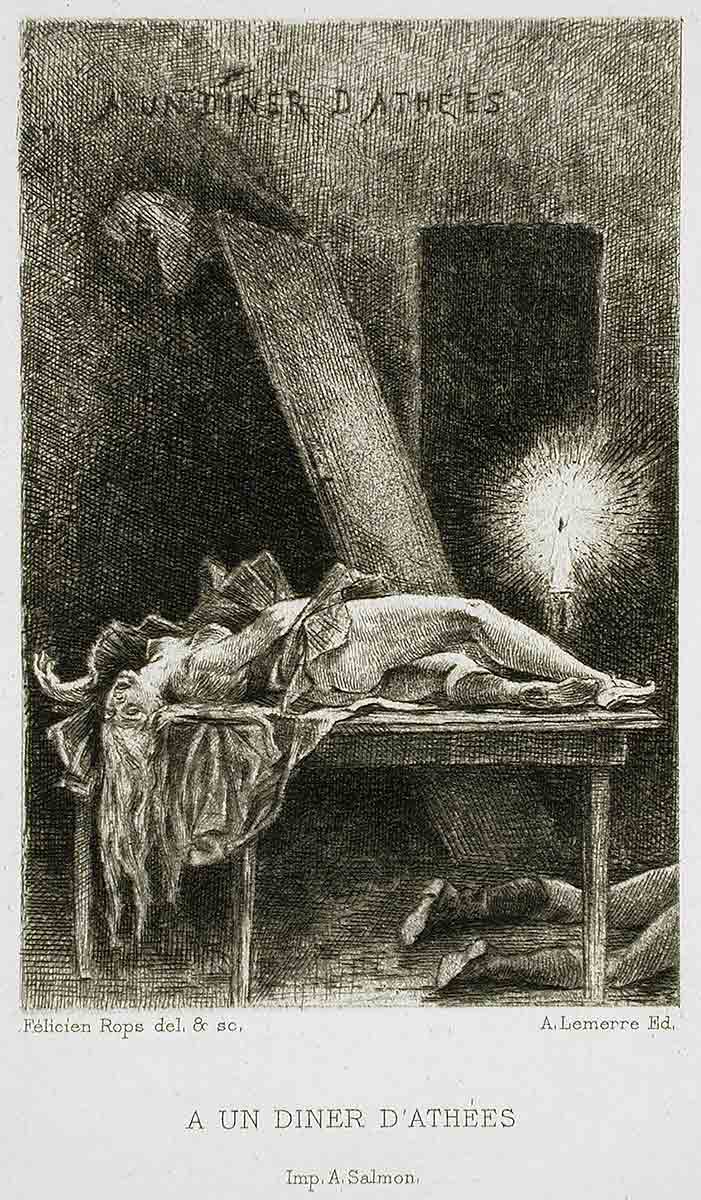
Félicien Rops frequently depicted insatiable devil-women in Gothic scenes blending sexual ecstasy with death, destruction, and the Black Mass. Rops creates a similar ambiguity to Stoker in the character of Lucy Westenra, as to how voluntarily these women have surrendered to vampiric lust.
Rops was inspired, as were many artists of the period, by the decadent movement and its early practitioner, the poet Charles Baudelaire. Les fleurs du mal (1857), Baudelaire’s notorious volume of poetry, included several poems about femmes fatales, and even one titled ‘The Metamorphoses of the Vampire.’ This poem, featuring a “putrescent thing, all faceless and exuding pus,” who drains the speaker of his “very marrow,” was censored from Les fleurs du mal after attracting the outraged attention of the French censors.
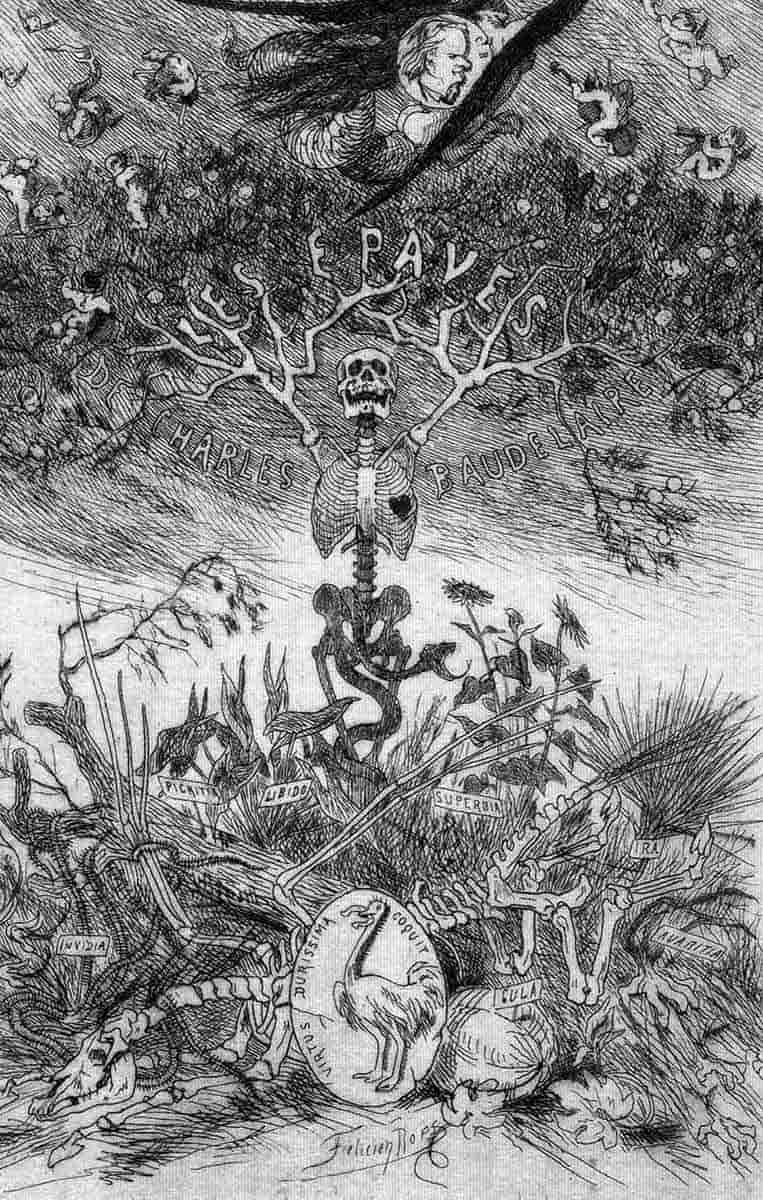
Along with five other censored poems, ‘The Metamorphoses of the Vampire’ was published in Belgium in 1866 in a volume titled Les épaves (‘scraps’ or ‘wreckage’), with a frontispiece by Rops depicting a skeleton emerging triumphantly from a wasteland.
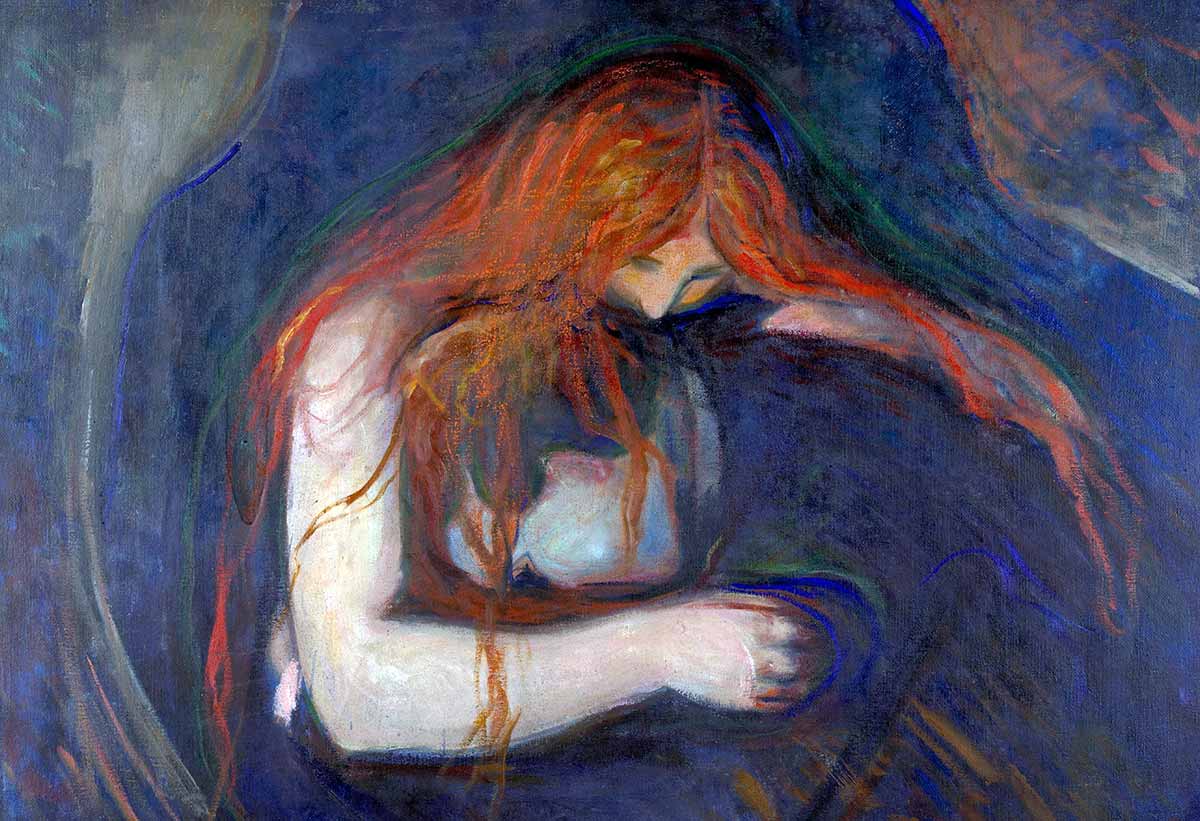
Edvard Munch‘s 1895 painting Love and Pain has often been known by an alternative title (not used by the painter himself), Vampire. While ostensibly showing merely a woman kissing a man on his neck, her consuming embrace and flowing, flame-colored hair connote the kinds of dangerous sexuality that preoccupied so many contemporary artists.
Munch repeatedly returned to the image of the scarlet-haired seductress whose red vitality might, it seems, come from draining the blood of her lovers, culminating in the painting Vampire in the Forest (1924-25). He explicitly related this motif in his work to the changing social role of women with the advent of feminism: “it became the woman who seduces and entices and deceives the man […] In the transition period, the man became the weaker one.”
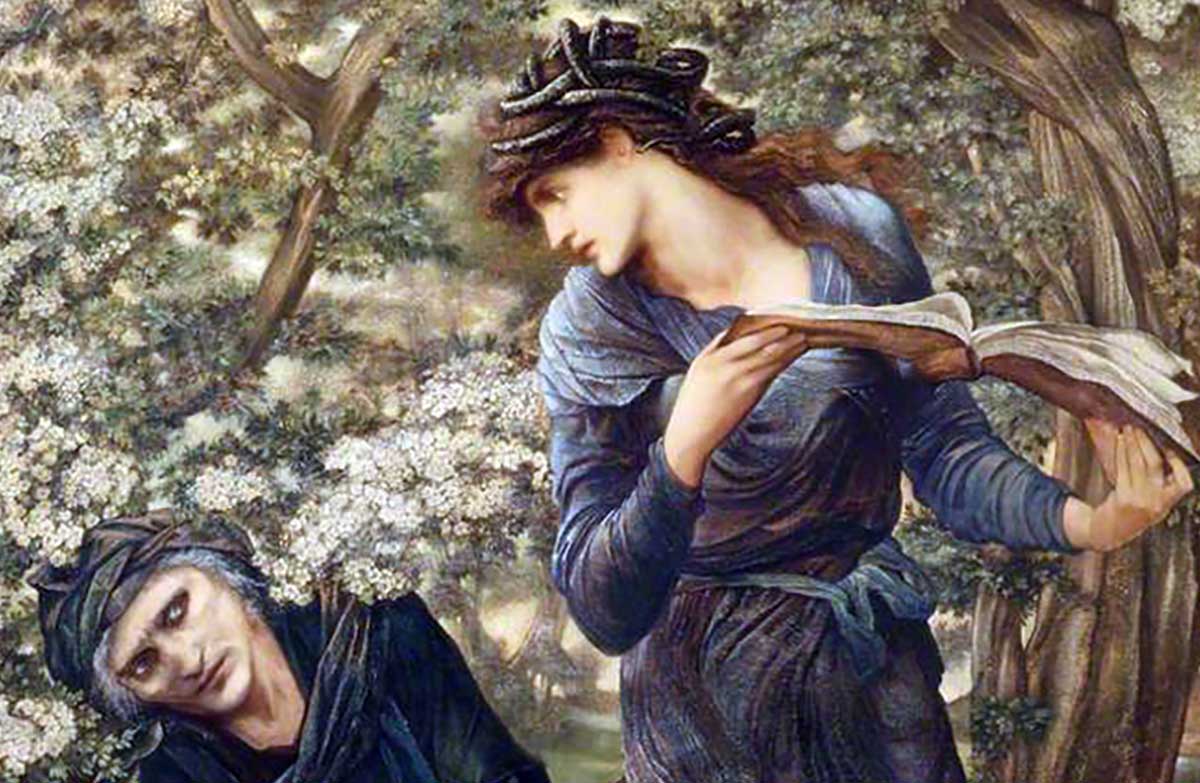
In Britain, too, artists responded to women’s emancipation by revamping the longstanding image of the female blood-sucker. Several Pre-Raphaelite artists dealt with women’s power in their work by representing demonic or magical female figures from myth and legend: witches, enchantresses, sirens, and vampires.
This reflected the Pre-Raphaelites’ interest in Romantic poetry. Painters took inspiration from Coleridge’s Christabel, Byron’s Giaour, and two poems by John Keats about seductive women. The first, ‘La Belle Dame Sans Merci,’ depicts a fairy-like woman who drains the spirit of every man she meets. In the second, ‘Lamia,’ the female character, like the vampire-like creatures in several world cultures, seeks to consume children.
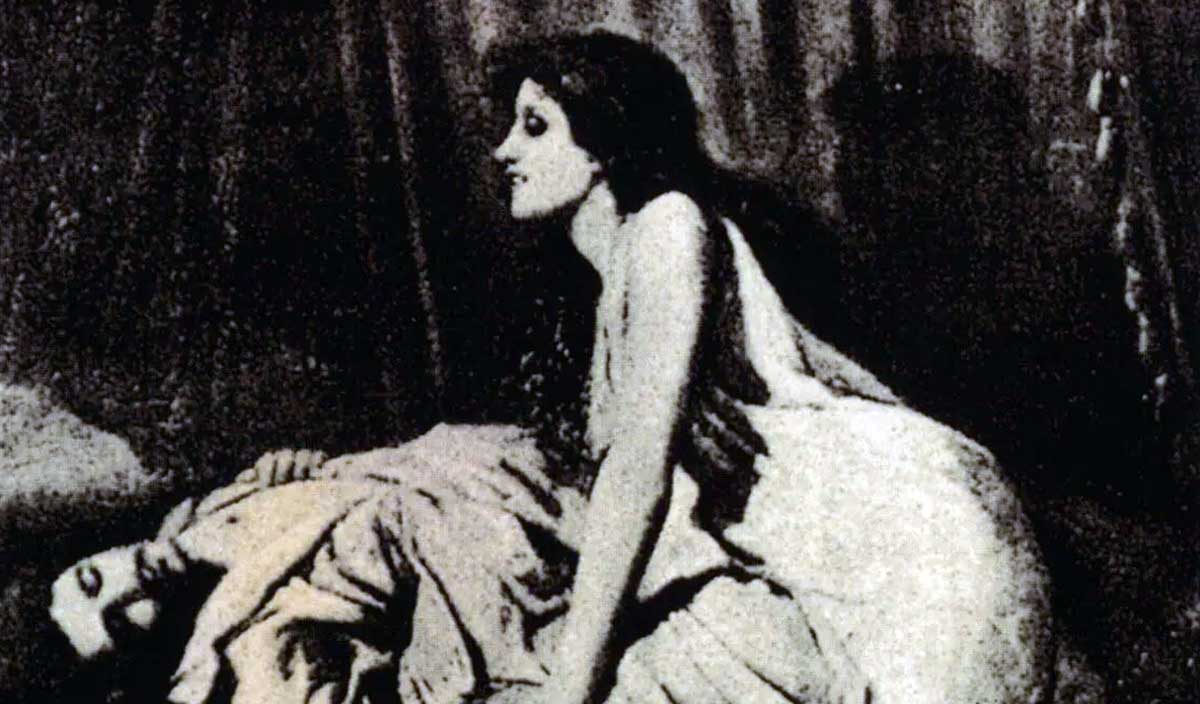
Edward Burne-Jones painted several dangerous women, from mermaids and sirens to the Arthurian seductresses Morgan le Fay and Nimue. But it was his son, Philip Burne-Jones, who would paint a work titled The Vampire in 1897, inspired by a Rudyard Kipling poem of the same name.
Burne-Jones’s painting resembles one from a century earlier, Henry Fuseli‘s The Nightmare, in staging a bedroom scene of fearful seduction—only now the roles have been switched. The woman in Fuseli’s painting, preyed upon by an incubus, becomes the succubus of Burne-Jones’s. Kipling’s poem, along with Burne-Jones’s painting, inspired a 1913 silent film called The Vampire, marking the triumphant entrance of the vampire onto the big screen.
Vampires on Screen
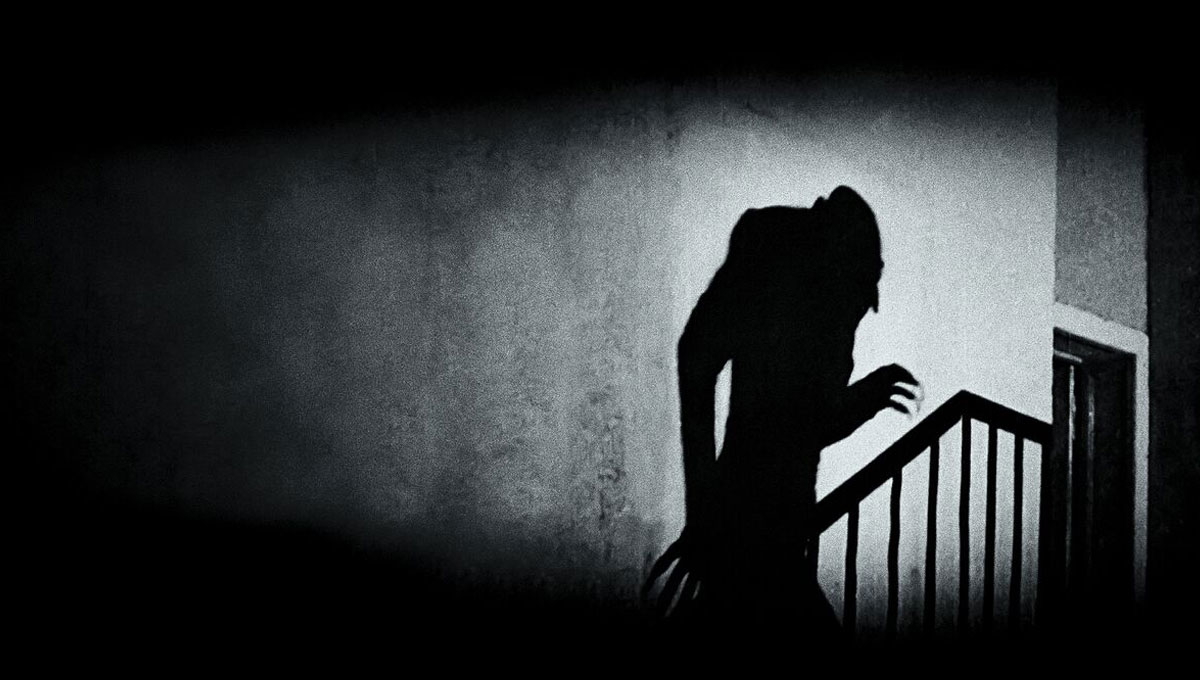
Appropriately enough, vampires on screen have refused to die, in spite of attempts to vanquish them. In 1922, Bram Stoker’s widow, Florence, sued the makers of the groundbreaking horror film Nosferatu because of its similarity to Dracula. These are substantial: a young man is sent to Transylvania to meet a mysterious client, and scion of a distinguished old family, who is looking to purchase a home in England. Count Orlok—as he is renamed in Nosferatu—sleeps in a coffin, becomes ravenous at the sight of blood, and is intent on claiming the protagonist’s love interest as his own.
One key difference that F.W. Murnau’s film introduced into the genre is the vampire’s susceptibility to sunlight, which in Dracula is dangerous but not fatal. Moreover, Nosferatu set the tone for the visual representations of vampires that would delight audiences for the next century.
Although the court found in Florence Stoker’s favor and ordered all copies of Nosferatu to be destroyed, the film survived, and it was too late to stop the spread of Dracula adaptations. The novel has always been in the public domain in the United States due to a copyright error, leading to hundreds of Draculas in film and television.
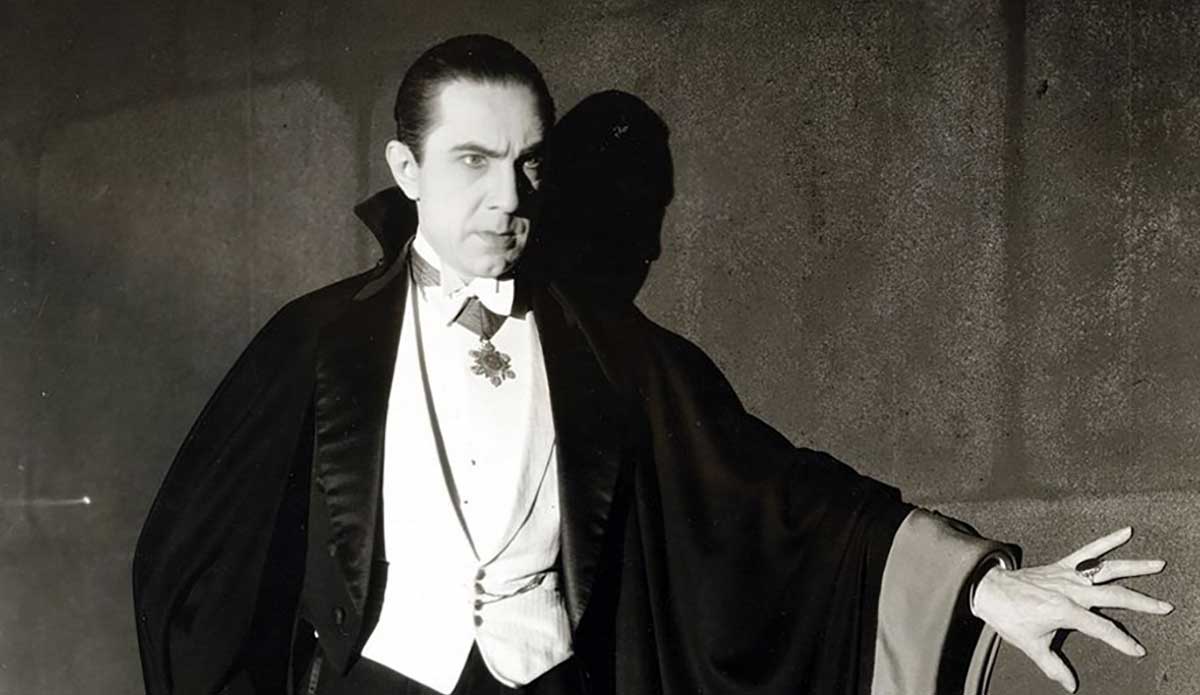
Each incarnation of Dracula has brought a new angle to the vampire, though elements of the original folklore, Polidori’s Byron-inspired novella, and Stoker’s novel have remained intact throughout.
Béla Lugosi in 1931 and Christopher Lee in 1958 played Dracula as a suave aristocrat, often garbed in white tie beneath his bat-like cape, his brooding mouth hiding sharp fangs. Gary Oldman’s portrayal, in Francis Ford Coppola’s Bram Stoker’s Dracula (1992), departed from the now-traditional costume and brought in elements of the steampunk aesthetic.
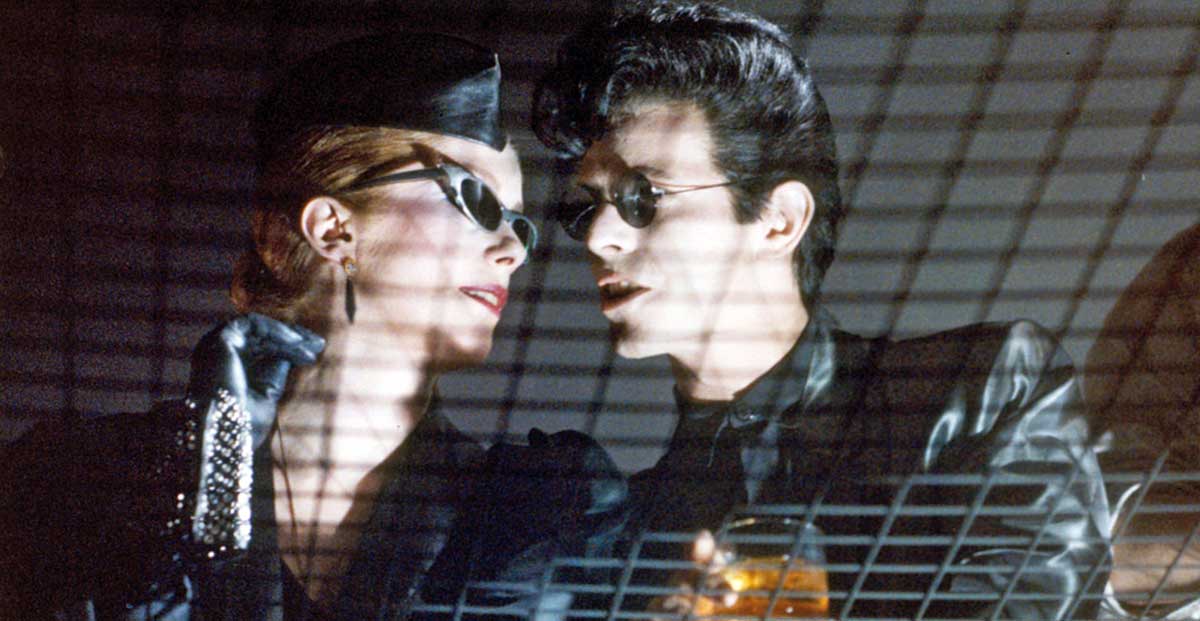
Film and television have explored the plot and characters of Dracula and the broader vampire myth from every possible angle. Vampires roam the dystopian streets of a post-virus New York in I Am Legend (2007); they pose as a wealthy couple in order to prey on a sleep doctor in The Hunger (1983); they navigate the pitfalls of eternal life in Only Lovers Left Alive (2013); they deal with racism and abuse in New Orleans in Interview with the Vampire (film version 1994, television version 2022 to present).
Other adaptations have taken the perspective of previously sidelined characters who are trying to defeat the vampire, such as the 2004 film Van Helsing and the television series Buffy the Vampire Slayer (1997-2003). Vampires became a staple of young adult fare in books, later adapted for the screen, such as the Twilight series (2008-12) and The Vampire Diaries (2009-17).
Thanks to the popularity of the goth subculture since the 1980s, with bands like Siouxsie and the Banshees and The Cure adopting costumes inspired by Lugosi’s and Lee’s vampires, and the band Bauhaus even releasing a song titled ‘Bela Lugosi’s Dead,’ the image of the vampire seems destined to live forever.