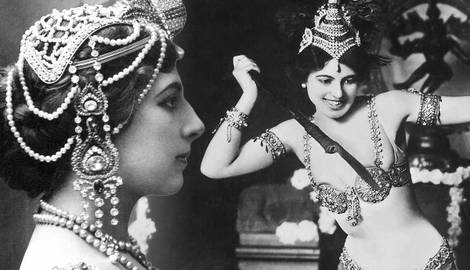

Mata Hari: a name synonymous with espionage, seduction, and dance routines that could mesmerize a roomful of Parisians. But was the infamous “spy” and stage star also a belly dancer? The postcards might suggest so—those coy glances, the exotic costumes—but the reality, as always, is much more complex than a simple image could convey. Mata Hari’s highly ornamented performance drew heavily on the mystique of the “Orient,” a theatrical concoction spiced with just enough cultural references to seem authentic. Her alleged mastery of Indonesian dance styles was likely more historical fiction than studied artistry. After all, Mata Hari was no stranger to reinvention, whether on stage or in the whispered backstories delivered in her boudoir.
Who Was Mata Hari?
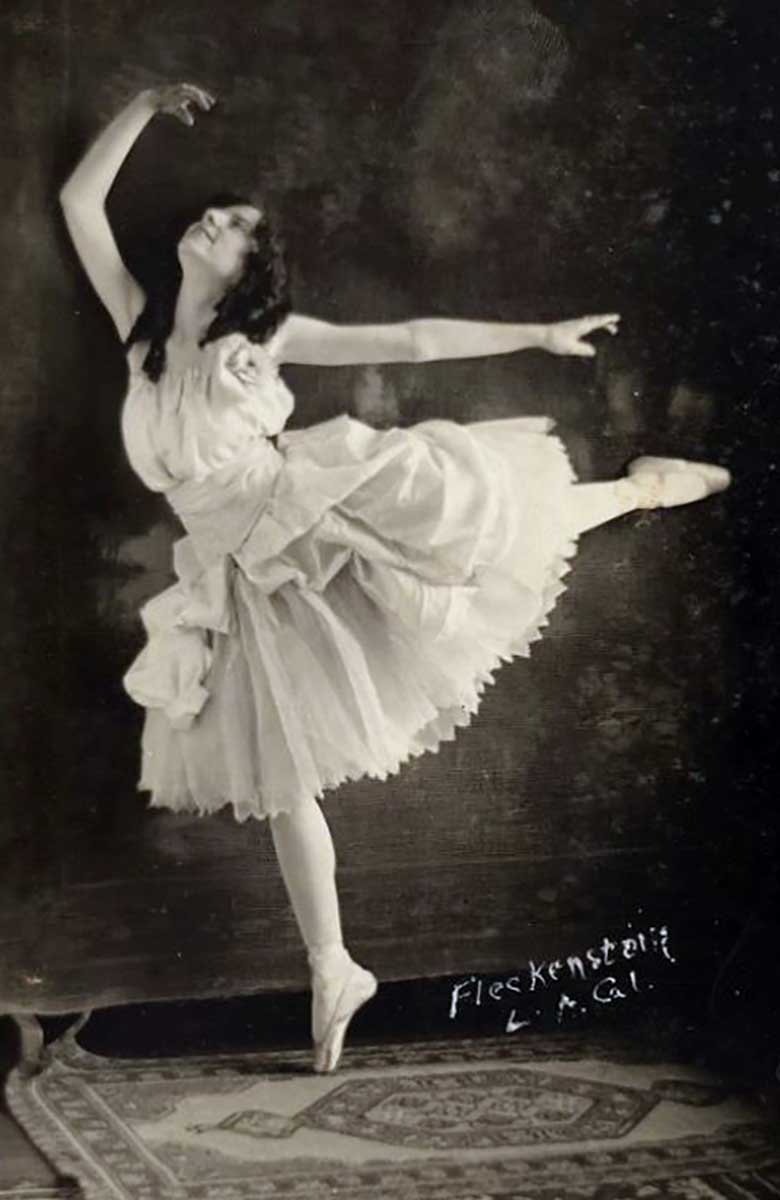
Margaretha Geertruida Zelle MacLeod was born in 1876 in the Netherlands to a father who made—and promptly lost—a fortune. Margaretha’s early life was a whirlwind of privilege followed by the devastation of collapse. By 13, her mother had died, her father had remarried, and the once-pampered Margaretha was shipped off to live with relatives who likely considered her a burden. Even those relations could not give Margaretha the kind of exciting life she so wanted, and she was sent to learn to teach kindergarten at a ladies’ school. This was not the sort of adventure Margaretha, dark-haired and doe-eyed, wanted for herself.
At 18, she answered a newspaper ad that may as well have read, “Abusive Colonial Officer Seeks Naïve Wife.” Enter Rudolf MacLeod, a man 20 years her senior with a penchant for alcohol and an Indonesian concubine in tow. Having such a woman, whose race made her inappropriate to marry although not to engage in relations with, was fairly common, if unethical, at the time. The more public-facing marriage of Rudolf and Margaretha was a predictable disaster, punctuated by violence, plenty of alcohol, and the tragic death of their son, Norman-John, likely from complications of syphilis—an infection the couple may have passed on. After a separation that was a long time coming and the loss of custody of her young daughter, Margaretha fled to Europe with little more than her determination and ability to adapt.
By 1903, she had landed in Paris, the city where women with tragic pasts went to start over—or so she believed. “I thought all women who ran away from their husbands went to Paris,” she quipped later, with what we can only assume was a rueful smirk. At first, the City of Lights wasn’t a miracle metropolis of salvation. Margaretha cycled through gigs, including as an artist’s model and, reportedly, circus horsewoman, though whether she actually took a turn in a ring remains murky. She did star in a circus but it was as a scantily clad temple dancer, not an equestrian.
Reinventing herself yet again, she adopted the stage name Mata Hari—Malay for “eye of the day”—and debuted what she called her “sacred dances” in the early months of 1905. These performances were an interesting blend of cultural appropriation and risqué spectacle. Drawing on her years in the Dutch East Indies, she spun tales of being trained as a holy dancer in Java, though her knowledge of the culture seems to have been as thin as her veils. “With every veil I threw off, my success rose,” she later remarked.
Her fabricated mystique worked. By August 1905, Mata Hari was the toast of Paris, with newspaper columns raving about her “exotic” looks and “Hindu” dances. Critics called her hypnotic and sensual; audiences called her scandalous—and adored her all the more for it. She mingled with aristocrats, seduced wealthy lovers, and claimed the title of a modern-day Amazon, though the closest she likely got to battle was deflecting rumors and nimbly running from her debts, using charm as her armor.
Margaretha’s metamorphosis into Mata Hari was a triumph of survival and audacity, proving that a somehow fictional oral autobiography could be an art form in itself. “I wanted to live like a colorful butterfly in the sun,” she admitted. And for a while, she did, even if she had to paint her own cardboard wings to get there.
Did She Really Belly Dance?
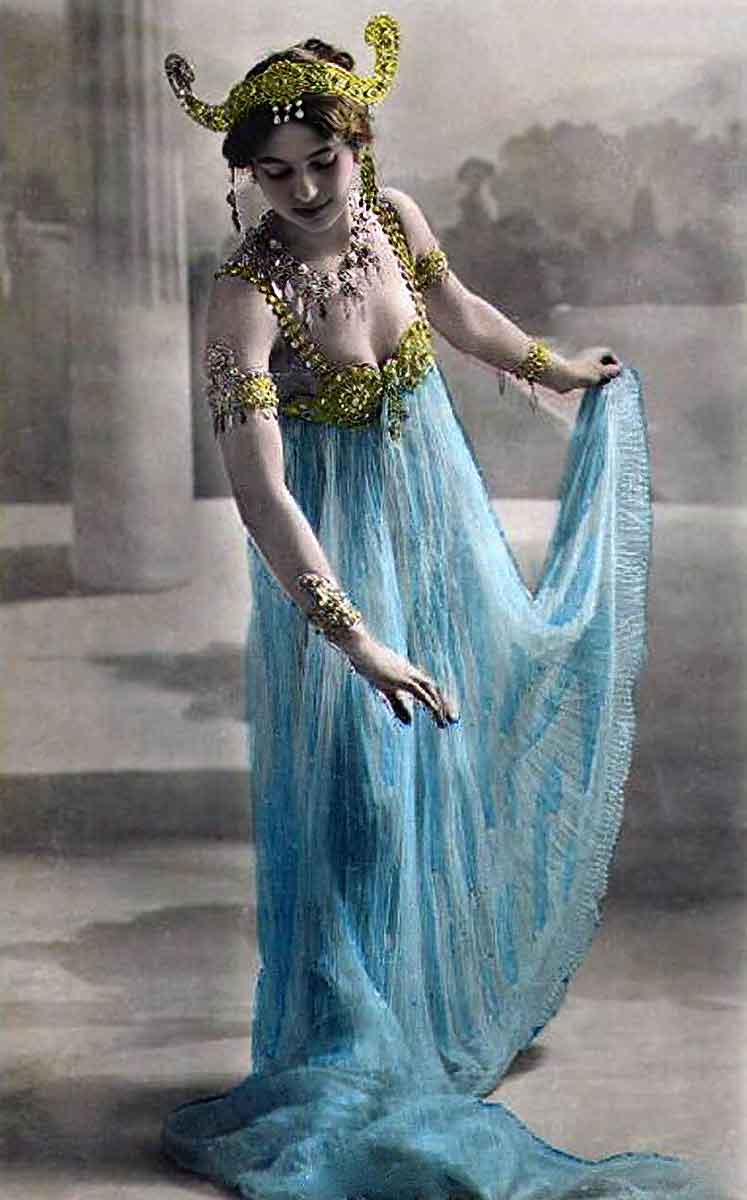
No, not really. Despite being dressed in ornately jeweled costumes and signature midriff-bearing bustiers, Mata Hari mimicked culture rather than incorporated it. The only similarity to actual belly dance was that she did it for money, as did the Romani women who performed in royal courts and at weddings (though the latter certainly didn’t undress like the Dutch wife turned-performer).
Using her “temple dance,” Mata Hari managed to ensnare a devoted entourage of admirers from every corner of Europe. These affluent and socially elite suitors were drawn to her like moths to a flame, trading treasure for time with the body they’d glimpsed at one of her controversial performances. Mata Hari had a knack for embellishing reality and behaving as though she was the epitome of untouchable confidence. In truth, she harbored insecurities about her modest assets, making sure her small breasts were never fully on display. While there are many things we can’t know about the real woman after a lifetime of making up personal histories, we do know for certain that many facets of her were a paradox.
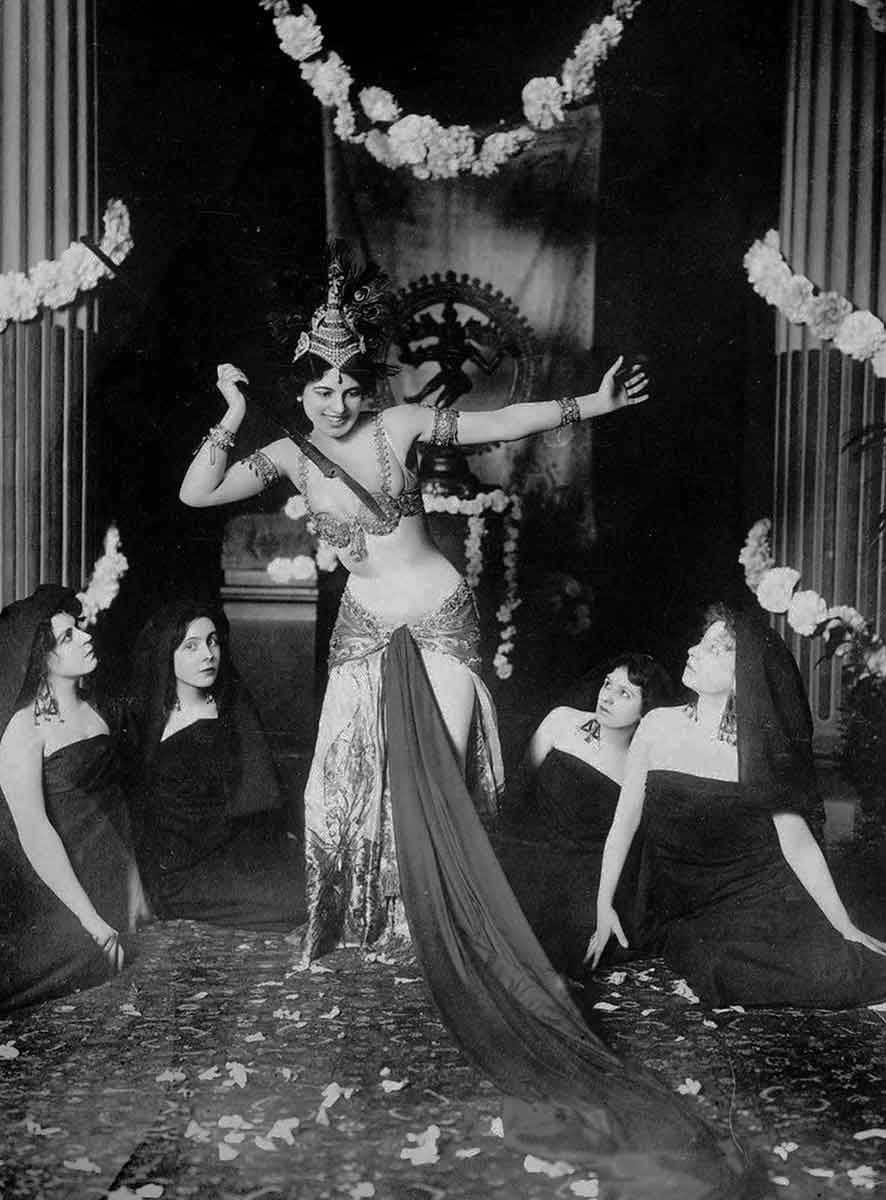
Mata Hari spun a tale about learning her dance moves from a Javanese priest as a child, though we know she was not in the Indies until her married life began. However, by 1911, Mata Hari was strutting her stuff on stage as a priestess who supposedly engaged in rituals honoring Shiva—or any other Indian deity. No matter what claims she made, historical accuracy and cultural sensitivity were not her strong suit. However, that didn’t deter eager audiences from flocking to her performances like they were witnessing the rarest spectacle known to mankind.
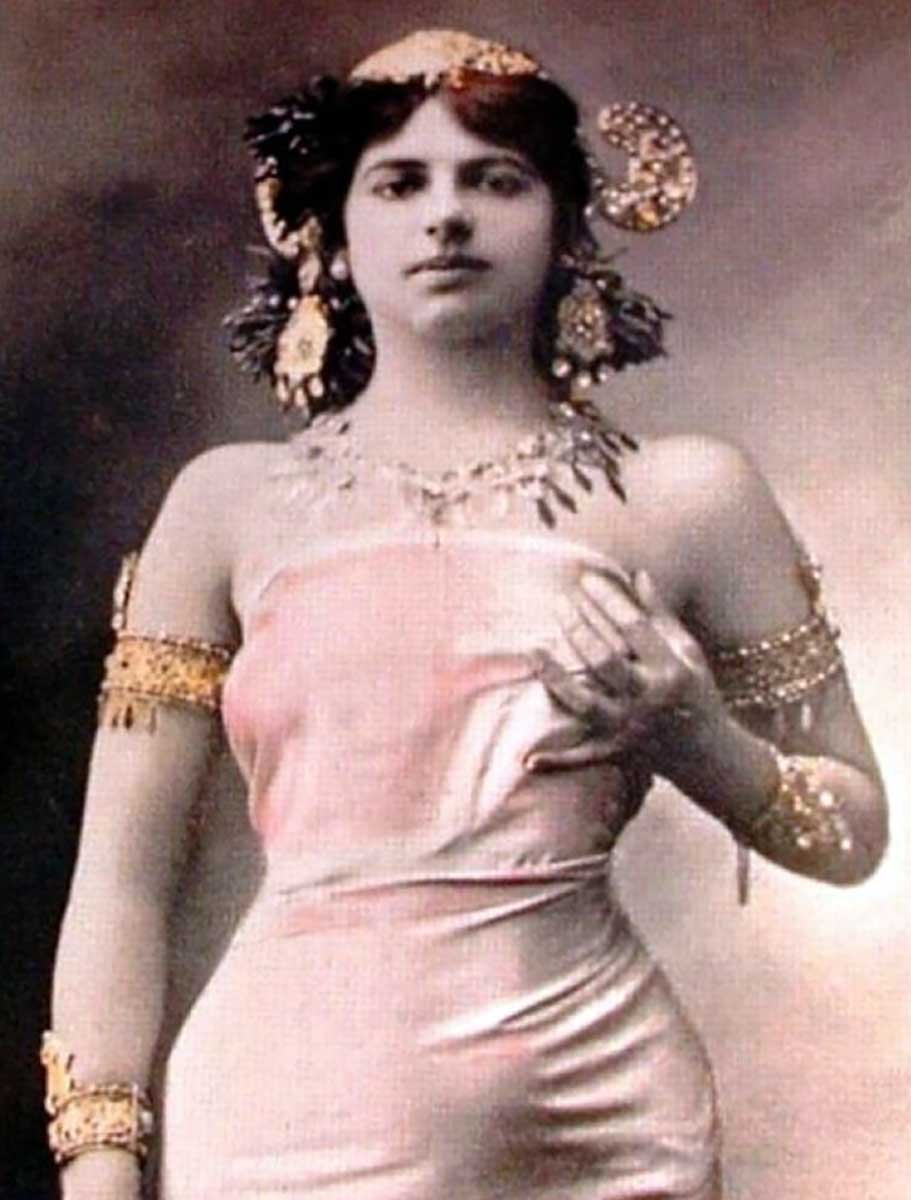
While she may have picked up the occasional exotic flourish during her ill-fated marriage in Dutch Indonesia, the reality of her dance education was mainly a crash course in the social ballroom dances of the era. Clearly, she had a flair for the dramatic—living in a cultural melting pot both in the East Indies and Paris suited this particular talent of hers.
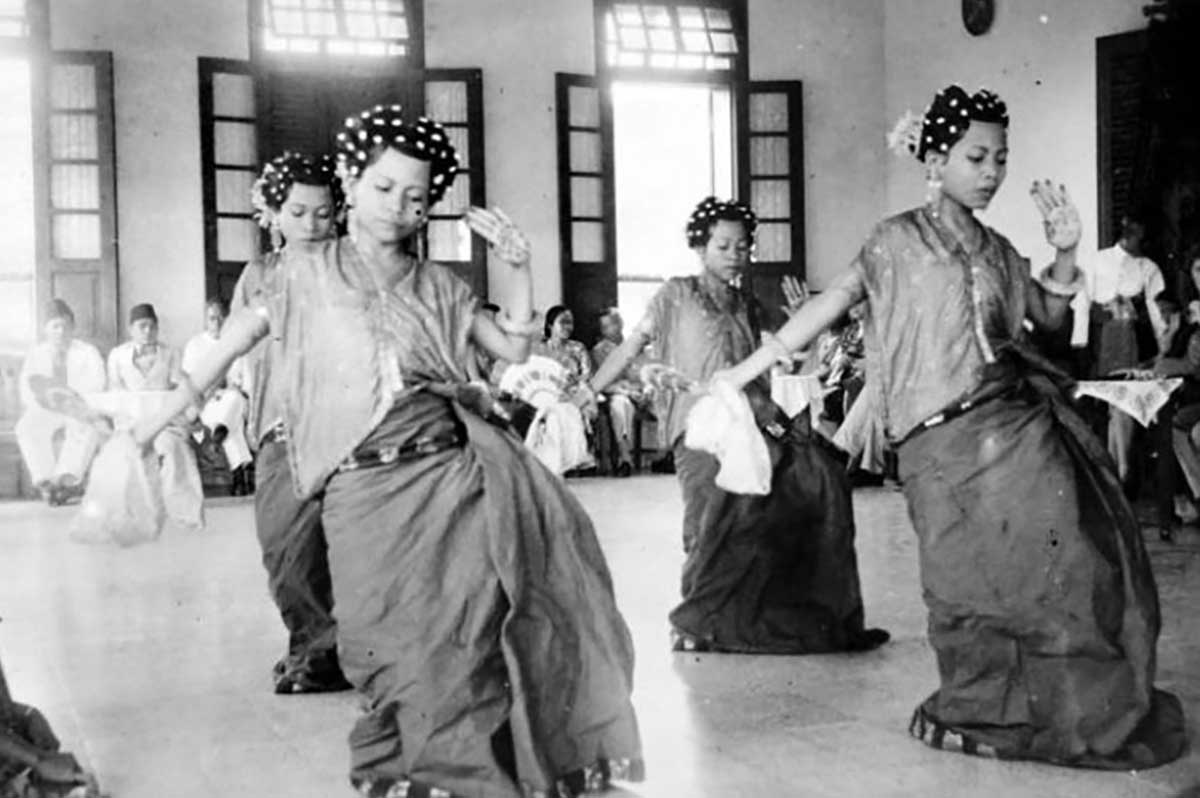
Yet, if we’re looking at accurate historical dance traditions in the area, Mata Hari’s choreography bore little resemblance to the revered Saman Dance, commonly performed in Indonesia during the Dutch colonial rule. This traditional dance was about community, camaraderie, and a stunning display of intricate hand movements—performed by men, mind you! Mata Hari, on the other hand, looked nothing like her cultural counterparts and opted instead for a highly theatrical veneer.
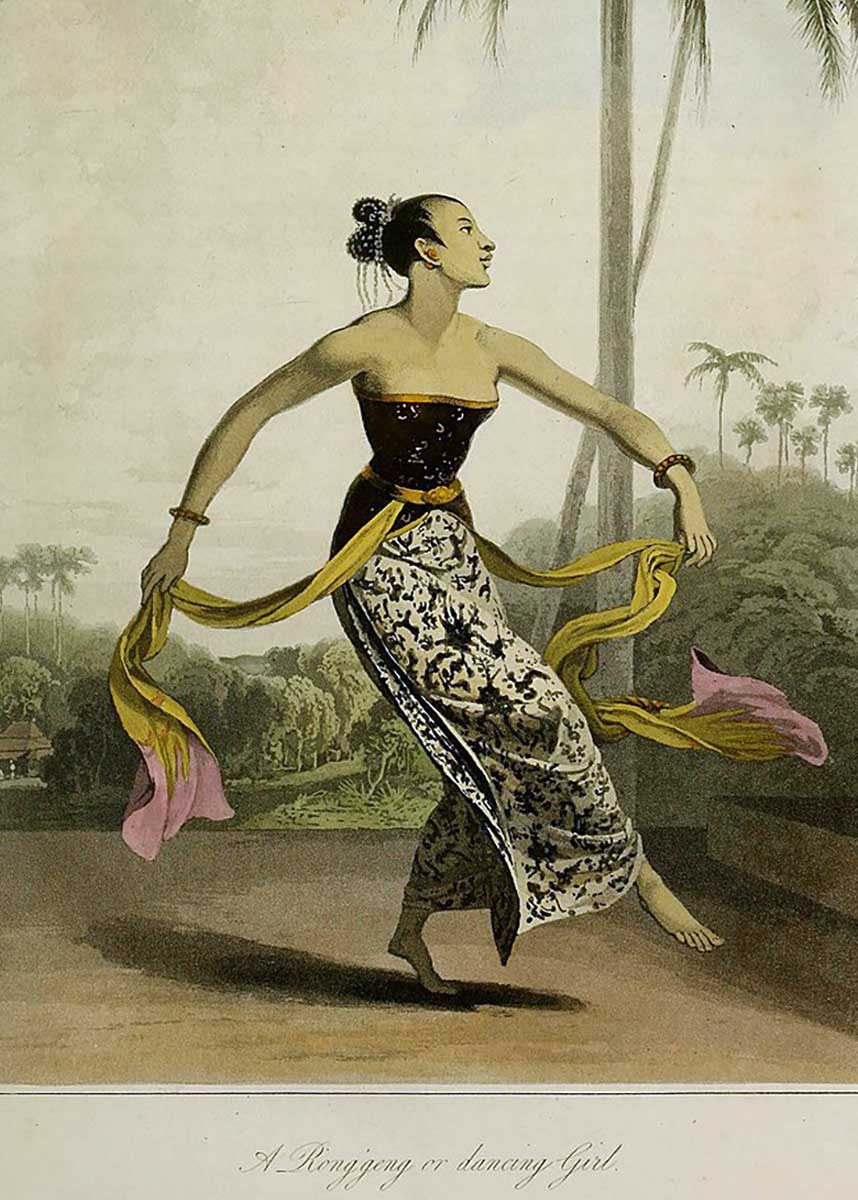
Delving a smidge deeper into the realm of women’s dances from that time, Mata Hari could’ve showcased Serimpi. Derived from the local phrase “Srimpi Sangopati,” meaning the second in line to the throne, this masterpiece is accompanied by the enchanting sounds of tinkling music. The movements of the Serimpi are all about subtlety, performed by a few elegant ladies who’ve mastered the art of refined and harmonious grace. But, Mata Hari didn’t dance the Serimpi, and her performances were a concoction of her own making. She claimed they were deeply rooted in authentic Asian traditions, complete with sacred dances, but in an effort to call a spade a spade—her knowledge barely scratched the surface.
While she proclaimed herself a product of the Dutch East Indies, the reality of her stage persona was more akin to a first-rate striptease. The ever-so-sassy Colette, a well-known French novelist, remarked that “she hardly danced” at all when performing. Instead, the novelist stated rather bluntly, she knew precisely how to artfully shed her garments, revealing a long and lithe figure as she languidly undulated on stage, often swathed in a cascade of veils she would remove one by one.
So, while Romani women were oscillating between praise and persecution for showcasing their vibrant belly dance traditions, Mata Hari was effortlessly pocketing cash for a rather watered-down version of striptease masquerading as a spiritual rite. In the end, Mata Hari wasn’t fooled by her own vibrant rainbow of lies. “I never could dance well,” she confessed in a moment of honesty, “people came to see me because I was the first who dared to show myself naked to the public.” There you have it: a historical figure who transformed the art of seduction behind a facade of spirituality—all while wrestling with her own insecurities.
Mata Hari wasn’t good at belly dancing or, frankly, any dance at all. What she was unparalleled at was the art of surviving. Or possibly—lying. She definitely used one in service of the other.
Did She Actually Spy for France, Germany, or Anyone?

The femme fatale of dance and espionage lore, she fit the stereotype so perfectly that the world’s intelligence agencies just assumed she had to be a spy. After all, she was beautiful, seductive, and a master of fluffed narratives. The rather tragic plot twist is this: there’s no solid evidence she did any spying, especially not the kind that warranted a death sentence. To find out more, one must unravel a total mess of accusations, cloak-and-dagger theatrics, and some truly questionable judgment calls.
Mata Hari’s alleged “career” in espionage kicked off in the most dubious way. In 1915, while scraping by in Amsterdam after Germany confiscated her bank account and luggage thanks, mostly, to the air of paranoia that was infecting all the major governments on the precipice of WWI, she was approached by a German consul named Karl Kroemer. He offered her a code name, invisible ink, and a wad of cash to spy for the Germans. As established, Mata Hari was many things—bold, creative, and ambitious—but she wasn’t obviously loyal to anyone. She took the money and bought the train tickets she needed to get out of dodge, but there is no evidence she did anything spy-worthy with it. Later, she would vehemently deny conducting any actual espionage, though her accepting of German cash was enough to doom her in the eyes of her accusers.
By 1916, Mata Hari was back to living in Paris and flaunting her usual flippant attitude toward those in conventional power. French intelligence caught wind of her German “connection” and decided to reel her in, propositioning her to serve as a French spy. She was given a near-impossible first task. She was to seduce the Crown Prince of Germany, Wilhelm, and pass on his secrets to those in France who could weaponize them. According to Mata Hari, this mission never succeeded. How anyone could have thought this character would make a good spy, once getting to know her, is utterly laughable. She was the embodiment of bold and brash, never one to choose subtlety or blending in. Her approach to espionage, if you could call it that, was more “champagne-fueled flirtation” than quiet plotting and strategy.
For poor Mata Hari, things took a darker turn and her run of unbelievable luck ran out. French authorities intercepted German messages, written in a code they knew had been compromised, that painted Mata Hari as a cunning double agent. Historians have since taken the stance that these messages were likely sent deliberately to frame her. In these early war years, France was desperate to boost morale during a conflict killing an entire generation of men and pinning their struggles on a treacherous, scandalous foreigner seemed like just the distraction they needed.
Distraction and spectacle it was, too. When her trial began in 1917, Mata Hari’s fate was all but sealed. The evidence was circumstantial at best, with much of it revolving around her lifestyle as a courtesan rather than any documented espionage activities. She wasn’t allowed to call witnesses who could have testified to her innocence, leaving the totality of her defense on her own shoulders. She was a convenient scapegoat who seemed at many points to not grasp the severity of the allegations against her. As the Washington Post later revealed, French authorities needed someone to blame for their military failures, and Mata Hari—with her daring dances and unapologetic lifestyle—was the perfect target.
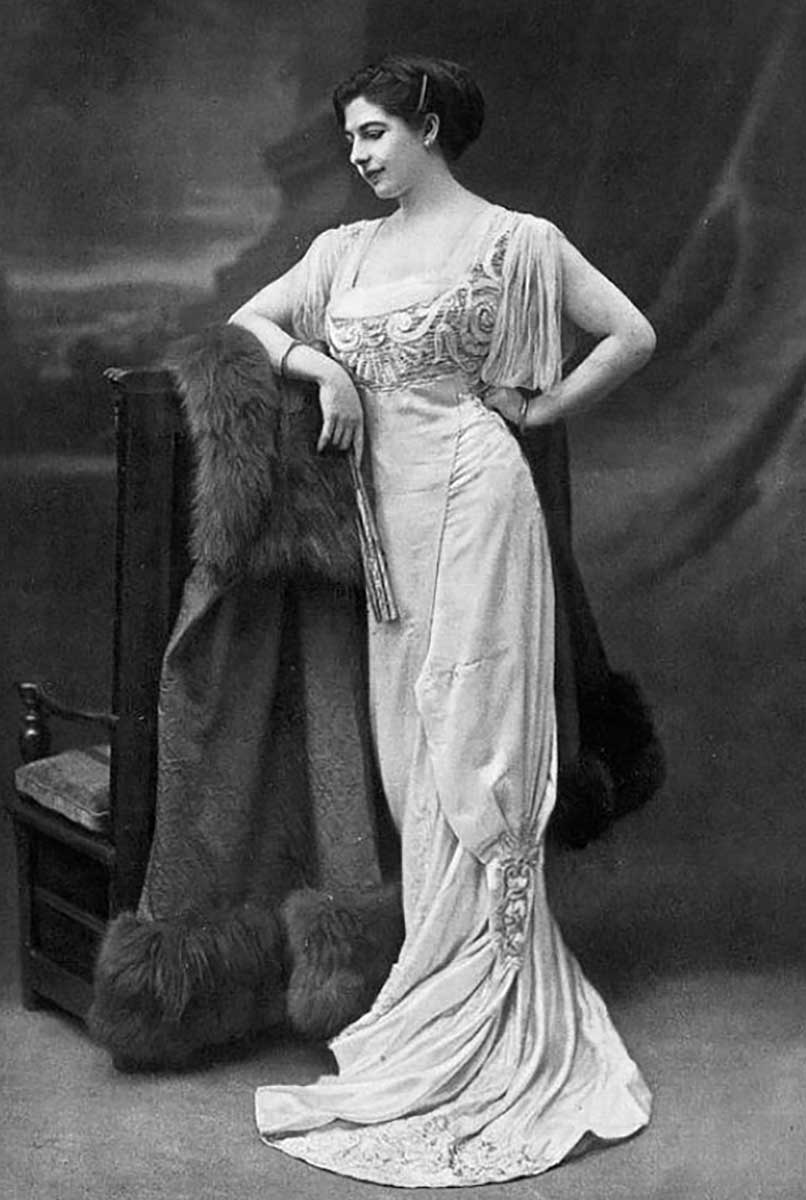
Did she spy for Germany? Doubtful. Did she spy for France? Not effectively. Did she spy for anyone? Honestly, it seems more likely she was just trying to survive in a world that was more interested in her body than her brain. “I did what I could for France,” she reportedly said, but the reality is she was a free agent caught in a deadly game she never fully understood.
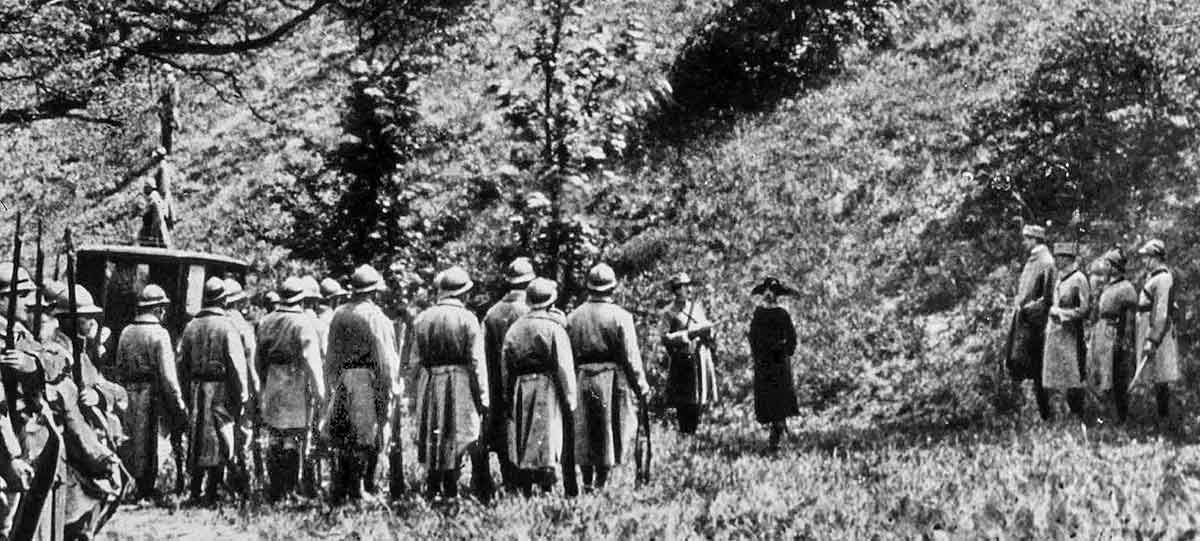
In the end, Mata Hari stood before a firing squad at dawn in 1917, refusing a blindfold and facing her executioners with an unflinching poise. She was convicted as a spy, but the real crime might have been society’s relentless need to turn her, a woman who lived by her own rules, into a villain. Maybe that is her legacy: a woman who dared to live on her own terms in a world that couldn’t handle her audacity.
Did Mata Hari Do Anything for Dance or Fashion?
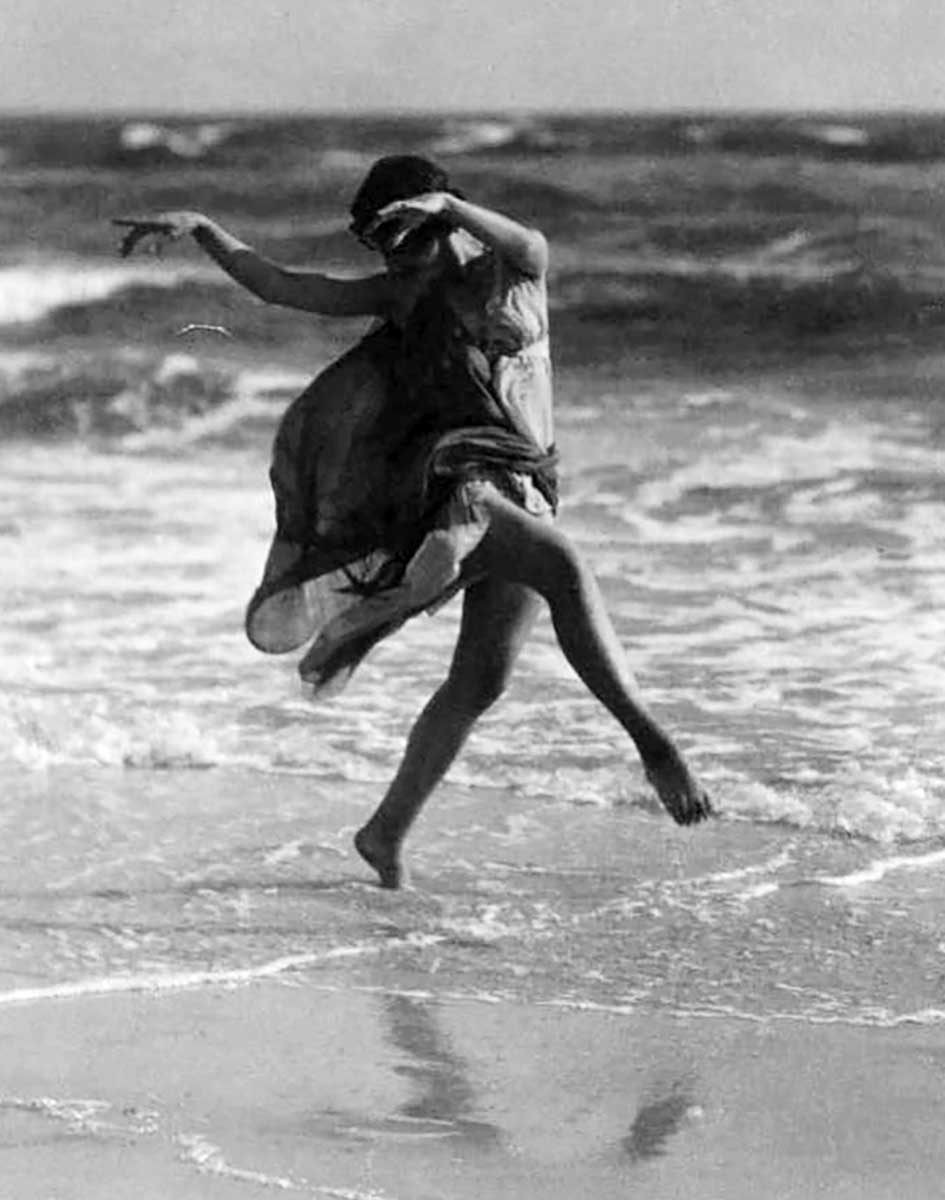
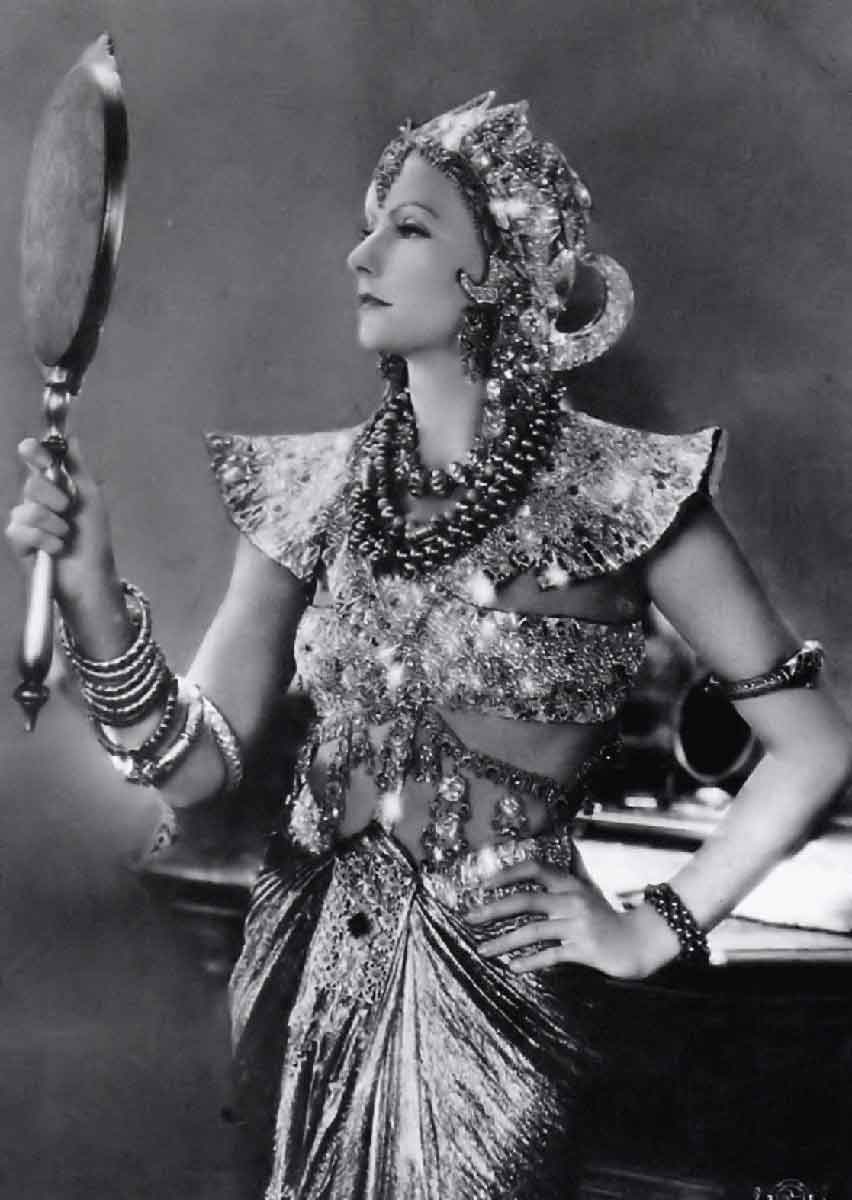
Mata Hari wasn’t just a performer—she was a walking, twirling, scandalously-draped revolution in both dance and fashion. While she may not have mastered ballet or even win over the most critical connoisseurs, Mata Hari undoubtedly knew how to command a stage—and a much coveted Vogue spread. Her legacy in these fields may not be as tangible as her contemporaries, but her impact is a blend of bold creativity, what we’d now call cultural appropriation, and a level of self-promotion that is easily on par with a modern Instagram model.
When Mata Hari burst onto the Parisian scene in the early 1900s, she wasn’t your typical prima ballerina. And therein lay her genius. Mata Hari understood that most privileged audiences wanted spectacle, not technical perfection. She wrapped herself in veils, borrowed liberally from the fad of orientalism, and transformed her performances into a heady mix of sensuality and mystery. This wasn’t just dance—it was theater, marketing, and cultural commentary all rolled into one appealing package.
Fashion, of course, was an integral part of Mata Hari’s allure. She was a muse for the great designer Paul Poiret, whose bold creations often blurred the line between art and fashion. Poiret’s designs, like his infamous “lampshade” dress, helped define the opulence and daring of the maximalism of the Belle Époque, and Mata Hari was a perfect model for his aesthetic. She was photographed in luxurious, clinging gowns that pushed the boundaries of good taste. While her contemporaries like Isadora Duncan and Maud Allan gained fame for their artistry, Mata Hari gained attention for her style and daring. In a 1913 Vogue fashion spread, she stunned in one of Poiret’s creations, cementing her place as a controversial fashion icon of her era.
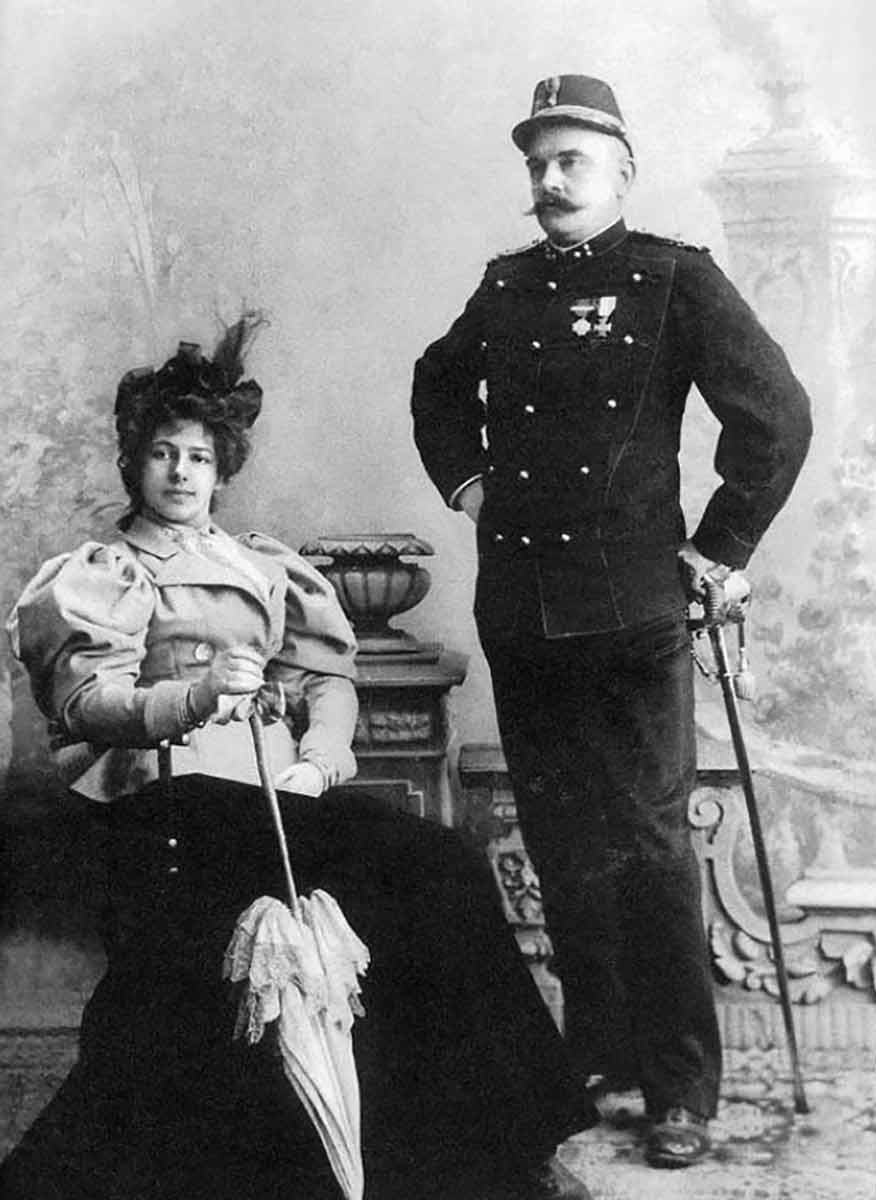
Yet, Mata Hari’s career in dance and fashion wasn’t without its challenges. She was compared—sometimes unfavorably—to contemporaries like Duncan and Allan, both of whom were considered more serious artists. Isadora Duncan, for instance, dismissed Mata Hari as an imitator, while Maud Allan’s performances were praised for their grace and modernity, even as critics lampooned her “kitsch” habits while on the stage. Despite this, Mata Hari carved her own niche, proving that performance art didn’t have to follow the rules of tradition.
Mata Hari’s story is as much about timing as talent. She rose to fame during a period of radical change in dance, fashion, and society. Her costumes and performances captured the zeitgeist of orientalism—an era obsessed with the exoticism and the “mystery” of the East, fueled by Diaghilev’s Ballets Russes and a growing fascination with non-Western aesthetics. At the same time, fashion was shedding its restrictive corsets and embracing freer, more daring silhouettes, thanks to designers like Poiret and years later, Coco Chanel. Mata Hari rode this wave of cultural change, becoming a style icon who blurred the lines between dancer, courtesan, and muse.
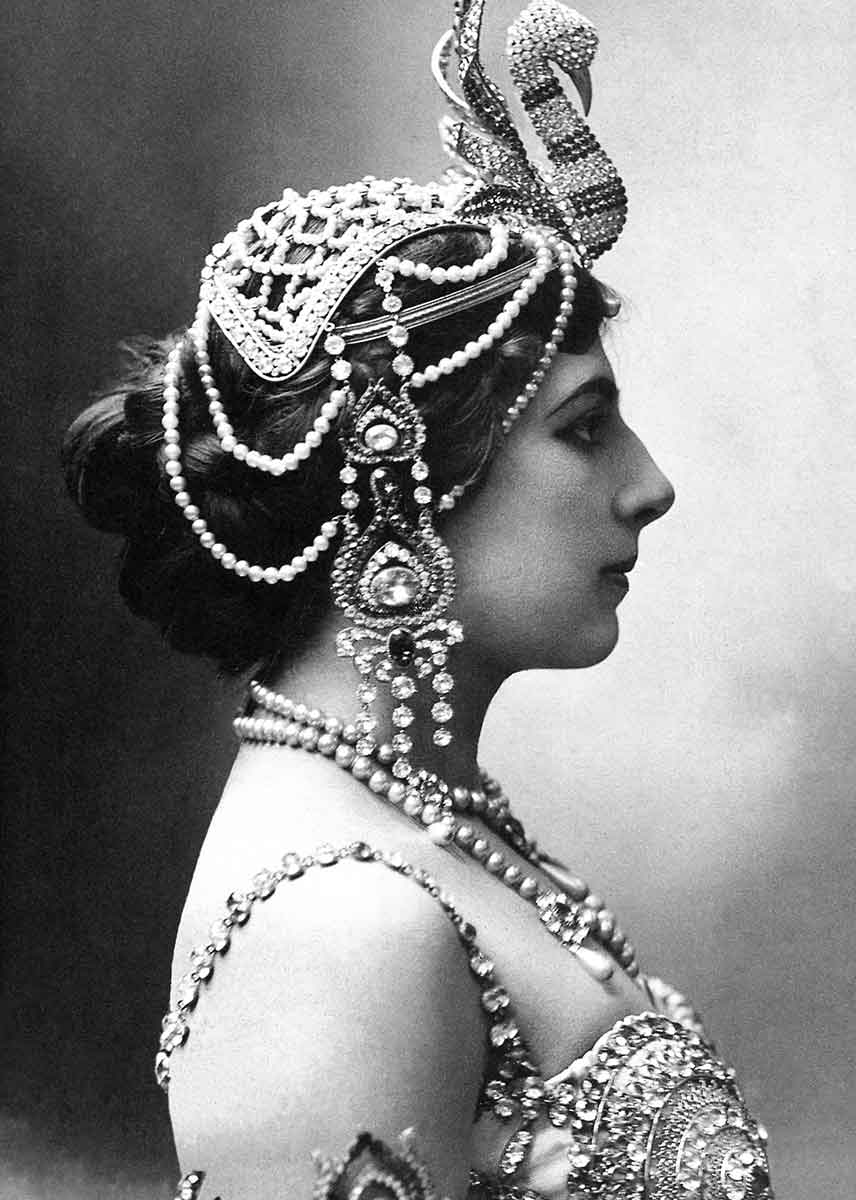
By the time World War I broke out, however, Mata Hari’s star was dimming. Modernist dancers like Duncan and Allan had taken the spotlight, and the extravagant orientalism that had defined Mata Hari’s performances began to feel out of step with the leaner, wartorn times. Her attempt to dance with Diaghilev’s Ballets Russes fizzled, and her pricey engagements dwindled. Yet her legacy endured—not necessarily for her technical skill but for her audacity, her ability to captivate an audience, and her talent for making heads turn.
In the end, Mata Hari’s contributions to dance and fashion may not have been groundbreaking in the traditional sense, but they were undeniably impactful. She showed the world that art isn’t just about study and knowledge; it is equally about imagination, reinvention, and knowing how to master the spotlight. For a time, no one owned it quite like Mata Hari.