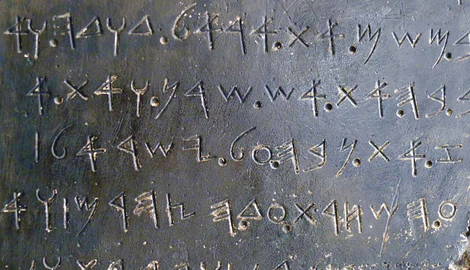

The Moabite Stone, or the Mesha Stele, is a broken black basalt stone slab with an inscription from around 840 BC. It was discovered by a missionary in 1868 and has led to much debate since, even resulting in its destruction. From a Christian perspective, what does the Moabite stone reveal about the Kingdom of Israel and the overarching storyline found in Scripture?
The Discovery and Destruction of the Mesha Stele
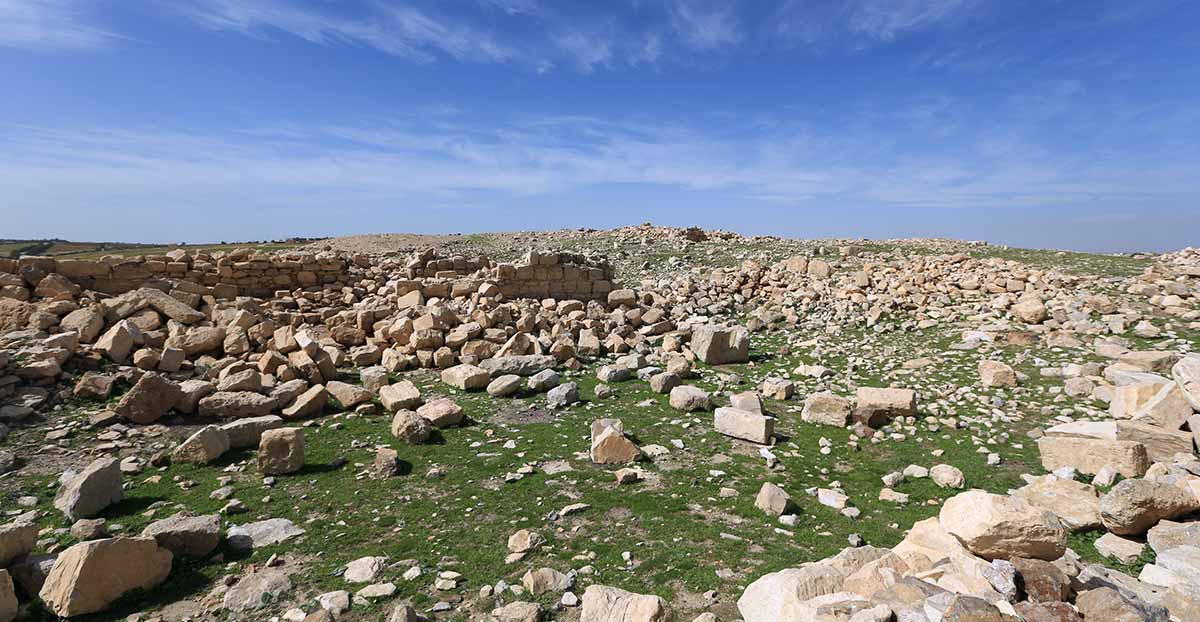
While the caves of the famous Dead Sea Scrolls sit on the northwestern shore of the Dead Sea, 40 kilometers (25 miles) opposite the water and higher up into the desert, Bedouin shepherds knew about yet another astounding archaeological discovery: the Mesha Stele, also known as the Moabite Stone.
Anglican missionary F.A. Klein visited with Bedouin shepherds in ancient Dibon (modern Dhiban) in 1868, when they took him to their great find. The long, ancient-looking, black basalt stone slab with inscriptions captured Klein’s attention so much that he made a detailed sketch of it, which worried the Bedouin.
Word about the stele soon got out. Luckily, one archaeologist, Charles Clermont-Ganneau, had a papier-mache impression made, because it was not long before the complicated matter of acquiring and protecting the piece of history led to it being shattered.
The reconstructed fragments are housed in the Louvre today.
King Mesha and the War Against the House of Omri
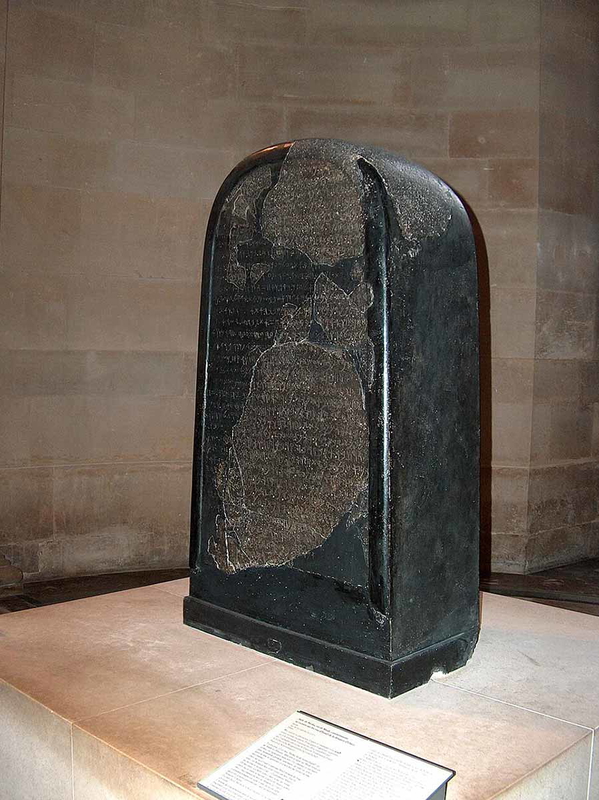
According to the Biblical Archaeology Society, the inscription on the Moabite stone dating back to about 840 BC reads:
“I am Mesha, son of Chemosh[ît], king of Moab, the Dibonite…”
It goes on to detail the kings, battles, and history of the Moabite Kingdom in those days. Mesha mentions Omri, king of Israel, as well as the Israelite god, Yahweh, versus the Moabite god, Chemosh. Mesha’s account details how Israel oppressed Moab for a long time, but how the kingdom was restored to the Moabites in later years. They, in turn, attacked Israel.
“Chemosh said to me: “Go, take Nebo from Israel!” I went in the night, and I fought there from dawn until noon; I took it and killed everyone…”
“I took from there the hear[th] altars of Yahweh, and I brought them before Chemosh. The king of Israel had built Yahaz, and he lived there while fighting against me…”
The Controversy Surrounding the House of David Inscription
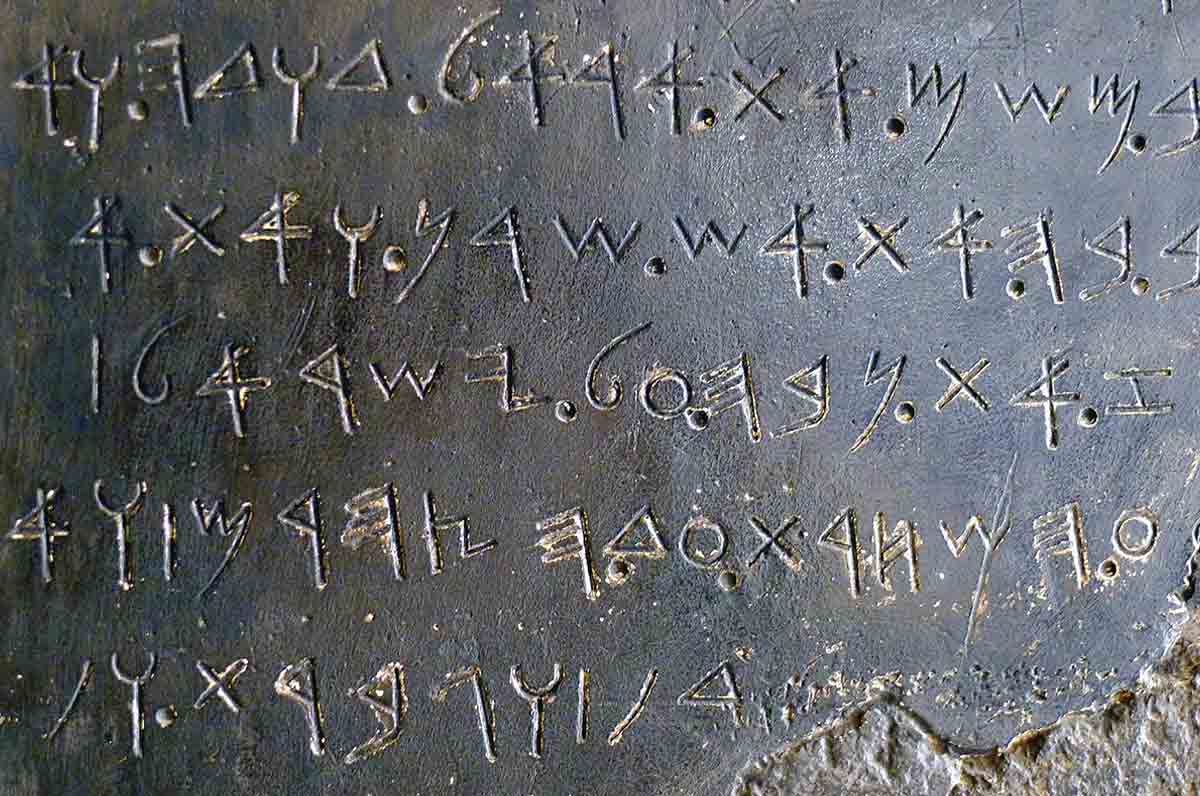
As the quotes above show, some parts of the Moabite Stone’s text are missing (added in brackets) because its destruction was so severe. There is an ongoing scholarly debate surrounding some parts of the text – especially Line 31 of the Moabite inscription because it might reference the House of David.
In 1994, epigrapher André Lemaire stated that, given the rest of the lines, the nations in the area, and by process of elimination, Line 31 must read “the house of David”. This is a name for the Israelites that is used throughout other biblical sources.
In 2019, Reflectance Transformation Imaging was used to provide new photographic evidence; they explored what the letters could say further. There are strong arguments for Line 31 stating all kinds of people or kingdoms. Lemaire’s position is heavily debated today and dismissed by some.
Comparing the Biblical Narrative with Moabite Inscriptions
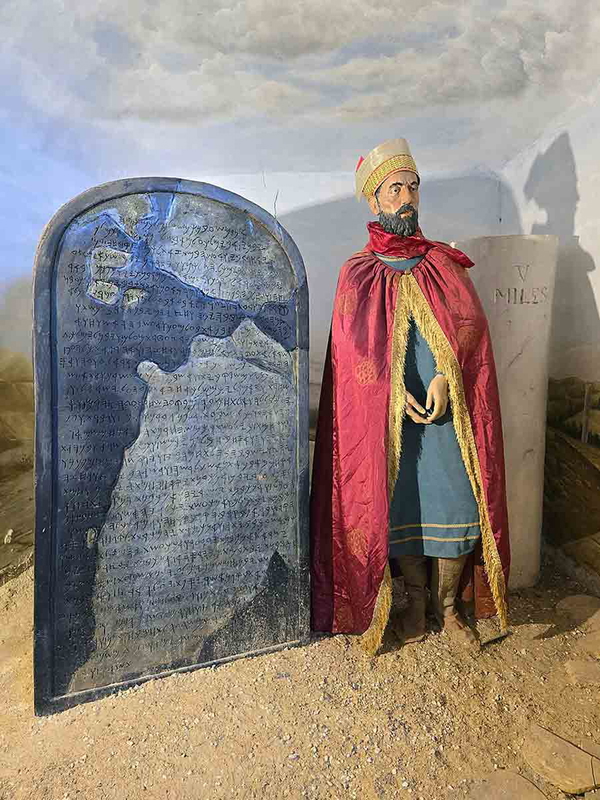
“Now Mesha king of Moab … rebelled against the king of Israel.” – 2 Kings 3:4-5
The Bible and the Moabite stone overlap in some places: They include the Moabite-Israel war, the same historical actors [Mesha, king of Moab (above) and Omri, king of Israel (1 Kings 16:21-28)], while each is led by their own god. There are many other biblical mentions of the Moabites and their god, like: “Chemosh the detestable god of Moab” (1 Kings 11:7).
Whether or not the Moabite Stone bears the words “House of David,” it remains an important primary monument from the ancient Moabite kingdom. It also provides a rare glimpse of Israel as a real political kingdom, religious group, and military power, broadly aligning with how the Bible describes the Kingdom of Israel in the 9th century BC.