
The Bible opens in Genesis with a divine utopia that doesn’t last for very long before it all turns very wicked and dystopian—caused, of course, by the curious and selfish hand of Eve stretching out for the forbidden fruit. After that, Eve is not mentioned in the Scriptures until the New Testament, when she is just recalled very briefly in passing (2 Corinthians 11:3 & 1 Timothy 2:13-14).
This article looks at how Eve has been depicted in Western art over 2000 years, from sinner to femme fatale to empowered figure.
Theological Art and the Visual Weight of the Fall
Very few biblical characters have been reinvented as often as Eve: first from Adam’s rib by the hand of God, then turned into a temptress by the evil serpent. Eve became particularly useful for artists because she could depict both purity and temptation at the same time: the person made in the Imago Dei, yet the one who “caused” the Fall of Sin.
Depictions of Eve have existed as long as this story has circulated, with our oldest discovery being the Dura-Europos wall painting (200-300 AD), where she stands next to Adam with the Tree of Knowledge between them.
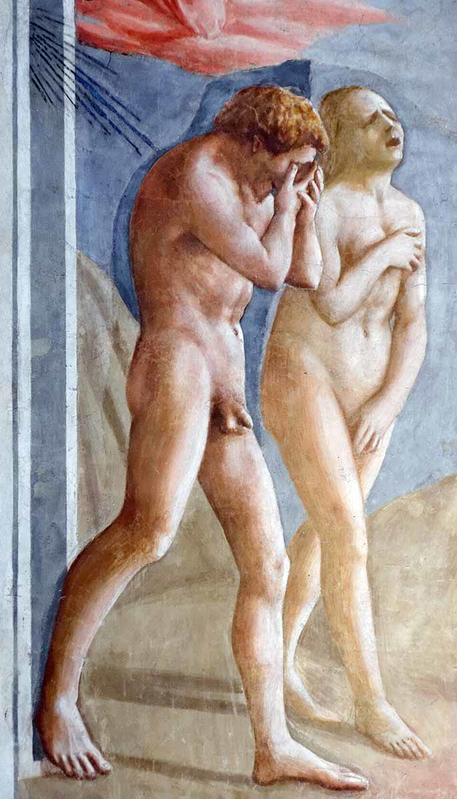
In the medieval period, depictions of Eve were mostly centered within the theological boundaries of Christian art. While medieval and Early Renaissance depictions, like Masaccio’s (above), focused on the raw grief of Eve, something was beginning to change…
The Renaissance Transformation into Classical Beauty
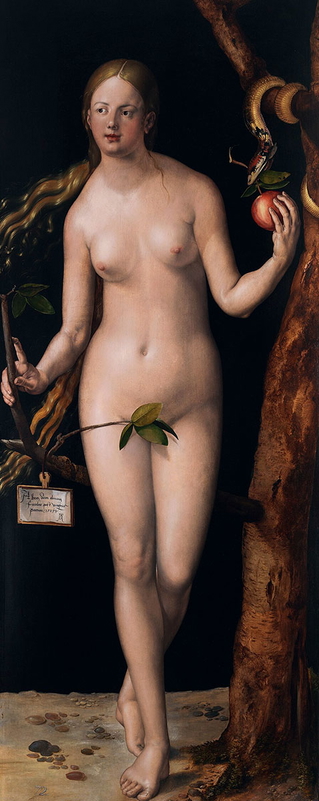
During the Renaissance period, Eve became an expression of the artist’s endeavor with the perfect female form, proportion, and classical anatomy—perhaps best expressed in Dürer’s single portrait of Eve (above).
“There is no man on earth who can give a final judgement on what the most beautiful shape may be. Only God knows.” – Albrecht Dürer
Ironic as it sounds, this story was no longer only about the Fall of Sin; it was about Eve as a symbol of beauty and the beginning of human life. On the canvas, Eve echoed the influence of the Renaissance artists’ Venus as the pagan goddess of love, sexuality, and fertility.
By now Eve had almost stepped out of the pages of Genesis and come into an identity of her own.
Mannerism and the Baroque Era of Dramatic Temptation
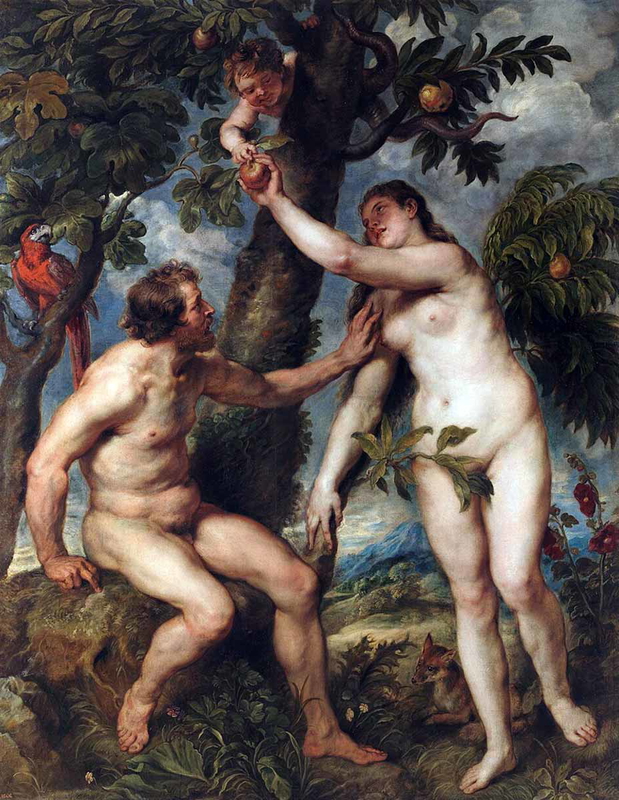
As Eve became more of an icon, the dramatic moment of choice in the Garden of Eden returned to the canvas. Tintoretto’s works show Adam with his back turned to the viewer as if he is also resisting Eve, who holds out the apple to him in temptation.
“And Adam was not the one deceived; it was the woman who was deceived and became a sinner.” – 1 Timothy 2:14
More movement and theater entered each new work, as seen in Peter Paul Rubens’ version (above), where Adam appears almost as an innocent bystander while Eve ignores his warning.
Another example of a biblical figure who was later morphed into something entirely different in the world of art is Mary Magdalene, portrayed as a prostitute.
The 19th Century and the Rise of the Femme Fatale
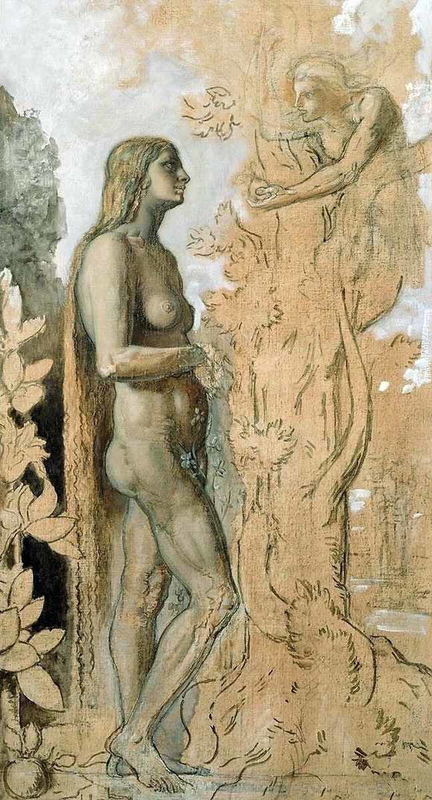
Concerning the other elements in the Genesis story, both the apple and the serpent became Western symbols for love, seduction, danger, and mystery.
Women’s roles and sexuality were issues of debate while another kind of Eve was born: the dangerous, manipulative, seductive woman who leads her lovers into disastrous situations—the femme fatale. This sounds more like biblical Jezebel or Delilah: the wicked woman leading noble, godly men astray.
“But I am afraid that just as Eve was deceived by the serpent’s cunning, your minds may somehow be led astray…” – 2 Corinthians 11:3
Modernist Reconfigurations of Agency and Autonomy
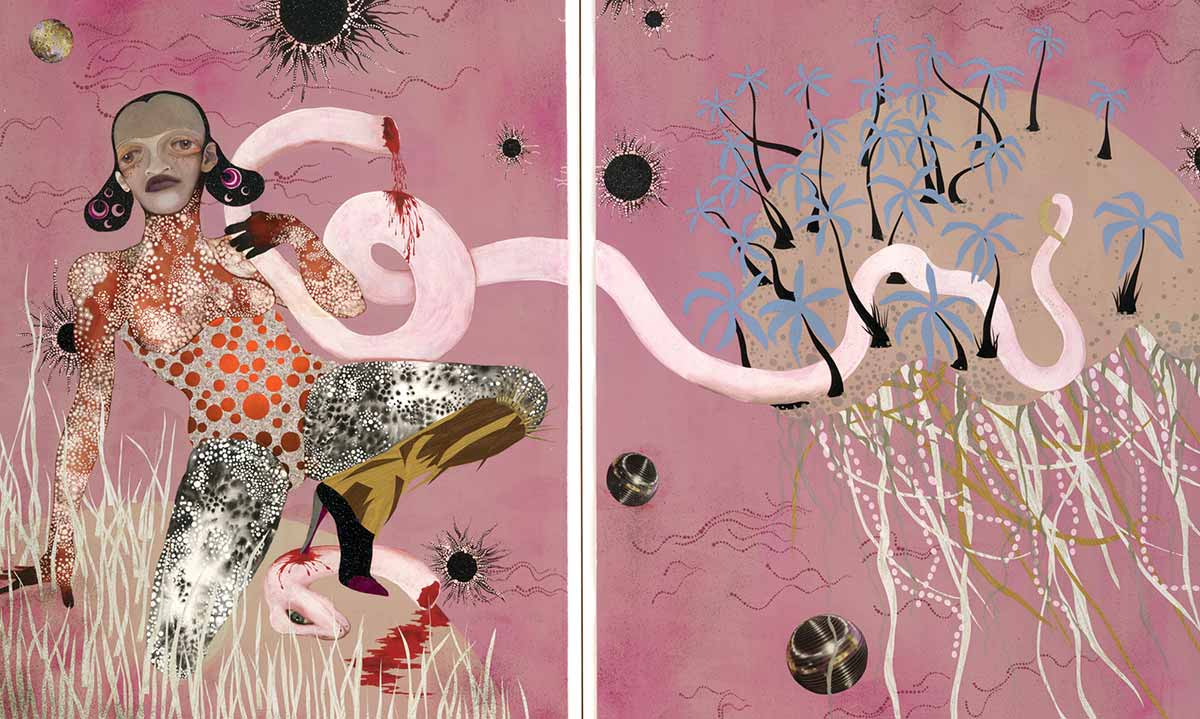
In more recent years, female artists have reinterpreted and reclaimed traditional imagery and challenged how Eve was depicted in the past. Instead of a tragic failure, Eve is shown as a bold seeker and even a fighter who has overcome the serpent (above).
While Eve remained the same person standing next to the same tree on the pages of the Bible, the lens through which Western culture viewed her has changed and continues to do so.
The art is no longer telling us about biblical Eve; it is telling us about the artist and their culture.