
In just five days in 1967, a Palo Alto high school transformed from a progressive, liberal society into a hotbed of fascism. It seemed an experiment by 25-year-old teacher Ron Jones had gone horribly wrong, but it had, in fact, gone horribly right.
How did the Third Wave unfold and what shocking lessons did it leave in its wake?
The Spark at Cubberley High School
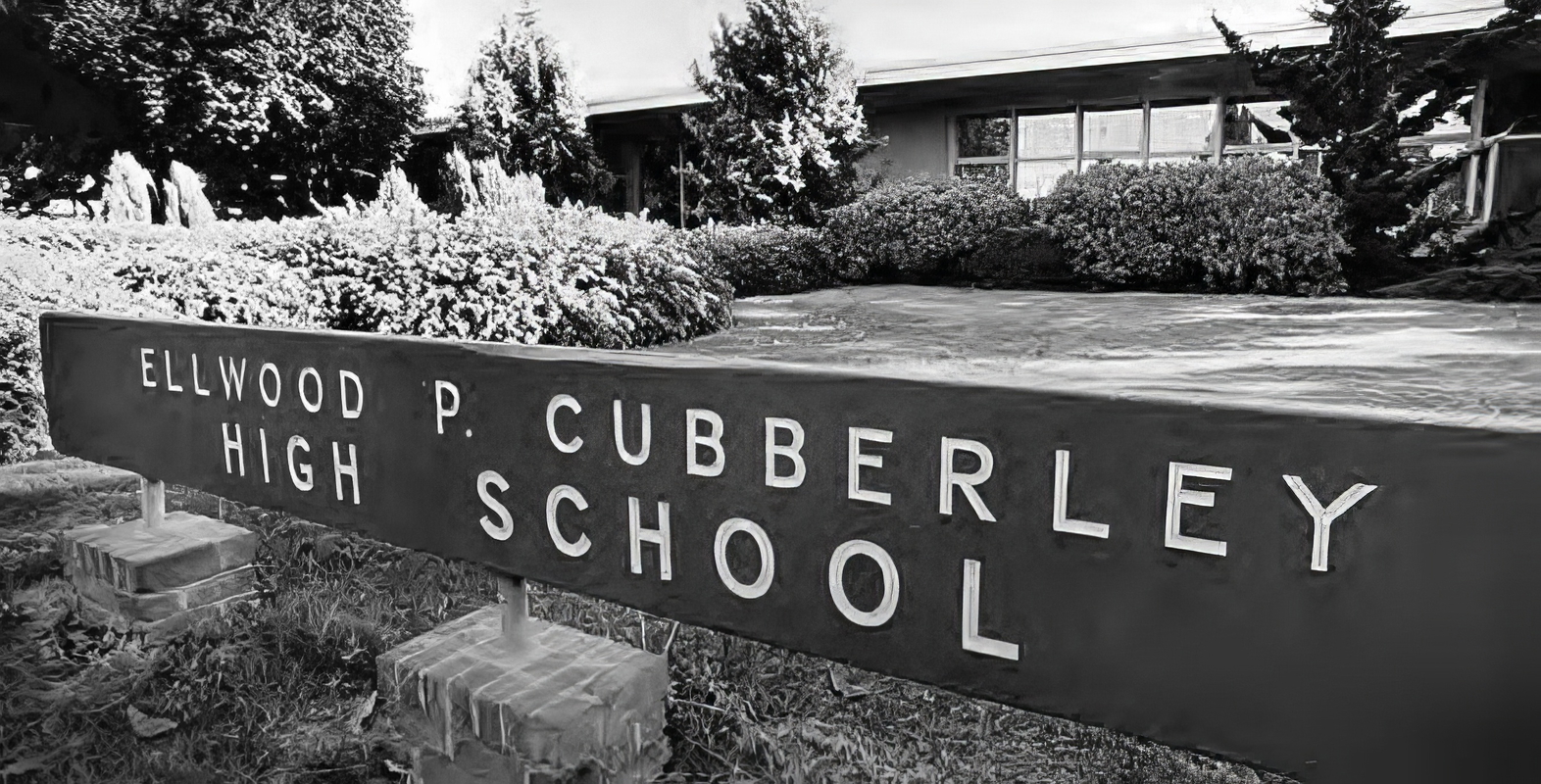
On a spring day in 1967, a young teacher, Ron Jones, at Cubberley High School in Palo Alto, California, was teaching a 10th-grade class about the Holocaust. While discussing the appeal of Nazism and how the German people could have accepted it so easily, Ron decided to enact an experiment to teach the lesson in a way that would never be forgotten. Instead of using textbooks, the students themselves would become the lesson.
And so in the first week of April, the experiment began, but what Ron had intended to be a single-day experiment turned into almost the whole school week.
The First Days of Totalitarian Transformation
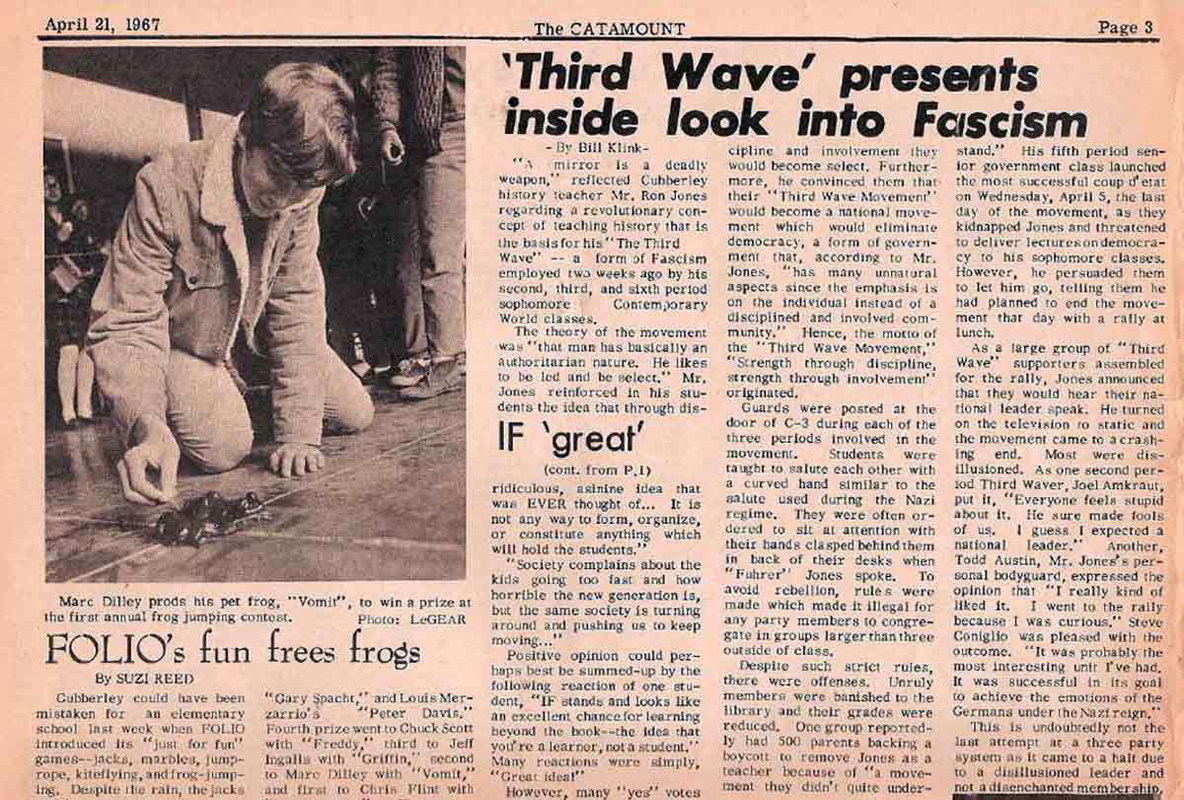
The students came into class on Monday, and Ron began by enforcing strict authoritarian control. He wrote “Strength Through Discipline” on the board and had the students sit at attention, observing correct posture. He ordered that the students address him as “Mr. Jones” at all times and to stand up when they asked questions in class.
The students followed the rules eagerly, and on the second day, Ron decided to continue the experiment. He wrote “Strength Through Community” on the board and created a salute which involved a cupped right hand held close to the shoulder. Students in the class were commanded to salute each other inside and outside of the classroom.
They were also given tasks such as creating logos and banners, while others were assigned gatekeeping duties, preventing non-members from entering the classroom. The idea of exclusivity became very apparent, and students from outside the class began asking if they could join.
The Movement Spirals out of Control
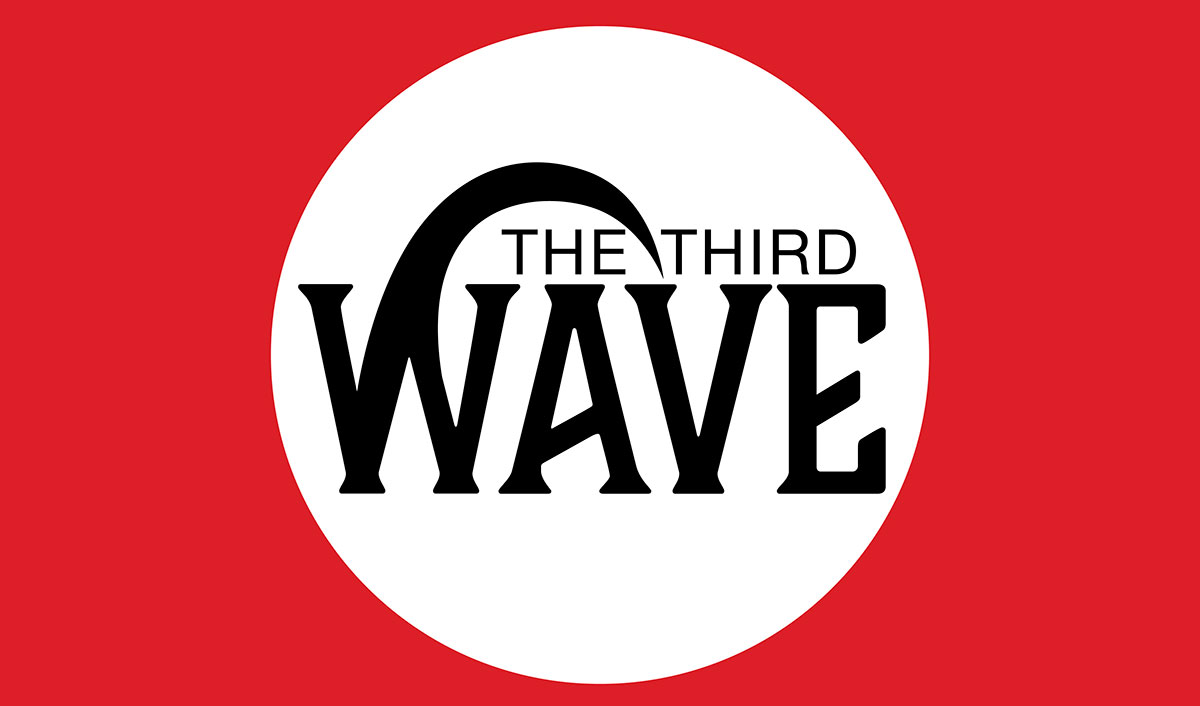
On the third day, students from other classes began cutting class to join the Third Wave— a name derived from surfing culture, which observed that the third wave in a series was often the strongest. As a representation of this, the logo of the movement was that of a wave.
Wednesday was the day of “Strength Through Action” and saw the issuing of membership cards, and membership rose rapidly to 200 students. Ron encouraged students to report on other members who failed to observe the rules, and noted how eagerly students took up this duty. One student even became Ron’s bodyguard.
By the fourth day, it had become apparent that the movement was blossoming out of Ron’s immediate control, and he felt himself becoming unable to enforce his own agency, not simply playing the part of a dictator, but actually becoming one. The experiment had to end for everyone’s safety. One student’s father, who had fought in World War II and spent time in a German prisoner of war camp, heard about what was happening, lost control, and broke into the classroom on Wednesday evening, ransacking it.
Ron spoke about “Strength Through Pride” on Thursday and announced that the Third Wave was not localized, but part of a national movement to steer the country’s politics. At noon on Friday, there would be a rally at which a presidential candidate would be announced via a televised service.
The Climactic Reveal and Immediate Aftermath
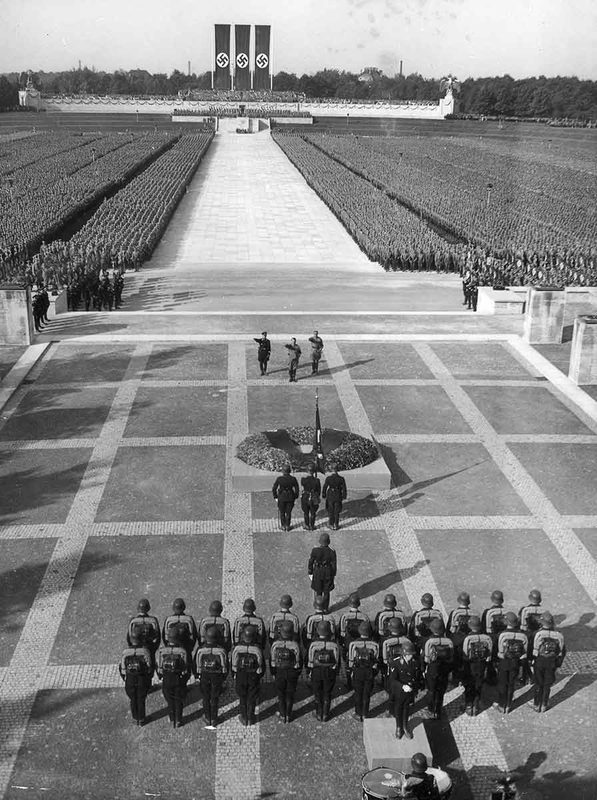
The day of the rally was the climactic finale of the Third Wave, but the students did not know it yet. Ron had convinced some of his friends to pose as reporters and photographers to make the situation look authentic. Banners hung across the auditorium, and every seat was filled. Students from all persuasions were there, from loners to the pseudo-hip to the bikers. Everyone wanted to be part of it.
Chants of “Strength Through Discipline” filled the air as the rally started. Then Ron switched on a television tuned to dead air. Anxious silence filled the space for several minutes before one student stood up, unable to take the wait, and shouted, “There isn’t any leader, is there?”
Ron broke the silence and explained the experiment, stating that the students were no better or worse than the Germans who had accepted Nazism. He then played a film on the Third Reich, which he introduced with the words, “How far would you have gone? Let me show you your future.”
Ron Jones explained what had happened and apologized to his students, sharing in the remorse that they felt for becoming what they thought couldn’t happen to them. Students openly wept and embraced each other, while others, who had assumed it was an experiment, breathed sighs of relief.
The Legacy of the Third Wave Experiment in Media
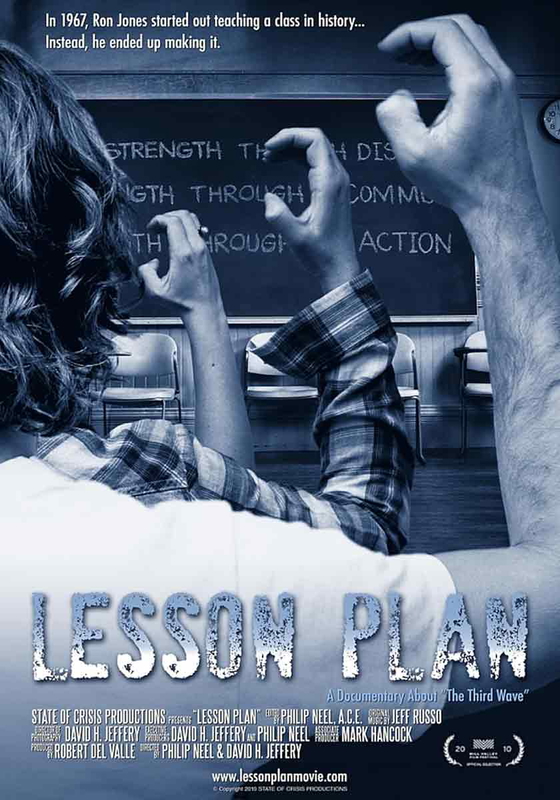
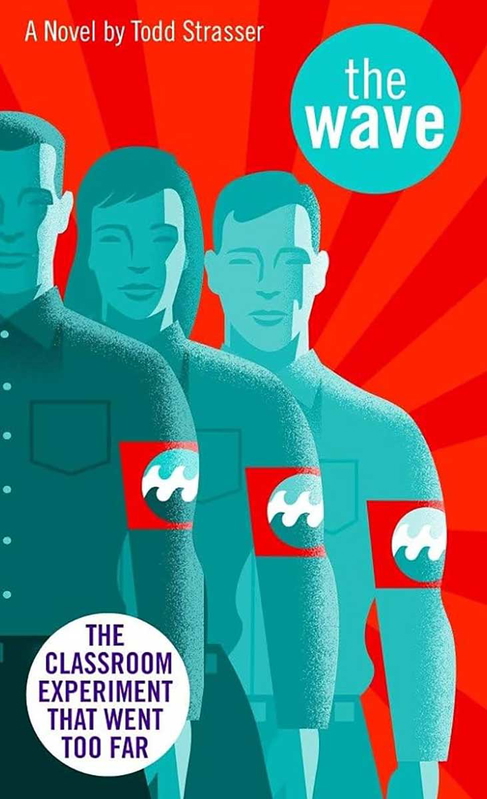
The Events of the Third Wave Experiment at Cubberley High went on to inspire literature and other media adaptations. Among these were the 1981 made-for-TV movie “The Wave,” a German adaptation in 2008 called “Die Welle” (The Wave), and a 2010 documentary entitled “Lesson Plan.” Ron Jones even turned the story into a musical stage production. The most modern interpretation is the German Netflix miniseries “Wir sind die Welle,” (We Are the Wave), which aired in 2019.
As a study of human psychology, the Third Wave stands alongside other terrifying examples such as the Stanford Prison Experiment and the Milgram Shock Experiment, each showcasing the dangerous elements of human beings and our susceptibility to compliance.
Fun fact: Scientist Michio Kaku attended Cubberley High School, where he graduated in 1964 (three years before the Third Wave experiment). During his time there, he built a particle accelerator for the school science fair!