Pheidon of Argos is an enigmatic figure from relatively early in Greek history, straddling history and myth. All that survives are a few scattered references to him in the works of ancient historians. From these references, we know that Pheidon was remembered as a tyrant who ruled over the city-state of Argos. Furthermore, he was said to have carved out a mini-empire for himself. But what do we really know about Pheidon, and was he a real historical figure?
The Earliest References to Pheidon of Argos
The earliest surviving reference to Pheidon is in The Histories, written by Greek historian Herodotus in the 5th century BC. He doesn’t say much about Pheidon, simply that:
“The despot of the Argives, that Pheidon who established for the Peloponnesians the measures which they use, and who went beyond all other Hellenes in wanton insolence, since he removed from their place the presidents of the games appointed by the Eleians and himself presided over the games at Olympia.” (6.127)
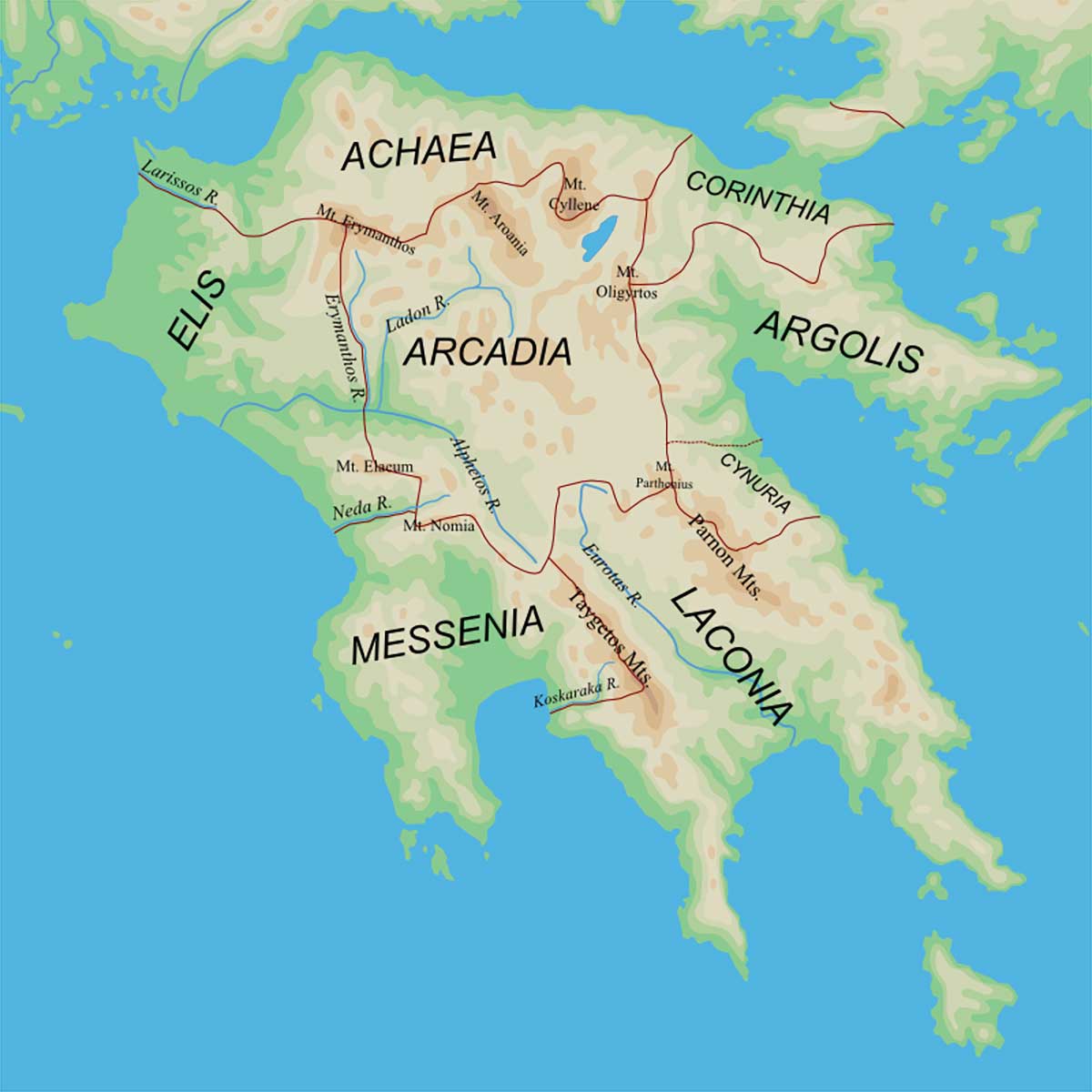
As we can see from this, Pheidon was notable for his wanton insolence. As per other translations, he acted “with the most hubris of all the Greeks.” The specific example of his hubris or wanton insolence is that he deposed the presidents of the Olympic Games and made himself the new president of that festival. Furthermore, the fact that he was in a position to do this demonstrates that his power reached as far as Olympia. This was on the other side of the Peloponnese from Argos. Hence, Pheidon’s power stretched right across the Peloponnese.
This passing reference suggests that he had carved out a mini-empire for himself. Therefore, we can see that Pheidon was a powerful and influential king. Additionally, he was said to have established the measures used by the Greeks of that region. Other sources ascribe to him the introduction of silver coins.
When Did Pheidon of Argos Live?
One of the biggest controversies surrounding Pheidon is the issue of when he really lived. There are many conflicting accounts of this in the ancient records. However, today it is commonly accepted that he lived in the 8th or 7th century BC.
One ancient source, the Parian Chronicle of the 3rd century BC, places Pheidon in c. 900 BC. Pausanias, a Greek geographer and travel writer of the 2nd century AD, wrote that Pheidon presided over the eighth Olympic Games, which were in 748 BC. Almost all scholars today agree that these dates are too early, especially the date in the Parian Chronicle. The ancient Greeks regularly exaggerated the antiquity of events and people, so this should not come as any surprise. Nevertheless, the question of just how much they exaggerated Pheidon’s antiquity is an open question.
Some scholars believe that there is evidence that Pheidon lived in the 7th century BC. The basis for this is largely related to the Olympic Games. As Herodotus stated, Pheidon made himself the president of that festival, and Pausanias agreed with this. Herodotus specifically claimed that he deposed the Eleian presidents from that place.
This appears to correspond to a statement in Pausanias as well as in Eusebius, a historian of the 4th century AD. As we saw, Pausanias claimed that Pheidon presided over the eighth Olympic Games. However, due to the common belief in modern times that his antiquity was exaggerated, this statement is often “corrected” to say 28th. This would place Pheidon in 668 BC.

In line with this, Eusebius’ Chronicle records the following information concerning the Olympic Games of 668 BC:
“These games were held by the inhabitants of Pisa, because Elis was preoccupied by a war in the west.”
This lends support to the idea that Pausanias’ reference to the eighth Olympiad is actually a mistake for the 28th. The reason is that Pausanias’ description of Pheidon taking over the presidency of the Olympics specifically states that this was done in association with the inhabitants of Pisa. Hence, Eusebius’ reference to the inhabitants of Pisa taking over the presidency of the Olympic Games from Elis seems to tie in well with what Pausanias wrote.
Furthermore, Pausanias also referred to an event known as the Battle of Hysiae and placed it in 669/8 BC. Since this was a battle between Argos and Sparta, this has been viewed as one of the battles that took place during Pheidon’s conquest of much of the Peloponnese. For these two main reasons, many scholars believe that Pheidon was most likely a king who ruled Argos in the first half of the 7th century BC.
A Later Date for Pheidon
Interestingly, many other scholars hold the opinion that Pheidon was actually a king who ruled about a century later, in the first half of the 6th century BC. The evidence for this can be seen in the very earliest reference to Pheidon. Herodotus’s account of Pheidon forms part of his account of the suitors of Agariste, the daughter of Cleisthenes of Sicyon. This latter figure, Cleisthenes, ruled over Sicyon in the first half of the 6th century BC. One of the suitors for his daughter Agariste’s hand was a son of Pheidon, named Leokedes. Hence, Pheidon was logically of the same generation as Cleisthenes. This would place his rule over Argos in the first half of the 6th century BC, similar to Cleisthenes’ rule over Sicyon.
Moreover, we noted earlier the tradition that Pheidon was the first to introduce silver coinage to the Greeks. Coinage in general did not arrive in Greece until the late 7th century BC, so this detail precludes an earlier date for Pheidon. Therefore, the information from Herodotus and from the tradition about Pheidon introducing silver coins clearly points to a 6th-century BC date for this tyrant of Argos.
How well does this late date align with other information we have about Pheidon? Herodotus says that:
“Now the whole region towards the west extending as far down as Malea was then possessed by the Argives, both the parts situated on the mainland and also the island of Kythera with the other islands.” (1.82)
This is a clear description of Argive dominance over a considerable portion of the Peloponnese, including the island of Kythera off the southern coast of Greece and other islands as well. Argive dominance included “the whole region towards the west.” Compare this with Pheidon’s dominance over Elis in the west. Without doubt, it makes sense to place Pheidon in this attested era of Argive supremacy over the Peloponnese. The crucial question is, when did this happen?
Herodotus provides this description immediately after describing Cyrus the Great‘s conquest of Lydia in Anatolia. The fall of Lydia is generally dated to 547 BC. Therefore, this is a clear description of Argos as the most powerful city in the Peloponnese during the mid-6th century BC. This strongly supports placing Pheidon in that era.
As for the issue of Elis and the Olympic Games, Pausanias also records other conflicts between Elis and Pisa in which Pheidon could have been involved. For example, Pausanias mentions a war between Pisa and Elis shortly after the Olympic festival of 588 BC.
The Historical Pheidon, Tyrant of Argos
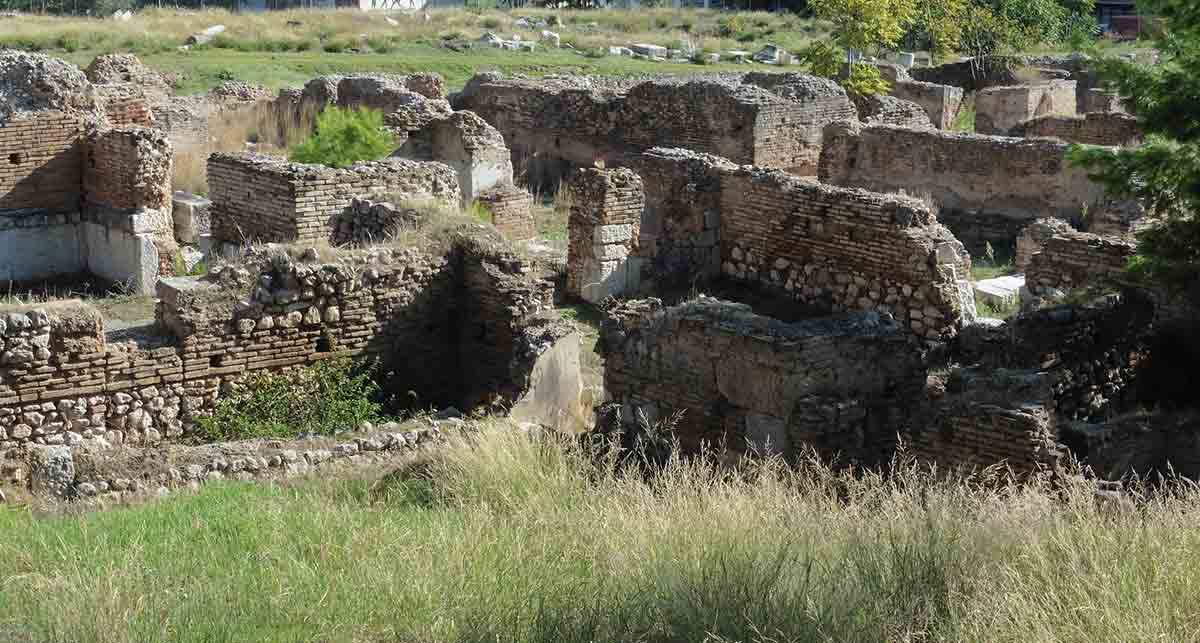
In conclusion, what do we know about Pheidon, the tyrant of Argos? He was infamous for his hubris and, evidently, for his expansionist policies. He carved out a mini-empire for himself in the Peloponnese, his rule extending as far as Elis and Olympia in the west. Furthermore, if we accept The Histories 1.82 as a description of Pheidon’s domain, he apparently ruled over Kythera and at least several other islands. He took over the Olympic Games for a time, and he was the first to introduce silver coinage to the Greeks.
As we have seen, there is considerable debate over when Pheidon of Argos really lived. Ancient sources, which are infamous for exaggerating the antiquity of events and people, tended to place him between the 9th and 8th centuries BC. Many modern scholars place him in the 7th century. However, there is good evidence that he actually lived in the first half of the 6th century BC. We see this from Herodotus’ description of Pheidon’s son, Leokedes, as the suitor of Agariste, daughter of Cleisthenes, as well as the reference to Pheidon introducing silver coinage.