At the height of its power in 117 CE, the Roman Empire spanned from the south of Scotland all the way to Mesopotamia. However, Rome and its European colonies took center stage when it came to architectural marvels that are still left standing today. These are found all over the Old Continent and range from elaborate bathhouses to towering aqueducts and impressive multi-purpose amphitheaters. The following 10 sites and buildings are a living testimony to the longevity of Roman engineering.
1. Porta Nigra (Germany)
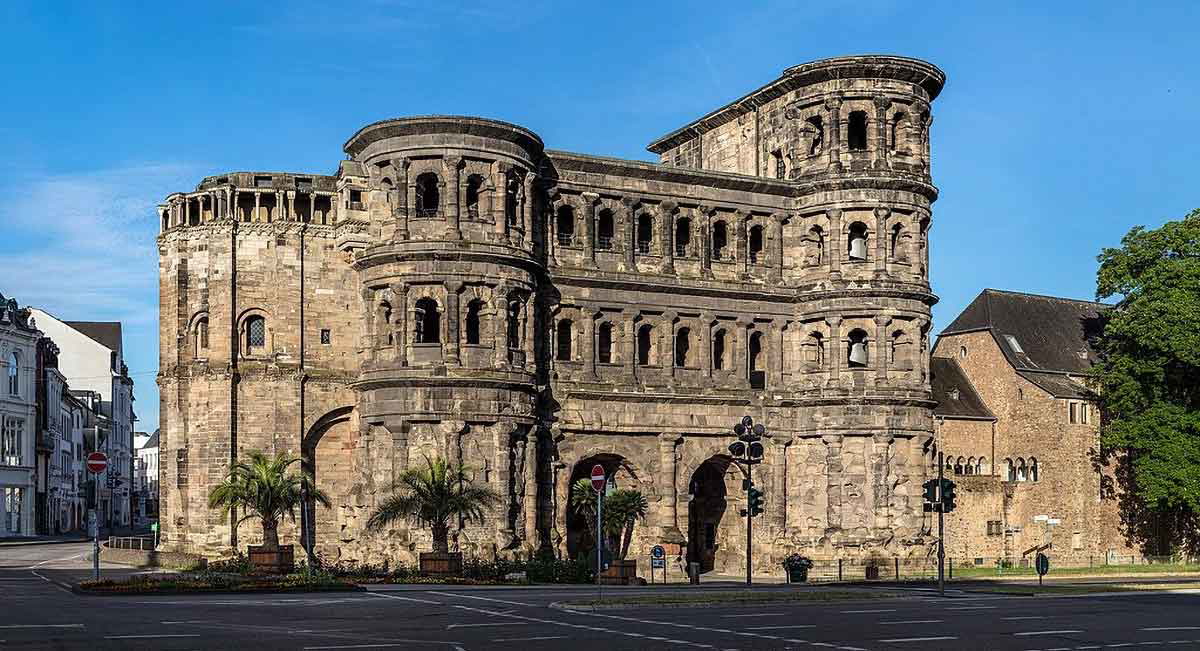
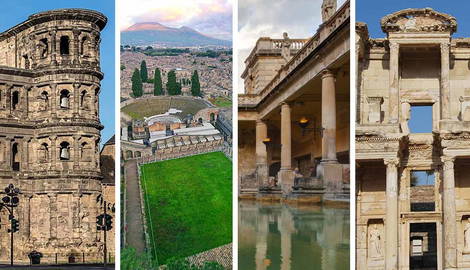
At the time of its construction in the late 2nd century CE, the Romans likely did not give much thought to the city gate depicted in the picture above. After all, it was just one of four gatehouses leading into Augusta Treverorum, or the present-day city of Trier in the west of Germany. However, Porta Nigra is the only gate standing today, some 1,850 years after its construction.
The original name was lost to history, while the current one means “A Black Gate,” indicating the darkened color of the gray sandstone that developed over the centuries. Although there is no traffic going through it today, the structure is still exposed to air pollution, since it sits next to a busy road.
During the Middle Ages, the UNESCO World Heritage Site served as a church (the round towers at the front formed the sides of the church) with a monastery next to it. Porta Nigra got its original form back during Napoleon’s reign and has not changed much since. The locals refer to it as de Pocht, or The Gate.
2. Pompeii (Italy)
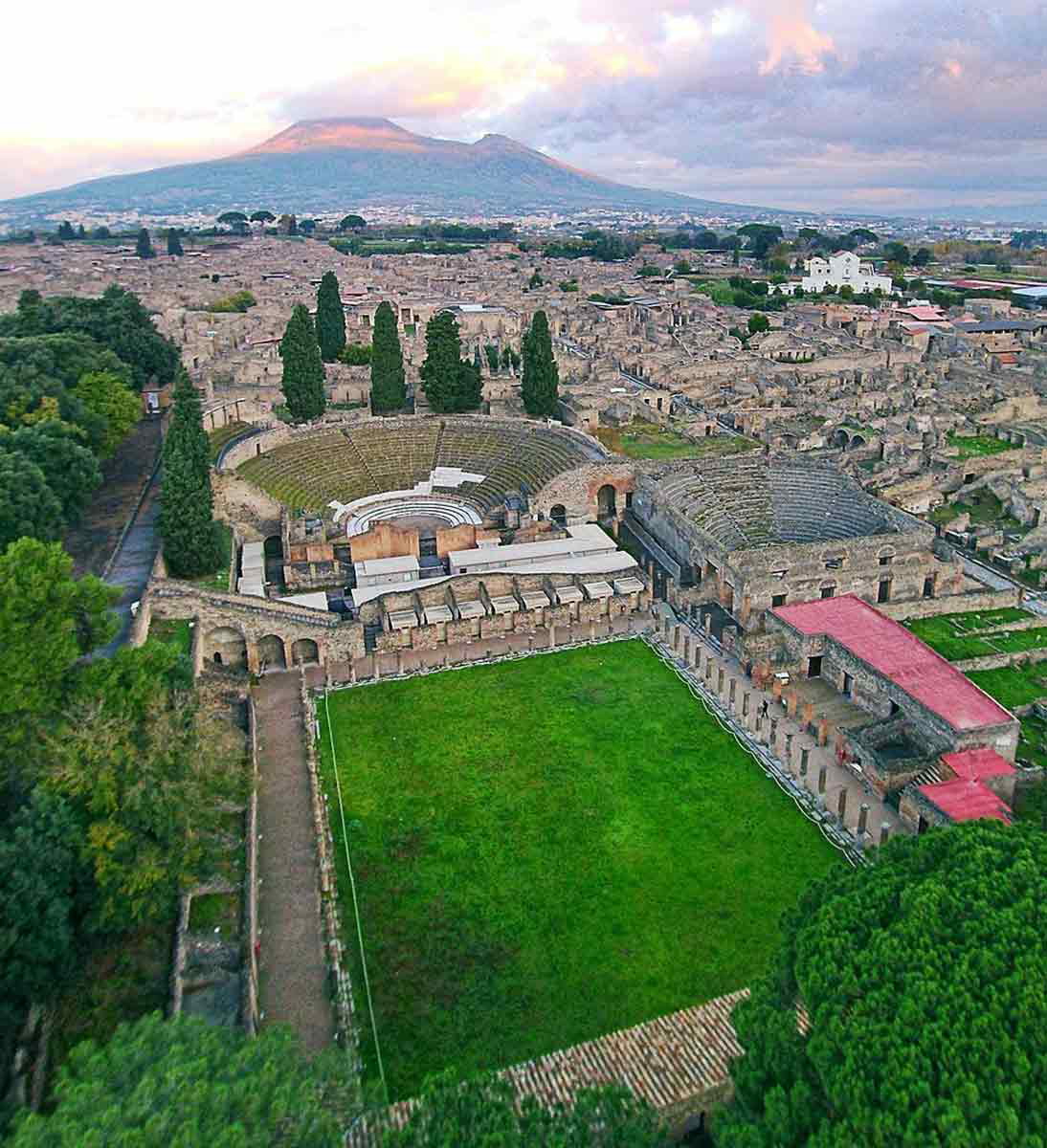
Pompeii is more than a Roman site; it is an entire city frozen in time. In August 79 CE, Pompeii, together with nearby Herculaneum, was buried under a thick layer of volcanic ash and pumice after the eruption of Mount Vesuvius. The event was catastrophic to the extent that the location of the ancient town southeast of modern Naples was lost for centuries. When the site was rediscovered at the very end of the 16th century, Pompeii, once a port city, lay inland, as volcanic activity had reshaped the Campanian coastline.
Archaeological excavation did not begin until the mid-18th century, and the European public was enthralled with the classical city that emerged from the ashes. Visitors today get a chance to walk down streets paved with basalt stone blocks and laid out in a grid typical of Roman settlements. They can see various once-opulent villas, the majestic Forum against the backdrop of Mount Vesuvius, public bathhouses, frescos with vivid colors, the amphitheater, and more. Archaeologists are still unearthing parts of the city, as they have only excavated two-thirds of Pompeii so far.
3. The Aqueduct of Segovia (Spain)
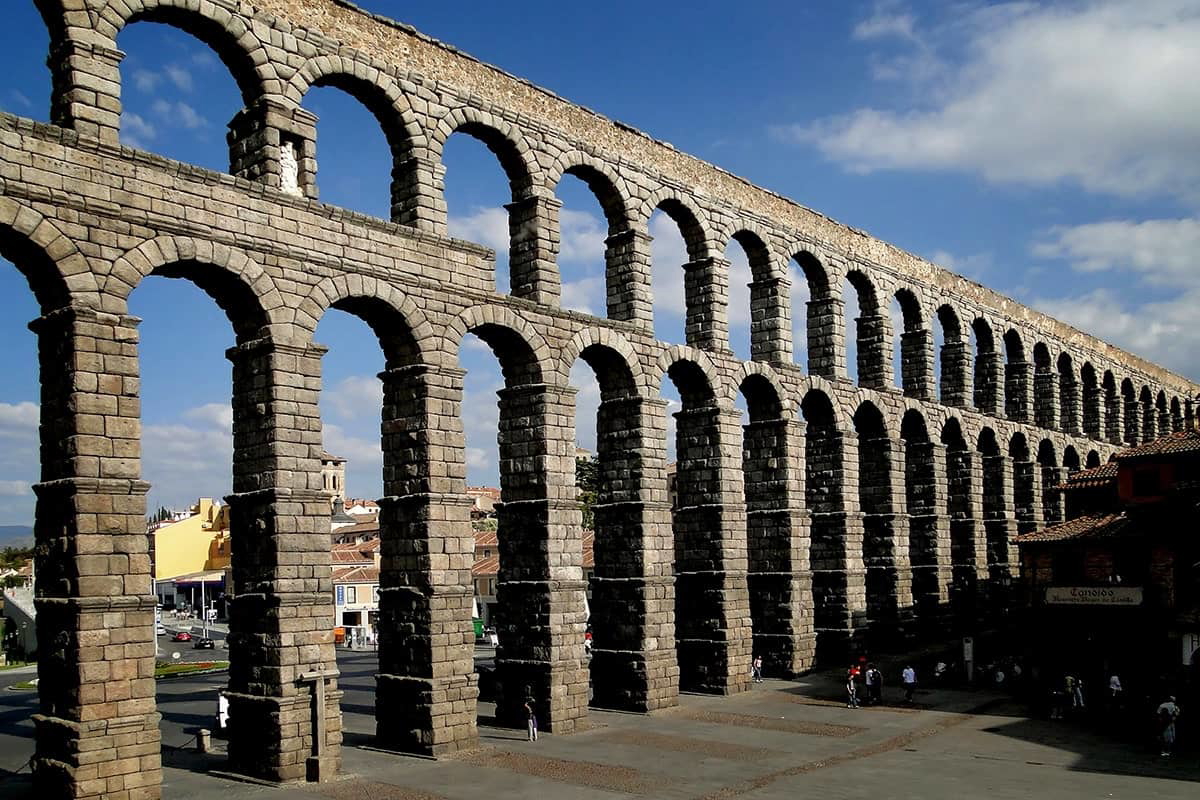
When we think of ancient Roman sites, we often refer to ruins. However, the Aqueduct of Segovia was in active use until 1973. It is located in the city of Segovia, the capital of a province of the same name, just northwest of Madrid.
Near the end of the 1st century CE, Roman engineers constructed an imposing aqueduct to channel water from nearby mountains into the settlement. Today, the Old Town, together with the Aqueduct, has been designated a UNESCO World Heritage site.
The most imposing section of the 15-kilometer-long aqueduct is the double-arched bridge that is twice as tall as the Hollywood sign. At Plaza del Azoguejo in the city center, the structure stands the highest at some 28 meters. The Romans constructed the entire aqueduct using unmortared granite blocks, which give it its distinct look today (pictured above). The 24,000 blocks have been conducting water to Segovia’s fountains for nearly two millennia, a testament to the skill of ancient engineers.
4. The Roman Baths (England)
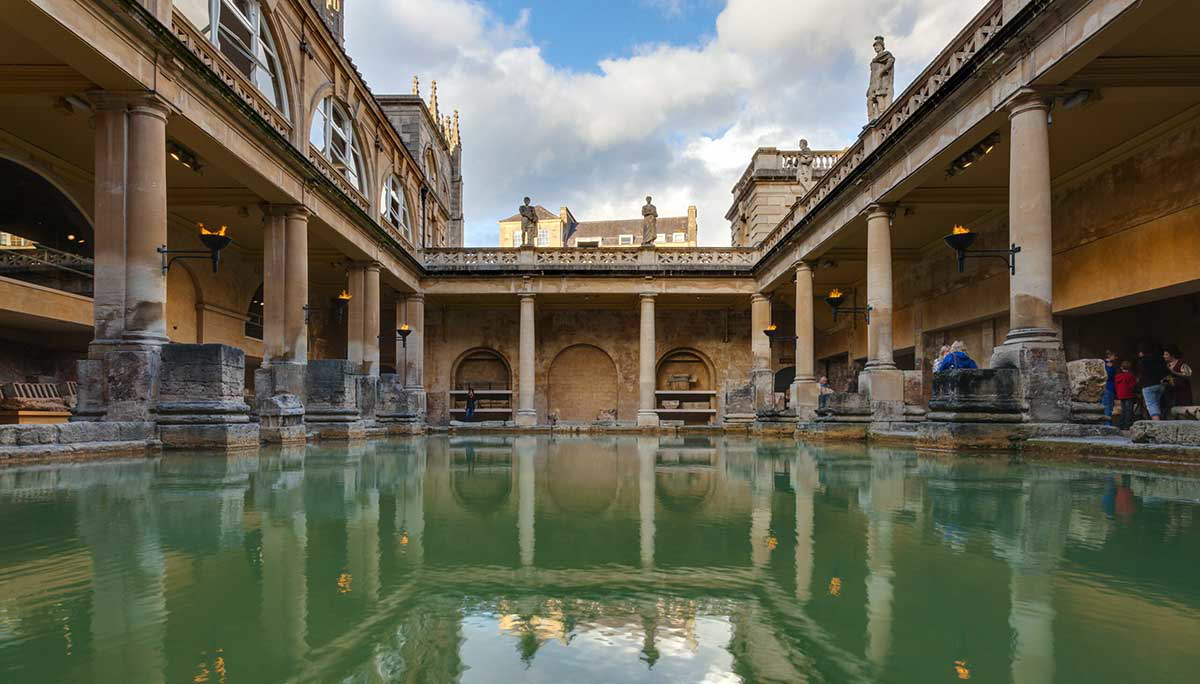
The next site on our list gave the name to Bath, a city in Somerset, England. The Romans built it around 70 CE, and the baths, or thermae, had remained in use until the end of the empire’s rule over Britain in the 5th century CE.
The bathhouses’ location is over naturally occurring hot springs rich in several dozen minerals, which made them perfect not just for bathing but also for healing. The water’s temperature is around 46 °C. However, this water is not suitable for swimming today, as it flows through lead pipes and is not treated, rendering it unsafe for human use.
The Roman baths were largely unused during the Middle Ages, so most of the gaudy structures we see nowadays as part of the complex are originally from the 1700s. The terraces on classical colonnades and statues date back to the time when Bath was a popular spa city. This architectural style is how Georgians imagined classical architecture. However, the bases of pools and the aforementioned plumbing are authentically Roman.
5. Fort City of Viminacium (Serbia)
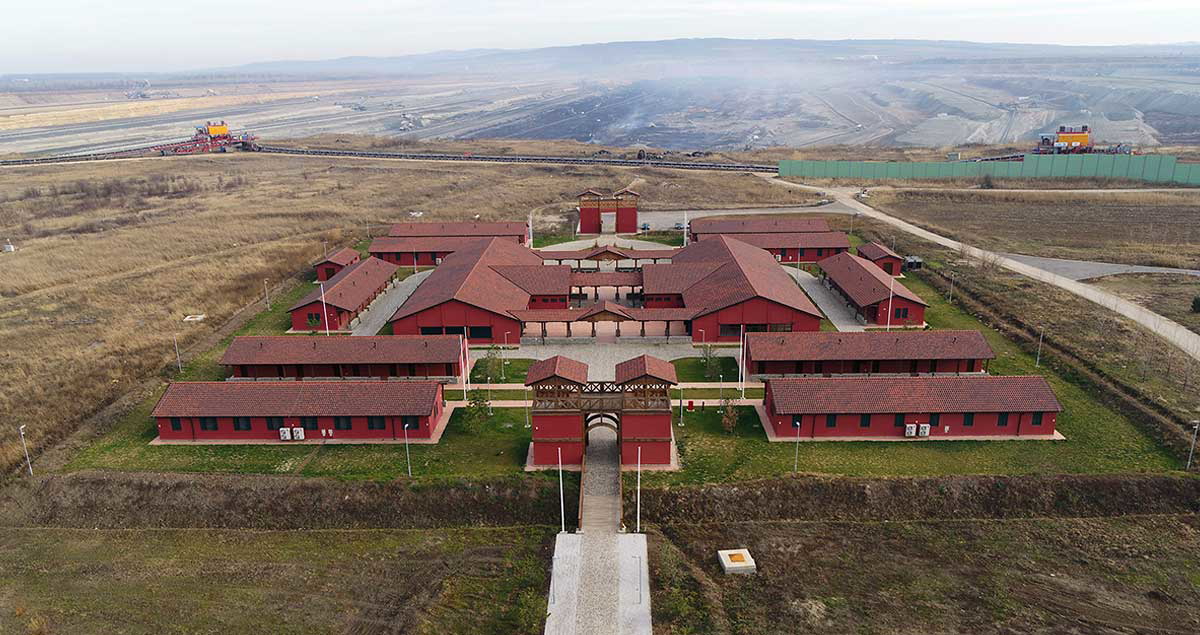
Historians estimate that as many as 18 Roman emperors were born in what is today Serbia, the single region outside of the Italian peninsula with the most emperors. The most famous of them, arguably, is Constantine the Great.
Other notable sites in the Balkan country include the imperial city of Sirmium (Sremska Mitrovica), imperial residences and villas, such as Mediana (Niš) and Felix Romuliana (Gamzigrad), as well as the remnants of Trajan’s Bridge over the Danube (near Kladovo), the longest permanent bridge in Antiquity.
However, the most interesting site is Viminacium, near the town of Kostolac in Eastern Serbia. The capital of the Roman province of Moesia Prima was both a major city, with an estimated population of 40,000 at its peak, and a military camp (castrum). Around the 1st century CE, a city developed around the camp, which sat on the Via Militaris, an ancient Roman road that started in present-day Belgrade and continued to Singidunum. The Huns pillaged Viminacium in the 5th century CE, only for it to finally disappear after the arrival of Slavs a century later.
6. The Library of Celsus in Ephesus (Türkiye)
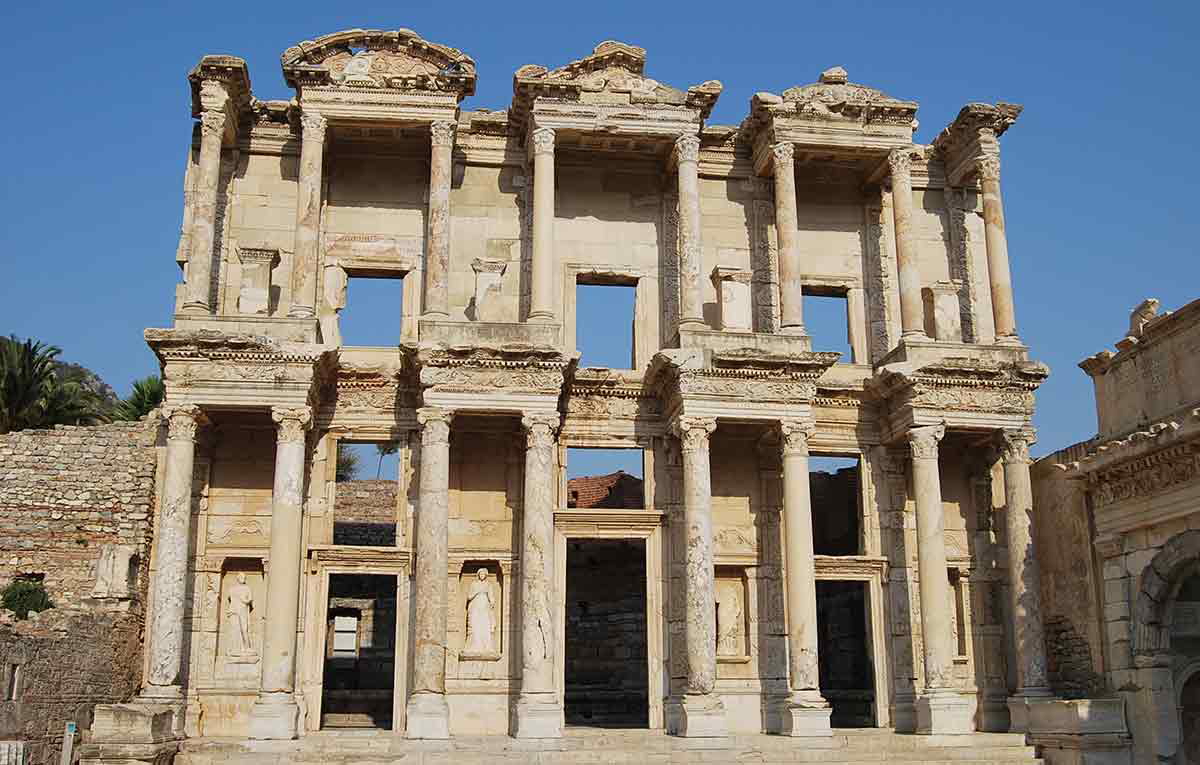
The Library of Celsus was the third most famous library in classical Antiquity, right behind the Great Library of Alexandria and the Library of Pergamum. It is located on the Ionian coast of modern-day Türkiye, near the town of Selçuk. It was part of the ancient Greek city of Ephesus, which is today a popular tourist destination and a UNESCO World Heritage Site since 2015.
The library bears the name of the former Roman proconsul of Asia, commissioned by his son at the beginning of the 2nd century CE. The structure doubled as a mausoleum for the aforementioned proconsul.
The picturesque two-storied façade features 16 columns, decorated with mythological figures and floral motifs. Between the columns, four female statues in niches adorn the front side of the library. They symbolize the moral traits a high Roman official was expected to possess, such as Wisdom, Insight, Virtue, and Knowledge. The statues are modern reproductions (c. 1910), while the originals are on display at the Ephesus Museum, part of the Museum of Art History in Vienna.
7. Pont du Gard (France)
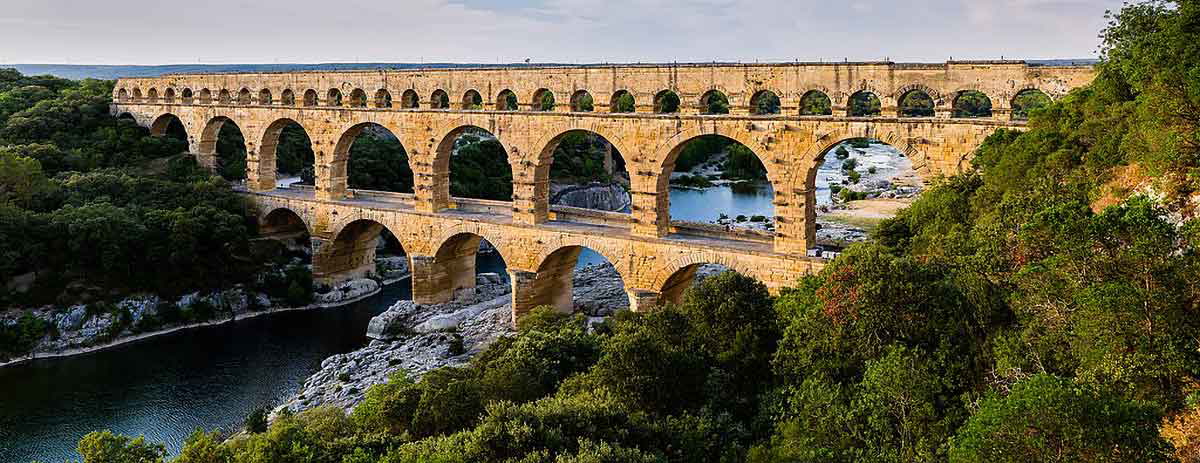
The second aqueduct on our list is not in an urban environment but in a natural one, further stressing its grandeur. Pont du Gard, translated as “The Bridge on the Gardon river,” is the highest Roman aqueduct in the world, standing at 49 meters above the river (at low water).
The Romans constructed it in the mid-1st century CE, during the reign of Claudius or maybe even Nero, to bring water to the colony of Nemausus (present-day Nîmes), some 50 kilometers away. This part of southern France is rich in examples of ancient architecture, as Nîmes is known as “The French Rome.”
The aqueduct bridge features three rows of arches constructed using shelly limestone and weighing 50,000 tons in total. However, the most impressive fact about the structure is the gradient, that is, the tiny downward slope of the water channel. On Pont du Gard, the gradient is just 25 centimeters per kilometer, one of the lowest values of the period.
8. The Colosseum in Rome (Italy)
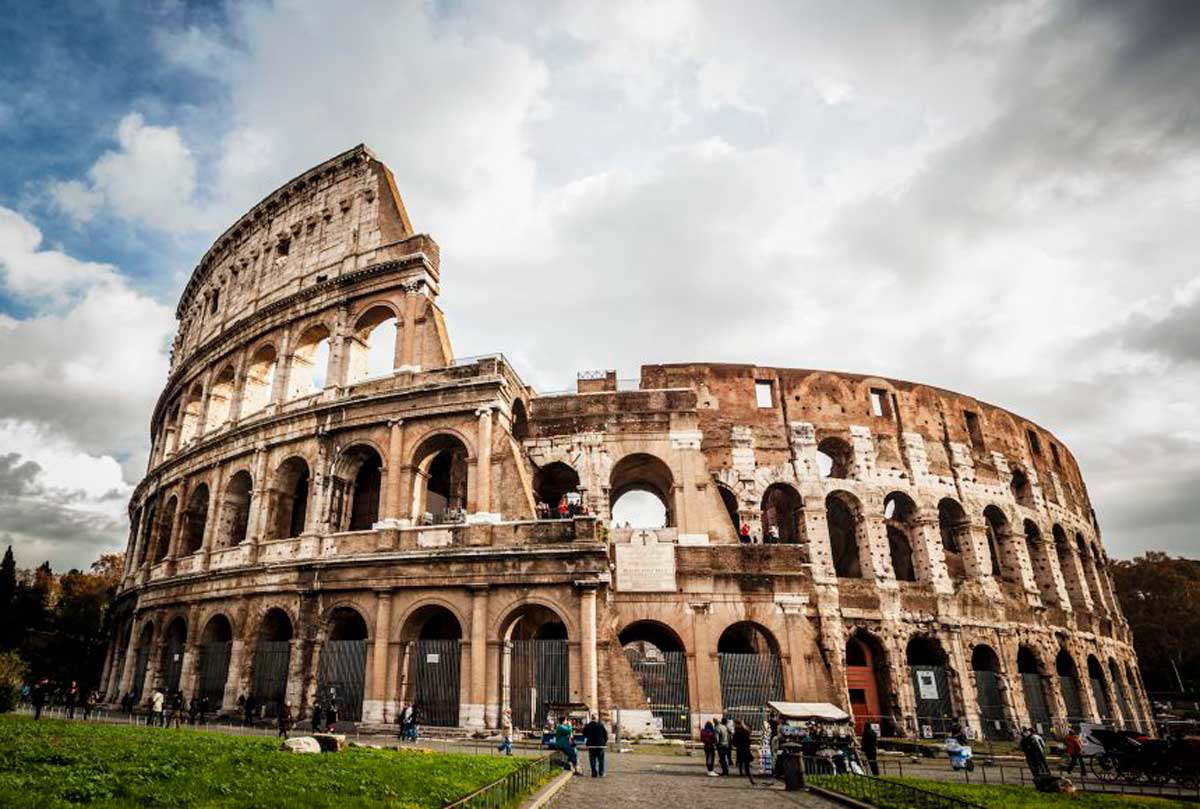
The Colosseum in the Italian capital is the building most people associate with the Roman Empire. Its official name is Amphitheatrum Flavium, or the Flavian Amphitheatre, in honor of the three emperors from the Flavian dynasty that took part in its construction during the 1st century CE. The amphitheater is a type of open-air public structure that is most similar to a stadium today.
The Colosseum in Rome is the largest amphitheater from Antiquity still standing, with an original capacity of up to 80,000 spectators. Other sizable amphitheaters exist(ed) in Capua near Naples, El Jem in Tunisia, and in Pula, Croatia.
The elliptical amphitheater hosted all sorts of spectacles, such as gladiator fights, battle reenactments, dramas, executions, animal hunts, and even mock sea battles in its early years. During Roman times, the Colosseum was primarily an entertainment venue.
After the 6th century, the structure gradually fell into disuse, as the Roman Empire weakened and earthquakes caused the collapse of some segments. It served partly as a cemetery, a castle, a Christian holy site, and it eventually became an archaeological site, which is now a tourist destination, drawing an average of seven million visitors annually.
8. Odeon of Herodes Atticus (Greece)
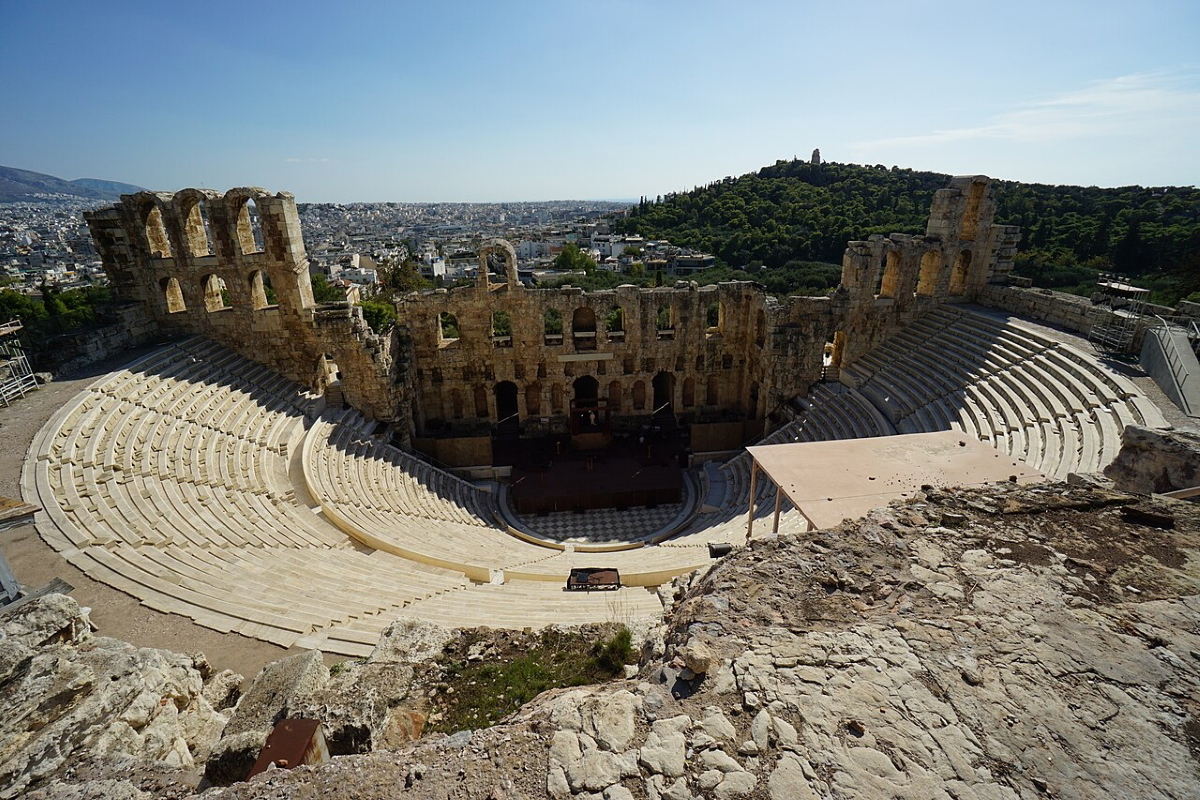
Just under the famous Parthenon, on the southwestern slope of the Acropolis of Athens, sits a stone theater from Roman times. Herodes Atticus, a native of Marathon and a Roman senator, ordered its construction in memory of his wife. The year of completion was 161 CE.
The tiered stone stands have the shape of a horseshoe, and there is a three-story wall behind the stage. When the Odeon was still in use, it also boasted a wooden roof made from cedar from Lebanon. The theater could hold around 5,000 spectators, despite appearing small due to the steep incline of the auditorium.
The structure was Roman in form but Greek in its use as a stage for music and oratory. This was symbolic of the new Roman Athens that Hadrian and other rulers envisioned as an imperial city built upon, quite literally, its Greek heritage.
The Odeon served this purpose until the mid-3rd century, when the Germanic tribe of Heruli destroyed it. The structure fell into disrepair, and by the 19th century, only the arches were visible above the ground, as most of the theater was buried in the hillside. Greek architects reconstructed the ancient venue during the 1950s, and today, the Odeon of Herodes Atticus once again hosts musical events.
10. Hadrian’s Wall (England)
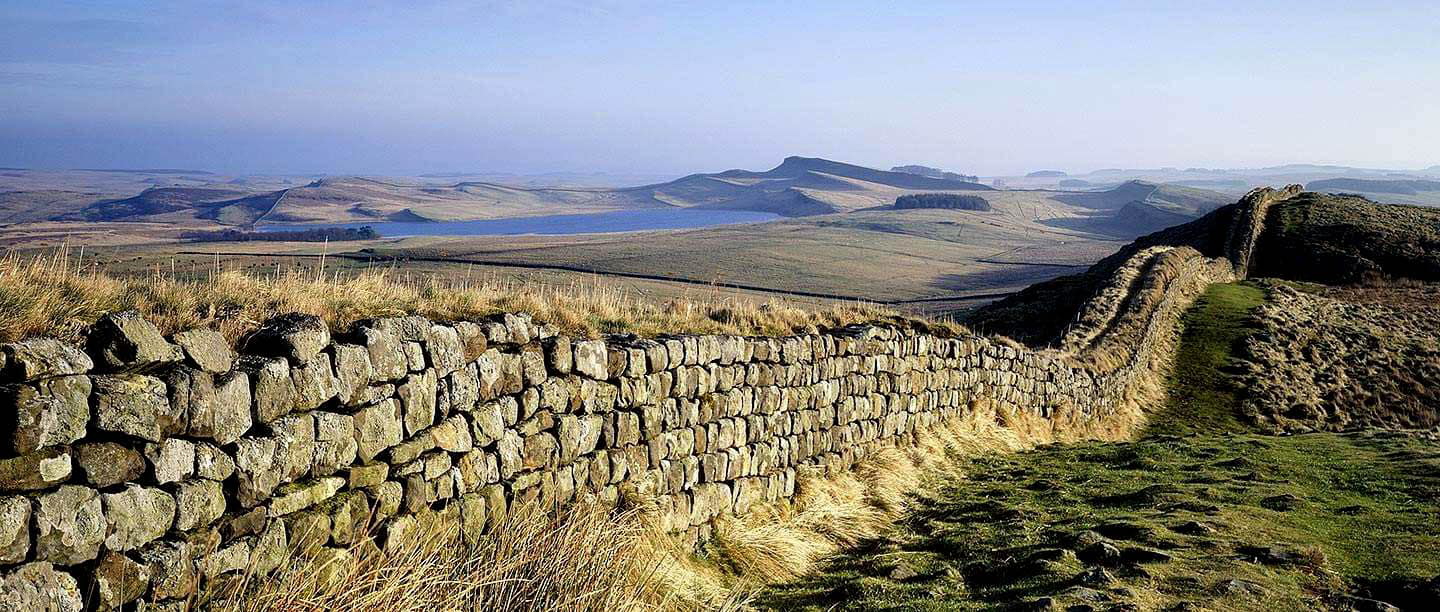
Emperor Hadrian ruled the Roman Empire for 21 years and left a significant architectural legacy, most notably, finalizing the reconstruction of the Pantheon in Rome. However, he is most famous today for a structure outside of the capital that bears his name: Hadrian’s Wall.
The construction of this defensive fortification began in 122 CE in the north of present-day England. The wall stretched for some 117 kilometers from the island’s Irish Sea coast in the west to the eastern coast and the North Sea. It was essentially a massive stone wall with ditches on both sides, turrets, gatehouses, and small fortresses that ran its length.
The structure’s subsequent name, the Picts’ Wall, reveals the reasons behind its construction. It was a defensive frontier to separate the province of Britannica, which the Romans deemed civilized, from the northern tribes, most notably, the Caledonians (and later, the Picts), whom the Romans designated as “barbarians.” The wall was a statement of Roman power, serving as both a military installation and a customs house to regulate the flow of people and goods.
The original height of the wall was four and a half meters, although there are no preserved sections of this height. In the centuries after the Romans left Britain (410 CE), the locals largely dismantled Hadrian’s Wall and repurposed its stones for roads, churches, and farmhouses.