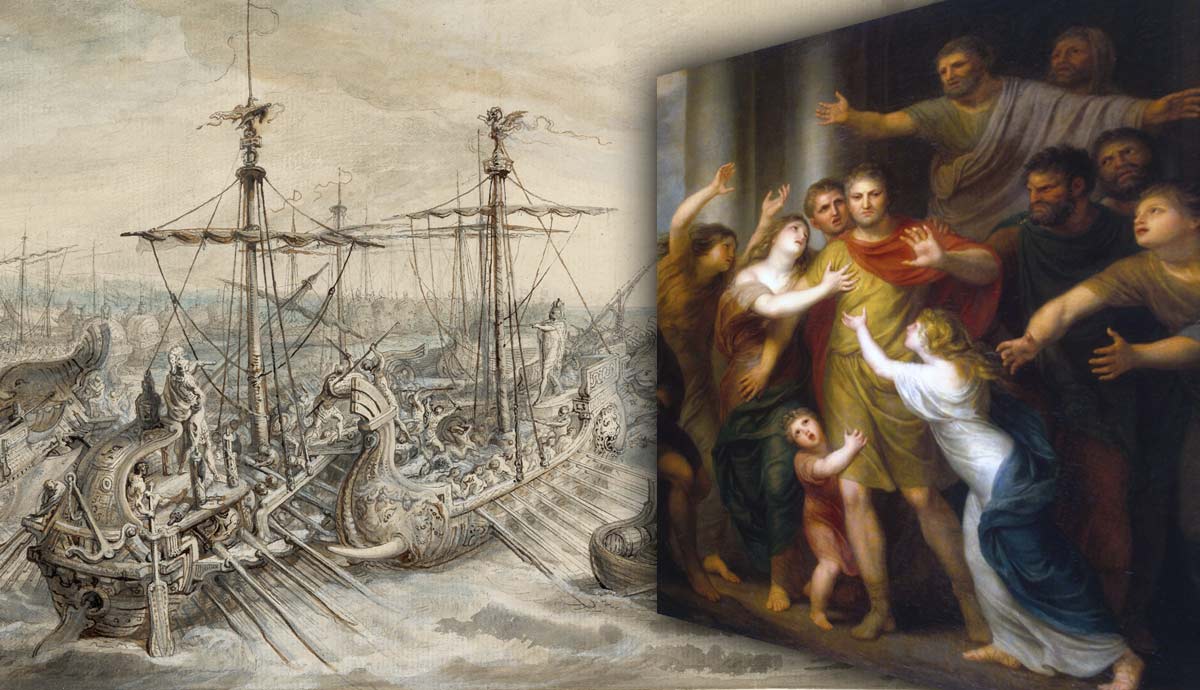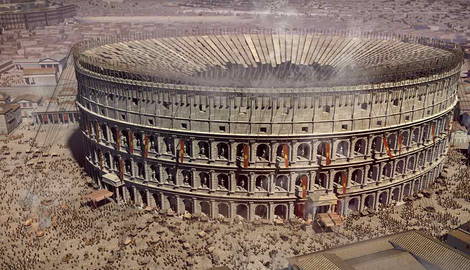
According to the Romans, from early in their history, they held the ludi Saeculares, a combination of religious rites and entertainments, every 100 or 110 years to mark the closing of one era and the start of a new one. While the Saecular Games do seem to have been based on old religious rites, the idea that they marked a new era, and that they should be held once every saeculum (age/generation), seems largely to have been invented in the Augustan Age. Augustus ushered in a new age in Rome, transforming the broken Republic into the Principate. The ludi Saeculares was part of his rewriting of history to support his new regime.
Ancient Rites for the Underworld Gods
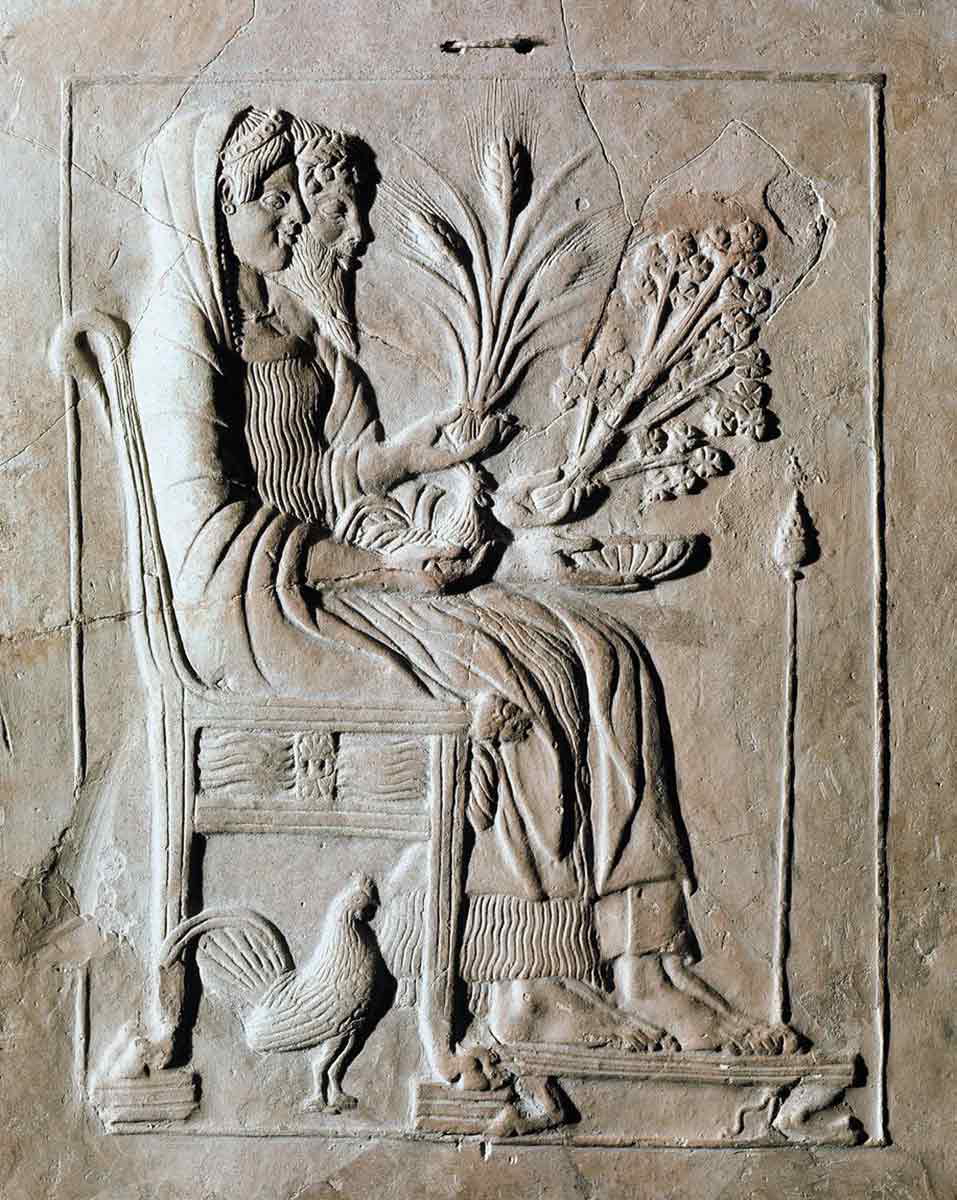
According to the ancient author Zosimus (2.1-4), the roots of the ludi Saeculares date to the time of the Roman kings (753-509 BC), but he does not give a specific date.
Zosimus recounts that a Sabine man named Valesius, an ancestor of the aristocratic Roman Valerii gens, prayed to his household gods for guidance after his children fell sick, and after he saw a portentous lightning strike. The Romans strongly believed in observing portents and omens to determine the will of the gods. A supernatural voice told him to take his children to Tarentum, where he should draw water from the Tiber River, heat it on a fire sacred to Dis Pater and Proserpina, underworld gods similar to the Greek gods Hades and Persephone, and give it to his children.
Despite Tarentum being far away in southern Italy and not near the Tiber, Valesius set off. When he came to what was then early Rome, specifically a place later known as Tarentum on the Campus Martius, the gods advised him that he had reached his destination, much nearer than expected.
Valesius drew water from the Tiber and heated it on an altar he erected. When the children drank the water, they fell asleep. They woke up cured. The children told their father that while sleeping, they had a shared vision that instructed them to offer black victims to Dis Pater and Proserpina and that they should spend three nights singing and dancing.
The Right Way to Honor the Gods
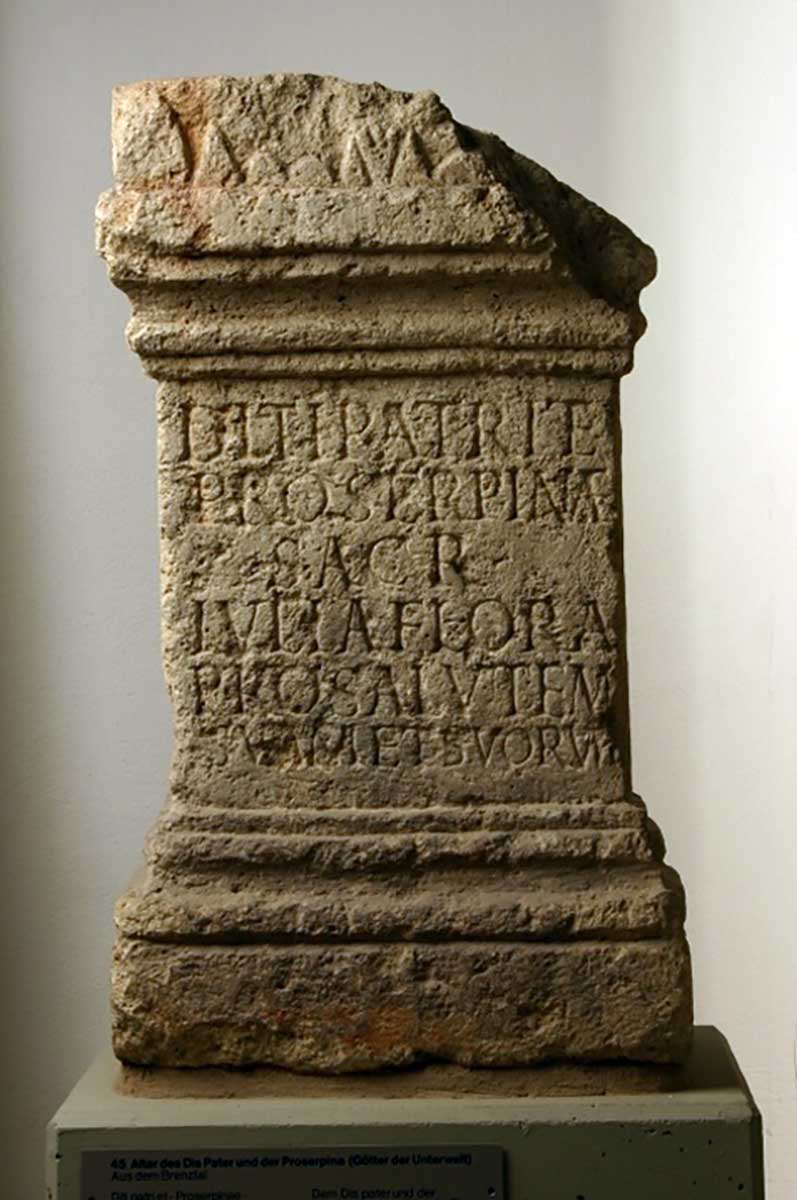
Intending to build a better altar to fulfill the will of the gods, Valesius started digging an altar foundation. However, in the ground he found a ready-made altar inscribed with a dedication to the two gods. According to Zosimus, the Romans had made this altar following the command of a monstrous apparition to make sacrifices to Dis Pater and Proserpina before going to war with Alba Longa, which was reportedly destroyed by the Romans around 650 BC. After making the sacrifices, the Romans buried the altar so that no one else could find it or use it. Valesius found this altar.
Later, in 509 BC, following the expulsion of the kings, one of Valesius’ descendants, Publius Valerius Publicola, made sacrifices on the same altar and exhibited spectacles in imitation of his ancestor to cure a plague. The Roman author Censorinus (17.1) says that this was the first celebration of the Ludi Saeculares, 245 years after the foundation of Rome (753 BC).
In his story, Zosimus is explaining how the Romans learned the correct way to honor these two gods. The Romans firmly believed in the importance of maintaining the favor of the gods through correct religious observances. Zosimus reinforces this when he notes that when the sacrifices were allowed to lapse during the Republic, the Romans often faced misfortune.
The sources are inconsistent but clearly imply that these rites were repeated sporadically throughout the Roman Republic, usually in response to a crisis. Censorinus confirms that the rites were performed again when the Quindecemvirs, the priestly college responsible for interpreting the oracles of the Sibylline Books, advised the Romans to repeat them in 249 BC, which was during the height of the First Punic War. They were then held again in 149 or 146 BC, during the Third Punic War.
A New Augustan Era
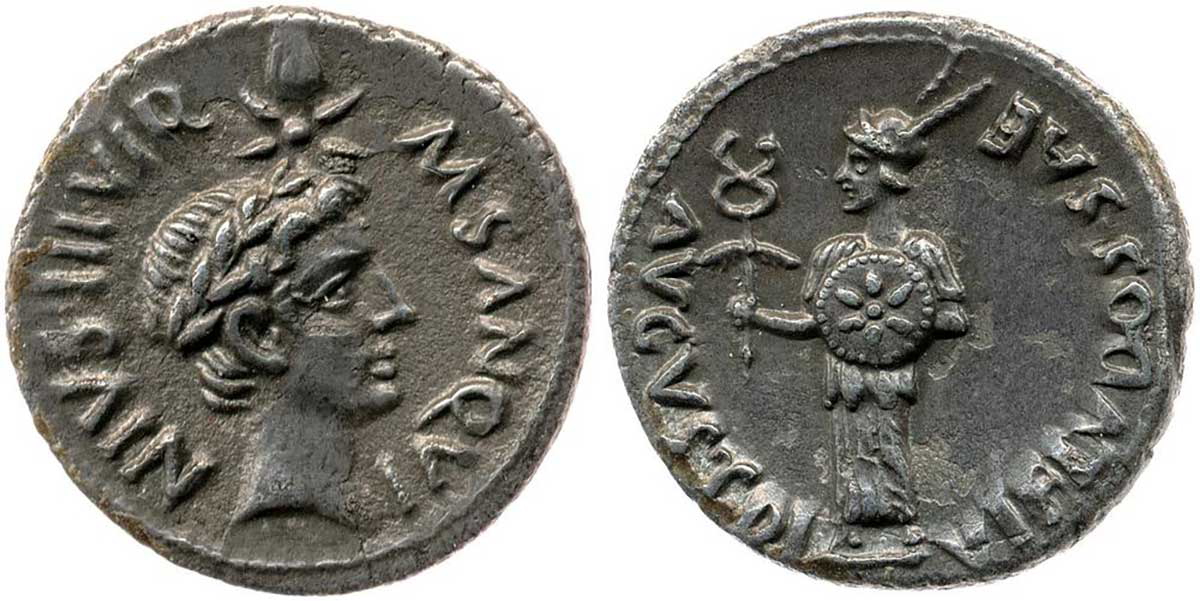
Censorinus wrote in the 3rd century AD, and Zosimus in the 6th century AD, so for them, the Roman Republic was already ancient history. While probably based on older legends, they are telling a version of history that was probably rewritten in the Augustan Age (27 BC-14 AD).
When Julius Caesar became the undisputed and unchallenged leader of Rome in 45 BC, the Republic was over. Many people were not willing to accept this, resulting in Caesar’s assassination the following year. This did not restore the Republic; it just led to further years of civil war as Caesar’s heirs battled it out for supreme power.
When Octavian emerged on top, he had the challenge of formulating his supreme position in Rome while paying homage to the traditions of the Republic, so that he could stabilize his position and avoid assassination. Reinventing himself as Augustus in 27 BC, he did this successfully over the course of about four decades.
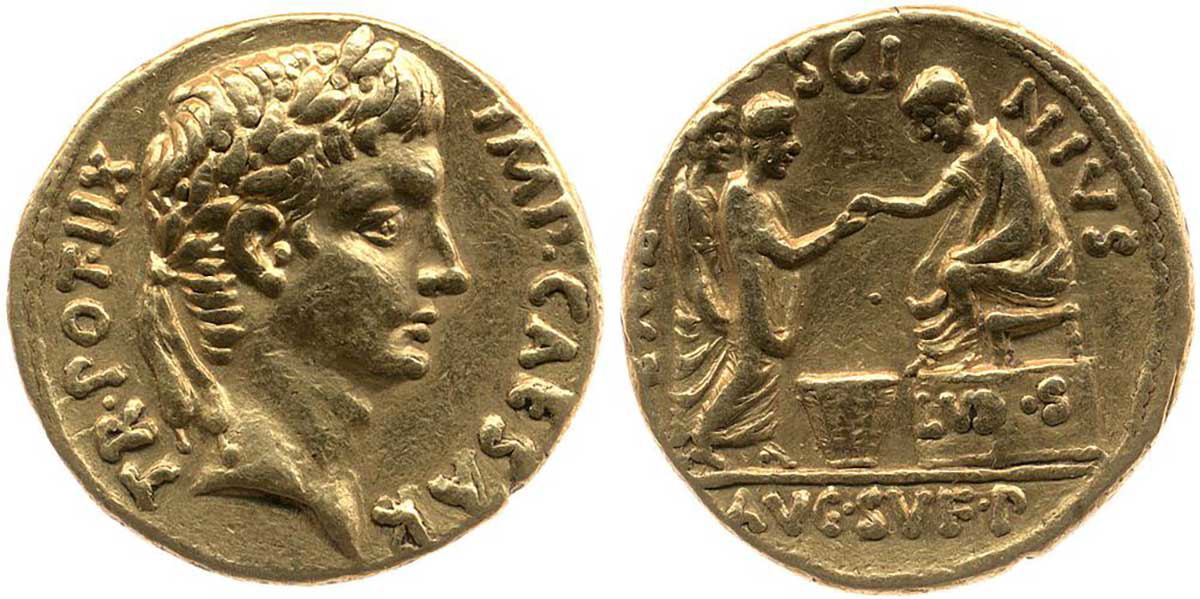
As part of this reinvention, Augustus also set about rewriting history, connecting his new regime with Rome’s ancient and venerated past. It was under Augustus’ influence that Virgil wrote his Aeneid, making the Trojan hero Aeneas the divinely appointed ancestor of the Roman people and casting Augustus, Aeneas’ direct descendant, as finally fulfilling Aeneas’ divine destiny. This is also when Livy wrote his history of Rome from its foundations to the modern day, with evidence that he was influenced by Augustus’ new interpretation of certain historical events.
Augustus originally intended to hold the ludi in 22 BC, but they were delayed until 17 BC. While Livy’s account of the ludi under Augustus is almost completely lost, he was one of the sources for Zosimus and Censorinus, who quotes Livy directly. This may indicate that the idea that the rites were neglected during the Republic, and that Rome suffered as a result, belongs to the Augustan Age, during which Augustus was renewing many ancient religious rites to ensure the favor of the gods.
It did not matter that it had not been 100 years since they were last held, because Augustus was rejuvenating and strengthening an important religious festival. He could establish a new cycle, as he had established a new Rome. He decreed that the ludi should be repeated every 100 years (Censorinus 17.7).
Augustus’ Ludi Saeculares
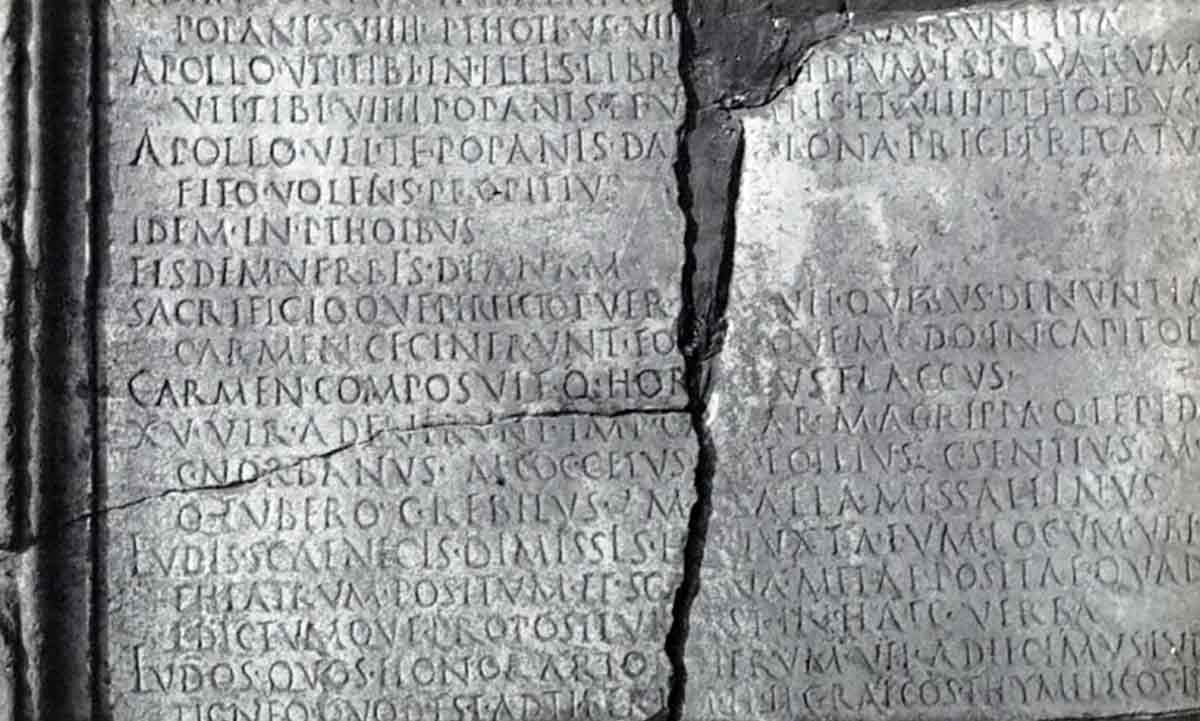
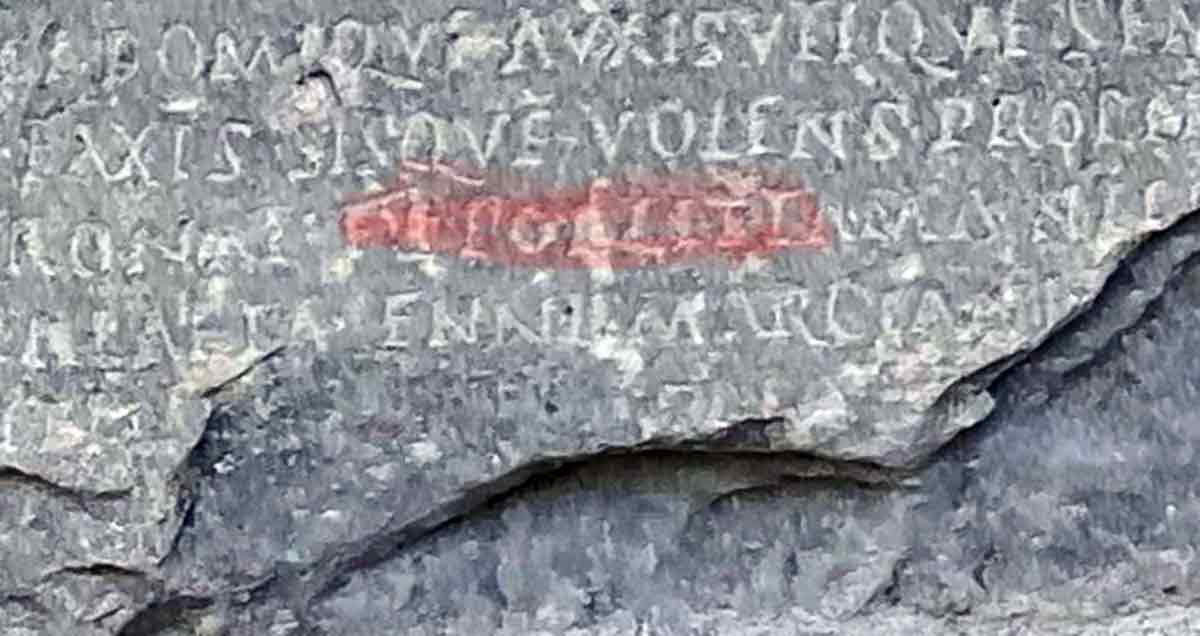
Zosimus gives a detailed description of the ludi Saeculares under Augustus (2.5-6), and details are also preserved in a partially surviving inscription commemorating the event.
Before the ludi, heralds were dispatched to invite the people to this once-in-a-lifetime moment. The festivities began on May 31, when the Quindecemvirs met on the Capitol and at the temple of Apollo on the Palatine, where they distributed purifying torches to the people. Offers of wheat and barley were also made at the temple of Diana on the Aventine. The first sacrifices were made that evening, nine female lambs and nine she-goats to the fates (Moirai) on the Campus Martius.
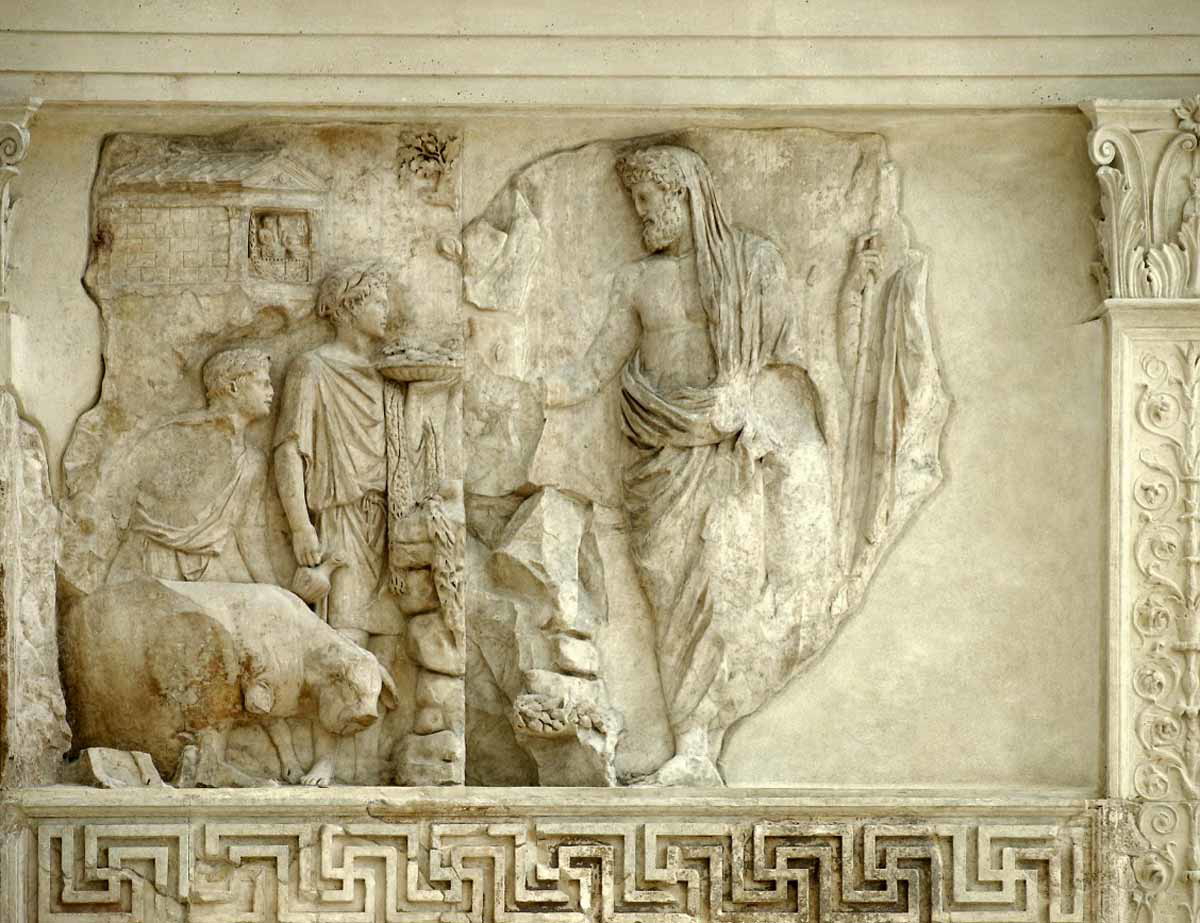
Augustus’ ludi differed from previous ludi Saeculares in that, while sacrifices were made to underworld gods at night, during the day, sacrifices were also made to Rome’s other important gods. On June 1, two bulls were sacrificed to Jupiter Optimus Maximus. In the evening, sacrificial cakes were offered on the Campus Martius to Illythiae, a goddess of childbirth. The next day, two cows were sacrificed to Juno Regina during the day, and a pregnant sow to Terra Mater in the evening.
On the final day, sacrificial cakes were given to Apollo and Diana. Apollo was Augustus’ patron god, and these sacrifices were made at the temple Augustus erected for the god on the Palatine. Augustus was at the center of the action, leading the nocturnal sacrifices and leading the daytime sacrifices in company with his friend and son-in-law Agrippa, who was also his designated heir at the time.
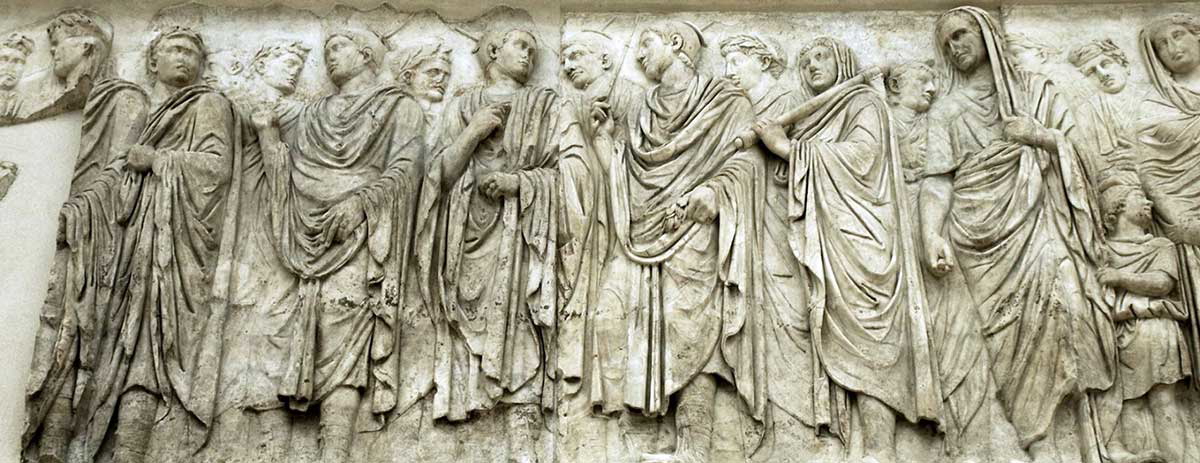
The Augustan poet Horace was commissioned to write the Carmen Saeculare, a Latin hymn that was sung in front of the temple of Apollo as part of the final offerings. The hymn asks the gods to protect Rome, its laws, and its people, and praises Augustus for ushering in a new era of prosperity. The poem specifically mentions Aeneas and Romulus, both considered ancestors of Augustus, linking back to other texts and histories produced during Augustus’ reign.
While the event included solemn sacrifices, the ludi were also a celebration of Rome. All sacrifices were followed by theatrical performances to entertain the masses. After the final sacrifices, there were further days of plays until June 11, and on June 12, chariot races. It was probably not an exaggeration that these were among the most spectacular entertainments that living Romans had seen in their lifetimes.
A New Tradition
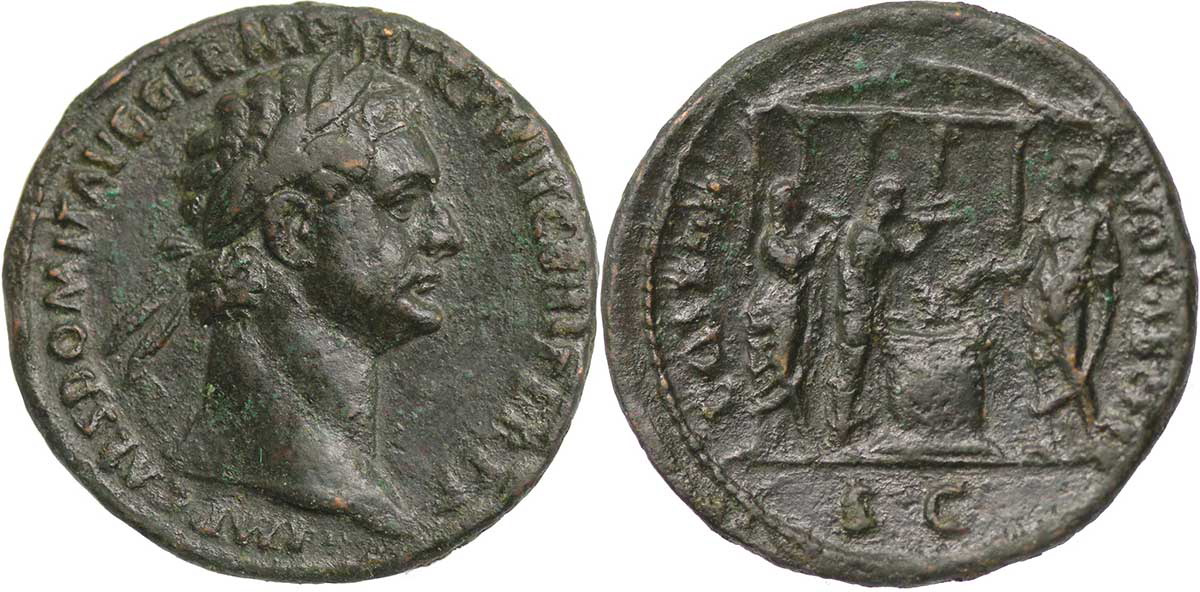
The ludi Saeculares under Augustus can be considered an act of propaganda. Augustus was publicly stating that he had ushered in a new golden age in Rome, as she fulfilled her divine destiny begun centuries earlier with Aeneas. Augustus declared that the ludi should be repeated every 100 years. Could he have known that Rome would be ruled by men called Caesar and Augustus for the next 500 years?
Augustus’ heirs followed his precedent in principle if not in specifics. The ludi Saeculares were held again just 64 years later in 47 AD by the emperor Claudius. He chose this date to mark 800 years since the legendary foundation of Rome in 753 BC. The biographer Suetonius mocks Claudius for holding the games and heralding them as something not seen by anyone in this lifetime, claiming that some of the performers had also performed in Augustus’ games (Claudius 21.2). They would certainly be very old performers if that were true.
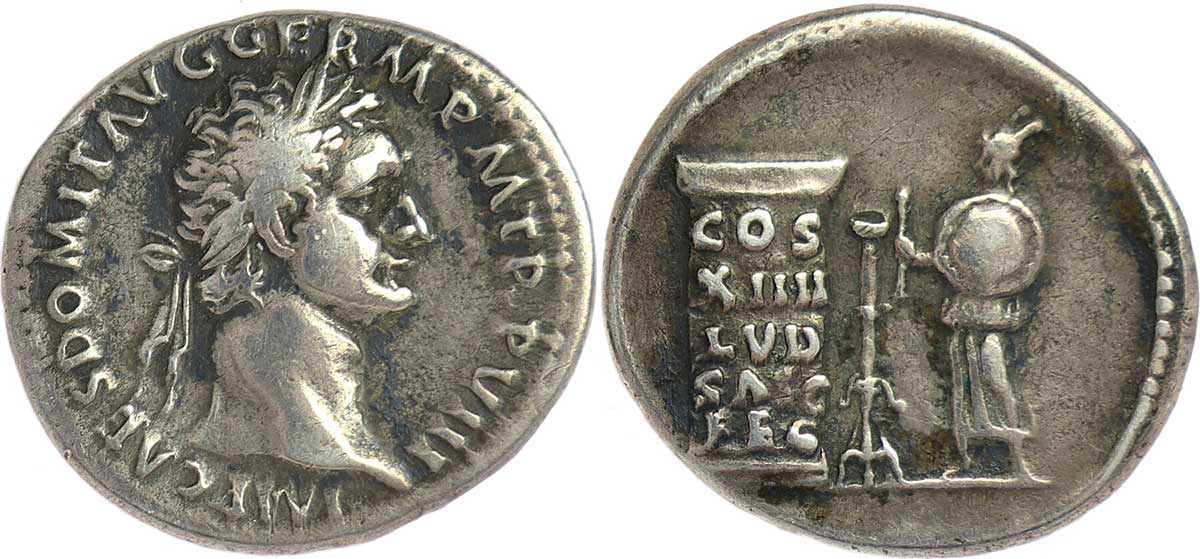
They were next held in 88 AD, 110 years after Augustus intended to hold the games in 22 AD, by the emperor Domitian. They were notably not held by Vespasian in 78 AD, 100 years later. This was despite being the founder of Rome’s second dynasty, the Flavians, and therefore possibly benefiting from a celebration of renewal. But Domitian had reasons to ignore Claudius’ precedents and hold the ludi. Without the military record of his father and brother, Domitian needed to work harder to justify his position. He possibly also wanted to compete with his brother Titus, who had hosted 100 days of games for the inauguration of the Colosseum.
While Tacitus’s account of the ludi under Domitian does not survive, he mentions them elsewhere (Annals 11.11). While generally critical of Domitian, Tacitus does not seem critical of this, perhaps because he was both a member of the Quindecemvirs and praetor in the year the ludi were held, so he probably played an important role in their organization.
The End of a Tradition
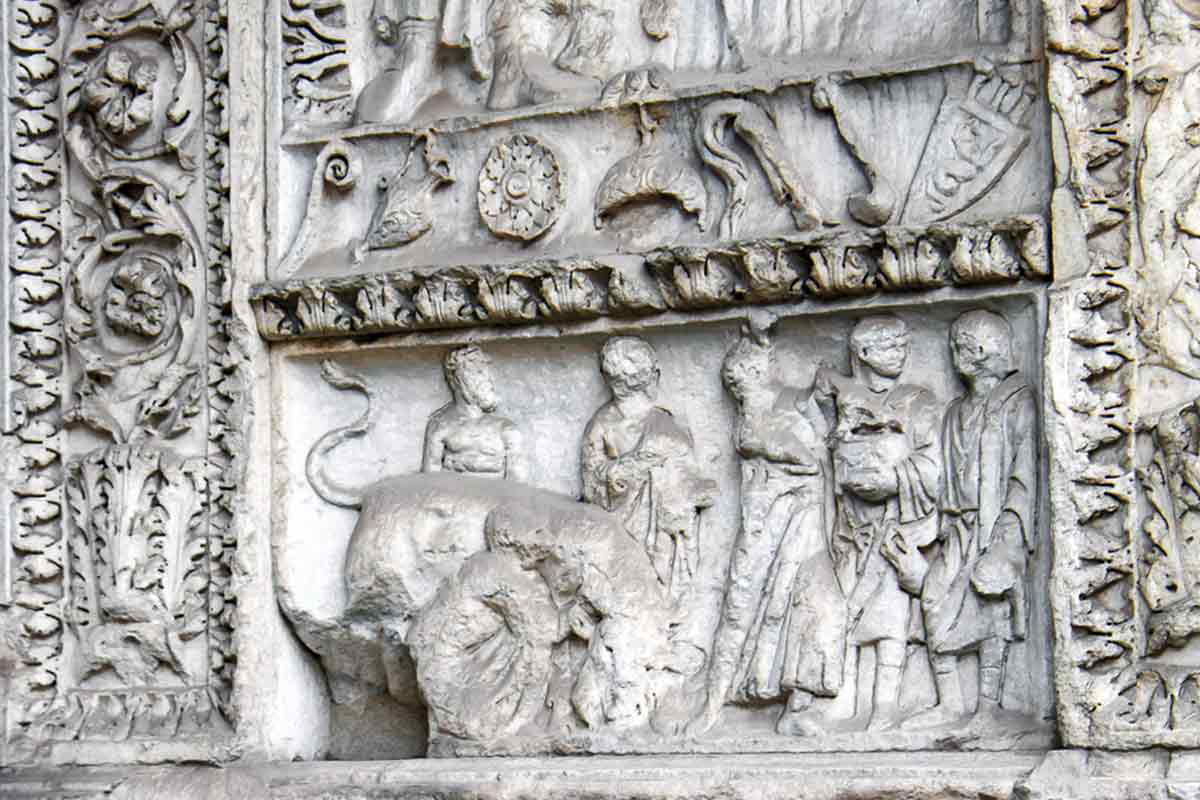
After Domitian, Roman emperors chose whichever system of calculation was most convenient for them to host the ludi. Antoninus Pius held the ludi in 148 AD, roughly 100 years after Claudius’s ludi, and to celebrate the first decade of his own reign.
Septimius Severus then held the ludi in 204 AD, roughly 220 years after Augustus’ celebration and about ten years into his reign and the new Severan dynasty. An inscription also survives from Septimius Severus’ celebration of the ludi, set up alongside Augustus’ in the Campus Martius. Other emperors probably erected similar inscriptions that have not survived. Following the Claudian cycle, Philip I then held the ludi in 248 AD.
With the rise of Christianity, the ludi stopped. Zosimus is critical of this, stating:
“Experience assures us that while these ceremonies were duly performed, according to the direction of the oracles, the empire was secure and likely to retain its sovereignty over almost all the known world, and on the other hand, when they were neglected, about the time when Diocletian laid down the imperial dignity, it fell to decay and degenerated insensibly into barbarism…” (2,7)
Zosimos then notes that they were not held under Constantine when the 110-year rule said they should, and goes on to recount the fall of the Caesars. It was only a few decades later that Constantine moved his capital to Constantinople, fundamentally changing Rome’s great destiny.