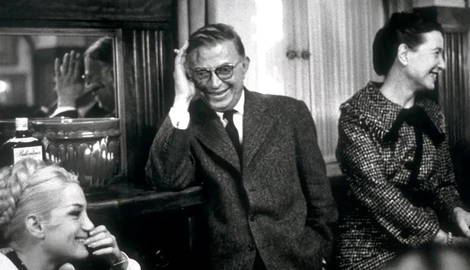
Altona is a philosophically complex play about lies, inauthenticity, and bad faith. Similar to Sartre’s much earlier No Exit, the play explores the idea of “hell being other people.” However, Altona is far more politically charged. While it is the only play in which Sartre explicitly mentions the Nazis, the themes were very relevant to the Algerian War of Independence that was ongoing at the time. French audiences would feel compelled to consider their own complicity and perhaps bad faith towards what was happening in North Africa in their names.
Key Facts About The Condemned of Altona (1959)
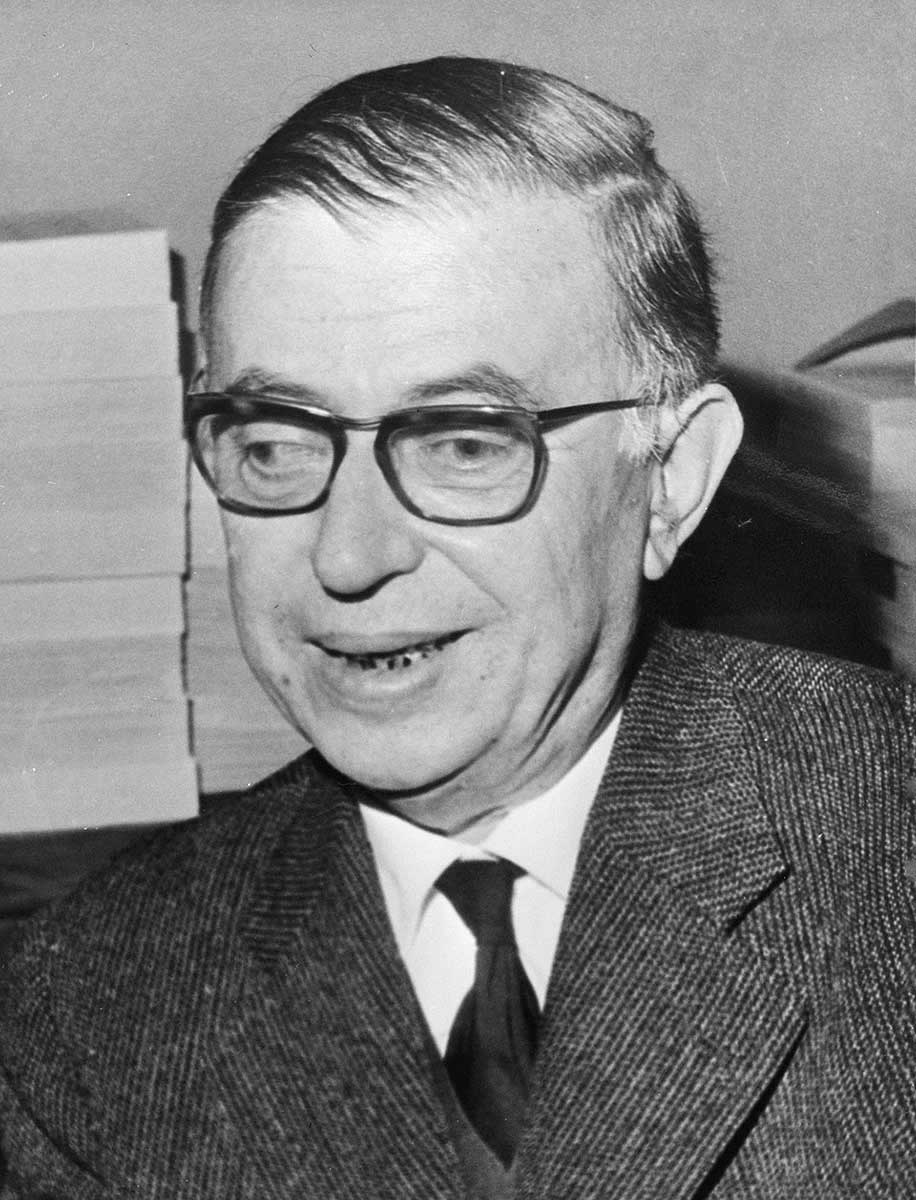
The Condemned of Altona (1959), also known simply as Altona or sometimes Loser Wins (an idea frequently expressed in the final act), is distinguished by being Sartre’s final completely original play and his only play to mention the Nazis directly.
Altona centers around an enormously wealthy family of German industrialists. They were rich and powerful before the war, profited during the war, and are now richer and more powerful fifteen years later.
The play showcases several key Sartrean ideas, including responsibility, authenticity, and bad faith.
The complex and complicated dynamic between the characters is established in the first two acts of the play, and these are by far the most philosophically interesting. The fourth act is the pay-off when various ideas come to a head, and the third and fifth acts are very short. Accordingly, in this article, we will concentrate mainly on the first two acts.
The First Act: Setting the Scene
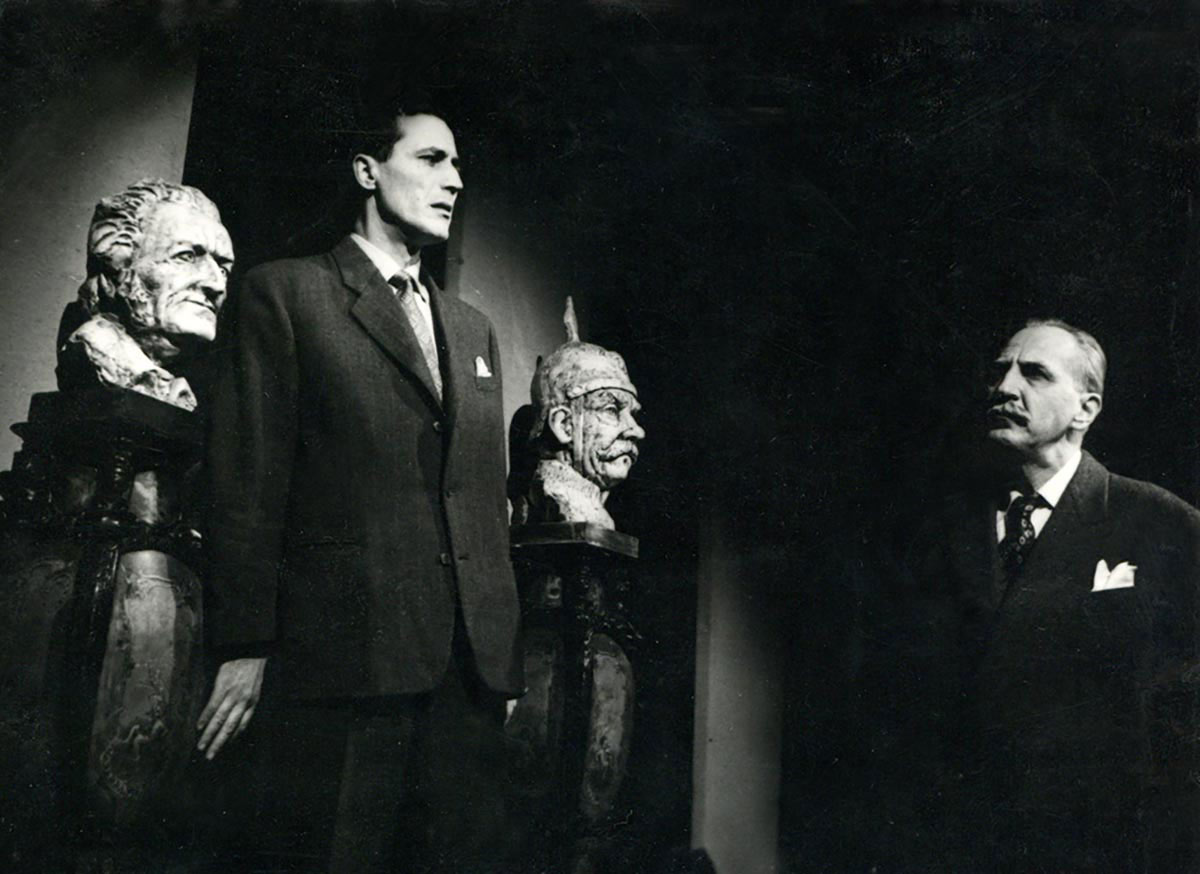
The curtain opens to reveal a German drawing room furnished with “pretentious ugly furniture.” There is a staircase leading up to a landing where a door can be seen. Upstage, on the left and right, are two large doors. Stage right are two French windows through which trees can be seen.
There are three people onstage: Leni, Werner, and Johanna. Leni and Werner are siblings. Johanna is Werner’s wife; she is a former movie star now retired. The three are waiting for Leni and Werner’s father, who has called a family meeting. It is clear that there is a great deal of tension in the family.
When the father arrives, he makes the others swear on the Bible to follow his wishes. He has cancer and only six months to live. He insists that Werner, his son, take over the family business after his death.
Leni appears indifferent, but Werner and Johanna are distraught. We discover that Werner is desperate for his father’s love and approval, but does not want to run the company. Johanna does not want him to run it either; she wants to escape the claustrophobic Altona mansion.
During the first act, we learn that there was another son, Franz, who died in Argentina. Had he survived, he would have been the natural choice to take over after his father’s death. However, the first big twist in the play is that Franz is not dead but shut up in his room and has been for years. He is behind the door visible on the landing.
The First Act: Franz
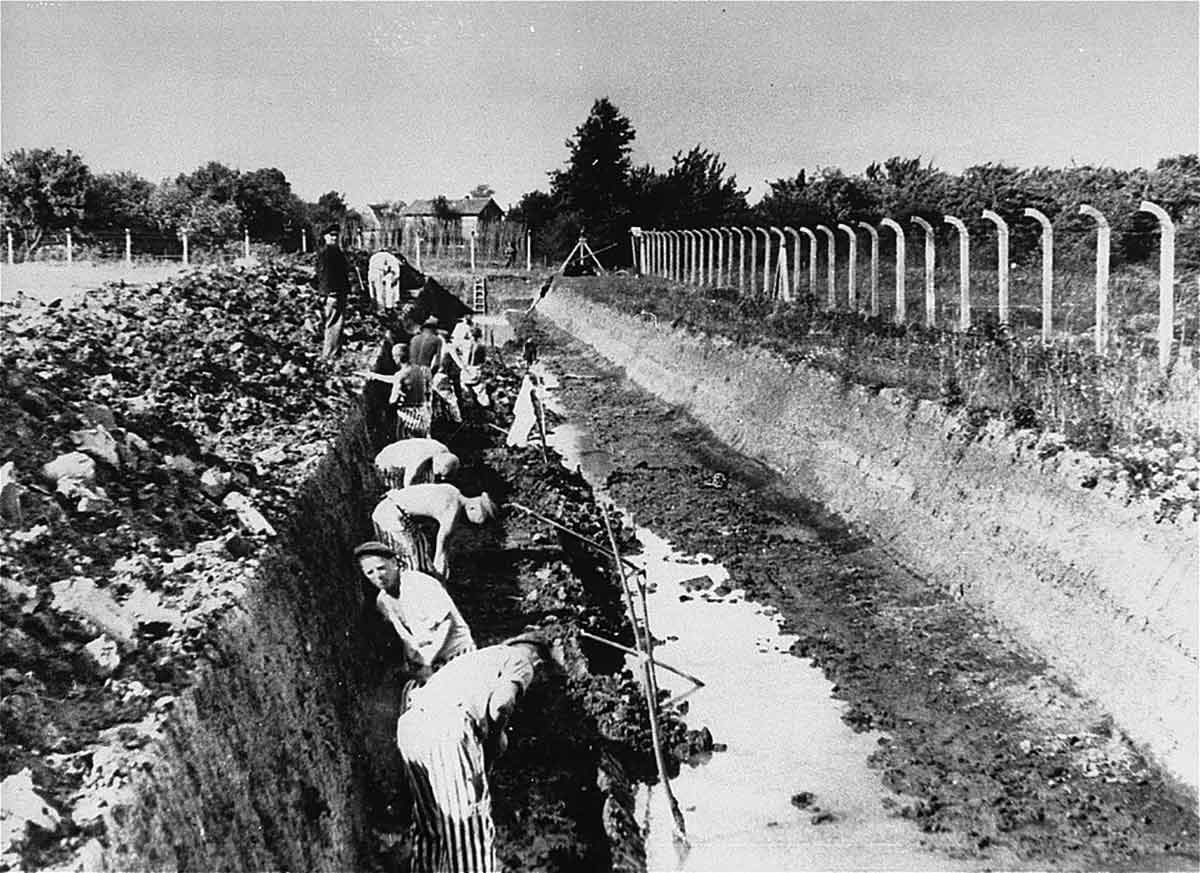
We learn more about Franz through flashbacks. During these, we also learn more about the family and their role during the war. It turns out that the father was complicit with the Nazis and sold them a piece of land knowing it would be used as a concentration camp.
He was not ideologically a Nazi but profiteering off the new regime. Later, he will justify his actions with the argument that if he had not sold land to the Nazis, someone else would have.
Through flashbacks, we see Franz outraged by his father’s act, and we also learn that Franz sheltered an escaped prisoner in his room. This puts Franz in danger and his father “helps” his son by phoning Goering personally and making a deal. They arranged to hand over the prisoner and for Franz to serve in the military rather than get into trouble. However, when Nazi officers come for the prisoner, they beat him to death in front of Franz.
When Franz returns home after the war, he intervenes when an American soldier attempts to rape his sister Leni. She hits the man with a glass bottle, but Franz takes the blame. The father once again steps in to shield his son. He hides his son in his room and tells everyone he is dead. Here, Franz has stayed for fifteen years, never leaving. His only visitor is his sister Leni, who brings him his meals.
A key aspect of the play is that Franz will only see Leni, and he keeps his door locked from the inside. Only when he hears a secret sequence of knocks, known only to Leni and himself, will he open the door.
The First Act: Father’s Plan
To recap, the father is dying, and he wants his son, Werner, to take over the business in six months. Werner is a weak man, desperate for his father’s approval, which he does not receive; he also does not want to run the family business. His wife, Johanna, wants nothing more than to leave the mansion and live their own lives elsewhere in Hamburg.
The father does not really care about the business, which can run itself. Werner would only be a figurehead, not an actual leader. What the father really wants is a meeting with Franz, who has refused to see him. Werner, weak and easily manipulated, agrees against his own wishes to obey his father despite Johanna begging him to leave with her and to live their own lives.
Later, the father catches Johanna spying on Leni to discover the secret knock to gain access to Franz. He talks her into visiting Franz to persuade his son to meet him before he dies of cancer. In return, he will release Werner from his obligation to run the company. Reluctantly, Johanna agrees to go along with the plan.
The Second Act: The Crabs

The second act takes place entirely in Franz’s bedroom. It is a small room with a bricked-up window and an attached bathroom. On the wall, there is a portrait of Hitler and hand-written signs with slogans such as DO NOT DISTURB, and FEAR IS FORBIDDEN. The bed has blankets but no mattress, and on the shelf there is a tape recorder and its reels. The room is a mess with rubbish strewn everywhere.
The scene begins with Leni tidying the room while Franz finishes a speech he is making to “the crabs.” He believes that these crabs, also known as “the masked inhabitants of the ceiling,” are sitting in judgment on the human race. In his mind, they are from the thirtieth century and are looking back in judgment on the humans of the twentieth century; Franz has taken it upon himself to defend the people of his time.
Leni does not contradict her brother and often encourages him in his delusions. Shockingly, we also discover that Franz and Leni have had incestuous relations while she has been visiting him in his room. When she brings this up, Franz denies it to the crabs.
The Second Act: Enter Johanna
Leni has been trying to get her brother Franz, to listen to her. She is worried that the others in the family will do something to him. In an attempt to get him to listen to her, she tells him Allied soldiers are coming to take him away. Franz, though, is more interested in pleading his case to thirtieth century crabs.
Some time after Leni has gone, Franz hears the secret knock. However, it is not his sister but his sister-in-law Johanna. At the father’s request, she is wearing makeup and a pretty dress. She is a former movie star and is still very beautiful. A child during the war, Johanna, must be in her twenties now.
Franz is not shocked at Johanna’s sudden arrival because he is in the middle of a hallucination or flashback when he opens the door.
Franz’s Flashbacks
After Leni leaves, Franz delivers a frenetic and confusing monologue to the crabs. Afterward, as Franz is resting, the door to his attached bathroom opens, and Sergeant-Major Hermann emerges.
The German soldier marches towards Franz and salutes smartly. He informs Franz of partisans in the area. When asked how many, he replies that there are about twenty, with two captured. Franz responds: “You know my orders. Dismiss!” The soldier marches away as Franz’s head droops.
Suddenly, Franz jumps up and screams: “No! Heinrich! Heinrich! I said no!” Franz then resumes his speech to the crabs, sitting in judgment on the twentieth century. It is at this point that Johanna uses Leni’s secret knock to access the room.
In another flashback in Act Four, Franz sees an old woman. He is escaping from Russia through Germany and has come across a village in ruins, the only survivor being the old woman who is leaning against a wall with her legs blown off.
She blames Franz and the whole of Germany for not fighting hard enough to win the war. She says that the victors were willing to kill and butcher the enemy, but the Germans were not. Her accusation is that the German soldiers prioritized military honor over a victory that would protect the German people. When Franz asks if she knows about the extermination camps, she replies that she does. He asks if she would be proud of her brother, who died in Normandy, if he had been a camp guard, and she says yes because that would mean he did everything he could to help Germany.
There is also a detailed flashback showing what happened to the Russian partisans held captive in the barn. A Lieutenant Klages tells Franz that he is powerless to stop the Sergeant-Major from torturing the prisoners.
The Second Act: Johanna Versus Leni
Franz does not realize that Johanna is not his sister because he is preoccupied with his flashback and defending himself to the crabs. However, he is not mistaken for long and soon realizes that Johanna is not Leni.
While Franz chides Johanna for tricking her way into his room and repeatedly asks her to leave, he makes no serious effort to reject her. The subject of Johanna’s beauty comes up, albeit with her denying that the beauty is actually hers but more something she has been cloaked with by others.
Franz’s only contact with the outside world has been with Leni, who has told him lies and supported his delusions about contemporary Germany. Now he has Johanna, who can offer a different story that contradicts Leni’s. However, Franz is deeply suspicious and believes her to be an enemy agent of some sort sent to discredit his sister. But he also sees Johanna not as a former movie star nor a character on screen, but as a real person.
Franz makes Johanna feel seen for who she really is, and he says she is beautiful. This has a powerful effect on Johanna because it makes her feel genuinely beautiful rather than painted to look so. She agrees to see Franz again. She still wants him to meet his father so she and Werner can be free, but she is also drawn to Franz. There is now a twisted “love” triangle between Franz, Leni, and Johanna.
The Final Acts
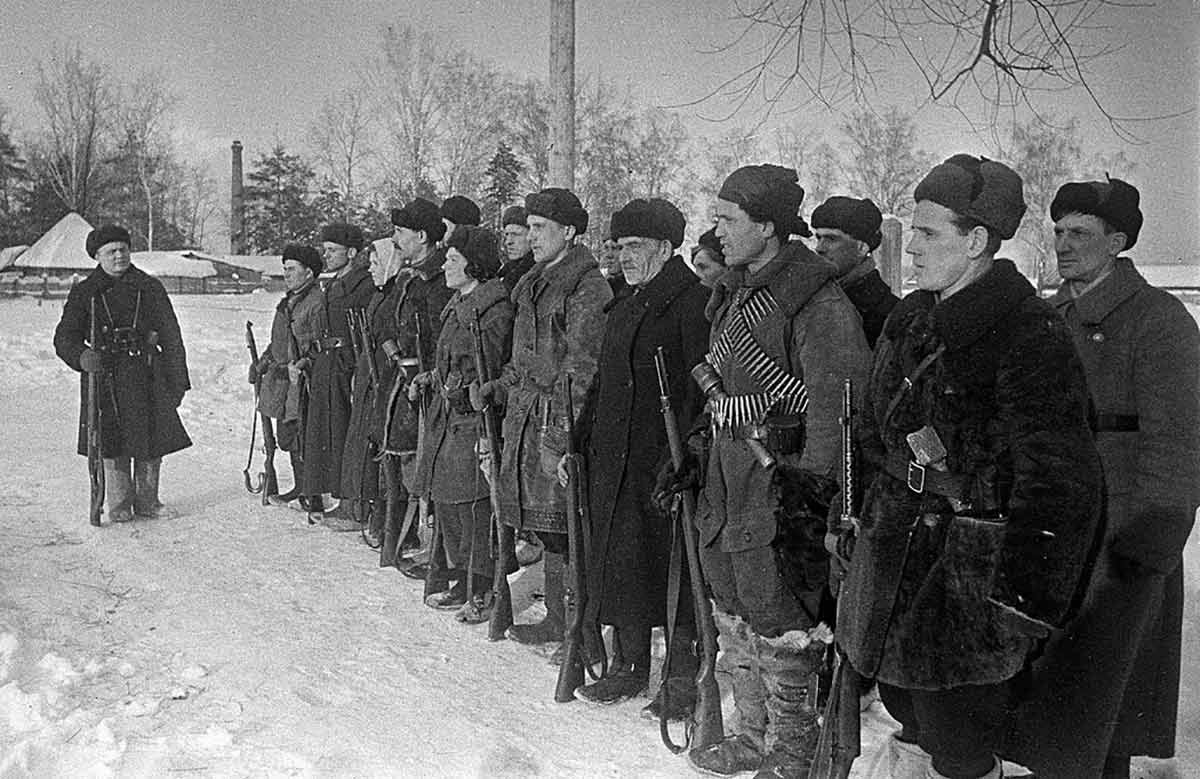
The short third act of the play reminds the audience of the complex threads linking the different characters’ motives together. It also introduces the idea of Werner becoming jealous of his wife’s visits with his brother.
The father thinks that if Franz leaves his room, he will quickly adjust and be better off. But Johanna is worried that when confronted with reality, Franz will take his own life. It is important to Franz that Germany be in a state of ruin and collapse, and it would be devastating for him to learn the country is doing well.
In the fourth act, we see the truth come out. Franz reveals a dark secret that torments his soul. We learn that he was “the butcher of Smolensk” who had ordered the torture of Russian peasants and partisans alike. For years, he has been lying to himself. In a further twist, in the fifth act, when Franz finally meets his father, we learn that the old man had known the truth for years. Two former German soldiers visited him, attempting blackmail, that the father arranged to fake his son’s death.
The last revelation is the father’s secret, what he has been planning all along. Despite what he told Johanna about Franz feeling better once leaving his room, he knew his son would seek to destroy himself. This is exactly what the old man wanted. Afraid of dying alone from cancer, he arranges for his son to want to die alongside him. The play ends with father and son leaving the mansion and driving the father’s Porsche off the road, ending their lives.
The Final Tally: Lies, Guilt, and Suicide
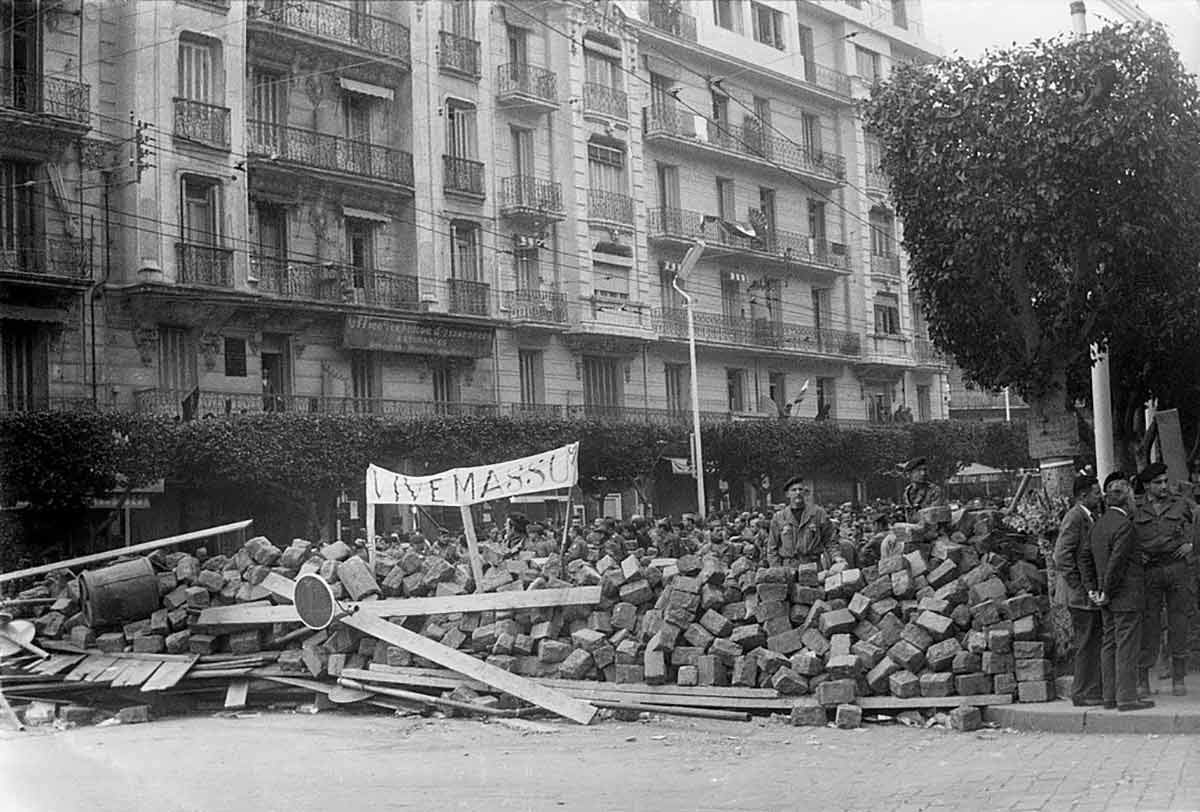
All the characters in Altona are living lies of some sort. The father pretends that his actions during the war have no consequence and that if he had not profited from the Nazi regime, someone else would have done. Leni lies to her brother because she wants to keep him all to herself.
Johanna formerly saw herself as nothing but a kind of doll to be dressed up and manipulated by others, but came to see herself through Franz’s eyes. He was a mirror through which she saw herself, but the mirror broke when she learned he was the butcher of Smolensk.
Franz, the most complex character, cannot live with the knowledge of his crimes. He clings to the idea that he left home a kind of hero, the protector of an escaped concentration camp prisoner and the savior of his sister. But he did not save the prisoner who was killed in front of him, and Leni killed the rapist, not Franz. Worse, he knows he is no hero but a butcher.
Franz needs the idea that Germany is in ruins, the people starving as a punishment for their crimes during the war. He tells himself that if Germany as a whole is guilty, then all Germans are guilty and not just particular individuals. When Franz discovers that Germany is not suffering, only he, he is forced to confront his guilt. This he cannot do, and so he chooses suicide.