
All of us experience negative episodes in our lives, and almost certainly most of us have negative episodes in our futures we have yet to endure. But endure these we must because if we do not, we cannot continue. A well-known way of looking at the negative is to say something like “that which does not kill us, makes us stronger.” It is a way of turning a negative into a positive. However, few would hope for bad things to happen even if they thought they would come out stronger.
Introducing Nietzsche’s Twilight of the Idols
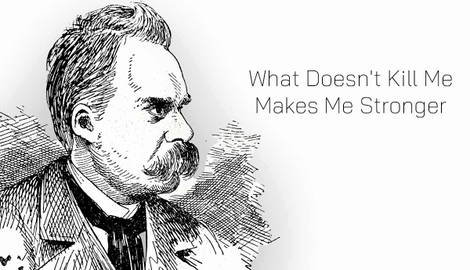
Many of us have heard the phrase “what does not kill me makes me stronger,” and some have encountered it in Kelly Clarkson’s song “Stronger,” but few realize that it comes from Friedrich Nietzsche. The full quote, taken from his text Twilight of the Idols (1889), reads, in English, as follows:
“From life’s school of war. – What doesn’t kill me makes me stronger.”
The meaning of this maxim is quite easy to grasp, which is one reason why it is so popular, but the questions for today concern where and how this idea fits within Nietzsche’s philosophy as a whole. To answer these questions, we first need to look at where Nietzsche’s maxim was originally published.
Twilight of the Idols was written by Nietzsche in 1888 and published in 1889. This makes the text one of his last works and representative of his mature philosophy. Nietzsche intended the book itself as a kind of primer for his current ideas. He intended that those unfamiliar with his philosophy could read Twilight of the Idols and quickly catch up.
This is, as anyone who has tried reading Nietzsche can readily attest, a massively over-ambitious endeavor! It is extremely difficult to imagine someone unfamiliar with Nietzsche’s philosophy reading Twilight of the Idols and getting the kind of quick overview of key Nietzschean ideas the author was hoping for.
However, this does not mean all is lost or that the text is a failed work. On the contrary, for those already invested in his philosophy, Twilight of the Idols is indeed an extremely useful primer.
Maxims and Arrows
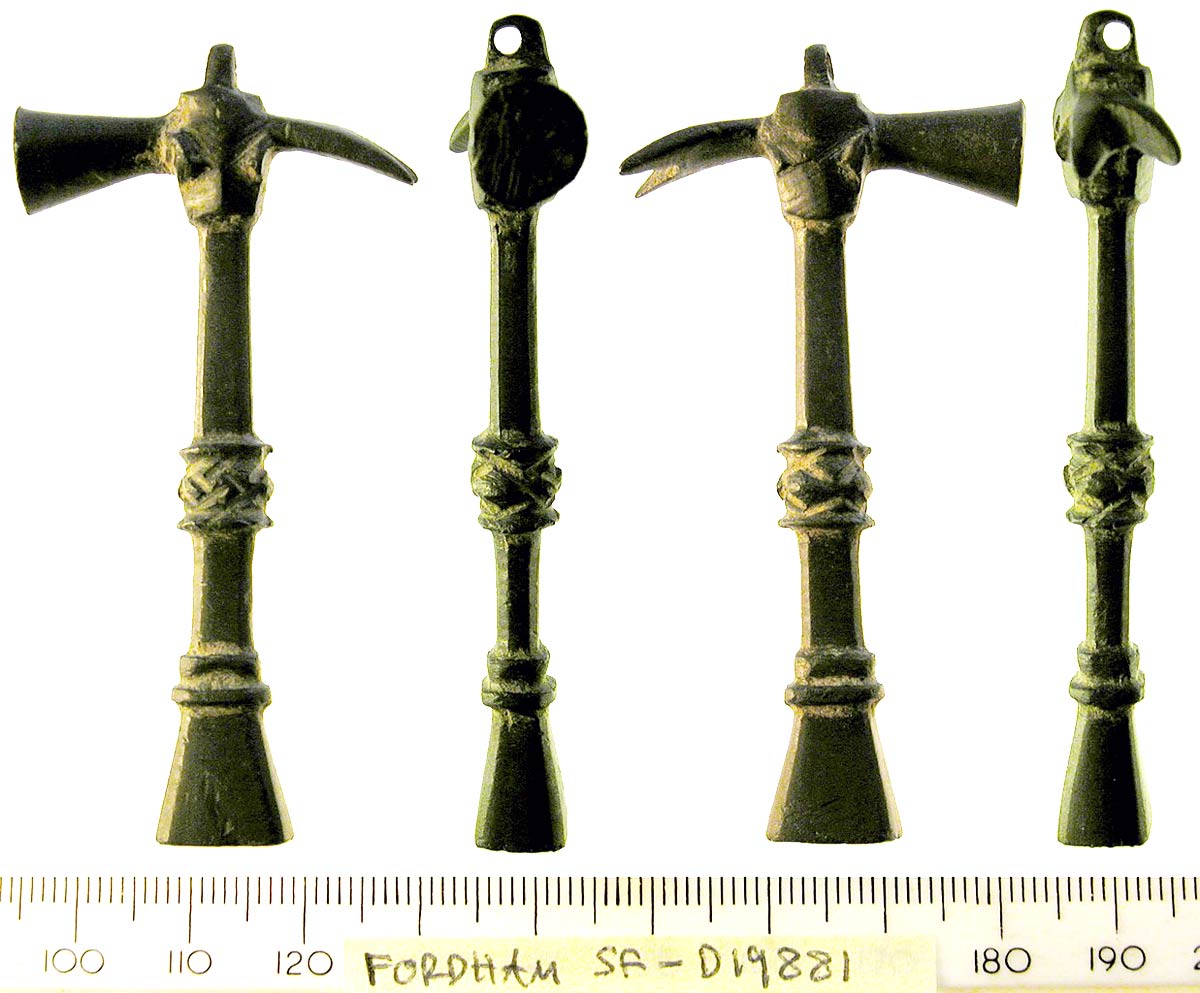
To understand exactly what Nietzsche was attempting with this text, we should first look at its full title, because the subtitle is illuminating, as is usually the case with his works. The full title is: Twilight of the Idols or How to Philosophize with a Hammer.
The idea of philosophizing with a hammer is evocative and might put many readers in mind of a violent way of thinking that smashes older ideas. Nietzsche was indeed highly critical of contemporary philosophy, but he actually had something else in mind. The hammer alluded to is the kind used to tune musical instruments, not the kind used to smash things up. His idea here is of testing idols by tapping them with a tuning hammer to see if they ring hollow.
The text itself is broken up into short chapters, the first of which is titled “Maxims and Arrows” (sometimes translated as “Epigrams and Arrows”). The idea commonly expressed as that which does not kill me makes me stronger is maxim or “arrow” number eight of forty-four.
So what exactly is a maxim, and why does Nietzsche fire these like arrows? A maxim is a general, pithy saying designed to express a truth. Nietzsche intends the idea that what does not kill us makes us stronger to be understood as an expression of a general truth. That is, we should accept the idea that what does not kill us makes us stronger as a simple fact of life that he will no doubt elaborate upon later.
But what about the idea of Nietzsche firing this idea at us like an arrow?
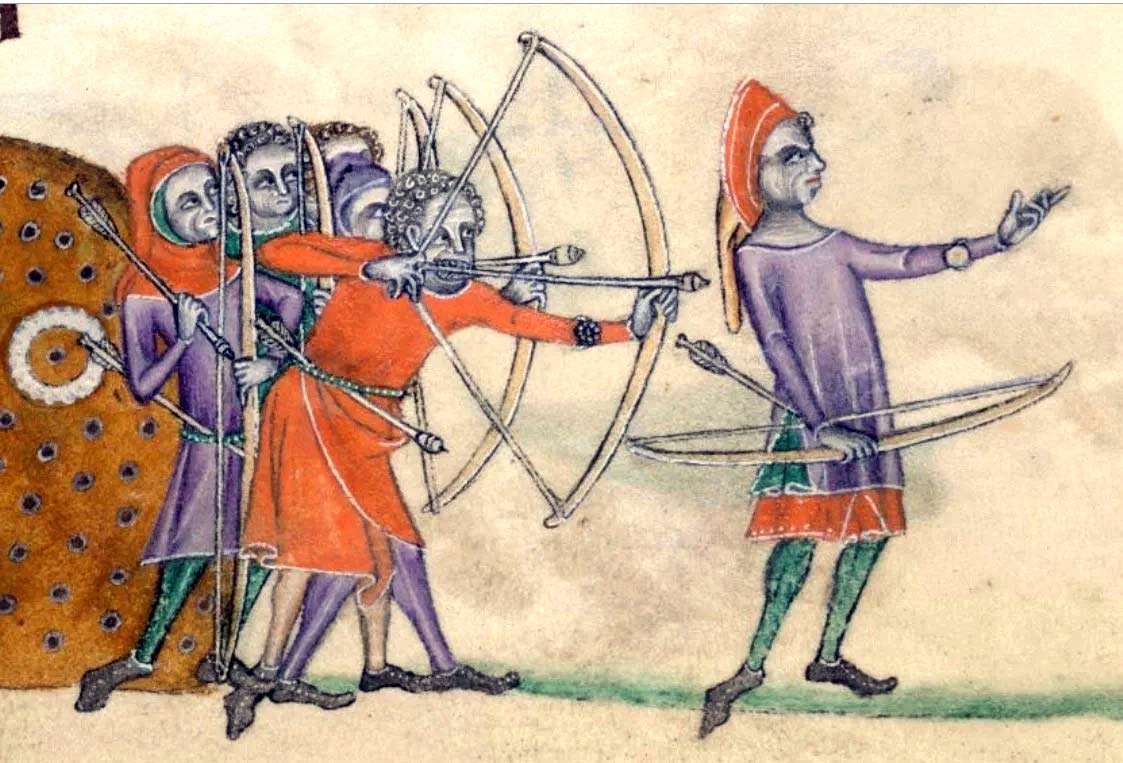
Coupled with the idea of arrows is the maxim that originates from “Life’s school of war.” Clearly, Nietzsche is taking a combative approach: he is referencing a military idea and “firing” it at readers as “arrows.”
Radical Acceptance of the Negative or Something More?
Simply focusing on the maxim itself, we can see that the idea expressed is one of acceptance and moving on with life strengthened after a negative experience.
“What does not kill me,” refers to a negative event of a kind that it is possible to overcome. Such events must be taken seriously since there is the suggested threat of death. After all, threats to our lives and existence are usually taken very seriously; and so whatever it is that “does not kill us” (but comes close) must be a very serious and very unpleasant episode. Clearly, Nietzsche is referring to an event that should not be very welcome in our lives.
However, Nietzsche goes on to say that this unwelcome event “makes me stronger.” And so, he is saying that rather than being wholly negative, unpleasant events can in some way make survivors more resilient. That is, unpleasant and unwelcome as they are, these horrible episodes in our lives leave us stronger and, in fact, better off for having experienced and survived them.
What we have here is something like what is known today as “radical acceptance,” but with one crucial difference. Typically, radical acceptance involves accepting the negative aspects of life without judgment. Here, accepting something is not necessarily approving of it.
However, as we shall see, Nietzsche wants us to love the negative aspects of life (see: amor fati).
Nietzsche’s Opening Salvo
When Nietzsche says that what does not kill us makes us stronger, he does not intend his readers to receive this as some novel idea of which he is the inventor. Rather, this is an idea that most of us are familiar with and take for granted.
The question is: why is Nietzsche “firing” the idea at us as soon as we open the text?
As mentioned above, the maxim “What doesn’t kill me makes me stronger” is part of a salvo of forty-four “arrows” fired at the reader in the first chapter of Twilight of the Idols.
Nietzsche not only wants his readers to have these ideas in the forefront of their minds while reading the text as a whole, but he also wants us, in some way, to feel overwhelmed by what we might call today “truth bombs.”
Nietzsche and the Eternal Return
We have seen that “that which does not kill us, makes us stronger” is an idea concerned with how well disposed we are to negative and unpleasant episodes.
A key passage that tackles this idea is found in Nietzsche’s Gay Science (1882). The text is a collection of aphorisms, with number 341, probably his most famous. In this aphorism, Nietzsche introduces the now-infamous thought experiment: if you learned that life endlessly repeats itself in the same way, would you be overjoyed or overcome?
This idea is known as the eternal return (sometimes eternal recurrence). Nietzsche begins by imagining a demon tells you that:
“This life as you now live it and have lived it you will have to live once again and innumerable times again; and there will be nothing new in it, but every pain and every joy and every thought and every sigh and everything unspeakably small or great in your life must return to you, all in the same succession and sequence.”
Would this revelation leave you overjoyed or crushed? For many, the thought of having to repeat the most painful moments in life would be crushing. But for someone who loved and welcomed “that which did not kill them,” they might be overjoyed at the prospect.
What Nietzsche really wants readers to ponder is: “how well disposed would you have to become to yourself and to life to long for nothing more fervently than for [the eternal return]?”
Aphorism 341 has perplexed many, but if we focus on the final question, Nietzsche’s meaning is quite clear. For him, to have a positive attitude towards ourselves, we must not merely accept unpleasant episodes but also love them, even long for them. This longing is what he has in mind when he affirms, “what does not kill me makes me stronger.”