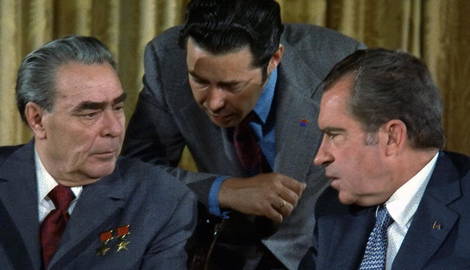

From 1969 to 1979, US and Soviet negotiators worked on a set of comprehensive arms limitation treaties to regulate the nuclear arms race and reduce the threat of nuclear conflict. Two treaties were signed, but only one came into force. The negotiations, called the Strategic Arms Limitation Talks, were part of the process of détente and helped to facilitate nuclear disarmament after the end of the Cold War.
US and Soviet Nuclear Arsenals in the Late 1960s
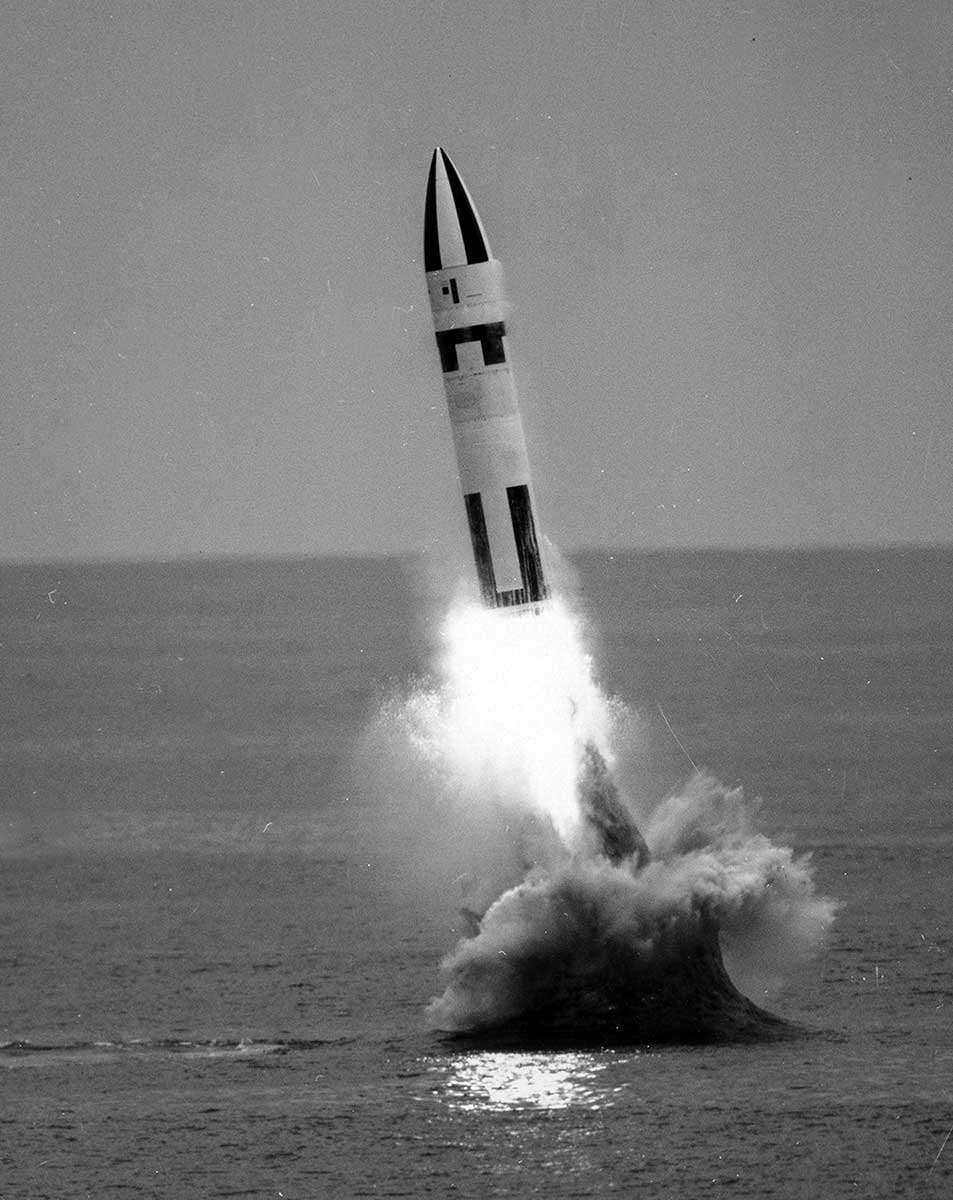
Once the Soviet Union tested an atomic bomb in 1949 in the Kazakh SSR, it was inevitable that the Soviets and Americans were going to be engaged in a nuclear arms race. The fear that a major war could break out meant that both countries wanted to gain an advantage in their stock of nuclear weapons. They also experimented with different types of nuclear weapons: long-range, medium-range, fusion or fission, land, air, or sea-launched, etc. Even after the agreement reached between the Kennedy and Khrushchev governments in 1962 to deescalate the Cuban Missile Crisis, the spectre of armageddon remained.
The United States’ nuclear arsenal was at its peak during the late 1960s, and in 1969 the United States had 27,552 nuclear weapons of all types in its arsenal. From 1960 to 1966, the US launched a fleet of 41 nuclear-powered ballistic missile submarines each armed with 16 nuclear missiles. Despite the losses in the Vietnam War, the United States Air Force could field over 100 B-52 bombers carrying nuclear payloads. On land, the United States had launch sites all over the country that could target critical population centers in the USSR.
The Soviets were estimated to have 10,538 nuclear weapons in 1969. It is not clear exactly how many they had because they were intentionally quiet about the size of their nuclear arsenal. Like the US, they maintained a triad of air, land, and sea-launched weapons. In 1961, they tested the largest nuclear weapon in history, Tsar Bomba, in the Arctic Ocean. Moscow had plans to ramp up its arsenal.
Buildup to the Talks
As the Vietnam War raged and the Israelis defeated the Soviet-backed Arab states in the Six-Day War in 1967, Washington was growing very concerned about developments in Soviet nuclear capabilities. Because the US had a head start on testing and producing nuclear weapons, Washington’s arsenal was larger than Moscow’s, even when not counting the nuclear weapons possessed by America’s allies. Moscow wanted to close the gap and was preparing a program to rapidly increase their arsenal. The Soviets especially wanted to even the odds regarding stockpiles of Intercontinental Ballistic Missiles (ICBMs).
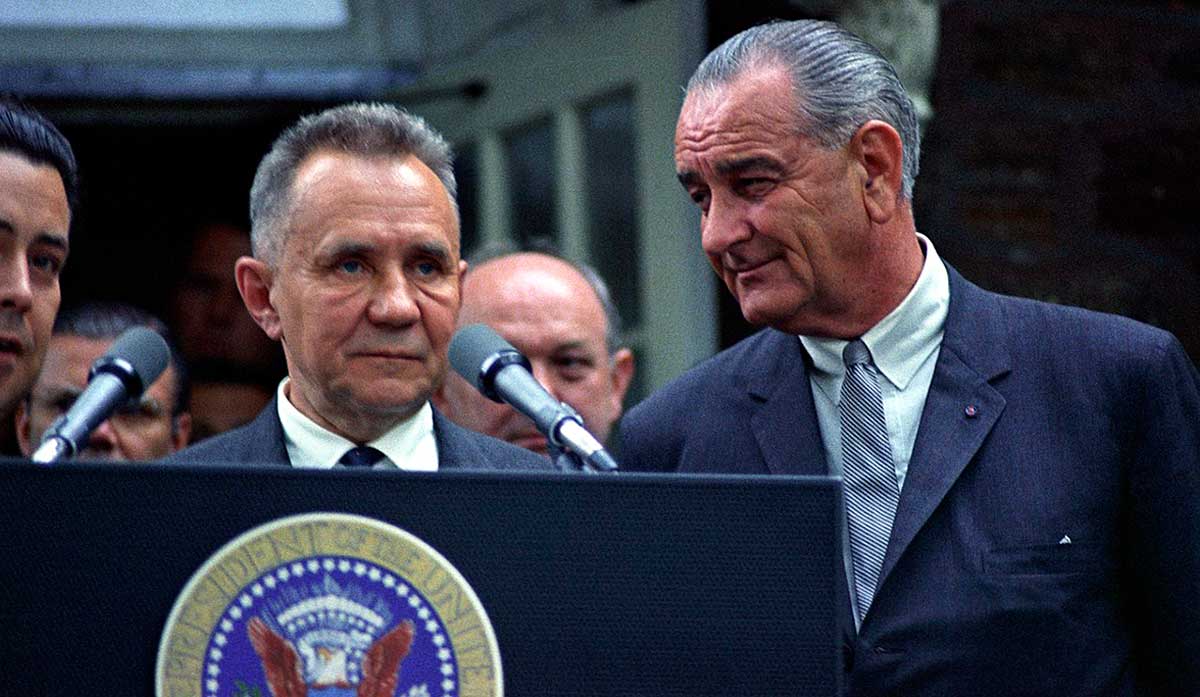
In January 1967, LBJ announced that the Soviets were building an air defense system that could shoot down American ICBMs near Moscow. This could give the USSR an advantage if they wanted to strike the US first. When LBJ met with Soviet Premier Alexei Kosygin in Glassboro, New Jersey, in June 1967, they talked about how to reduce nuclear tensions in light of the Six-Day War and America’s continued air raids over North Vietnam. They reached no major agreements, but kept a channel open between the two and promised to continue talking.
In 1968, several UN member states including the US and the USSR signed the Nuclear Nonproliferation Treaty, or NPT. The signatories stipulated that the nuclear powers would not ship nuclear weapons material to non-nuclear states, and the non-nuclear signatories would not try to gain access to them. However, the treaty did not denuclearize any state and many UN members did not sign. When Richard Nixon was elected president in 1968, he faced the same issue LBJ had; how to avert the resumption of the nuclear arms race that had paused after 1963.
The First Meetings of SALT I
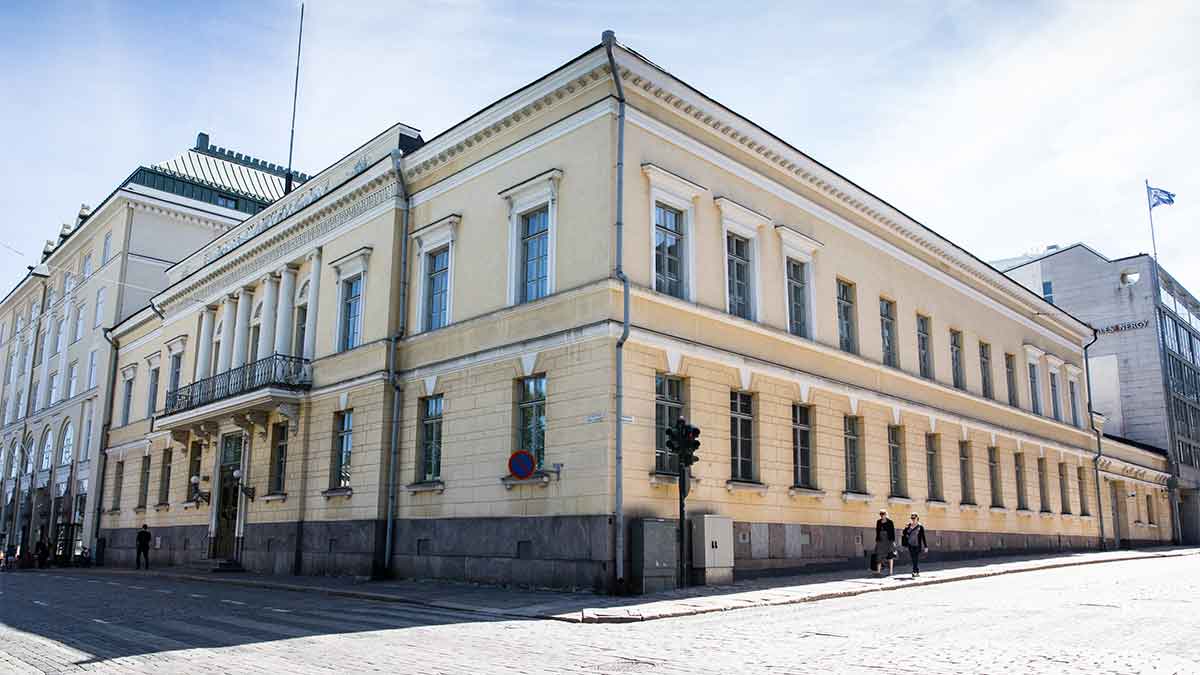
President Nixon decided to continue his predecessor’s efforts to reach an agreement with the Soviets. The Sino-Soviet split helped give the United States leverage to use, while the Kremlin also believed that they could use America’s struggles in Vietnam as leverage. On November 17, 1969, US delegate Gerard Smith met with Soviet Deputy Foreign Minister Vladimir Semyonov at the Smolna Building in Helsinki, Finland. The Finns, officially neutral in the Cold War, offered to mediate the first round of the Strategic Arms Limitation Talks. There was hope that some kind of agreement could be reached.
The US government’s main goal was to convince the Soviets of two things: their overwhelming superiority in nuclear capabilities and their unwillingness to pursue a first-strike policy. The Soviets in turn wanted the Americans to know about the development of MIRV capabilities: missiles that could launch dozens of nuclear armed submunitions. They were hostile to any suggestions of foreign inspection of nuclear launch sites because they worried about espionage threats. Both parties tried to argue that their Anti-Ballistic Missile systems were not designed to give them a first-strike advantage.
The talks continued in a relatively respectful manner, however, not much progress was made initially. Both parties dug in their heels, fearing that concessions would lead to a lopsided deal. The next round of talks was scheduled in Vienna, where the Austrians hoped to mediate a successful round of talks. This set the stage for two years of talks on reducing the number of ICBMs and Anti-Ballistic Missile systems that either side possessed.
SALT I Signed Between Nixon and Brezhnev
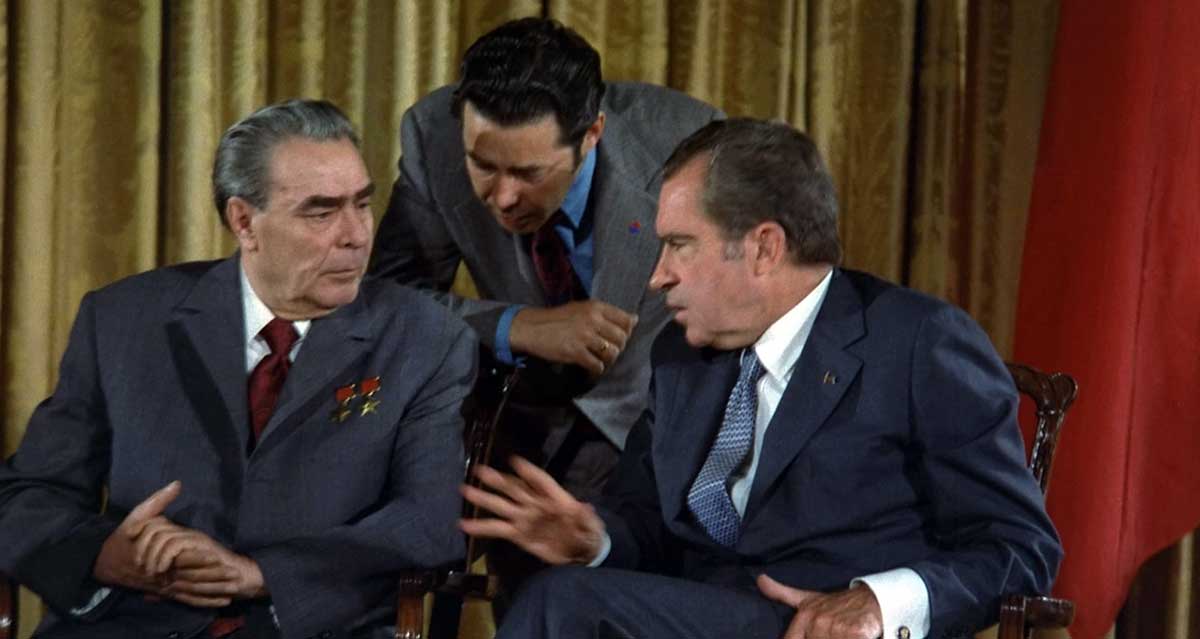
From 1970 to 1972, members of Nixon’s and Leonid Brezhnev’s teams hashed out details for a comprehensive treaty targeting ICBM and ABM production. Familiar sticking points remained: whether there would be reciprocity in the negotiations, foreign inspections, and other issues. There was no discussion about reducing the launch vehicles for nuclear weapons. Additionally, the Soviets did not consider nuclear weapons aimed at countries in Europe or Asia to be strategic nuclear arms, but the United States did and did not want to jeopardize its commitments to its European NATO allies.
On May 20, 1971, the White House announced that a breakthrough had been reached. Nixon aimed to sign an agreement limiting the production and deployment of ABM systems. The Soviets were also interested in this. After two and a half years of negotiations, Nixon flew with members of his staff to Moscow and signed the first SALT Treaty. This treaty had two main components: the Anti-Ballistic Missile Treaty and the Interim Agreement on Strategic Offensive Arms.
The Interim Agreement paused additional ICBM deployment and production for a period of five years pending an additional SALT treaty. The ABM Treaty was more durable and was intended to be permanent. It did not ban the use of ABM systems, but it did limit both parties to deploy two fixed, ground-based defense sites of 100 missile interceptors each. One site could protect the national capital, while the second could be used to guard an ICBM field. By signing this, both countries gave hope for additional nuclear talks.
SALT II Negotiations
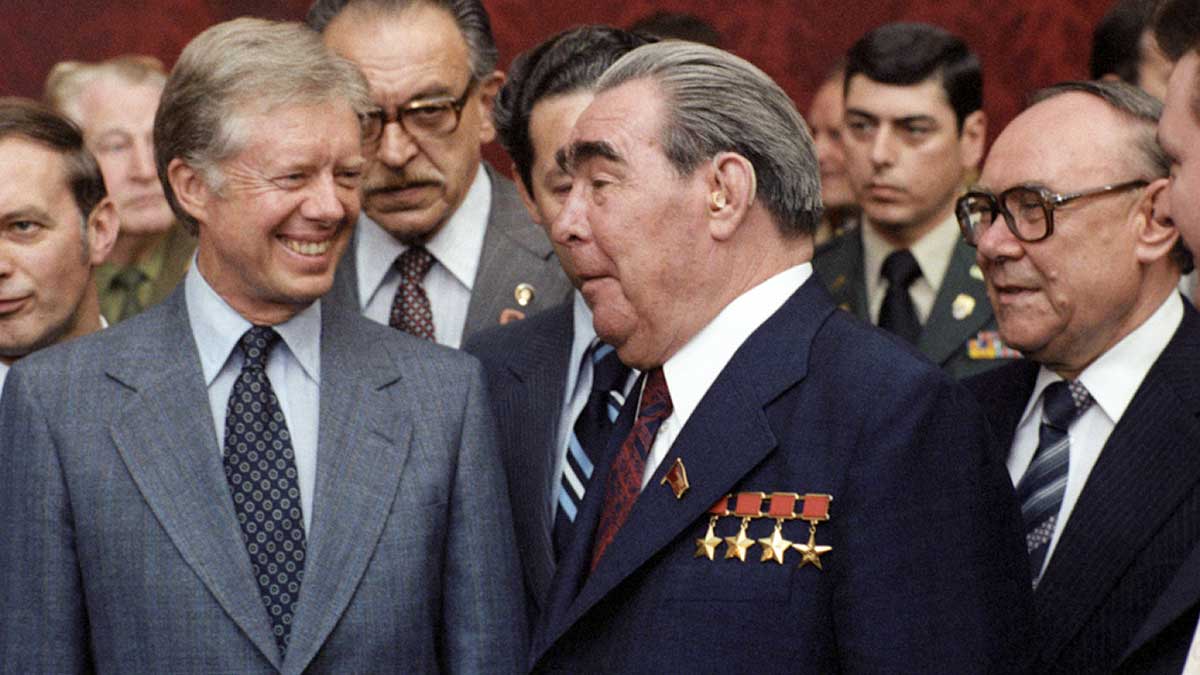
The success behind the SALT I talks inspired American and Soviet negotiators to continue working toward another agreement. President Gerald Ford’s administration pursued talks about reducing ICBM deployments in line with the terms of the Interim Agreement from SALT I. However, he was unable to conclude an agreement due to internal opposition from hawkish Republicans opposed to détente and the election of Jimmy Carter in 1976. Carter’s administration hoped to enshrine the Interim Agreement into a permanent treaty.
Talks continued in Vienna even as détente started to break down. The United States was no longer worried about the Vietnam War after the withdrawal of US troops in 1973 and the fall of Saigon in 1975. However, it was worried about a possible Soviet arms buildup in Europe and hoped to deflect criticism from the hawks in the Republican Party who opposed détente. Following the signing of the Vladivostok Accords between the Ford and Brezhnev governments, which banned the construction of new ICBM launch sites, the Carter administration pushed for a comprehensive deal reducing ICBM quantities in both countries.
On June 18, 1979, the US and Soviet governments announced that they had reached an agreement. The SALT II Treaty established parity between the two nations in terms of nuclear weapons delivery systems. It also limited the number of MIRV missiles used by both countries. However, it did not address other elements of the American or Soviet arsenals. Carter and Brezhnev met in Vienna and signed the deal in spite of opposition from hardliners in both countries. It was believed that SALT III would address long-range nuclear bombers in the future.
Collapse of Both Agreements
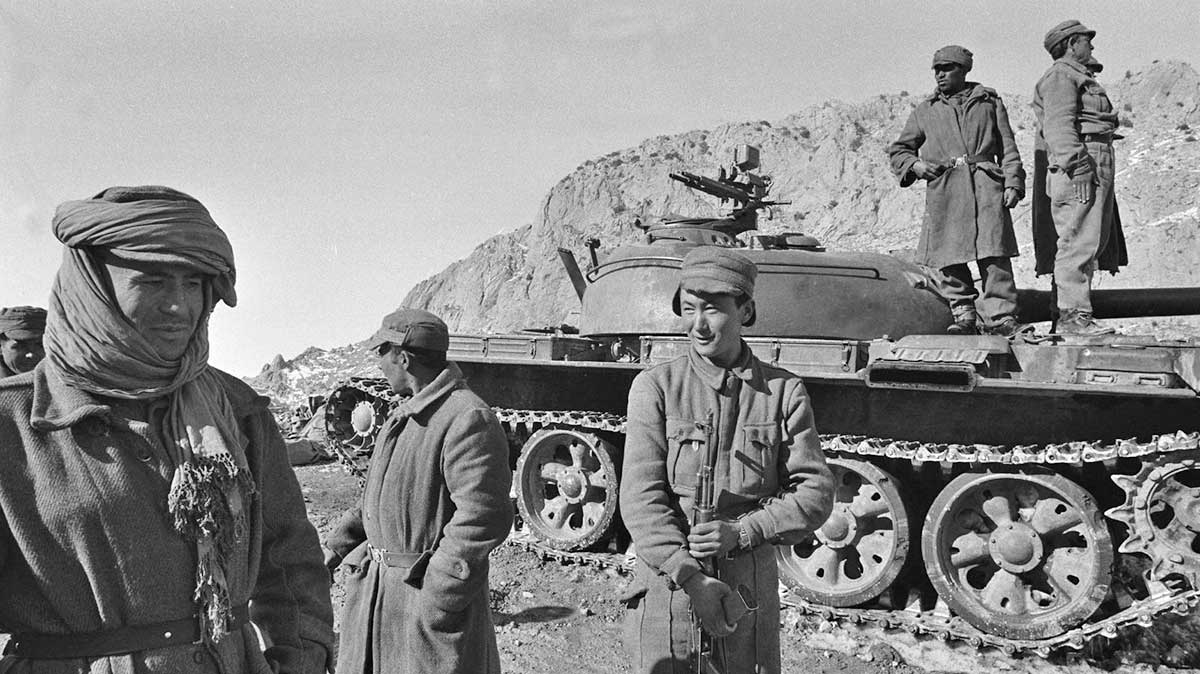
Carter’s successes were undermined by the increasing willingness of the Soviets to use force to resolve their problems. In 1979, Soviet forces invaded Afghanistan to prop up its communist government. The United States was infuriated and fruitlessly demanded the Soviets halt their military operation. Hawks, especially the new Republican neocons, felt vindicated in their belief that only force could stop the Soviets. They helped Ronald Reagan get elected and pushed for a hardline approach towards the Soviets.
The Senate refused to ratify the SALT II Treaty because many senators felt that the agreement was in favor of the Soviets. Senator Henry Jackson was especially opposed to SALT II. A conservative Democrat, he demanded that the US push for a more aggressive approach towards Moscow. At the same time, the Supreme Soviet in Moscow never ratified the treaty either. This collapsed any nuclear arms talks until Mikhail Gorbachev came to power in 1985.
The START treaties signed between the US and Russian governments in the 1990s and 2000s built on the earlier progress from detente. However, nonproliferation efforts collapsed again under the weight of increasing tensions between Washington and Moscow. Washington withdrew from the ABM Treaty in 2001 and the Intermediate-Range Nuclear Forces Treaty in 2019. Russia’s invasion of Ukraine extinguished any efforts to restart nuclear talks, similar to the Afghanistan invasion in 1979. While anti-nuclear treaties helped to reduce US-Soviet tensions during the latter stages of the Cold War, they did not prove durable once neither Moscow nor Washington wanted to keep to the terms.