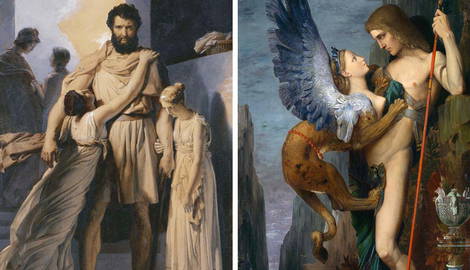
Among the many cities that feature in Greek mythology, few cast a longer shadow than Thebes. Its stories span the full spectrum of human experience, from creation to ruin. While Athens stood for intellect and balance, Thebes embodied the unrulier side of the Greek imagination. From the founding of the city by Cadmus to the tragedies that destroyed his descendants, the Theban myths explore questions of guilt, destiny, and morality. Here are five myths that not only shaped Theban tradition but also helped define how the Greeks understood their world.
1. Cadmus and the Birth of Thebes
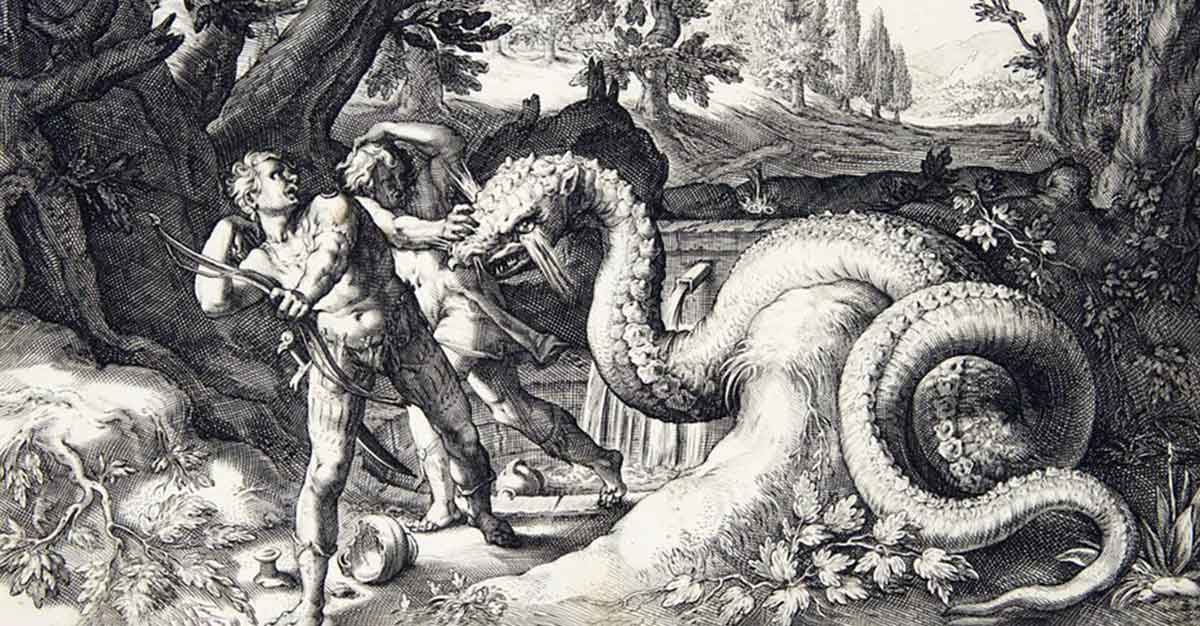
The story of Thebes begins with an act of displacement. Cadmus, the Phoenician prince sent to find his sister Europa, wandered far from home and never completed his search. Following the advice of Apollo’s oracle, he followed a cow across unfamiliar country until it lay down on a patch of land. There, he killed a dragon, sacred to the god Ares. Following further divine instruction, he sowed its teeth into the earth. From them sprang armed men known as the Spartoi, who immediately turned on one another, leaving only a few survivors. These survivors then became the first citizens of Thebes.
Ares never forgave the killing of his dragon, and the divine vengeance that followed clung to Cadmus’s family line for generations. Cadmus and his wife, Harmonia, were transformed into serpents, reflecting a circular logic typical of Theban stories. Beginnings and endings echo one another. In the Greek imagination, Thebes was cursed from the outset by a sense that prosperity and good fortune would always be overshadowed by its violent past.
2. Amphion, Zethus, and the Making of Thebes’ Walls
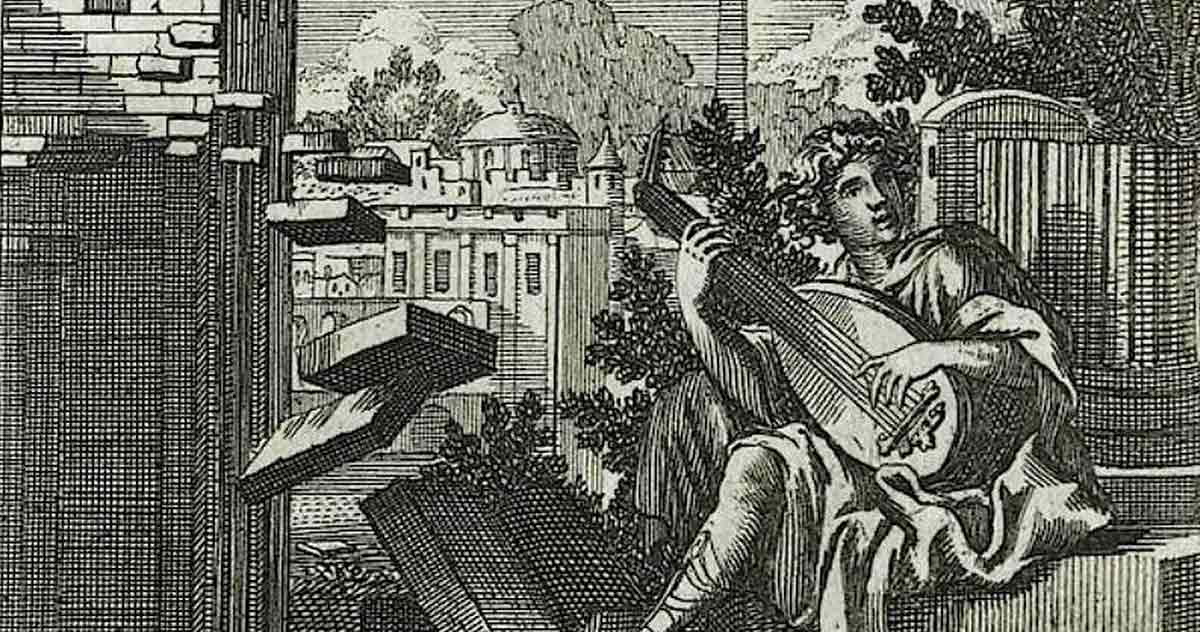
Once Cadmus had laid the foundations, the task of fortifying Thebes and turning it into a real city fell to the twin brothers, Amphion and Zethus. Their story, known to early poets and familiar throughout classical literature, offered an origin myth in which practical labor and divine influence worked in tandem. In contrast to the later tales of infighting and civil strife that troubled the city, the building of the walls stands out as a rare moment of Theban unity.
The twins were sons of Zeus and Antiope. They were raised away from Thebes after their mother was mistreated by her uncle, the ruler of Thebes, Lycus, and his wife, Dirce. When Amphion and Zethus reached adulthood, they returned to avenge her and refounded the city. Their pairing was often contrasted in ancient writing. Zethus embodied physical strength and the virtues of a productive life, while Amphion, taught by Hermes, possessed an exceptional musical talent.
The walls of Thebes were built through this combination of abilities. While Zethus worked with stone and earth, Amphion played his lyre, and the stones moved into place at the sound of his music. The detail is symbolic, yet it reflects a broader Greek idea that an artist’s skill was as vital to a city’s foundation as physical labour. Through Amphion, the walls became more than defensive structures. They were also examples of how art could shape the physical world.
3. The Tragedy of Oedipus
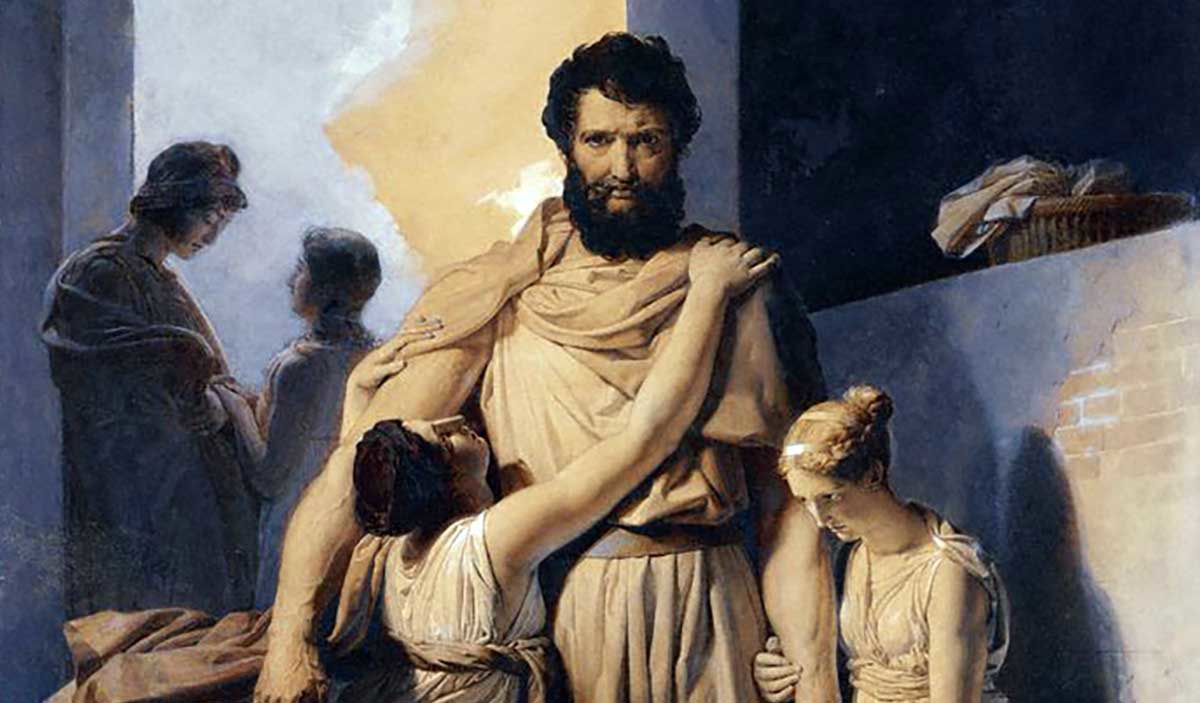
Oedipus is arguably the most pivotal figure in all of Theban mythology. Ancient sources, including Homer and Sophocles, wrote about him, whilst the authors of the lost Theban epics provided a broader outline of his life.
To summarize, he was born to King Laius and Queen Jocasta. Laius received a prophecy that his son would kill him. Fearing its fulfillment, Laius ordered the infant left to die on Mount Cithaeron with his feet bound. This act gave Oedipus his name, meaning “swollen foot.” Unfortunately for King Laius, a shepherd rescued the child and carried him to Corinth, where King Polybus and Queen Merope raised him as their own.
Oedipus’s troubles began when he heard a rumor that he was not Polybus’s biological son. Seeking clarity, he consulted the Delphic oracle, which offered no information about his parentage yet warned that he was destined to kill his father and marry his mother. Believing the prophecy referred to the rulers of Corinth, Oedipus subsequently left the city. His attempt to evade fate instead directed him toward Thebes.
As he traveled, he encountered a small procession led by an older man. A dispute over passage arose, and Oedipus killed them all in the ensuing violence. The old man, unbeknownst to Oedipus, was King Laius himself. Continuing his journey, he reached Thebes, solved the riddle of the Sphinx, and freed the city from its torment. As a reward, he was given the throne and Jocasta’s hand. For years, he ruled successfully, unaware of the nasty truth that underpinned his achievements.
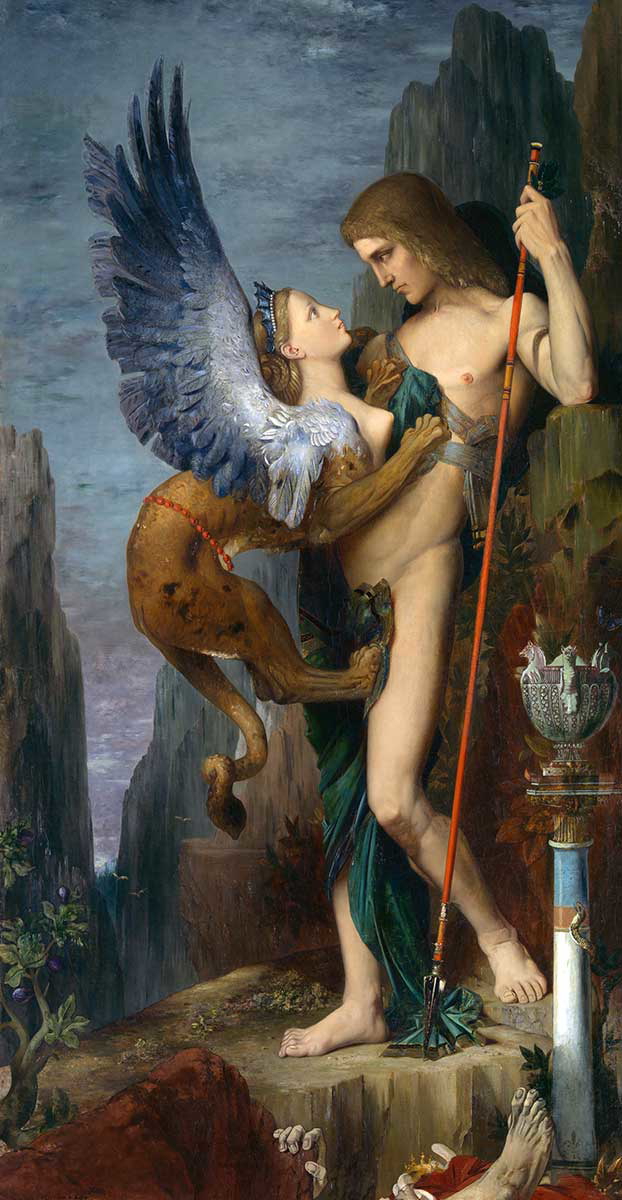
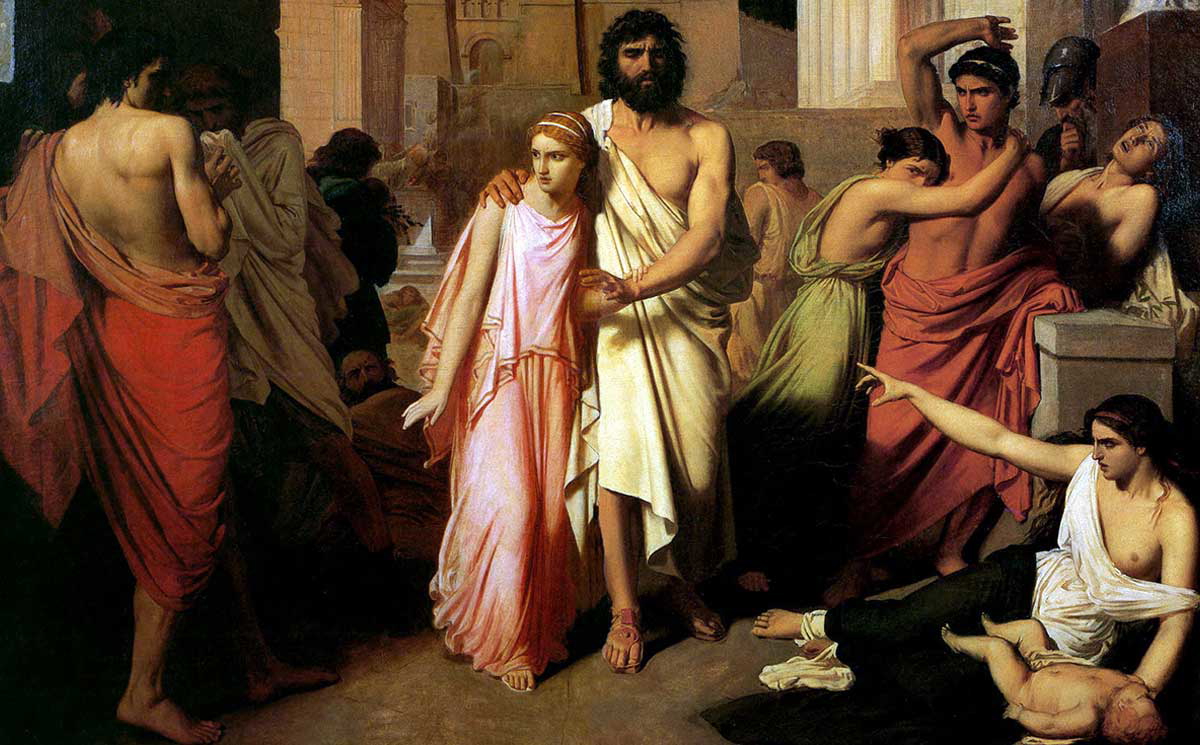
Sophocles’ Oedipus Rex begins long after these events. A plague ravages the city, and the search for its cause gradually unfurls the hidden facts of Oedipus’s past. Each testimony he gathers ultimately draws him closer to the play’s inevitable and tragic revelation: that he is the murderer of Laius, and thus the source of the plague, and also the husband of his own mother.
After Jocasta’s suicide, Oedipus blinds himself in an act of atonement and departs from Thebes. In Oedipus at Colonus, he becomes a wandering exile whose final resting place is treated as sacred. Across all versions, his story shows how the pursuit of knowledge, however well-intentioned, can expose truths that overturn the very order it seeks to restore. As a central pillar of Greek myth, the tragedy of Oedipus served as a powerful way to explore the uneasy balance between destiny, choice, and the high cost of seeking the truth.
4. The Grief of Antigone
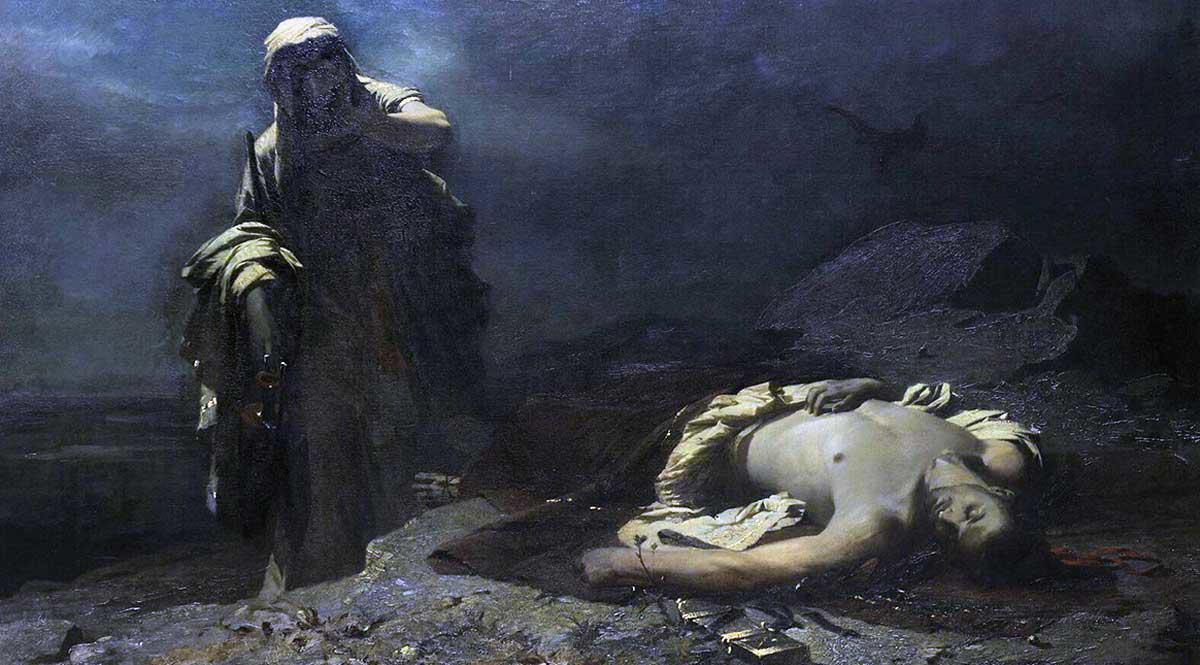
Out of Oedipus’s downfall emerges the story of Antigone, the eponymous heroine of another Sophocles play and one of Greek literature’s most enduring figures. In the drama, she becomes the center of a clash between private duty and royal power when she is forced to choose between obedience to King Creon’s decree and loyalty to her brother Polynices, whose burial the king forbids.
Antigone’s subsequent decision to defy the king and perform the rites anyway is both a form of rebellion and a matter of conviction. In honoring her brother, she upholds a belief that obligations to kin and to the dead stand above the commands of rulers. Creon, for his part, clings to principles the Greeks also valued, including order and civic authority.
Tragedy follows because neither will yield. Antigone’s steadfastness isolates her, while Creon’s intransigence destroys his family and erodes his authority. The play raises questions about the reach of state power, the force of conscience, and the duties the living owe the dead. Within the wider Theban cycle, Antigone offers a brief vision of moral clarity even as the world around her continues its decline. Yet in its central figures, Sophocles’ drama also reminds us that individual pride carries a cost and that moral courage, however admirable, may lead to further loss.
5. Dionysus and the Return of the God
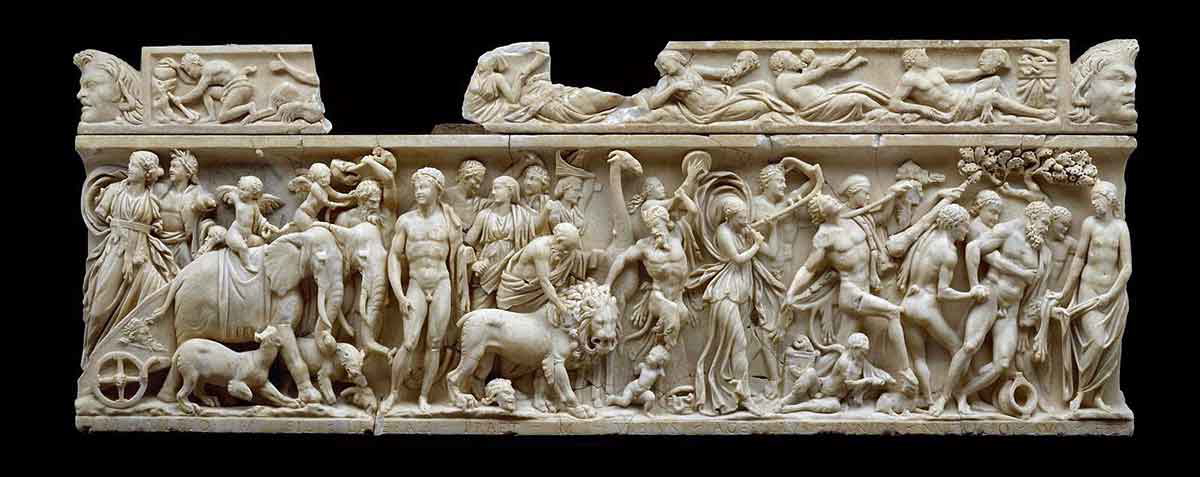
Thebes’s final reckoning comes not from mortals but from a returning deity. In Euripides’ Bacchae, Dionysus returns to his birthplace seeking recognition. King Pentheus, committed to rational order, mocks the god’s ecstatic rites and vows to suppress them. What follows is a contest between restraint and catharsis that ends in devastation.
In disguise, Dionysus tempts Pentheus into spying on the women celebrating his worship in the mountains. In their frenzy, they mistake the king for a wild animal and tear him apart, with his own mother leading the attack in divine madness. The moment is horrifying yet feels inevitable. In this grotesque act, Euripides brilliantly describes the eruption of everything Thebes had tried to deny as the city’s accumulated tensions are finally released in a single, catastrophic gesture.
Composed late in Euripides’ life, The Bacchae carries an uneasy, insightful tone. Dionysus is neither wholly kind nor wholly cruel, but a force exposing the limits of human control. His destruction of Thebes is not simple revenge but the expression of a principle that the ancient Greeks took seriously: that a city devoted to order must simultaneously confront the instincts it suppresses.
Similarly, the play remains strikingly modern in what it reveals about human nature, particularly what happens when the human need for mystery and liberation is ignored. Thebes falls not only from impiety but from its refusal to make space for the irrational and Dionysian impulses within.
A Mythical Past
Together, these stories trace a dramatic arc that helped define both the identity of Thebes and the texture of Greek mythology itself. Theban myth offered the Greeks a place to explore ideas they could not contain elsewhere, including the violence that underlies origins, the tension between force and harmony, the limits of authority, and the unsettling power of the gods. These five myths shaped Greek myth not merely through their characters but through the questions they posed concerning fate, responsibility, and divine justice. In returning to them, we see why Thebes became one of the most enduring imaginative landscapes of the ancient world, and why its legends still stand among the defining myths of ancient Greece.