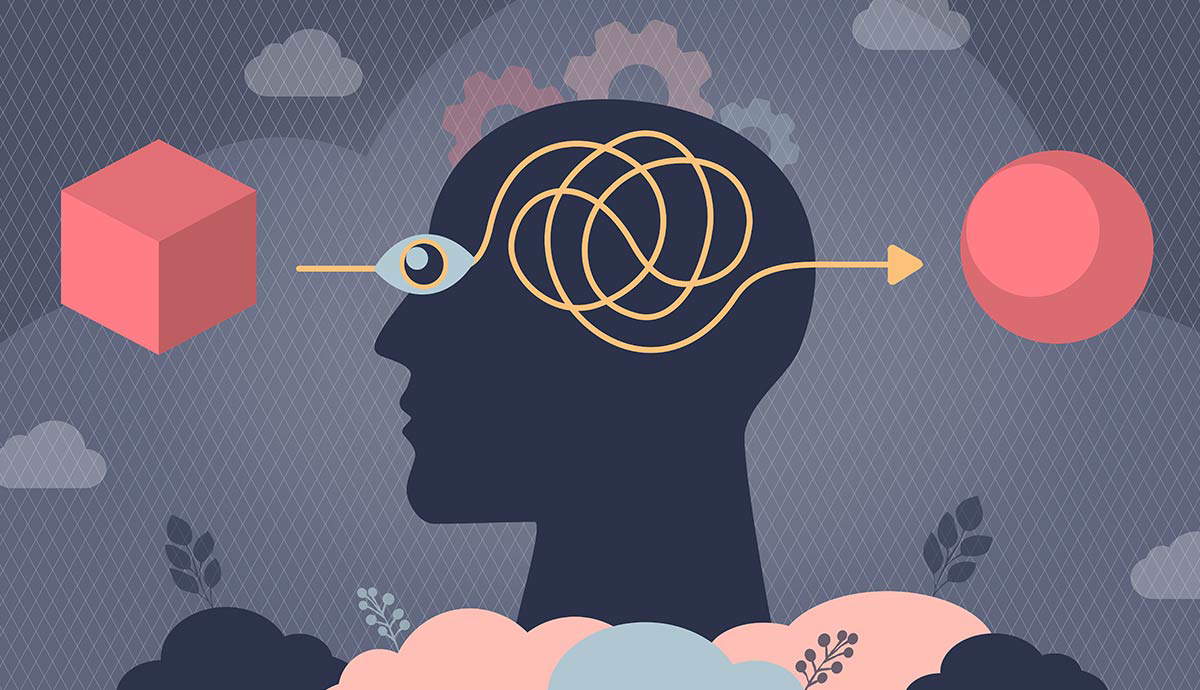

Normality seems to be embedded in our society through norms, expectations, and scientific tests, as well as criteria for pathological states. Yet, it is hard to define. We intuitively know what is normal (or at least believe we do), though this depends on our immediate cultural and natural environment and history. Normality is also a cornerstone of many scientific disciplines, but even there its definition remains contested. Is normality a statistical average, a reflection of biological self-regulation, or a socially constructed ideal? This article covers each of these possible definitions.
Normality Is Context-Dependent, Which Makes It Hard to Define

Is normality anything tangible at all, or just a social construct of control and understanding? Normality is used to make familiar judgments, to regulate and label behavior, to enforce social norms, and to identify pathology.
It allows quick, largely accurate judgments, and such judgments are used in science, medicine, and statistics. Chadwick (2017) examines the distinction between normality as convention and as scientific fact.
Can we pin down what is normal across such varied uses? What is normal shifts quickly with social context, even in extreme cases. One may be a vehement opponent of drunk driving in a country that upholds that belief, yet in a country where no one seems to care, one may find one’s moral judgment shifting to match the social one.
Less grimly, we update our criteria for normality based on people’s characteristics. Randomly yelling profanities is abnormal for most people, yet normal for someone with Tourette’s. Green eyes, deafness, and heterochromia are traits of differing rarity, and each may be abnormal in one context and normal in another.
Science Uses Normality Mainly for Agents and Functions, Not Physics

In science, normality is typically used in biology and the social sciences, and essentially only for agents and functional systems. It makes little sense to apply it to lower-level properties, like physical ones. We use it for teleology, for typical actions, goals, and functions, concepts we derive from macrostructures.
In this way, normality could be taken as a judgment we impose on other agents. Yet we also use the concept for non-agential functions, like the function of hearts: a normal heart has a typical size and rhythm and pumps blood effectively.
Such functions cannot be assigned to physics. Biology uses teleology (to some biologists’ chagrin) much more than physics, where it would make little sense.
A particle does not act as if it has a goal; it is fully described by mathematics and cannot be abnormal in this sense, since it will have the exact same properties. Even quantum physics, which behaves abnormally by classical standards, is described by Schrödinger’s equation, and its evolution under that equation is perfectly regular.
Is normality then predictability, things operating as intended? Even chaos can be derived mathematically, something we cannot do with agents. Perhaps the need for normality judgments arises from too much complexity.
Medicine Treats Normal as Absence of Dysfunction, Which Misleads

In medicine, normality often implies a lack of dysfunction, as with the heart. The use of normality as a classification criterion has increased massively since the statistical revolution, so it is important to assess what this means.
Dysfunction indicated by the patient or by others is a typical indication of pathology, and such classifications are heavily influenced by what is considered normal. This is easier in clear cases of dysfunction, such as a non-functioning arm or an abnormality that clearly deviates from the typical.
However, defining “normal” within this framework presents significant challenges.
What is normal for behavior and mental health is less obvious, and what is normal for one organism may not apply to another. Disease, aging, and environmental factors also constantly alter an organism’s baseline. Normal functioning at 200 meters above sea level differs markedly from normal functioning at 5,000 meters.
Pathologizing whatever is not the normal ideal can inadvertently pathologize natural variation. Menopause and male pattern baldness, while “abnormal” relative to a baseline of functioning or an ideal, are natural physiological processes.
Homeostasis Offers a Moving Baseline, but Not a Clean Ideal

Medical normality misses the ever-changing baseline of our homeostasis, our self-organization, which is what biological systems do. Averages become largely useless in this sense, although they can quickly and dirty estimate.
According to French philosopher Canguilhem (1966/1989), normality is a process and reflects the ability to adapt to a given context, internal and external. The organism structures these environments rather than submitting to them.
This perspective emphasizes homeostasis, the body’s inherent ability to maintain a stable internal environment despite external fluctuations. The homeostatic ideal is not simply imposed by what is “natural” or typical for humans as a species, but set by the system itself and its interaction with the environment.
But normalizing the homeostatic ideal is also a problem.
We could form a society where obesity is a homeostatic normality, handled by medical interventions rather than bodily balance. We can aid the body in ways that let us normally sustain rather than pathological states. We would then have to define what is biologically ideal for us as beings and base our normality on that, which seems impossible.
Evolution Cannot Define Normal Because Context Changes What Helps

Another biological perspective is that maintaining survival is the norm, which could be said to be the function of homeostasis or what we have evolved for: a sort of natural normality.
Basing normality on survival, as Darwin at least implicitly did, suffers from the problem of counting the highly abnormal as normal, as long as it does not violate our internal integrity. We also make normality claims about things that have nothing to do with survival.
Lactose intolerance is treated as abnormal in populations where lactase persistence is common, yet it is not actually harmful; it is more a social inconvenience. Lactase persistence is itself an acquired normality, and the opposite would have been true previously.
The sickle cell allele is a source of anemic pathology in one context and a survival boon in another. A single copy protects against severe malaria, which is why it persists in malarial regions, while two copies cause sickle cell disease.
This goes to show that because we have changed so much of our evolutionary niche, we cannot expect the normal to be the homeostasis of that niche. What we evolved to do or be is not what is normal, as various forms of cultural naturalism sometimes claim.
What counts as abnormal is also heavily dependent on cultural context. Dyslexia, for instance, is an abnormality only in the context of reading.
Society Decides Much of What Counts as Normal

In human society, the concept of normalcy is heavily influenced by social and cultural factors, which lie outside the purview of biology.
Judgments of homosexuality have shifted massively over time and across cultures. In the West, homosexuality was once classified as a mental disorder and is now widely accepted. The American Psychiatric Association’s 1973 decision to remove it followed new scientific studies and shifting social attitudes, not the discovery of any biological fact about homosexuality.
As the British philosopher John Dupré puts it: “normality in behavior depends mainly on what we, as a society, decide to accept as normal” (Dupré, 1998, p. 243). Famous French philosopher Foucault treated normalization as a central strategy of modern power in Discipline and Punish (1977).
Social Norms Can Turn Natural Variation Into Pathology

The social construction of normality can have profound consequences. Its pursuit can lead to the pathologization of natural human variation, such as what is now taken to be neurodiversity.
Statistical measures, such as average scores on standardized tests or the prevalence of certain traits in a population, often define what is considered “normal” and may be used to maintain this pathologization. However, these measures can be influenced by social biases, sampling biases, and the specific population studied.
It also masks the problem of using the average as a baseline. Across all the variables in a test battery, few people would be deemed normal on every one except Quetelet’s fictional average man. Even in tests requiring, for example, four of six measures to be in the “abnormal” range, this is not statistically unlikely. Using such tests indiscriminately is sure to pathologize normality.
This is especially true because mental disorders and their criteria are based on societal norms and are therefore relatively arbitrary. Homosexuality was removed as a diagnosis in 1973, but distress over one’s orientation stayed codable: “ego-dystonic homosexuality” appeared in the DSM-III (1980) and was dropped in 1987, and a residual “sexual disorder not otherwise specified” covering such distress remained until the DSM-5 (2013). Distress produced by social norms was thus itself classified as individual pathology.
Pathologizing Normal Variation Has Real Ethical Costs

The pursuit of normality has significant ethical and social implications. The medicalization of normal human variation can lead to unnecessary treatments, stigmatization, and a narrow view of human diversity.
The focus on “fixing” or “treating” perceived deviations from the norm can also lead to neglect of the social and environmental factors that contribute to individual differences.
This pathology of the individual can be created by social norms or context, classified by science as a pathology, and then updated and expanded through research as it is correlated, medicalized, biologized, and geneticized.
Eventually it is normalized, and so has to be reclaimed from the bureaucratic and the scientific. A new type of person will be made through classification and norms (Hacking, 2006).
References
- Canguilhem, G. (1989). The normal and the pathological (C. R. Fawcett, Trans.). Zone Books. (Original work published 1943)
- Chadwick, R. (2017). Normality as convention and as scientific fact. In T. Schramme & S. Edwards (Eds.), Handbook of the philosophy of medicine (pp. 17-28). Springer.
- Dupré, J. (1998). Normal people. Social Research, 65(2), 221-248.
- Foucault, M. (1977). Discipline and punish: The birth of the prison (A. Sheridan, Trans.). Pantheon Books.
- Hacking, I. (2006, August 17). Making up people. London Review of Books, 28(16), 23-26.