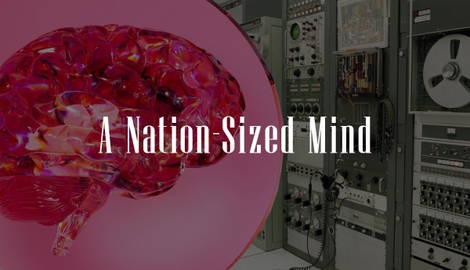

Imagine linking every person in China by radio and telling each to mimic the firing pattern of one neuron in a human brain. Would this nation-sized system, functionally identical to a brain, be conscious? Could it feel pain, experience red, or understand language? Ned Block’s China Brain thought experiment pushes functionalism to its intuitive limits. If mental states are defined by functional roles alone, as functionalism maintains, this thought experiment asks: does the material that fills those roles matter for conscious experience?
Functionalism Defines Mental States by Role, Not by Material

Functionalism is a dominant view in philosophy of mind that gained prominence in the mid-20th century, partly as a response to the limitations of both behaviorism (which ignored internal mental states) and early physicalist theories like type-identity theory (which claimed that mental state types, like the general concept of pain, are identical to brain state types, like the firing of C-fibers).
However, this faced the powerful challenge of multiple realizability (Putnam, 1967): pain, or something functionally equivalent to it, seems to exist in many species (dogs, birds, octopuses, potentially aliens) whose neurological structures differ significantly from humans and lack C-fibers. How can pain be C-fiber firing if it occurs without C-fibers?
Functionalism offered an elegant solution: mental states are not defined by their physical makeup but by their functional role, their characteristic pattern of causal relations to sensory inputs, behavioral outputs, and other internal mental states.
Pain, on this view, is whatever internal state plays the role of pain (typically caused by bodily damage, causing winces, avoidance behavior, beliefs about being hurt, desires for relief), regardless of whether that role is implemented (realized) by C-fibers in a human, different neurons in an octopus, or perhaps silicon chips in a sophisticated robot.
This perspective resonated strongly with the rise of cognitive science and artificial intelligence, which often operate under the related banner of computationalism: the view that mental processes are fundamentally computations, and computations can, in principle, run on any suitable hardware that can implement the necessary algorithms.
Functionalism thus provided a philosophical framework where mind could be studied somewhat independently of neurobiology, focusing instead on abstract causal or computational structures.
Leibniz’s Mill and Dneprov’s Game Anticipated the China Brain

The core intuition that understanding or consciousness might not be readily apparent in the physical components of a system has deep historical roots. Gottfried Wilhelm Leibniz, writing long before modern computers or neuroscience, posed his famous Mill argument against early mechanistic views of the mind. He asked us to imagine a machine whose structure produced thought, feeling, and perception, then to imagine enlarging it to the size of a mill so we could walk inside.
Observing the gears, levers, and parts pushing one another, Leibniz argued, we would find only physical mechanisms, “never anything by which to explain a perception” (Monadology, §17). The physical interactions alone would not reveal the subjective experience. Leibniz used this to argue for the non-mechanical, non-physical nature of the soul, but the argument highlights the enduring gap between observing physical processes and understanding how subjective awareness arises.
A more direct precursor to the China Brain thought experiment that we will discuss below appeared in Anatoly Dneprov’s 1961 science fiction story The Game. In the story, mathematicians participate in a complex communication game, following rules to pass messages. Unbeknownst to them, their coordinated actions perfectly simulate a computer performing a specific task: translating a sentence from Portuguese into Russian.
Dneprov’s main point is the disconnect between the system’s function (translation, implying understanding) and the experience of its parts (individuals merely following rules, with no knowledge of Portuguese, translation, or the overall purpose). This shows how a complex, seemingly intelligent function might emerge from components that individually lack the relevant understanding or awareness.
The story anticipates the functional logic of both the China Brain and the Chinese Room scenarios, nearly two decades before the papers in which these thought experiments figured were published.
Block Asked Whether a Nation Simulating a Brain Would Feel Anything

Lawrence Davis explored a similar idea in 1974, when he simulated brains with telephone systems and staffed offices. Arguably, this could have influenced philosopher Ned Block to crystallize the argument in his influential 1978 paper “Troubles with Functionalism.”
In this paper, Block invites us to imagine harnessing China’s entire population, chosen for its vast size, to simulate the functional organization of a human brain. The comparison to neurons is loose: a human brain has roughly 86 billion neurons (Azevedo et al., 2009), far more than China has citizens, so each person plays the role of a neuron or, given the numbers, a small cluster of them.
They carry communication devices (radios, phones) and a set of instructions detailing precisely how to respond to incoming signals by sending specific signals to designated others. This network is hooked up to a physical body, perhaps a robot, via satellite links that provide sensory inputs and relay motor commands.
Crucially, Block stipulates that this incredibly complex system perfectly replicates the entire functional organization of a particular conscious human brain, state for state, input for output. Every causal relationship between inputs, internal states, and outputs that defines the original brain’s mental life is mirrored exactly by the interactions within the population of China and its connections to the body. We are, of course, asked to grant the practical feasibility (ignoring issues of speed, complexity, and coordination) for the sake of the philosophical argument.
The core question then becomes: given this perfect functional isomorphism, would the China Brain system have conscious mental states? Specifically, would it possess qualia, the raw, subjective, qualitative feelings of experience, like the hurtfulness of pain, the redness of red, or the taste of chocolate?
Block Argued That a Functional Duplicate Could Still Lack Qualia

Block’s central argument against functionalism hinges on the powerful intuition that the answer is “no.” Something crucial, perhaps tied inextricably to the biological substrate or to a type of complex organization not captured by mere input-output mapping, must be missing from the China Brain.
It seems deeply counterintuitive, even absurd, to attribute genuine subjective feelings or conscious awareness to this sprawling system of people following rules and communicating via radio waves. While the system as a whole behaves exactly like a conscious person, where could the actual feeling of pain reside? Surely not in any individual Chinese citizen diligently following their instruction manual. Not in the radio signals themselves. Not distributed sparsely across the entire nation.
Block argues that we can conceive of this functionally identical system operating entirely in the dark, without any accompanying subjective experience. If it is conceivable that a system can be functionally identical to a conscious system yet lack qualia, then functional identity cannot be sufficient for, or identical to, mental states possessing qualitative character. Because of this point, Block’s thought experiment is also dubbed the absent qualia argument in the literature.
Block’s own label for the fault is that functionalism is too liberal: it ascribes minds to systems that plainly lack them. The opposite error, chauvinism, denies minds to systems that have them, and functionalists use that charge in reply.
Dennett Defends Functionalism by Denying That the China Brain Is Substrate Prejudice
Many functionalists remain unmoved by this appeal to intuition, arguing that our intuitions are unreliable when confronted with such radically unfamiliar scenarios.
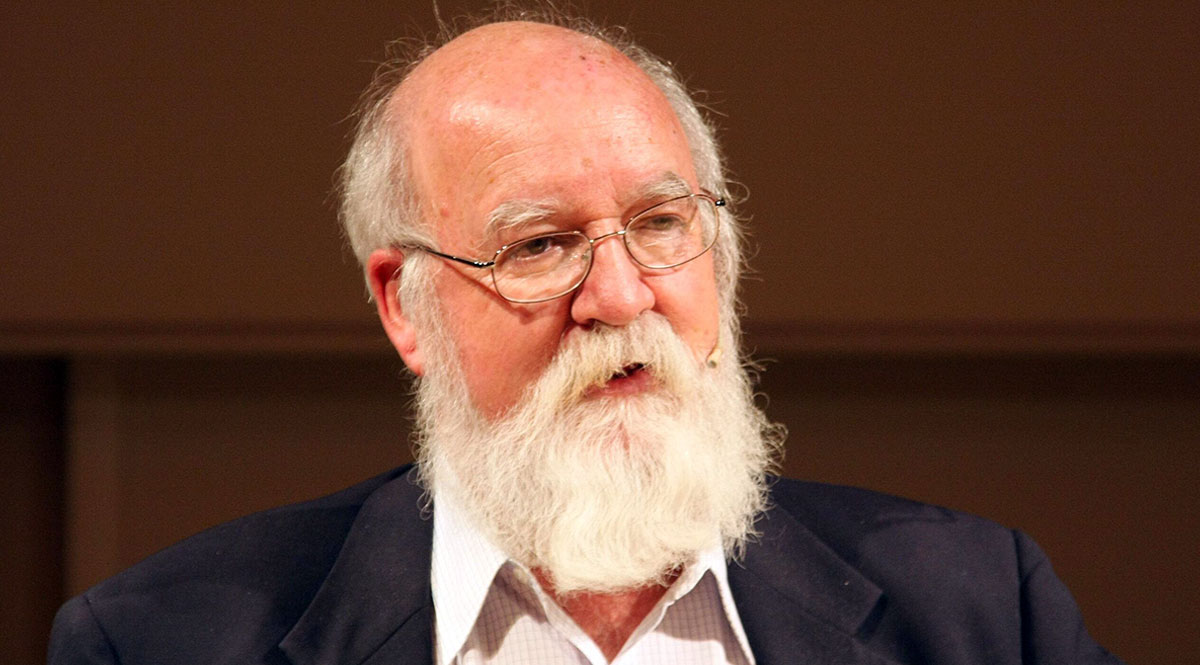
Daniel Dennett, a leading functionalist, famously advocates “biting the bullet” (Dennett, 1991): if the China Brain truly, perfectly replicates every functional relationship of a conscious brain down to the finest detail (a monumental feat far beyond mere input-output mimicry), then, however bizarre it seems, it would possess consciousness, qualia included.
To deny its consciousness based solely on its unusual implementation (people and radios instead of neurons) is, Dennett argues, to succumb to chauvinism, an unfounded prejudice that consciousness can only arise from the specific biological wetware of brains. If functionalism and multiple realizability are correct, the substrate should not matter, only the functional organization.
Dennett further argues that thought experiments like the China Brain or Chalmers’s philosophical zombies (1996), beings physically and functionally identical to humans but lacking consciousness, rely on a conceptual sleight of hand, a “conjuror’s trick.”
They ask us to imagine functional identity without the very properties (like consciousness or qualia) that functionalists believe arise from it. A consistent functionalist would argue that perfect functional duplication necessarily entails duplication of the associated mental states, including subjective experience.
The intuition that consciousness could be absent despite functional identity may stem from underestimating the complexity of replicating all relevant functional roles of a brain, or from implicitly clinging to a non-functionalist view of mind.
Searle’s Chinese Room Makes a Similar Point About Understanding

Block’s argument about absent qualia resonates with John Searle’s famous Chinese Room thought experiment (1980), though Searle’s target is slightly different. In fact, Searle focuses primarily on strong AI and the claim that computation alone is sufficient for understanding.
In the thought experiment, Searle imagines himself locked in a room, following English instructions to manipulate Chinese symbols and produce appropriate responses to Chinese questions without understanding a word of Chinese himself. He argues that just as he (the CPU) does not understand Chinese merely by running the program, a computer running a program does not genuinely understand either.
Both Searle and Block conclude that mere functional simulation or symbol manipulation, divorced from the specific causal powers of the brain, is insufficient for genuine mental states, which is understanding for Searle, and qualia for Block.
Both arguments appeal to the intuition that something essential is missing in the simulation compared to the biological original, pointing towards the importance of the underlying substrate or its specific causal capacities.
Critics Say Rejecting the China Brain Treats Neurons as Special

The debate inevitably circles back to the nature of the physical substrate.
Do Block’s and Searle’s arguments imply that biological neurons possess some unique, “magic” property necessary for consciousness or understanding that cannot be replicated by other materials? Critics argue that no scientific evidence currently supports such biological essentialism.
Attributing special consciousness-conferring powers to neurons risks sounding like vitalism or appealing to undiscovered physics or biology.
Furthermore, if consciousness arises from specific complex organizational properties of the brain, intricate feedback loops, recursive processing, particular patterns of information integration, then functionalists maintain there is no a priori reason these organizational properties could not, in principle, be implemented on a different substrate, provided it can support the requisite complexity.
Perhaps the China Brain, despite its stipulated functional isomorphism at the neuronal level, fails to replicate higher-level organizational features crucial for consciousness, or perhaps our intuition fails to grasp how consciousness could emerge from such a bizarre substrate if the functional organization were truly identical at all relevant levels.
The so-called Systems Reply often leveled against Searle (arguing that while the man in the room does not understand Chinese, the entire system including the room, rules, and symbols does) could potentially be adapted to the China Brain: maybe consciousness could be said to reside in the entire nation-system, not in its individual parts.
Sources
- Azevedo, F. A. C., Carvalho, L. R. B., Grinberg, L. T., Farfel, J. M., Ferretti, R. E. L., Leite, R. E. P., Filho, W. J., Lent, R., & Herculano-Houzel, S. (2009). Equal numbers of neuronal and nonneuronal cells make the human brain an isometrically scaled-up primate brain. Journal of Comparative Neurology, 513(5), 532–541.
- Block, N. (1978). Troubles with functionalism. In C. W. Savage (Ed.), Perception and cognition: Issues in the foundations of psychology (Minnesota Studies in the Philosophy of Science, Vol. 9, pp. 261–325). University of Minnesota Press.
- Dennett, D. C. (1991). Consciousness explained. Little, Brown and Company.
- Leibniz, G. W. (1989). Monadology. In R. Ariew & D. Garber (Eds. & Trans.), Philosophical essays (pp. 213–225). Hackett. (Original work published 1714)
- Putnam, H. (1967). Psychological predicates. In W. H. Capitan & D. D. Merrill (Eds.), Art, mind, and religion (pp. 37–48). University of Pittsburgh Press.
- Searle, J. R. (1980). Minds, brains, and programs. Behavioral and Brain Sciences, 3(3), 417–424.