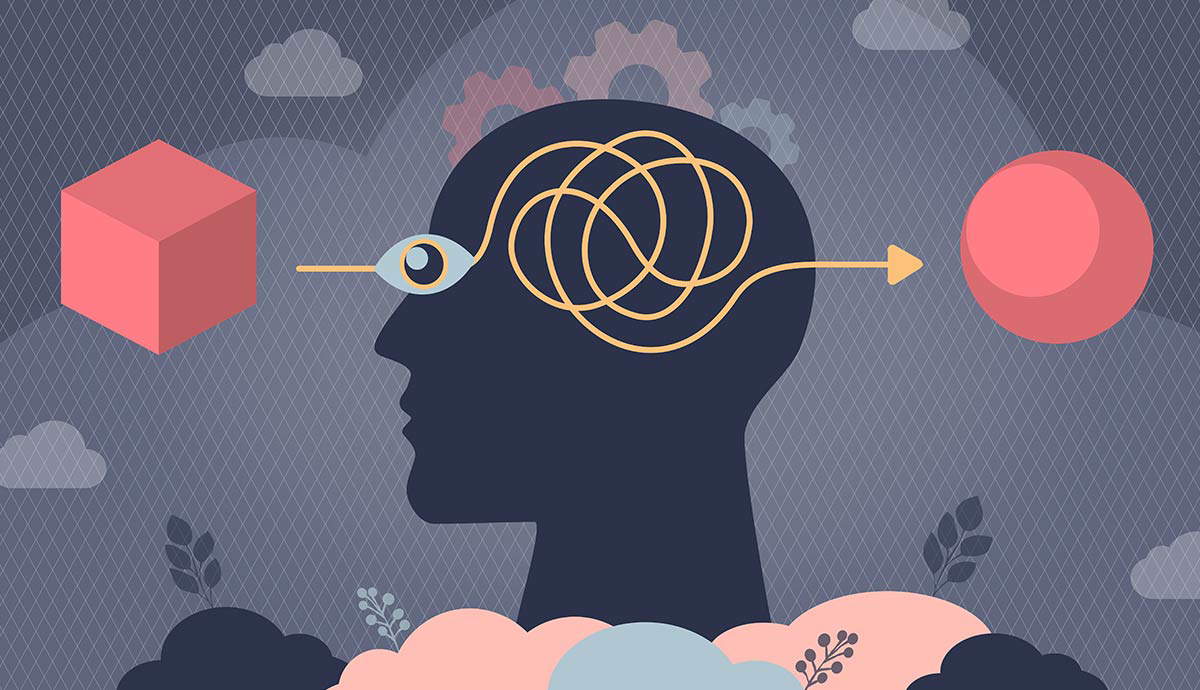

Your mind is the one place in the universe where you are truly alone. In other words, it is the last sanctuary hidden from governments, corporations, and the prying eyes of society. However, as neuroscientific breakthroughs blur the line between thoughts and data, that sanctuary is under siege. From mind-reading scanners to cognitive-enhancing drugs, we are entering an era of brain colonization that threatens the very foundations of our autonomy, freedom of thought, and identity.
Neurotechnology Is Breaching the Last Bastion of Mental Privacy

The mind has long been considered the last bastion of our privacy, hidden from governments, corporations, and others. We hold this privacy dear, as is evident in our commitment to the freedom-of-thought dictum. Nevertheless, this dictum is not always upheld when those thoughts are put into words.
The ideal of mental privacy may be further tested by neuroscience, which has begun to breach the internal. Notably, internal mental states are not specifically covered by legal frameworks such as the U.S. Constitution.
The “colonization” of the brain is a major shift, and with it come unique and serious ethical considerations. Previously, we have only been able to modify psychology externally, and in the last hundred years, we have rather blindly modified it directly using drugs and brain stimulation.
We already have the capacity to read the brain; in lie scanning, predicting decisions, detecting whether someone cheated after the fact, and reading certain dispositions. While these methods are currently far from being efficacious, practical, or ecologically valid, they indicate the information the brain can give up to others.
The current best predictors of the decisions someone made in a simple binary choice task in a lab, based on statistical brain data, achieve less than 70% accuracy (Rolls & Deco, 2011).
Neuroscience and the Erosion of Mental Autonomy

It is not just mental privacy that is potentially under threat from neurotechnology, autonomy is too. We can induce changes directly in the brain using direct brain stimulation, light stimulation, and other interventions. These can induce moods and feelings, change dispositions, and alter the propensity to act.
Technology is also moving toward direct brain-computer interfacing and brain feedback systems that use brain data to modify one’s brain states.
Future brain imaging could use functional near-infrared spectroscopy, which can image at a distance without the subject’s awareness. Methods of deep transcranial stimulation are also not far off, making such technology much more ubiquitous.
Are actions the only thing we should be judged on, or our inherent dispositions?
Intuitively, we say the former, yet it may not be so clear once that barrier has been breached. We do not wish to be taken at face value in our dispositions or thoughts, but we still do so, individually and as a society.

Could we deny ourselves the knowledge of the risk of violence in prisoners being released? Would we not use information that could indicate our propensity for addiction?
Using brain data for dispositions related to recidivism, insurance, employment, and academics is not unlikely, at least in the absence of rules preventing it. While such measures may not be enforced outright, they could be effectively coerced into becoming required. Developments in lie detection, mental warfare, and neuromarketing all indicate the desirability of using brain data to find out what people are thinking and to use it.
Developments in neurotechnology have the potential to threaten principles we care about: self-determination, freedom of will, and authenticity.
Deep Brain Stimulation Can Change Your Personality, Even if You Stay ‘You’

Deep brain stimulation, used to treat muscle tremors in disorders like Parkinson’s, has been shown to change patients’ dispositions significantly, both according to the patients themselves and according to others, even if they retain their identity (Brezovar et al., 2022). It could be said to be a different person induced by external means. Neurotechnology may therefore also threaten our personality, perhaps even our identity.
This is acceptable in treatment that removes a pathology, which most likely also interferes with our conception of ourselves, such as OCD, or that prevents us from acting, like severe muscle tremors. It becomes a less palatable risk for enhancement purposes or for treating less debilitating pathologies.
Another aspect of our personality is memory, that is, those aspects of identity that connect us to our past. Not only may it be possible to read such things off brain activity, but it may be possible to directly induce changes in them deliberately.
Research in memory modification for those with PTSD is well underway. This primarily operates by recalling the memory and modifying it when it is reconsolidated after retrieval (a state of heightened plasticity) rather than directly removing or altering the memory. Optogenetically, memory modification has been achieved directly in animals, allowing researchers to turn memories on and off (Zawadzki & Adamczyk, 2021).
Cognitive Enhancers Trade Off as Much as They Boost

Today, there are common cognitive enhancers on the market, primarily stimulants like caffeine and nicotine, and prescription drugs like Adderall and Ritalin. Some drugs reduce sleepiness, like modafinil, intended for narcoleptics but used as a way to more effectively crunch past the point of cognitive decline due to sleepiness and fatigue.
Stimulants are effective short-term enhancers, although their cognitive effects may be minor and, in the long term, may even prove negative (Advokat, 2010). They are commonly used in academic and competitive settings where concentration and focus are important. The future might bring more efficacious enhancers in terms of concentration, cognitive capacity, and wakefulness.
Why would we consider such enhancements problematic?
First, there is the typical issue of haves and have-nots. Prescription drugs obtained outside of their use case are primarily acquired by those who can hoodwink the system, and thus potentially gain an advantage.
More prevalent is the issue of socioeconomic access to such drugs, which could create an environment where poor socioeconomic standing puts a person in an even more severe negative feedback loop.

This is not a distinct cognitive enhancement problem, given the fact that distributive justice is a problem for most important inventions. On the other hand, drugs typically work best to level out deficiencies, so they may primarily act as a leveling tool for those with lower cognitive capacity.
However, it is unlikely that enhancers will be a net positive outside of balancing systems that are deficient in some way, which is why enhancing might be physiologically different from treating pathology.
The brain has limited resources and capacity; it is not a muscle we can simply add mass to. Changing neurotransmitter balance and stimulating brain regions have wide-ranging implications. Cognitive enhancement may, in fact, instead be a cognitive trade-off.
An example is modafinil use, which helps maintain cognitive performance at near-baseline levels even with low amounts of sleep. However, self-assessment of that performance is impaired (Gurtman et al., 2008). Ritalin may aid in some cognitive processes, such as holding a representation in mind, but it also reduces the capacity to flexibly update that representation (Fallon et al., 2017).
There are also less palatable cognitive “enhancers,” such as those used to reduce moral inhibition in soldiers.
The Bioconservative Case Against Brain Modification Mostly Fails

There is also an uncommon ethical argument that capacities like mood enhancement, personality enhancement, and cognitive enhancement are unnatural, that they amount to playing god, or that they will reduce human effort. These are typical moral-purity arguments against new technology and so far typically lack substance beyond that.
This fear of the direct influence on our internal character is typically shaped by a view of an internal-external separation, a dualistic view, and an underappreciation of how the environment impacts us. It is unclear why directly modifying ourselves would be more unnatural than the unnatural environment we find ourselves in, which subsequently modifies us.
Why would cognitive enhancement be morally or ethically problematic, but enhancing our environment is not? The argument is typically one for the sanctity of the body, paired with an internalist view of separation between us and the environment.
We are clearly not morally opposed to an intake of neurotransmitters into our brain, considering our propensity for mood-balancing drugs and painkillers. What we seem to be opposed to is enhancement rather than “bringing back to normal.”

Still, normality arguments also fail to be especially pervasive if we consider how far from normality we have taken our external influences, and it is unclear why we would renormalize positive changes on a natural basis.
Moreover, it seems rather arbitrary what counts as normal. If we disregard the naturalistic argument, such as the authentic self or what is natural, then is not normality just a bell curve, with arbitrary demarcation points for what is not normal?
There is a truth in that conservatism may be advised in directly manipulating our brains; on a personal level, the risk-to-benefit ratio is much worse compared to pathology. For example, there are legitimate possibilities that brain modification could change one’s personality and other lasting changes, as reported by individuals receiving deep-brain stimulation.
However, this is simply an argument for careful implementation and development, not disuse.
Cognitive Enhancement Could Become Mandatory Without Ever Being Forced

Another ethical issue of cognitive enhancement is akin to that of mandatory vaccinations, with the coercion to take such enhancers for the betterment of society.
Now the difference is that it is not harm prevention but simply enhancement, and whether we can actually justify such coercion, even if it would prove objectively beneficial.
If cognitive enhancement were available, employers, governments, etc., would want them taken, and, through the competitive advantage it would induce, the individual would essentially be forced to take them, both by being competed out and by peer pressure.
Sources
- Advokat, C. (2010). What are the cognitive effects of stimulant medications? Emphasis on adults with attention-deficit/hyperactivity disorder (ADHD). Neuroscience & Biobehavioral Reviews, 34(8), 1256–1266. https://doi.org/10.1016/j.neubiorev.2010.03.006
- Fallon, S. J., van der Schaaf, M. E., ter Huurne, N., & Cools, R. (2017). The Neurocognitive Cost of Enhancing Cognition with Methylphenidate: Improved Distractor Resistance but Impaired Updating. Journal of Cognitive Neuroscience, 29(4), 652–663. https://doi.org/10.1162/jocn_a_01065
- Gurtman, C. G., Broadbear, J. H., & Redman, J. R. (2008). Effects of modafinil on simulator driving and self-assessment of driving following sleep deprivation. Human Psychopharmacology, 23(8), 681–692. https://doi.org/10.1002/hup.983
- Rolls, E. T., & Deco, G. (2011). Prediction of Decisions from Noise in the Brain before the Evidence is Provided. Frontiers in Neuroscience, 5, 33. https://doi.org/10.3389/fnins.2011.00033
- Zawadzki, P., & Adamczyk, A. K. (2021). Personality and Authenticity in Light of the Memory-Modifying Potential of Optogenetics. AJOB Neuroscience, 12(1), 3–21. https://doi.org/10.1080/21507740.2020.1866097