
Sartre’s collection of short stories, The Wall, is a landmark of 20th-century existentialist fiction, and “The Room” is its most philosophically dense story. It centers on the character of Ève, a woman married to a man with severe mental health issues. She refuses to accept the reality of her situation, and tries to believe his delusions are true. If she wants to join him, why does the story end with her talking about killing Pierre?
Rooms and Walls
In 1939, Jean Paul Sartre published a collection of short stories titled The Wall (Le Mur). This short book and the stories contained within have become classics of existential literature. The story we will concern ourselves with today is “The Room” (La Chambre).
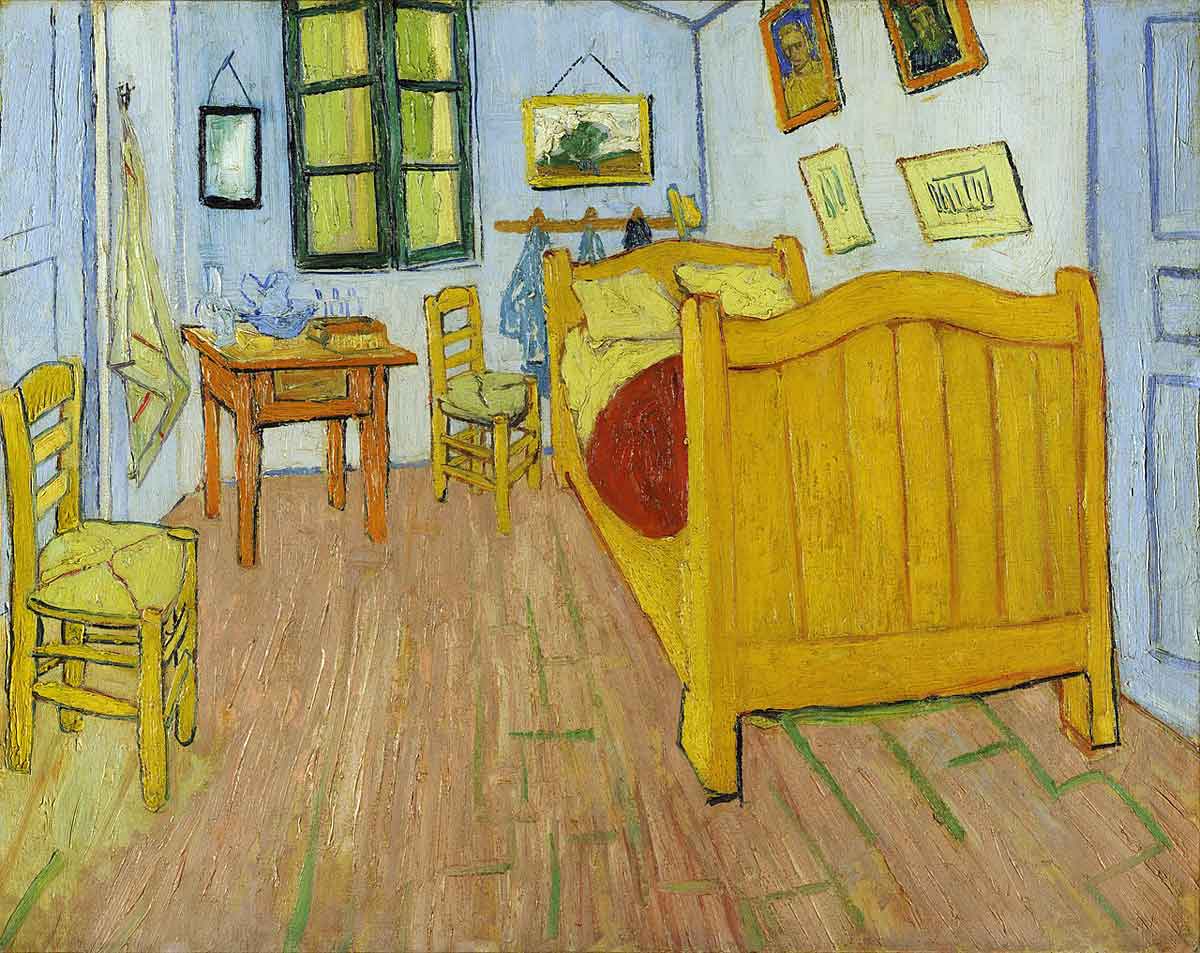
It will come as no surprise that “The Room” in a collection called “The Wall” is concerned with shutting oneself off from the world. All the action of the story first takes place in a room occupied by Ève’s bedridden mother and quickly moves to Ève and Pierre’s dark home. The home is made darker by Pierre’s habit of painting everything black.
Ève does not want her husband Pierre to be confined to a psychiatric hospital. Considering such a place, especially one in the 1930s, we cannot help but think of some poor soul confined to a padded room. However, would Pierre’s situation be much different if he were hospitalized? He is already confined to a room with little awareness of the outside world.
There are different kinds of walls than those that surround a room, whether that be a bedroom or a padded cell. These are the metaphorical barriers that prevent us from truly comprehending other people or the world.
Pierre’s mental health problems put up a barrier between him and Ève. She cannot get through to him, nor can he understand her. Ève herself puts up a barrier between herself and her father. He cannot understand her, and she refuses to communicate why she will not send Pierre away and live her own life.
This setting, the stifling room, madness, and the inability to communicate honestly, frequently appears in Sartre’s fiction. Most notably in his plays The Condemned of Altona and No Exit.
Madness and Make-Believe

Madness and make-believe play a key role in “The Room.” Let us first look at madness and Pierre’s make-believe belief. In the next section, we will look at Ève.
The story begins in a room occupied by Ève’s mother, Madame Darbédat. The woman is ill, bedridden with an unexplained malady. On Thursdays, she is visited by her husband after his weekly visit to Ève. In a sense, Madame Darbédat is in a similar position to Pierre. She is ill, living out her days in a room away from the world and visited once a week by her husband and Ève’s father, Monsieur Darbédat. However, her situation is quite different from Pierre’s.
When we first see Madame Darbédat, she is in bed, eating some Turkish delight and reading. The sweet candy makes her think of Turkish mosques and her honeymoon in Algiers. She is an invalid, but unlike Pierre, she can enjoy sensual and intellectual activities; she savors Turkish delight and the memories it evokes. The outside world is a strong presence in her life.
Pierre, on the other hand, has no grip on reality. He does not enjoy eating or drinking. In fact, he thinks his fork is dangerous and, if not handled correctly, might attack. His “memories” of time spent with Ève are all false. Moreover, he thinks his wife’s name is Agathe. In a way, there is no outside world for Pierre. All his experiences are merely projections of his own inner turmoil.
The Bad Faith of Ève
Pierre has strange beliefs caused by his condition that are almost incomprehensible to everyone else, including Ève. Pierre believes that his life is visible on some kind of screen; he wonders why Monsieur Darbédat keeps visiting when he could watch him from home on “the screen.” Pierre also believes that his life is frequently interrupted by terrifying attacks by flying statues.
While Ève cannot truly understand Pierre’s world, she attempts to be a part of it. Not just by sharing a life with her husband, she actively wills herself to believe in the flying statues. Unbeknownst to anyone, Ève forces herself to live in Pierre’s make-believe world.
“Reality” for Pierre is only his black room and whatever he projects into it. Ève would rather live in this cramped unreality than the real world.
She is not mad, and Sartre did not intend to depict her as mad.
In order to understand the ending of the story, we need to understand Ève.
Is Ève Lying to Herself?
Ève attempts to convince herself that her husband’s delusions are real, and so it is tempting to say that she is lying to herself. However, what lying to oneself actually involves is surprisingly difficult to pin down.
But to understand Ève we need to understand what she is actually doing. More precisely, if we want to understand Sartre’s character, we need to understand what Sartre is attempting to do with the character.
When someone lies, they must first know the truth and then deliberately say something contrary to it to someone else. For example, someone who recently cheated on their diet by eating a sugary snack can falsely report having not eaten any snacks. This lie requires that: (a) the dieter knows the truth and chooses to say something different; and (b) there is someone else to whom they offer the falsehood.
If they genuinely forgot about the snack and later told someone what they believed was true, then they would not be lying but mistaken. For the lie to be a lie, someone must first know the truth and then choose to say something contrary to that truth to someone else. This raises an interesting question: how could anyone possibly lie to themselves?
Imagine someone felt so guilty about snacking that they wanted to deny what they had done, even to themselves. They would have to simultaneously know the truth while telling themselves they did not cheat. The trouble with lying to oneself in order to cope with snacking guilt is that the liar must know the truth (and know that they know) for it to be a lie. But they would always know they were lying, so there could be no true intent to deceive, and their guilt would remain unassuaged.
Sartre’s Concept of Bad Faith

When Ève attempts to force herself to accept Pierre’s false version of reality, she is not exactly lying to herself but acting in bad faith.
Sartre’s conception of bad faith, expressed in Being and Nothingness, is similar to lying to oneself but with an element of role-playing. That is, someone in bad faith has an idea of what they want to embody or represent and then tries to fulfill that role. Sartre gives the example of a waiter who attempts, through his approach to his work and the role he attempts to take on, to become “a waiter.” Let us look at what Sartre says in the text.
“His movement is quick and forward, a little too precise, a little too rapid. He comes toward the patrons with a step a little too quick. He bends forward a little too eagerly; his voice, his eyes express an interest a little too solicitous for the order of the customer. Finally there he returns, trying to imitate in his walk the inflexible stiffness of some kind of automaton while carrying his tray with the recklessness of a tight-rope-walker by putting it in a perpetually unstable, perpetually broken equilibrium which he perpetually re-establishes by a light movement of the arm and hand.”
We can easily imagine this man from Sartre’s vivid description. The waiter is doing everything he can not to be himself but to be a waiter. It is like the man is trying to become the idea of something, almost pretending to be a waiter.
How Is the Waiter in Bad Faith?

When the waiter in the example attempts to become “a waiter,” he imagines a waiter as being the same kind of thing as a tray or a corkscrew.
That is, when he is playing at being a waiter, he can only do those things that waiters do. He speaks to the café patrons the way he does and brings them their food and drinks the way he does not, not because he chooses to, but because he is a waiter.
For Sartre, he is in bad faith because he denies his own freedom and responsibility by pretending to be an object designed and directed by something outside of himself.
Let us now turn our attention back to “The Room” and Ève’s bad faith.
The Ending: Why Ève Says She Will Kill Pierre
We saw that when Sartre’s waiter attempts to be a waiter, he is trying to remove himself entirely from what he does at work. By pretending to be just a waiter, he denies the reality of being an individual free to act as they choose and being responsible for these actions.
Ève puts herself in bad faith, attempting to believe her husband’s delusions. Why does she do this? By joining him in this invented world, Ève now has no decision to make regarding her husband’s degenerative condition. She evades reality, where she is free to send Pierre away, and must then accept responsibility for her life and decisions.
At the end of the story, Ève says she will kill Pierre before he becomes too ill. With Pierre dead, she will never have to face the reality of his condition. This does not solve the ultimate problem (her fear of freedom and the responsibility that comes with it) but Sartre wants to show that bad faith is not the answer.