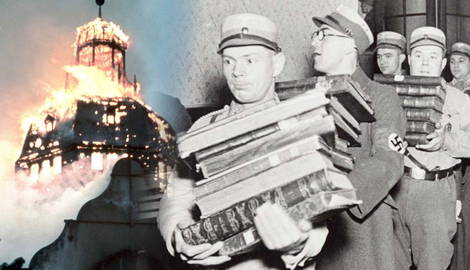

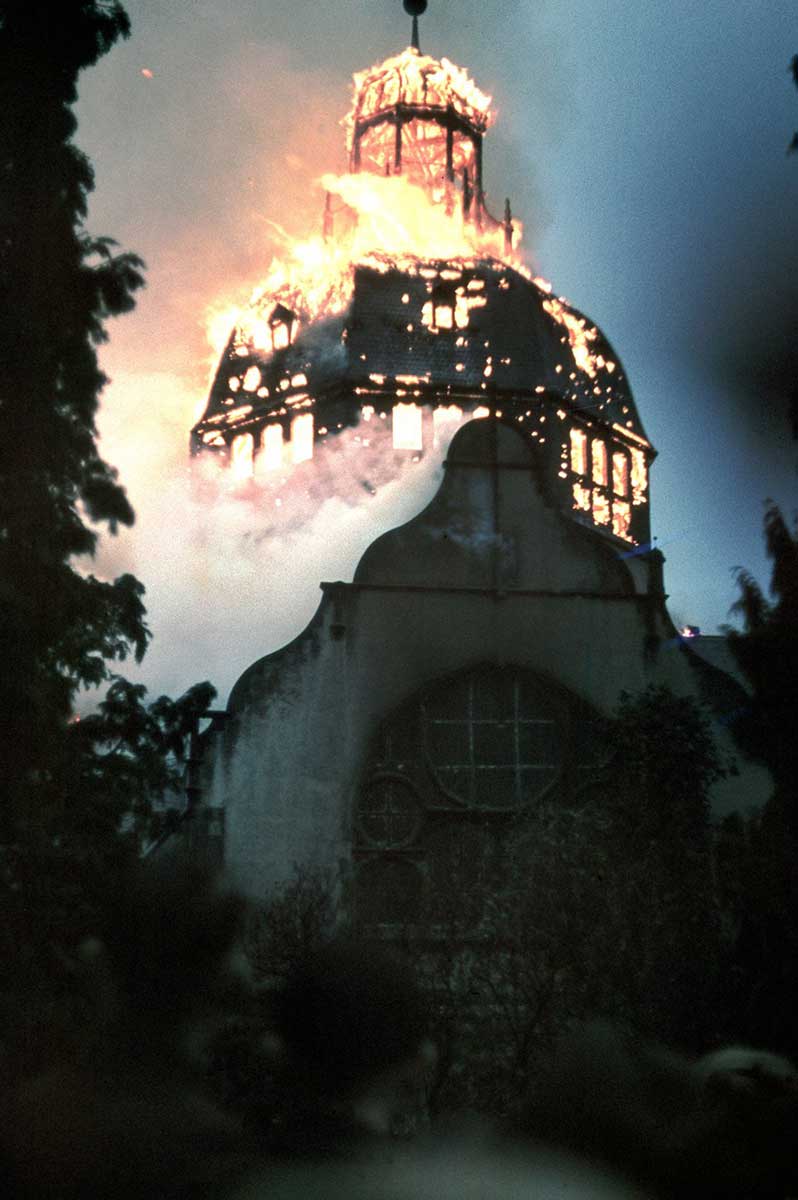
On November 9-10, 1938, the Nazi Party unleashed violent attacks on Jewish communities across the Third Reich and occupied Austria. The event is known as Kristallnacht, or the Night of Broken Glass, after the shattered glass from destroyed synagogues, homes, and businesses. Although Jews had already faced oppression since Hitler’s rise to power in 1933, Kristallnacht stands as a pivotal chapter in history. Afterward, Nazi antisemitic policies became increasingly violent, leading to the persecution, displacement, and suffering of millions of Jews, ultimately culminating in the Holocaust.
Nazi Racial Policies Leading to Kristallnacht
Adolf Hitler’s vision of Nazi ideology was deeply rooted in the theories of racial struggle and racial superiority. The Nazi leader promoted this vision in his book, Mein Kampf (My Struggle), published in 1925, which is “both a manifesto of ideological hatred and a strategic guide for manipulation.”
According to the book, Germans belonged to a pure, master race, the “Aryan” race, and thus, they were at the top of the racial hierarchy. On the other hand, other races were regarded as inferior. Jews, particularly, were deemed a “parasite race,” striving to survive and expand at the expense of the racially pure Germans. Thus, for the preservation of the Aryan race, all the Jews should be eliminated.
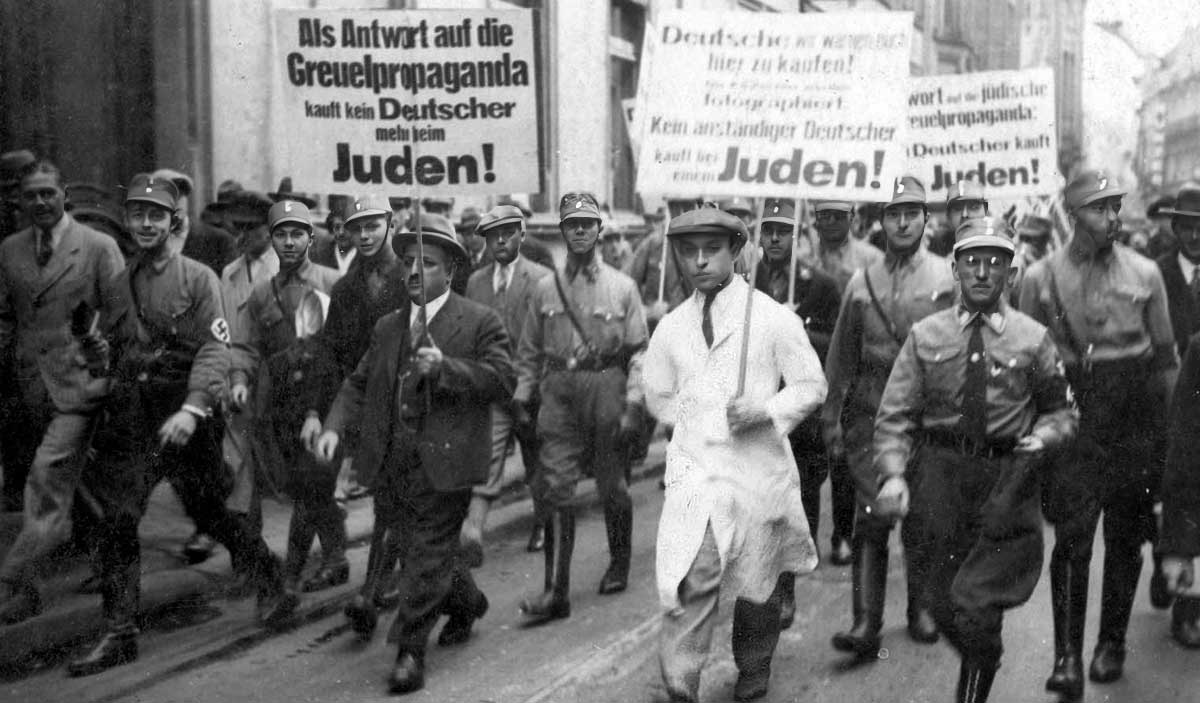
By 1930, along with the broader context of the Great Depression, economic hardships, and poor living conditions, Nazi-based concepts of racial superiority and racial struggles gained popularity among the wider German public. Through propaganda efforts, the Nazi Party successfully utilized these concepts to blame Jews for the socio-economic challenges the German people were facing.
In January 1933, the Nazi party won the elections, and Adolf Hitler became the Chancellor of the Third Reich. Already in 1933, Jewish people were prohibited from working at a public office, press, or radio outlet.
During this initial phase, the Nazi regime was not yet strong enough, and Adolf Hitler aimed to consolidate power by balancing the radical elements of the Nazi Party and the conservative German elites, including business leaders. To avoid public unrest, antisemitic measures were implemented through legal channels, such as discriminatory laws and economic restrictions.
The Gradual Radicalization of the Nazi Antisemitic Policies
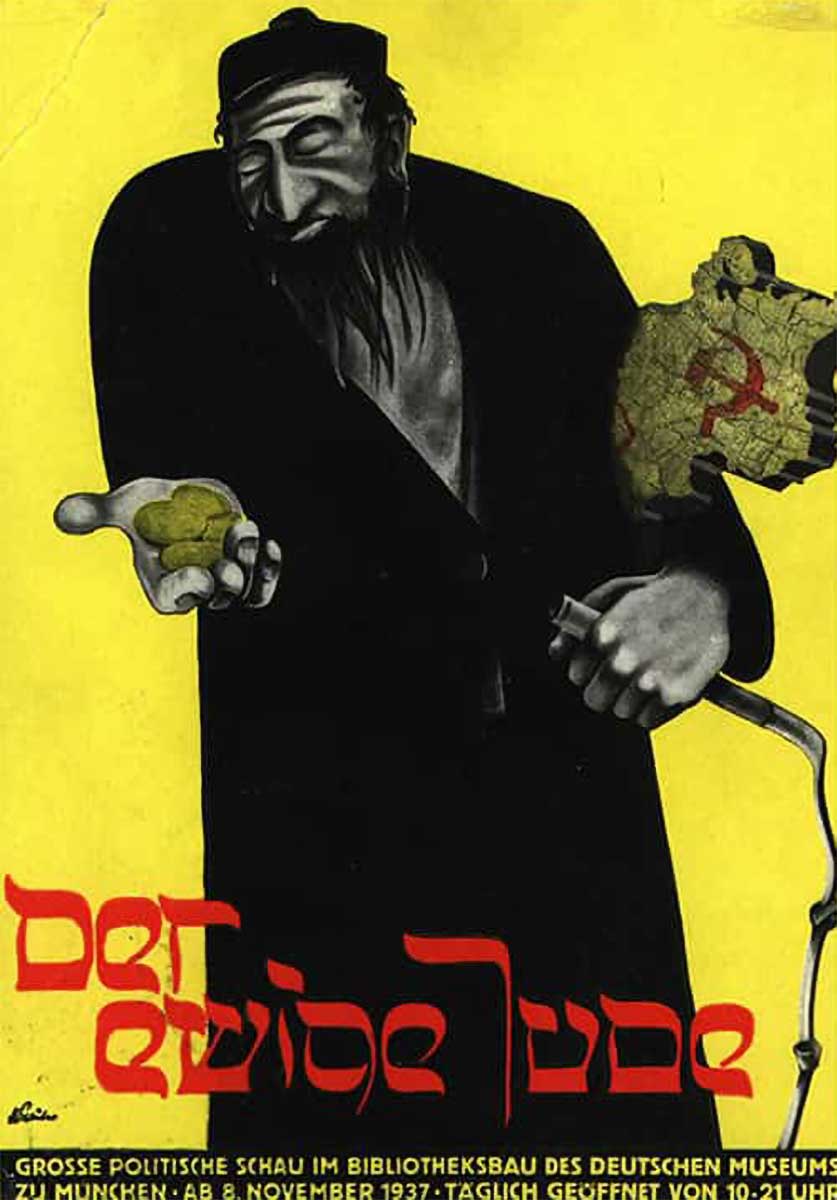
In May 1935, Nazi Germany officially denounced the Treaty of Versailles, which ended World War I and established a new world order. As a result, Adolf Hitler initiated the process of rapid remilitarization of the Third Reich, aiming to reclaim its status of dominant power. Consequently, this period saw the intensification of Nazi antisemitic policies, partly due to the pressure coming from the radical members of the Nazi Party, demanding that more extreme measures should be taken.
On September 15, 1935, Nazi Germany passed the Nuremberg Laws, legalizing the previous antisemitic policies and setting the stage for future atrocities.
The Nuremberg Laws defined Jews as members of an enemy race and mandated the total separation of “Aryans” and “non-Aryans.” The first law, the “Reich Citizenship Law,” deprived Jews of political rights by declaring that only Aryans could be regarded as citizens of the Third Reich.
The second law, the “Law for the Protection of German Blood and Honor,” prohibited marriages and extramarital sexual relations between Germans and Jews.
On September 16, the United States Ambassador to Germany, William Edward Dodd, sent a cable to the Secretary of State of the United States to voice his concerns with the Nuremberg Laws. He stated:
“The new laws against the Jews deceive very few people that the last word has been said on that question or that new discriminatory measures will not eventually follow within the limit of what is possible without bringing about too great a disturbance in business.”
Ambassador Dodd was right. The year 1938 saw the intensification of antisemitic policies.
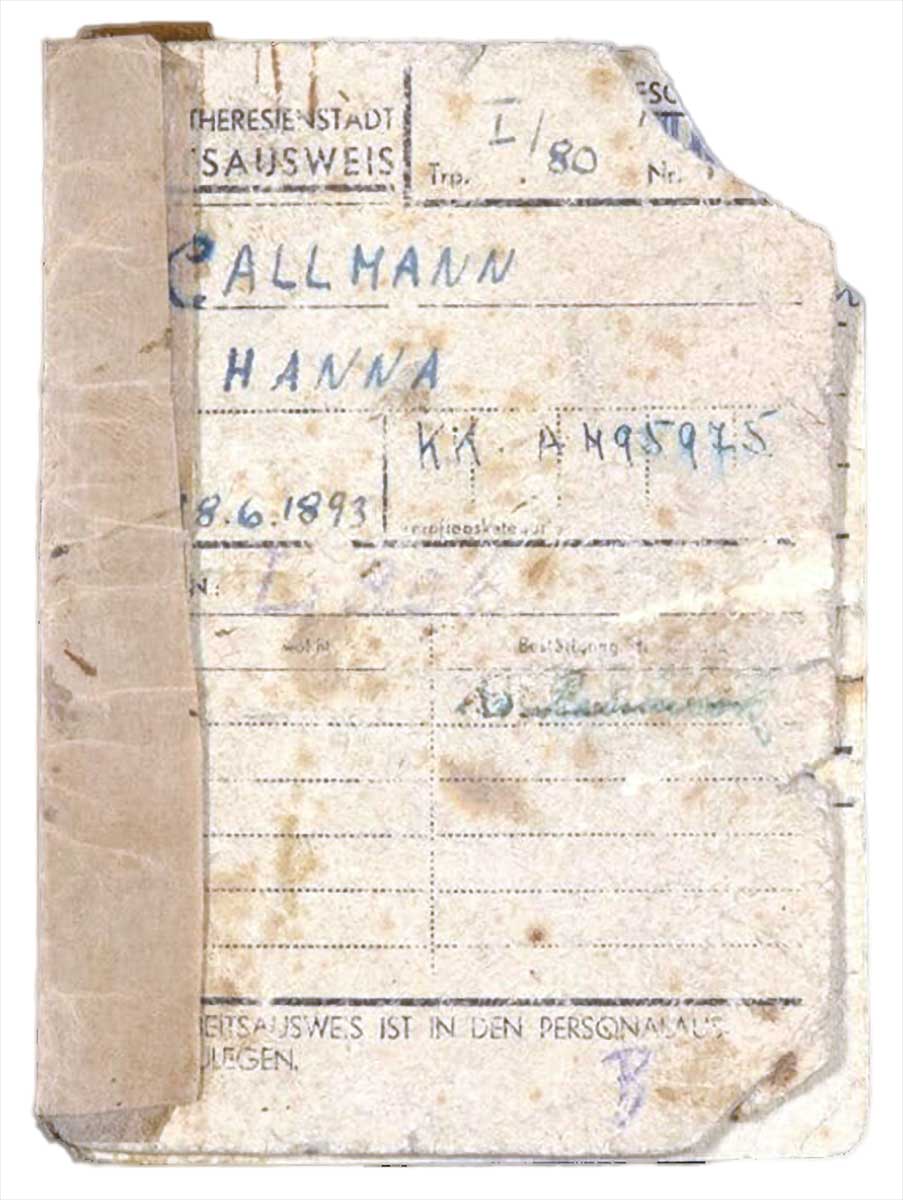
In October 1938, new laws were passed. Nazi officials invalidated Jewish passports and required Jewish people to add the “typically Jewish names” (Sarah for women and Israel for men) to their documents. These measures were legalized in the following two measures:
- The Law on the Alteration of Family and Personal Names (August 1938)
- The Decree on Passports of Jews (October 1938)
Then, on October 27, 1938, Nazi Germany launched the first mass deportation of Jews with Polish citizenship over the Polish border. Polish authorities, however, agreed to receive only a small portion of the deportees. As a result, almost 17,000 people were forced to live near the Polish towns of Zbąszyń and Bytom, deprived of basic living conditions. The forced deportation, known as Polenaktion, marked by deprivation and neglect, caused anger and frustration among the deportees and their family members.
Among them was the family of Herschel Grynszpan, a 17-year-old Polish Jew living in Paris, France. Aiming to draw international attention and resonance to the forced migration of Polish Jews, on the morning of November 7, 1938, he shot to death a German diplomat, Ernst vom Rath.
Adolf Hitler would utilize the incident as a pretext to launch a series of anti-Jewish hostilities known as Kristallnacht—the Night of Broken Glass.
The Night of Broken Glass
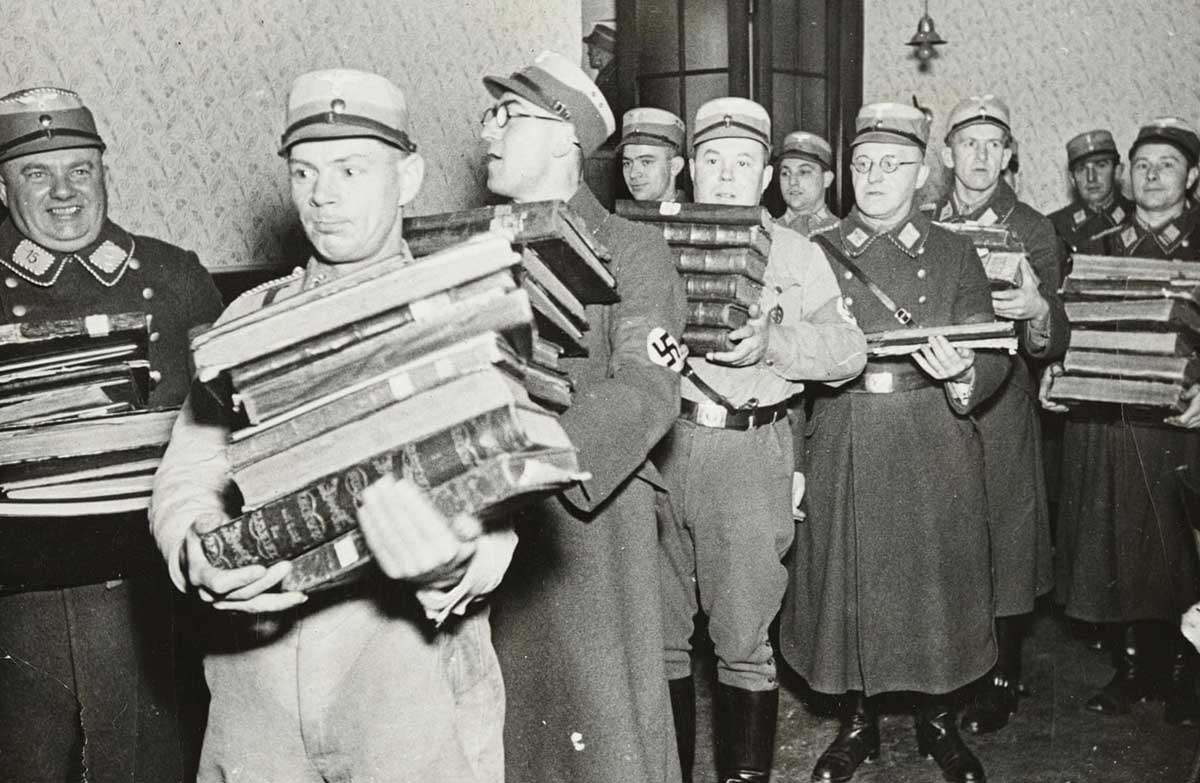
November 8, 1938, marked the anniversary of the 1923 Beer Hall Putsch—Adolf Hitler’s first unsuccessful attempt to install a Nazi government in Germany.
The high-level representatives of the Nazi Party gathered in Munich to commemorate the day. Coincidentally, Ernst von Rath died on the same day. The Nazi Party utilized the fact as a pretext to carry out violent antisemitic attacks in Nazi Germany and occupied Austria, portraying them as a spontaneous outburst of public sentiment. During the celebration, Propaganda Minister Joseph Goebbels declared that “demonstrations should not be prepared or organized by the Party, but insofar as they erupt spontaneously, they are not to be hampered.”
The head of the Security Police (Sicherheitspolizei), Reinhard Heydrich, urgently instructed regional offices of the State Police, SA (or Sturmabteilung, the paramilitary wing of the Nazi Party), and the Hitler Youth units. The instructions dictated that all synagogues should be vandalized and Jewish properties should be transferred to the Nazi Security Service as archival material. At the same time, Heydrich advised that the violence should not be directed towards non-Jewish Germans or foreigners and their properties.
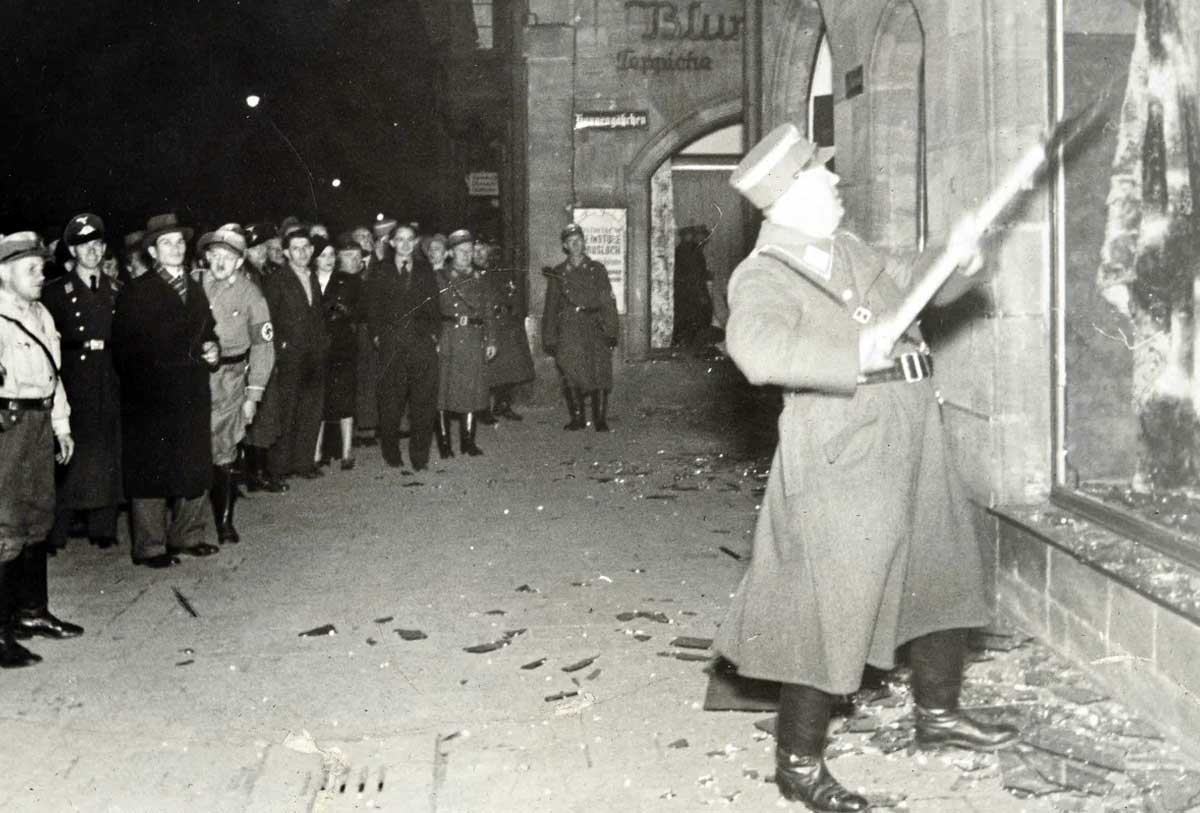
Throughout the late evening and early morning hours of November 9 and10, well-organized, violent raids erupted in various parts of the Third Reich and occupied Austria.
Nearly 1,000 synagogues and Jewish businesses were destroyed and vandalized. Some 30,000 Jewish men were detained and sent for imprisonment in concentration camps, especially in Dachau. Reportedly, 91 Jews were killed.
Kristallnacht witnesses and survivor Albert Friedlander recalls the night:
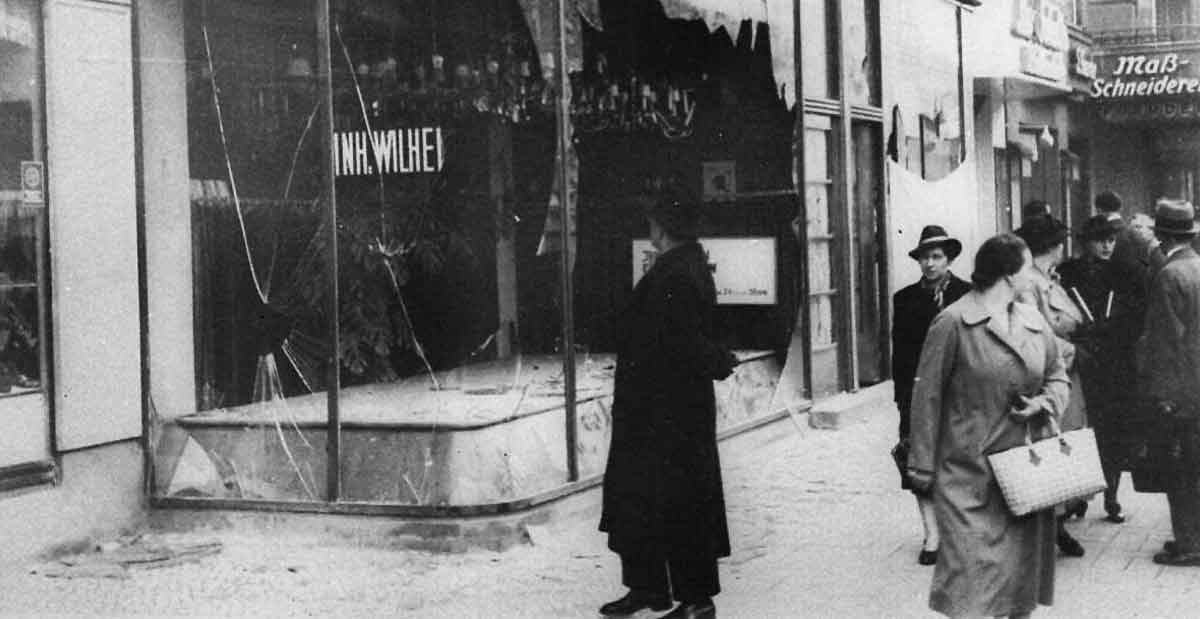
“There was a lot of glass on the streets. We lived in the West End, surrounded by shops, many of them Jewish. This was late at night, and it was dark, but we had no trouble picking out the Jewish shops. They had been looted, the windows had been smashed, and there were ashes, rubble, and debris outside some of the shops. We had not seen how our fellow Jews had been treated: beaten, taken to prison, some of them never to return. But in our hiding place, listening to our friends, we heard more and more of the story of Kristallnacht.”
Almost immediately following the Kristallnacht, the Nazi government declared that Jewish businesses could only be reopened if owned by a non-Jewish person.
Within a week, the Nazis had prohibited Jewish children from attending the schools. Jews were also banned from trade and commercial activities, successfully ousting the Jewish communities from German society and economy.
The first widespread assault on Jewish communities has been described as “the beginning of the Holocaust.”
The Importance of Kristallnacht
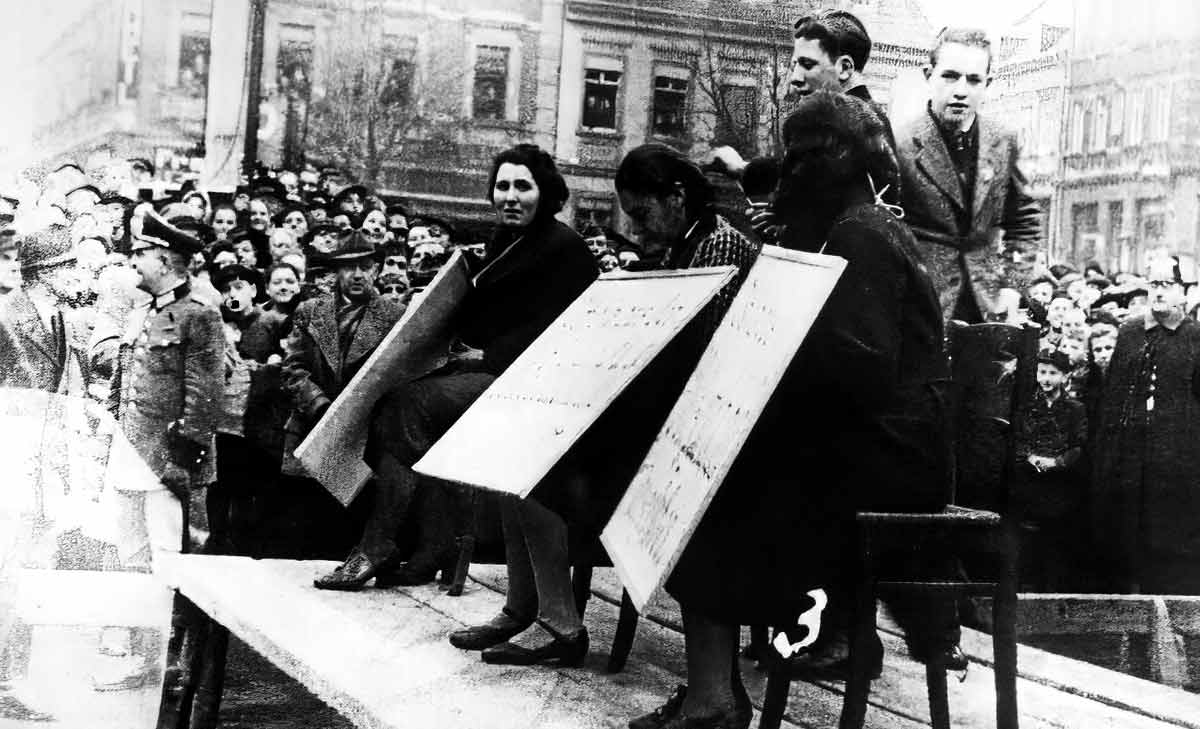
Kristallnacht was a turning point in the Nazi government’s racial antisemitism, marking the successful removal of Jews from German public life.
It is regarded as the first and only large-scale, stated-directed pogrom in Nazi Germany.
It was the first major outbreak of violence against Jews, as earlier Nazi policies, though discriminatory, had largely been restricted to legal measures. Kristallnacht marked a shift, with Nazi forces directly targeting Jewish lives and property for destruction. It was also the last time such violence occurred publicly.
The aftermath of Kristallnacht left cities in chaos, with shattered glass covering the streets and the burnt remains of buildings creating an unsettling scene.
Following Kristallnacht, as Professor Sabine von Mering, director of the Center for German and European Studies, remarked, the Nazi government operated largely at night, “seizing Jews from their homes at night, putting them in plain, dark cars, and taking them away to concentration camps with little fanfare. There was, of course, a lot of anti-Semitism depicted on signs, in pamphlets, and in newspaper headlines, and anti-Jewish laws were being enacted almost weekly. And during the war, marches to the deportation trains often took place in broad daylight.”
The events of November 9 and 10 caused public outrage in the international arena. However, because of the struggling world economy, the immigration policies, and the widespread antisemitic sentiments, no tangible result was achieved to limit Nazi racial policies. This cemented Adolf Hitler’s and other Nazi officials’ vision that mass violence, based on racial antisemitism, would not garnish significant domestic or international opposition. Kristallnacht, thus, paved the way to the “Final Solution of the Jewish Problem,” or the physical annihilation of European Jews and, ultimately, the Holocaust.
Concerning Kristallnacht, former Chancellor of West Germany Helmut Schmidt outlined in his speech delivered in Cologne Synagogue on November 9, 1978:
“The German night, whose observance after the passage of forty years has brought us together today, remains a cause of bitterness and shame. In those places where the houses of God stood in flames, where a signal from those in power set off a train of destruction and robbery, of humiliation, abduction, and incarceration—there was an end to peace, to justice, to humanity. The night of 9 November 1938 marked one of the stages along the path leading down to hell.”