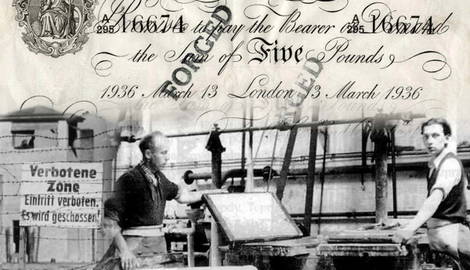

The economy became a battlefield during World War II when Nazi Germany initiated Operation Andreas in 1940—later renamed Operation Bernhard in 1942—under the command of SS Major Friederich Bernhard Krüger. Under the operation, Nazi Germany printed counterfeit British banknotes. Initially intending to artificially inflate the British economy, the Nazi authorities later decided to utilize the forged notes to finance their intelligence activities and World War II military efforts.
Operation Andreas: The Origins of Operation Bernhard
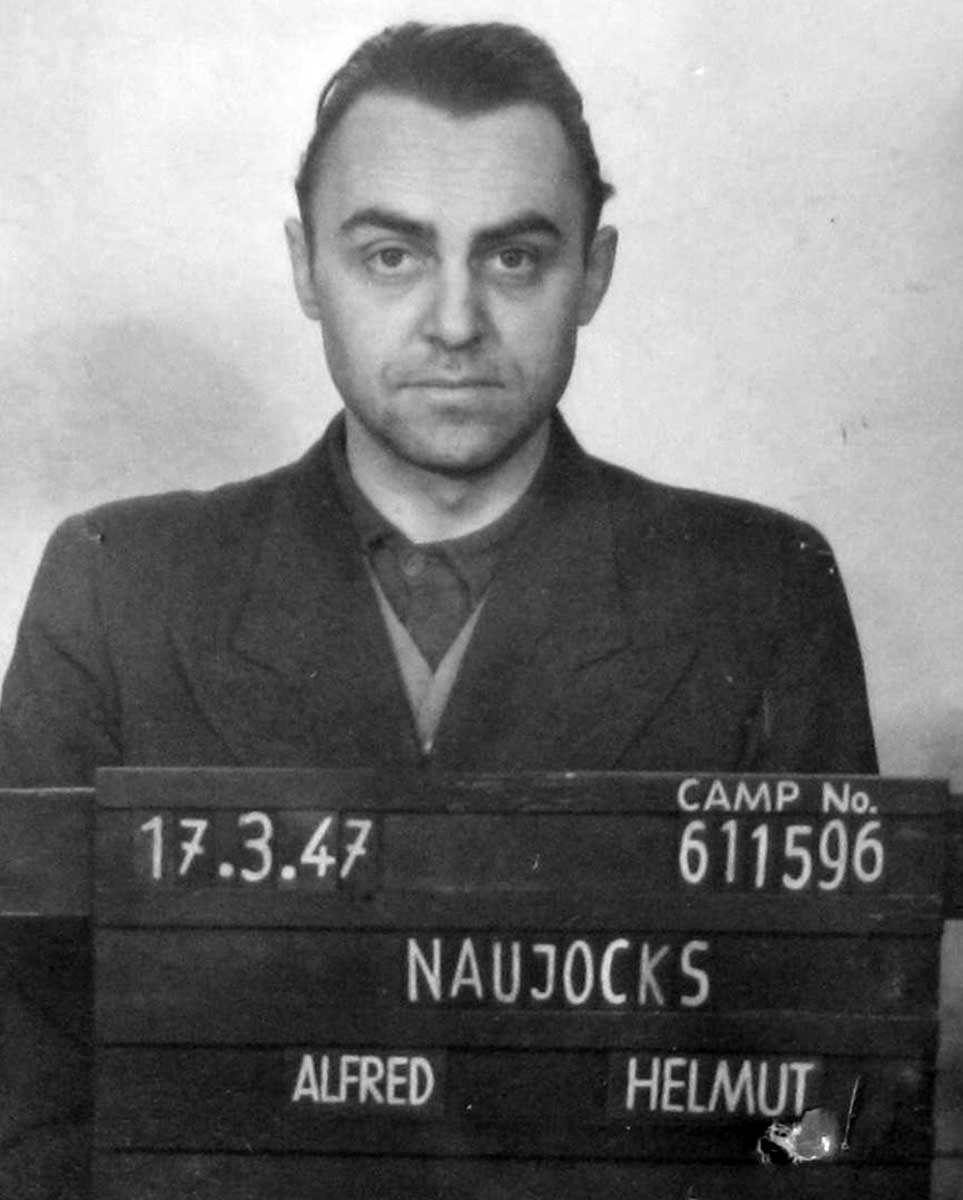
On September 18, 1939, Alfred Naujocks, a key SS (the “political soldiers” of the Nazi Party) operative known for his leading role in the Gleiwitz incident, presented Reinhard Heydrich, a chief lieutenant of the SS, with the proposal to forge British paper currencies, amounting to £30 billion.
Just weeks earlier, Naujocks had played a crucial role in implementing the so-called Gleiwitz incident, seizing a Polish radio station and transmitting an anti-German speech. The Gleiwitz incident is regarded as being utilized by Nazi Germany to invade Poland in September 1939, setting the stage for the start of World War II.
According to Naujocks’s proposal, the forged notes would be dropped over Britain, causing inflation and ultimately destabilizing its economy. Heydrich liked the proposal and notified Joseph Goebbels, the Reich Minister of Propaganda, about the scheme. However, Goebbels did not show much enthusiasm, describing it as “a grotesque plan.” Nevertheless, the Chancellor of Germany, Adolf Hitler, approved the plan. The operation was subsequently codenamed Operation Andreas in late 1939.
Heydrich ordered Alfred Naujocks to lead the operation and set up a forgery unit in Berlin, Germany. Albert Langer, a mathematician and codebreaker, was charged to oversee the technical aspects of the plan. The tasks of Operation Andres included creating banknote paper indistinguishable from the authentic British notes, preparing identical printing plates to the British notes, and duplicating the British unique serial numbering system.
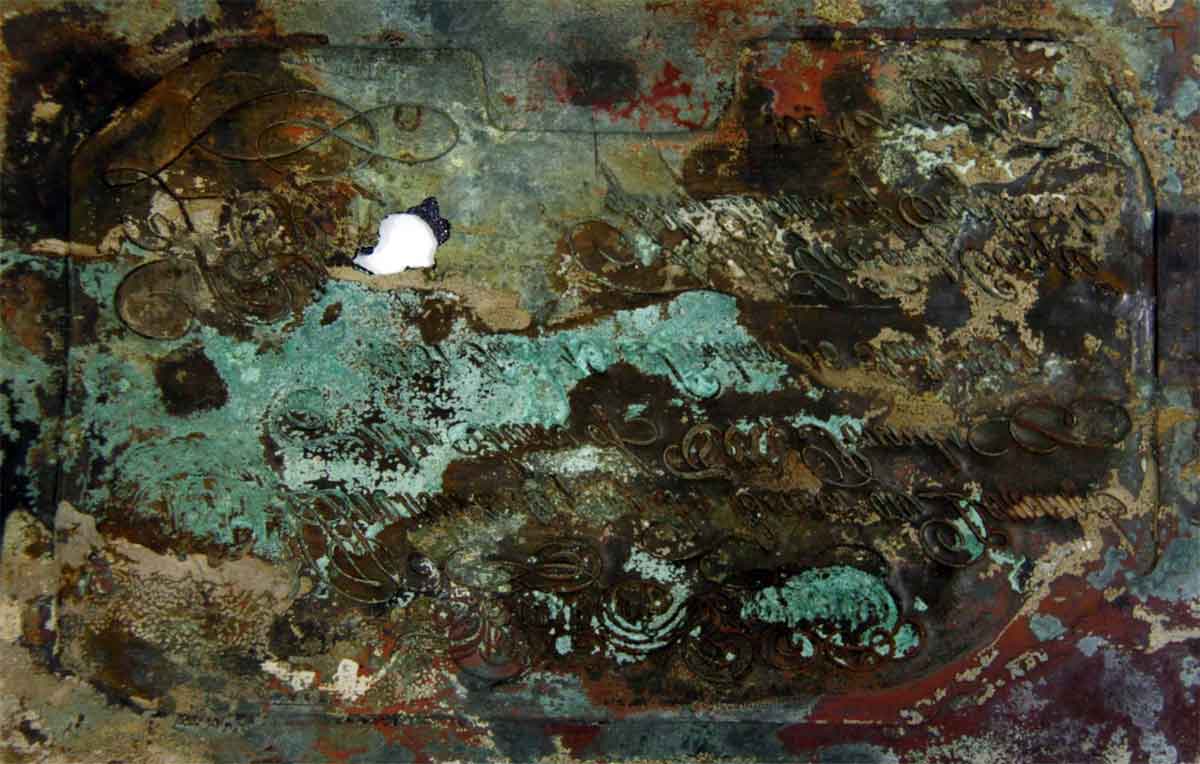
The team of Operation Andreas chose to forge the £5 note, which was the highest denomination in common circulation at the time.
The operation did not remain a secret, however. Already in November 1939, a Russian émigré informed the British Ambassador to Greece, Michael Palairet, of the Nazi plan, referring to it as the “Offensive against Sterling and Destruction of its Position as World Currency.”
When informed, the British government alerted the Bank of England, which, in turn, issued a blue emergency £1 note with a metal security thread running through the paper, making it technically harder to forge the note. The bank also made a public announcement, warned British society about the counterfeit activities, and stopped producing new £5 notes.
The technical team at the Berlin forgery unit managed to accomplish the given tasks in just seven months. However, by the end of 1940, Naujocks resigned from his position due to disagreements with Heydrich. Operation Andreas continued under the leadership of Andreas Langer, though he faced challenges and struggled to achieve consistency and accuracy in forging the British notes.
By 1942, Lagner also resigned, and Operation Andreas ceased to exist. Even though about £3 million in forged notes were produced, due to their low quality, most of them were never used.
Operation Bernhard: The Second Attempt to Destabilize British Economy
A well-known SS officer named Bernhard Krüger was tasked by the Nazi Party in 1942 to coordinate the second attempt to counterfeit British currency. Consequently, the second operation became known as Operation Bernhard. Unlike Operation Andreas, which only sought to destabilize the British economy, Operation Bernhard intended to finance Nazi espionage operations during World War II.
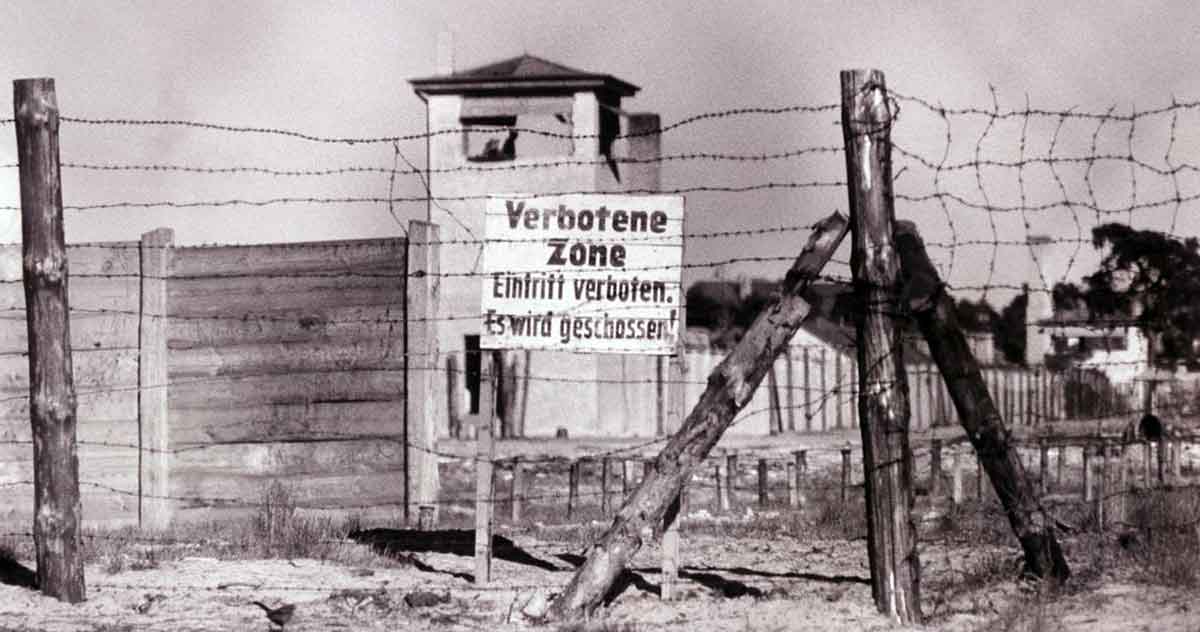
At Sachsenhausen, a Nazi concentration camp in Oranienburg, Germany, operation units were set up in blocks 18 and 19. The units had wired fences. Special SS guards controlled the territory, isolating it from the rest of the building.
Krüger’s first task was identifying incarcerated Jewish prisoners skilled in draftsmanship, engraving, printing, banking, and typography to assemble the forging group. The first group, composed of 26 Jewish prisoners, was formed in September 1942, and in just 2 months, 80 other prisoners joined them in Sachsenhausen.
The prisoners at Units 18 and 19 were treated with unusual respect compared to other inmates. Bernhard Krüger ordered that they receive better living conditions and enjoy some privileges, such as listening to the radio and reading newspapers. These privileges aimed to keep the prisoners’ morale high and increase efficiency, as the given tasks were technically complex, requiring attention and patience.
The prisoners at Sachsenhausen were tasked to thoroughly study the original British banknotes. In particular, they had to analyze the security marks, the vignette, the color and structure of the banknote paper, as well as the signatures.
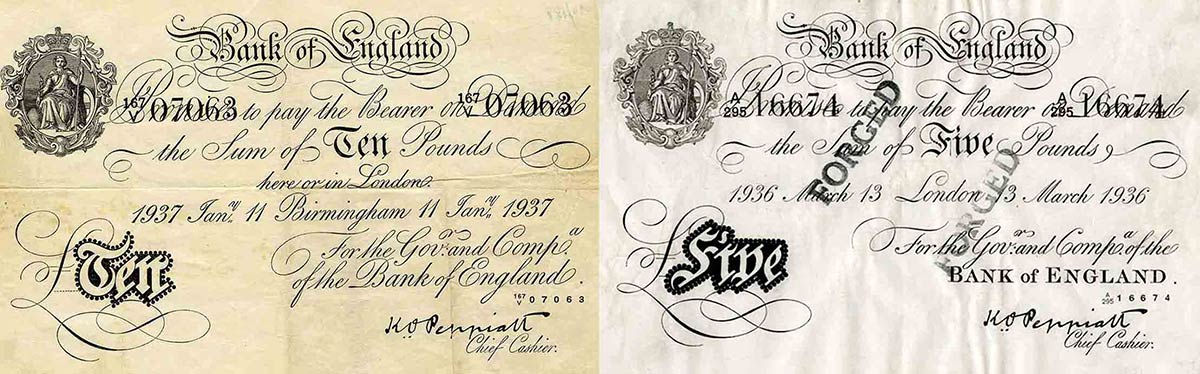
The group managed to identify 150 security marks on British notes, intended as an anti-counterfeiting measure, and created high-quality printing plates to forge the £5, £10, £20, and £50 banknotes. Through extensive experimentation, the group created banknote papers as well.
The production of the forged notes began in January 1943. To make them “look and feel” as the circulating currency, prisoners were ordered to repeatedly rub and fold the forged notes with dirty hands, intending to create the illusion of age and usage.
Printing of the forged British notes reached its peak in mid-1943 when about 65,000 notes were printed in just a month.
Printed banknotes were divided into four categories based on the quality of the counterfeit notes:
- Grade 1, the highest quality forged notes, were intended to be in circulation in the neutral countries during World War II;
- Grade 2 forged notes were to be utilized as an allowance for collaborators of the Nazi regime;
- Grade 3 notes were intended to be dropped over the British territory;
- Grade 4 notes were defective and deemed to be destroyed.
Operation Bernhard in Practice
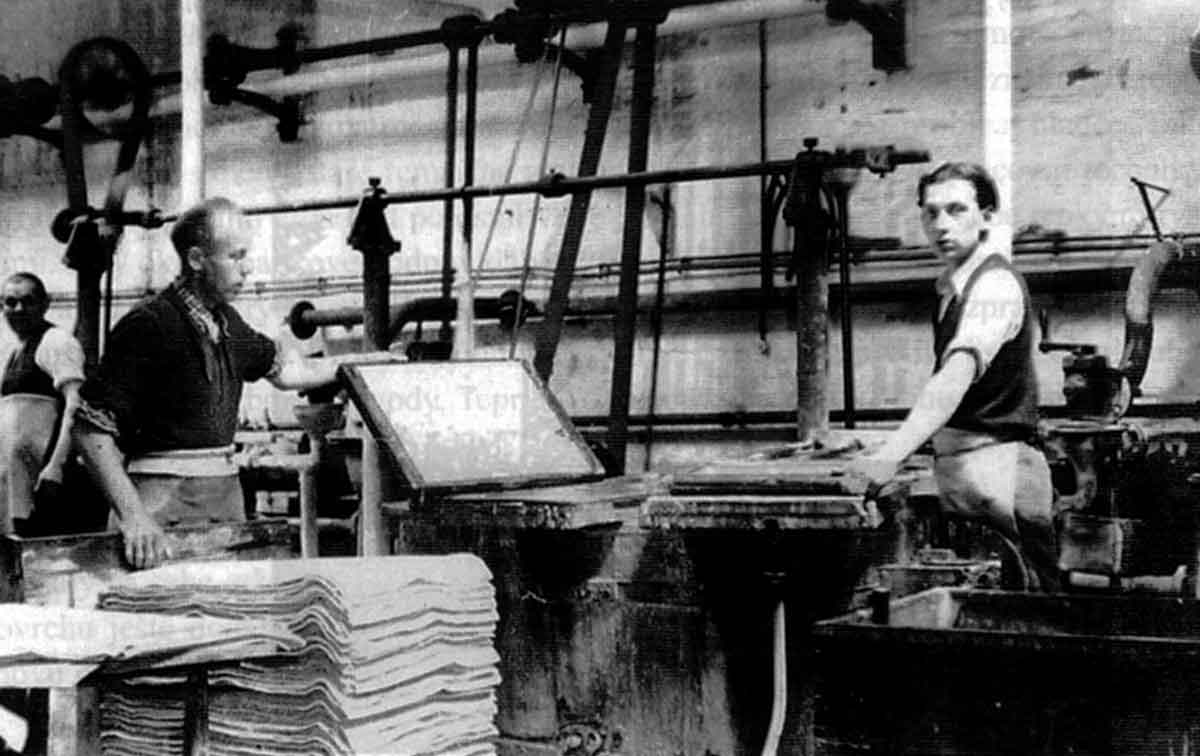
The inmates at Units 18 and 19 worked with a vague feeling that their lives would end after the completion of Operation Bernhard. Unsure whether they should delay the progress to postpone their execution or to excel to hasten their own deaths, the operation progressed. The high-ranking Nazi officials were content with the results of Operation Bernhard. Ironically, the Third Reich awarded twelve prisoners (three of them being Jewish) with the War Merit Medal.
Indeed, the work of the forging units proved to be astonishing. From 1942 to 1945, Nazi Germany forged 132 million pounds, equal to about 15% of all genuine notes in circulation, or seven billion dollars in 2023.
The Third Reich deployed a significant portion of the forged banknotes to fund intelligence activities as well as to support Nazi espionage operations in Europe. For instance, the forged notes were extensively used to buy weaponry and raw materials for the production of weapons. Forged British banknotes were also utilized to procure illicit weaponry from partisans in Yugoslavia, which was then distributed to pro-Nazi factions in Southeastern Europe.
Reportedly, Nazi authorities paid Elyesa Bazna, a notorious Albanian spy codenamed Cicero, in counterfeit British notes for his intelligence efforts. Elyesa Bazna passed critical classified information over to the Nazis by stealing documents from the British ambassador to Turkey.
In another instance, forged British notes equaling £100,000 were reportedly utilized to rescue Adolf Hitler’s political ally and leader of fascist Italy, Benito Mussolini, during the Gran Sasso raid in September 1943.
By 1943, 10-15% of the Grade 1 Nazi-forged British banknotes circulated across Europe and North Africa. Ultimately, doubts began to emerge about the authenticity of British currency. This widespread mistrust undermined the pound, leading to a decline in its international value, further straining Britain’s economic stability during World War II.
Uncovering Operation Bernhard
During Operation Bernhard, the forgers faced significant challenges in replicating the complex and unique British banknote serial numbers. Initially, the solution applied was to reuse serial numbers from authentic banknotes. However, this method proved ineffective.
In 1943, Nazi-forged notes were exposed when a bank employee in Morocco noticed that a £5 note he received had already been marked as “paid” at another bank, indicating that it was a counterfeit.
In response, the British government decided to withdraw all notes with a face value higher than £5 from circulation and inform everyone of the widespread counterfeiting of British banknotes.
Ultimately, Operation Bernhard was uncovered in 1944, when the British captured infamous Nazi intelligence officer Alfred Naujocks.
By 1945, the Allied forces were advancing on the European continent; the Nazi defeat in World War II was imminent. The prisoners at Units 18 and 19 were transferred to Austria and were liberated when the United States forces entered the occupied Austrian territories on May 6, 1945.
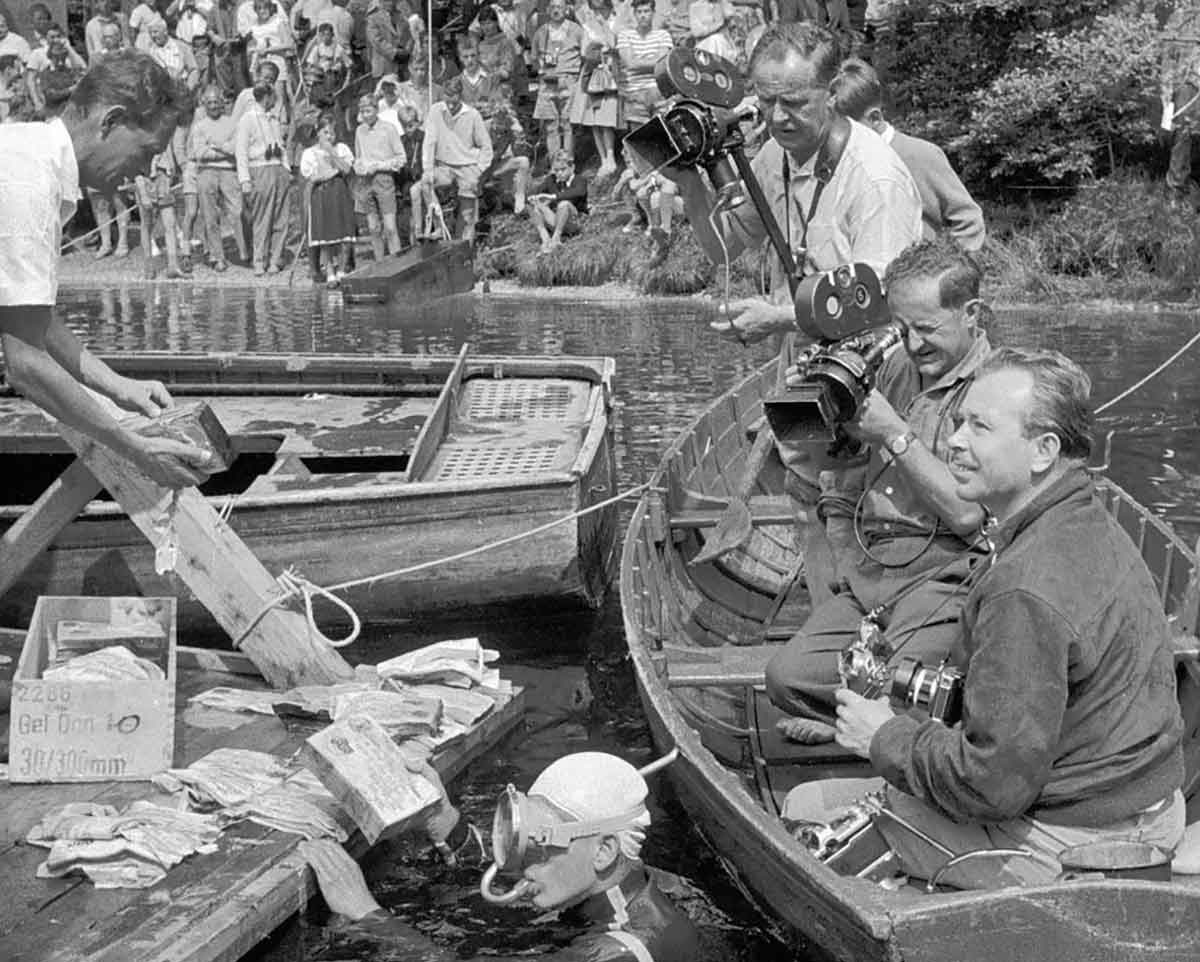
Reportedly, the Nazi authorities dumped most of the forged notes and equipment into Lake Toplitz (a lake in the Austrian Alps), anticipating that the evidence of Operation Bernhard would remain secret in the deep waters of the lake. To the Nazis’ surprise, in 1945, the Austrian newspapers reported about a diver finding wooden boxes containing counterfeit £5 banknotes. The media outlets revealed the total value of the found banknotes was around £700 million, which the Austrian National Bank had sought to destroy.
The Legacy of Operation Bernhard
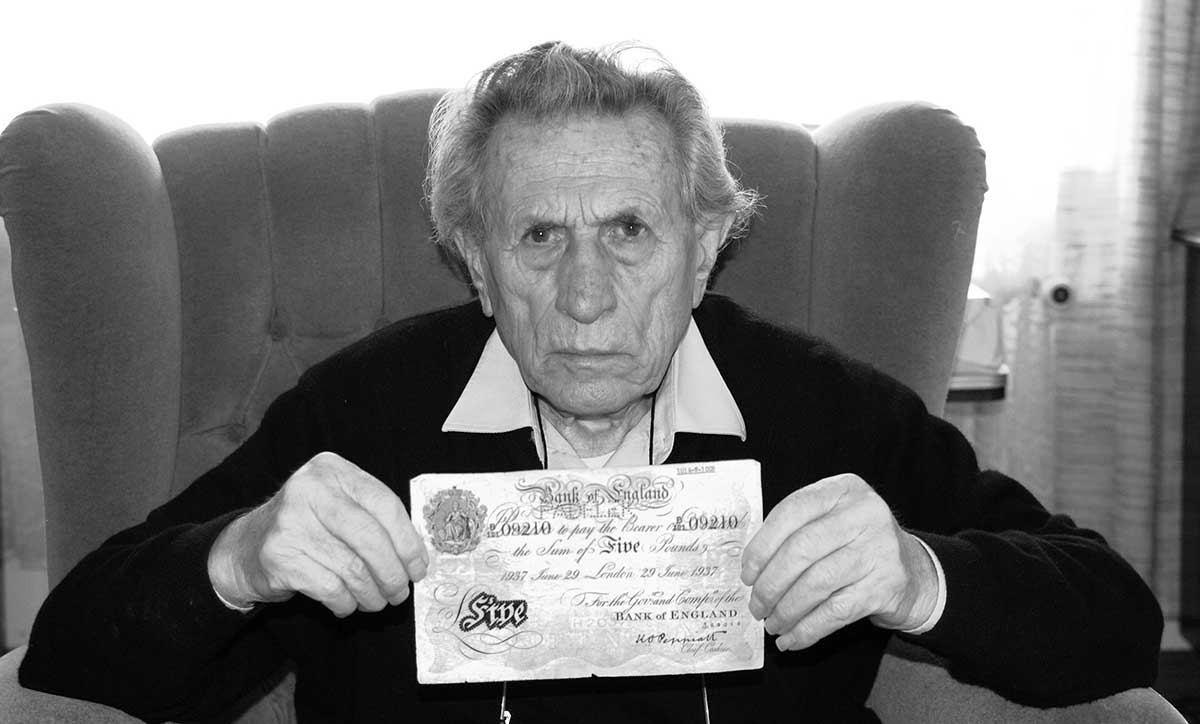
Even though Operation Bernhard did not collapse the British economy, it went down in history as one of the most interesting covert plots of World War II, having implications years after the completion of the war.
The forged British notes were still in circulation years after 1945. Only in 1964 did the British authorities decide to reintroduce the £10 note. The £20 note reappeared in 1970, and the £50 in 1981.
The leader of Operation Bernhard, SS Major Krüger, hid from the British authorities at his home until his surrender in November 1946. Forging an enemy’s currency was not considered a war crime; hence, Krüger underwent the complex denazification process and continued working for the Hahnemühle paper company.
Operation Bernhard has acquired considerable attention around the world and has been extensively covered in the media, literature, and film industries. Some forged British banknotes during Operation Bernhard are held in museums, including the National Bank of Belgium and the Bank of England Museum.
One of the best-known authors writing about the operation is Adolf Burger, a Jewish Slovak printer forced to become a counterfeiter. Years after liberation, he wrote a book titled The Devil’s Workshop: A Memoir of the Nazi Counterfeiting Operation, published in 1983.
Historian Vince Houghton, working as a curator at the International Spy Museum in Washington, D.C., described Operation Bernhard as an example of economic espionage. As Houghton outlines, this operation “is indicative of intelligence agencies and governments trying to find the edge—the way to defeat their enemy any way possible.”