
Ancient Philosophy marks the beginning of systematic human reflection on reality, knowledge, ethics, and the meaning of life. Emerging in the ancient Greek and Roman world, it introduced fundamental questions that continue to shape philosophical inquiry today. Thinkers such as Socrates, Plato, Aristotle, and the Stoics sought to understand nature, virtue, reason, and the good life through careful argument rather than myth or tradition. Their ideas formed the foundations of Western philosophy, science, logic, and political thought.
The Pre-Socratics: Birth of Philosophy

The Pre-Socratic philosophers represent the earliest stage of Western philosophy and mark the decisive break from mythological explanations of the world. Active primarily between the 6th and 5th centuries BC, these thinkers sought to understand nature, existence, and change through reasoned inquiry rather than divine narrative. Their work laid the foundations for philosophy, science, and rational thought.
Figures such as Thales, Anaximander, and Anaximenes focused on identifying the fundamental principle underlying all reality, proposing water, the indefinite, or air as the basic substance of the cosmos. Others, like Pythagoras, emphasized number and mathematical harmony as the structure of reality, linking philosophy with early scientific thought. Heraclitus introduced the idea of constant change, famously asserting that all things flow, while Parmenides challenged this view by arguing that true being is unchanging and indivisible. This tension between change and permanence became one of the central problems of philosophy.
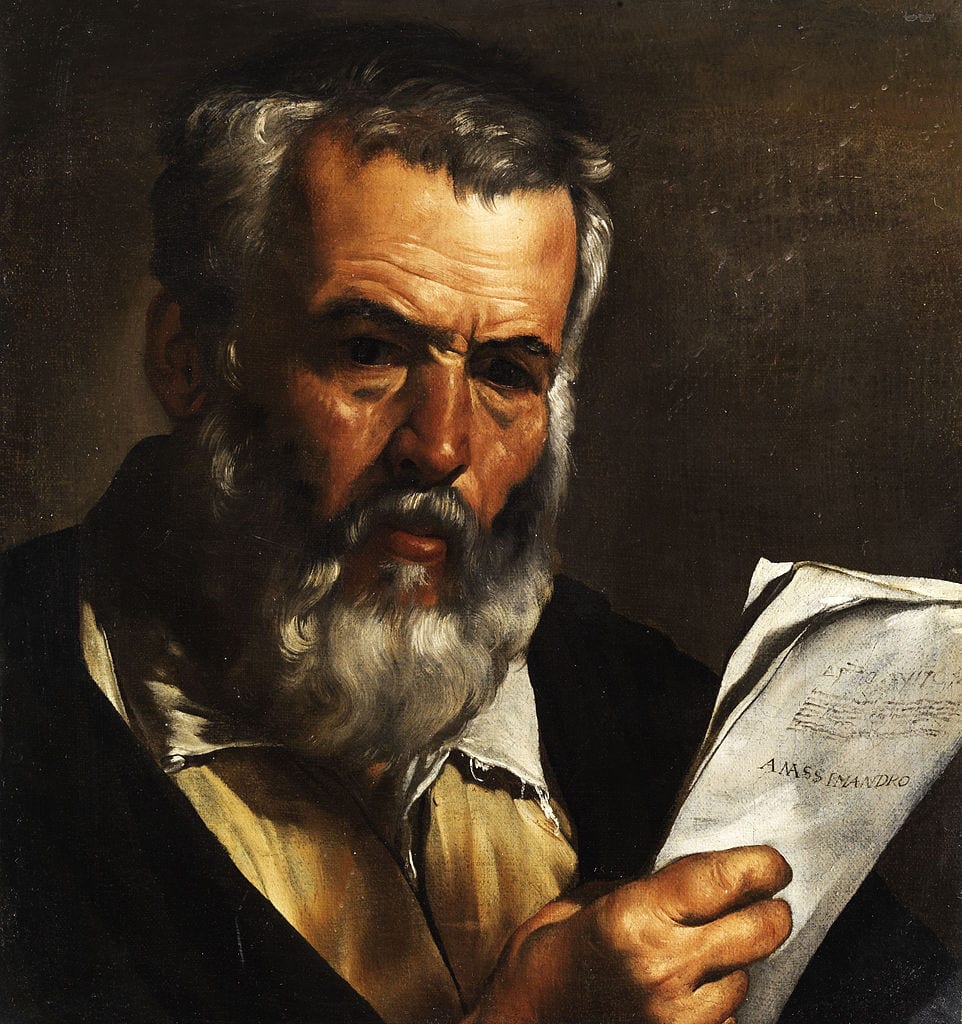
Later Pre-Socratics such as Empedocles, Anaxagoras, and Democritus attempted to reconcile these opposing views by proposing pluralistic theories of nature, including the four elements, cosmic mind, and atomism. Although their ideas differed, they shared a commitment to rational explanation and critical inquiry.
The significance of the Pre-Socratics lies not only in their theories, many of which survive only in fragments, but in their method. By asking what the world is made of and how it operates according to rational principles, they initiated philosophy as a disciplined pursuit of knowledge. Their legacy shaped Socrates, Plato, and Aristotle and established the intellectual foundations of Western philosophy.
Socrates: Revolution in Dialogue
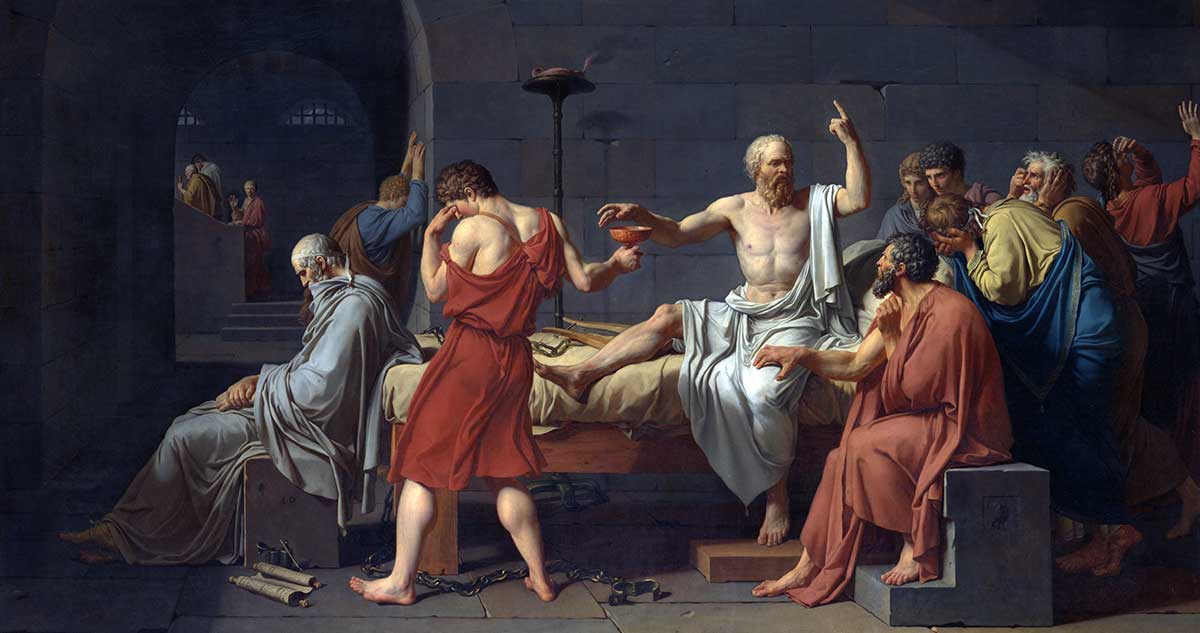
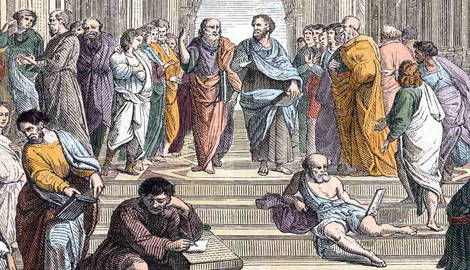
Socrates stands as one of the most transformative figures in the history of philosophy, not because of his written works, which he left none, but because of the method he introduced. Living in Athens during the 5th century BC, Socrates shifted philosophical inquiry away from cosmological speculation toward ethical examination and the improvement of the human soul. His greatest contribution was the revolution of dialogue as a philosophical tool.
Rather than teaching doctrines, Socrates engaged others in conversation through a method now known as the Socratic dialogue or elenchus. By asking a series of carefully structured questions, he exposed contradictions in commonly held beliefs and pushed his interlocutors to refine their understanding. This approach challenged the assumption that wisdom consisted of possessing knowledge. Instead, Socrates famously claimed that true wisdom begins with recognizing one’s own ignorance.
Dialogue, for Socrates, was not mere debate but a cooperative search for truth. Through questioning, participants were encouraged to examine concepts such as justice, virtue, courage, and piety, uncovering their underlying assumptions. This method placed reasoned discussion at the center of philosophical life and made self-examination a moral duty. Socrates believed that an unexamined life was not worth living, emphasizing ethical awareness over theoretical certainty.
His commitment to dialogue ultimately brought him into conflict with Athenian authorities. Accused of corrupting the youth and impiety, Socrates accepted his death sentence rather than abandon his principles, reinforcing his belief that moral integrity outweighed personal survival. Through Plato’s dialogues, Socrates’ method became foundational to Western philosophy. The revolution he initiated transformed philosophy into an active, dialogical practice rooted in questioning, critical thinking, and the relentless pursuit of truth through conversation.
Plato: Philosophy of Transcendence
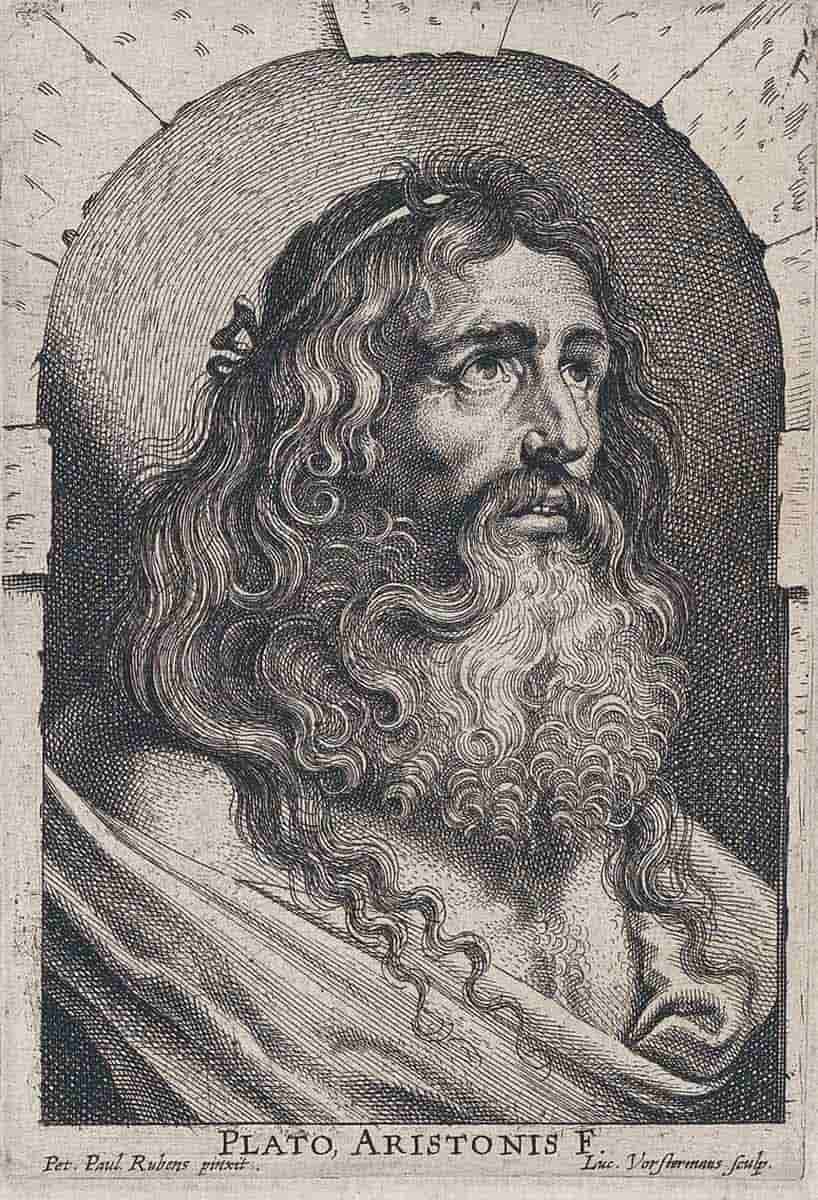
Plato stands as one of the most influential philosophers in Western history, developing a vision of reality that emphasized transcendence beyond the visible world. A student of Socrates, Plato sought to provide a stable foundation for knowledge and ethics in response to the uncertainty revealed by his teacher’s dialogues. His philosophy is grounded in the distinction between the world of appearances and a higher, intelligible realm.
Central to Plato’s thought is the Theory of Forms. According to this view, the physical world is in constant change and therefore cannot be the source of true knowledge. Instead, genuine understanding arises from grasping the eternal and unchanging Forms, perfect and non-material essences such as Justice, Beauty, and the Good. Particular objects and actions participate in these Forms but never fully embody them. Knowledge, for Plato, is thus a process of intellectual ascent, moving from sensory perception to rational insight.
This transcendent framework also shapes Plato’s ethics and politics. The Form of the Good stands as the highest principle, illuminating all other Forms and guiding moral life. In The Republic, Plato argues that only those who apprehend this higher reality, the philosopher-kings, are fit to rule, as they govern according to truth rather than opinion.
Plato famously illustrates this ascent through the Allegory of the Cave, where prisoners mistake shadows for reality until one turns toward the light. Philosophy, in this sense, is a transformative journey of the soul, drawing it away from illusion toward ultimate truth. Plato’s philosophy of transcendence deeply influenced later metaphysics, theology, and conceptions of reality itself.
Aristotle: Philosophy of Immanence
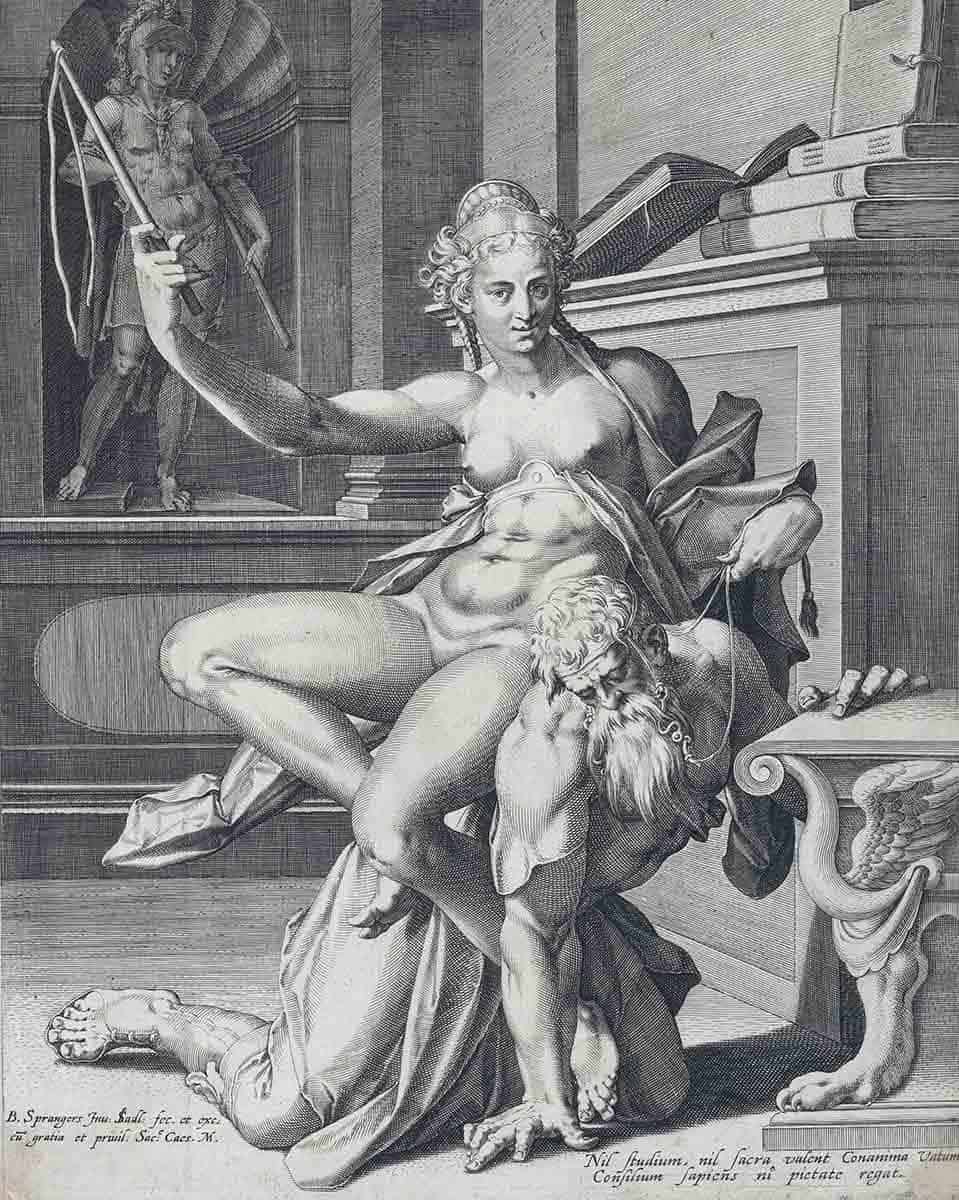
Aristotle, a student of Plato, developed a philosophical system that shifted the focus from transcendence to immanence, grounding reality, knowledge, and meaning within the natural world itself. While Plato located truth in a separate realm of Forms, Aristotle argued that form and matter are inseparable in concrete substances. For him, reality is not something to escape, but something to understand through careful observation and rational analysis.
Central to Aristotle’s philosophy is the concept of hylomorphism, the idea that all beings are composed of matter and form. Form does not exist independently in a transcendent realm; it is present within each individual thing, giving it structure, purpose, and identity. This immanent view allows Aristotle to explain change, growth, and diversity without abandoning stability or intelligibility.
Aristotle’s emphasis on immanence also shapes his approach to knowledge. Rather than relying solely on abstract intuition, he grounded philosophy in empirical observation, classification, and logical reasoning. His development of formal logic and systematic inquiry laid the foundations for science and influenced intellectual traditions for centuries. In ethics, Aristotle rejected otherworldly ideals in favor of practical human flourishing. In the Nicomachean Ethics, virtue is cultivated through habitual action within everyday life, guided by reason and aimed at eudaimonia, or human flourishing. Meaning, for Aristotle, is realized through living well within the world, not beyond it. His philosophy of immanence thus affirms nature, experience, and rational practice as the proper domain of philosophical inquiry.
The Hellenistic Period: Reaction to Turmoil
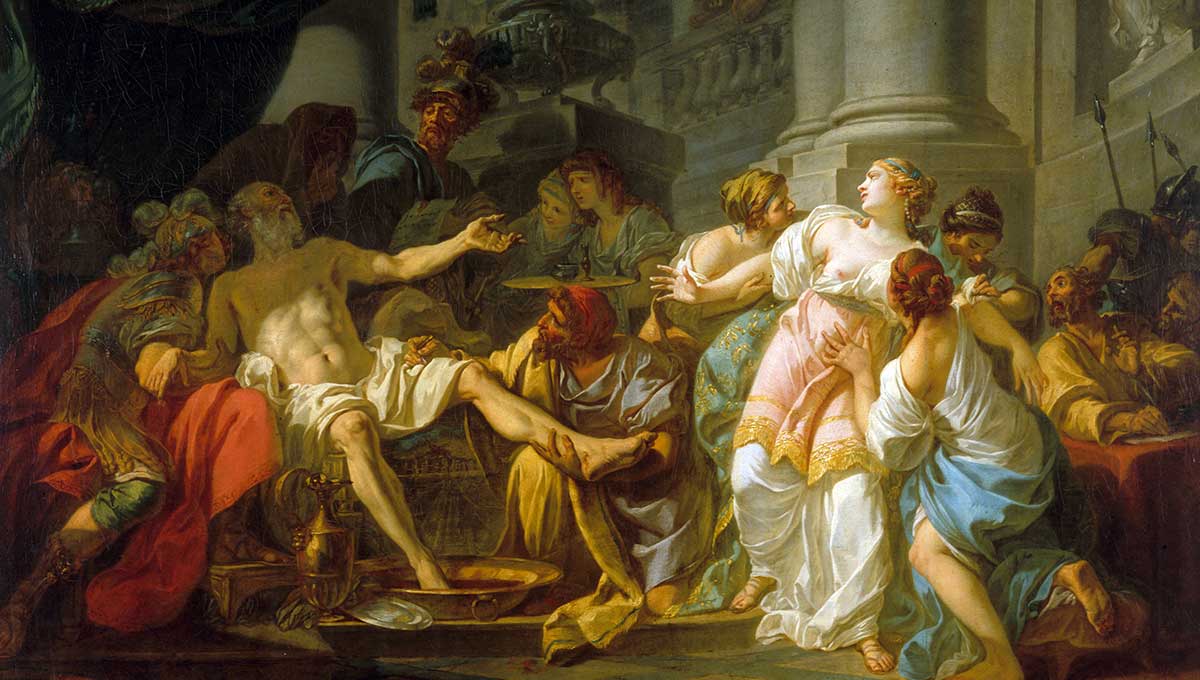
The Hellenistic Period, spanning roughly from the death of Alexander the Great in 323 BC to the rise of Roman dominance, was an era marked by profound social, political, and cultural upheaval. The collapse of the Greek city-state system and the emergence of vast empires radically altered how individuals understood their place in the world. Traditional civic identities weakened, political participation diminished, and daily life became increasingly unstable and unpredictable. In this context of uncertainty, philosophy shifted its focus from abstract speculation to the practical problem of how to live well amid disorder.
Philosophical schools such as Stoicism, Epicureanism, Cynicism, and Skepticism emerged as direct responses to these conditions. Stoicism, founded by Zeno of Citium, taught that inner peace could be achieved by aligning one’s will with reason and nature, accepting what lies beyond one’s control, and cultivating virtue as the only true good. Epicureanism, developed by Epicurus, offered a different path, advocating for modest pleasure, freedom from fear, and the cultivation of friendship as defenses against anxiety and political chaos.
Cynicism pushed this practical orientation to its limits, rejecting social conventions, wealth, and status altogether in favor of radical simplicity and independence. Skepticism, particularly in its Pyrrhonian form, responded to uncertainty by suspending judgment, arguing that tranquility arises when one abandons the futile search for absolute certainty in an unstable world.
Despite their differences, these schools shared a common goal: securing personal tranquility in an unpredictable environment. Philosophy became a form of therapy, aimed at protecting the individual rather than reforming the state. By shifting attention from external power to inner stability, Hellenistic philosophers provided tools for resilience that remain relevant today. Their work reflects a timeless insight: that when social structures fail to offer security, wisdom must be sought within the self.